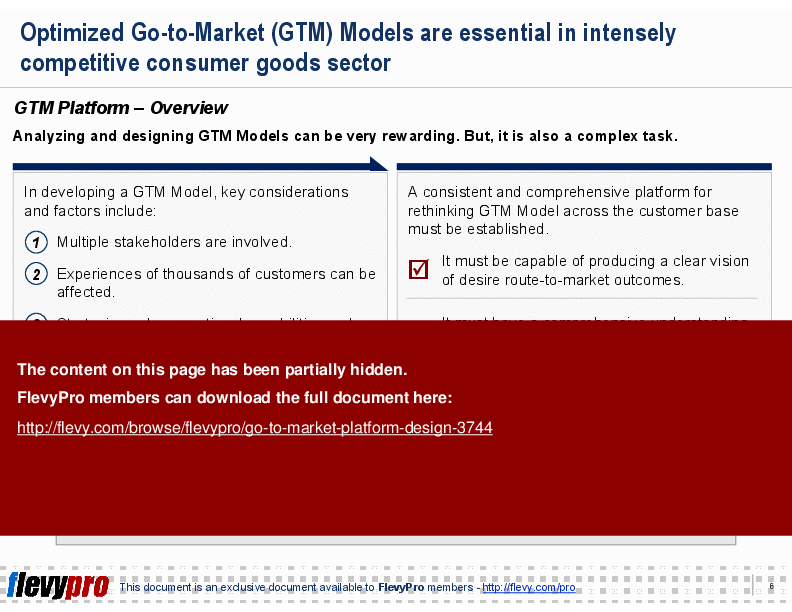

The routes to market companies take to sell and service their products are critical to their success. It determines their sales volume, their ability to deliver the proper levels of customer service in a cost-effective manner, and their success at securing scarce retail shelf space for their products. Yet, only a few organizations have a comprehensive conceptual framework for optimizing their routes to market.
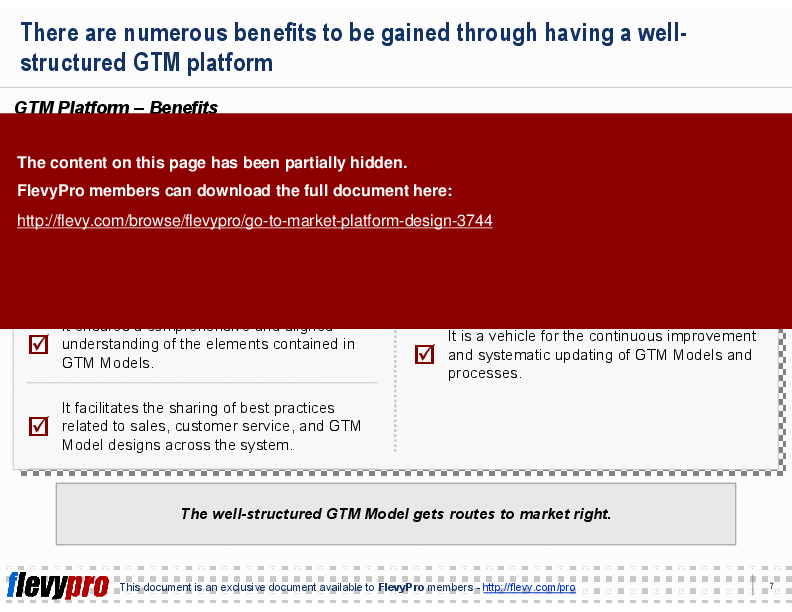
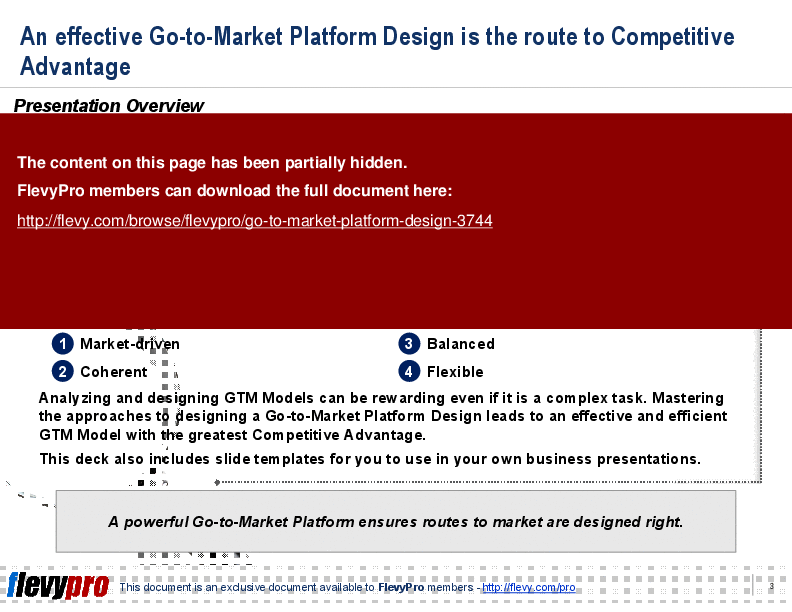
A proven GTM Platform must be available to enable companies to design profitable Go-to-Market (GTM) Models. The platform will enable managers to identify and analyze the key activities and tasks required to best serve their customer segments. A powerful GTM Platform ensures routes to market are designed right.
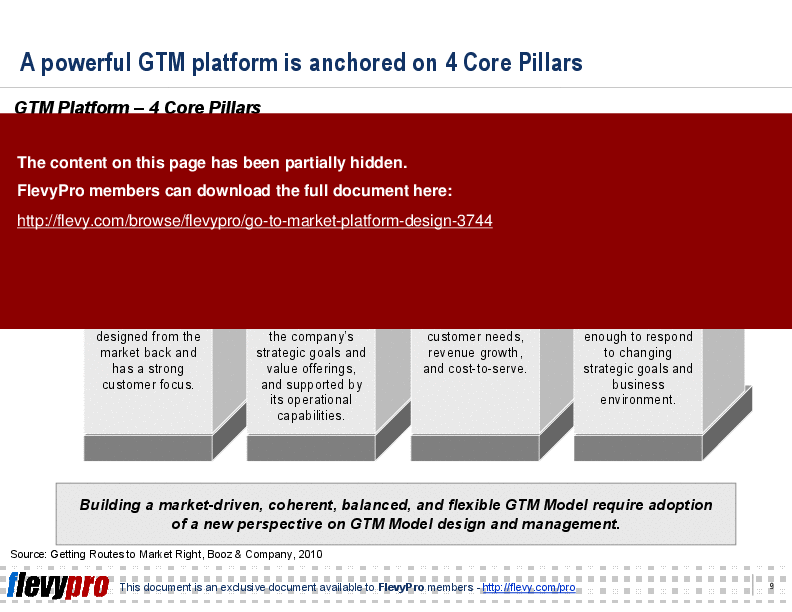
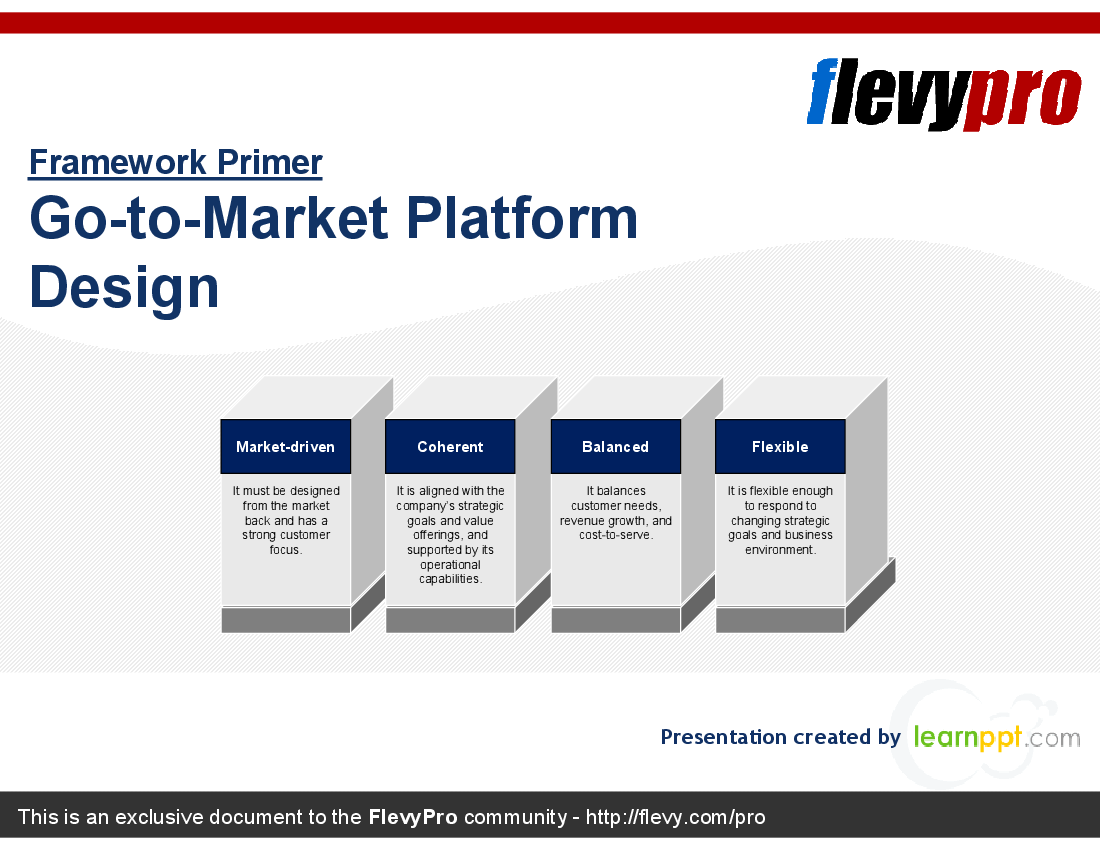
This framework thoroughly discusses the 4 core pillars of a powerful Go-to-Market Platform. The 4 pillars are critical qualities that ensure that the expected benefits are achieved.
1. Market-driven
2. Coherent
3. Balanced
4. Flexible
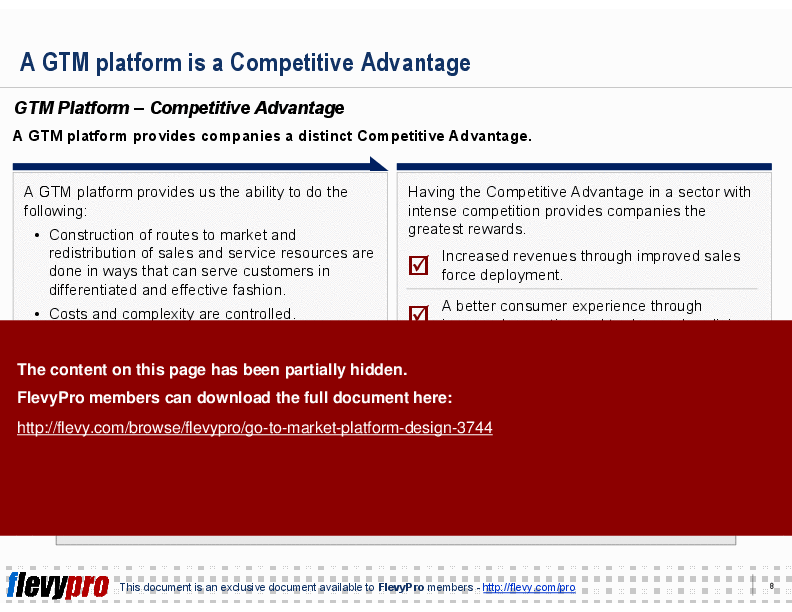
Analyzing and designing GTM Models can be rewarding even if it is a complex task. Mastering the approaches to designing a Go-to-Market Platform Design leads to an effective and efficient GTM Model with the greatest Competitive Advantage.
This deck also includes slide templates for you to use in your own business presentations.
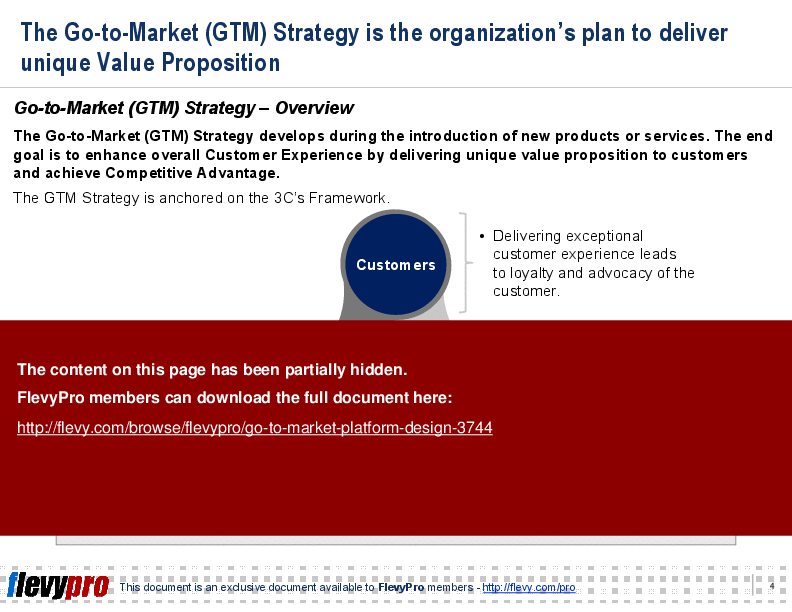
This PPT delves into the intricacies of developing a Go-to-Market (GTM) Strategy, emphasizing the importance of delivering a unique value proposition to customers. It highlights the 3C's Framework—Customers, Competition, and Company—as the foundation for crafting a GTM Strategy that enhances customer experience and drives competitive advantage. The framework ensures that customer needs are met, fostering loyalty and advocacy.
Key considerations in developing a GTM Model include involving multiple stakeholders, understanding customer experiences, and establishing a consistent platform for rethinking GTM Models. This document provides a comprehensive guide to balancing customer needs, revenue growth, and cost-to-serve, ensuring that your GTM Model is both effective and efficient. Templates included in the deck facilitate the application of these principles in your business presentations.
Got a question about this document? Email us at flevypro@flevy.com.
Executive Summary
The Go-to-Market Platform Design presentation provides a structured approach for organizations to optimize their routes to market. Developed by former McKinsey and Big 4 consultants, this framework emphasizes the importance of a market-driven, coherent, balanced, and flexible GTM strategy. By leveraging proven methodologies, executives will be equipped to enhance customer experiences, drive revenue growth, and achieve competitive advantages. This presentation includes practical templates to facilitate the implementation of GTM strategies within their organizations.
Who This Is For and When to Use
• Corporate executives overseeing product launches and market strategies
• Marketing teams responsible for customer engagement and service delivery
• Strategy consultants guiding clients in optimizing market approaches
• Sales leaders focused on enhancing sales force effectiveness
Best-fit moments to use this deck:
• During the planning phase of a new product launch
• When assessing and redesigning existing GTM strategies
• In workshops aimed at aligning cross-functional teams on market approaches
Learning Objectives
• Define the core components of an effective Go-to-Market (GTM) strategy
• Analyze customer segments to tailor GTM models effectively
• Build a coherent GTM platform that aligns with corporate goals
• Establish a balanced approach to customer needs, revenue growth, and cost-to-serve
• Implement flexible GTM strategies that adapt to market changes
• Utilize templates for practical application in business presentations
Table of Contents
• Overview (page 1)
• GTM Platform (page 3)
• Core Pillars of a GTM Platform (page 9)
• Templates (page 17)
Primary Topics Covered
• GTM Strategy Overview - The GTM strategy outlines how organizations deliver unique value propositions to enhance customer experiences and achieve competitive advantages.
• Market-driven Approach - This approach ensures that GTM models are designed from the market back, focusing on customer needs and preferences.
• Coherent Framework - A coherent GTM platform aligns with the company's strategic goals and integrates with the overall customer service framework.
• Balanced Priorities - Balancing customer needs, revenue growth, and cost-to-serve is essential for building an optimal GTM model.
• Flexible Design - Flexibility in GTM models allows organizations to adapt to changing strategic goals and competitive threats.
• Customer Service Framework - This framework visualizes how strategic goals and value offerings cascade down to operational models and customer interactions.
Deliverables, Templates, and Tools
• GTM strategy framework template for defining customer segments
• Customer service framework visual for aligning strategic goals
• Balanced scorecard for assessing revenue growth and cost-to-serve
• Flexibility assessment tool for evaluating GTM model adaptability
• Market-driven analysis template for evaluating customer needs
• Coherence mapping tool for aligning GTM strategies with corporate objectives
Slide Highlights
• Overview of the GTM platform emphasizing market-driven design
• Visual representation of the 4 core pillars of a GTM platform
• Customer service framework illustrating strategic goal alignment
• Balanced scorecard detailing trade-offs among competing priorities
• Flexibility assessment slide showcasing adaptability in GTM models
Potential Workshop Agenda
GTM Strategy Development Session (90 minutes)
• Define the core components of an effective GTM strategy
• Analyze customer segments to tailor GTM models
• Develop a coherent GTM platform that aligns with corporate goals
GTM Model Optimization Workshop (60 minutes)
• Assess existing GTM strategies and identify areas for improvement
• Utilize templates to create actionable GTM plans
• Discuss best practices for balancing customer needs and revenue growth
Customization Guidance
• Tailor the GTM strategy framework to reflect specific market conditions and customer segments
• Adjust the customer service framework to align with organizational goals and operational capabilities
• Modify templates to incorporate unique metrics and KPIs relevant to the business context
Secondary Topics Covered
• SWOT and PEST analyses for competitive assessment
• Best practices in sales and customer service integration
• Continuous improvement methodologies for GTM models
• Stakeholder engagement strategies during GTM implementation
Topic FAQ
Document FAQ
These are questions addressed within this presentation.
What is a Go-to-Market (GTM) strategy?
A GTM strategy is a plan that outlines how an organization delivers unique value propositions to enhance customer experiences and achieve competitive advantages.
Why is a market-driven approach important?
A market-driven approach ensures that GTM models are designed based on customer needs and preferences, leading to better alignment with market demands.
How can I balance competing priorities in my GTM model?
Balancing priorities involves assessing customer needs, revenue growth, and cost-to-serve to determine optimal trade-offs in the GTM model.
What are the core pillars of an effective GTM platform?
The core pillars include being market-driven, coherent, balanced, and flexible to adapt to changing market conditions.
How can I customize the GTM templates for my organization?
Templates can be tailored by incorporating specific metrics, KPIs, and market conditions relevant to your organization’s context.
What tools are available to assess GTM model flexibility?
Flexibility assessment tools can help evaluate how well a GTM model can adapt to changing strategic goals and competitive threats.
How do I ensure coherence in my GTM platform?
Coherence can be achieved by aligning the GTM model with the company’s overall customer service framework and strategic goals.
What methodologies can support continuous improvement in GTM models?
Adopting methodologies such as Lean or Agile can facilitate ongoing evaluation and enhancement of GTM models.
Glossary
• Go-to-Market (GTM) Strategy - A plan for delivering unique value propositions to customers.
• Market-driven - An approach that prioritizes customer needs in GTM design.
• Coherent - Alignment of GTM strategies with corporate goals and customer service frameworks.
• Balanced - The equilibrium between customer needs, revenue growth, and cost-to-serve.
• Flexible - The ability to adapt GTM models to changing market conditions.
• Customer Service Framework - A structured approach to delivering customer value aligned with strategic goals.
• SWOT Analysis - A method for assessing strengths, weaknesses, opportunities, and threats.
• PEST Analysis - A framework for analyzing external factors affecting the market.
• Balanced Scorecard - A tool for measuring organizational performance across multiple dimensions.
• Continuous Improvement - Ongoing efforts to enhance products, services, or processes.
• Stakeholder Engagement - The process of involving individuals or groups that have an interest in the organization’s activities.
• Lean Methodology - A systematic approach to minimizing waste within a manufacturing system.
• Agile Methodology - A project management approach that emphasizes flexibility and customer satisfaction.
• KPI (Key Performance Indicator) - A measurable value that demonstrates how effectively a company is achieving key business objectives.
• Customer Segmentation - The process of dividing a customer base into groups based on shared characteristics.
• Value Proposition - A statement that explains how a product or service solves a problem or improves a situation for customers.
• Revenue Growth - The increase in a company's sales over a specific period.
• Cost-to-Serve - The total cost incurred by a company to deliver a product or service to a customer.
• Market Analysis - The assessment of the market to understand its dynamics and identify opportunities.
• Operational Capabilities - The skills and resources that an organization possesses to execute its business strategy effectively.
• Trade-offs - Decisions made to balance competing priorities in business strategies.
Source: Best Practices in Competitive Advantage, Product Strategy, Go-to-Market, Platform Strategy PowerPoint Slides: Go-to-Market Platform Design PowerPoint (PPT) Presentation Slide Deck, LearnPPT Consulting
Did you need more documents?
Consider a FlevyPro subscription from $39/month. View plans here.
For $10.00 more, you can download this document plus 2 more FlevyPro documents. That's just $13 each.
|
Download our FREE Strategy & Transformation Framework Templates
Download our free compilation of 50+ Strategy & Transformation slides and templates. Frameworks include McKinsey 7-S, Balanced Scorecard, Disruptive Innovation, BCG Curve, and many more. |