
In an intensely competitive consumer goods sector, optimized Go-to-Market (GTM) Models are essential. This entails the design for routes to market that companies use to sell and deliver their products and to service their trade accounts.
GTM Models enable profitable growth, service excellence, and consumer engagement at the point of sale. But the more diverse a company's customer base and product portfolio, and the more competitive its markets, the more challenging it is to design an effective and efficient GTM Model.
Companies with a large customer base often use the same route to market to manage all trade accounts. Some accounts were being underdeveloped and underserved while others are given more attention. As a result, sales potential of existing accounts was not being fully captured and cost-to-serve was higher than necessary. New resources could have been deployed to establish, maintain, and develop new accounts to optimize market potential.
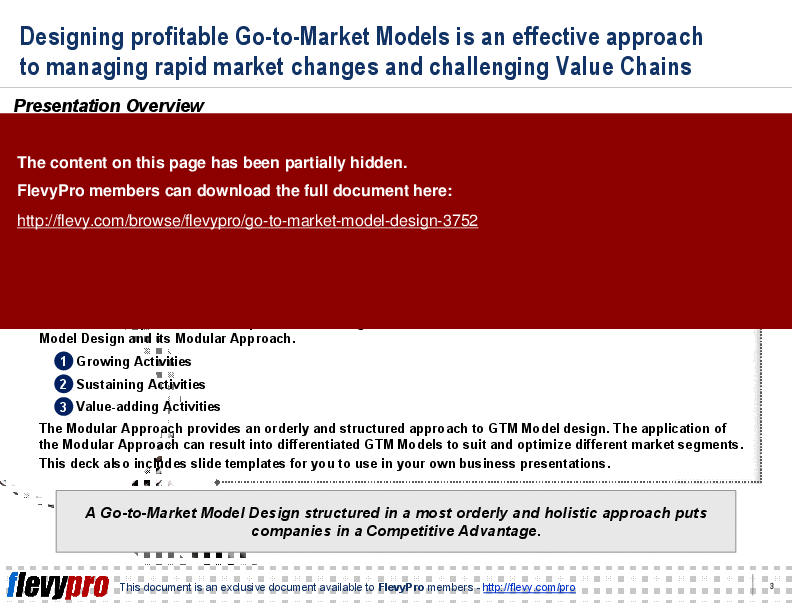
This framework provides an in-depth understanding of the 3 essential sets of core activities of the Go-to-Market Model Design and its Modular Approach.
1. Growing Activities
2. Sustaining Activities
3. Value-adding Activities
The Modular Approach provides an orderly and structured approach to GTM Model design. The application of the Modular Approach can result into differentiated GTM Models to suit and optimize different market segments.
This deck also includes slide templates for you to use in your own business presentations.
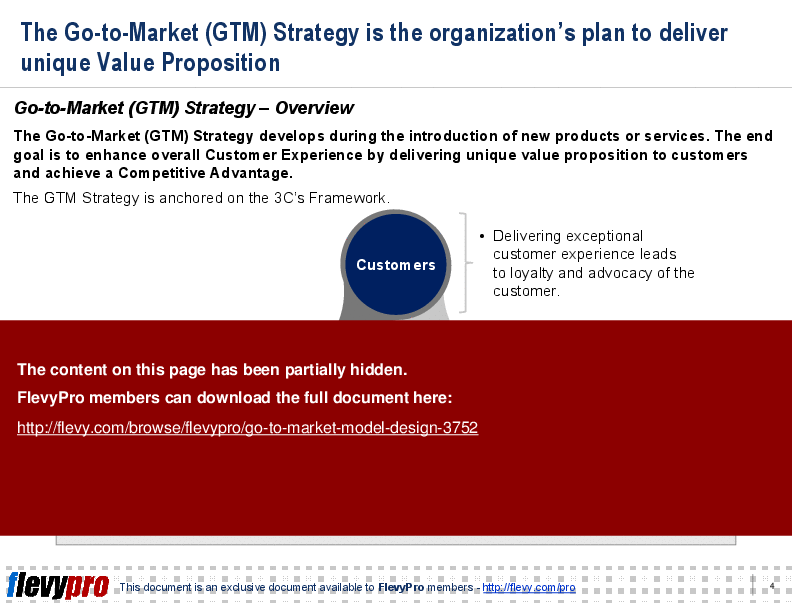
This presentation delves into the intricacies of the Go-to-Market (GTM) Strategy, emphasizing its role in delivering a unique value proposition and achieving a competitive edge. It explores the 3C's Framework and the importance of customer experience in fostering loyalty and advocacy. The PPT also highlights the necessity for a systematic approach to GTM Model analysis, design, and implementation. With a focus on the holistic and modular views, it provides a comprehensive guide to structuring effective routes to market. The included slide templates are designed to enhance your business presentations, offering practical tools for immediate application.
Got a question about this document? Email us at flevypro@flevy.com.
Executive Summary
The Go-to-Market Model Design framework is an essential tool for organizations aiming to navigate the complexities of rapidly changing markets and value chains. Developed by seasoned consultants, this framework provides a structured approach to designing effective Go-to-Market (GTM) models that optimize routes to market, enhance customer engagement, and drive profitable growth. By employing a modular approach, companies can tailor their GTM strategies to meet the diverse needs of their customer segments, ensuring a competitive advantage in the consumer goods sector.
Who This Is For and When to Use
• Business executives seeking to improve market strategies and customer engagement
• Marketing teams tasked with developing and implementing GTM strategies
• Sales leaders aiming to optimize routes to market for better service delivery
• Consultants focused on advising clients on market entry and growth strategies
Best-fit moments to use this deck:
• During the development of new product launches to establish effective market entry strategies
• When assessing and redesigning existing GTM models to enhance operational efficiency
• In strategic planning sessions aimed at aligning marketing and sales efforts with customer needs
Learning Objectives
• Define the components of an effective Go-to-Market model and its importance in competitive markets
• Build modular GTM strategies tailored to specific customer segments and market conditions
• Establish core activities necessary for customer acquisition, development, and retention
• Analyze existing GTM models to identify inefficiencies and areas for improvement
• Develop actionable templates for implementing GTM strategies in real-world scenarios
• Enhance customer experience through optimized service delivery at the point of sale
Table of Contents
• Overview (page 1)
• GTM Model Design (page 3)
• Modular Approach (page 12)
• Templates (page 15)
Primary Topics Covered
• GTM Model Design - A comprehensive framework for creating effective routes to market that enhance customer engagement and drive growth.
• Modular Approach - A structured method that allows for flexibility in designing GTM models tailored to various market segments.
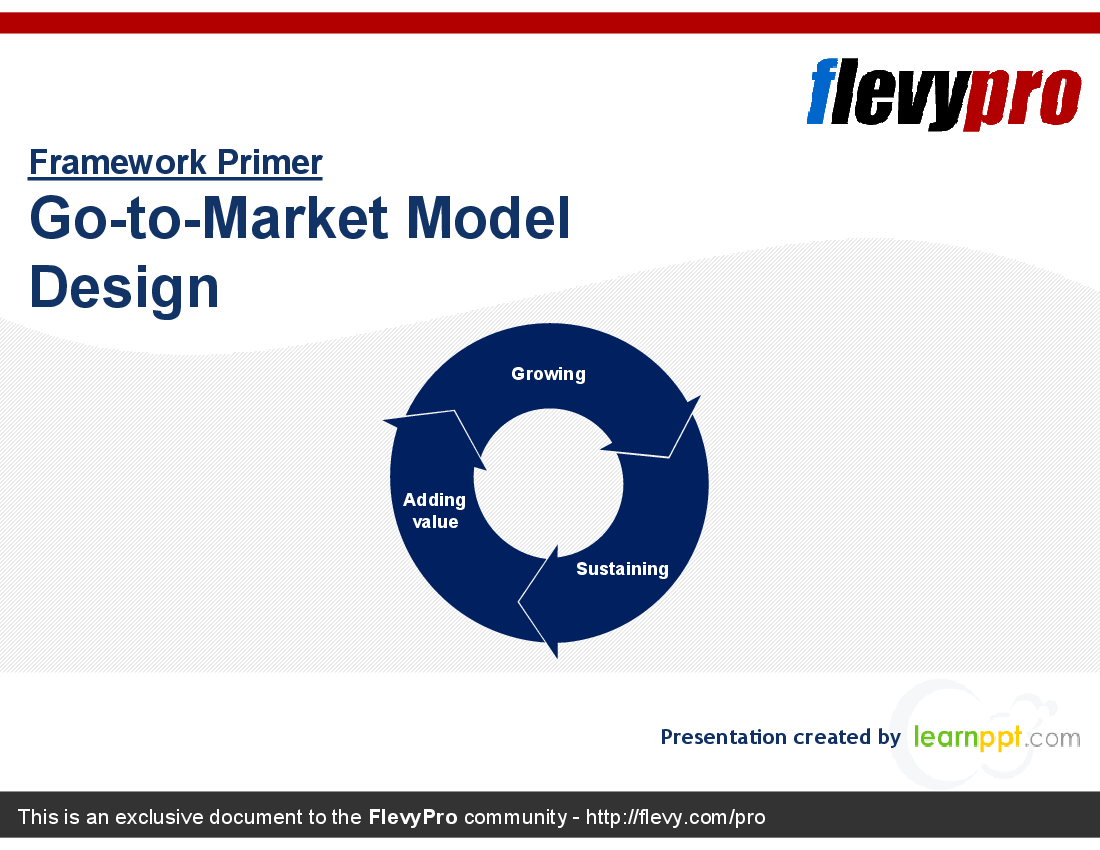
• Core Activities - Essential tasks categorized into growing, sustaining, and value-adding activities that support GTM strategies.
• Customer Segmentation - Understanding different customer bases to optimize marketing and sales efforts effectively.
• Market Analysis - Utilizing SWOT and PEST analyses to assess competition and identify market opportunities.
• Implementation Strategies - Practical steps for executing GTM models and measuring their effectiveness.
Deliverables, Templates, and Tools
• GTM model design templates for various customer segments
• Core activity frameworks for growing, sustaining, and value-adding tasks
• Customer segmentation analysis tools to identify target markets
• Actionable checklists for implementing GTM strategies
• Performance tracking templates to measure GTM effectiveness
Slide Highlights
• Overview of the Go-to-Market Model and its significance in competitive landscapes
• Visual representation of the Modular Approach to GTM Design
• Breakdown of core activities essential for effective GTM execution
• Case studies illustrating successful GTM implementations in various sectors
• Templates for practical application in business presentations
Potential Workshop Agenda
GTM Model Design Overview (60 minutes)
• Introduce the importance of GTM models in today’s market
• Discuss the core components of an effective GTM strategy
• Review case studies of successful implementations
Modular Approach Workshop (90 minutes)
• Explore the benefits of a modular design in GTM strategies
• Break into groups to design GTM models for different customer segments
• Present and critique group designs for feedback
Core Activities Deep Dive (60 minutes)
• Analyze the 3 core activities: growing, sustaining, and value-adding
• Identify tasks associated with each activity and their impact on customer engagement
• Develop action plans for implementing identified tasks
Customization Guidance
• Tailor templates to reflect specific customer segments and market conditions
• Adjust terminology and metrics to align with organizational goals and strategies
• Incorporate company-specific data and case studies into presentations for relevance
Secondary Topics Covered
• Competitive landscape analysis techniques
• Customer experience enhancement strategies
• Integration of sales and marketing efforts for cohesive GTM execution
• Risk management in GTM strategy implementation
Topic FAQ
Document FAQ
These are questions addressed within this presentation.
What is the purpose of a Go-to-Market model?
A Go-to-Market model serves as a strategic framework for organizations to effectively deliver products and services to their target customers, ensuring alignment with market demands and competitive dynamics.
How does the Modular Approach benefit GTM design?
The Modular Approach allows organizations to create flexible and tailored GTM models that can adapt to various customer needs and market conditions, optimizing resource allocation and service delivery.
What are the core activities involved in GTM Model Design?
The core activities include growing customer accounts, sustaining existing relationships, and adding value through enhanced customer experiences at the point of sale.
How can organizations assess the effectiveness of their GTM strategies?
Organizations can utilize performance tracking templates and customer feedback mechanisms to measure the success of their GTM strategies and identify areas for improvement.
What role do SWOT and PEST analyses play in GTM strategy development?
SWOT and PEST analyses help organizations understand their competitive landscape, market performance, and potential gaps, informing strategic decisions in GTM model design.
Can the GTM Model be applied to different industries?
Yes, the GTM Model is versatile and can be adapted to various industries, particularly in consumer goods, where market dynamics are rapidly changing.
What resources are available for implementing GTM strategies?
The framework includes templates, action plans, and case studies that provide practical guidance for implementing effective GTM strategies in real-world scenarios.
How can companies ensure customer engagement through their GTM models?
By focusing on customer acquisition, development, and retention activities, companies can enhance customer engagement and satisfaction, leading to loyalty and advocacy.
Glossary
• Go-to-Market Model - A strategic framework for delivering products and services to target customers.
• Modular Approach - A flexible method for designing GTM strategies tailored to specific market segments.
• Core Activities - Essential tasks categorized into growing, sustaining, and value-adding functions within a GTM model.
• Customer Segmentation - The process of dividing a customer base into distinct groups for targeted marketing efforts.
• SWOT Analysis - A strategic planning tool used to identify strengths, weaknesses, opportunities, and threats.
• PEST Analysis - A framework for analyzing the external macro-environmental factors affecting an organization.
• Customer Experience - The overall perception and interaction a customer has with a brand or organization.
• Performance Tracking - The process of measuring and analyzing the effectiveness of strategies and initiatives.
• Market Dynamics - The forces that impact the supply and demand of products and services in a market.
• Value Proposition - The unique value a product or service offers to customers, differentiating it from competitors.
• Sales and Marketing Alignment - The coordination of sales and marketing efforts to achieve common business goals.
• Risk Management - The identification, assessment, and prioritization of risks followed by coordinated efforts to minimize their impact.
Source: Best Practices in Strategy Development, Product Strategy, Go-to-Market PowerPoint Slides: Go-to-Market Model Design PowerPoint (PPT) Presentation Slide Deck, LearnPPT Consulting
Did you need more documents?
Consider a FlevyPro subscription from $39/month. View plans here.
For $10.00 more, you can download this document plus 2 more FlevyPro documents. That's just $13 each.
|
Download our FREE Strategy & Transformation Framework Templates
Download our free compilation of 50+ Strategy & Transformation slides and templates. Frameworks include McKinsey 7-S, Balanced Scorecard, Disruptive Innovation, BCG Curve, and many more. |