
Sorry, this document is currently only available to FlevyPro subscribers.
You can join FlevyPro for only $39/month.
Or, you can subscribe to the Business Transformation Stream, our curated collection of Business Transformation frameworks.
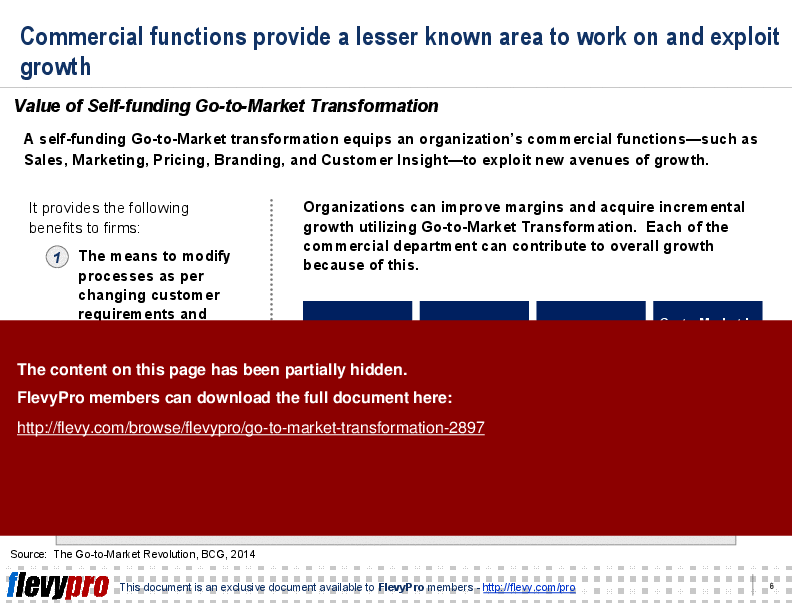
In these tough times, leading organizations are revolutionizing their commercial functions—including Sales, Marketing, Pricing, Branding, and Customer Insights—to drive revenue. This presentation discusses the role of self-funding Go-to-Market Transformation in equipping an organization's commercial functions to exploit growth.
Specific topics covered in the presentation include:
1. Merits of Go-to-Market Transformation
2. Go-to-Market Transformation Implementation
3. Success Factors Associated with Transformation
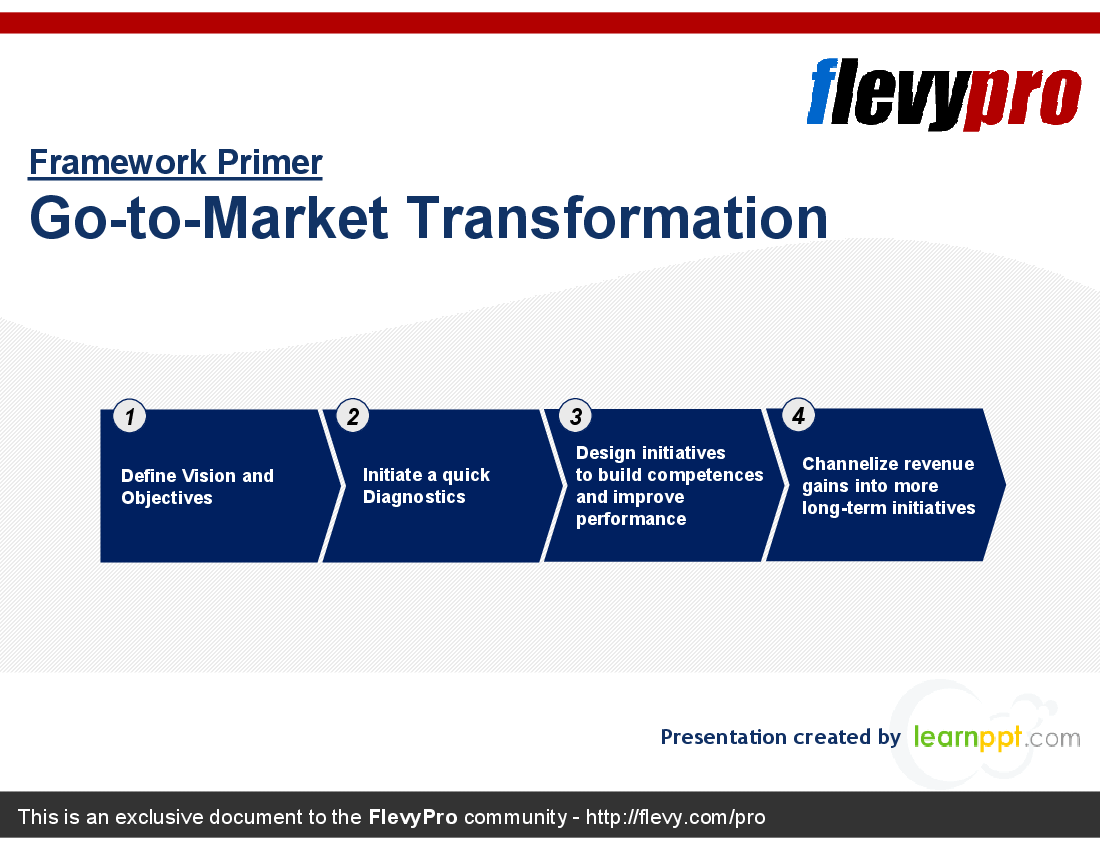
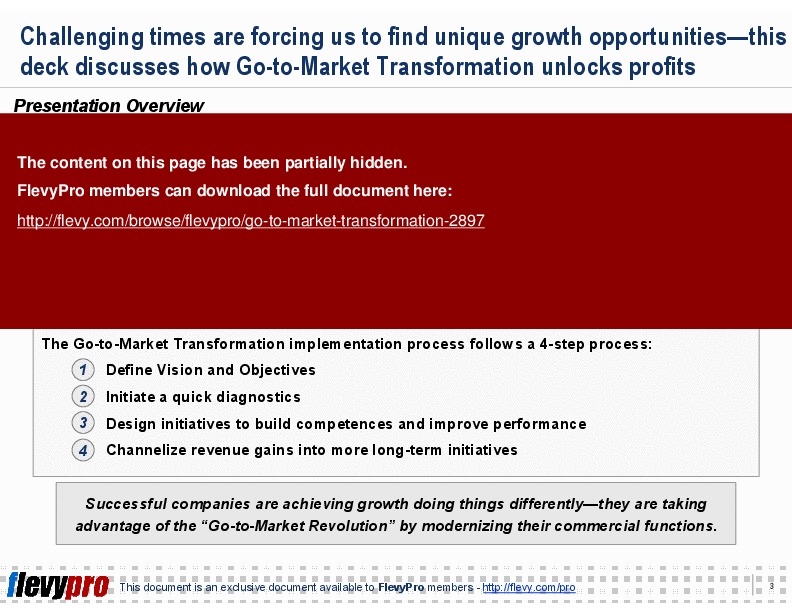
The Go-to-Market Transformation implementation process follows a 4-step process:
1. Define Vision and Objectives
2. Initiate a quick diagnostics
3. Design initiatives to build competences and improve performance
4. Channelize revenue gains into more long-term initiatives
This PPT delves into the strategic importance of modernizing commercial functions to stay competitive. It highlights how progressive organizations are leveraging technology and customer-centric initiatives to drive sustainable growth. The Go-to-Market Transformation approach is not just about cost-cutting, but about fundamentally rethinking how to engage with customers and optimize sales, marketing, pricing, and branding functions.
The presentation provides a clear, actionable 4-step process for implementing Go-to-Market Transformation. It includes defining vision and objectives, initiating quick diagnostics, designing initiatives to build competencies, and channeling revenue gains into long-term initiatives. This structured approach ensures that organizations can systematically improve their commercial capabilities and achieve significant revenue growth.
Executives will find value in understanding the success factors associated with Go-to-Market Transformation. The document emphasizes the need for leadership commitment, continuous improvement, and the strategic alignment of commercial functions. By following the outlined steps and principles, organizations can unlock new growth opportunities and gain a competitive edge in the market.
Got a question about this document? Email us at flevypro@flevy.com.
Executive Summary
The Go-to-Market Transformation PPT provides a strategic framework designed to enhance commercial functions such as Sales, Marketing, Pricing, Branding, and Customer Insights. This presentation outlines a 4-step approach to revamp these areas, enabling organizations to unlock new growth opportunities and drive profitability. By implementing this framework, corporate executives and consultants can effectively diagnose current capabilities, design targeted initiatives, and channel revenue gains into sustainable long-term strategies.
Who This Is For and When to Use
• Corporate executives seeking to enhance commercial performance
• Integration leaders focused on aligning sales and marketing strategies
• Consultants advising organizations on growth and transformation
• Business development teams aiming to optimize pricing and branding efforts
Best-fit moments to use this deck:
• During strategic planning sessions focused on revenue growth
• When initiating a Go-to-Market Transformation project
• In workshops aimed at aligning sales and marketing functions
Learning Objectives
• Define the vision and objectives for Go-to-Market Transformation
• Conduct a quick diagnostic of current commercial capabilities
• Design initiatives to build competencies and improve performance
• Identify revenue channels for long-term growth
• Implement a structured approach to commercial function optimization
• Establish metrics for tracking transformation success
Table of Contents
• Overview (page 3)
• Value and Merits (page 6)
• Go-to-Market Transformation Approach (page 9)
Primary Topics Covered
• Overview of Go-to-Market Transformation - This section introduces the concept and importance of transforming commercial functions to drive revenue growth.
• Value of Self-funding Transformation - Highlights how a self-funding approach can enhance commercial capabilities and lead to significant growth.
• Implementation Steps - Details the 4-step process for executing Go-to-Market Transformation effectively.
• Success Factors - Discusses the essential elements required for successful transformation initiatives.
Deliverables, Templates, and Tools
• Diagnostic assessment template for evaluating current commercial capabilities
• Initiative design framework for building competencies
• Revenue tracking model to monitor gains from transformation efforts
• Action plan template for channeling short-term gains into long-term strategies
Slide Highlights
• Overview of the Go-to-Market Transformation framework
• Key metrics demonstrating the potential revenue growth from transformation
• Detailed steps for implementing the transformation process
• Success factors that contribute to effective execution
Potential Workshop Agenda
Introduction to Go-to-Market Transformation (30 minutes)
• Overview of the framework and its importance
• Discussion on current challenges in commercial functions
Diagnostic Assessment Session (60 minutes)
• Conduct a quick diagnostic of existing capabilities
• Identify areas for improvement and potential initiatives
Action Planning Workshop (90 minutes)
• Design initiatives to build competencies
• Develop an action plan for channeling revenue gains
Customization Guidance
• Tailor the diagnostic assessment to specific industry needs
• Adjust the initiative design framework based on organizational goals
• Incorporate company-specific metrics for tracking success
Secondary Topics Covered
• Challenges in implementing Go-to-Market Transformation
• Case studies of successful transformations in various industries
• Insights on leveraging technology for commercial optimization
Topic FAQ
Document FAQ
These are questions addressed within this presentation.
What is Go-to-Market Transformation?
Go-to-Market Transformation is a strategic approach aimed at revamping commercial functions to drive revenue growth and enhance profitability.
How can this framework help my organization?
This framework provides a structured methodology to identify gaps in current capabilities and design targeted initiatives for improvement.
What are the key steps in the transformation process?
The process involves defining vision and objectives, conducting diagnostics, designing initiatives, and channeling revenue gains into long-term strategies.
What metrics should be used to track success?
Metrics should include revenue growth, efficiency gains, and improvements in customer engagement and satisfaction.
Is this framework applicable to all industries?
Yes, the principles of Go-to-Market Transformation can be adapted to various industries, including retail, manufacturing, and services.
How can I customize the presentation for my team?
You can tailor the diagnostic assessments and initiative designs to align with your organization's specific goals and challenges.
What resources are needed for implementation?
Successful implementation requires commitment from leadership, skilled personnel, and appropriate technological tools.
Can this transformation be self-funded?
Yes, the framework emphasizes leveraging short-term gains to fund broader transformation initiatives.
Glossary
• Go-to-Market Transformation - A strategic overhaul of commercial functions to enhance revenue generation.
• Self-funding - Utilizing short-term gains from transformation to finance further initiatives.
• Diagnostics - A quick assessment of current capabilities and market positioning.
• Competencies - Skills and abilities that enhance organizational performance.
• Revenue Gains - Increases in income resulting from improved commercial strategies.
• Long-term Initiatives - Strategic programs aimed at sustaining growth over time.
• Success Factors - Essential elements that contribute to the effective execution of transformation initiatives.
• Commercial Functions - Key areas such as Sales, Marketing, Pricing, and Branding that drive revenue.
• Customer Insights - Understanding customer behavior and preferences to inform strategies.
• Action Plan - A structured approach to implementing initiatives and tracking progress.
• Metrics - Quantifiable measures used to assess performance and success.
• Industry Adaptation - Tailoring strategies to fit the specific context of different sectors.
Source: Best Practices in Business Transformation, Go-to-Market PowerPoint Slides: Go-to-Market Transformation PowerPoint (PPT) Presentation Slide Deck, LearnPPT Consulting
Sorry, this document is currently only available to FlevyPro subscribers.
You can join FlevyPro for only $39/month.
Or, you can subscribe to the Business Transformation Stream, our curated collection of Business Transformation frameworks.
Did you need more documents?
Consider a FlevyPro subscription from $39/month. View plans here.
|
Download our FREE Strategy & Transformation Framework Templates
Download our free compilation of 50+ Strategy & Transformation slides and templates. Frameworks include McKinsey 7-S, Balanced Scorecard, Disruptive Innovation, BCG Curve, and many more. |










