
This framework is developed by a team of former McKinsey and Big 4 consultants. The presentation follows the headline-body-bumper slide format used by global consulting firms.
Explore effective downturn management strategies crafted by ex-McKinsey and Big 4 consultants. Navigate economic turbulence with structured phases and actionable templates. Downturn Management and Transformation is a 27-slide PPT PowerPoint presentation slide deck (PPTX) available for immediate download upon purchase.
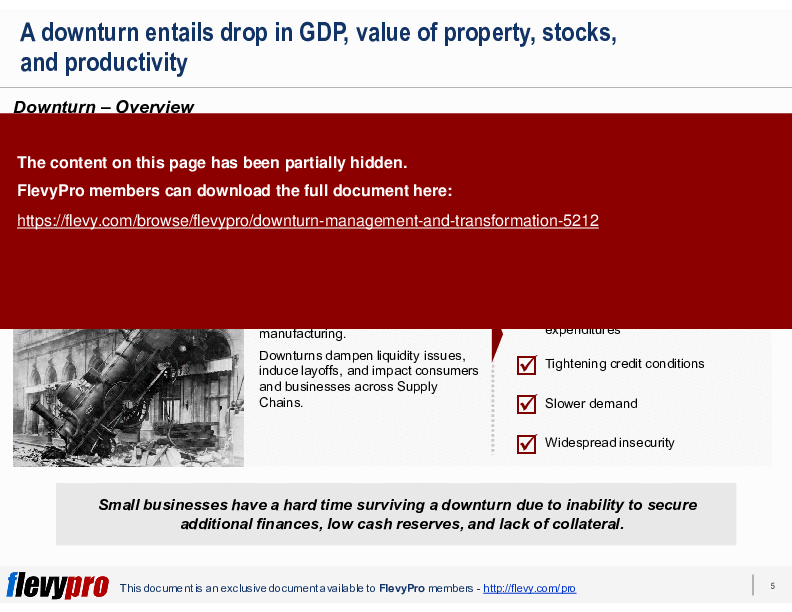
A downturn is described as a contracted business cycle with a general decline in economic activity. During the phenomenon, there is significant decline in economic activity across markets with subsequent drop in spending, GDP, real income, employment, and manufacturing.
Downturns cause inflation (rise of commodity prices), decline in sales revenues and profits, and cutbacks on R&D and other crucial expenditures. Downturns challenge businesses because of tightening credit conditions, slower demand, and general insecurity.
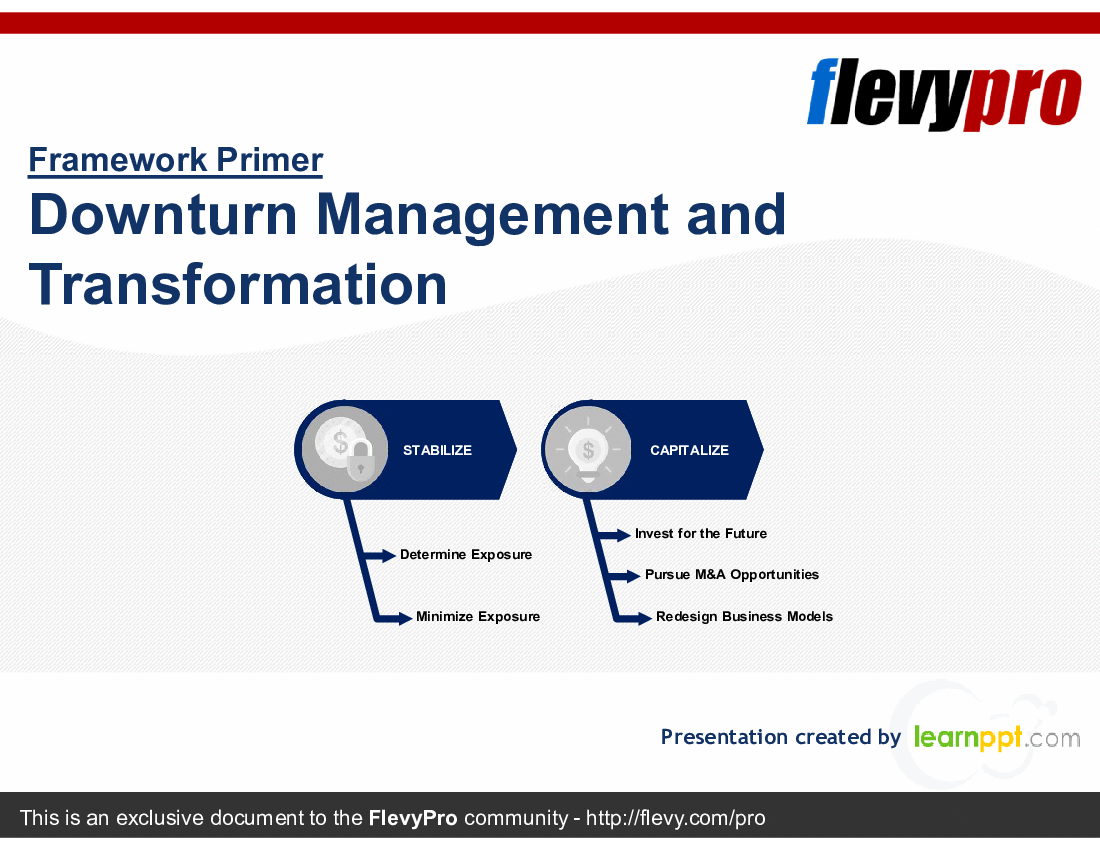
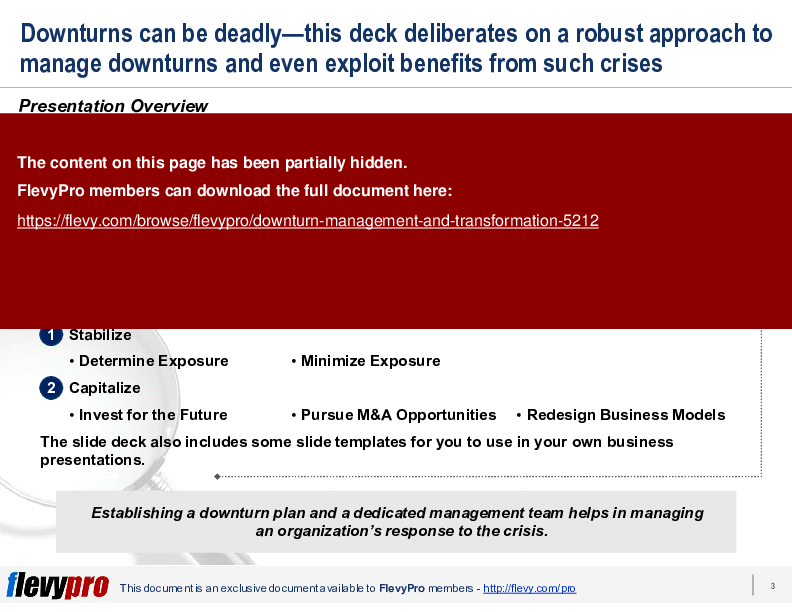
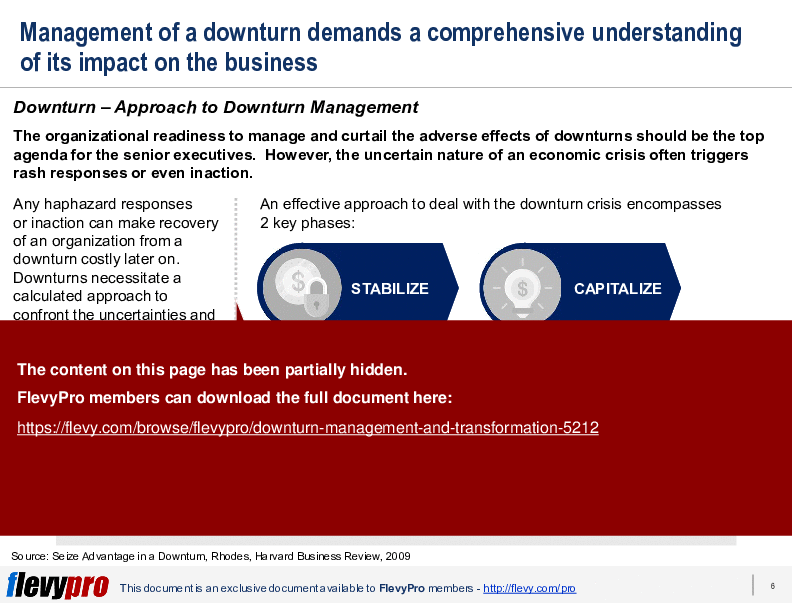
This presentation provides a detailed account of an effective approach to manage Downturns, its key phases and steps, and fundamentals actions essential to emerge out of the crisis successful. The are 2 key phases, each comprised of several key steps:
Phase 1. Stabilize
Phase 2. Capitalize
The slide deck also includes some slide templates for you to use in your own business presentations.
This PPT delves into the intricacies of downturn management, providing a structured approach to navigate economic turbulence. It emphasizes the importance of determining and minimizing exposure during the stabilization phase. Executives are guided through scenario analysis, quantifying impacts, and competitive analysis to make informed decisions. The document also highlights the necessity of maintaining financial stability and protecting existing business operations to mitigate risks.
Capitalizing on downturns involves strategic investments, pursuing M&A opportunities, and innovating business models. The presentation outlines how to identify and leverage key opportunities, even in challenging times. It underscores the significance of investing in future growth and redesigning business models to adapt to changing market conditions. This proactive approach ensures that businesses not only survive, but thrive during economic downturns.
The slide deck includes practical templates to aid in the implementation of these strategies. These templates are designed to help executives communicate their plans effectively and ensure organizational alignment. By following the structured approach outlined in this presentation, businesses can transform challenges into opportunities and emerge stronger from economic downturns.
This PPT slide outlines a strategic framework for managing economic downturns, consisting of 2 phases: Stabilize and Capitalize. The Stabilize phase focuses on assessing vulnerabilities and minimizing exposure to risks to create a stable environment. The Capitalize phase encourages organizations to invest for the future, pursue merger and acquisition opportunities, and redesign business models to adapt to new economic conditions. This proactive approach aims to unlock growth avenues during challenging times. Recessions necessitate a reevaluation of strategies, requiring organizations to adjust their approaches to emerge stronger post-downturn. Understanding these phases enables leaders to formulate a robust response to immediate challenges while positioning for future success.
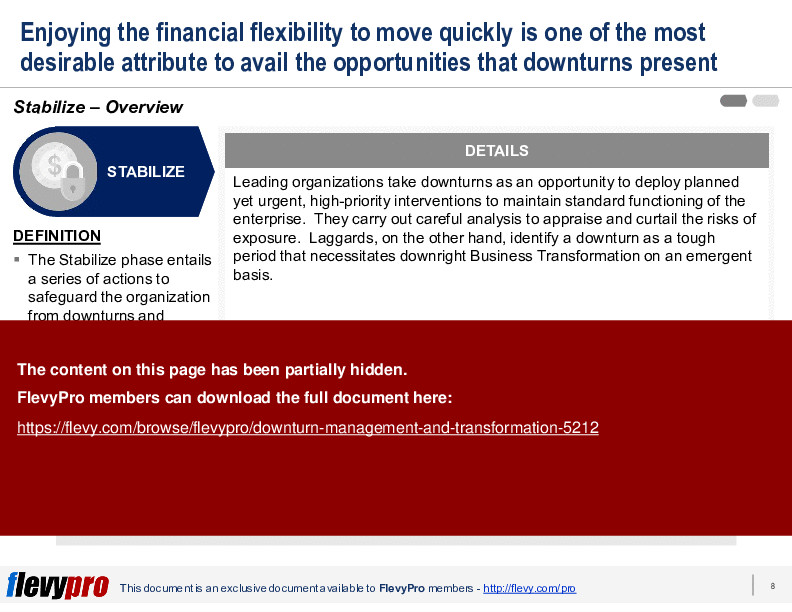
The "Stabilize" phase of downturn management involves actions to protect organizations from economic downturns while ensuring liquidity. Proactive organizations view downturns as opportunities, implementing strategic interventions to maintain operational standards and conducting thorough risk assessments. Key steps include "Determine Exposure" and "Minimize Exposure," which focus on identifying vulnerabilities and reducing risks. Effective management during downturns can lead to improved outcomes once conditions stabilize, highlighting the importance of preparedness and strategic foresight. This phase encourages executives to adopt agility and proactive planning to enhance resilience and performance during economic challenges.
This PPT slide outlines strategies for organizations to stabilize during a financial crisis, focusing on 3 key areas: Protect Financials, Protect Existing Business, and Maximize Valuation.
In the "Protect Financials" section, organizations should secure financial health through cost-cutting measures, enhancing productivity, and retaining customers. Rationalizing structures, eliminating non-value-adding activities, reassessing supply chain processes, and exploring credit options for reliable customers are critical. Revisiting pricing strategies and launching lower-priced product versions help maintain market presence, while strict capital allocation and disposing of inefficient assets are advised.
The "Protect Existing Business" segment emphasizes evaluating and creating new revenue streams while integrating key functions.
Finally, "Maximize Valuation" includes developing a robust investor communication strategy, evaluating investor preferences, and revisiting dividend policies, noting that share buybacks can demonstrate financial responsibility.
This PPT slide outlines a strategic approach for businesses to navigate economic downturns, focusing on the "Capitalize" phase after stabilizing the crisis. This phase emphasizes leveraging current conditions for growth. Key steps include conducting thorough scenario analyses to assess the crisis's impact on stakeholders, investing for the future, pursuing mergers and acquisitions, and redesigning business models. These actions promote a proactive response, encouraging companies to seek growth avenues rather than merely reacting to challenges. Effective communication with employees and management about potential opportunities and threats is essential for a cohesive crisis management strategy.
This PPT slide outlines the initial step in the "Stabilize" phase of managing financial downturns, focusing on a structured risk assessment at organizational and unit levels. Key actions include conducting scenario analysis, quantifying impact, and analyzing competition. Scenario analysis explores potential situations affecting the organization, identifying risks and communicating necessary interventions to stakeholders. Quantifying impact measures the effects of identified risks, essential for prioritizing responses and resource allocation. Analyzing competition assesses competitor responses to downturn conditions, providing insights for strategic decisions. This methodical approach prepares organizations to navigate financial uncertainties effectively.
Source: Best Practices in Business Transformation, Downturn PowerPoint Slides: Downturn Management and Transformation PowerPoint (PPTX) Presentation Slide Deck, LearnPPT Consulting
This framework is developed by a team of former McKinsey and Big 4 consultants. The presentation follows the headline-body-bumper slide format used by global consulting firms.
For $10.00 more, you can download this document plus 2 more FlevyPro documents. That's just $13 each.
ABOUT FLEVYPRO
This document is part of the FlevyPro Library, a curated knowledge base of documents for our FlevyPro subscribers.
FlevyPro is a subscription service for on-demand business frameworks and analysis tools. FlevyPro subscribers receive access to an exclusive library of curated business documents—business framework primers, presentation templates, Lean Six Sigma tools, and more—among other exclusive benefits.
The average daily rate of a McKinsey consultant is $6,625 (not including expenses). The average price of a Flevy document is $65.
Trusted by over 10,000+ Client Organizations
Since 2012, we have provided business templates to over 10,000 businesses and organizations of all sizes, from startups and small businesses to the Fortune 100, in over 130 countries.
"As a small business owner, the resource material available from FlevyPro has proven to be invaluable. The ability to search for material on demand based our project events and client requirements was great for me and proved very beneficial to my clients. Importantly, being able to easily edit and tailor
the material for specific purposes helped us to make presentations, knowledge sharing, and toolkit development, which formed part of the overall program collateral. While FlevyPro contains resource material that any consultancy, project or delivery firm must have, it is an essential part of a small firm or independent consultant's toolbox.
"
– Michael Duff, Managing Director at Change Strategy (UK)
"I have used FlevyPro for several business applications. It is a great complement to working with expensive consultants. The quality and effectiveness of the tools are of the highest standards."
– Moritz Bernhoerster, Global Sourcing Director at Fortune 500
"Flevy is now a part of my business routine. I visit Flevy at least 3 times each month.
Flevy has become my preferred learning source, because what it provides is practical, current, and useful in this era where the business world is being rewritten.

many challenges and there is the need to make the right decisions in a short time, with so much scattered information, we are fortunate to have Flevy. Flevy investigates, selects, and puts at our disposal the best of the best to help us be successful in our work.
"
– Omar Hernán Montes Parra, CEO at Quantum SFE
"[Flevy] produces some great work that has been/continues to be of immense help not only to myself, but as I seek to provide professional services to my clients, it gives me a large "tool box" of resources that are critical to provide them with the quality of service and outcomes they are expecting."
– Royston Knowles, Executive with 50+ Years of Board Level Experience
"As an Independent Management Consultant, I find Flevy to add great value as a source of best practices, templates and information on new trends. Flevy has matured and the quality and quantity of the library is excellent. Lastly the price charged is reasonable, creating a win-win value for
the customer, Flevy and the various authors. This is truly a service that benefits the consulting industry and associated clients. Thanks for providing this service.
"
– Jim Schoen, Principal at FRC Group
"Flevy.com has proven to be an invaluable resource library to our Independent Management Consultancy, supporting and enabling us to better serve our enterprise clients.
The value derived from our [FlevyPro] subscription in terms of the business it has helped to gain far exceeds the investment made, making a subscription a no-brainer for any growing consultancy – or in-house strategy team."
– Dean Carlton, Chief Transformation Officer, Global Village Transformations Pty Ltd.
"FlevyPro provides business frameworks from many of the global giants in management consulting that allow you to provide best in class solutions for your clients."
– David Harris, Managing Director at Futures Strategy
"Last Sunday morning, I was diligently working on an important presentation for a client and found myself in need of additional content and suitable templates for various types of graphics. Flevy.com proved to be a treasure trove for both content and design at a reasonable price, considering the time I
saved. I encountered a download issue during the ordering process. However, a quick email to Flevy's support team, even on a Sunday (!!!), resulted in assistance within less than an hour, allowing me to download the content I needed. Fantastic job, Flevy! I give 5 stars for both content/price and customer service. Thank you!
"
– M. E., Chief Commercial Officer, International Logistics Service Provider
Download our free compilation of 50+ Strategy & Transformation slides and templates. Frameworks include McKinsey 7-S, Balanced Scorecard, Disruptive Innovation, BCG Curve, and many more.