 Click main image to view in full screen.
DICE Hard Change Factors – PowerPoint PPT Template
PowerPoint (PPT) 12 Slides FlevyPro Document


CHANGE MANAGEMENT PPT TEMPLATE DESCRIPTION
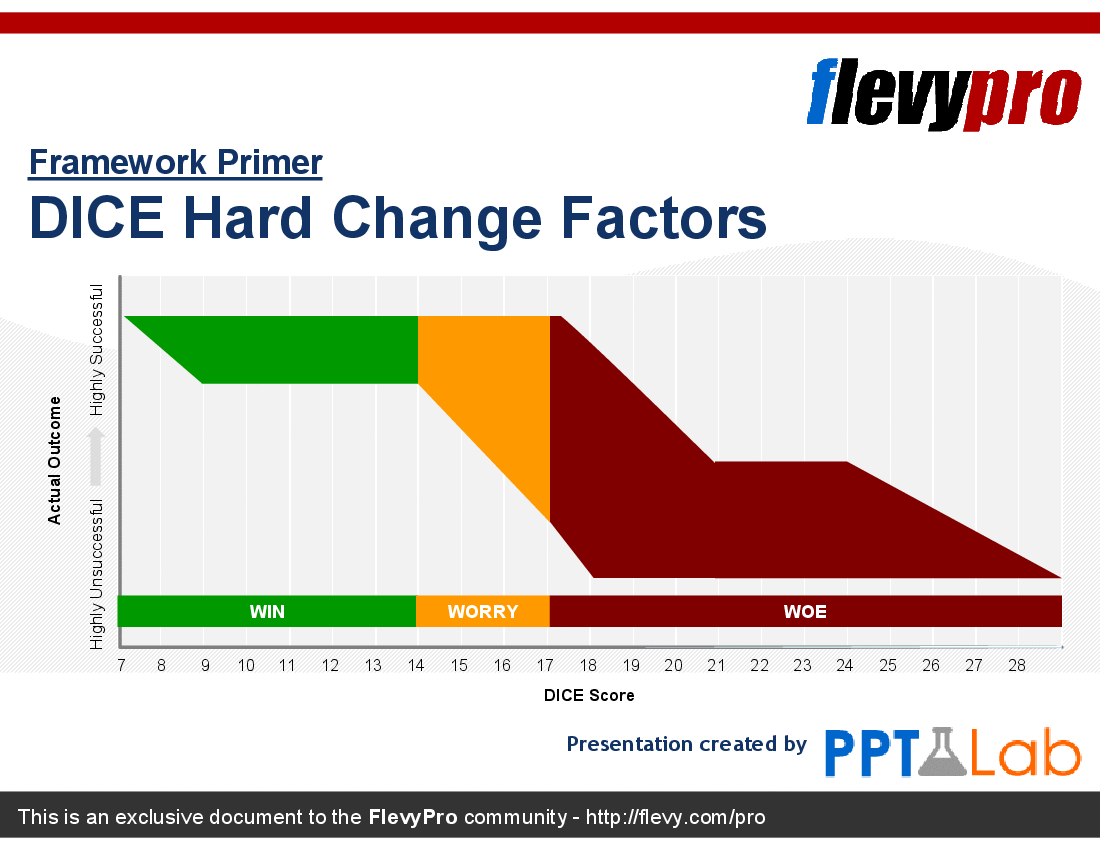
The DICE Hard Change Factors framework is a Change Management methodology developed by Perry Keenan, Kathleen Conlon, and Alan Jackson of the Boston Consulting Group. DICE is used to calculate how well a company is implementing or how well it will be able to implement its change initiatives by evaluating 4 “hard” change factors.
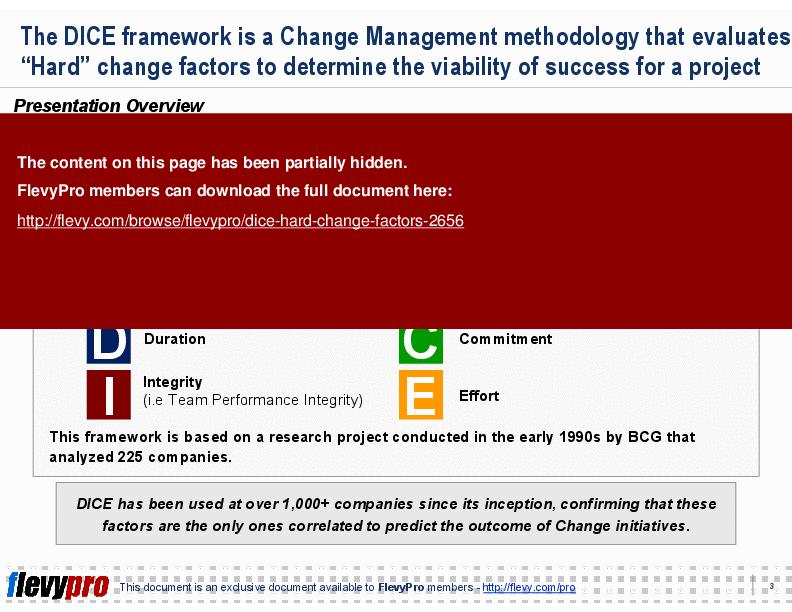
Most change professionals are aware of the "soft" factors that influence the success of a change program namely, Vision, Leadership, Organizational Culture, Employee Motivation, Top-down or Participatory Approach. There are also several "hard" factors, which are often not considered. Specifically, there are 4 such hard factors, known as the DICE factors:
D – Duration
I – (Team Performance) Integrity
C – Commitment
E – Effort
This framework is based on a research project conducted in the early 1990s by BCG that analyzed 225 companies. DICE has been used at over 1,000+ companies since its inception, confirming that these factors are the only ones correlated to predict the outcome of Change initiatives.
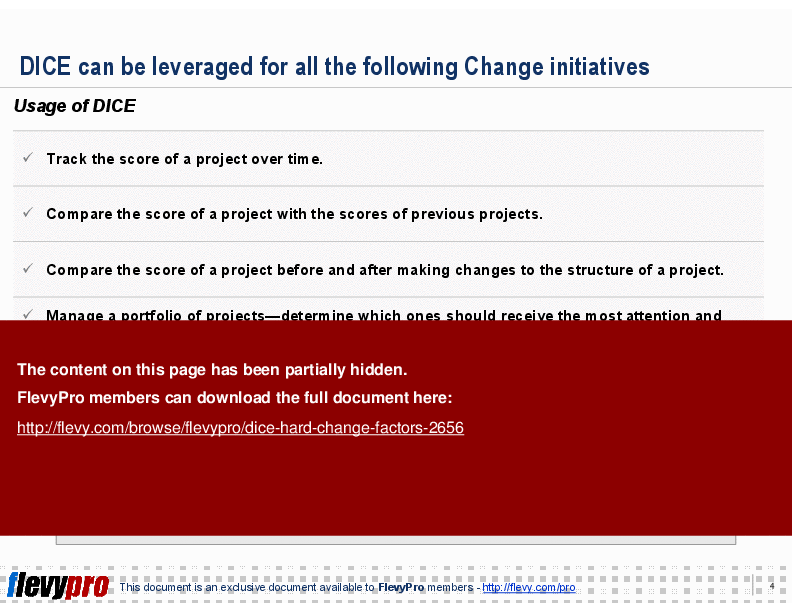
The DICE framework offers a robust toolset for tracking and comparing project scores over time, allowing executives to make data-driven decisions. It enables organizations to manage a portfolio of projects effectively, determining which ones require the most attention and resources. This methodology is essential for ensuring that change initiatives are aligned with strategic objectives and are executed with precision.
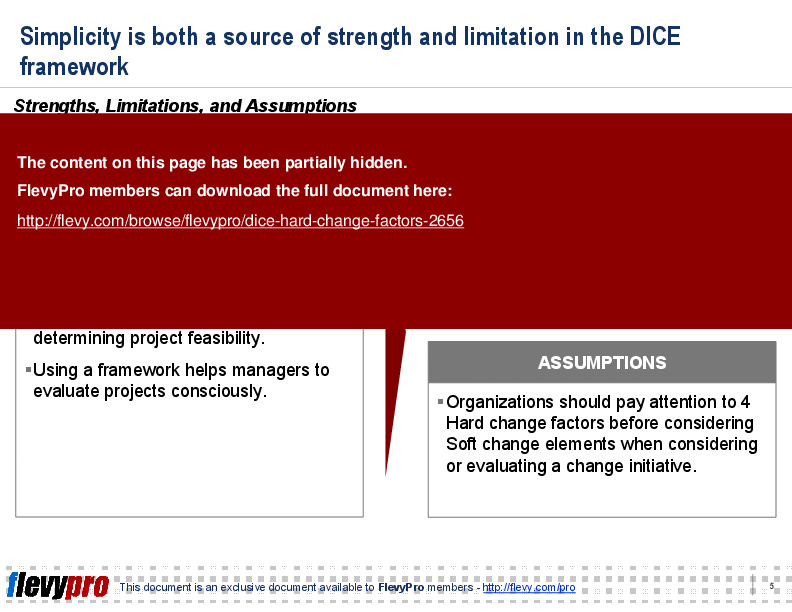
Simplicity is a double-edged sword in the DICE framework, serving as both a strength and limitation. While it provides a clear and straightforward approach to evaluating projects, it also requires careful consideration of its assumptions. Organizations must prioritize the four hard change factors before delving into softer elements, ensuring a comprehensive evaluation of change initiatives. This framework is indispensable for leaders aiming to navigate the complexities of change management with confidence.
Got a question about this document? Email us at flevypro@flevy.com.
TOPIC FAQ
What are the DICE hard change factors and what do they measure?
The DICE hard change factors are 4 discrete dimensions used to evaluate implementation prospects: D = Duration, I = (Team Performance) Integrity, C = Commitment, and E = Effort. Together they measure how well an organization is implementing or will be able to implement change initiatives and are known collectively as the 4 factors.How was the DICE framework developed and validated?
DICE was developed by Perry Keenan, Kathleen Conlon, and Alan Jackson at the Boston Consulting Group from a research project in the early 1990s that analyzed results from 225 companies; the framework has since been applied at over 1,000+ companies, with those 225 companies analyzed.How can organizations use DICE to manage a portfolio of change projects?
Organizations can score individual initiatives on the 4 DICE factors and then track and compare those scores over time to identify which projects need the most attention or resources; the approach supports portfolio-level prioritization and data-driven decisions using tracking and comparing project scores over time.What limitations should I be aware of when using only DICE for change assessment?
DICE’s simplicity can obscure context and assumptions, so practitioners should not ignore soft factors such as Vision, Leadership, Organizational Culture, Employee Motivation, and participation approach; the framework requires prioritizing the 4 hard factors before integrating soft elements like Vision and Leadership.What should I look for when choosing a DICE template or slide deck?
Choose materials that explicitly present the 4 DICE factors and provide a means to score, track, and compare initiatives over time and to support portfolio decisions; for example, Flevy’s DICE Hard Change Factors is a 12-slide PPT that focuses on the 4 factors and score-tracking.Can small teams apply DICE quickly during tight timelines or governance meetings?
The framework’s clear and straightforward four-factor scoring approach makes it suitable for rapid assessment and discussion in governance meetings, though teams must still surface assumptions and context when assigning scores to ensure valid comparisons using the four-factor scoring approach.I just completed a merger and need to prioritize integration work — how could DICE help?
DICE can be used to score integration initiatives on Duration, Team Integrity, Commitment, and Effort to highlight high-risk programs needing immediate resources or leadership attention; the method is grounded in BCG research that analyzed 225 companies.How does DICE relate to assessments of culture and leadership?
DICE concentrates on 4 hard, implementation-related factors correlated with change outcomes and is intended to be used alongside assessments of soft factors such as Leadership and Organizational Culture rather than as a replacement for them, focusing on the 4 hard factors.Source: Best Practices in Change Management, Bain PowerPoint PowerPoint Slides: DICE Hard Change Factors PowerPoint (PPT) Presentation Slide Deck, PPT Lab
Did you need more documents?
Consider a FlevyPro subscription from $39/month. View plans here.
For $10.00 more, you can download this document plus 2 more FlevyPro documents. That's just $13 each.




























