
This framework is developed by a team of former McKinsey and Big 4 consultants. The presentation follows the headline-body-bumper slide format used by global consulting firms.
Editor Summary
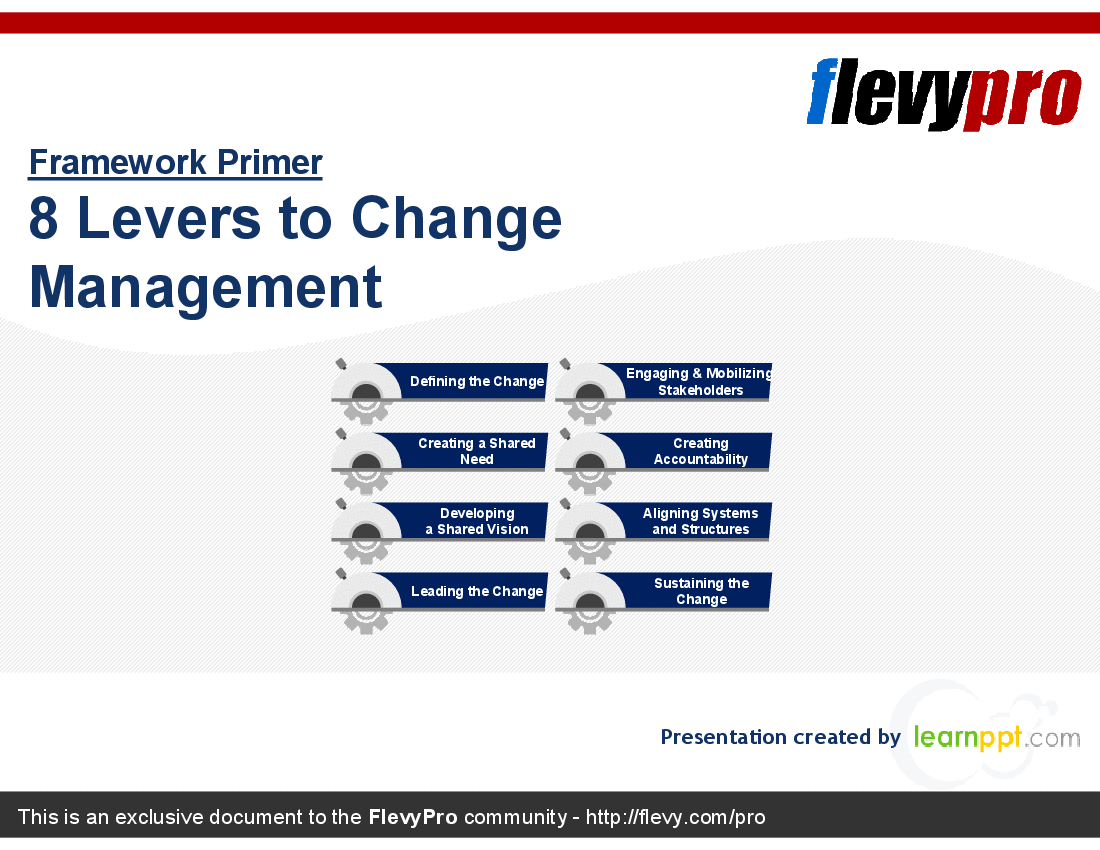
24-slide PowerPoint titled "8 Levers to Change Management PPT" by LearnPPT Consulting presents an 8-lever framework for the people side of organizational transformation: Defining the Change; Creating a Shared Need; Developing a Shared Vision; Leading the Change; Engaging and Mobilizing Stakeholders; Creating Accountability; Aligning Systems and Structures; and Sustaining the Change.
Read moreIncludes slide templates for presentation use. Target users include senior leaders, HR change leads, transformation managers, and consultants. Sold as a digital download on Flevy.
Use this deck when an organization must secure workforce adoption of new mindsets, processes, policies, or behaviors during a transformation or major rollout. Typical users and activities include:
HR change leads designing communications and programs to create a shared need among employees.
Transformation managers mapping the future state and developing a shared vision for the organization.
Senior leaders sponsoring the program and establishing accountability and governance mechanisms.
Internal communications teams engaging and mobilizing stakeholders with presentation-ready templates.
The 8-lever structure breaks the people side into actionable components from defining the change through sustaining it, reflecting a staged consulting approach to change.
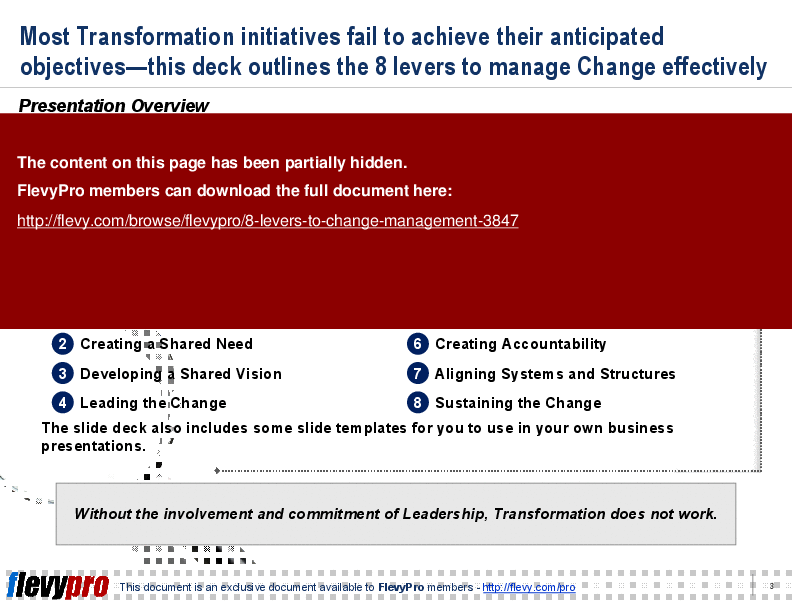
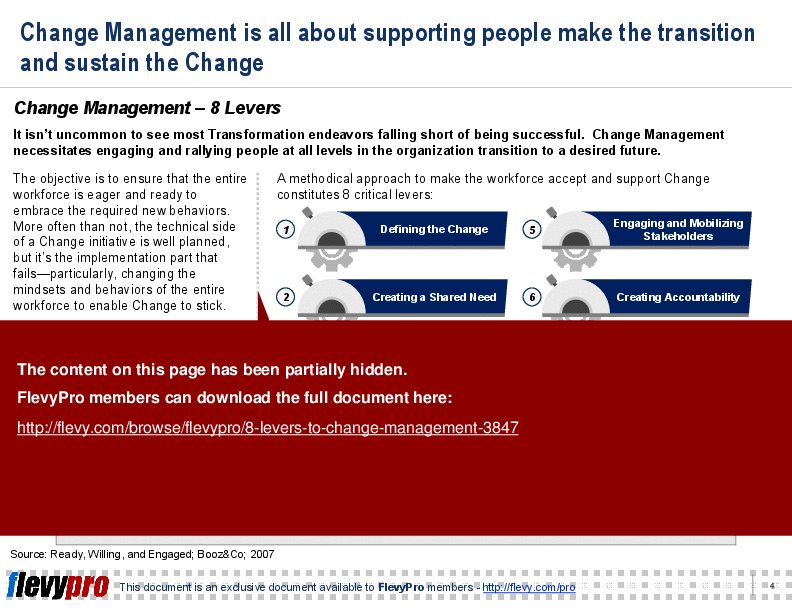
Change Management necessitates engaging and rallying people at all levels in the organization transition to a desired future. It is critical to ensure that the entire workforce is eager and ready to embrace the required new behaviors. More often than not, the technical side of a Change initiative is well planned, but it's the implementation part that fails—particularly, changing the mindsets and behaviors of the entire workforce to enable Change to stick.
Change Management needs to focus on the "people side" of Transformation, by assisting people to incorporate new mindsets, processes, policies, practices, and behaviors. This deck highlights the 8 levers that are critical to make the workforce accept and support Change:
1. Defining the Change
2. Creating a Shared Need
3. Developing a Shared Vision
4. Leading the Change
5. Engaging and Mobilizing Stakeholders
6. Creating Accountability
7. Aligning Systems and Structures
8. Sustaining the Change
The slide deck also includes some slide templates for you to use in your own business presentations.
The 8 Levers to Change Management PPT provides a comprehensive framework for driving organizational transformation. It emphasizes the importance of a methodical approach to ensure the workforce is aligned with the change objectives. Each lever is designed to address specific areas critical to the success of the change initiative, from defining the change to sustaining it over time. This deck is an essential tool for leaders who need to navigate the complexities of change management effectively.
The presentation also includes actionable insights and practical steps for each lever, ensuring that leaders can implement these strategies in their organizations. The templates provided are designed to help you communicate the change process clearly and effectively to all stakeholders. This resource is invaluable for any organization looking to achieve lasting change and improve overall performance.
What are the core components of a people-focused change management framework?
A people-focused framework organizes work to shift mindsets and behaviors across the workforce. The framework outlined in the 8 Levers to Change Management PPT breaks this into eight components: Defining the Change; Creating a Shared Need; Developing a Shared Vision; Leading the Change; Engaging and Mobilizing Stakeholders; Creating Accountability; Aligning Systems and Structures; Sustaining the Change, totaling eight levers.
Why do many change initiatives fail during implementation rather than planning?
Many initiatives have technically sound plans, but fail to change employee mindsets, behaviors, and daily practices required for adoption. Implementation gaps typically stem from insufficient stakeholder mobilization, weak accountability, or misaligned systems rather than the technical design, often centering on changing mindsets and behaviors across the workforce.
What should senior leaders prioritize when sponsoring a transformation?
Senior leaders should visibly lead the change, articulate and model the shared vision, set clear accountability, and ensure systems and structures support new behaviors. Emphasis on leadership presence and governance helps translate strategy into day-to-day adoption consistent with the "Leading the Change" lever.
What should I look for when selecting a change management slide deck for executive briefings?
Evaluate whether the deck addresses both the people and technical sides, lists specific change components (e.g., vision, stakeholder engagement, accountability), and includes ready-to-use presentation templates for stakeholders. The 8 Levers to Change Management PPT provides an 8-lever framework plus slide templates and is 24 slides.
How can I judge the value of change management templates relative to their cost?
Assess whether templates reduce prep time, support stakeholder mobilization, and map to core activities like visioning, accountability, and systems alignment. Value derives from reusable slides that align to the initiative’s needs; for example, the 8 Levers to Change Management PPT includes slide templates across its 8 levers and 24 slides.
I need to align HR policies and operating practices after a reorganization — which lever applies?
Aligning HR policies and operating practices falls under the "Aligning Systems and Structures" lever, which focuses on ensuring processes, policies, and org structures reinforce the desired behaviors and new ways of working as outlined in the 8 Levers to Change Management PPT.
How should I approach creating a shared vision that gets employee buy-in?
Developing a shared vision requires involving leaders and key stakeholders, communicating the future state clearly, and linking the vision to the shared need and practical behaviors expected. The approach maps to the "Developing a Shared Vision" lever and can be supported by presentation templates in the 8 Levers to Change Management PPT.
What practices help sustain change after initial adoption?
Sustaining change requires ongoing accountability mechanisms, reinforcement through systems and structures, and continued stakeholder engagement to keep behaviors embedded. The framework emphasizes creating accountability and aligning systems as ongoing practices tied to the "Sustaining the Change" lever.
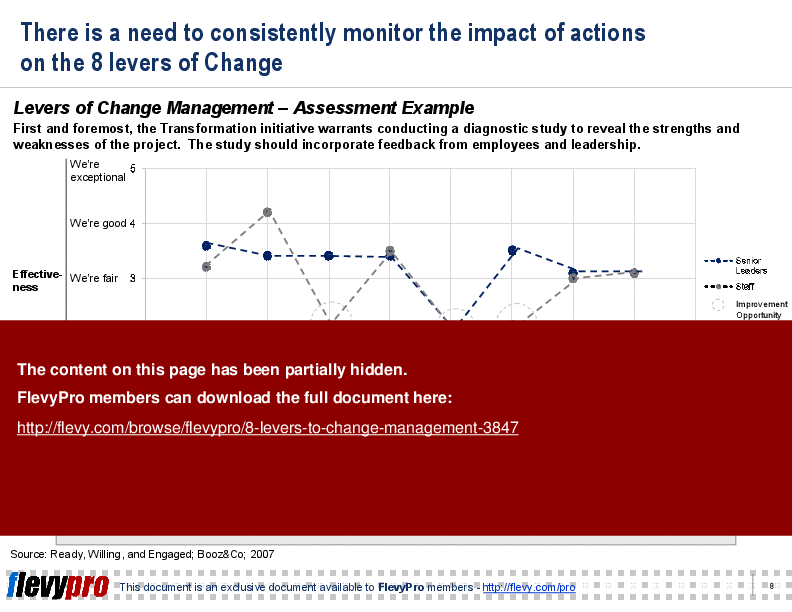
This PPT slide presents a framework for assessing change management effectiveness through eight levers: Defining the change, Creating a shared need, Developing a shared vision, Leading the change, Engaging and mobilizing stakeholders, Creating accountability, Aligning systems and structures, and Sustaining the change. A diagnostic study identifies strengths and weaknesses in transformation projects, incorporating feedback from employees and leadership. Effectiveness is measured on a vertical axis from "We're exceptional" to "This is a Roadblock," while the horizontal axis plots the eight levers. Gaps in understanding or execution between senior leaders and staff are revealed, with "Improvement Opportunity" markers indicating areas needing focus. Regular diagnostic exercises support continuous improvement, ensuring transformation initiatives remain agile and responsive.
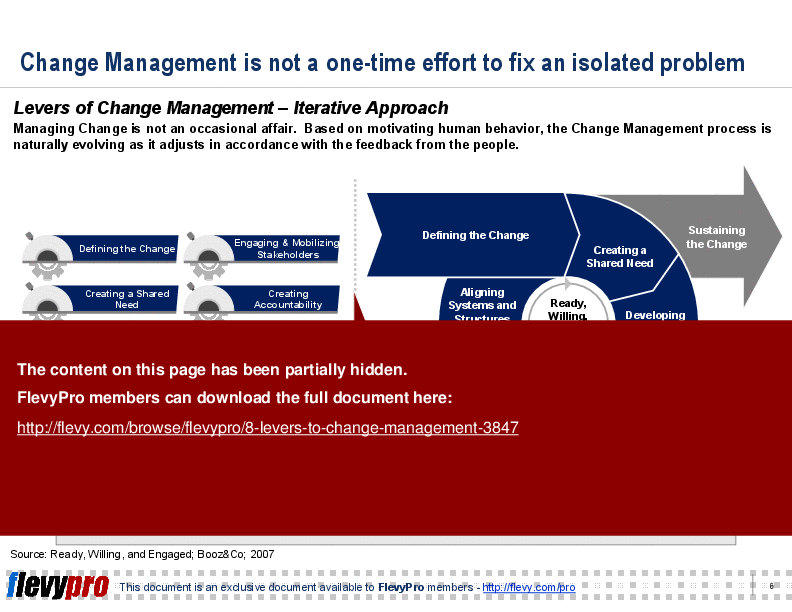
This PPT slide presents a structured framework for change management, emphasizing its iterative nature rather than a one-time event. The circular model illustrates eight key levers: Defining the Change, Creating a Shared Need, Developing a Shared Vision, Engaging & Mobilizing Stakeholders, Creating Accountability, Aligning Systems and Structures, Leading the Change, and Sustaining the Change. These levers foster a culture that is "Ready, Willing, and Engaged," highlighting the importance of employee involvement and buy-in. The linear listing of levers suggests a sequential process, while the circular model indicates their interconnectedness. Engaging stakeholders is crucial for effective communication and collaboration throughout the change process, enabling leaders to implement and sustain organizational transformation.
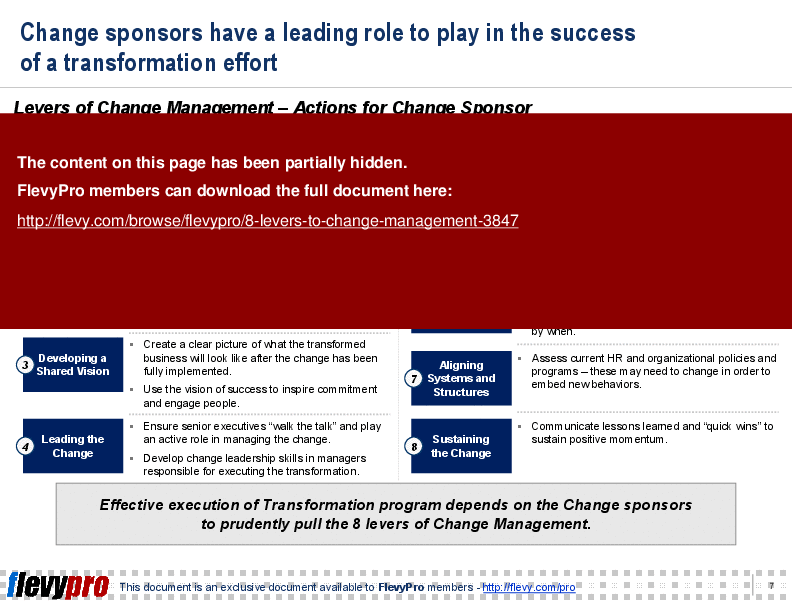
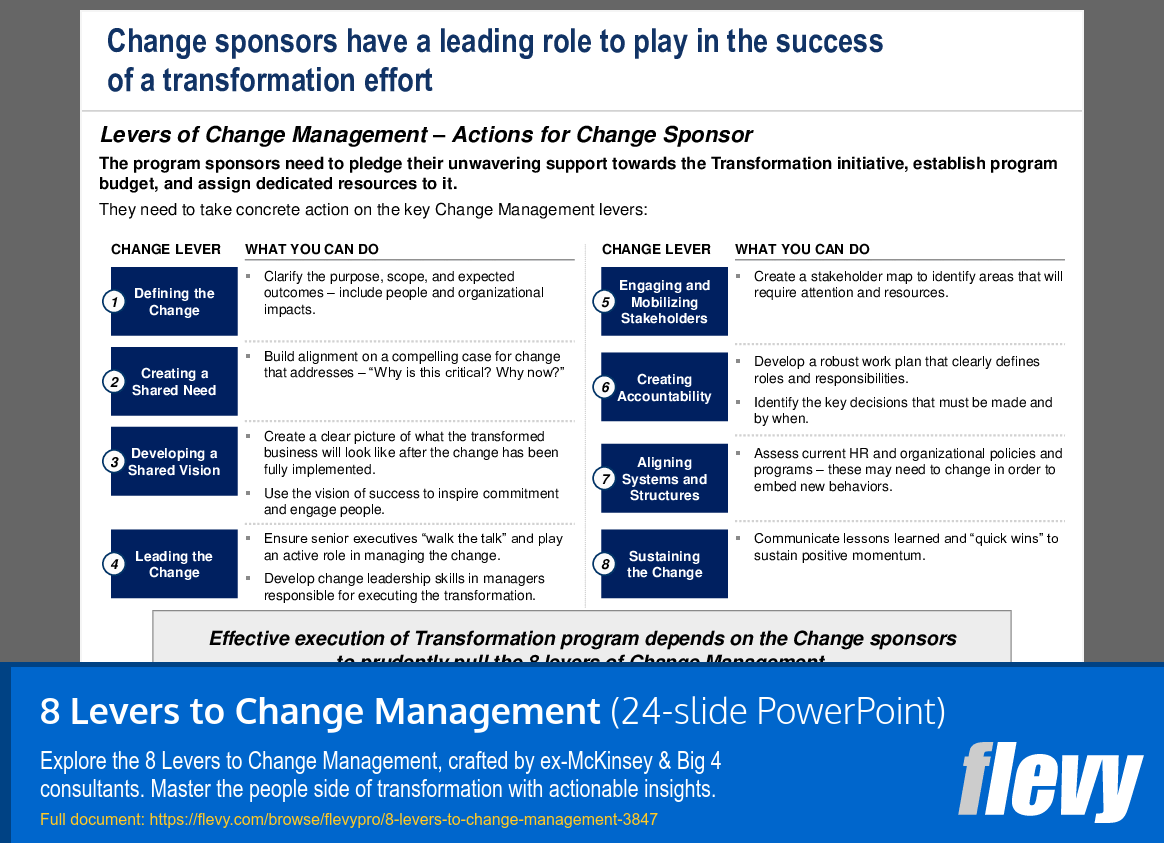
This PPT slide outlines essential actions for change sponsors in transformation initiatives, focusing on eight key levers of change management. The first lever, "Defining the Change," emphasizes clarifying the purpose, scope, and expected outcomes, considering both people and organizational impacts. The second lever, "Creating a Shared Need," highlights the importance of building a compelling case for change. "Developing a Shared Vision" is the third lever, which aims to inspire commitment among stakeholders by depicting the transformed organization. The fourth lever, "Leading the Change," underscores the active participation of senior executives in demonstrating commitment and developing leadership skills. The remaining levers involve engaging stakeholders, creating accountability, aligning systems, and sustaining change, with specific actions like stakeholder mapping and policy assessment. The success of the transformation program relies on the commitment and actions of change sponsors.
This PPT slide outlines the importance of sustaining momentum in transformation initiatives. It highlights the pitfall of prematurely declaring success, which can undermine ongoing leadership support and employee engagement. A robust communication strategy is essential for long-term employee engagement and internalization of best practices. Key actions include maintaining an explicit flow of information to enhance employee involvement and fostering a culture of optimism. Continuous monitoring of transformation outcomes is crucial, as organizations must remain responsive to evolving dynamics. Sustaining change is a recurring process that requires ongoing commitment and adaptation, providing actionable insights for effectively managing change initiatives.
Program sponsors play a critical role in ensuring accountability within transformation initiatives by establishing mechanisms to quantify results and hold individuals accountable. A practical work plan must outline milestones, task assignments, and resource allocations, emphasizing the need for clarity in planning. Sponsors should identify key decision-makers and establish deadlines, highlighting the importance of governance. Key actions include defining time commitments from all personnel to align resources with project goals and securing leadership authorization for time away from routine tasks to minimize distractions. Incorporating individual and team performance into appraisal processes ensures alignment with transformation objectives, while rewarding contributions reinforces positive behaviors and motivates team members.
This PPT slide outlines essential steps for change leaders to create a shared need for transformation within an organization. Establishing a shared rationale for change is critical for successful implementation. Key questions include ensuring alignment among leadership on the transformation's scope and business case, and confirming that the organization understands how the change aligns with its overarching purpose. Key actions include building awareness and alignment among senior teams and stakeholders, demonstrating the benefits of change to motivate employees, and establishing a feedback mechanism to facilitate discussions. This structured approach fosters collective effort and support for transformation initiatives.
Source: Best Practices in Change Management PowerPoint Slides: 8 Levers to Change Management PowerPoint (PPT) Presentation Slide Deck, LearnPPT Consulting
This framework is developed by a team of former McKinsey and Big 4 consultants. The presentation follows the headline-body-bumper slide format used by global consulting firms.
For $10.00 more, you can download this document plus 2 more FlevyPro documents. That's just $13 each.
ABOUT FLEVYPRO
This document is part of the FlevyPro Library, a curated knowledge base of documents for our FlevyPro subscribers.

FlevyPro is a subscription service for on-demand business frameworks and analysis tools. FlevyPro subscribers receive access to an exclusive library of curated business documents—business framework primers, presentation templates, Lean Six Sigma tools, and more—among other exclusive benefits.
The average daily rate of a McKinsey consultant is $6,625 (not including expenses). The average price of a Flevy document is $65.
Trusted by over 10,000+ Client Organizations
Since 2012, we have provided business templates to over 10,000 businesses and organizations of all sizes, from startups and small businesses to the Fortune 100, in over 130 countries.
Read Customer Testimonials
"As a consulting firm, we had been creating subject matter training materials for our people and found the excellent materials on Flevy, which saved us 100's of hours of re-creating what already exists on the Flevy materials we purchased."
– Michael Evans, Managing Director at Newport LLC
"If you are looking for great resources to save time with your business presentations, Flevy is truly a value-added resource. Flevy has done all the work for you and we will continue to utilize Flevy as a source to extract up-to-date information and data for our virtual and onsite presentations!"
– Debbi Saffo, President at The NiKhar Group
"I like your product. I'm frequently designing PowerPoint presentations for my company and your product has given me so many great ideas on the use of charts, layouts, tools, and frameworks. I really think the templates are a valuable asset to the job."
– Roberto Fuentes Martinez, Senior Executive Director at Technology Transformation Advisory
"I have found Flevy to be an amazing resource and library of useful presentations for lean sigma, change management and so many other topics. This has reduced the time I need to spend on preparing for my performance consultation. The library is easily accessible and updates are regularly provided. A wealth of great information."
– Cynthia Howard RN, PhD, Executive Coach at Ei Leadership
"Flevy is our 'go to' resource for management material, at an affordable cost. The Flevy library is comprehensive and the content deep, and typically provides a great foundation for us to further develop and tailor our own service offer."
– Chris McCann, Founder at Resilient.World
"The wide selection of frameworks is very useful to me as an independent consultant. In fact, it rivals what I had at my disposal at Big 4 Consulting firms in terms of efficacy and organization."
– Julia T., Consulting Firm Owner (Former Manager at Deloitte and Capgemini)
"As a young consulting firm, requests for input from clients vary and it's sometimes impossible to provide expert solutions across a broad spectrum of requirements. That was before I discovered Flevy.com.
Through subscription to this invaluable site of a plethora of topics that are key and crucial to consulting, I
have been able to exceed expectations and deliver quality advice and solutions to my clients. The quality and expertise of the authors are exemplary and gives me great confidence to use as part of my service offerings.
I highly recommend this company for any consultant wanting to apply international best practice standards in their service offerings.
"
– Nishi Singh, Strategist and MD at NSP Consultants
"I am extremely grateful for the proactiveness and eagerness to help and I would gladly recommend the Flevy team if you are looking for data and toolkits to help you work through business solutions."
Download our free compilation of 50+ slides and templates on Organizational Design, Change Management, and Corporate Culture. Methodologies include ADKAR, Burke-Litwin Change Model, McKinsey 7-S, Competing Values Framework, etc.