
This 100+ slide presentation is created by former McKinsey, BCG, Deloitte, EY, and Capgemini consultants. It provides a robust framework for formulating a Digital Transformation Strategy that drives both Growth & Cost Savings.
Provides a framework for crafting a Digital Transformation Strategy fitting for your organization--that encapsulates both Growth and Operational Improvement benefits.
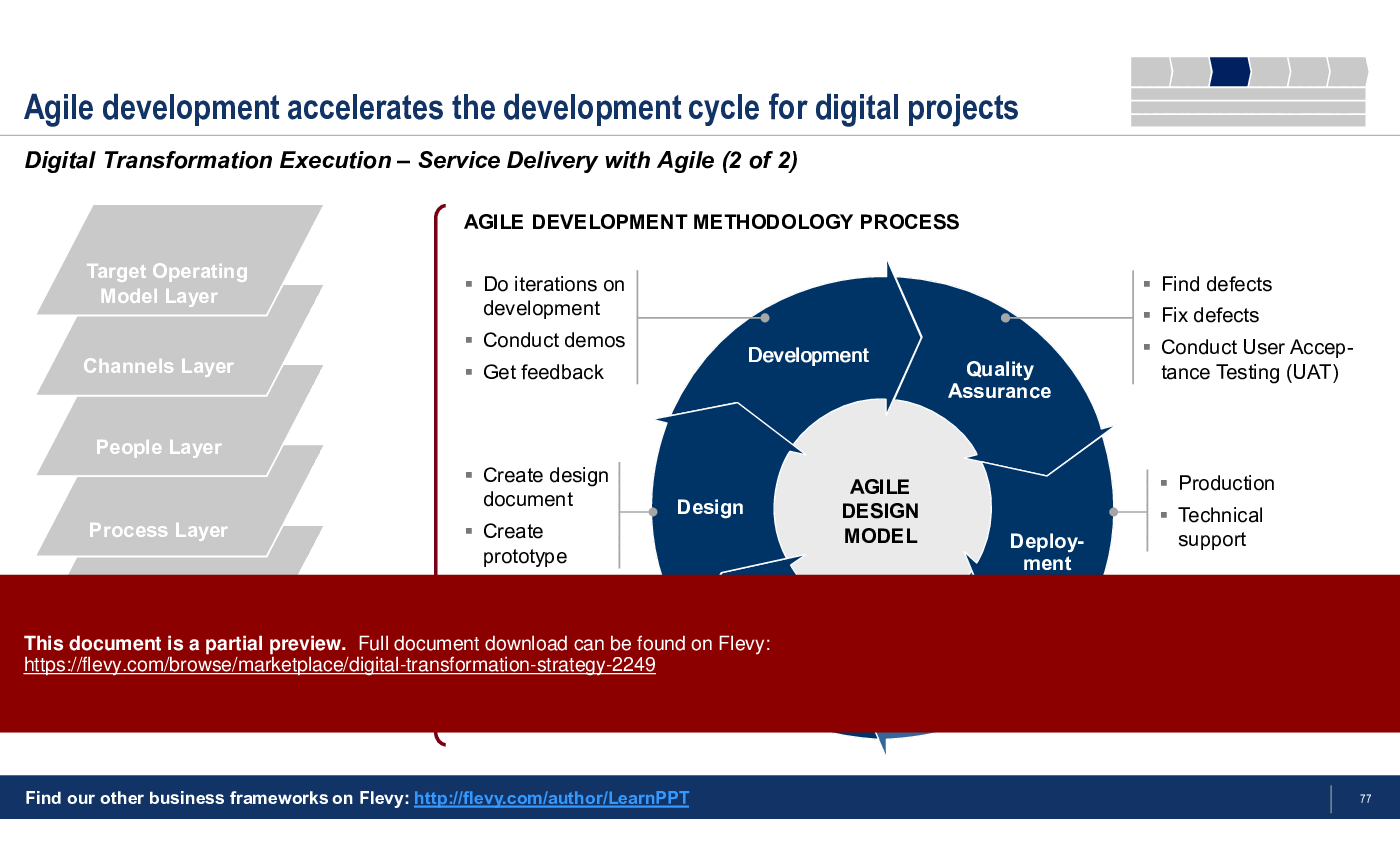
Provides a framework for Digital Transformation Execution--lays out key phases and functional layers.
Provides a framework for Digital Maturity--i.e. know where you stand and how to gradually improve/mature across the areas of Customer Experience, Operations, and Information/Technology.
DIGITAL TRANSFORMATION PPT DESCRIPTION
This product (Digital Transformation Strategy) is a 145-slide PPT PowerPoint presentation slide deck (PPTX), which you can download immediately upon purchase.
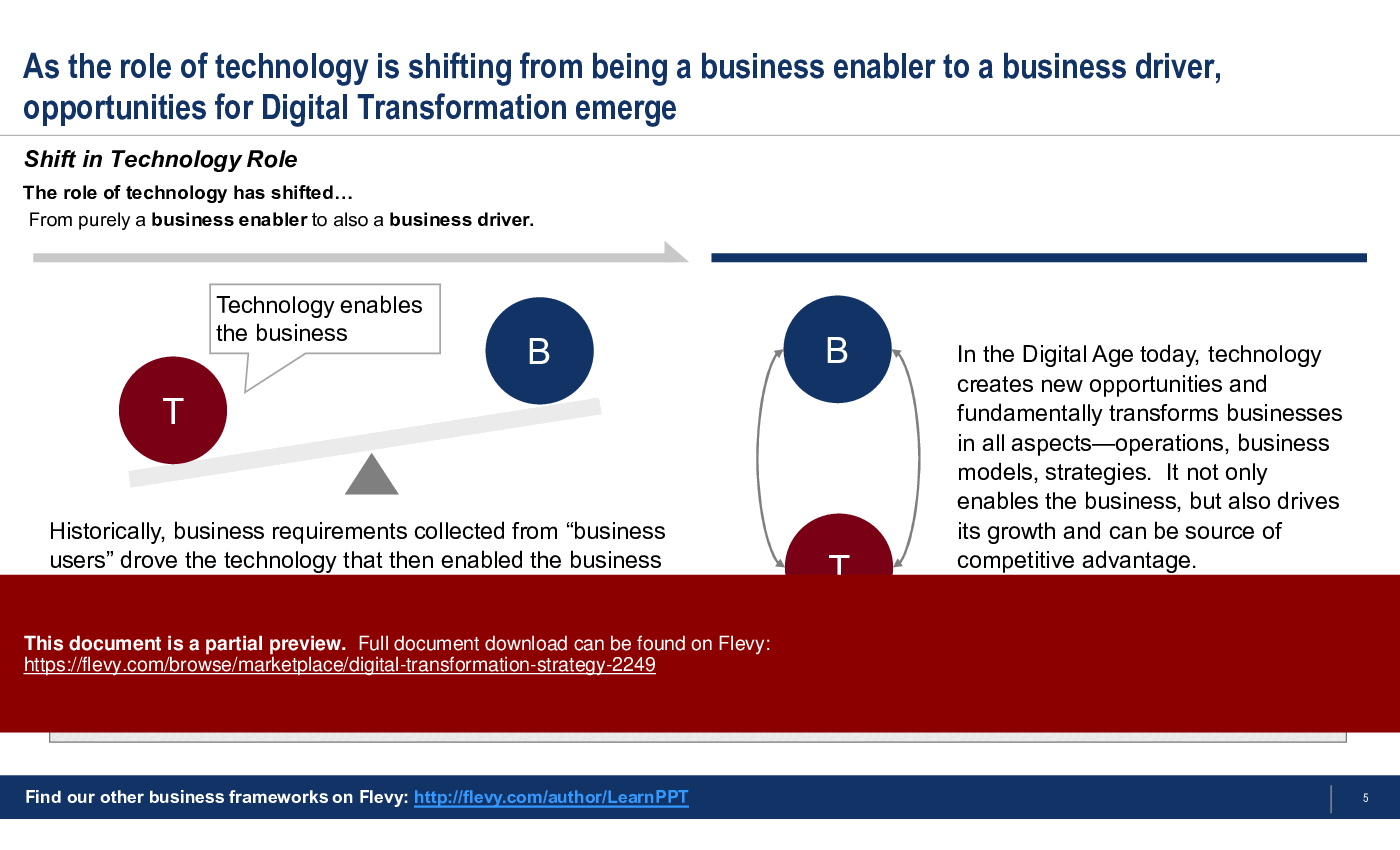
Digital Transformation is being embraced by organizations across most industries, as the role of technology shifts from being a business enabler to a business driver. This has only been accelerated by the COVID-19 global pandemic. Thus, to remain competitive and outcompete in today's fast paced, digital world, organizations must go digital by formulating a robust Digital Transformation Strategy.

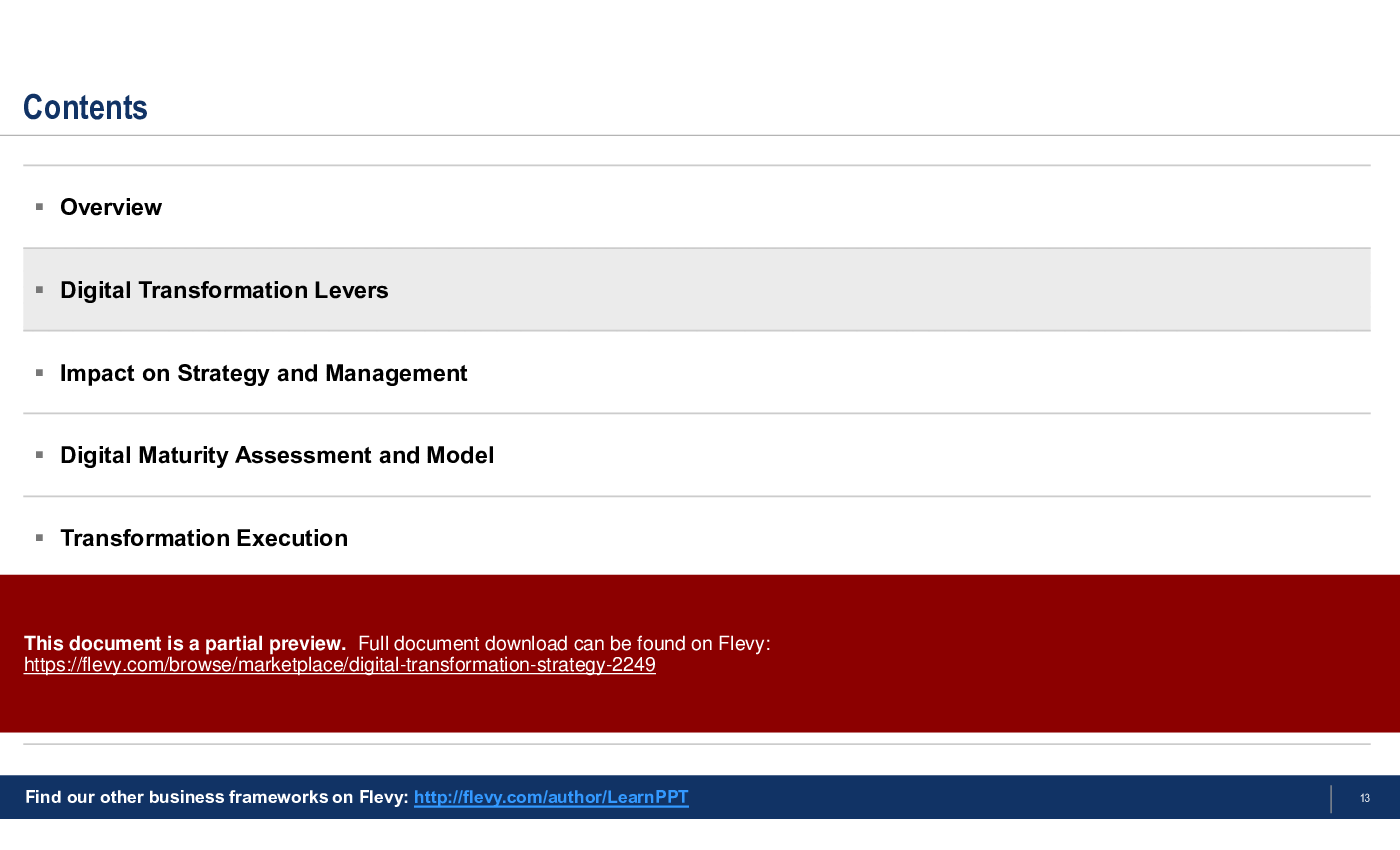
This 100+ slide PowerPoint presentation on Digital Transformation Strategy is organized into the following sections:
• Overview
• Digital Transformation Levers
• Impact on Strategy and Management
• Digital Maturity Assessment and Model
• Digital Transformation Execution
• Templates
• Appendix
Digital Transformation is driven by emergent Technology Trends, namely Robotic Process Automation (RPA), Artificial Intelligence (primarily Machine Learning), Social Media, Mobility, Internet of Things (IoT), Cybersecurity, Big Data, and Cloud. These emerging technology trends allow us to leverage 8 levers to Digital Transformation, which are the core components of our Digital Transformation Strategy framework:
OPERATIONAL IMPROVEMENT (Business Enabler Levers)
5. Process Efficiency
6. Asset Utilization
7. Agility
8. New Business & Service Models
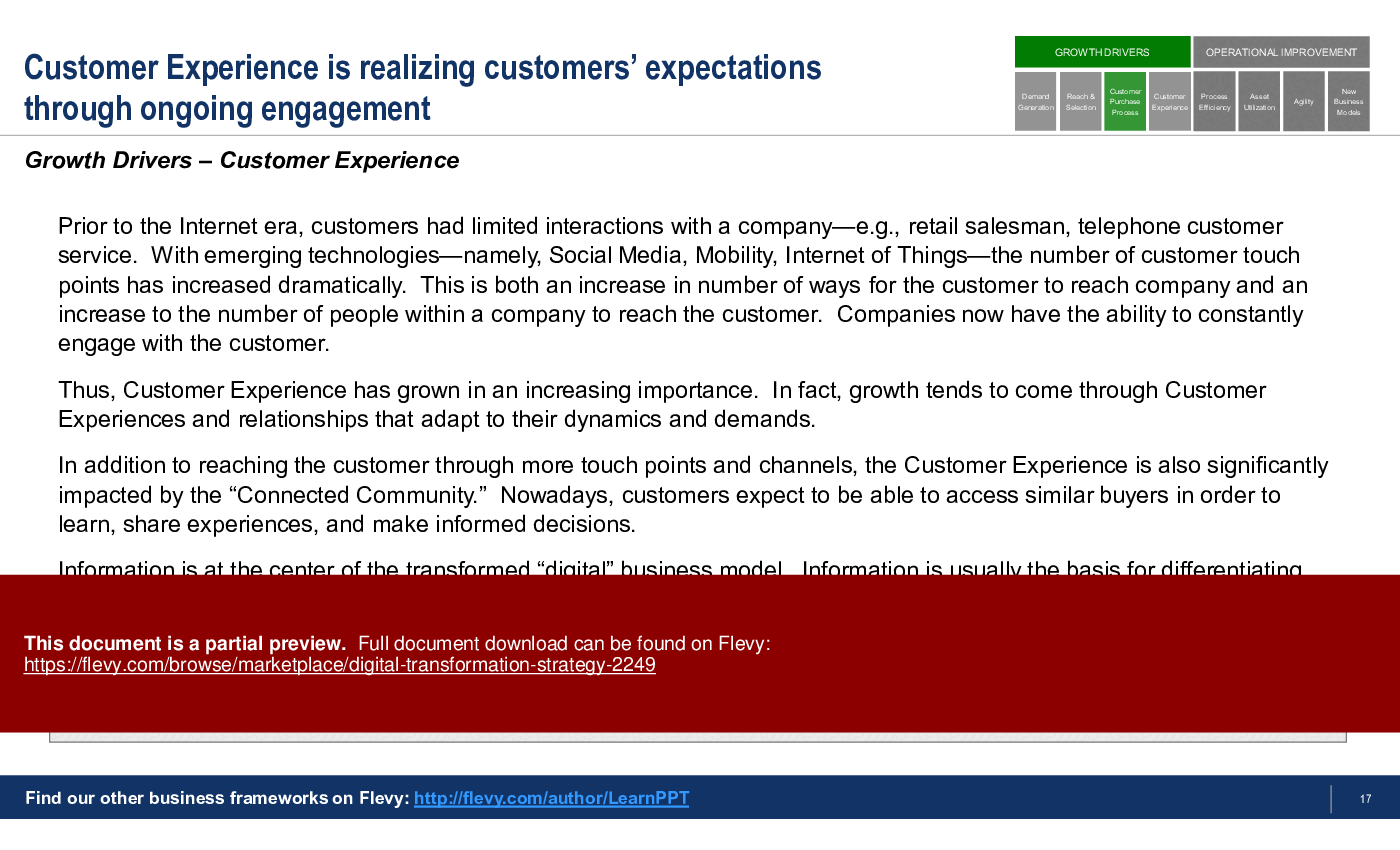
Digital Transformation opportunities includes both Operational Improvement and Growth Driver initiatives, where the latter is driven largely by improved Customer Experience.
Effective digitalization strategy also requires a strong understanding and accurate assessment of the organization's Digital Maturity. This presentation provides an assessment framework to determine the organization's Digital Maturity across 3 Transformation Areas:
1. Customer Experience
2. Operations
3. Information & Technology
This Digital Transformation presentation also covers numerous other Digital Transformation frameworks, including the Customer Purchase Process, Customer Experience Matrix, McKinsey's Customer Decision Journey, Accenture's Nonstop Customer Experience Model, Digital Maturity Assessment, Digital Maturity Model, 6 Layers of Successful Execution, Digital Operating Models, Customer Interaction Channel Map, Prompt Engineering, among others.
In addition, this Digital Transformation Strategy PPT includes a set of PowerPoint templates for you to use in your own business presentations; as well as an Appendix with a deeper dive into various topics (including ChatGPT).
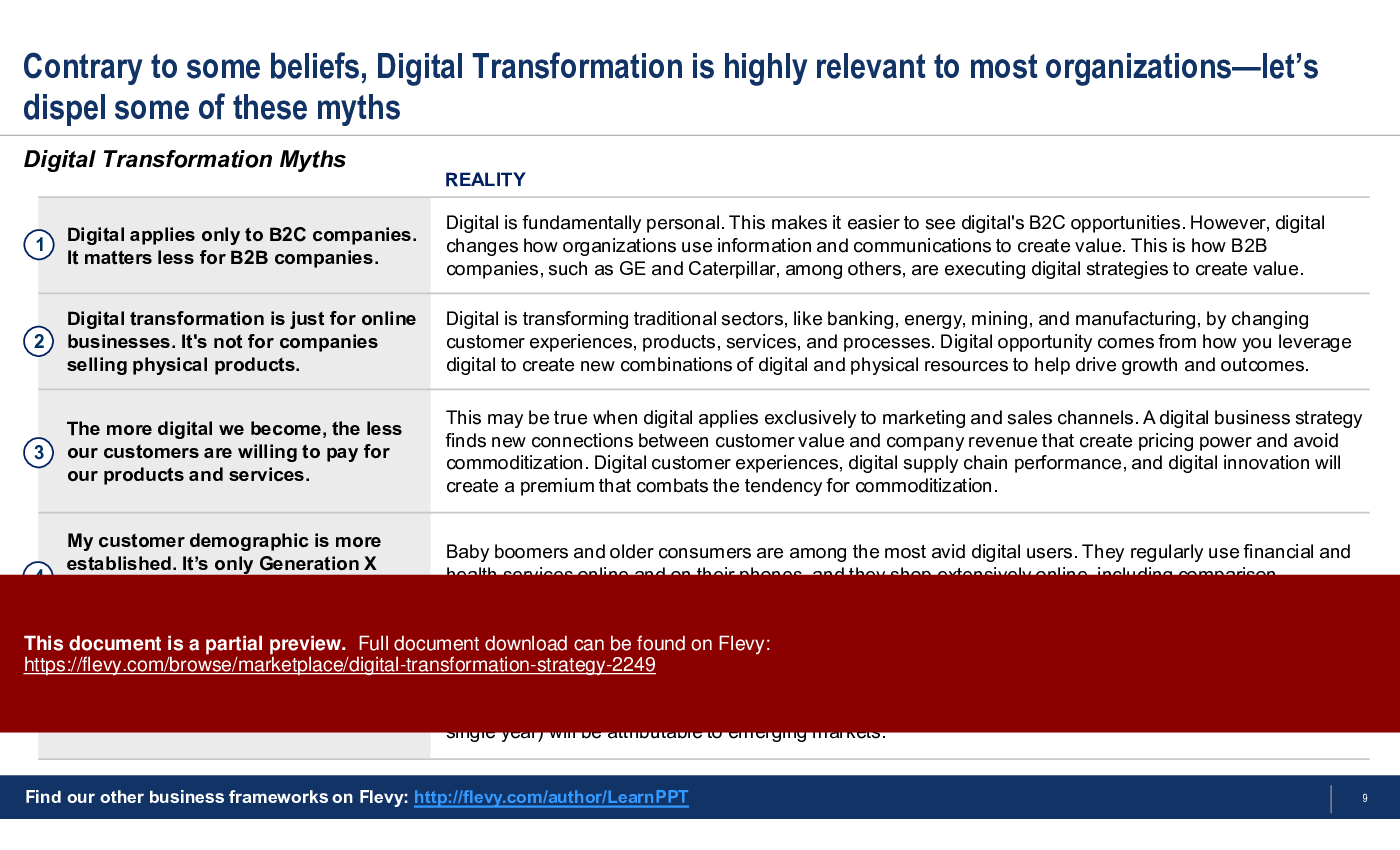
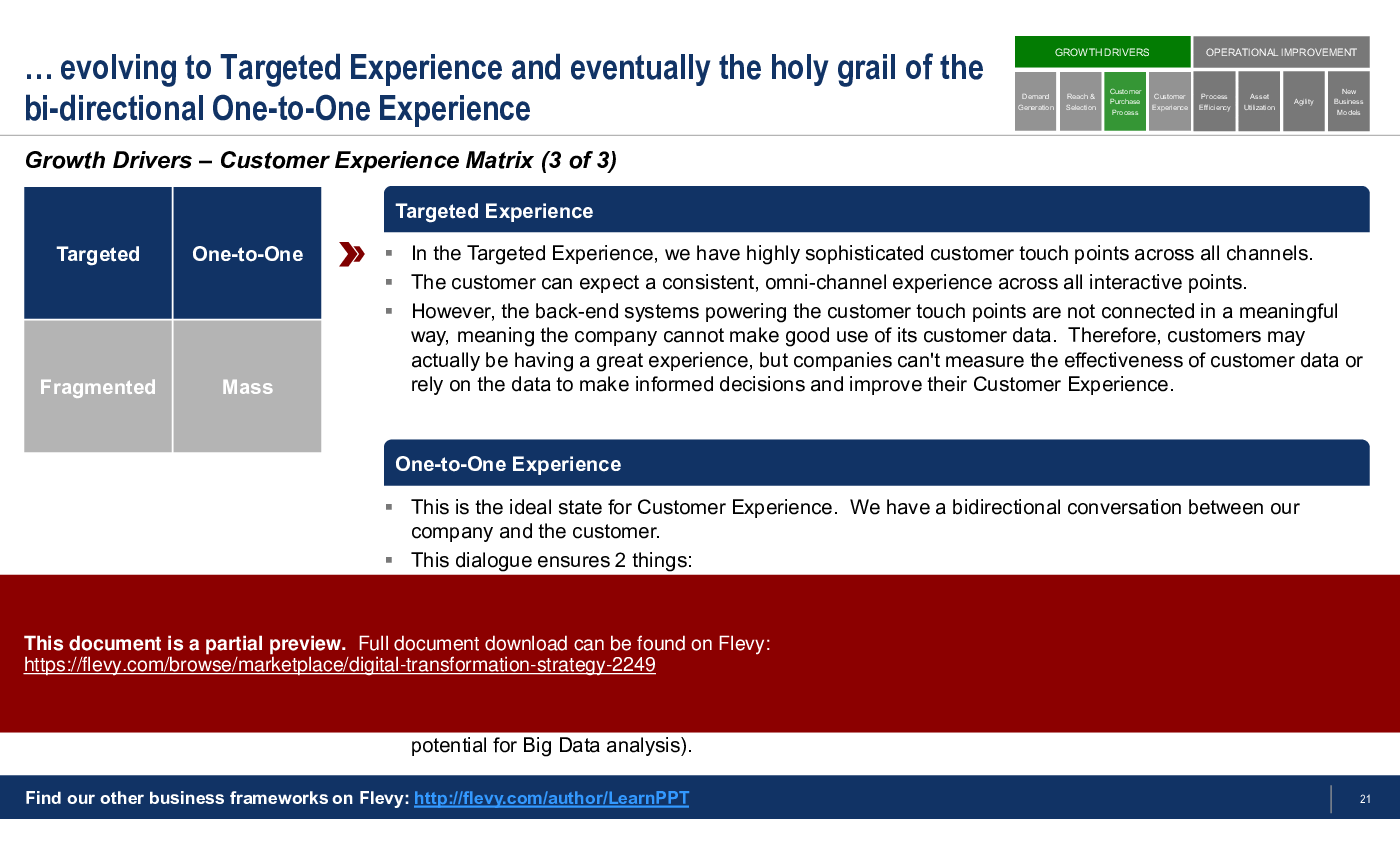
The presentation dispels common myths about Digital Transformation, making it clear that it is relevant to both B2B and B2C companies. It also emphasizes the importance of leveraging customer data to enhance Customer Experience and drive growth.
Got a question about the product? Email us at support@flevy.com or ask the author directly by using the "Ask the Author a Question" form. If you cannot view the preview above this document description, go here to view the large preview instead.
MARCUS OVERVIEW
This synopsis was written by Marcus [?] based on the analysis of the full 145-slide presentation.
Executive Summary
This Digital Transformation Strategy presentation is crafted by former McKinsey, BCG, and Deloitte consultants, providing a consulting-grade framework designed to drive both growth and operational improvement. It encompasses over 100 slides detailing the critical levers of digital transformation, including Demand Generation, Customer Experience, and Process Efficiency. This framework equips corporate executives and consultants with the tools necessary to assess digital maturity, formulate strategies, and execute transformation initiatives effectively.
Who This Is For and When to Use
• Corporate executives seeking to implement digital transformation in their organizations
• Strategy and operations teams focused on enhancing customer experience and operational efficiency
• Consultants advising businesses on digital strategy and execution
• Change management professionals overseeing digital initiatives
• IT leaders responsible for integrating new technologies into existing systems
Best-fit moments to use this deck:
• During strategic planning sessions to align digital initiatives with business goals
• For workshops aimed at assessing current digital maturity and identifying gaps
• In presentations to stakeholders to illustrate the roadmap for digital transformation
• When developing training sessions for teams on digital tools and processes
Learning Objectives
• Define the key components of a Digital Transformation Strategy and its importance in modern business
• Build a comprehensive roadmap that integrates digital initiatives across various business functions
• Establish metrics for assessing digital maturity and tracking progress over time
• Identify and leverage emerging technologies to enhance customer experience and operational efficiency
• Develop a governance framework to manage digital transformation initiatives effectively
• Create actionable plans for executing digital strategies and measuring their impact
Table of Contents
• Overview (page 3)
• Digital Transformation Levers (page 11)
• Impact on Strategy and Management (page 39)
• Digital Maturity Assessment and Model (page 44)
• Transformation Execution (page 57)
• Templates (page 71)
• Appendix (page 87)
Primary Topics Covered
• Digital Transformation Levers - Eight key levers that drive digital transformation, including Demand Generation and Customer Experience.
• Impact on Strategy and Management - How digital transformation reshapes organizational strategy and operational management.
• Digital Maturity Assessment - A framework for evaluating an organization's digital maturity across critical areas.
• Transformation Execution - A structured approach to implementing digital strategies, including change management and governance.
• Templates - Ready-to-use templates for various aspects of digital transformation planning and execution.
Deliverables, Templates, and Tools
• Digital Maturity Assessment template for evaluating current capabilities
• Roadmap template for outlining digital transformation initiatives
• Change management framework to guide organizational adoption of digital strategies
• Governance model template to ensure alignment and accountability
• Communication plan template for stakeholder engagement during transformation
Slide Highlights
• Overview of the eight levers of digital transformation and their impact on growth and efficiency
• Visual representation of the Digital Maturity Model, illustrating phases from initiation to improvement
• Case studies showcasing successful digital transformation initiatives across various industries
• Framework for assessing the impact of emerging technologies on business operations
• Detailed roadmap for executing a Digital Transformation Strategy
Potential Workshop Agenda
Digital Transformation Kickoff (90 minutes)
• Introduce the Digital Transformation Strategy framework and objectives
• Discuss the importance of digital maturity and assessment tools
• Identify key stakeholders and roles in the transformation process
Leveraging Technology for Transformation (60 minutes)
• Explore emerging technologies and their applications in business
• Discuss case studies of successful digital initiatives
• Brainstorm potential technology integrations for the organization
Measuring Success and Continuous Improvement (60 minutes)
• Establish metrics for tracking progress and success of digital initiatives
• Discuss the importance of ongoing assessment and adaptation in digital strategies
• Develop a plan for regular stakeholder updates and feedback loops
Customization Guidance
• Tailor the Digital Maturity Assessment to reflect specific organizational contexts and industry standards
• Adjust the roadmap template to align with unique business goals and timelines
• Modify the change management framework to fit the organizational culture and existing processes
• Incorporate specific metrics and KPIs relevant to the organization’s digital strategy
Secondary Topics Covered
• Customer Experience Matrix and its role in enhancing customer interactions
• The Customer Decision Journey and its implications for marketing strategies
• Best practices for integrating social media into digital transformation efforts
• Cybersecurity considerations in the context of digital initiatives
• The role of Big Data and analytics in driving informed decision-making
FAQ What is a Digital Transformation Strategy?
A Digital Transformation Strategy is a comprehensive plan that outlines how an organization can leverage digital technologies to enhance operations, improve customer experiences, and drive growth.
Why is digital maturity assessment important?
Assessing digital maturity helps organizations identify their current capabilities, gaps, and areas for improvement, enabling them to prioritize initiatives effectively.
How can emerging technologies be integrated into existing systems?
Emerging technologies can be integrated through careful planning, pilot programs, and by leveraging APIs and cloud solutions that allow for seamless connectivity with existing systems.
What are the key challenges in digital transformation?
Common challenges include resistance to change, lack of digital skills, data silos, and ensuring alignment between digital initiatives and business objectives.
How do we measure the success of digital transformation initiatives?
Success can be measured through established KPIs, customer feedback, operational efficiency metrics, and overall impact on revenue growth.
What role does leadership play in digital transformation?
Leadership is crucial in setting the vision, fostering a culture of innovation, and ensuring alignment across the organization to drive successful transformation.
How can we ensure stakeholder buy-in during the transformation process?
Engaging stakeholders early, providing clear communication about the benefits of transformation, and involving them in the planning process can help secure buy-in.
What frameworks can be used to guide digital transformation?
Frameworks such as the Digital Maturity Model, Change Management frameworks, and Governance models provide structured approaches to guide transformation efforts.
Glossary
• Digital Transformation - The integration of digital technology into all areas of a business, fundamentally changing how it operates and delivers value to customers.
• Digital Maturity - The extent to which an organization has adopted digital technologies and integrated them into its operations.
• Change Management - A structured approach to transitioning individuals, teams, and organizations to a desired future state.
• Governance - The framework of policies, roles, and responsibilities that guide decision-making and accountability in an organization.
• Customer Experience - The overall perception and interaction a customer has with a brand throughout their journey.
• Emerging Technologies - New technologies that are currently developing or will be developed over the next few years, such as AI, IoT, and blockchain.
• Robotic Process Automation (RPA) - The use of software robots to automate repetitive tasks traditionally performed by humans.
• Big Data - Large volumes of data that can be analyzed for insights and decision-making.
• Cybersecurity - The practice of protecting systems, networks, and programs from digital attacks.
• Customer Decision Journey - The process customers go through when making purchasing decisions, including awareness, consideration, and post-purchase evaluation.
• Social Media - Platforms that allow users to create and share content or participate in social networking.
• Digital Strategy - A plan that outlines how an organization will use digital technologies to achieve its business goals.
The slide outlines 3 fundamental forms of artificial intelligence (AI): Assisted Intelligence, Augmented Intelligence, and Autonomous Intelligence. Assisted Intelligence enhances existing processes and is "Widely Deployed" across industries to improve operational efficiency. Augmented Intelligence, labeled "Emerging Today," enables tasks that require AI collaboration, enhancing decision-making capabilities. Autonomous Intelligence, termed the "Wave of the Future," operates independently, automating complex processes and decision-making aligned with organizational goals. The AI industry is projected to reach $15 billion by 2022, with accelerated growth anticipated, highlighting the urgency for organizations to adopt AI technologies for competitiveness and innovation.
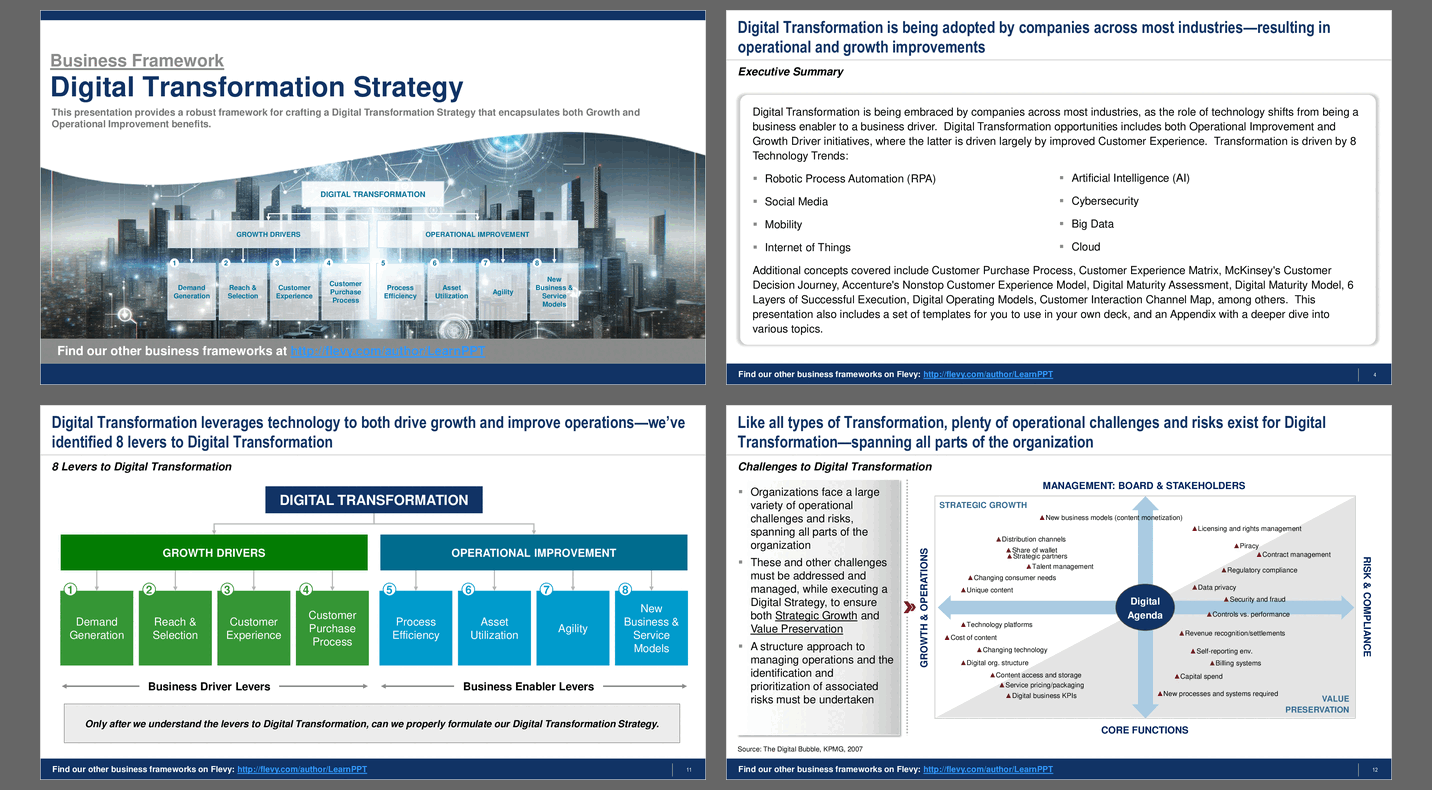
This slide outlines a framework for Digital Transformation, featuring eight key levers categorized into Growth Drivers and Operational Improvement. Growth Drivers include Demand Generation, which creates awareness of products; Reach & Selection, targeting the right audience; Customer Experience, enhancing customer interactions; and the Customer Purchase Process, streamlining the journey from interest to purchase. Operational Improvement encompasses Process Efficiency, optimizing internal processes; Asset Utilization, maximizing resource use; Agility, adapting quickly to market changes; and New Business & Service Models, exploring innovative approaches for value delivery. Integrating these levers is essential for a comprehensive Digital Transformation Strategy.
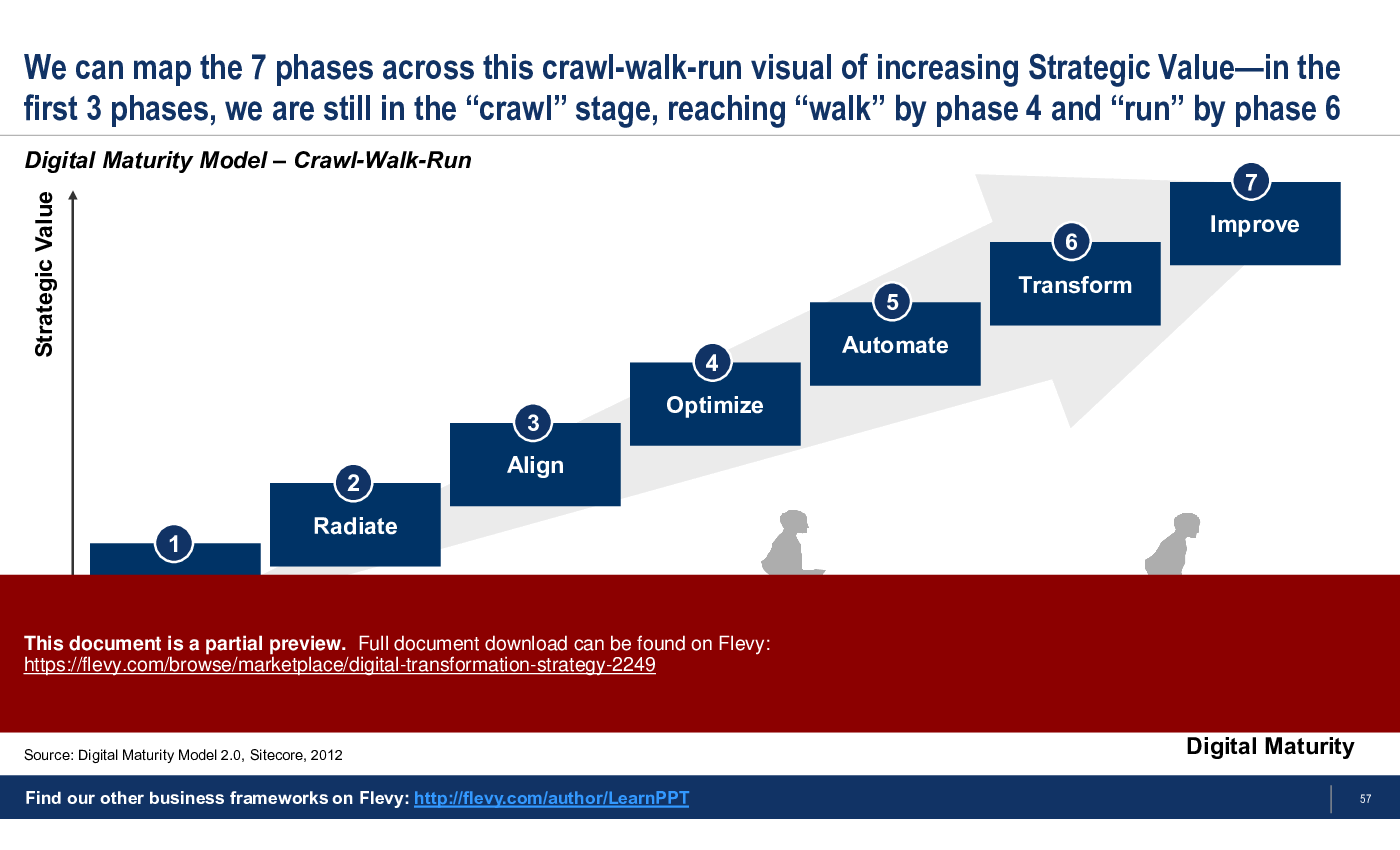
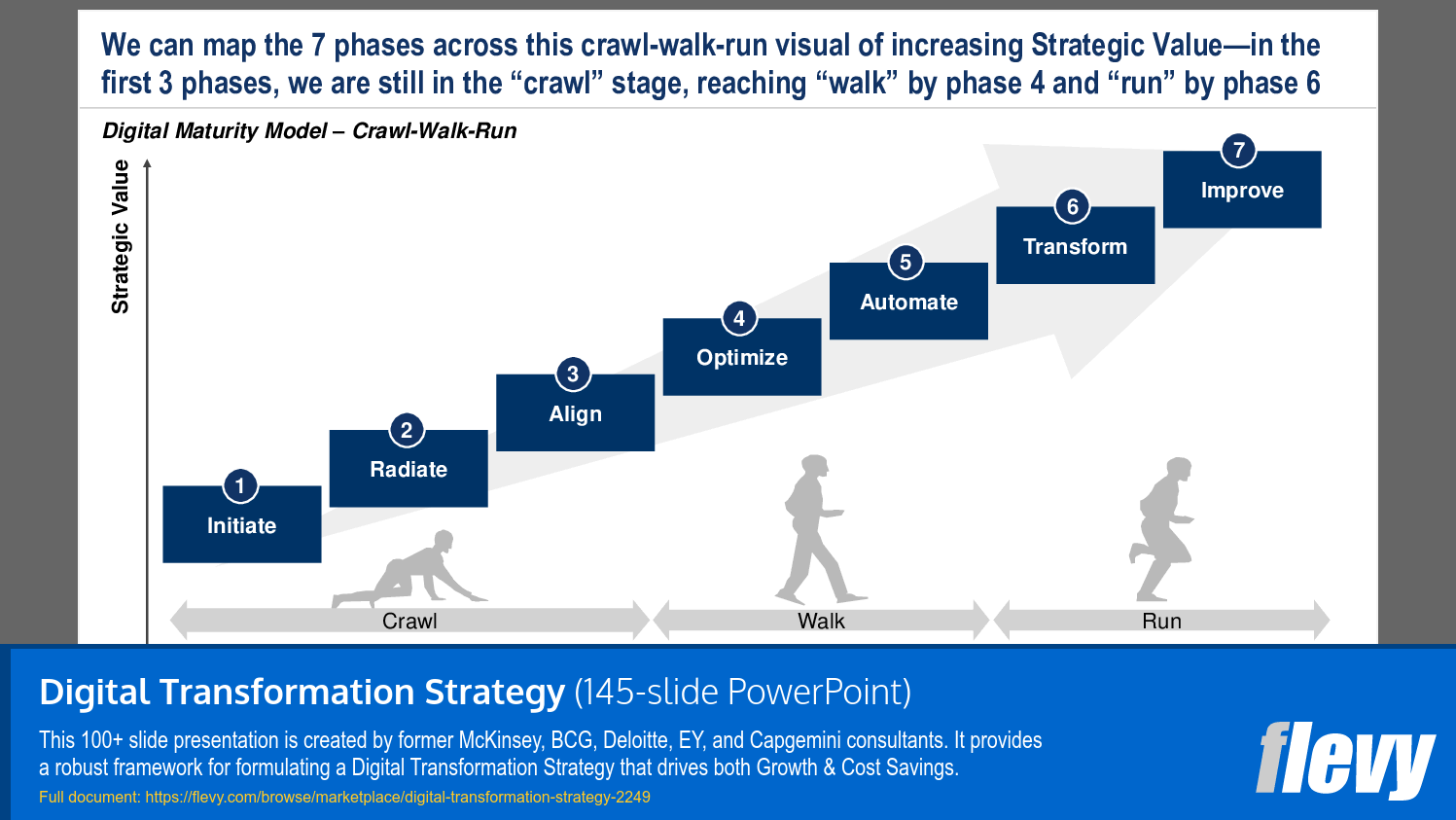
The Digital Maturity Model is structured around the "Crawl-Walk-Run" framework, illustrating 7 phases of digital transformation: Initiate, Radiate, Align (Crawl), Optimize, Automate (Walk), and Transform, Improve (Run). Organizations start at the "Crawl" stage, indicating the beginning of their digital journey. Progressing to "Walk" signifies deeper integration of digital strategies, refining operations and leveraging technology. The "Run" phase represents full realization of digital initiatives, driving significant strategic value. Many organizations remain in the "Crawl" phase, highlighting the need for methodical progression through each phase to enhance digital capabilities. This framework guides executives in assessing their maturity level and informs strategic decisions for effective digital strategy enhancement.
This framework for digital transformation is segmented into 6 phases. The "Strategy" phase establishes a clear digital transformation strategy, assesses stakeholder value, and defines the organization's vision, aligning activities with business goals. The "Current State" phase involves a digital assessment to identify gaps and prioritize initiatives based on digital maturity. In the "Future State," organizations define their target operating model, considering channels, people, processes, technology, and service models. The "Roadmap" phase outlines the project portfolio, requirements management, architecture evolution, and implementation plan for coordinated initiatives. The "Implement" phase focuses on executing planned initiatives, managing business and technology changes, and ensuring continuity. Finally, the "Monitor" phase emphasizes transitioning to a steady state, ongoing maintenance, and continuous improvement for sustainable transformation.
This slide outlines 4 essential components of User Experience (UX) Design: Experience Strategy, Information Architecture, Interaction Design, and User Research.
Experience Strategy ensures content and services align with user needs, incorporating design, digital, marketing, and brand strategies. Information Architecture organizes information for enhanced understanding and accessibility, utilizing concepts like taxonomy and big data. Interaction Design focuses on creating engaging user experiences through visual design, storyboarding, wireframing, and prototyping, contributing to a seamless user journey. User Research gathers insights on audience behavior through market research, user testing, and analytics, informing design decisions. These components interconnect to enhance user satisfaction and drive organizational growth.
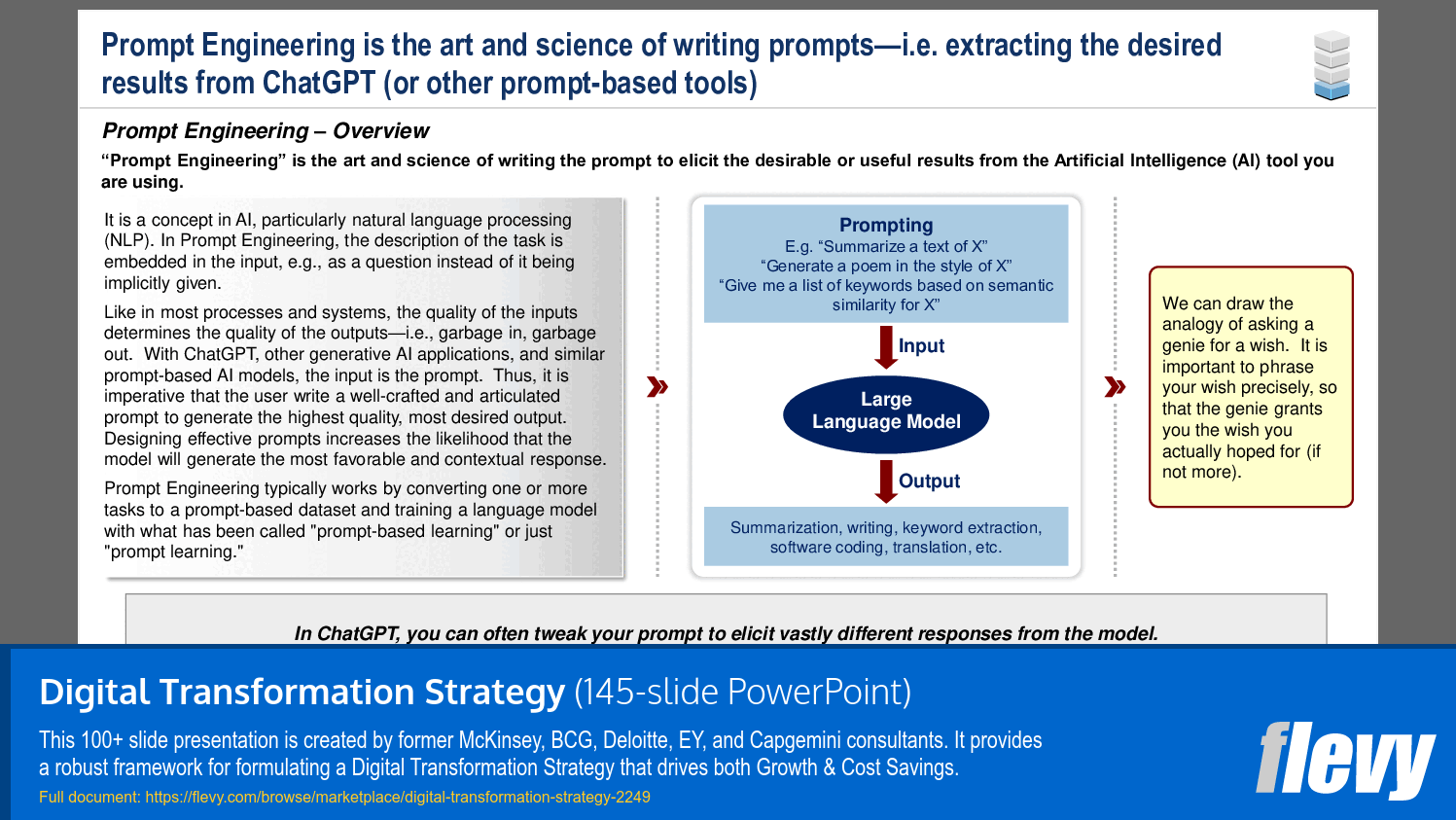
This slide provides an overview of prompt engineering, a key concept in artificial intelligence and natural language processing (NLP). Crafting precise prompts is essential for eliciting high-quality responses from AI tools like ChatGPT, encapsulated in the phrase "garbage in, garbage out." The process of prompting includes applications such as text summarization, poetry generation, and keyword extraction based on semantic similarity. A diagram illustrates the flow from input to a large language model, resulting in outputs like summarization, writing, and translation. The analogy of asking a genie for a wish emphasizes the need for clarity and precision in prompting. Additionally, "prompt-based learning" allows users to refine prompts to align better with their objectives, maximizing the potential of AI tools across various contexts.
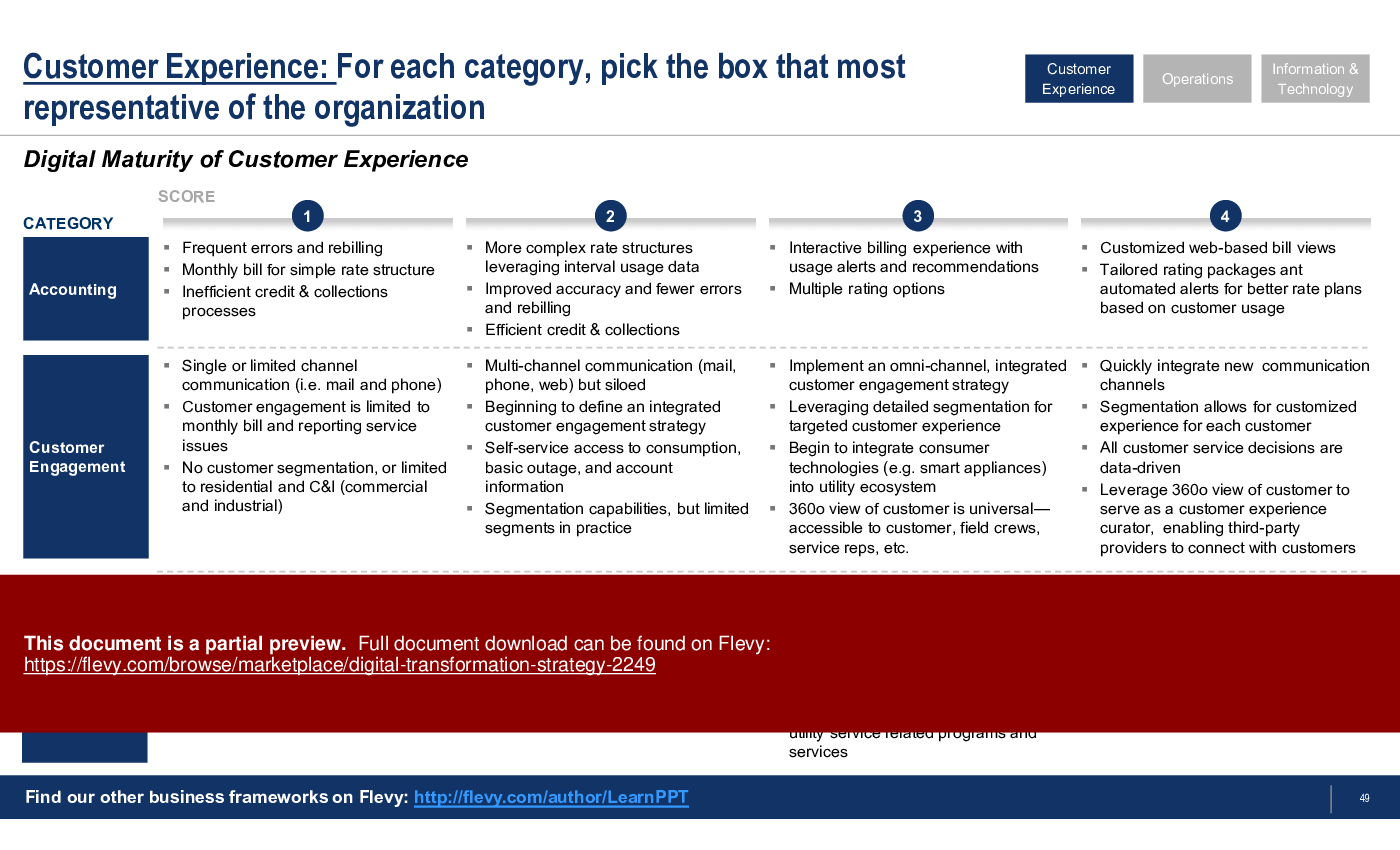
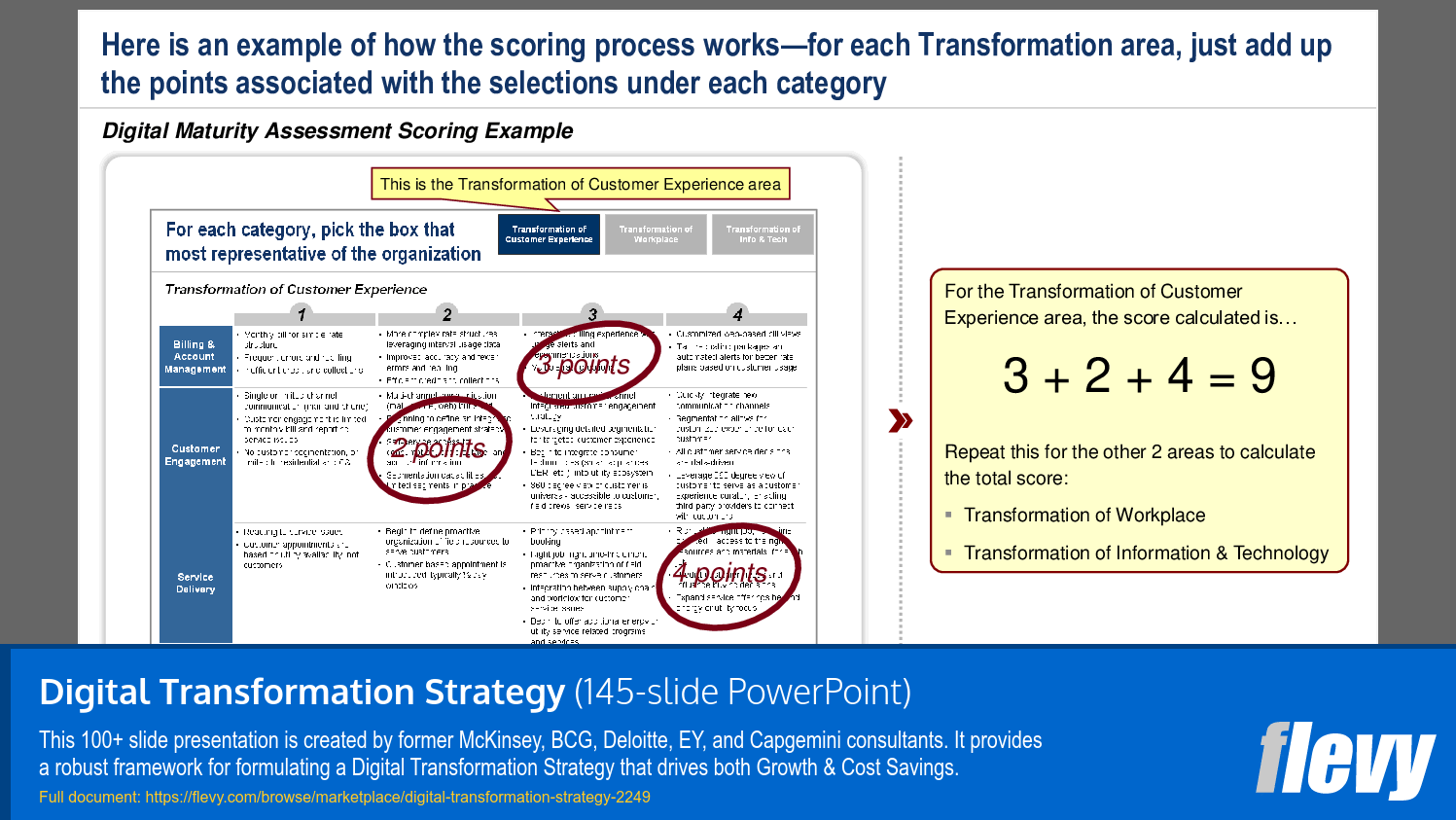
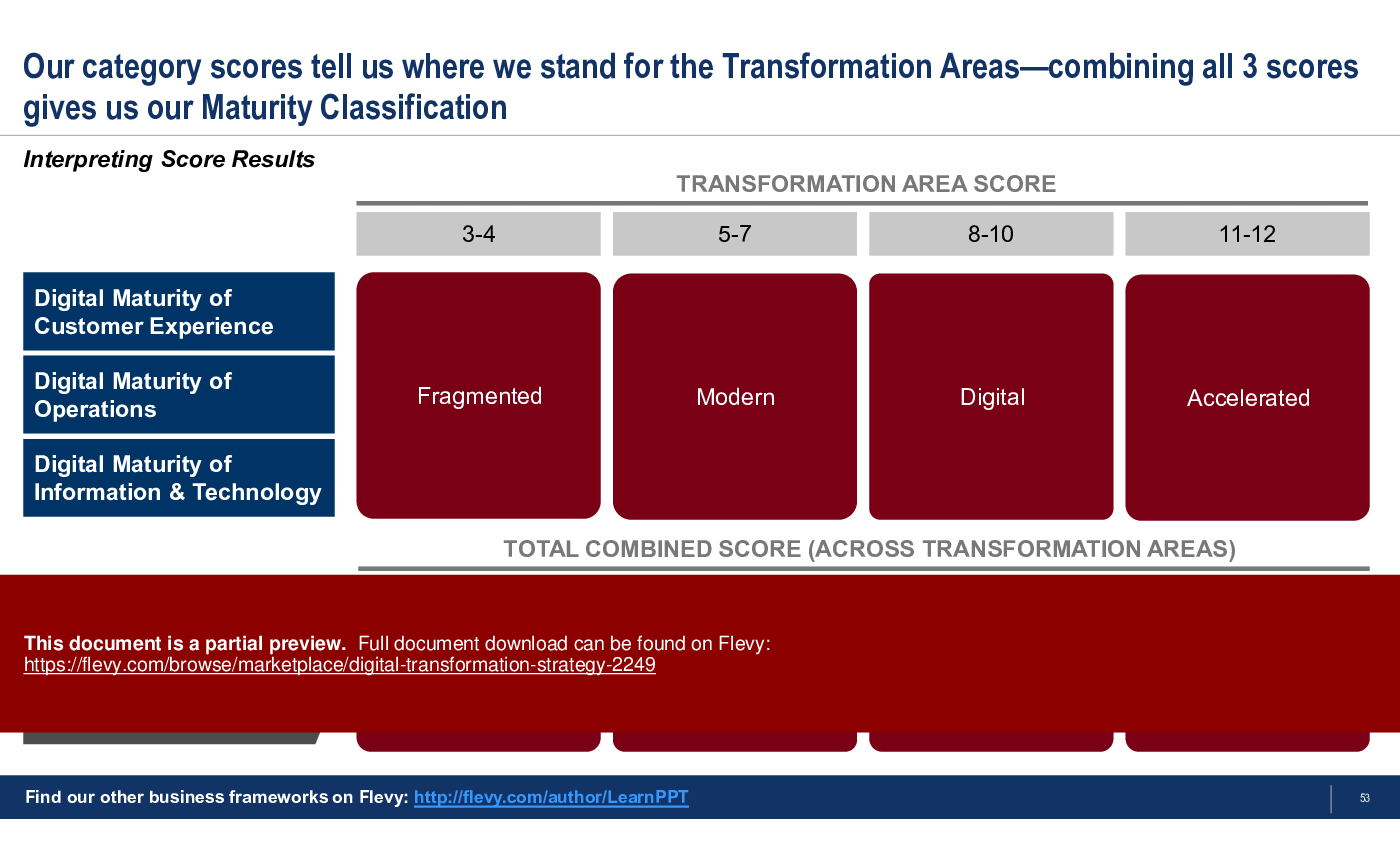
This slide outlines a structured approach to assessing digital maturity through the "Transformation of Customer Experience." It features a scoring mechanism for evaluating capabilities in categories such as Billing & Account Management, Customer Engagement, and Service Delivery. Each category includes options with specific point values; for example, a score of 2 points is assigned for a particular choice in Customer Engagement. Aggregating scores across categories provides a total score, exemplified by a calculation resulting in a score of 9. This framework helps organizations quantify their digital transformation efforts, benchmark performance, and prioritize actions aligned with transformation goals.
The slide illustrates the evolution of the customer purchase process across industries, contrasting traditional models (2006-2011) with digital models (2012 onward).
In Retail, the shift to omni-channel engagement leverages technologies like augmented reality for an integrated shopping experience.
Healthcare has moved to real-time integration with mobile devices, enhancing patient engagement through SMS reminders.
Banking has transitioned from physical branches to e-money and mobile banking, increasing accessibility to financial services.
Telecom focuses on multi-play services and diverse communication channels, meeting varied customer needs.
Government initiatives have adopted e-Governance, integrating infrastructure and knowledge transfer to improve public service delivery.
These trends highlight a fundamental shift in customer experience frameworks driven by technology and changing consumer expectations.
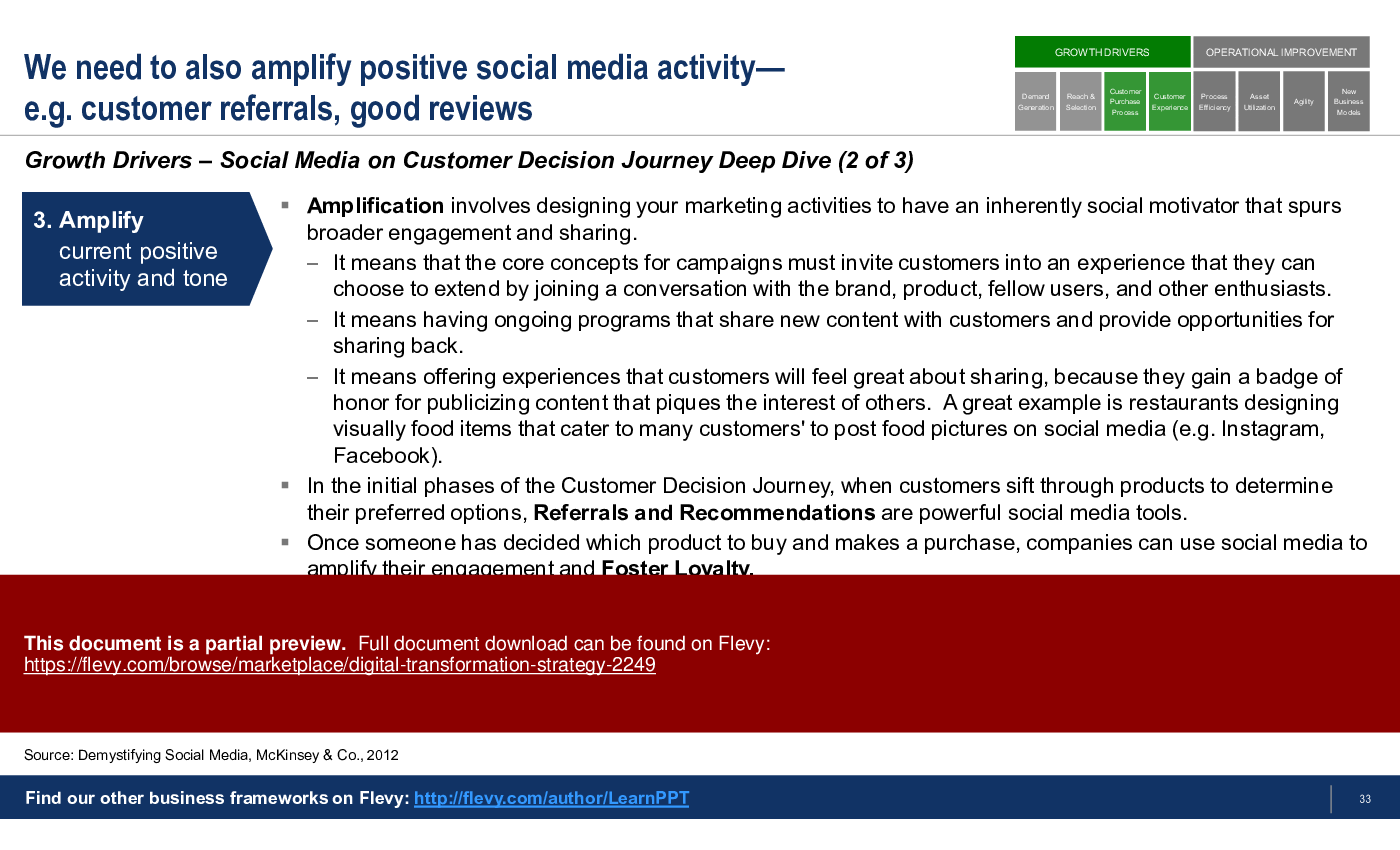
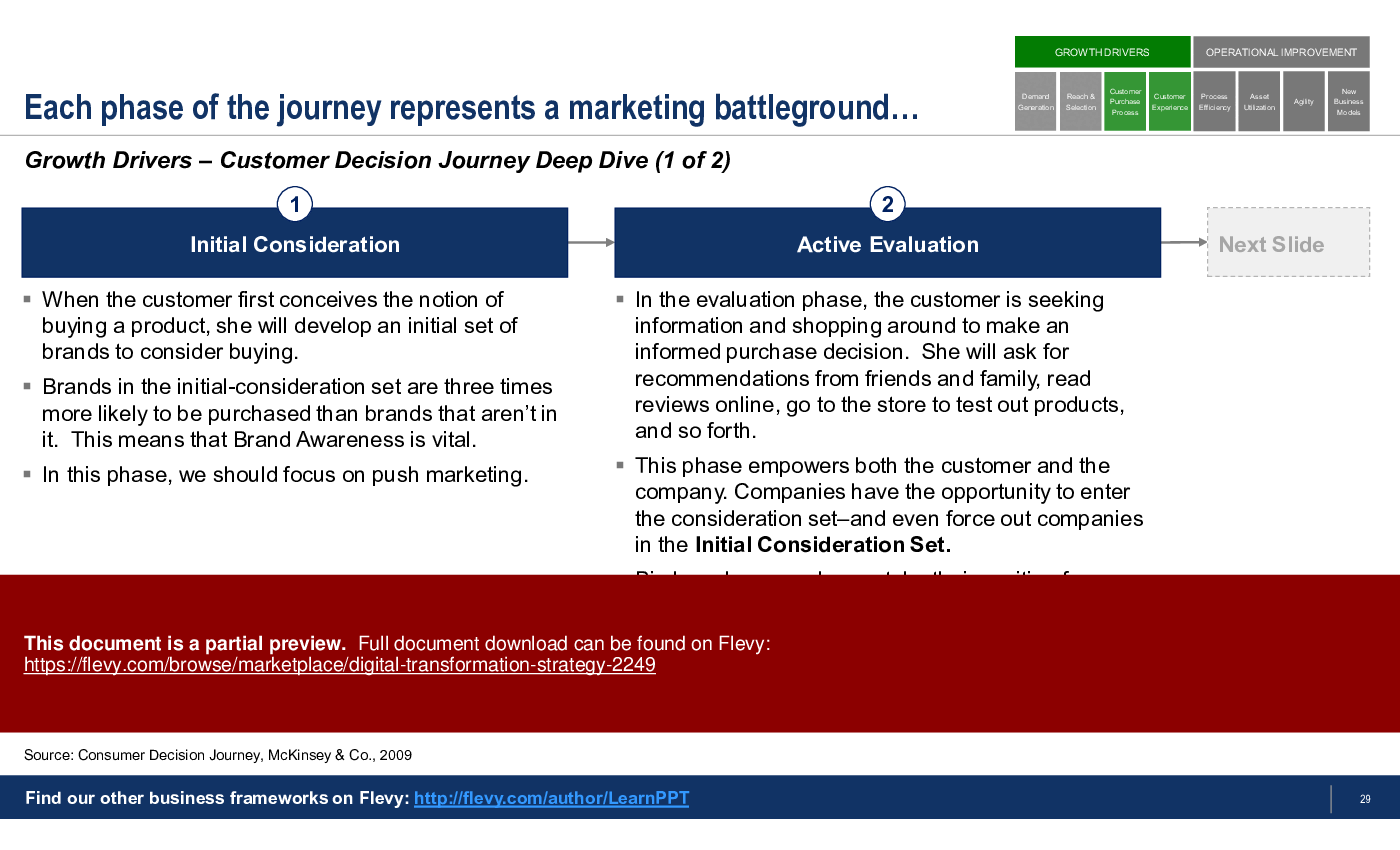
This slide outlines leveraging social media across 4 key phases of the customer decision journey: Initial Consideration, Active Evaluation, Moment of Purchase, and Post-purchase Experience. In the Initial Consideration phase, Brand Monitoring involves tracking social channels for trends and insights. During Active Evaluation, Crisis Management and Customer Service focus on responding to consumer comments and addressing negative feedback. The Moment of Purchase emphasizes amplifying positive sentiment through Referrals and Recommendations, influencing buying decisions. The Post-purchase Experience fosters ongoing engagement through Brand Content Awareness and Customer Input, encouraging loyalty and advocacy. A Continuation of Evaluation suggests that customer engagement should persist post-purchase, leading to targeted deals and enhancing satisfaction and repeat business. This strategic guide emphasizes adaptive marketing responses tailored to each phase, driving long-term brand loyalty.
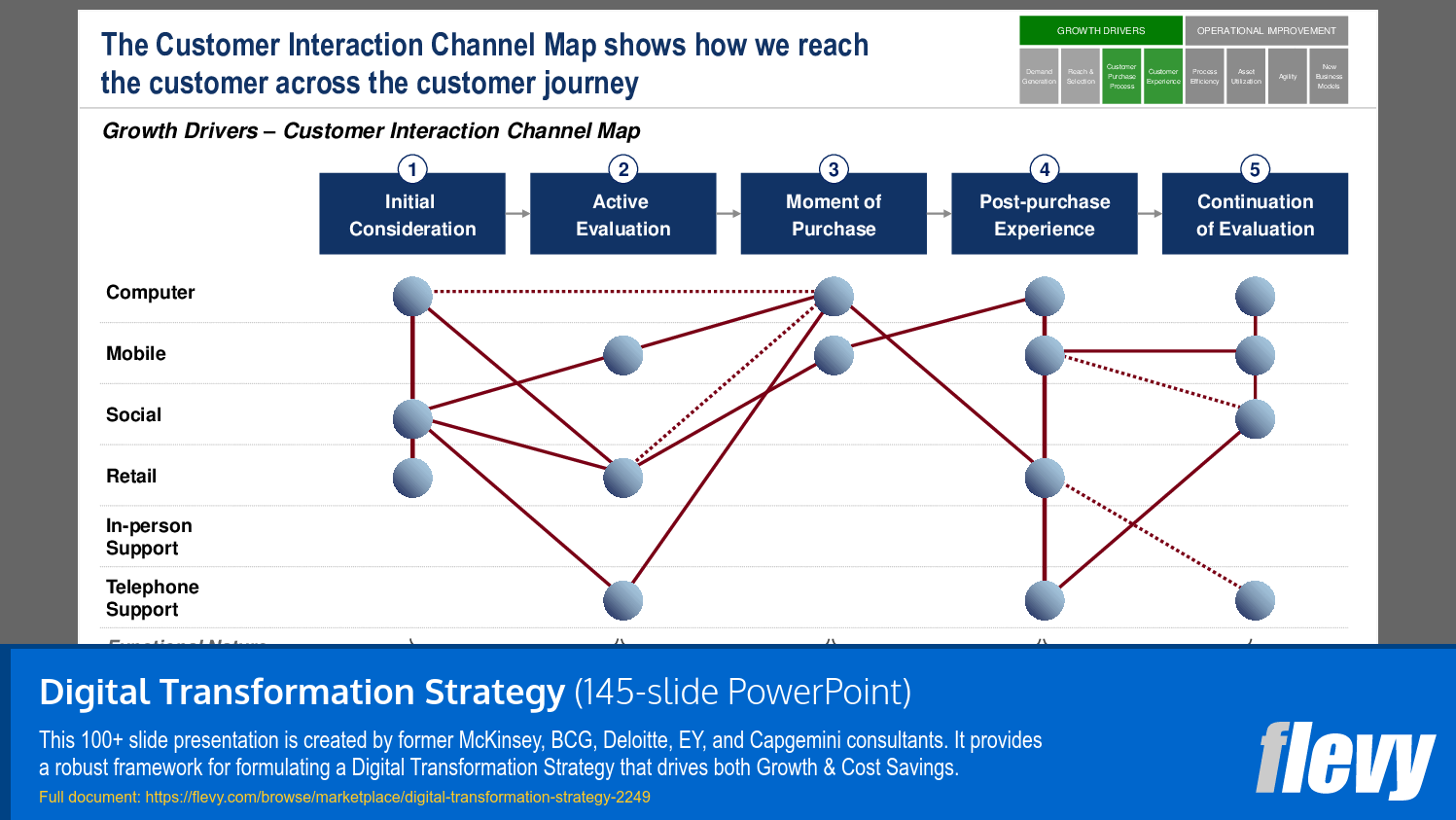
The Customer Interaction Channel Map illustrates key touchpoints in the customer journey, encompassing 5 stages: Initial Consideration, Active Evaluation, Moment of Purchase, Post-purchase Experience, and Continuation of Evaluation. Channels include Computer, Mobile, Social, Retail, In-person Support, Telephone Support, and Functional Web, with connections indicating the flow of customer interactions. Customers may transition between channels, such as starting on mobile for Initial Consideration and moving to retail for purchase. The varying degrees of interaction, represented by dotted and solid lines, suggest some channels are more effective for engagement and conversion. This multi-channel approach ensures consistent messaging across touchpoints, helping businesses refine customer engagement strategies and enhance overall satisfaction.
This slide outlines the critical components of effective prompt engineering for C-level executives in digital transformations and AI implementations. The best prompts incorporate 6 essential elements: Task, Persona, Context, Examples, Tone, and Format. The Task defines the prompt's objective, while the Persona identifies the target audience, crucial for tailoring responses. Context provides background information, and Examples guide the AI in generating relevant content. Tone addresses the emotional quality of the response, and Format pertains to the output structure. While all 6 elements enhance prompt effectiveness, they are not mandatory for every prompt. Mastering prompt engineering is an iterative process that fosters a culture of ongoing improvement, enabling better communication with AI systems and driving successful digital initiatives.
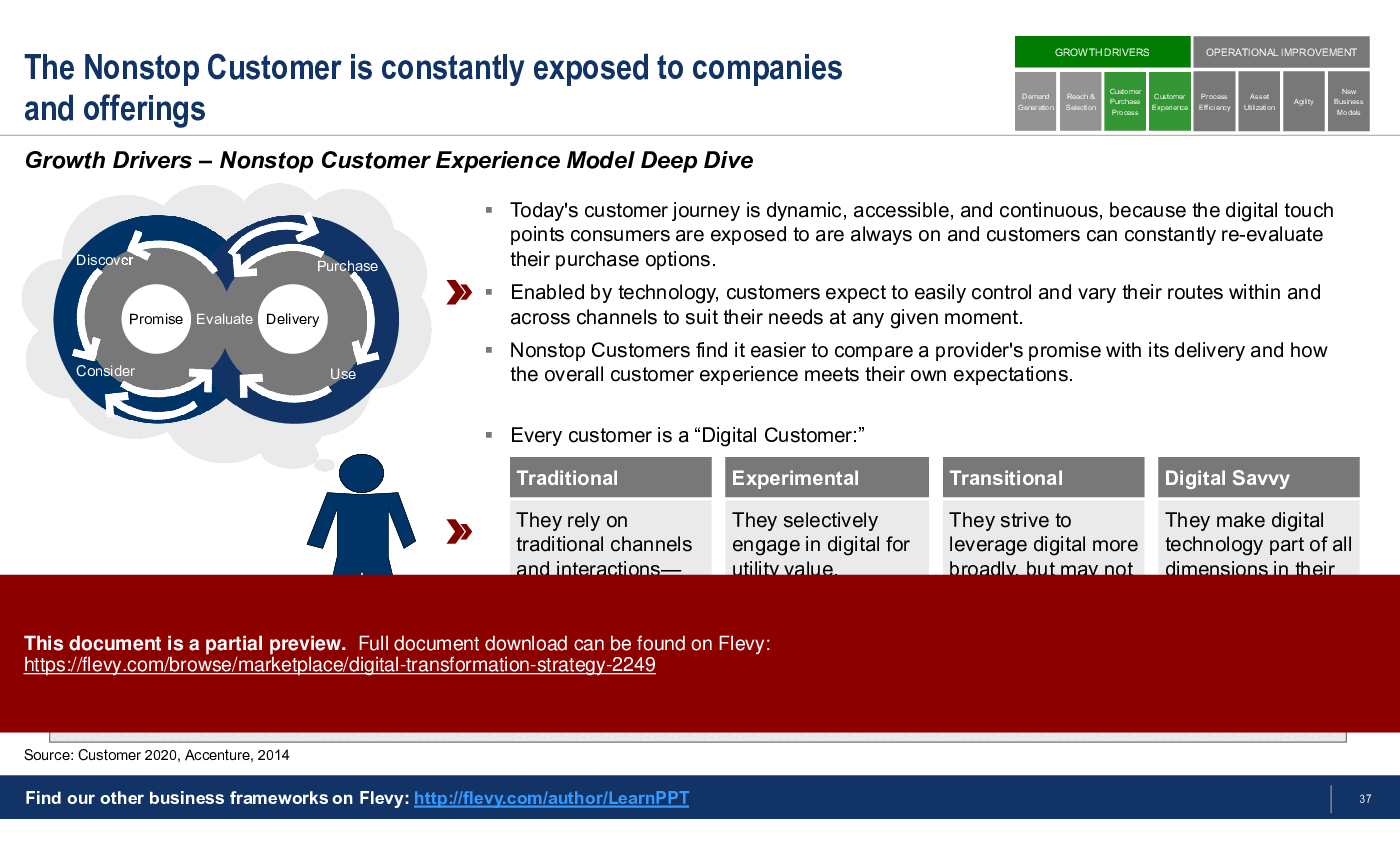
The slide outlines the evolving customer journey, introducing the "Nonstop Customer," who engages continuously with companies through digital touchpoints. The customer journey is cyclical, comprising stages: Discover, Consider, Evaluate, Purchase, Use, and Delivery, with seamless transitions based on customer needs. Technology shapes customer expectations for real-time assessments across channels, enabling quick comparisons of provider offerings. Customers are categorized into 4 types based on digital engagement: Traditional, Experimental, Transitional, and Digital Savvy, reflecting varying reliance on digital channels. The "Switching Economy" emphasizes the urgency for companies to remain relevant, as customers will switch providers if they perceive inadequate digital integration or service, underscoring the need for rapid adaptation to maintain loyalty.
This slide outlines challenges organizations face during digital transformation, necessitating a comprehensive approach to operational risks. It focuses on 2 axes: Growth & Operations and Risk & Compliance. The Growth & Operations axis identifies critical components such as new business models, distribution channels, and changing consumer needs that drive strategic growth. The Risk & Compliance section addresses pitfalls of digital initiatives, including data privacy, security, and regulatory compliance, highlighting the need for organizations to navigate these risks. Establishing controls and performance metrics is essential to align digital strategies with overall business objectives, ensuring successful digital transformation that fosters growth while preserving value.
This slide outlines a framework for developing a Digital Transformation Strategy, focusing on eight key levers categorized into Business Driver Levers and Business Enabler Levers. Business Driver Levers include Demand Generation, Reach & Selection, Customer Experience, and the Customer Purchase Process, which enhance market presence and customer engagement. Business Enabler Levers emphasize operational improvements such as Process Efficiency, Asset Utilization, Agility, and New Business Models, optimizing resources to respond to market changes. A successful Digital Transformation Strategy requires understanding the interplay between technology and these levers, prioritizing initiatives that enhance both growth and operational efficiency to improve customer experience and align with business objectives.
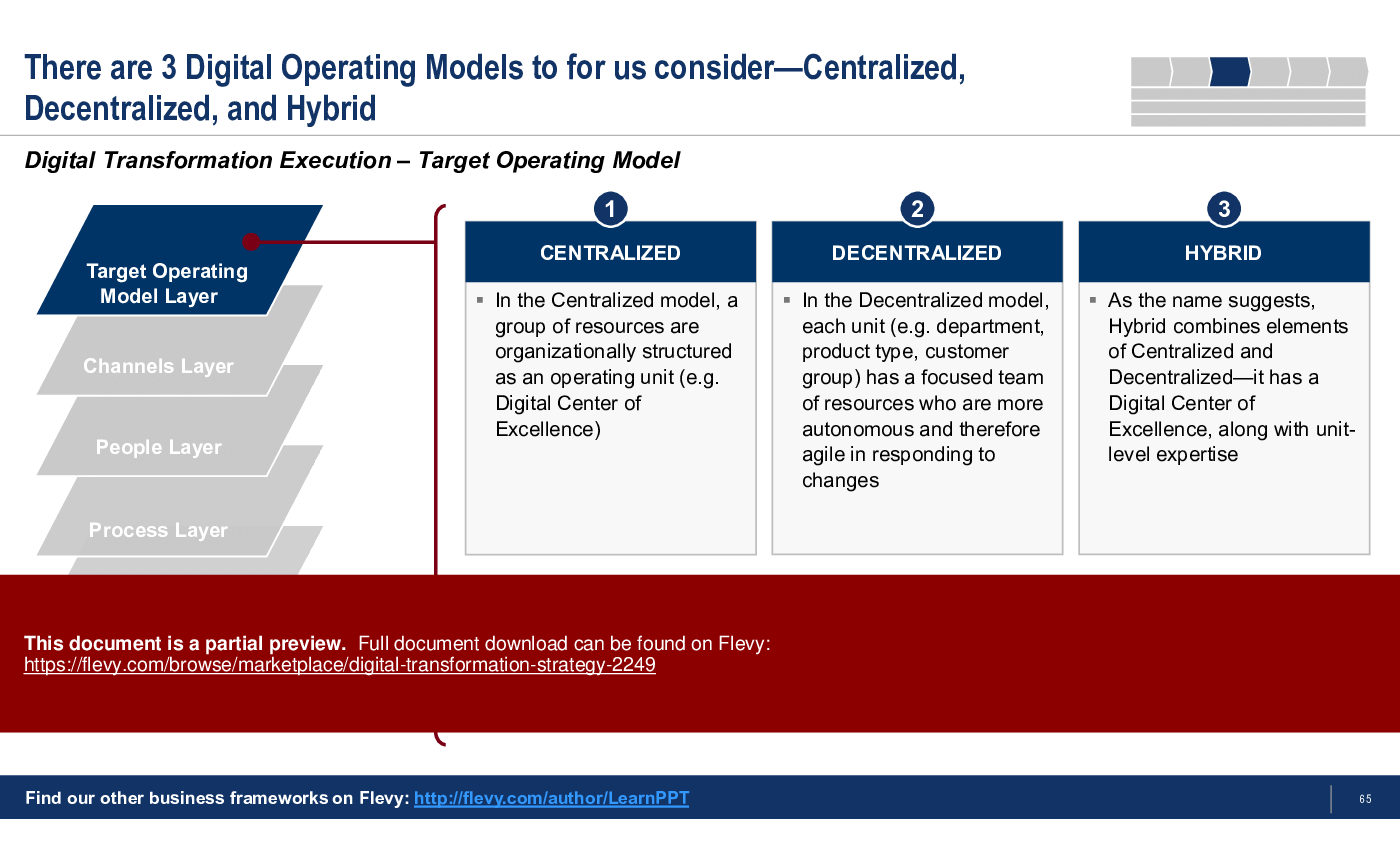
This slide presents a framework for executing digital transformation through a target operating model, emphasizing the hybrid approach as the most effective. It categorizes operational structures into 3 models: Centralized, Decentralized, and Hybrid. The Centralized model establishes a Digital Center of Excellence for uniformity and centralized decision-making, while the Decentralized model allows individual business units to operate independently, enhancing flexibility, but risking inconsistencies. The Hybrid model combines centralized oversight with decentralized functions, balancing control and agility. Effective execution in the Hybrid model requires focused coordination and clarity, aligning the operating model with organizational goals and market dynamics.
This slide outlines the foundational elements of User Experience (UX) Design, focusing on user-centric thinking. It identifies 3 core components: Human, Technology, and Organization. The Human Component influences desirability, emphasizing the importance of understanding user needs for engaging experiences. The Technology Component determines feasibility, highlighting the alignment of technical capabilities with user requirements. The Organization Component drives viability, stressing the need for organizational support in user experience initiatives. Additionally, UX is a subset of Customer Experience (CX), indicating that UX designers must consider broader customer journey elements for cohesive experiences. This framework illustrates how these components interconnect to enhance UX strategies.
The framework assesses digital maturity across 3 categories: Employee Training, General Business Processes, and Field Work, each with 4 maturity levels from basic to advanced. In Employee Training, initial levels reveal inefficiencies in knowledge transfer through traditional classroom methods, progressing to digitized training for efficient knowledge sharing, culminating in on-demand training with continuous improvement and real-time communication. General Business Processes start with manual processes and workarounds, evolving to digital processes that enhance job knowledge and automate efficiencies, with advanced stages utilizing algorithms for process optimization. Field Work begins with limited customer information access and physical workspace dependence, advancing to digitized field data and mobile device use, culminating in augmented reality and wearable device integration for transformative field operations. This structured approach enables organizations to evaluate digital maturity and strategize improvements for operational efficiency and digital transformation.
This slide illustrates the transformation in customer experience and purchase processes due to technological advancements. The traditional linear model includes stages: Discover, Consider, Evaluate, Purchase, and Use, lacking feedback mechanisms for customer loyalty. In contrast, the modern cyclical process emphasizes an iterative customer journey with phases: Discover/Consider, Evaluate, Purchase, and Experience, incorporating a feedback loop that influences future decisions. Each phase represents a battleground for companies to secure customer loyalty and drive purchases, recognizing that engagement extends beyond the sale. The presentation will explore 2 methodologies developed by leading consulting firms to navigate the complexities of the modern customer journey effectively.
Source: Best Practices in Digital Transformation, Customer Experience, Business Transformation, Cyber Security PowerPoint Slides: Digital Transformation Strategy PowerPoint (PPTX) Presentation Slide Deck, LearnPPT Consulting
This 100+ slide presentation is created by former McKinsey, BCG, Deloitte, EY, and Capgemini consultants. It provides a robust framework for formulating a Digital Transformation Strategy that drives both Growth & Cost Savings.
We are a team of management consultants trained by top tier global consulting firms (including McKinsey, BCG, Deloitte, EY, Capgemini) with a collective experience of several decades. We specialize in business frameworks based on real-life consulting engagements.
We have served 100s of clients that range from Fortune 500 companies to tech startups to
... [read more] $1B+ private companies.
Utilize our consulting frameworks to apply structured thinking & analysis to address your business challenges, uncover strategic insights, and implement workable solutions. Our PowerPoint presentations follow traditional consulting slide design formats, starting with a clear slide headline. Easily customize and repurpose our slides for your own business presentations.
Beyond business frameworks & methodologies, we also offer PowerPoint templates and other business templates. Our templates are professionally designed and have been used in thousands of deliverables & work products across hundreds of clients.
Since 2012, we have provided best practices to over 10,000 businesses and organizations of all sizes, from startups and small businesses to the Fortune 100, in over 130 countries.
Read Customer Testimonials
"As a consulting firm, we had been creating subject matter training materials for our people and found the excellent materials on Flevy, which saved us 100's of hours of re-creating what already exists on the Flevy materials we purchased."
– Michael Evans, Managing Director at Newport LLC
"FlevyPro has been a brilliant resource for me, as an independent growth consultant, to access a vast knowledge bank of presentations to support my work with clients. In terms of RoI, the value I received from the very first presentation I downloaded paid for my subscription many times over! The
quality of the decks available allows me to punch way above my weight – it's like having the resources of a Big 4 consultancy at your fingertips at a microscopic fraction of the overhead.
"
– Roderick Cameron, Founding Partner at SGFE Ltd
"As a young consulting firm, requests for input from clients vary and it's sometimes impossible to provide expert solutions across a broad spectrum of requirements. That was before I discovered Flevy.com.
Through subscription to this invaluable site of a plethora of topics that are key and crucial to consulting, I
have been able to exceed expectations and deliver quality advice and solutions to my clients. The quality and expertise of the authors are exemplary and gives me great confidence to use as part of my service offerings.
I highly recommend this company for any consultant wanting to apply international best practice standards in their service offerings.
"
– Nishi Singh, Strategist and MD at NSP Consultants
"[Flevy] produces some great work that has been/continues to be of immense help not only to myself, but as I seek to provide professional services to my clients, it gives me a large "tool box" of resources that are critical to provide them with the quality of service and outcomes they are expecting."
– Royston Knowles, Executive with 50+ Years of Board Level Experience
"Flevy is our 'go to' resource for management material, at an affordable cost. The Flevy library is comprehensive and the content deep, and typically provides a great foundation for us to further develop and tailor our own service offer."
– Chris McCann, Founder at Resilient.World
"As a consultant requiring up to date and professional material that will be of value and use to my clients, I find Flevy a very reliable resource.
The variety and quality of material available through Flevy offers a very useful and commanding source for information. Using Flevy saves me time, enhances my expertise and ends up being a good decision."
– Dennis Gershowitz, Principal at DG Associates
"As an Independent Management Consultant, I find Flevy to add great value as a source of best practices, templates and information on new trends. Flevy has matured and the quality and quantity of the library is excellent. Lastly the price charged is reasonable, creating a win-win value for
the customer, Flevy and the various authors. This is truly a service that benefits the consulting industry and associated clients. Thanks for providing this service.
"
– Jim Schoen, Principal at FRC Group
"I am extremely grateful for the proactiveness and eagerness to help and I would gladly recommend the Flevy team if you are looking for data and toolkits to help you work through business solutions."
– Trevor Booth, Partner, Fast Forward Consulting
Save with Bundles
This document is available as part of the following discounted bundle(s):
Download our FREE Digital Transformation Templates
Download our free compilation of 50+ Digital Transformation slides and templates. DX concepts covered include Digital Leadership, Digital Maturity, Digital Value Chain, Customer Experience, Customer Journey, RPA, etc.
Download our FREE Digital Transformation Templates
Get Our FREE Product.
Download our free compilation of 50+ Digital Transformation slides and templates. DX concepts covered include Digital Leadership, Digital Maturity, Digital Value Chain, Customer Experience, Customer Journey, RPA, etc.