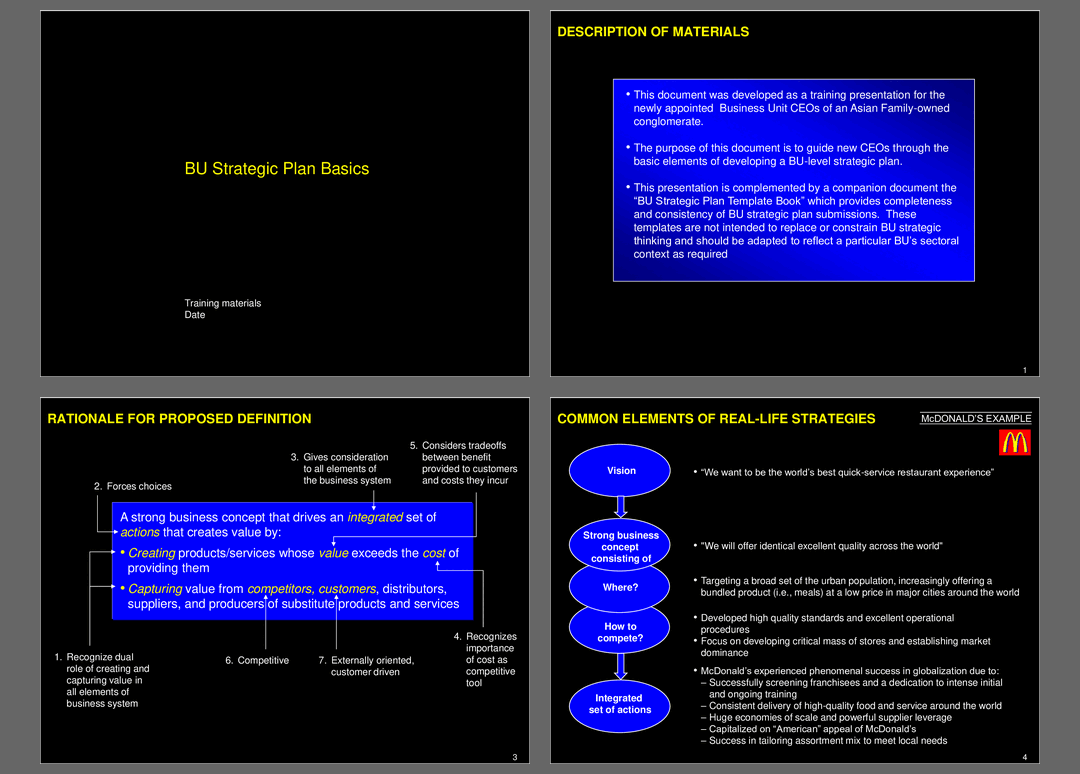

This document was developed as a training presentation for the newly appointed Business Unit CEOs of an Asian Family-owned conglomerate.
The purpose of this document is to guide new CEOs through the basic elements of developing a BU-level strategic plan.
This presentation is complemented by a companion document the "Business Unit Strategic Plan Template Book," which provides completeness and consistency of BU strategic plan submissions. These templates are not intended to replace or constrain BU strategic thinking and should be adapted to reflect a particular BU's sectoral context as required
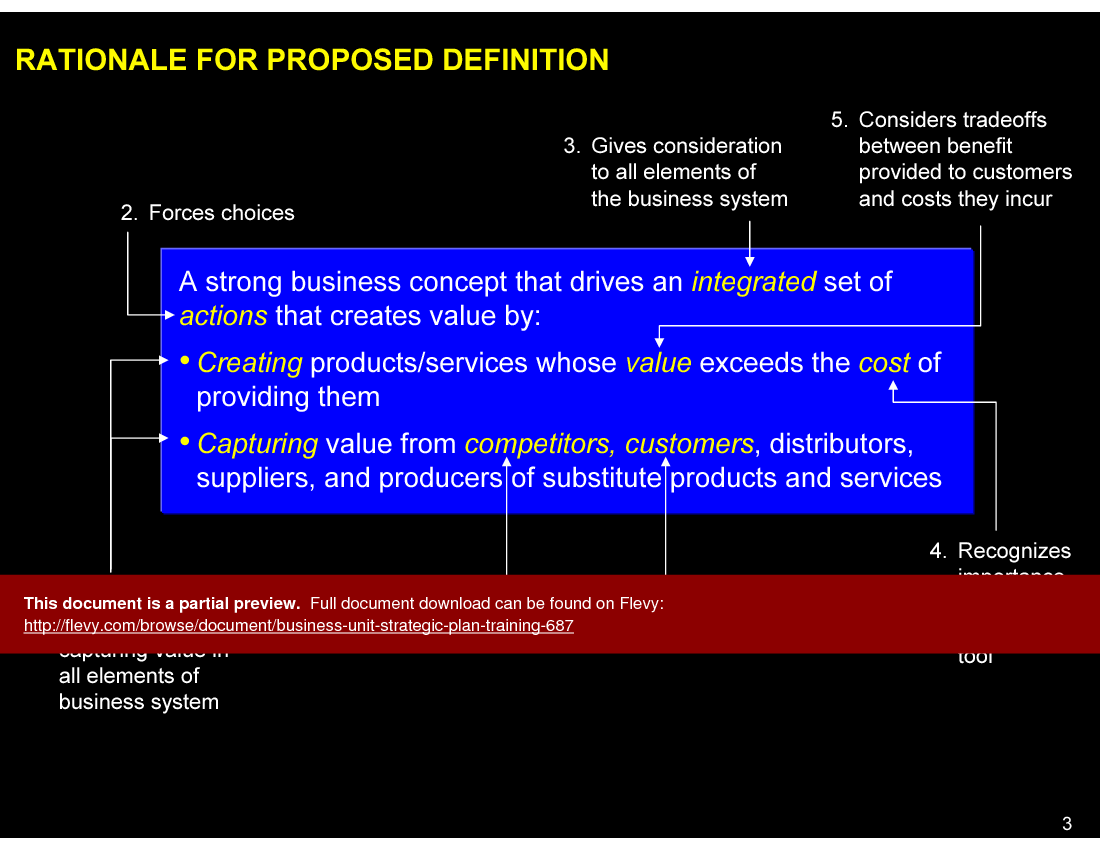
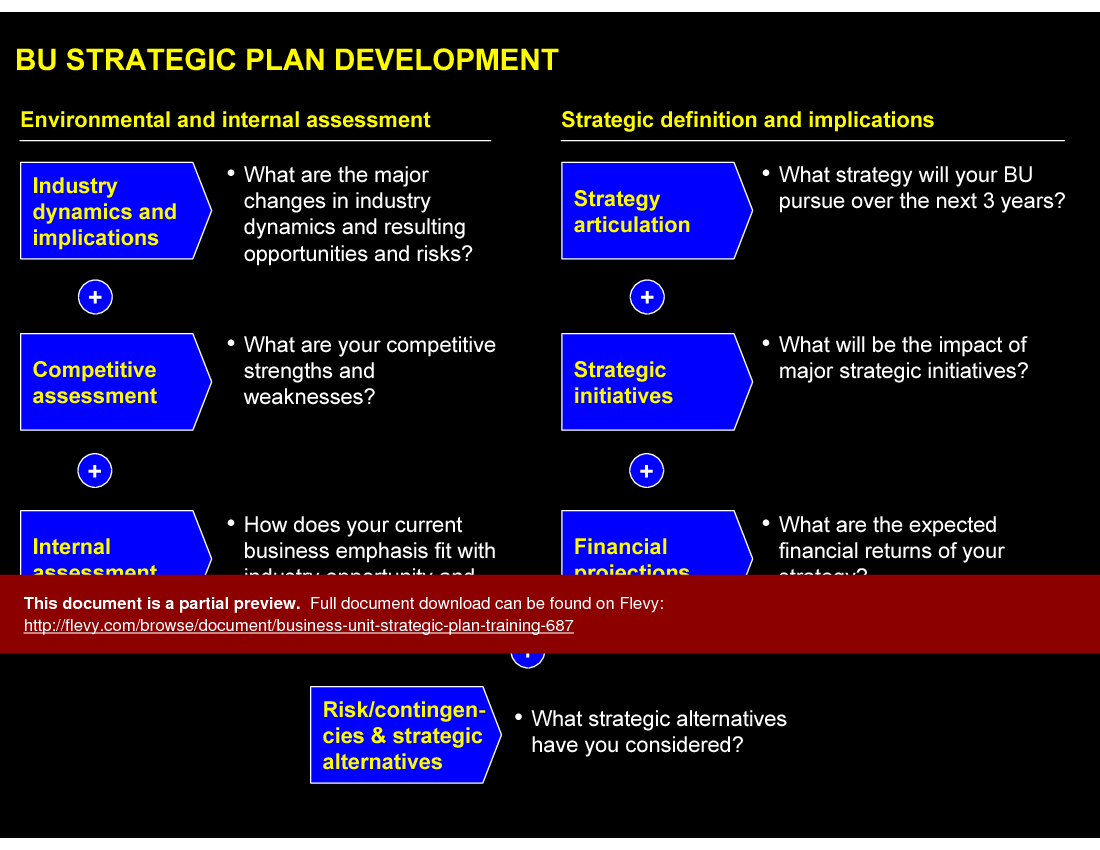
This training presentation dives deep into the essential components of a Business Unit (BU) strategic plan, ensuring that new CEOs are well-equipped to make informed decisions. It emphasizes the importance of creating products and services whose value surpasses the cost of production, and capturing value from various stakeholders including competitors and customers. The document provides a comprehensive framework for assessing industry dynamics, competitive strengths and weaknesses, and internal capabilities, all crucial for strategic planning.
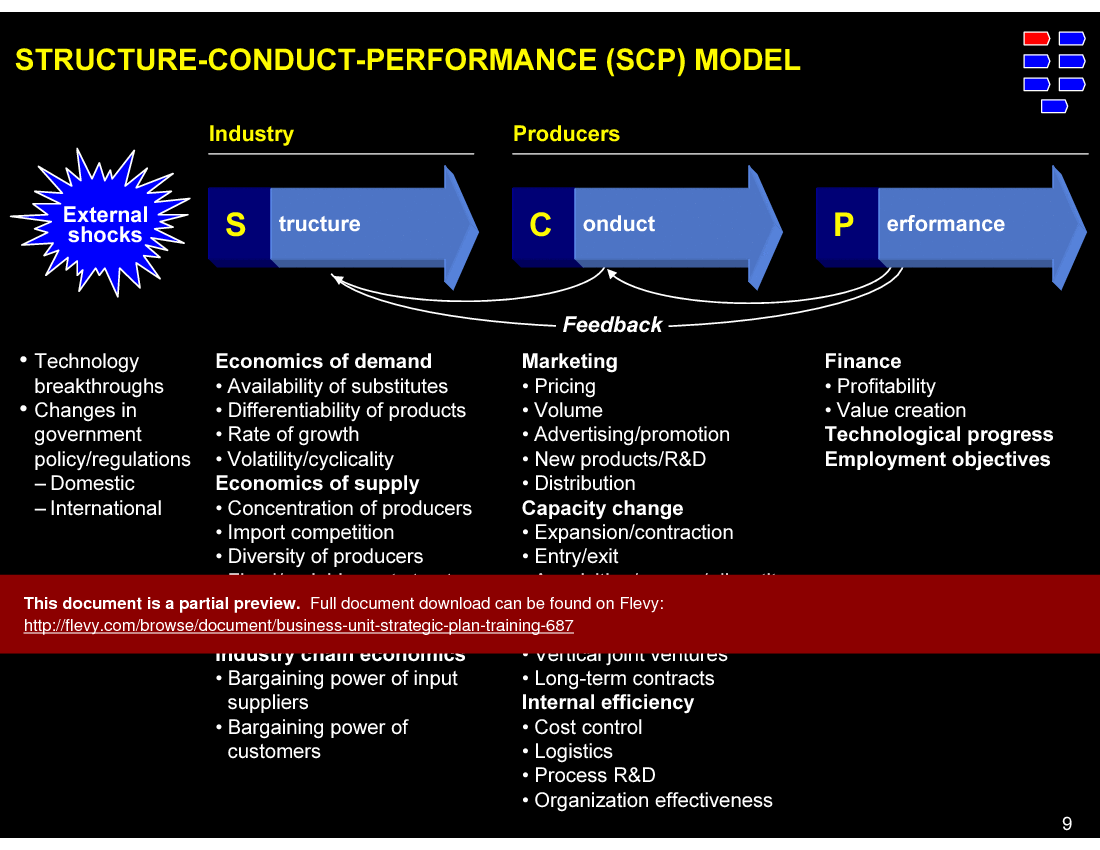
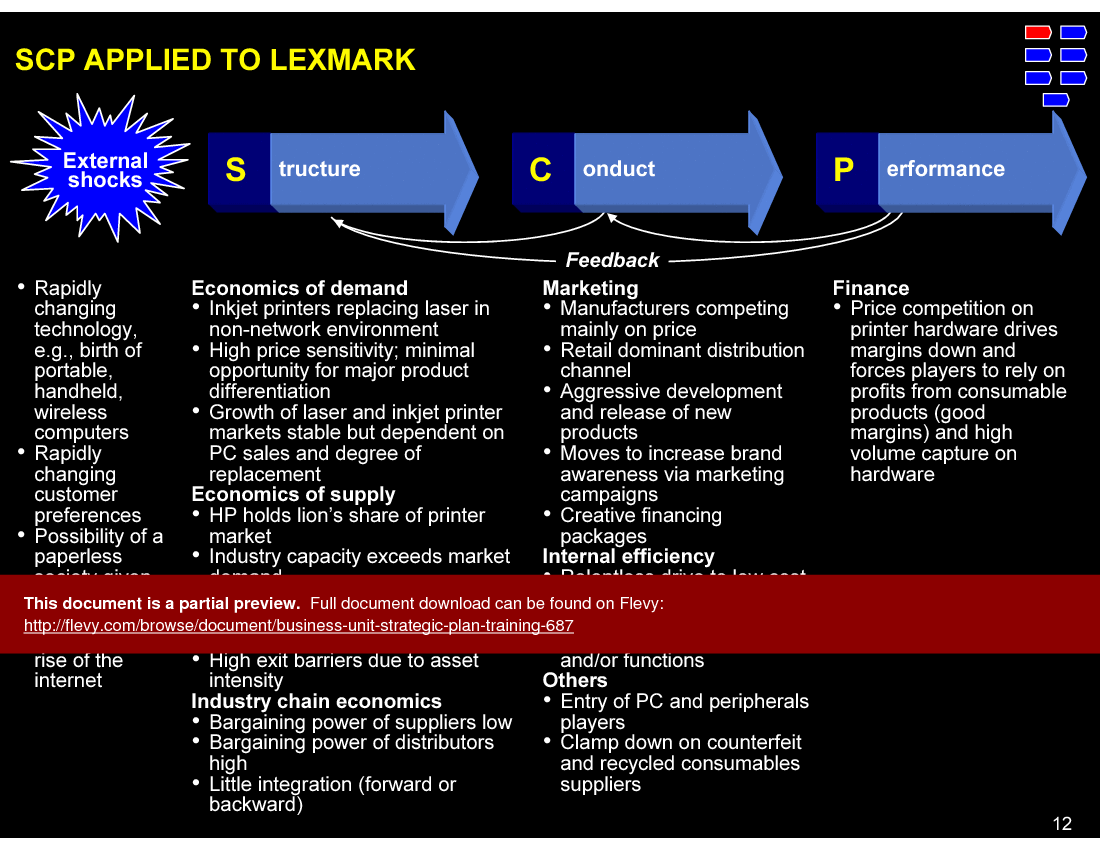
The presentation also covers the Structure-Conduct-Performance (SCP) model, highlighting how external shocks, market structure, and firm conduct impact performance. It offers a detailed analysis of how these factors apply to specific companies, providing practical insights that can be adapted to different business contexts. This model serves as a valuable tool for understanding the broader market environment and making strategic adjustments accordingly.
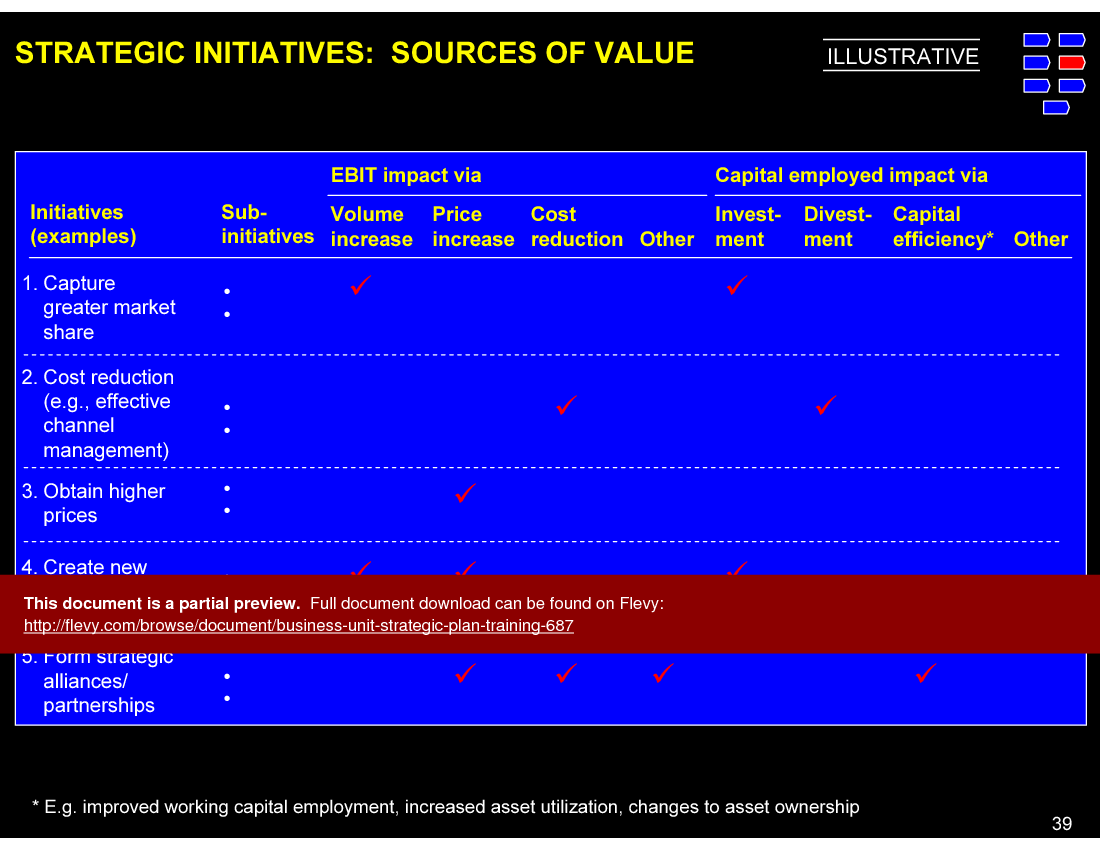
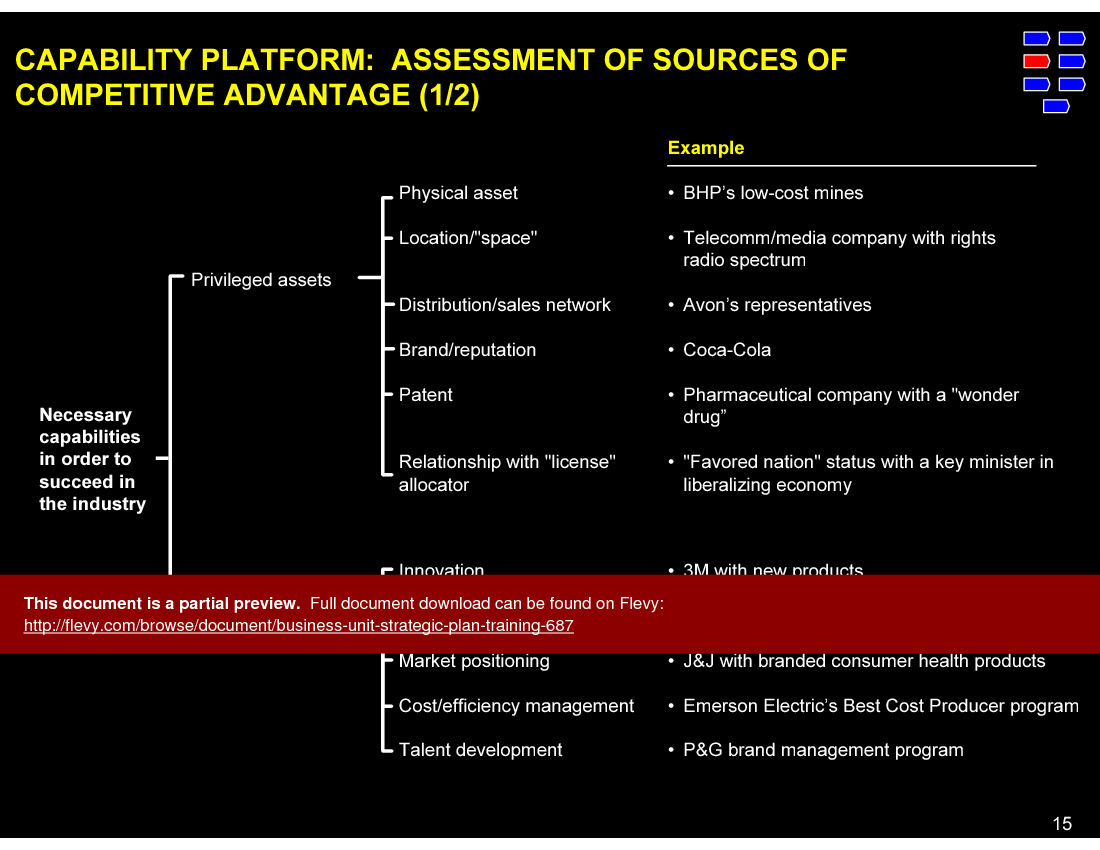
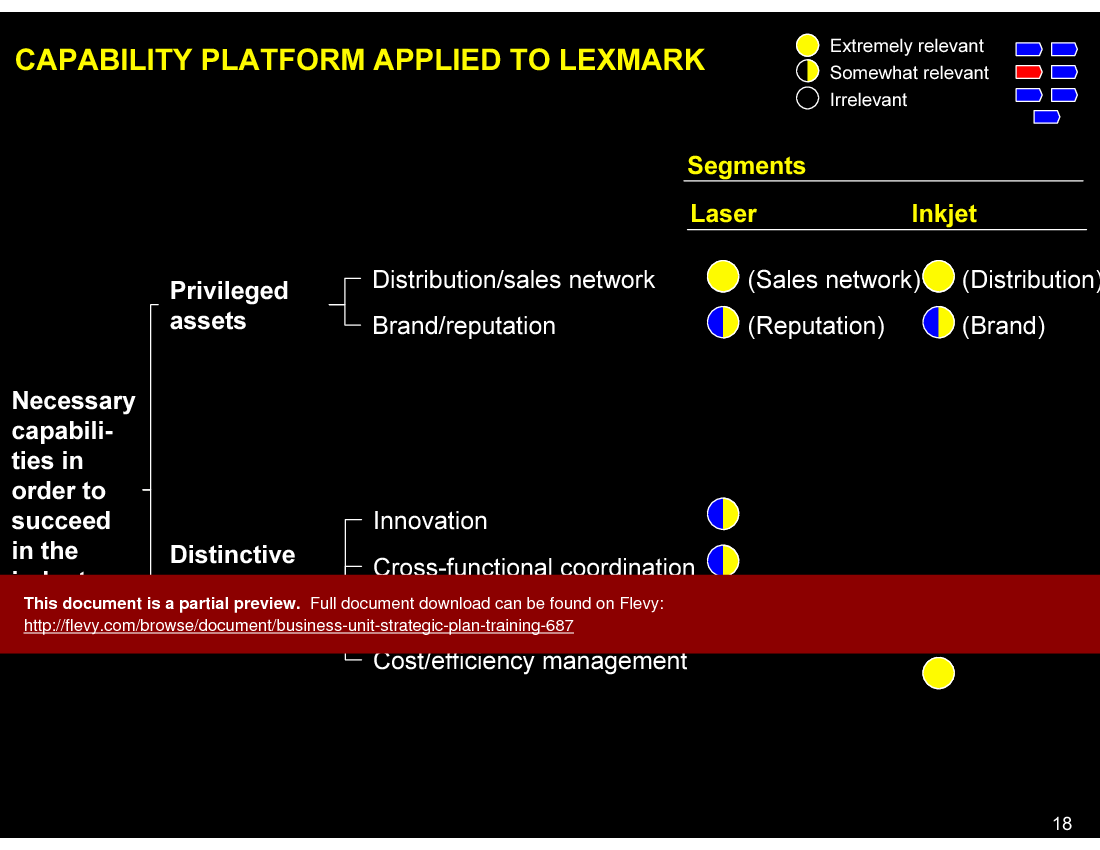
Additionally, the document includes a thorough examination of capability platforms, identifying sources of competitive advantage such as privileged assets and distinctive capabilities. It provides examples of how these capabilities have been leveraged by leading companies, offering actionable insights for new CEOs. The presentation also addresses financial projections and strategic initiatives, ensuring that all aspects of the BU strategic plan are covered comprehensively.
Got a question about the product? Email us at support@flevy.com or ask the author directly by using the "Ask the Author a Question" form. If you cannot view the preview above this document description, go here to view the large preview instead.
Executive Summary
The Business Unit Strategic Plan Training presentation is designed for newly appointed Business Unit CEOs within an Asian family-owned conglomerate. This McKinsey, Bain, or BCG-quality training material provides a structured approach to developing a comprehensive BU-level strategic plan. It equips CEOs with the necessary frameworks and methodologies to create value through effective strategy articulation, competitive assessment, and financial projections. By utilizing this presentation, new leaders will be able to navigate the complexities of strategic planning and drive their business units toward sustainable growth.
Who This Is For and When to Use
• Newly appointed Business Unit CEOs seeking foundational knowledge in strategic planning
• Senior executives responsible for guiding strategic initiatives within their business units
• Consultants and advisors supporting BU leaders in strategic development
• Teams involved in competitive analysis and market positioning
Best-fit moments to use this deck:
• Onboarding sessions for new CEOs to establish strategic planning frameworks
• Quarterly strategy reviews to assess and refine BU strategic plans
• Workshops focused on competitive assessments and market dynamics
Learning Objectives
• Define the core components of a Business Unit strategy and its importance
• Build a comprehensive strategic plan that aligns with industry dynamics
• Establish a framework for competitive assessment and internal capabilities evaluation
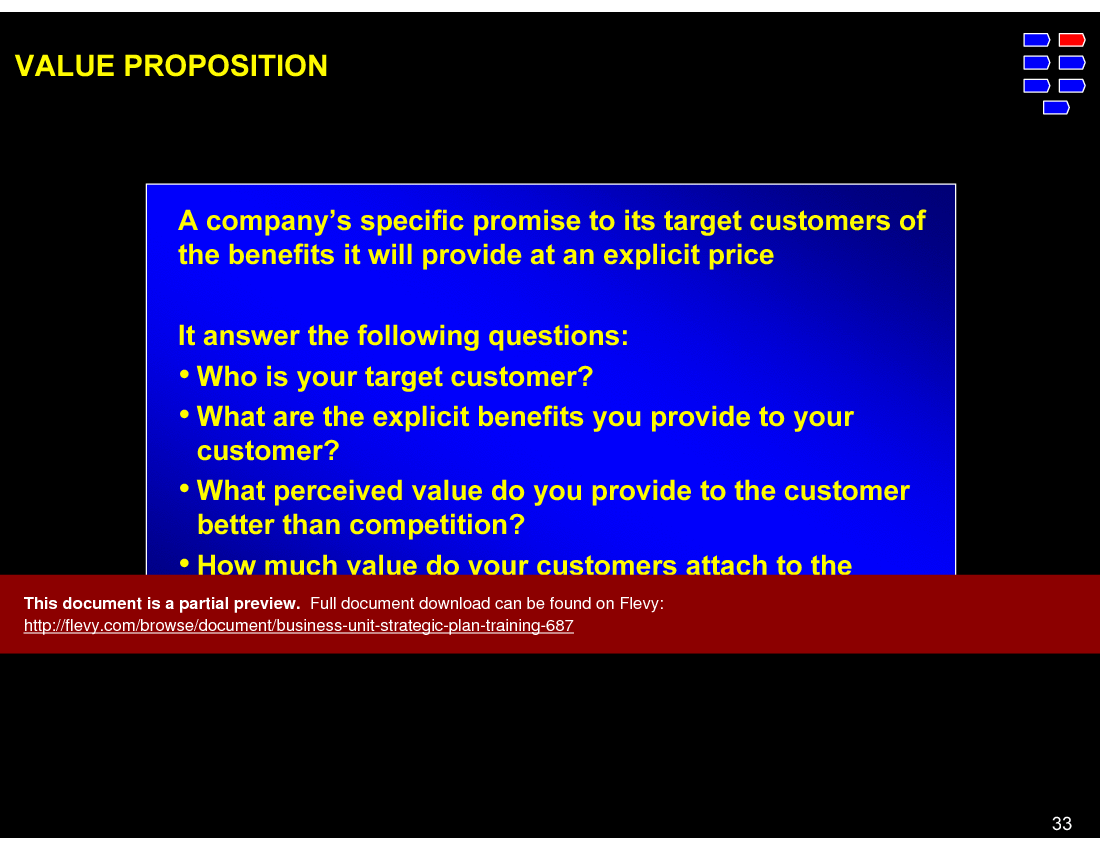
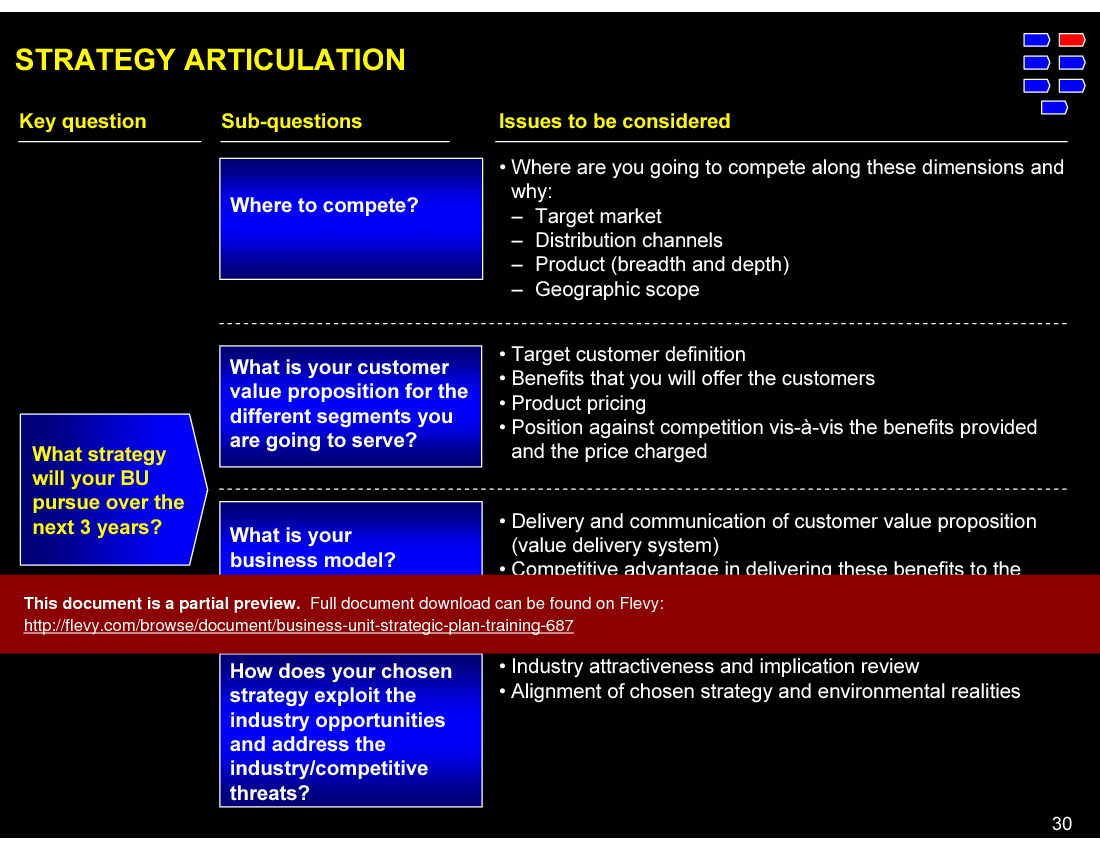
• Articulate a clear value proposition tailored to target customer segments
• Develop financial projections that support strategic initiatives
• Identify and mitigate risks associated with strategic choices
Table of Contents
• Introduction to BU Strategy (page 1)
• Key Elements of a BU Strategy (page 2)
• Competitive Assessment Framework (page 6)
• Industry Dynamics and Implications (page 7)
• SWOT Analysis (page 11)
• Structure-Conduct-Performance (SCP) Model (page 9)
• Capability Assessment (page 15)
• Financial Projections Overview (page 43)
• Risk and Contingencies (page 47)
Primary Topics Covered
• BU Strategy Definition - A Business Unit strategy is a strong business concept that integrates actions to create and capture value, ensuring alignment with market dynamics.
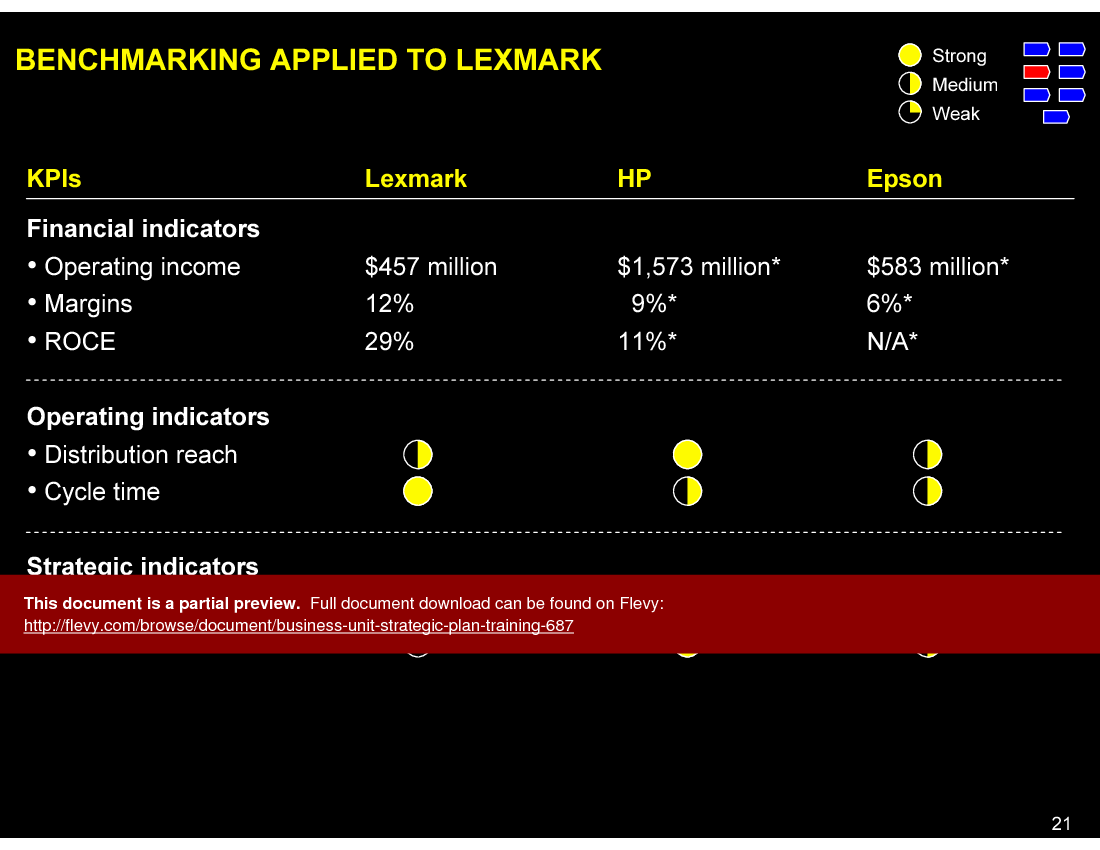
• Competitive Assessment - This involves evaluating internal capabilities against industry standards and competitor performance to identify strengths and weaknesses.
• SWOT Analysis - A structured approach to identify internal strengths and weaknesses alongside external opportunities and threats, guiding strategic decision-making.
• SCP Model - The Structure-Conduct-Performance model analyzes industry dynamics to understand competitive behavior and performance outcomes.
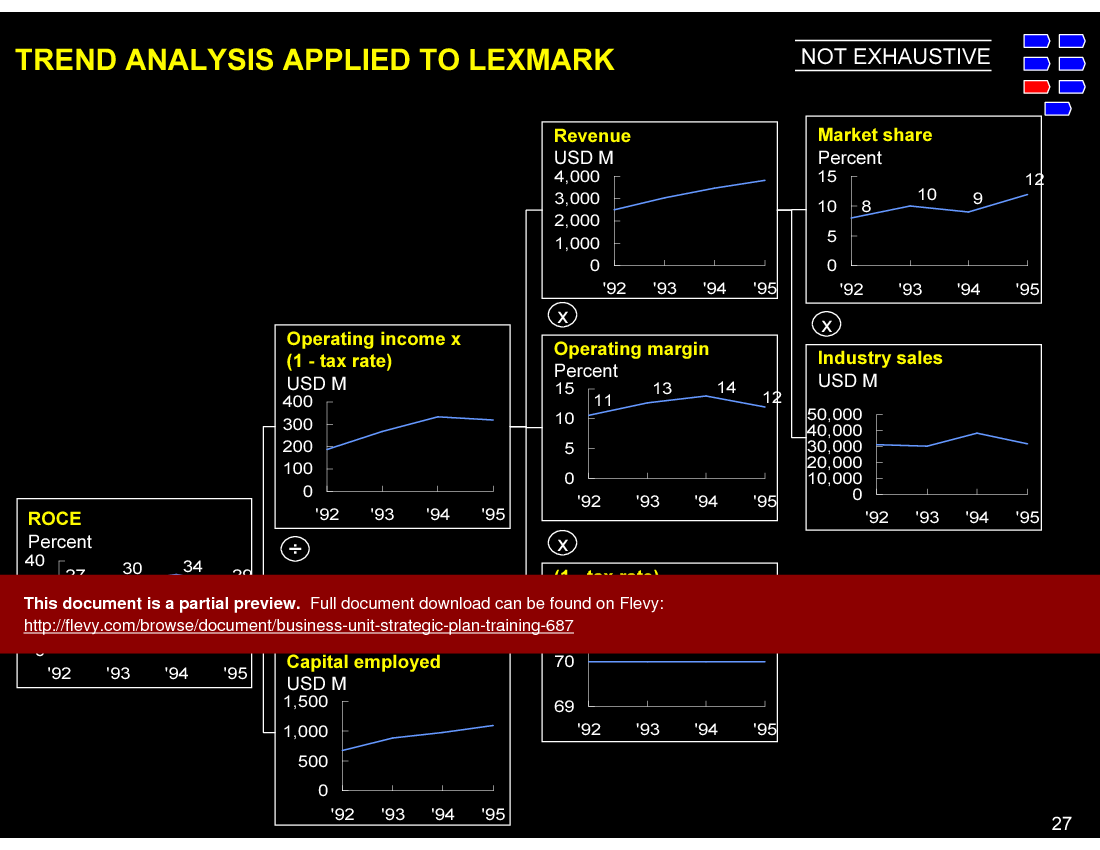
• Financial Projections - Key financial metrics and forecasts that support the strategic plan, including revenue, costs, and expected returns on investment.
• Risk Management - Identifying potential risks associated with strategic choices and developing contingency plans to mitigate these risks.
Deliverables, Templates, and Tools
• Business Unit Strategic Plan Template for structured submissions
• Competitive Assessment Framework for evaluating market position
• Financial Projection Models to forecast income statements and cash flows
• SWOT Analysis Template for internal and external assessments
• SCP Model Framework for analyzing industry dynamics
• Risk Assessment Checklist for identifying and managing strategic risks
Slide Highlights
• Overview of the BU strategy definition emphasizing value creation and capture
• Interactive debate slide illustrating the importance of competitive assessment
• Visual representation of the SCP model linking industry structure to performance
• SWOT analysis framework highlighting internal and external factors
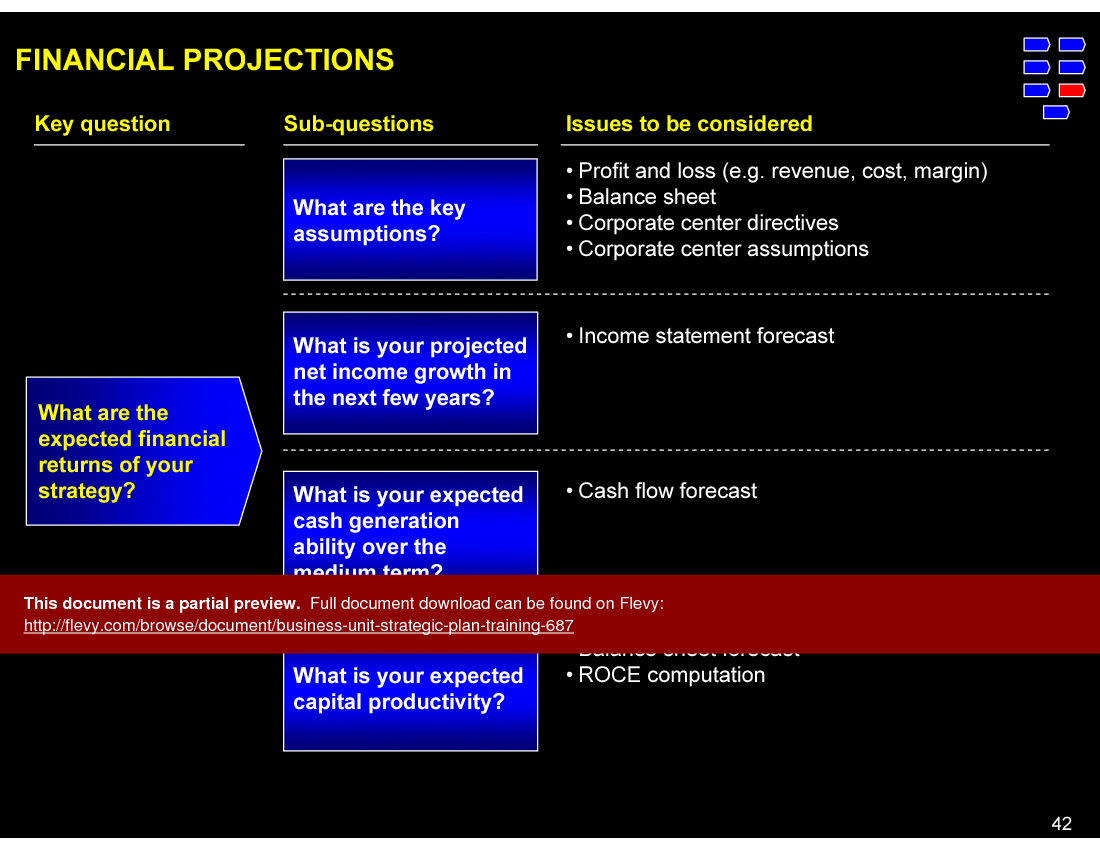
• Financial projections slide detailing key assumptions and expected outcomes
Potential Workshop Agenda
Introduction to BU Strategy (60 minutes)
• Discuss the importance of a strong business concept
• Review key elements of a BU strategy
• Explore case studies of successful BU strategies
Competitive Assessment Workshop (90 minutes)
• Conduct a competitive landscape analysis
• Identify internal capabilities and benchmark against competitors
• Develop a preliminary SWOT analysis
Financial Projections and Risk Management Session (90 minutes)
• Outline financial forecasting methods and key metrics
• Discuss risk identification and contingency planning
• Create a draft financial projection model
Customization Guidance
• Tailor the strategic plan template to reflect specific industry contexts and BU needs
• Adjust financial projection assumptions based on historical performance and market conditions
• Incorporate unique value propositions that resonate with target customer segments
Secondary Topics Covered
• Industry dynamics and their implications for strategic planning
• Market segmentation and targeting strategies
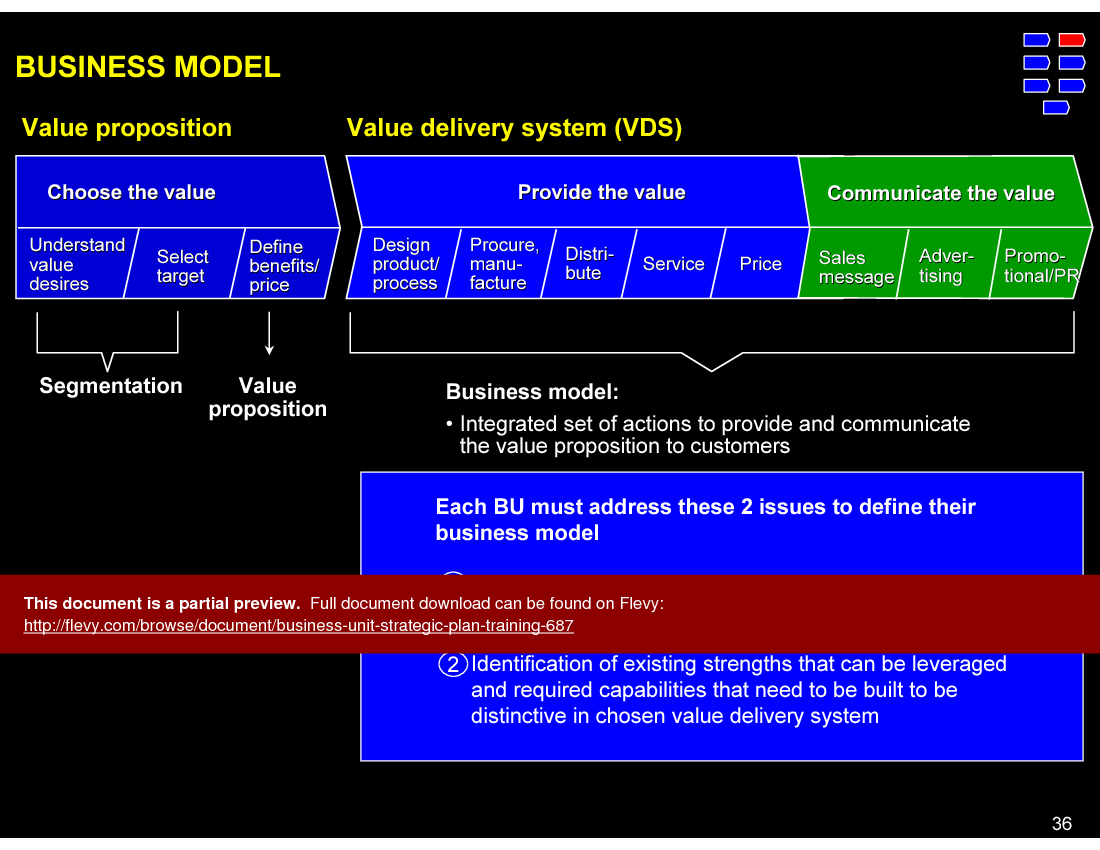
• Value proposition development for diverse customer segments
• Strategic initiatives and their expected financial impacts
• Long-term strategic alternatives beyond the initial plan
FAQ
What is a Business Unit strategy?
A Business Unit strategy is a comprehensive plan that integrates actions to create and capture value, ensuring alignment with market dynamics and competitive positioning.
How do I conduct a competitive assessment?
A competitive assessment involves evaluating your internal capabilities against industry standards and competitor performance to identify strengths, weaknesses, and market opportunities.
What is the SCP model?
The Structure-Conduct-Performance model analyzes the relationship between industry structure, competitive behavior, and performance outcomes, providing insights into strategic positioning.
How do I create financial projections?
Financial projections involve forecasting key metrics such as revenue, costs, and margins based on market assumptions, historical performance, and strategic initiatives.
What is a SWOT analysis?
A SWOT analysis is a structured framework for identifying internal strengths and weaknesses alongside external opportunities and threats, guiding strategic decision-making.
How can I tailor the strategic plan template?
Customize the strategic plan template by reflecting specific industry contexts, adjusting financial assumptions, and incorporating unique value propositions relevant to your BU.
What are the key components of risk management in strategic planning?
Key components include identifying potential risks, assessing their impact, developing contingency plans, and continuously monitoring the external environment for changes.
How do I articulate a value proposition?
A value proposition clearly defines the benefits your product or service provides to target customers, differentiating it from competitors and addressing customer needs effectively.
Glossary
• Business Unit (BU) - A segment of a company focused on a specific market or product line.
• SWOT Analysis - A framework for identifying strengths, weaknesses, opportunities, and threats.
• SCP Model - Structure-Conduct-Performance model analyzing industry dynamics.
• Financial Projections - Forecasts of future financial performance based on strategic initiatives.
• Value Proposition - A statement outlining the benefits provided to customers at a specific price.
• Competitive Assessment - Evaluation of a company's position relative to its competitors.
• Risk Management - The process of identifying, assessing, and mitigating risks associated with strategic choices.
• Market Segmentation - The process of dividing a market into distinct groups of buyers.
• Strategic Initiatives - Specific actions or projects aimed at achieving strategic objectives.
• Contingency Plans - Plans developed to address potential risks or unforeseen events.
• Industry Dynamics - The factors and trends that shape the competitive landscape of an industry.
• Financial Metrics - Key performance indicators used to assess financial health and performance.
• Internal Assessment - Evaluation of a company's internal capabilities and resources.
• External Assessment - Analysis of external market conditions and competitive forces.
• Value Delivery System (VDS) - The integrated set of actions to provide and communicate value to customers.
• Target Market - The specific group of customers a business aims to serve.
• Operational Procedures - Established methods for conducting business activities efficiently.
• Market Positioning - The process of establishing a brand or product in the minds of consumers.
• Customer Value Proposition - The promise of value to be delivered to customers.
• Strategic Alternatives - Different strategic options considered in response to market conditions.
• Contingency Planning - Preparing alternative plans to address potential risks or changes in strategy.
Source: Best Practices in Strategic Plan Example, Business Unit Strategy PowerPoint Slides: Business Unit Strategic Plan Training PowerPoint (PPT) Presentation Slide Deck, Documents & Files
|
Download our FREE Strategy & Transformation Framework Templates
Download our free compilation of 50+ Strategy & Transformation slides and templates. Frameworks include McKinsey 7-S, Balanced Scorecard, Disruptive Innovation, BCG Curve, and many more. |