
This framework is developed by a team of former McKinsey and Big 4 consultants. The presentation follows the headline-body-bumper slide format used by global consulting firms.
Editor Summary
25-slide PowerPoint presentation "CRM and the Customer Experience" by LearnPPT Consulting, covering CRM Design, CXP Design, and Strategy Implementation.
Read moreAddresses customer economic value assessment, customer segmentation, crafting value propositions, customer lifecycle management (acquisition, retention, growth), behavioral science in interactions, and technology and organizational integration. Includes a detailed CRM Index to assess current and future positioning. Used for the final phase of a Customer Analysis Approach where prior analyses are integrated. Available on Flevy with immediate digital download.
Use this presentation when an organization must translate customer analytics and recommendations into a coherent CRM strategy and operational customer experience program — for example after completing customer segmentation or value-proposition work.
Chief Customer Officer building a business case and economic model to justify CRM investments and prioritize initiatives.
CRM manager benchmarking current vs. desired performance and using a CRM Index to prioritize segmentation and retention actions.
Customer experience designer mapping interaction points and applying behavioral science to improve satisfaction and conversion.
Strategy consultant creating an implementation plan that integrates technology and organizational structure changes.
The three-section structure (CRM Design, CXP Design, Strategy Implementation) links diagnosis to actionable implementation consistent with phased consulting practice.
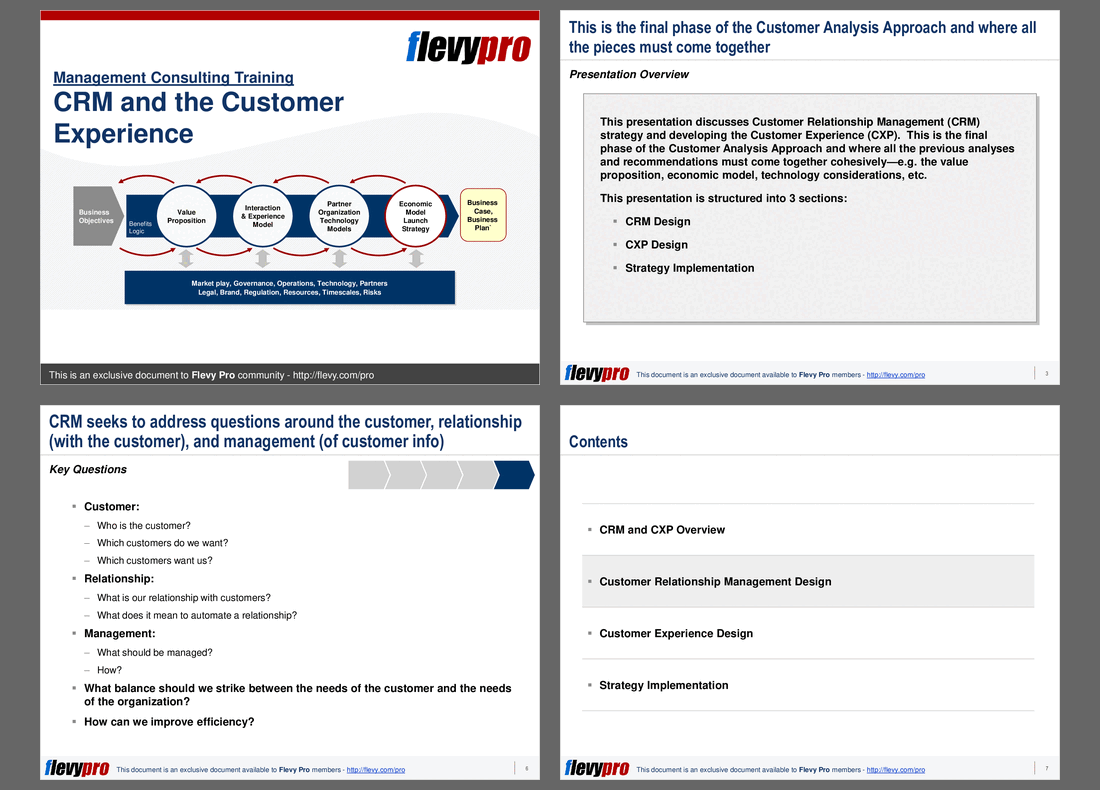
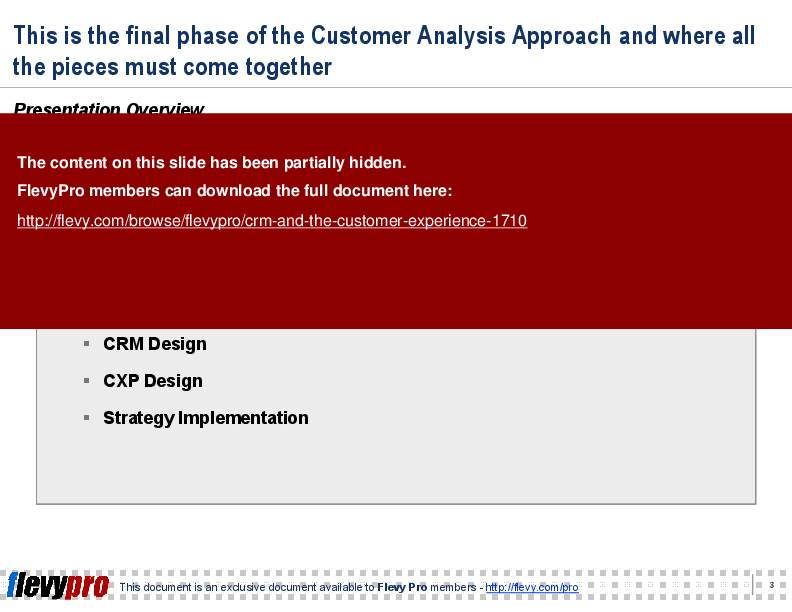
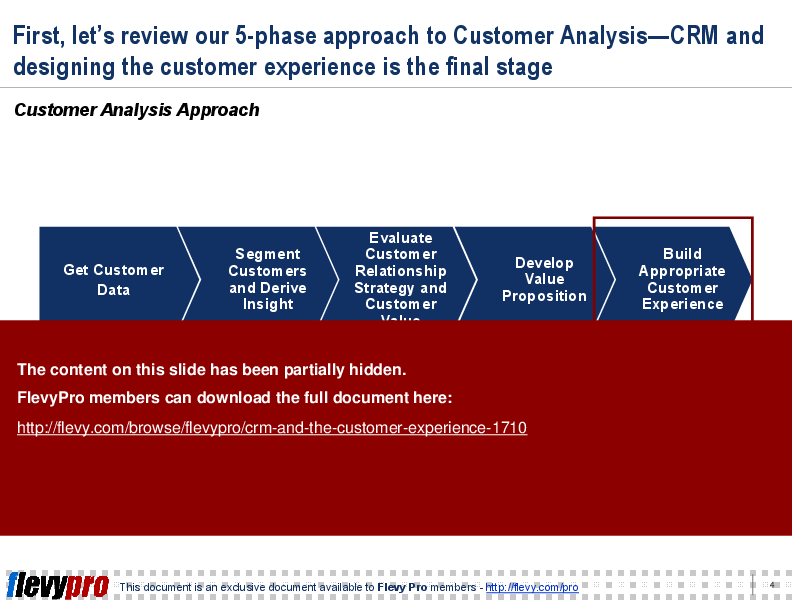
This presentation discusses Customer Relationship Management (CRM) strategy and developing the Customer Experience (CXP). This is the final phase of the Customer Analysis Approach and where all the previous analyses and recommendations must come together cohesively—e.g. the value proposition, economic model, technology considerations, etc.
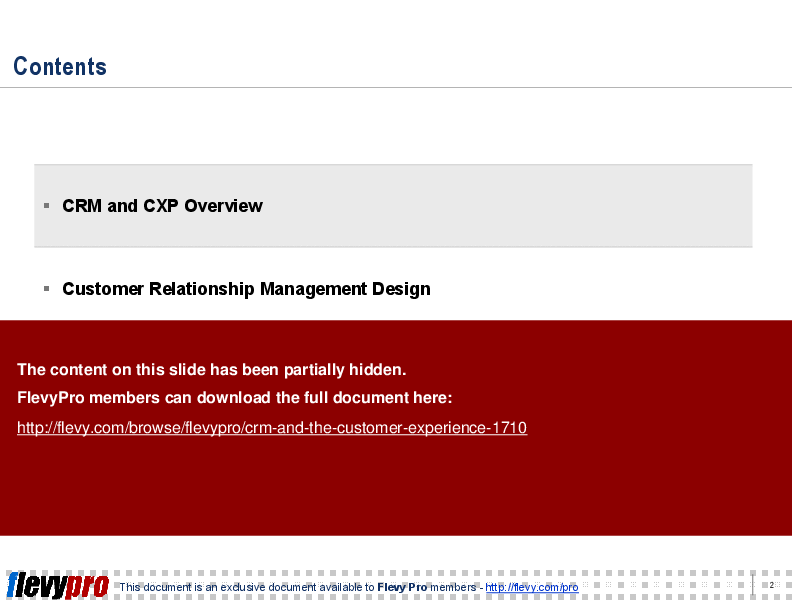
This presentation is structured into 3 sections:
1. CRM Design
2. CXP Design
3. Strategy Implementation
This comprehensive presentation delves into the intricate relationship between CRM and CXP, emphasizing the critical role of aligning customer relationship strategies with customer experience design. It provides a structured approach to understanding customer economic value, segmenting customers, and crafting value propositions that meet their needs. The PPT also explores the dynamics of customer interactions and the behavioral science principles that can enhance customer satisfaction.
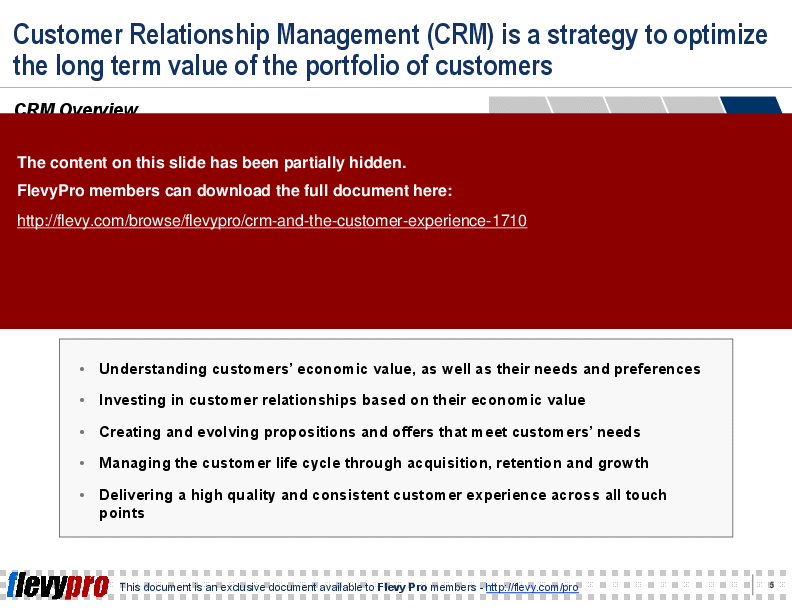
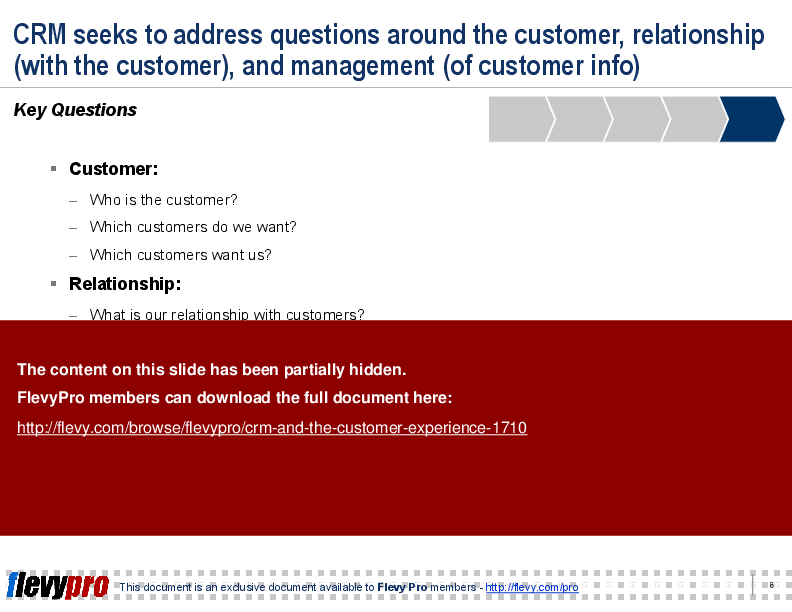
The presentation highlights the importance of managing customer life cycles through acquisition, retention, and growth. It addresses key questions around customer identification, relationship management, and the effective use of customer information. The document provides a detailed CRM Index to help organizations understand their current and future positioning, offering actionable insights for optimizing customer relationships.
Executives will find value in the strategic implementation section, which outlines the necessary steps for aligning CRM strategies with business objectives. It covers the development of business cases, economic models, and the integration of technology and organizational structures. This presentation is an essential resource for any organization looking to enhance its customer relationship management and deliver a superior customer experience.
What are the core components of an effective CRM strategy?
An effective CRM strategy links customer economic value assessment, segmentation, and tailored value propositions with operational enablers: lifecycle management, customer identification and information use, and technology/organizational alignment. The overview highlights these components and consolidates them into a diagnostic CRM Index.
How does customer experience (CXP) design complement CRM activities?
CXP design aligns the customer's interaction journey with relationship objectives by mapping customer touchpoints, applying behavioral science to influence satisfaction and behavior, and ensuring propositions and processes deliver expected value. CXP work connects interaction design to CRM metrics and behavioral principles.
What is a CRM Index and how can it be used in planning?
A CRM Index is a diagnostic tool to assess an organization’s current and target CRM positioning, enabling benchmarking and prioritization of initiatives across acquisition, retention, and growth. The presentation "CRM and the Customer Experience" includes a detailed CRM Index for positioning analysis.
Which customer lifecycle stages should CRM programs manage?
CRM programs should explicitly manage acquisition, retention, and growth, aligning value propositions, segmentation, and economic models to each stage. The document overview emphasizes lifecycle management across these 3 stages as central to strategy and implementation.
What should I look for in a CRM/CXP slide deck when evaluating vendors on budget and time constraints?
Prioritize decks that connect diagnostics to delivery: clear CRM design, CXP mapping, and strategy implementation sections; inclusion of business case development, economic modeling, and technology/organizational integration. Those elements indicate focus on both justification and execution, such as a business case and economic model.
How does a structured presentation help convert analysis into implementable CRM actions?
A structured presentation organizes diagnostics (segmentation, value proposition, CRM Index) into design choices and then into implementation steps for technology, organization, and business cases. That staged flow aligns analysis to execution as reflected by the 3 sections in the presentation.
I need to align CRM investments with business objectives—what practical steps should I take?
Build a business case that ties projected customer economic value to investment options, map how segmentation and value propositions drive revenue or retention, and specify required technology and organizational changes. The "CRM and the Customer Experience" presentation outlines these steps and supports business case and economic model development.
After completing customer analysis, how do I create an implementation plan that brings recommendations together?
Use a final-phase approach that consolidates value propositions, economic models, technology considerations, and organizational impacts into prioritized initiatives, timelines, and governance. The presentation positions this consolidation as the Strategy Implementation section, integrating prior analyses and recommendations.
This PPT slide presents a framework for customer positioning using a CRM Index, categorizing customers into segments: Relationship Optimizers, Customer Satisfiers, Pleasant Transactors, Basic Connectors, and Enterprise Connectors. Each segment requires tailored engagement strategies to maximize value and enhance relationships. Businesses should prioritize satisfying customers to maintain revenue streams rather than focusing solely on individual profitability, indicating a shift towards a holistic view of customer value. Relationship Optimizers need nuanced approaches, supported by real-time access to customer data. In contrast, Basic and Pleasant Transactors may respond better to mass marketing techniques, underscoring the need for differentiated strategies aligned with each segment's characteristics. Adapting engagement strategies based on CRM Index insights is essential for nurturing customer relationships and driving long-term success.
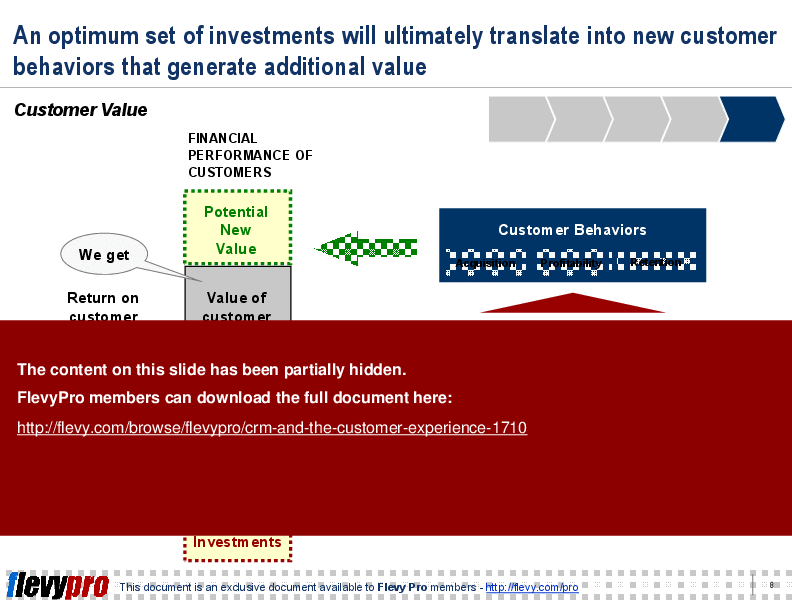
This PPT slide presents a framework for understanding the relationship between investments in customer relationships and enhanced customer behaviors, leading to increased value. It highlights "Potential New Value" from customer interactions and the "Value of customer behavior," indicating that leveraging customer actions can improve financial outcomes. The framework contrasts what the business receives ("We get") against what it invests ("We got"), emphasizing the importance of measuring returns on customer relationships. Customer interactions are categorized into 3 areas: Customer Behaviors (acquisition, profitability, retention), Customer Experiences (finding, buying, enjoying, exploring), and Capabilities (People, Processes, Technology, Customer Knowledge). This holistic approach integrates various capabilities to optimize interactions and enhance overall value generation.
This PPT slide illustrates customer value variability, highlighting that not all customers contribute equally to profitability. A bell curve depicts customer distribution based on profitability, with the x-axis representing profitability per customer and the y-axis showing the number of customers. The peak at "moderately profitable" indicates most customers fall into this category, while fewer are unprofitable or highly profitable. Key questions prompt reflection on customer management strategies, including reasons for unprofitability and potential cost reductions. A three-dimensional model shows the relationship between relationship duration, profitability, and the number of relationships, suggesting that optimizing these factors enhances business potential. The upward trend labeled "Customer Optimisation" indicates that increasing relationship duration and profitability can lead to greater success. Overall, a business's potential hinges on the number, profitability, and duration of customer relationships.
Source: Best Practices in Customer Experience, Customer Relationship Management PowerPoint Slides: CRM and the Customer Experience PowerPoint (PPT) Presentation Slide Deck, LearnPPT Consulting
This framework is developed by a team of former McKinsey and Big 4 consultants. The presentation follows the headline-body-bumper slide format used by global consulting firms.
For $10.00 more, you can download this document plus 2 more FlevyPro documents. That's just $13 each.
ABOUT FLEVYPRO
This document is part of the FlevyPro Library, a curated knowledge base of documents for our FlevyPro subscribers.

FlevyPro is a subscription service for on-demand business frameworks and analysis tools. FlevyPro subscribers receive access to an exclusive library of curated business documents—business framework primers, presentation templates, Lean Six Sigma tools, and more—among other exclusive benefits.
Since 2012, we have provided business templates to over 10,000 businesses and organizations of all sizes, from startups and small businesses to the Fortune 100, in over 130 countries.
"[Flevy] produces some great work that has been/continues to be of immense help not only to myself, but as I seek to provide professional services to my clients, it gives me a large "tool box" of resources that are critical to provide them with the quality of service and outcomes they are expecting."
– Royston Knowles, Executive with 50+ Years of Board Level Experience
"As a consulting firm, we had been creating subject matter training materials for our people and found the excellent materials on Flevy, which saved us 100's of hours of re-creating what already exists on the Flevy materials we purchased."
– Michael Evans, Managing Director at Newport LLC
"As a niche strategic consulting firm, Flevy and FlevyPro frameworks and documents are an on-going reference to help us structure our findings and recommendations to our clients as well as improve their clarity, strength, and visual power. For us, it is an invaluable resource to increase our impact and value."
– David Coloma, Consulting Area Manager at Cynertia Consulting
"The wide selection of frameworks is very useful to me as an independent consultant. In fact, it rivals what I had at my disposal at Big 4 Consulting firms in terms of efficacy and organization."
– Julia T., Consulting Firm Owner (Former Manager at Deloitte and Capgemini)
"Flevy is our 'go to' resource for management material, at an affordable cost. The Flevy library is comprehensive and the content deep, and typically provides a great foundation for us to further develop and tailor our own service offer."
– Chris McCann, Founder at Resilient.World
"I am extremely grateful for the proactiveness and eagerness to help and I would gladly recommend the Flevy team if you are looking for data and toolkits to help you work through business solutions."
– Trevor Booth, Partner, Fast Forward Consulting
"If you are looking for great resources to save time with your business presentations, Flevy is truly a value-added resource. Flevy has done all the work for you and we will continue to utilize Flevy as a source to extract up-to-date information and data for our virtual and onsite presentations!"
– Debbi Saffo, President at The NiKhar Group
"Flevy.com has proven to be an invaluable resource library to our Independent Management Consultancy, supporting and enabling us to better serve our enterprise clients.
The value derived from our [FlevyPro] subscription in terms of the business it has helped to gain far exceeds the investment made, making a subscription a no-brainer for any growing consultancy – or in-house strategy team."
– Dean Carlton, Chief Transformation Officer, Global Village Transformations Pty Ltd.
Save with Bundles
This document is available as part of the following discounted bundle(s):
Download our FREE Digital Transformation Templates
Download our free compilation of 50+ Digital Transformation slides and templates. DX concepts covered include Digital Leadership, Digital Maturity, Digital Value Chain, Customer Experience, Customer Journey, RPA, etc.