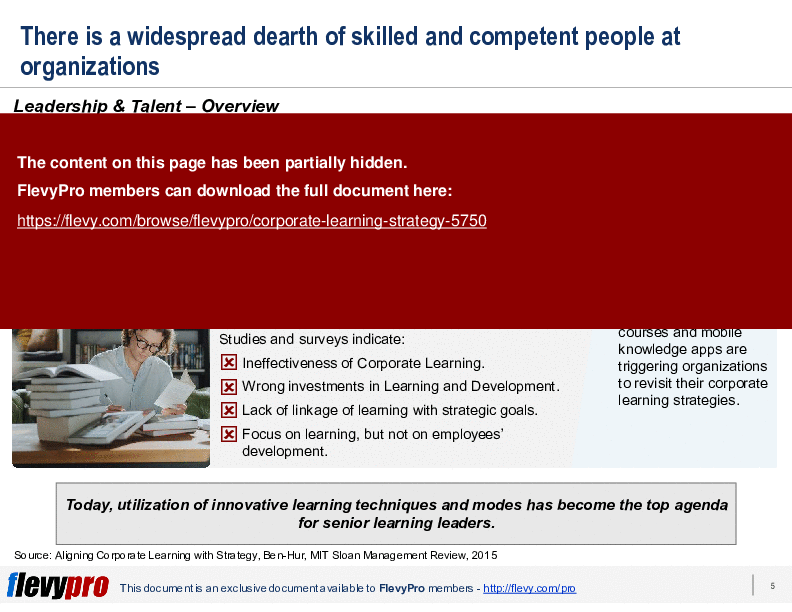

Although organizations invest heavily in Learning and Talent Development, most CEOs complain about the shortage of learned managers and leaders. Research reveals that a number of managers consider employee performance to remain the same if their organization's Learning function is totally abolished.
The truth is Learning and Development (L&D) is important for organizations, as L&D delivers value. Competencies of knowledge workers make the difference in achieving organizational growth. These programs also develop Leadership Talent. Furthermore, effective Learning experiences engage the emotional and cognitive centers of human brains, making employees appreciative of their managers and organizational learning efforts.
However, organizations are making the wrong investments in L&D, resulting in the ineffectiveness of Corporate Learning. The abundance of online courses and mobile knowledge apps are triggering organizations to revisit their Corporate Learning Strategies. Organizations need to follow a proven and effective Learning and Development framework to derive the expect valued in L&D investments.
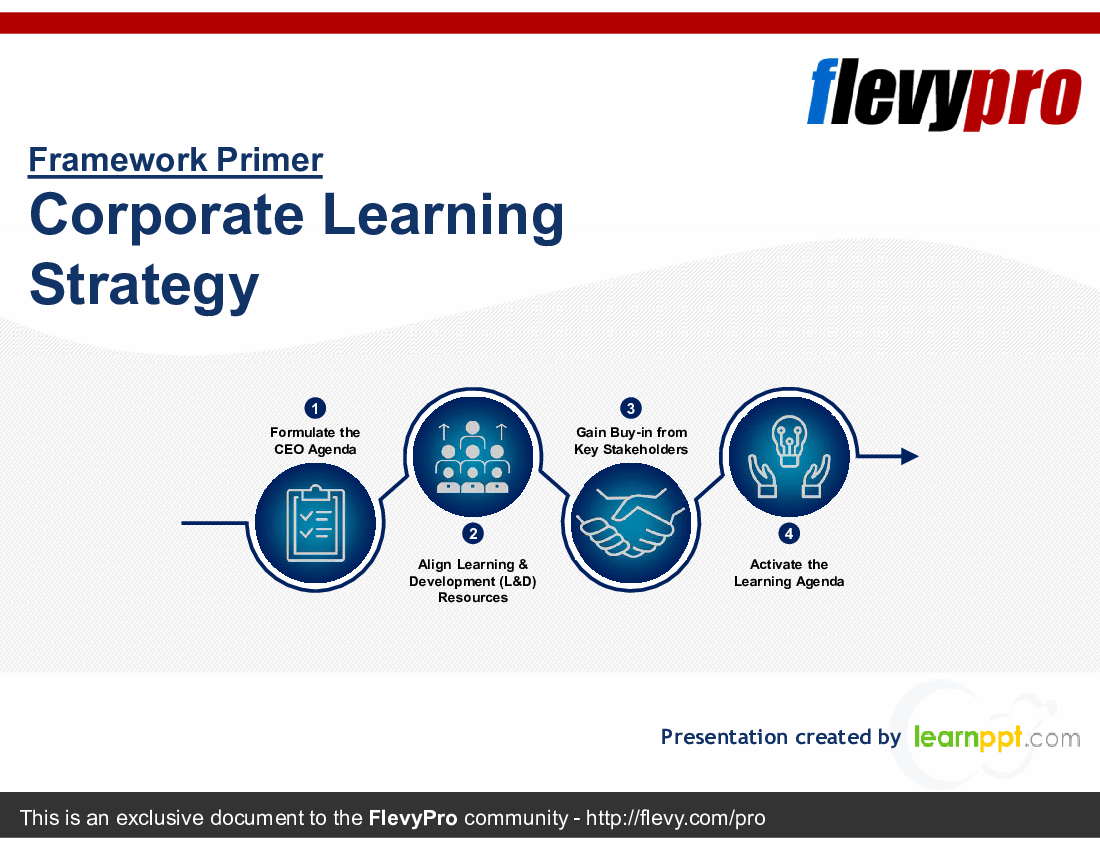
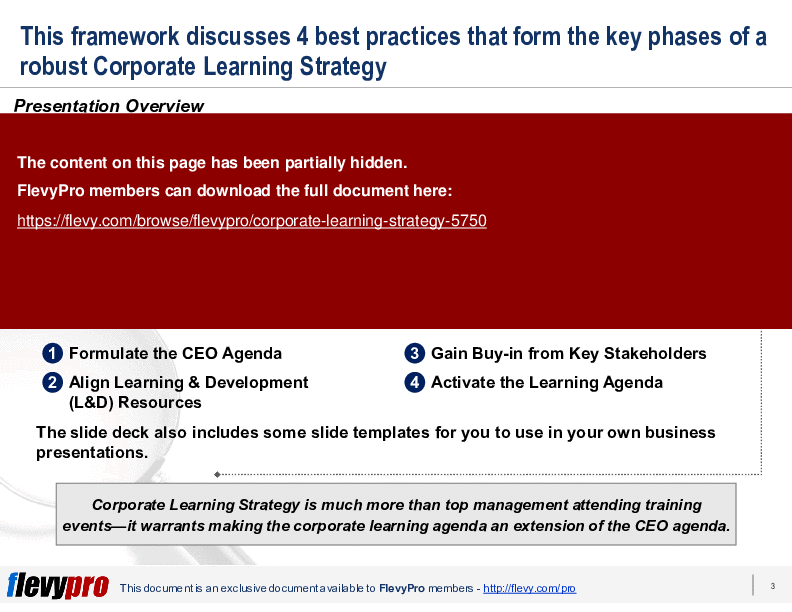
This PowerPoint presentation on Corporate Learning Strategy discusses the Learning practices that represent 4 key phases of the process for defining and executing a research-substantiated Corporate Learning Strategy:
1. Formulate the CEO Agenda
2. Align Learning & Development (L&D) Resources
3. Gain Buy-in from Key Stakeholders
4. Activate the Learning Agenda
Each of these phases are discussed in depth in this PPT Learning and Development framework presentation, including key questions and case examples.
Corporate Learning Strategy is much more than top management attending training events. It warrants making the corporate learning agenda an extension of the CEO agenda.
This L&D strategy PPT also includes some slide templates depicting the 5 Core Characteristics of the Learning Organization and the 4-phase approach to Corporate Learning Strategy Development, which you can incorporate into your own Learning and Development Strategy presentations.
The presentation also delves into the alignment of L&D with business objectives, emphasizing the importance of employee engagement and leadership. It highlights the role of technology in expanding the reach of learning within organizations.
Got a question about this document? Email us at flevypro@flevy.com.
Executive Summary
The Corporate Learning Strategy presentation provides a structured approach to enhancing organizational learning and development (L&D). Designed by former McKinsey consultants, this framework outlines 4 critical phases: Formulate the CEO Agenda, Align Learning & Development (L&D) Resources, Gain Buy-in from Key Stakeholders, and Activate the Learning Agenda. By implementing this strategy, organizations can effectively integrate learning initiatives with business objectives, ensuring that leadership development aligns with the overall corporate strategy. This presentation includes templates to facilitate the application of these concepts in real-world scenarios.
Who This Is For and When to Use
• Learning and Development Executives focused on strategic alignment of learning initiatives
• Corporate Executives seeking to enhance leadership capabilities within their organizations
• Change Management Leaders responsible for implementing new learning strategies
• HR Professionals involved in talent development and organizational growth
Best-fit moments to use this deck:
• During strategic planning sessions to align learning initiatives with corporate goals
• When assessing current L&D practices and identifying areas for improvement
• In stakeholder meetings to gain support for new learning agendas
Learning Objectives
• Define the key components of a Corporate Learning Strategy
• Build a comprehensive plan that aligns L&D with organizational goals
• Establish metrics to measure the effectiveness of learning initiatives
• Identify and engage key stakeholders to support learning initiatives
• Activate a learning agenda that reflects the CEO's priorities
• Develop a repository of L&D resources that supports organizational needs
Table of Contents
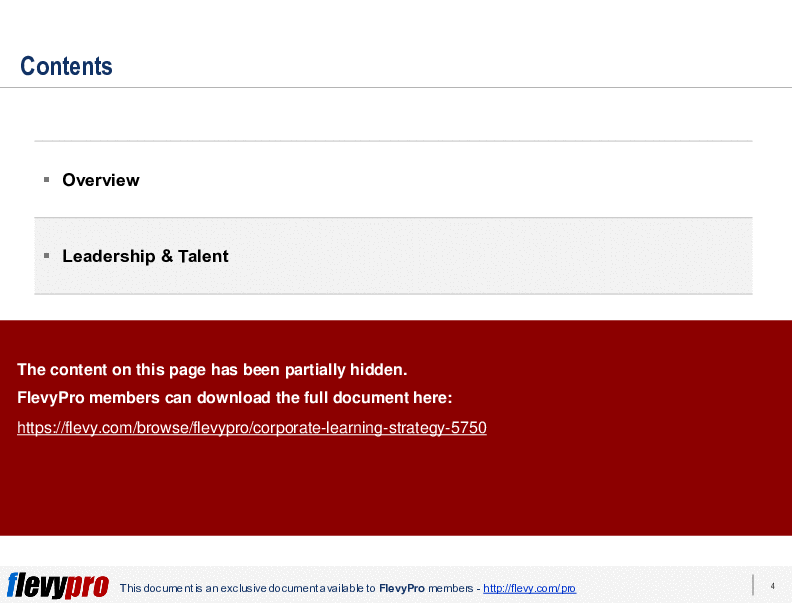
• Overview (page 1)
• Leadership & Talent (page 5)
• Learning Organization (page 8)
• Corporate Learning Strategy (page 12)
• Templates (page 20)
Primary Topics Covered
• CEO Agenda Formulation - Establishing a learning agenda that aligns with the CEO's strategic priorities is crucial for effective organizational development.
• Aligning L&D Resources - Ensuring that learning initiatives are tailored to meet business needs and organizational goals enhances the impact of L&D efforts.
• Stakeholder Buy-in - Engaging stakeholders at all levels is essential for the successful implementation of learning initiatives.
• Activating the Learning Agenda - Translating the learning agenda into actionable initiatives that support strategic objectives is vital for organizational success.
Deliverables, Templates, and Tools
• CEO Agenda formulation template to document leadership priorities
• L&D resource alignment checklist to ensure strategic fit
• Stakeholder engagement plan template to facilitate buy-in
• Learning agenda activation framework to guide implementation
Slide Highlights
• Overview of the Corporate Learning Strategy framework
• Key questions for formulating the CEO agenda
• Case studies illustrating successful L&D transformations
• Visuals depicting the alignment of learning initiatives with business goals
Potential Workshop Agenda
Corporate Learning Strategy Overview (60 minutes)
• Introduction to the Corporate Learning Strategy framework
• Discussion of the importance of aligning L&D with business objectives
Stakeholder Engagement Session (90 minutes)
• Identify key stakeholders and their roles in the learning agenda
• Develop strategies for gaining stakeholder buy-in
Action Planning Workshop (120 minutes)
• Create actionable plans for implementing the learning agenda
• Assign responsibilities and establish timelines for execution
Customization Guidance
• Tailor the CEO agenda formulation to reflect specific organizational goals and challenges
• Modify L&D resource alignment templates to fit the unique context of your organization
• Adjust stakeholder engagement strategies based on organizational hierarchy and culture
Secondary Topics Covered
• The role of technology in enhancing learning experiences
• Best practices for continuous improvement in L&D
• Characteristics of effective learning organizations
Topic FAQ
Document FAQ
These are questions addressed within this presentation.
What is the purpose of the Corporate Learning Strategy?
The strategy aims to align learning initiatives with business objectives, ensuring that leadership development supports organizational growth.
How can we measure the effectiveness of our learning initiatives?
Establish key performance indicators (KPIs) that align with business goals to assess the impact of learning programs.
What are the key phases of the Corporate Learning Strategy?
The 4 key phases are Formulate the CEO Agenda, Align L&D Resources, Gain Buy-in from Stakeholders, and Activate the Learning Agenda.
How do we engage stakeholders effectively?
Engage stakeholders by communicating the strategic importance of learning initiatives and involving them in the planning process.
What resources are included in the presentation?
The presentation includes templates for formulating the CEO agenda, aligning L&D resources, and engaging stakeholders.
Can this strategy be applied to any organization?
Yes, the Corporate Learning Strategy is adaptable to various organizational contexts and can be customized to meet specific needs.
What challenges might we face when implementing this strategy?
Resistance to change, lack of stakeholder engagement, and misalignment with business goals are common challenges.
How often should we review our learning initiatives?
Regular reviews should be conducted to ensure that learning initiatives remain relevant and aligned with evolving business objectives.
Glossary
• Corporate Learning Strategy - A structured approach to aligning learning initiatives with organizational goals.
• CEO Agenda - The strategic priorities set by the CEO that guide organizational direction.
• Stakeholder Engagement - The process of involving key individuals in the planning and implementation of initiatives.
• Learning Agenda - A framework that outlines the objectives and initiatives for organizational learning.
• L&D Resources - Tools, materials, and programs used to support learning and development efforts.
• Key Performance Indicators (KPIs) - Metrics used to evaluate the success of learning initiatives.
• Continuous Improvement - Ongoing efforts to enhance learning processes and outcomes.
• Learning Organization - An organization that fosters a culture of continuous learning and knowledge sharing.
• Training Needs Assessment - A systematic approach to identifying learning gaps and requirements.
• Instructional Design - The process of creating effective educational experiences and materials.
• Organizational Development - A systematic approach to improving an organization's effectiveness through planned change.
• Leadership Development - Programs and initiatives aimed at enhancing the skills and capabilities of leaders within an organization.
Source: Best Practices in Leadership, Talent Management, Learning Organization PowerPoint Slides: Corporate Learning Strategy PowerPoint (PPTX) Presentation Slide Deck, LearnPPT Consulting
Did you need more documents?
Consider a FlevyPro subscription from $39/month. View plans here.
For $10.00 more, you can download this document plus 2 more FlevyPro documents. That's just $13 each.
This document is available as part of the following discounted bundle(s):
Save %!
Learning Organization Transformation Frameworks
This bundle contains 10 total documents. See all the documents to the right.

|
Download our FREE Organization, Change, & Culture, Templates
Download our free compilation of 50+ slides and templates on Organizational Design, Change Management, and Corporate Culture. Methodologies include ADKAR, Burke-Litwin Change Model, McKinsey 7-S, Competing Values Framework, etc. |