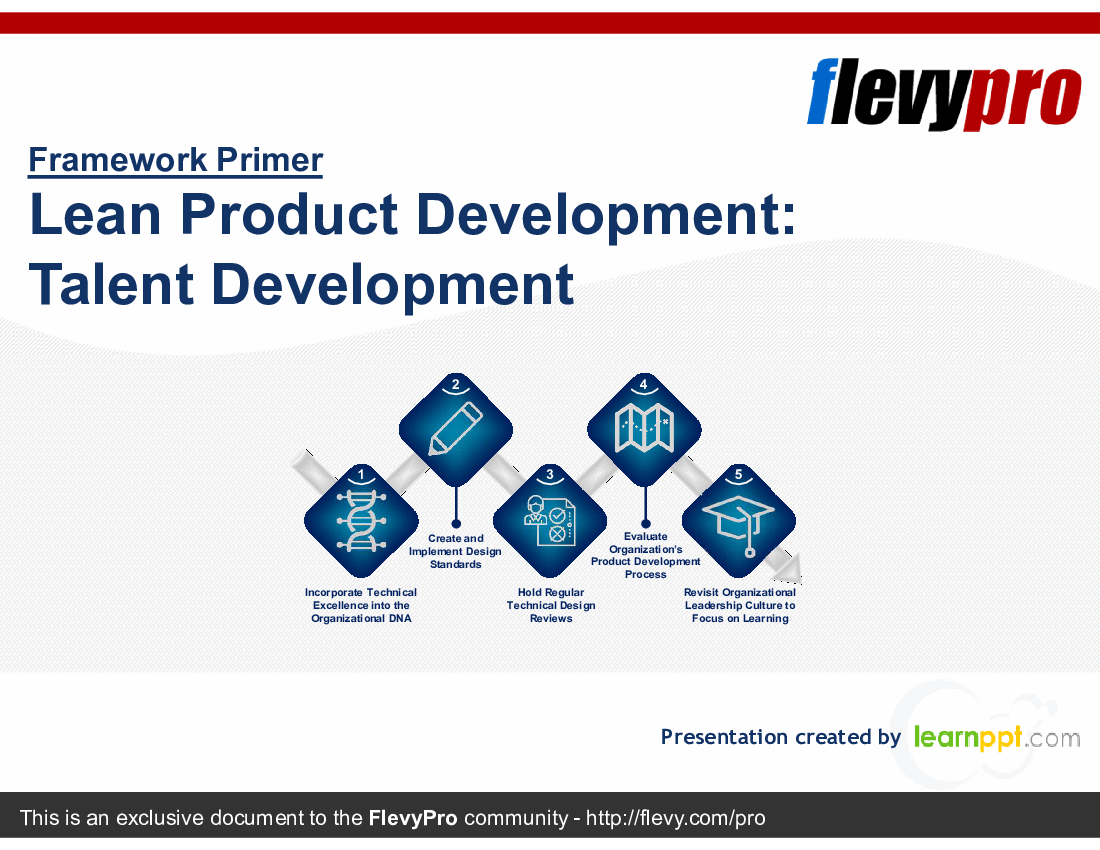

Lean Product Development helps in developing expert designers and developers, who are excellent problem solvers and are adept at creating innovative solutions.
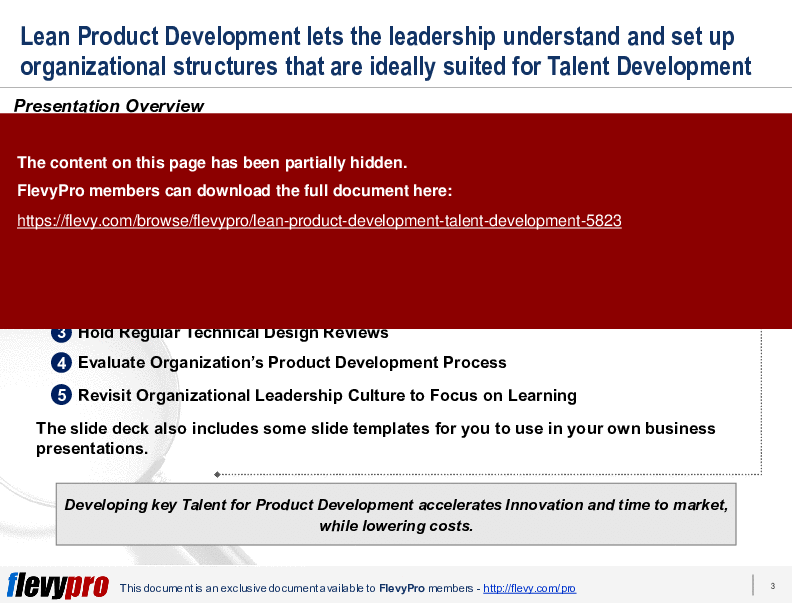
This presentation talks about the 5 key steps that managers responsible for developing creative products and solutions need to take, in order to facilitate Learning & Development (L&D) of key Talent (with particularly relevancy in the Manufacturing sector).
Developing key Talent for Product Development accelerates Innovation and time to market, while lowering costs.
The slide deck also includes some slide templates for you to use in your own business presentations.
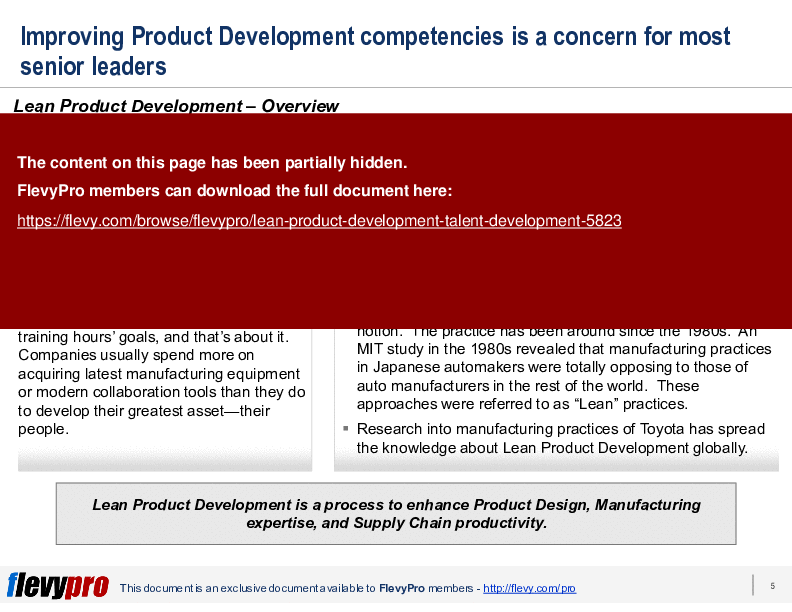
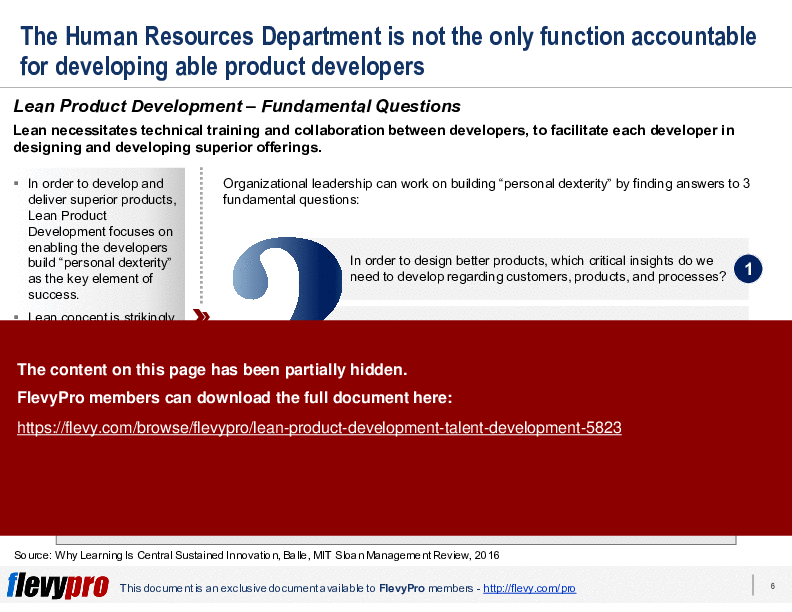
Lean Product Development is a strategic approach that empowers leadership to establish organizational frameworks optimized for talent growth. This methodology underscores the importance of technical mastery and collaboration among developers, ensuring that each team member contributes to the creation of superior products. By focusing on personal dexterity, Lean Product Development transforms developers into adept problem solvers, driving innovation and efficiency.
The PPT delves into the critical role of regular technical design reviews and the evaluation of the organization's product development process. These steps are crucial for maintaining high standards and fostering a culture of continuous improvement. The presentation also highlights the necessity of revisiting organizational leadership culture to prioritize learning, ensuring that the development team remains agile and responsive to market demands.
This comprehensive slide deck is an invaluable resource for managers aiming to enhance their team's capabilities. It provides actionable insights and practical templates that can be seamlessly integrated into your business presentations. By leveraging these tools, you can accelerate innovation, reduce time to market, and achieve significant cost savings.
Got a question about this document? Email us at flevypro@flevy.com.
Executive Summary
The "Lean Product Development: Talent Development" presentation is designed for leaders in manufacturing seeking to enhance their organization's talent capabilities. This framework provides actionable insights into developing expert designers and developers who can solve complex problems and create innovative solutions. It outlines 5 critical steps for improving Learning & Development (L&D) processes, emphasizing the importance of integrating technical excellence into the organizational culture. By implementing these strategies, organizations can accelerate innovation and reduce time to market while managing costs effectively.
Who This Is For and When to Use
• Product Development Managers focused on enhancing team capabilities
• Learning and Development (L&D) leaders in manufacturing sectors
• Organizational leaders aiming to foster a culture of continuous improvement
• HR professionals responsible for talent development and training
• Executives seeking to improve product design and development processes
Best-fit moments to use this deck:
• During strategic planning sessions focused on talent development
• When implementing new product development initiatives
• In workshops aimed at improving technical competencies within teams
• For training sessions on Lean Product Development principles
Learning Objectives
• Define the key components of Lean Product Development and its relevance to talent development
• Build a framework for incorporating technical excellence into organizational practices
• Create and implement effective design standards for product development
• Establish regular technical design reviews to enhance team collaboration
• Evaluate and improve the existing product development process
• Revisit and reshape the organizational leadership culture to prioritize learning
Table of Contents
• Overview (page 1)
• Lean Product Development (page 3)
• Talent Development (page 8)
• Templates (page 15)
Primary Topics Covered
• Lean Product Development Overview - An introduction to Lean principles and their impact on enhancing creativity, reducing costs, and improving quality in product development.
• Talent Development Steps - A structured approach detailing 5 essential steps for developing key talent in product development, particularly in manufacturing.
• Incorporating Technical Excellence - Strategies for embedding technical mastery into the organizational DNA to enhance everyday work practices.
• Design Standards Implementation - Guidelines for creating and executing design standards based on existing organizational knowledge.
• Technical Design Reviews - The importance of regular assessments to nurture talent through practical experiences and collaborative learning.
• Evaluating Product Development Processes - A critical analysis framework for assessing the effectiveness of current product development practices.
Deliverables, Templates, and Tools
• Technical excellence assessment framework for evaluating engineering capabilities
• Design standards handbook template for guiding product development
• Technical design review checklist for regular assessments
• Evaluation framework for analyzing product development processes
• Leadership culture assessment tool focused on learning and development
• Action plan template for implementing Lean Product Development strategies
Slide Highlights
• Overview of Lean Product Development principles and their significance
• Step-by-step breakdown of the talent development process in manufacturing
• Visual representation of the integration of technical excellence into organizational practices
• Examples from leading companies like Toyota and Ford illustrating best practices
• Templates for design standards and technical reviews to facilitate implementation
Potential Workshop Agenda
Introduction to Lean Product Development (30 minutes)
• Overview of Lean principles and their application in talent development
• Discussion on the significance of technical excellence
Talent Development Framework (60 minutes)
• Detailed exploration of the 5 steps for developing key talent
• Group activities to brainstorm implementation strategies
Technical Design Reviews (45 minutes)
• Best practices for conducting effective design reviews
• Role-playing scenarios to practice collaborative assessment techniques
Evaluating Product Development Processes (30 minutes)
• Framework for analyzing current practices and identifying improvement areas
• Action planning for next steps in talent development
Customization Guidance
• Tailor the technical excellence assessment framework to fit specific organizational needs
• Adjust design standards templates based on existing knowledge and practices
• Incorporate company-specific examples into training materials for relevance
• Modify the workshop agenda to align with team availability and objectives
Secondary Topics Covered
• Continuous Improvement Culture in manufacturing
• Importance of mentoring and coaching in talent development
• Role of leadership in fostering a learning environment
• Integration of technical training across various departments
Topic FAQ
Document FAQ
These are questions addressed within this presentation.
What is Lean Product Development?
Lean Product Development focuses on enhancing product design and manufacturing processes through continuous improvement and technical excellence.
How can this framework benefit my organization?
Implementing these strategies can accelerate innovation, reduce time to market, and lower costs by developing skilled designers and developers.
What are the key steps in talent development?
The framework outlines 5 steps: incorporating technical excellence, creating design standards, holding technical reviews, evaluating processes, and revisiting leadership culture.
How can I implement design standards effectively?
Utilize existing organizational knowledge to create user-friendly design manuals and regularly update them based on lessons learned from projects.
What role does leadership play in talent development?
Leadership should prioritize coaching and talent development, fostering an environment that encourages learning and technical mastery.
Are there templates included in the presentation?
Yes, the presentation includes templates for design standards, technical reviews, and evaluation frameworks to facilitate implementation.
How often should technical design reviews be conducted?
Regular assessments should be held weekly to ensure continuous improvement and collaboration among teams.
What is the significance of a Continuous Improvement Culture?
A culture of continuous improvement is essential for achieving operational excellence and fostering innovation within the organization.
Glossary
• Lean Product Development - A methodology focused on enhancing product design and manufacturing efficiency.
• Talent Development - The process of improving the skills and capabilities of employees.
• Technical Excellence - Mastery of technical skills that should be embedded in organizational practices.
• Design Standards - Guidelines that dictate the principles and practices for product design.
• Technical Design Review - A collaborative assessment of product designs against established standards.
• Continuous Improvement - An ongoing effort to improve products, services, or processes.
• Organizational DNA - The ingrained culture and practices that define an organization.
• Learning & Development (L&D) - Initiatives aimed at improving employee skills and knowledge.
• Evaluation Framework - A structured approach for assessing processes and performance.
• Leadership Culture - The values and behaviors that shape how leaders guide and develop their teams.
• Mentoring - A developmental partnership where a more experienced individual guides a less experienced one.
• Collaboration - Working together to achieve a common goal, particularly in design and development.
Source: Best Practices in Talent Management, Lean Management, Learning Organization, Product Management PowerPoint Slides: Lean Product Development: Talent Development PowerPoint (PPTX) Presentation Slide Deck, LearnPPT Consulting
Did you need more documents?
Consider a FlevyPro subscription from $39/month. View plans here.
For $10.00 more, you can download this document plus 2 more FlevyPro documents. That's just $13 each.
|
Download our FREE Organization, Change, & Culture, Templates
Download our free compilation of 50+ slides and templates on Organizational Design, Change Management, and Corporate Culture. Methodologies include ADKAR, Burke-Litwin Change Model, McKinsey 7-S, Competing Values Framework, etc. |