
This framework is developed by a team of former McKinsey and Big 4 consultants. The presentation follows the headline-body-bumper slide format used by global consulting firms.
Explore the Core Competence Model, crafted by ex-McKinsey & Big 4 consultants. Enhance strategic alignment with resources, capabilities, and competitive advantage insights. Core Competence Model is a 24-slide PPT PowerPoint presentation slide deck (PPTX) available for immediate download upon purchase.
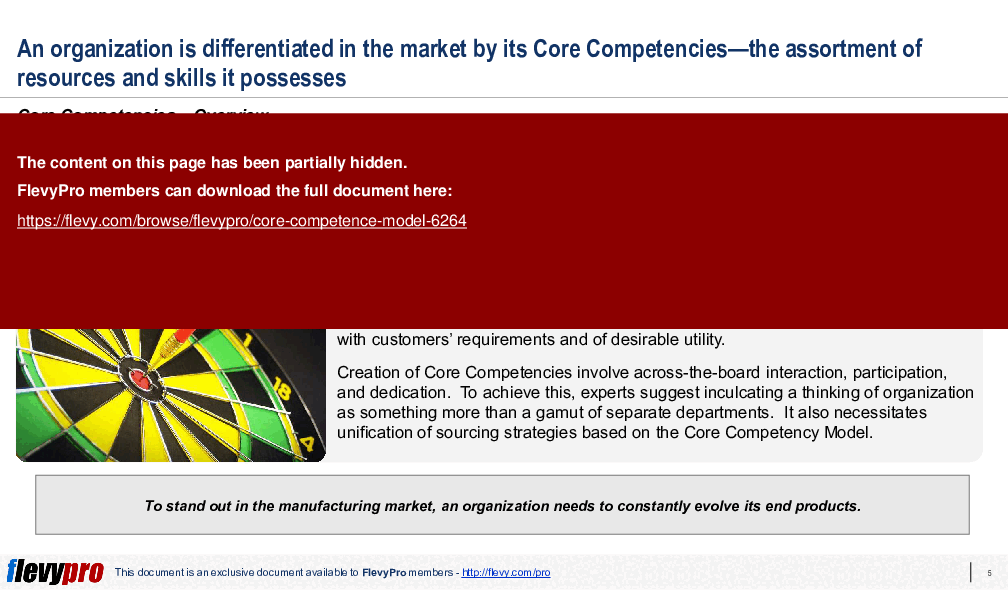
Core Competencies are defined as the collective organizational knowledge integral to produce market-winning product or service offerings. Specifically, Core Competencies necessitate coordinating diverse manufacturing skills and incorporating several technology streams to develop end products.
In this age of Globalization, the ability of senior leaders to recognize, foster, and take advantage of the Core Competencies critical for growth is a real metric of their proficiency. With ubiquitous Disruption threatening the technology infrastructure and operating models of organizations on a consistent basis, it's an unrelenting challenge for senior leadership to create an enterprise proficient in introducing offerings in line with customers' requirements and of desirable utility.
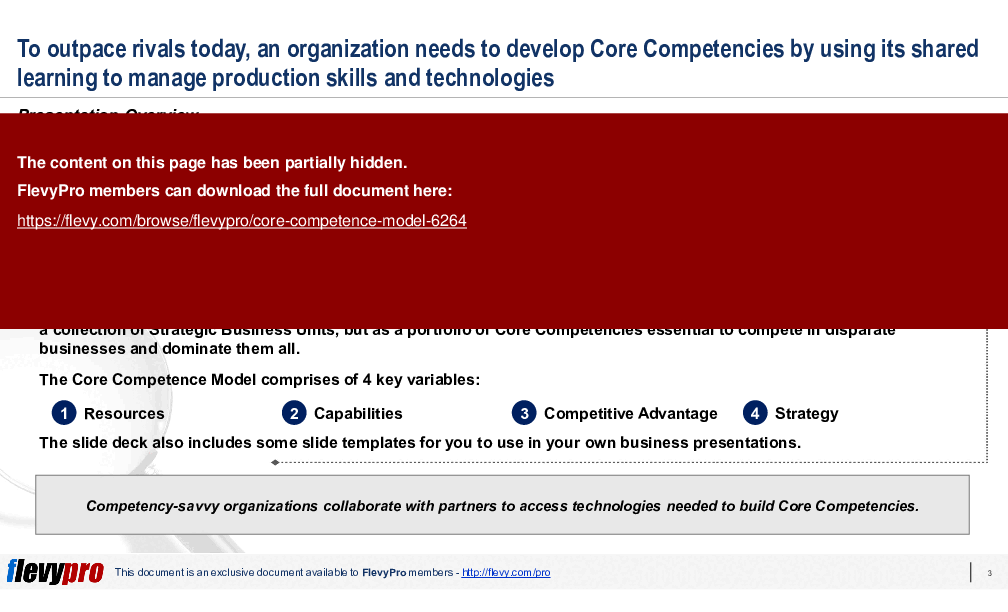
This deck provides a detailed overview of the Core Competence Model, a framework that outlines an organization not just as a collection of Strategic Business Units, but as a portfolio of Core Competencies essential to compete in disparate businesses and dominate them all.
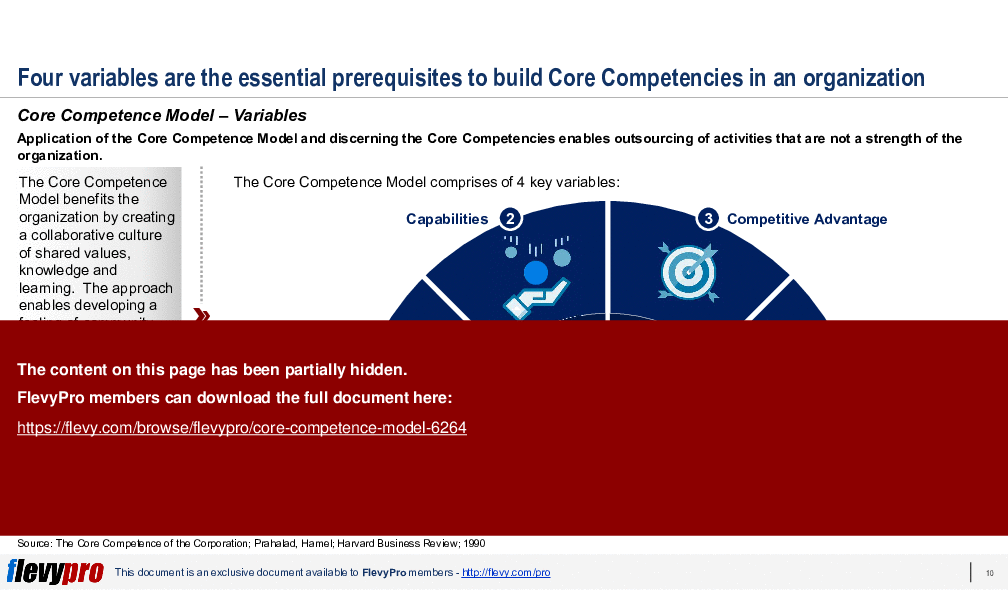
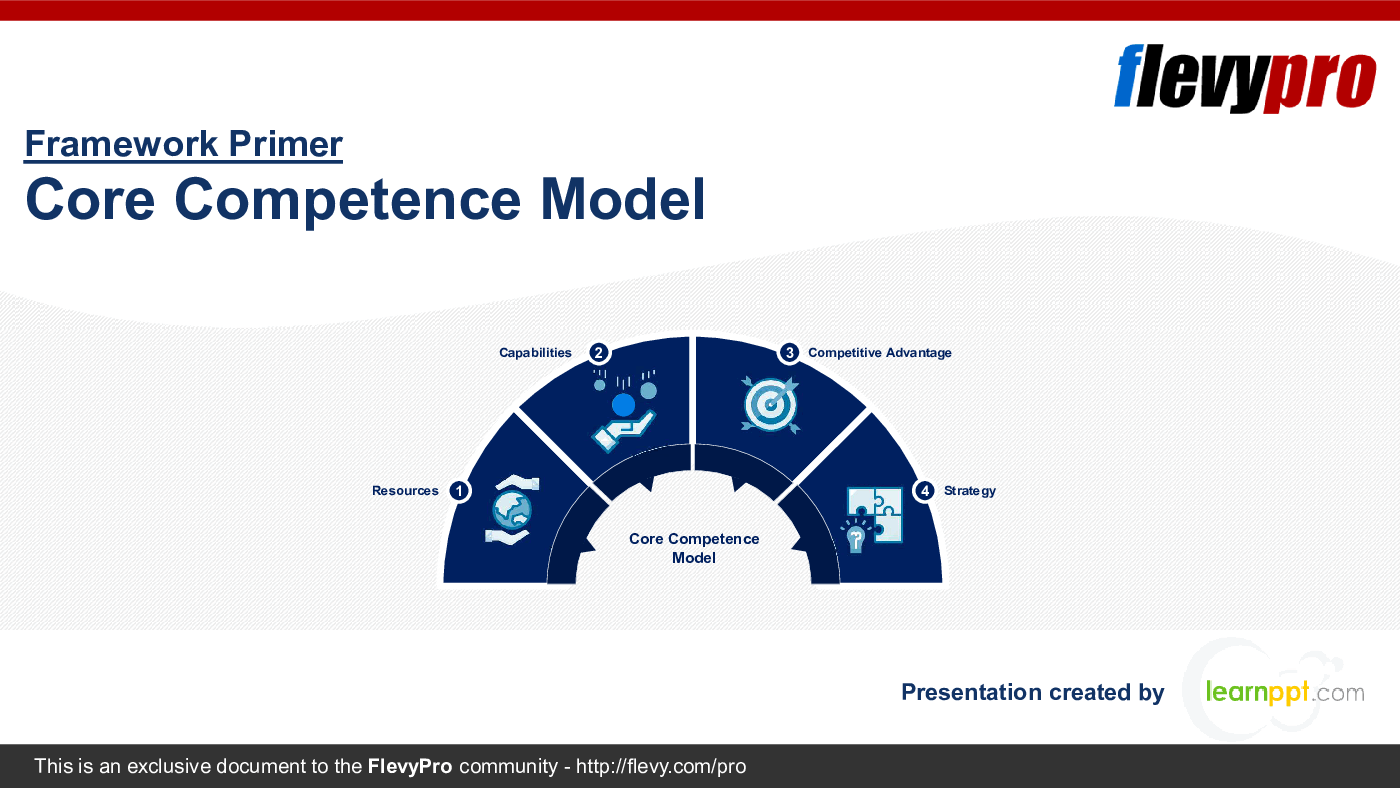
The Core Competence Model comprises of 4 key variables:
The slide deck also includes some slide templates for you to use in your own business presentations.
The Core Competence Model emphasizes the importance of viewing an organization as a cohesive entity rather than a collection of isolated business units. This perspective allows for the leveraging of shared resources and capabilities across different segments, fostering innovation and competitive advantage. The model's four key variables—Resources, Capabilities, Competitive Advantage, and Strategy—are dissected in detail, providing actionable insights for senior leaders aiming to align their strategic initiatives with core competencies.
This presentation also delves into the practical application of the Core Competence Model, offering templates and frameworks to facilitate the integration of core competencies into your strategic planning. The deck outlines how to identify, cultivate, and capitalize on these competencies, ensuring your organization remains agile and competitive in a rapidly evolving market landscape. This resource is indispensable for executives committed to driving sustainable growth and maintaining a competitive edge.
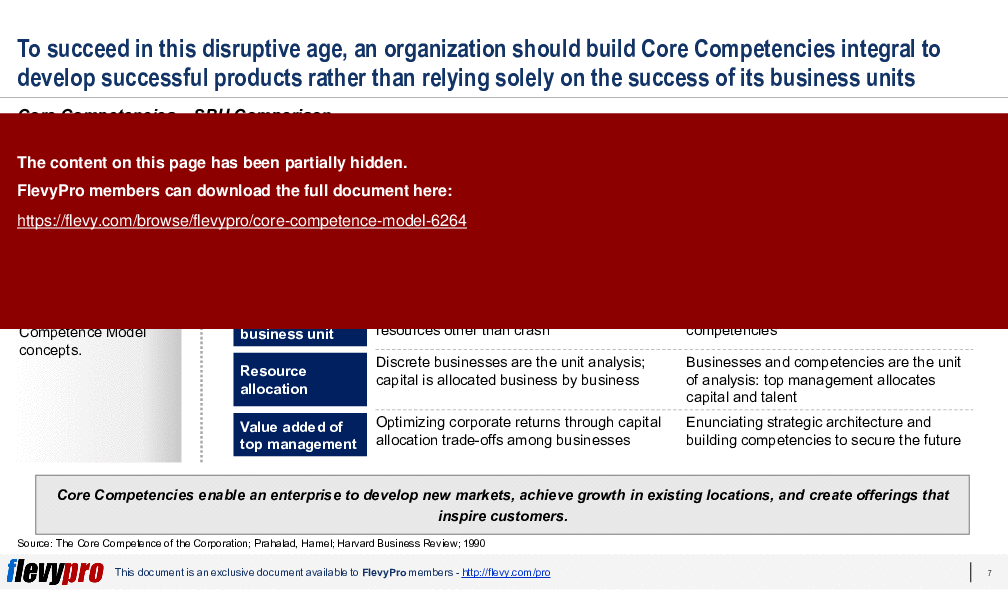
This PPT slide analyzes the differences between Strategic Business Units (SBUs) and the Core Competence Model. The "Basis for competition" shows SBUs focus on current product competitiveness, while the Core Competence Model emphasizes interfirm competition to build sustainable capabilities. In "Corporate structure," SBUs are portfolios aligned by product-market relationships, whereas the Core Competence Model organizes around competencies and core products for integrated resource management. The "Status of the business unit" reveals SBUs have autonomy over resources, while the Core Competence perspective views them as reservoirs for core competencies. For "Resource allocation," SBUs allocate capital on a business-by-business basis, while the Core Competence Model advocates for strategic allocation based on competencies. Lastly, the "Value added of top management" highlights that SBUs optimize returns through capital allocation, whereas the Core Competence Model focuses on strategic architecture and competency development for future success.
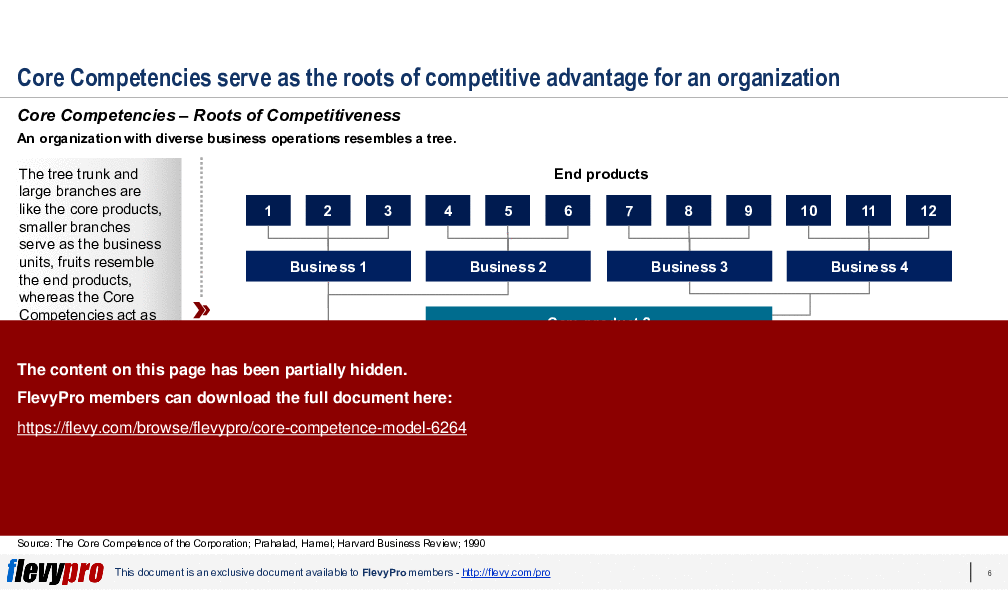
This PPT slide illustrates core competencies within an organization using a tree metaphor. The trunk and large branches represent core products, while smaller branches symbolize individual business units. The fruits depict end products, showcasing final offerings to customers. Core competencies are likened to roots, emphasizing their foundational role in supporting business units and products. Each business unit links to core products, which relate to specific competencies necessary for development and delivery. The effectiveness of end products is influenced by these underlying competencies. The distinction between short-term competitiveness, reliant on pricing strategies, and long-term success, dependent on leveraging core competencies, is highlighted. Aligning business units with core competencies enhances overall performance and sustains organizational growth.
This PPT slide presents the Core Competence Model, structured into 4 key components: Resources, Capabilities, Strategy, and Competitive Advantage. The Resources quadrant emphasizes tangible and intangible assets critical for executing strategy, including financial resources, human capital, and technology. The Capabilities section focuses on skills and processes that enable effective resource utilization, such as operational efficiencies and customer relationship management. The Strategy quadrant outlines how an organization leverages its resources and capabilities to achieve strategic objectives. The Competitive Advantage quadrant highlights unique differentiators, such as proprietary technologies and brand equity. This framework systematically evaluates and enhances core competencies, ensuring alignment between resources, capabilities, and strategic goals for sustained success.
This PPT slide outlines 3 critical tests for evaluating core competencies within an organization. The first test assesses whether core competencies provide access to diverse markets, enhancing growth opportunities by leveraging existing strengths across sectors. The second test evaluates the contribution of core competencies to customer perceptions, ensuring they translate into tangible benefits that reinforce the value proposition and foster customer loyalty. The third test examines the challenge of imitation, positing that core competencies should be difficult for competitors to replicate, thus maintaining a unique market position. These tests serve as a framework for organizations to identify strengths that drive market access, customer value, and create barriers to competition, essential for long-term success in a dynamic business environment.
The Core Competence Model outlines 4 quadrants: Premier Plus Ten, Mega Opportunities, Fill in the Blanks, and White Spaces, each representing strategic approaches to enhance market positioning. Establishing a strategic goal to develop high-quality Core Competencies within a decade is essential for organizations in existing markets, focusing on leveraging strengths to meet market needs. The Mega Opportunities quadrant emphasizes new market ventures, which can yield significant returns, but also complicate product diversification. Fill in the Blanks and White Spaces highlight areas for exploring untapped potential and addressing gaps in offerings. This framework guides organizations in aligning competencies with market demands, facilitating informed decisions on resource allocation and strategic direction.
The Core Competence Model outlines 4 essential variables: Resources, Capabilities, Competitive Advantage, and Strategy. Resources encompass the fundamental assets required for developing core competencies and technologies, emphasizing alignment with strategic goals. Capabilities assess opportunities for cultivating core competencies, suggesting that leveraging existing capabilities can enhance performance. Competitive Advantage addresses challenges in maximizing market share of core products, indicating that companies must actively overcome barriers to market presence. Strategy serves as the framework for achieving maximum market share, highlighting the need for a well-defined strategy that integrates all variables to align with market demands. Together, these variables provide a comprehensive framework for building and sustaining core competencies.
This PPT slide outlines the Core Competence Tests, focusing on the decision-making process for in-house manufacturing versus external sourcing. Key concepts include identifying efficiencies in the supply chain and analyzing the distribution network and customer base. The Core Competence Model supports vertical integration, enabling organizations to fully control their supply chain, enhancing production efficiency and market responsiveness. Three tests for core competencies are proposed: they should provide access to diverse markets, significantly enhance customer value propositions, and be difficult for competitors to replicate. Achieving a market-leading position is unlikely with more than 5 or 6 core competencies, emphasizing the need for focus and strategic alignment.
Source: Best Practices in Competitive Advantage, Core Competences, Distinctive Capabilities PowerPoint Slides: Core Competence Model PowerPoint (PPTX) Presentation Slide Deck, LearnPPT Consulting
This framework is developed by a team of former McKinsey and Big 4 consultants. The presentation follows the headline-body-bumper slide format used by global consulting firms.
For $10.00 more, you can download this document plus 2 more FlevyPro documents. That's just $13 each.
ABOUT FLEVYPRO
This document is part of the FlevyPro Library, a curated knowledge base of documents for our FlevyPro subscribers.

FlevyPro is a subscription service for on-demand business frameworks and analysis tools. FlevyPro subscribers receive access to an exclusive library of curated business documents—business framework primers, presentation templates, Lean Six Sigma tools, and more—among other exclusive benefits.
The average daily rate of a McKinsey consultant is $6,625 (not including expenses). The average price of a Flevy document is $65.
Trusted by over 10,000+ Client Organizations
Since 2012, we have provided business templates to over 10,000 businesses and organizations of all sizes, from startups and small businesses to the Fortune 100, in over 130 countries.
"Last Sunday morning, I was diligently working on an important presentation for a client and found myself in need of additional content and suitable templates for various types of graphics. Flevy.com proved to be a treasure trove for both content and design at a reasonable price, considering the time I
saved. I encountered a download issue during the ordering process. However, a quick email to Flevy's support team, even on a Sunday (!!!), resulted in assistance within less than an hour, allowing me to download the content I needed. Fantastic job, Flevy! I give 5 stars for both content/price and customer service. Thank you!
"
– M. E., Chief Commercial Officer, International Logistics Service Provider
"FlevyPro has been a brilliant resource for me, as an independent growth consultant, to access a vast knowledge bank of presentations to support my work with clients. In terms of RoI, the value I received from the very first presentation I downloaded paid for my subscription many times over! The
quality of the decks available allows me to punch way above my weight – it's like having the resources of a Big 4 consultancy at your fingertips at a microscopic fraction of the overhead.
"
– Roderick Cameron, Founding Partner at SGFE Ltd
"The wide selection of frameworks is very useful to me as an independent consultant. In fact, it rivals what I had at my disposal at Big 4 Consulting firms in terms of efficacy and organization."
– Julia T., Consulting Firm Owner (Former Manager at Deloitte and Capgemini)
"Flevy.com has proven to be an invaluable resource library to our Independent Management Consultancy, supporting and enabling us to better serve our enterprise clients.
The value derived from our [FlevyPro] subscription in terms of the business it has helped to gain far exceeds the investment made, making a subscription a no-brainer for any growing consultancy – or in-house strategy team."
– Dean Carlton, Chief Transformation Officer, Global Village Transformations Pty Ltd.
"My FlevyPro subscription provides me with the most popular frameworks and decks in demand in today’s market. They not only augment my existing consulting and coaching offerings and delivery, but also keep me abreast of the latest trends, inspire new products and service offerings for my practice, and educate me
in a fraction of the time and money of other solutions. I strongly recommend FlevyPro to any consultant serious about success.
"
– Bill Branson, Founder at Strategic Business Architects
"I have used FlevyPro for several business applications. It is a great complement to working with expensive consultants. The quality and effectiveness of the tools are of the highest standards."
– Moritz Bernhoerster, Global Sourcing Director at Fortune 500
"As a young consulting firm, requests for input from clients vary and it's sometimes impossible to provide expert solutions across a broad spectrum of requirements. That was before I discovered Flevy.com.
Through subscription to this invaluable site of a plethora of topics that are key and crucial to consulting, I
have been able to exceed expectations and deliver quality advice and solutions to my clients. The quality and expertise of the authors are exemplary and gives me great confidence to use as part of my service offerings.
I highly recommend this company for any consultant wanting to apply international best practice standards in their service offerings.
"
– Nishi Singh, Strategist and MD at NSP Consultants
"One of the great discoveries that I have made for my business is the Flevy library of training materials.
As a Lean Transformation Expert, I am always making presentations to clients on a variety of topics: Training, Transformation, Total Productive Maintenance, Culture, Coaching, Tools, Leadership Behavior, etc. Flevy
It is well worth the money to purchase these presentations. Sure, I have the knowledge and information to make my point. It is another thing to create a presentation that captures what I want to say. Flevy has saved me countless hours of preparation time that is much better spent with implementation that will actually save money for my clients.
"
– Ed Kemmerling, Senior Lean Transformation Expert at PMG
Download our free compilation of 50+ Strategy & Transformation slides and templates. Frameworks include McKinsey 7-S, Balanced Scorecard, Disruptive Innovation, BCG Curve, and many more.