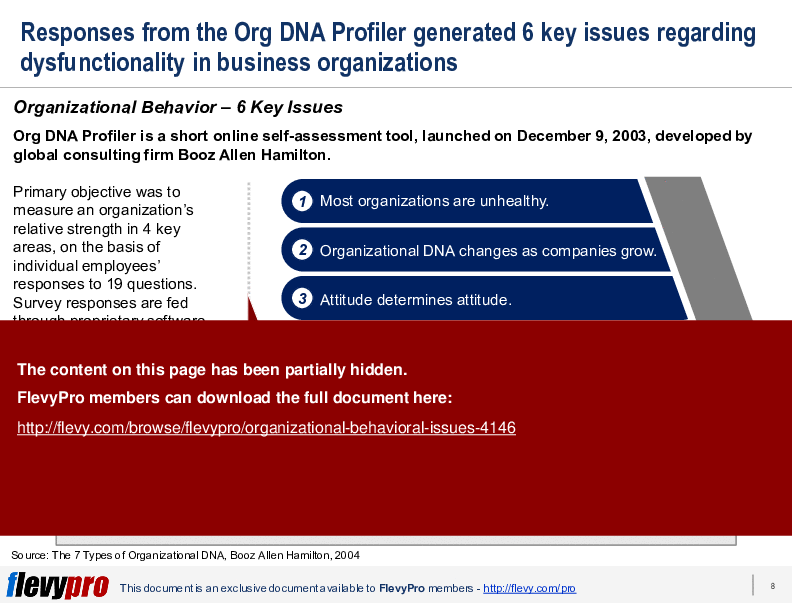

Most organizations are unhealthy. Only organizations that are recognized to be Resilient, Just-in-Time, and Military can be described and relatively free from dysfunction. Yet, only 27% of the responses gathered from an organizational behavior and culture study showed a healthy profile.
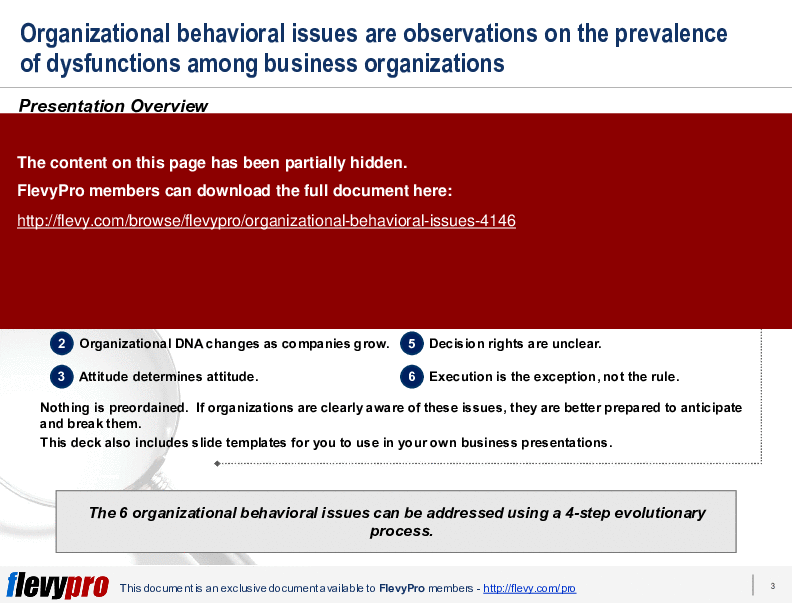
In an organizational behavior study of 4,007 completed assessments collected, there were 6 organizational behavioral issues that emerged. These issues can still be turned around by undertaking the appropriate steps. This presentation provides organizations a good understanding of the 6 organizational behavioral issues:
1. Most organizations are unhealthy.
2. Organizational DNA changes as companies grow.
3. Attitude determines attitude.
4. Non-executives feel micromanaged.
5. Decision rights are unclear.
6. Execution is the exception, not the rule.
Nothing is preordained. If organizations are clearly aware of these issues, they are better prepared to anticipate and break them.
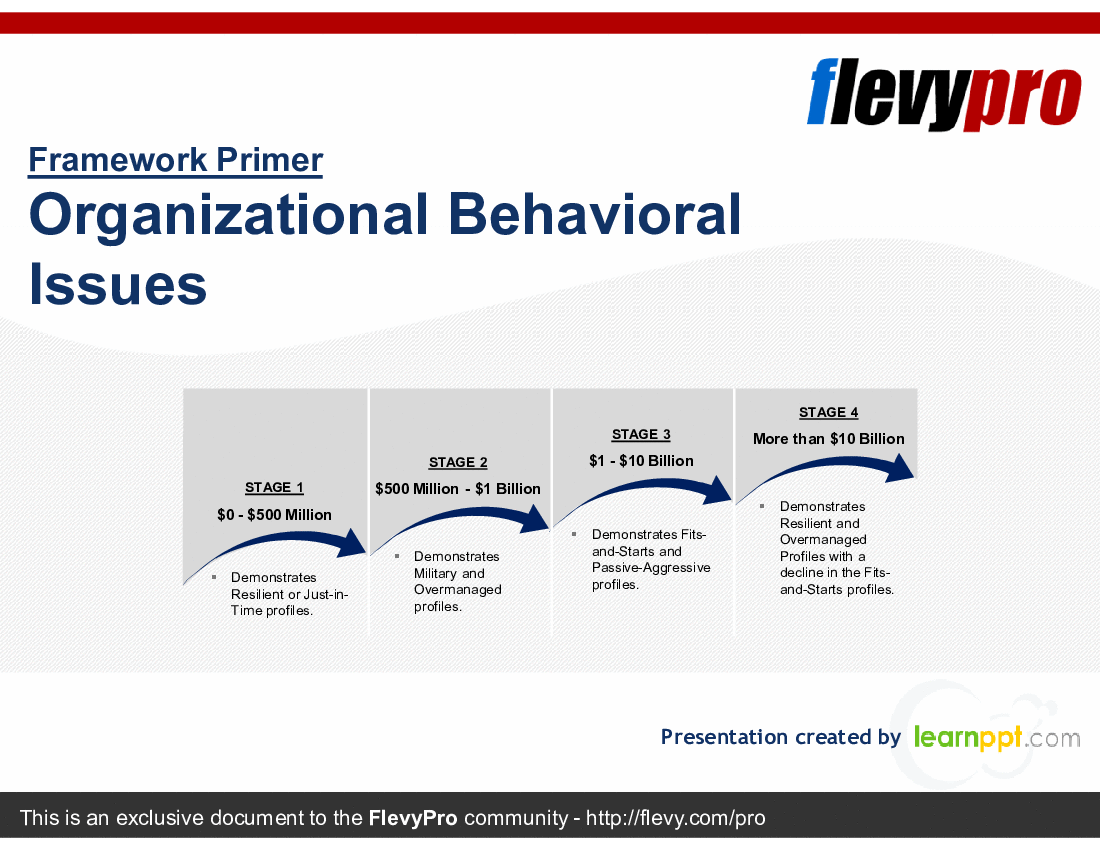
The 6 organizational behavioral issues can be addressed using a 4-step evolutionary process. Each stage is categorized by the size of the organization, based on annual revenue. Different types of organizations tend to be more prevalent in specific stages of growth and maturity.
This deck also includes slide templates for you to use in your own business presentations.
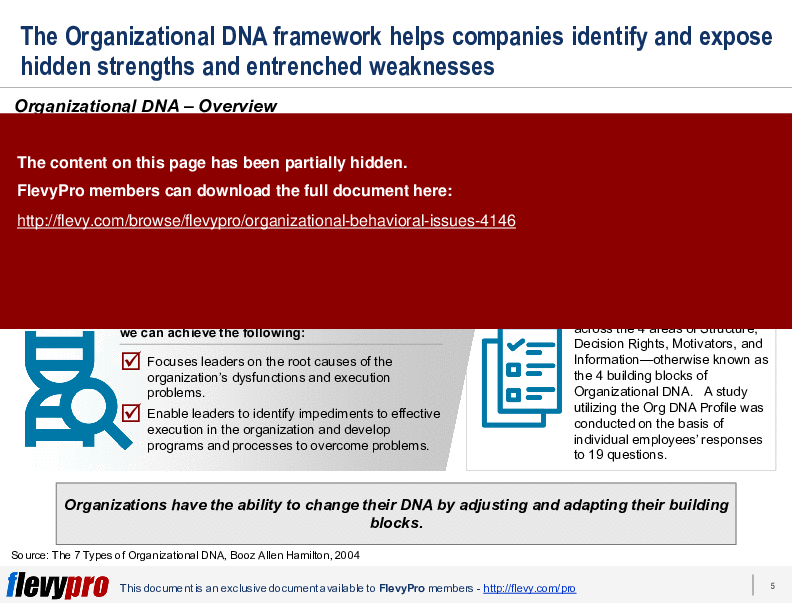
The Organizational DNA framework is pivotal for leaders aiming to pinpoint and rectify core dysfunctions within their companies. By focusing on the root causes of execution problems, this framework empowers leaders to develop targeted programs and processes that drive effective execution. The study's findings, based on employee responses to 19 key questions, offer actionable insights into the structural and motivational elements that shape organizational behavior.
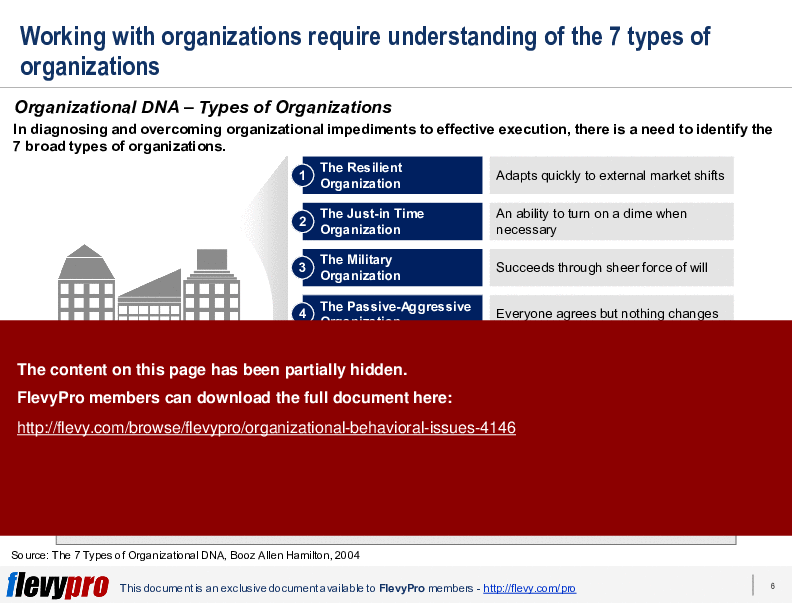
Understanding the seven types of organizations is crucial for diagnosing and overcoming impediments to effective execution. From Resilient organizations that adapt swiftly to market shifts to Overmanaged organizations bogged down by bureaucracy, this presentation delineates the characteristics and challenges of each type. This knowledge equips leaders to tailor their strategies according to the organization's growth stage and specific behavioral profile.
Got a question about this document? Email us at flevypro@flevy.com.
Executive Summary
The "Organizational Behavioral Issues" presentation provides a comprehensive analysis of the 6 key organizational behavioral issues identified through the Org DNA Profiler, a tool developed by Booz Allen Hamilton. This document is designed for corporate executives and consultants seeking to enhance organizational effectiveness by addressing dysfunctions that hinder performance. By utilizing a structured 4-step evolutionary process, organizations can identify and resolve these issues, ultimately leading to improved execution and operational health.
Who This Is For and When to Use
• Corporate executives looking to diagnose and improve organizational health
• Change management consultants facilitating organizational assessments
• HR leaders aiming to address employee engagement and decision-making clarity
• Strategy teams focused on enhancing execution and accountability
Best-fit moments to use this deck:
• During organizational assessments to identify behavioral issues
• In strategy sessions aimed at improving operational effectiveness
• When implementing change management initiatives to foster a healthier culture
Learning Objectives
• Define the 6 key organizational behavioral issues and their implications
• Analyze the impact of organizational DNA on behavior and performance
• Identify symptoms of dysfunction within various organizational profiles
• Develop actionable strategies to address and resolve identified issues
• Establish frameworks for continuous monitoring and improvement of organizational health
• Foster a culture of accountability and effective execution
Table of Contents
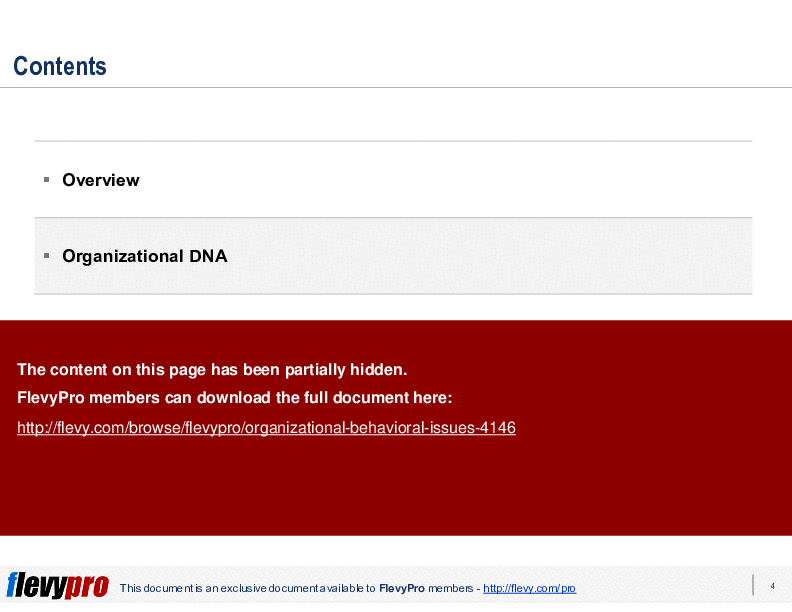
• Overview (page 3)
• Organizational DNA (page 5)
• Organizational Behavior (page 8)
• Resolving Issues in Organizational Behavior (page 10)
• Templates (page 17)
Primary Topics Covered
• Organizational Behavioral Issues - The presentation identifies 6 critical issues affecting organizational health, including unclear decision rights and execution challenges.
• Organizational DNA - This framework helps organizations understand their inherent strengths and weaknesses, enabling targeted interventions.
• Evolutionary Process - A structured approach to diagnosing and resolving organizational dysfunctions through a four-stage model based on company size and maturity.
• Profiles of Organizations - Insights into various organizational profiles, such as Resilient, Just-in-Time, Military, Passive-Aggressive, Fits-and-Starts, Outgrown, and Overmanaged.
• Symptoms of Dysfunction - Identification of common signs that indicate organizational health issues, allowing for early intervention.
• Actionable Frameworks - Practical frameworks and templates to assist organizations in implementing changes effectively.
Deliverables, Templates, and Tools
• Organizational DNA assessment template to evaluate strengths and weaknesses
• Framework for identifying and addressing organizational behavioral issues
• Action plan template for implementing change initiatives
• Monitoring and evaluation framework to track progress and outcomes
• Slide templates for presenting findings and recommendations
• Checklist for assessing organizational health
Slide Highlights
• Overview of the 6 key organizational behavioral issues
• Visual representation of the 4 stages of organizational evolution
• Detailed analysis of organizational profiles and their characteristics
• Framework for resolving issues in organizational behavior
• Templates for practical application in organizational assessments
Potential Workshop Agenda
Understanding Organizational Behavior (60 minutes)
• Overview of organizational behavioral issues
• Discussion on the impact of organizational DNA
Identifying and Analyzing Issues (90 minutes)
• Group activity to assess current organizational health
• Presentation of findings and identification of key issues
Developing Action Plans (90 minutes)
• Workshop on creating actionable strategies to address identified issues
• Establishing monitoring and evaluation processes
Customization Guidance
• Tailor the assessment templates to reflect specific organizational contexts and cultures
• Adjust the frameworks to align with unique strategic objectives and operational goals
• Incorporate relevant metrics and KPIs to measure progress
Secondary Topics Covered
• The role of leadership in shaping organizational behavior
• Strategies for fostering a culture of accountability
• Techniques for enhancing employee engagement and decision-making clarity
• Best practices for implementing change management initiatives
Topic FAQ
Document FAQ
These are questions addressed within this presentation.
What are the 6 key organizational behavioral issues?
The 6 issues include: most organizations being unhealthy, changes in organizational DNA as companies grow, attitude determining attitude, non-executives feeling micromanaged, unclear decision rights, and execution being the exception.
How can organizations assess their behavioral issues?
Organizations can use the Org DNA Profiler, which analyzes responses to a series of questions to identify strengths and weaknesses in organizational behavior.
What is the significance of organizational DNA?
Organizational DNA serves as a framework to understand the underlying characteristics of an organization, helping leaders identify areas for improvement and develop targeted strategies.
How does the evolutionary process work?
The evolutionary process involves 4 stages based on organizational size and maturity, allowing organizations to diagnose and address dysfunctions as they grow.
What are the common symptoms of dysfunction?
Common symptoms include unclear decision-making processes, lack of accountability, and ineffective execution of strategies.
How can organizations foster a culture of accountability?
By clearly defining roles, responsibilities, and decision rights, organizations can empower employees and enhance accountability at all levels.
What templates are included in the presentation?
The presentation includes templates for assessing organizational DNA, developing action plans, and monitoring progress on behavioral issues.
How can organizations implement the recommendations from this presentation?
Organizations can start by conducting assessments, identifying key issues, and developing tailored action plans based on the frameworks provided in the presentation.
Glossary
• Organizational DNA - The underlying characteristics that define an organization's culture and behavior.
• Dysfunction - A breakdown in organizational processes that hinders performance.
• Org DNA Profiler - A self-assessment tool used to evaluate organizational strengths and weaknesses.
• Behavioral Issues - Challenges that arise from unhealthy organizational practices and cultures.
• Execution - The process of implementing strategies and plans effectively.
• Accountability - The obligation of individuals to report on their actions and decisions.
• Change Management - The approach to transitioning individuals, teams, and organizations to a desired future state.
• Profiles - Distinct categories that describe different organizational behaviors and characteristics.
• Monitoring - The ongoing process of tracking progress and outcomes against established goals.
• Action Plan - A detailed strategy outlining steps to address identified issues.
• Engagement - The level of commitment and involvement employees have towards their organization.
• Decision Rights - The authority to make decisions within an organization.
• Culture - The shared values, beliefs, and practices that shape an organization's environment.
• Strategy - A plan of action designed to achieve specific goals.
• Assessment - The evaluation of an organization's current state to identify areas for improvement.
• Framework - A structured approach to understanding and addressing complex issues.
• Templates - Pre-designed documents that facilitate the creation of specific deliverables.
• KPIs - Key Performance Indicators used to measure success against objectives.
• Stakeholders - Individuals or groups with an interest in the organization's performance and outcomes.
• Facilitator - A person who guides a group through a process or discussion.
• Intervention - An action taken to improve a situation or address an issue.
Source: Best Practices in Organizational Design, Organizational Behavior PowerPoint Slides: Organizational Behavioral Issues PowerPoint (PPTX) Presentation Slide Deck, PPT Lab
Did you need more documents?
Consider a FlevyPro subscription from $39/month. View plans here.
For $10.00 more, you can download this document plus 2 more FlevyPro documents. That's just $13 each.
|
Download our FREE Organization, Change, & Culture, Templates
Download our free compilation of 50+ slides and templates on Organizational Design, Change Management, and Corporate Culture. Methodologies include ADKAR, Burke-Litwin Change Model, McKinsey 7-S, Competing Values Framework, etc. |