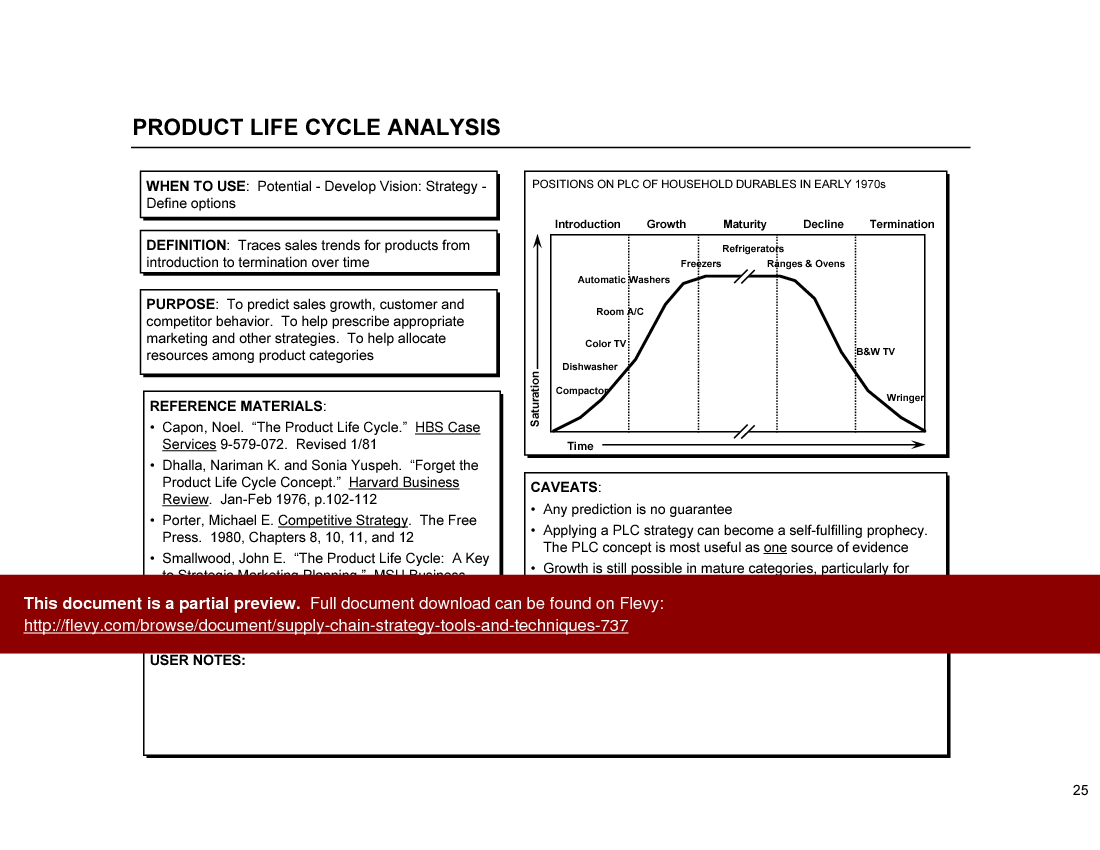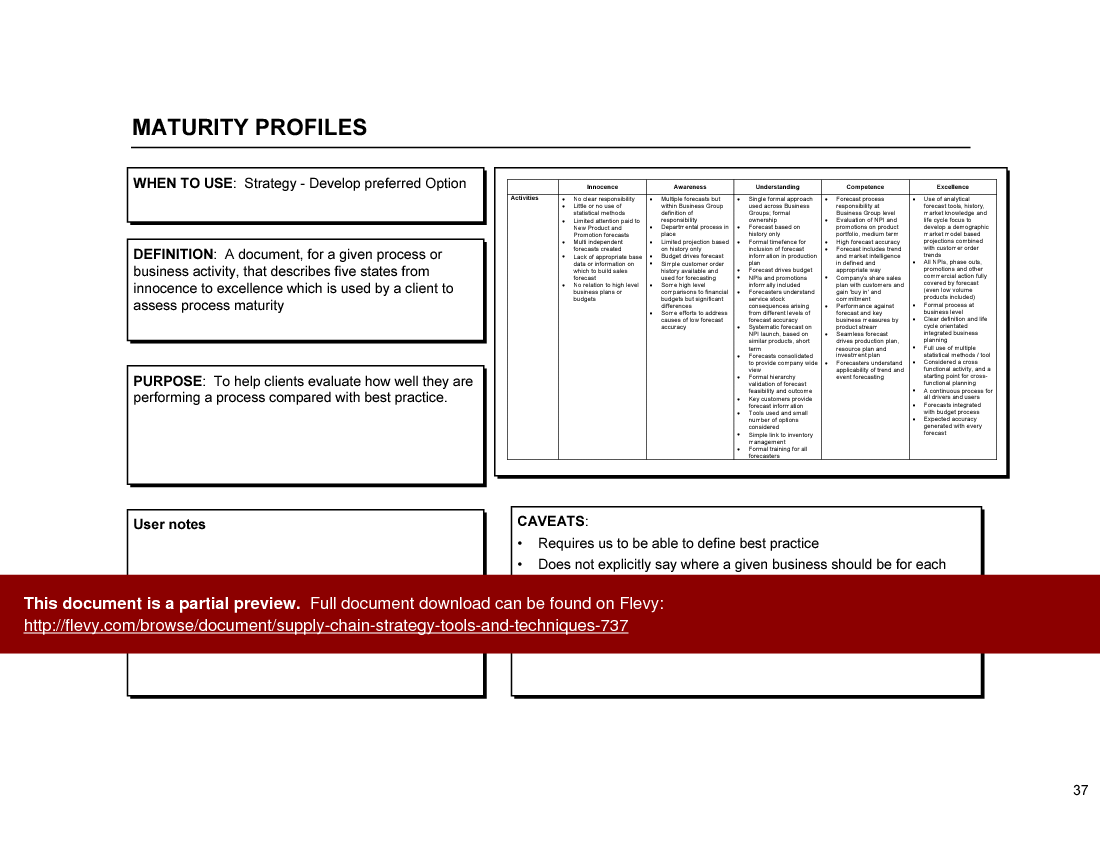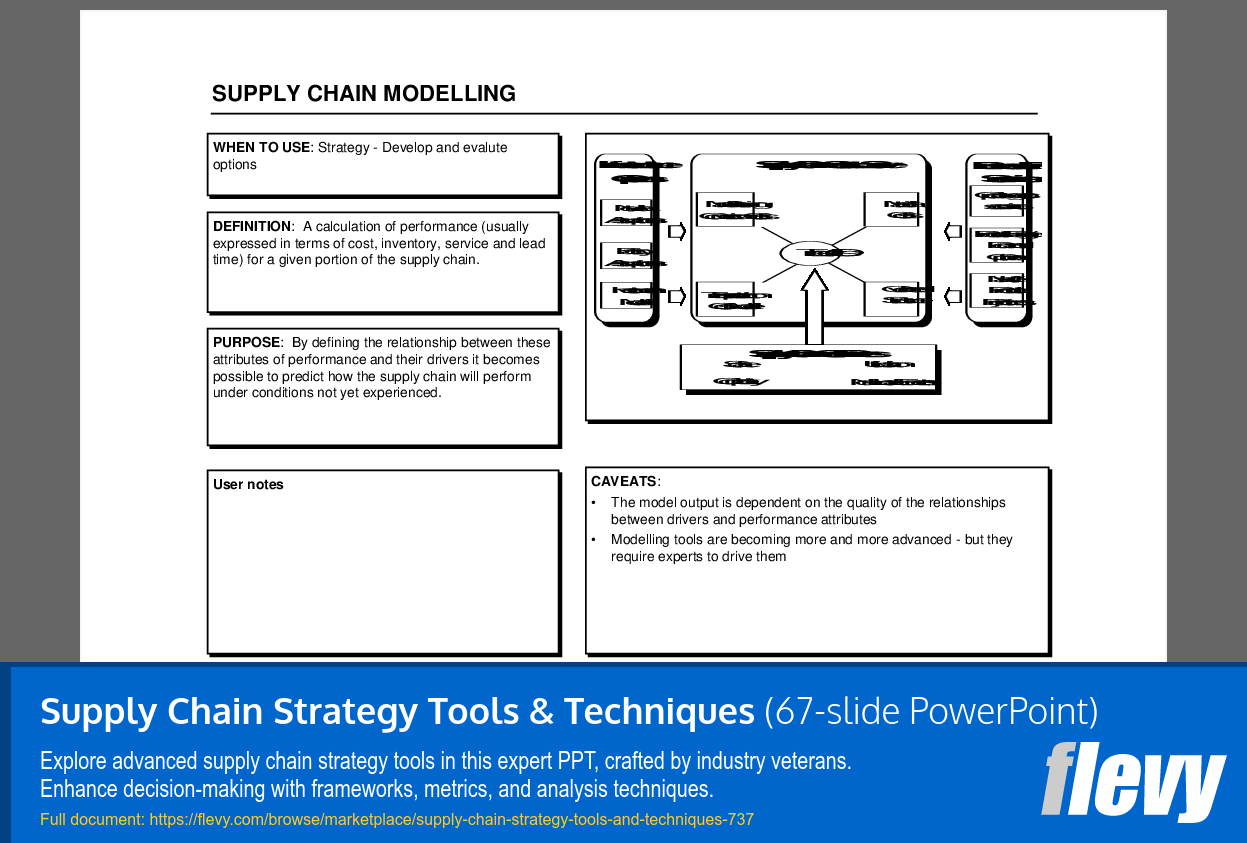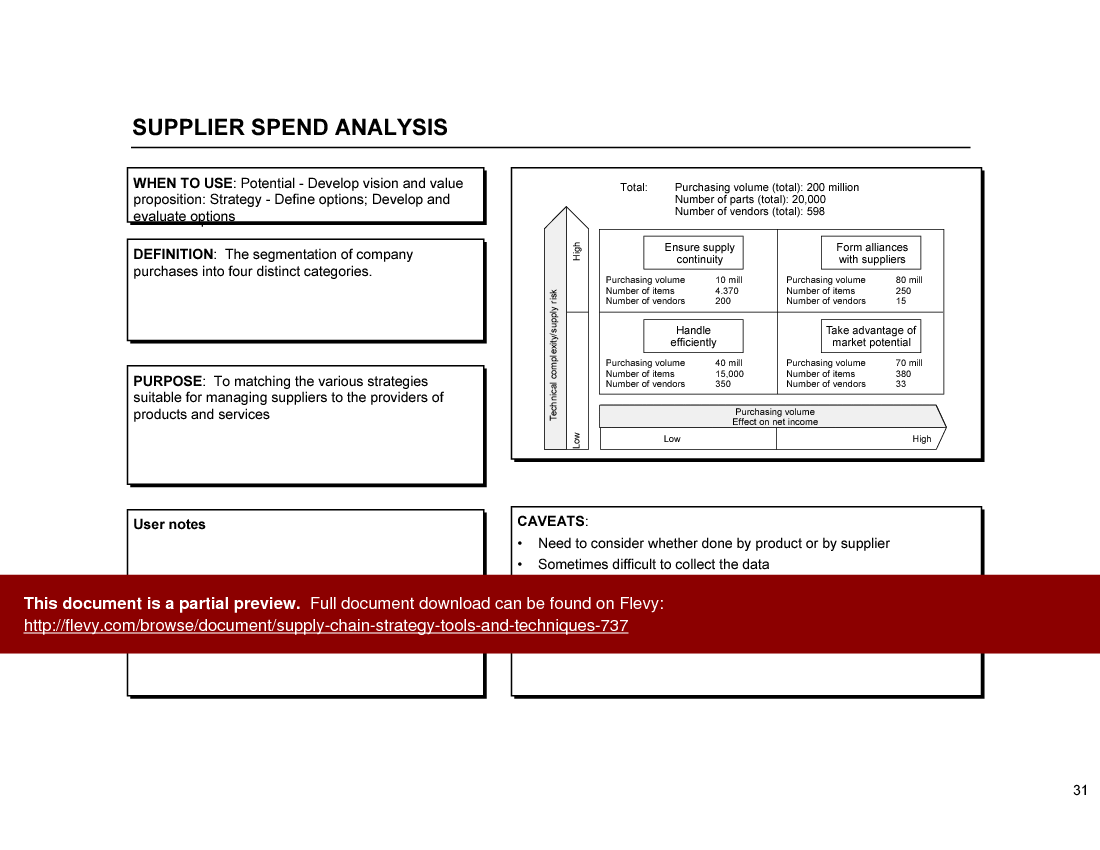
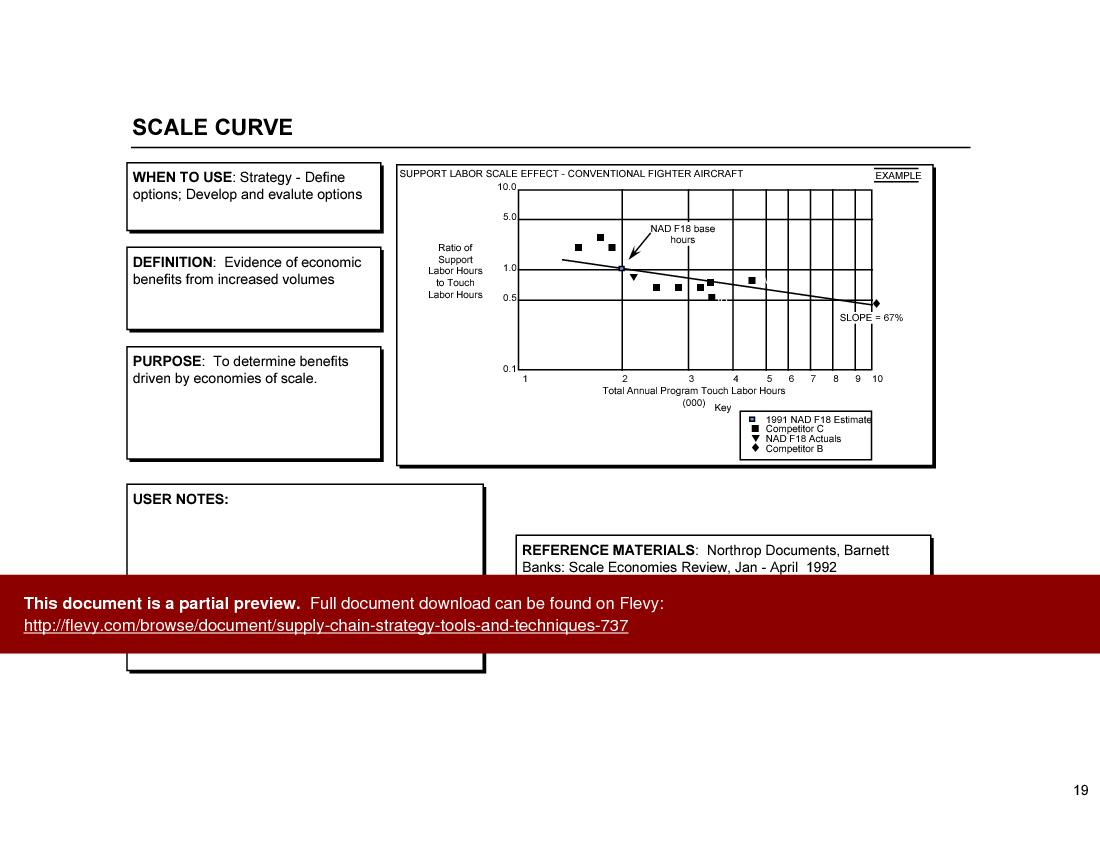
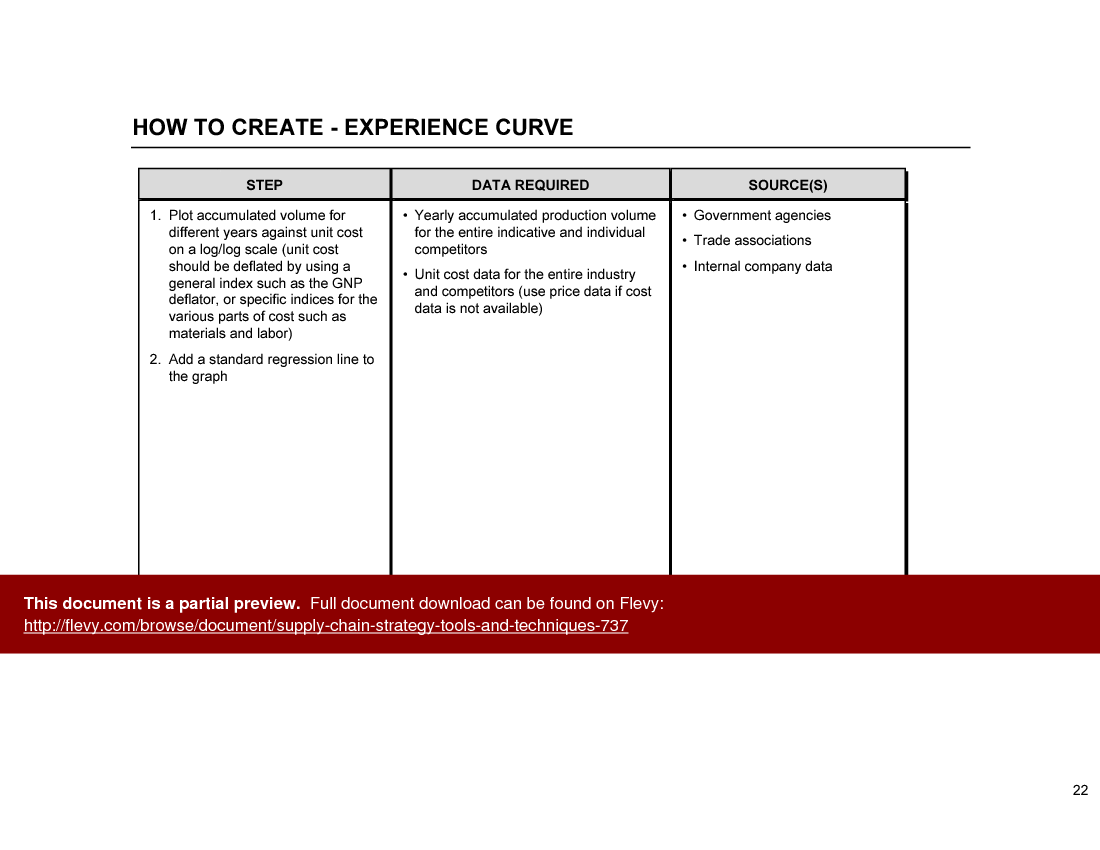

This deck was developed to support supply chain visioning and strategic diagnostics. It provides checklists of key questions to ask in formulating a supply chain strategy, core frameworks, tools and techniques that facilitate the strategic thinking process.
See also "Supply Chain Performance and Metrics"
See also "4 Stage Model Supply Chain Assessment"
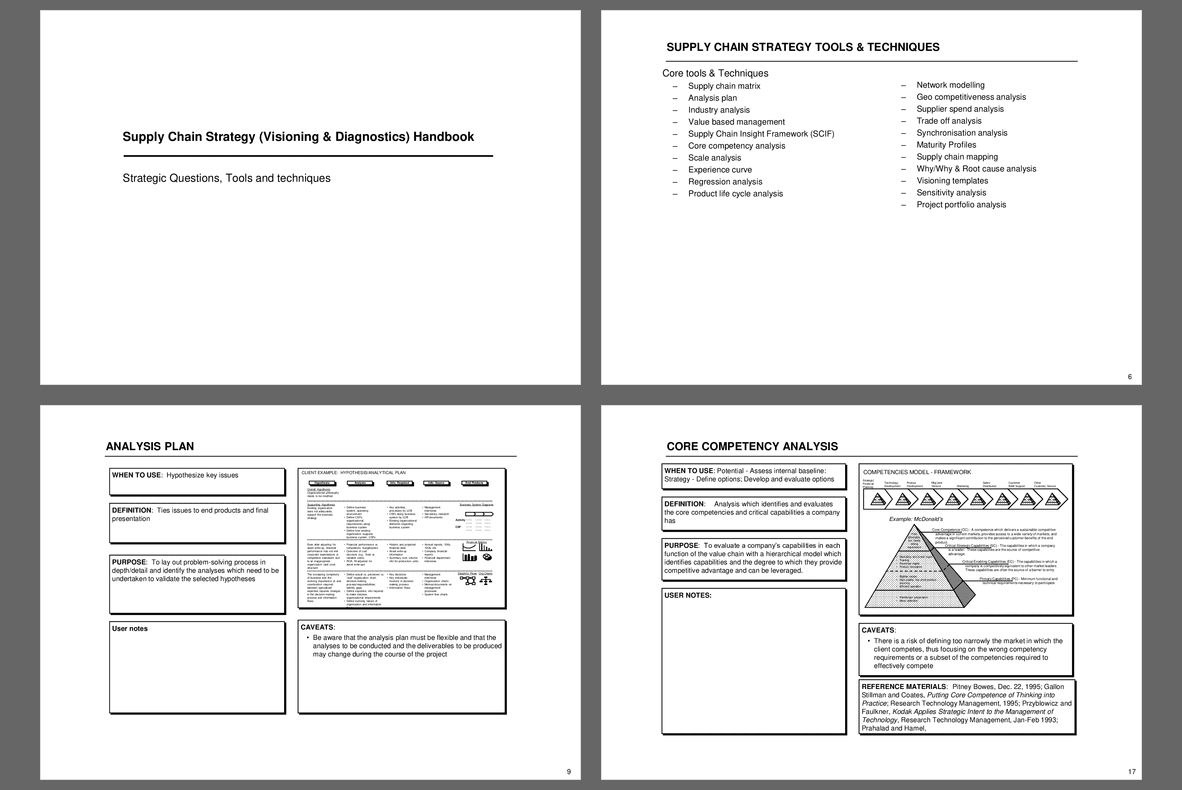
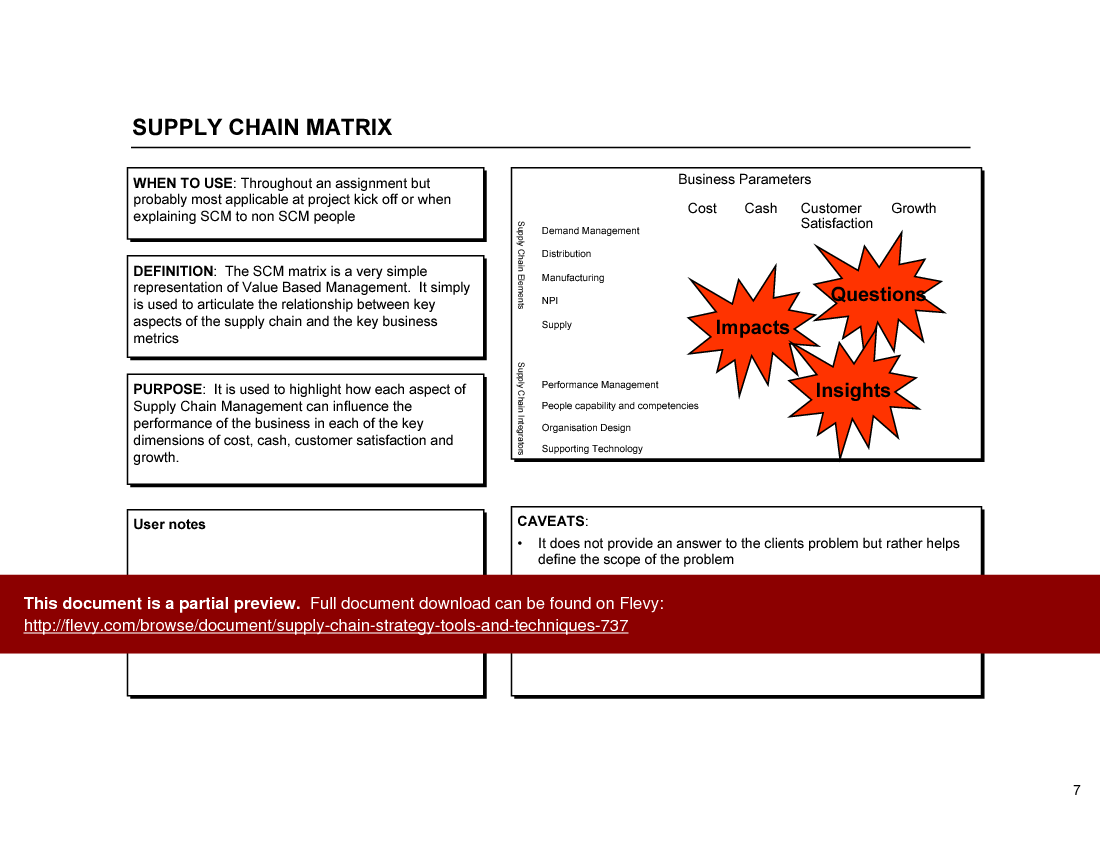
This comprehensive PowerPoint deck delves deep into the intricacies of supply chain strategy, offering a robust set of tools and techniques for C-level executives. The document includes a detailed Supply Chain Matrix, which highlights how each aspect of Supply Chain Management can influence key business metrics like cost, cash, customer satisfaction, and growth. This matrix is particularly useful for articulating the relationship between supply chain activities and business performance, making it an essential tool for strategic planning.
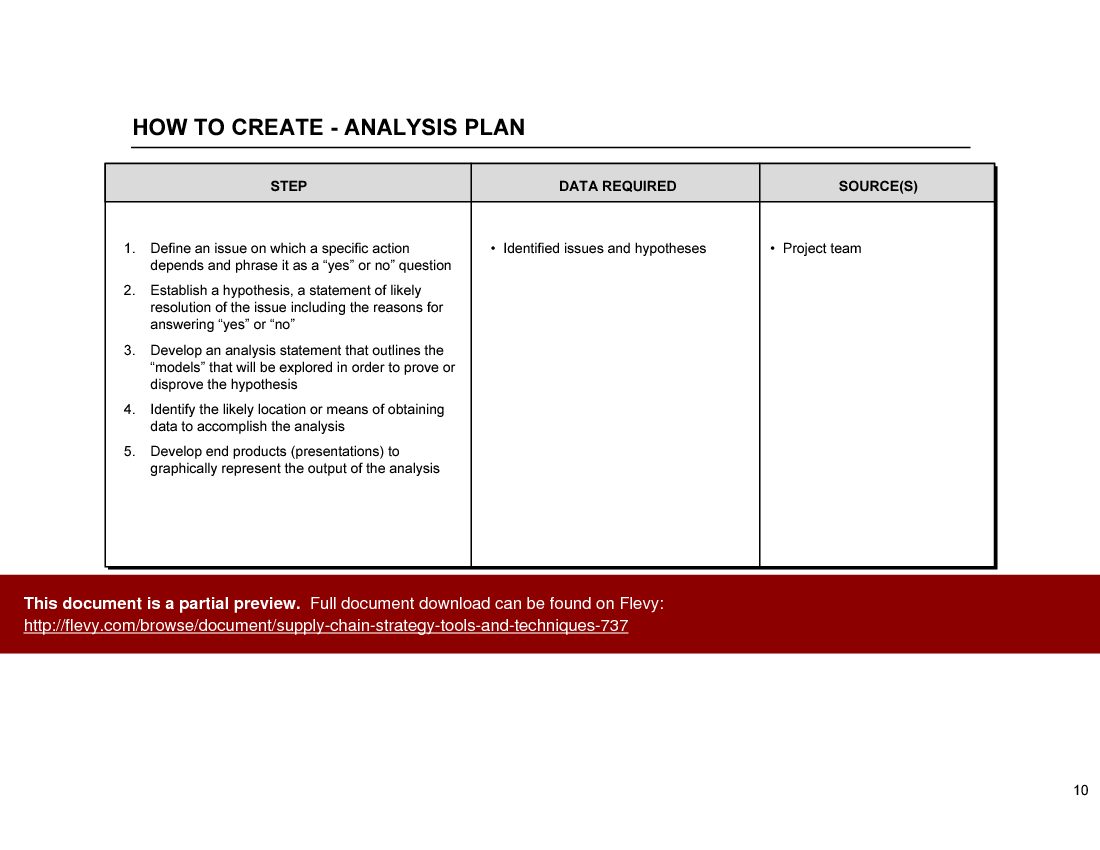
The deck also provides a step-by-step guide on creating an analysis plan. This section outlines how to define issues, establish hypotheses, and develop analysis statements to explore various models. It emphasizes the importance of identifying data sources and developing presentations to graphically represent analysis outputs. This structured approach ensures that executives can make informed decisions based on thorough analysis and clear visualizations.
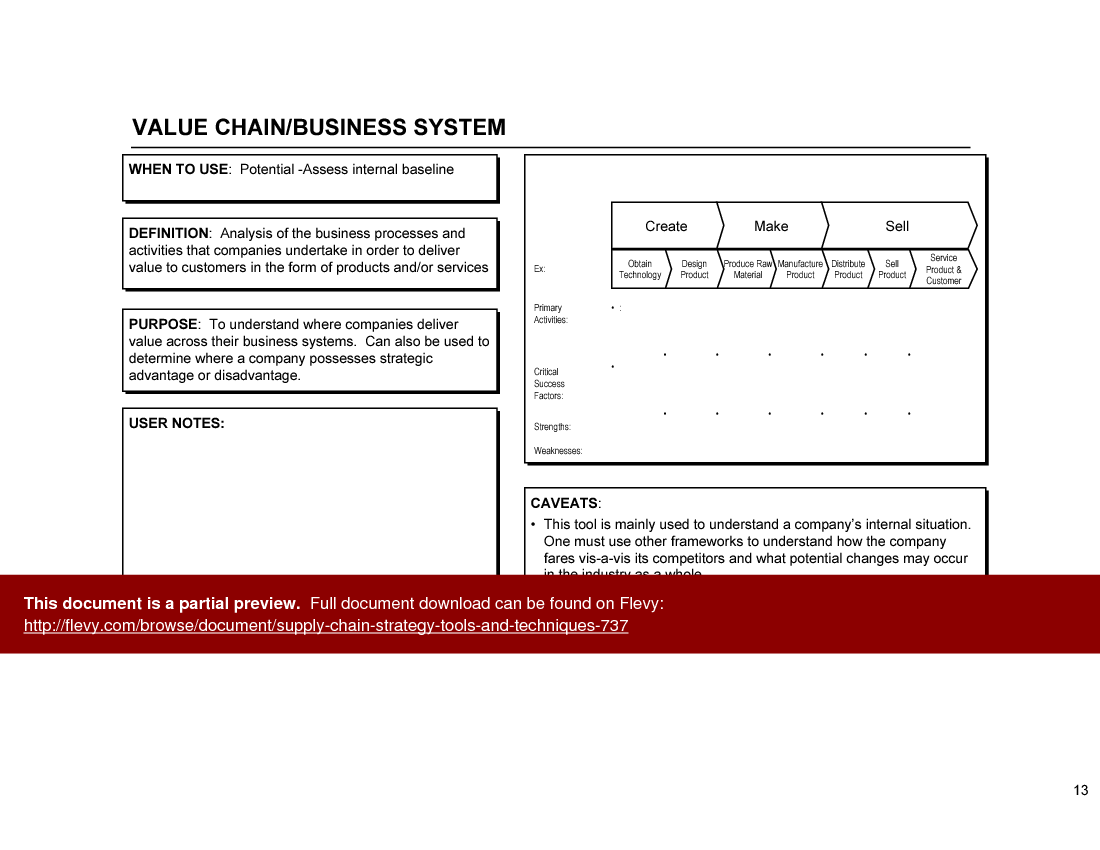
Another key feature is the Value Chain/Business System analysis, which helps companies understand where they deliver value across their business systems. This tool is crucial for identifying strategic advantages or disadvantages and can be used to assess internal baselines. The document also includes caveats to highlight the limitations of this tool, ensuring that users are aware of its scope and applicability.
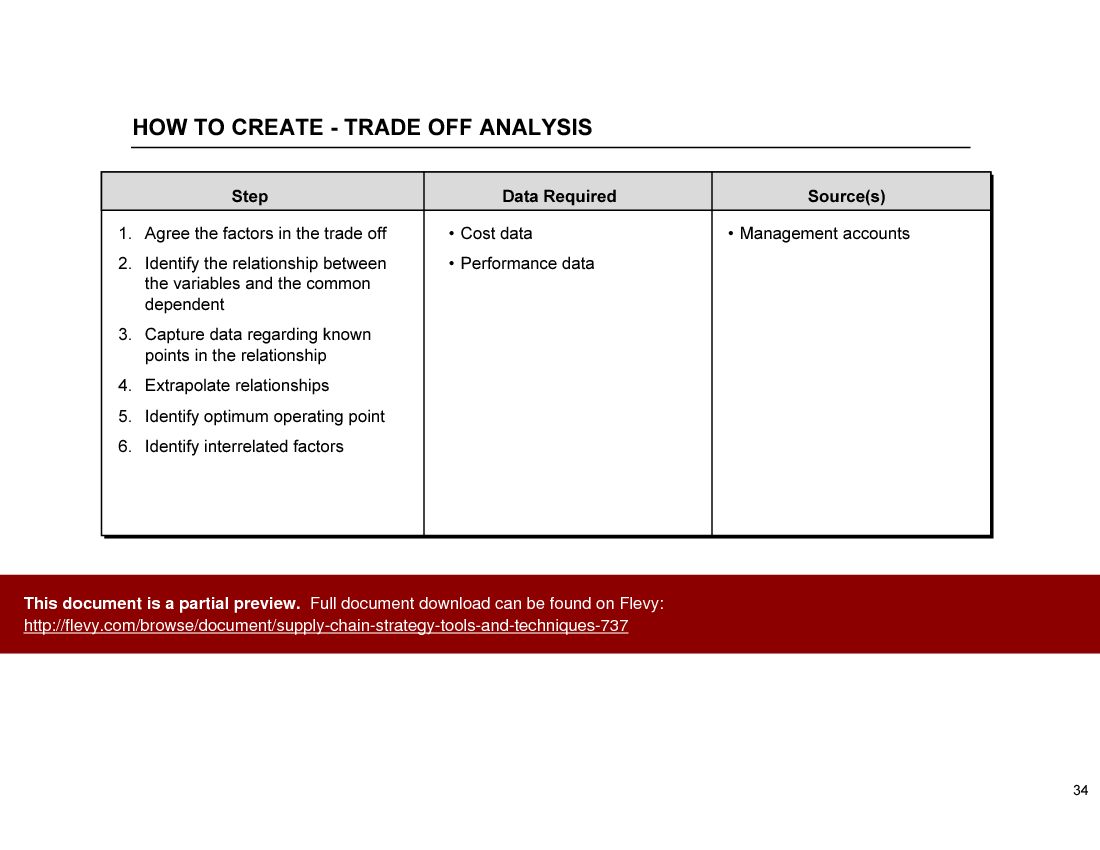
The deck also covers various methodologies for supply chain modeling, including hypothesis testing, data collection, and sensitivity analysis. These sections provide detailed steps and data requirements, making it easier for executives to implement these techniques within their organizations. The inclusion of supporting tools and techniques such as SWOT analysis, financial analysis, and customer segmentation further enhances the document's utility, offering a comprehensive toolkit for supply chain strategy development.
Got a question about the product? Email us at support@flevy.com or ask the author directly by using the "Ask the Author a Question" form. If you cannot view the preview above this document description, go here to view the large preview instead.
Executive Summary
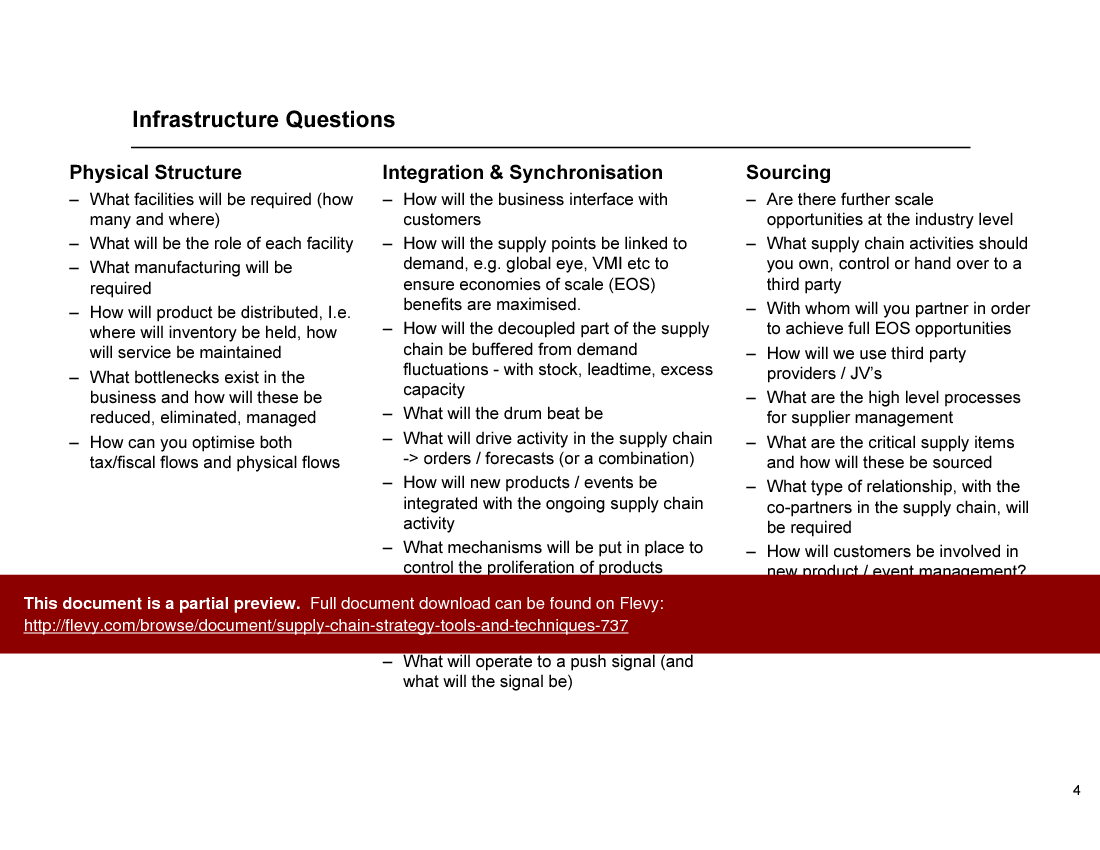
The Supply Chain Strategy (Visioning & Diagnostics) Handbook is a consulting-grade resource designed to enhance your organization's supply chain strategy through a comprehensive exploration of strategic questions, tools, and techniques. This handbook provides a structured approach to align supply chain solutions with your business's Go to Market Strategy, ensuring that customer needs drive every decision. Executives and consultants will gain insights into critical infrastructure, sourcing, and performance management questions, enabling them to make informed decisions that enhance operational efficiency and customer satisfaction.
Who This Is For and When to Use
• Supply Chain Executives seeking to refine their strategic approach
• Operations Managers responsible for implementing supply chain solutions
• Business Analysts focused on diagnosing supply chain issues
• Consultants advising organizations on supply chain optimization
Best-fit moments to use this handbook:
• During strategic planning sessions to align supply chain initiatives with business goals
• When assessing current supply chain performance and identifying areas for improvement
• At project kick-offs to establish a clear framework for supply chain diagnostics
Learning Objectives
• Define the relationship between supply chain solutions and Go to Market Strategy
• Identify key infrastructure requirements for effective supply chain management
• Analyze sourcing strategies to optimize supplier relationships
• Establish performance metrics that align with overall business goals
• Utilize diagnostic tools to uncover root causes of supply chain inefficiencies
• Develop a comprehensive understanding of customer needs to inform supply chain decisions
Table of Contents
• Introduction to Supply Chain Strategy (page 3)
• Strategic Questions for Supply Chain Solutions (page 4)
• Infrastructure Considerations (page 5)
• Sourcing Strategies (page 6)
• Performance Management Framework (page 7)
• Supporting Technology and People Capabilities (page 8)
• Core Tools and Techniques (page 9)
• Caveats and User Notes (page 10)
Primary Topics Covered
• Go to Market Strategy - The alignment of supply chain solutions with customer needs and business objectives.
• Infrastructure Requirements - Key considerations for physical structures, distribution, and manufacturing roles.
• Sourcing Strategies - Evaluation of supplier relationships and third-party partnerships to maximize efficiency.
• Performance Management - Metrics and measures to link individual behavior to overarching business goals.
• Supporting Technology - The role of technology in enhancing supply chain visibility and decision-making.
• People Capabilities - Skills and behaviors required for effective supply chain management and customer interaction.
Deliverables, Templates, and Tools
• Supply Chain Matrix for visualizing the relationship between supply chain elements and business metrics
• Analysis Plan template for structuring problem-solving processes
• Porter’s Five Forces Analysis framework for assessing market attractiveness
• Value Chain Analysis tool for identifying competitive advantages
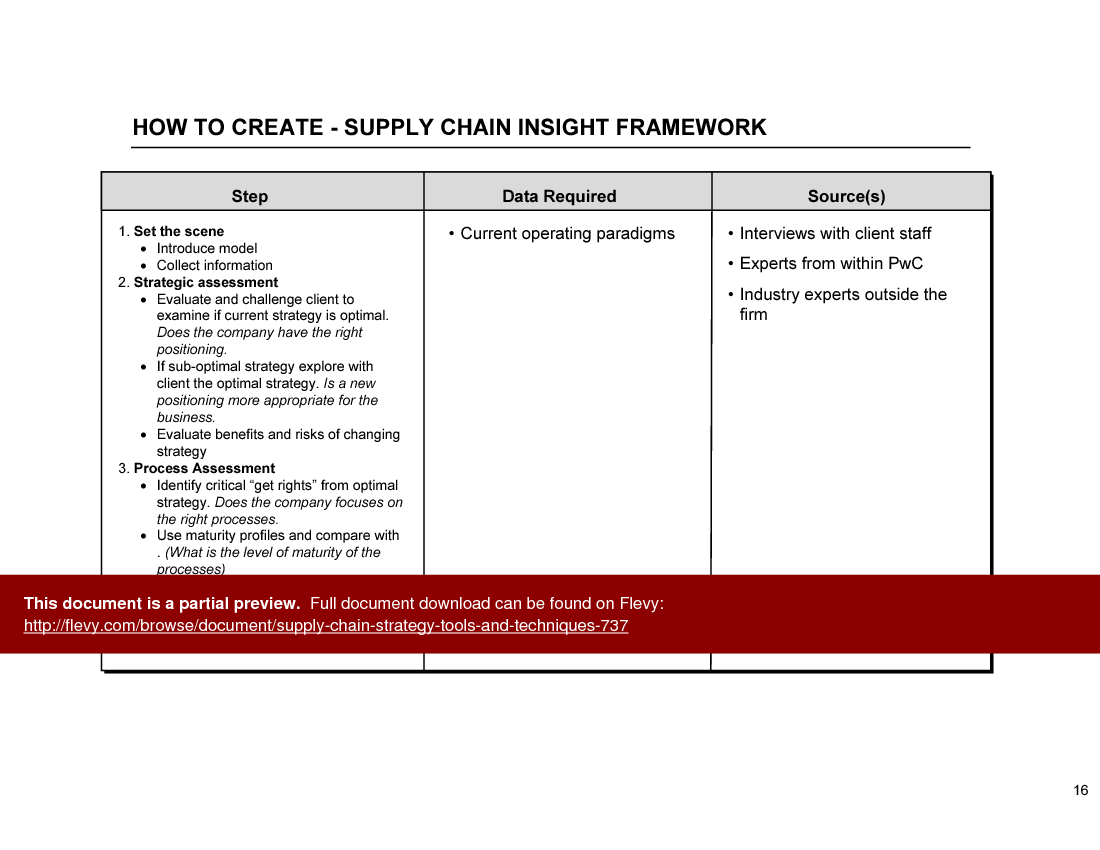
• Supply Chain Insight Framework for evaluating supply chain drivers
• Core Competency Analysis template for assessing organizational strengths
Slide Highlights
• Overview of the Supply Chain Matrix illustrating key business parameters
• Detailed analysis plan outlining hypotheses and required data
• Visual representation of Porter’s Five Forces impacting market dynamics
• Value Chain Analysis highlighting primary activities and critical success factors
• Supply Chain Insight Framework showcasing the integration of supply chain drivers
Potential Workshop Agenda
Introduction to Supply Chain Strategy (60 minutes)
• Overview of supply chain fundamentals and strategic alignment
• Discussion on the importance of customer-centric approaches
Infrastructure and Sourcing Workshop (90 minutes)
• Identify infrastructure needs and roles in the supply chain
• Evaluate sourcing strategies and supplier relationships
Performance Management and Technology Session (60 minutes)
• Establish key performance metrics and measures
• Discuss the role of technology in enhancing supply chain efficiency
Customization Guidance
• Tailor the Supply Chain Matrix to reflect specific business metrics and goals
• Modify the analysis plan to align with organizational objectives and key issues
• Adapt the Value Chain Analysis to focus on critical success factors relevant to your industry
Secondary Topics Covered
• Customer Insight and Alignment strategies for understanding market needs
• Customer Segmentation techniques for targeted marketing approaches
• Logic Trees for structured problem-solving and analysis
• SWOT Analysis for evaluating internal and external factors affecting the supply chain
• Economic Value Added (EVA) Analysis for assessing capital efficiency
FAQ
What is the purpose of the Supply Chain Matrix?
The Supply Chain Matrix visually represents the relationship between supply chain elements and key business metrics, helping organizations identify areas for improvement.
How can I customize the analysis plan for my organization?
You can tailor the analysis plan by aligning it with your specific business goals and the key issues you aim to address during the project.
What are the key performance metrics for supply chain management?
Key performance metrics include cost efficiency, customer satisfaction, inventory turnover, and lead time reduction, all linked to overall business objectives.
How does the Value Chain Analysis help in supply chain strategy?
Value Chain Analysis identifies the primary activities that create value and competitive advantages, allowing organizations to focus on areas that enhance performance.
What is the significance of the Supply Chain Insight Framework?
The Supply Chain Insight Framework helps organizations understand the underlying drivers of their supply chains, enabling better strategic decision-making.
How can I assess supplier relationships effectively?
Utilize Supplier Spend Analysis to evaluate purchasing patterns and identify opportunities for strategic partnerships or improvements in supplier management.
What is the role of technology in supply chain management?
Technology enhances visibility, improves data sharing, and supports decision-making processes, ultimately leading to more efficient supply chain operations.
How can I ensure my supply chain strategy aligns with customer needs?
Conduct customer insight research to gather feedback on requirements and satisfaction levels, ensuring that your supply chain solutions are customer-centric.
Glossary
• Go to Market Strategy - The plan for delivering products or services to customers.
• Supply Chain Matrix - A visual tool for assessing the relationship between supply chain elements and business metrics.
• Porter’s Five Forces - A framework for analyzing market competitiveness and attractiveness.
• Value Chain Analysis - A method for identifying activities that create value within an organization.
• Core Competency - A unique capability that provides a competitive advantage.
• EVA (Economic Value Added) - A measure of a company's financial performance based on residual wealth.
• SWOT Analysis - A strategic planning tool for identifying strengths, weaknesses, opportunities, and threats.
• Customer Segmentation - The process of dividing a market into distinct groups of buyers.
• Performance Metrics - Standards used to measure the efficiency and effectiveness of an organization.
• Supply Chain Insight Framework - A tool for understanding the drivers of supply chain performance.
• Supplier Spend Analysis - An assessment of purchasing patterns and supplier relationships.
• Maturity Profiles - A framework for evaluating the performance of processes against best practices.
• Root Cause Analysis - A method for identifying the underlying causes of problems in a process.
• Sensitivity Analysis - A technique for assessing how changes in variables impact outcomes.
• Trade-Off Analysis - An evaluation of the relationships between different supply chain performance variables.
• Focus Groups - A qualitative research method for gathering insights from a representative group.
• Conjoint Analysis - A statistical technique for understanding customer preferences among product attributes.
• Logic Trees - A visual representation of the relationships between problems and solutions.
• Kano Model - A framework for analyzing customer satisfaction based on product attributes.
Source: Best Practices in Supply Chain Analysis PowerPoint Slides: Supply Chain Strategy Tools & Techniques PowerPoint (PPT) Presentation Slide Deck, Documents & Files
This document is available as part of the following discounted bundle(s):
Save %!
Supply Chain Toolkit
This bundle contains 3 total documents. See all the documents to the right.
|
Receive our FREE presentation on Operational Excellence
This 50-slide presentation provides a high-level introduction to the 4 Building Blocks of Operational Excellence. Achieving OpEx requires the implementation of a Business Execution System that integrates these 4 building blocks. |