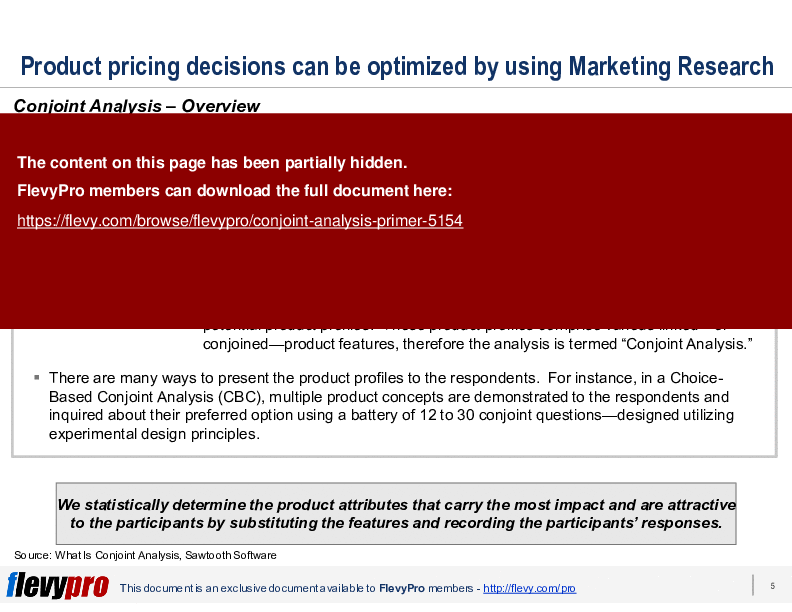

Marketing Research is of immense value for executives in deciding how much to price their products. One of the methods that researchers most commonly adopt is the Conjoint (Trade-off) Analysis. The method helps in identifying product features that consumers prefer, discerning the impact of price changes on demand, and estimating the probability of product acceptance in the market.
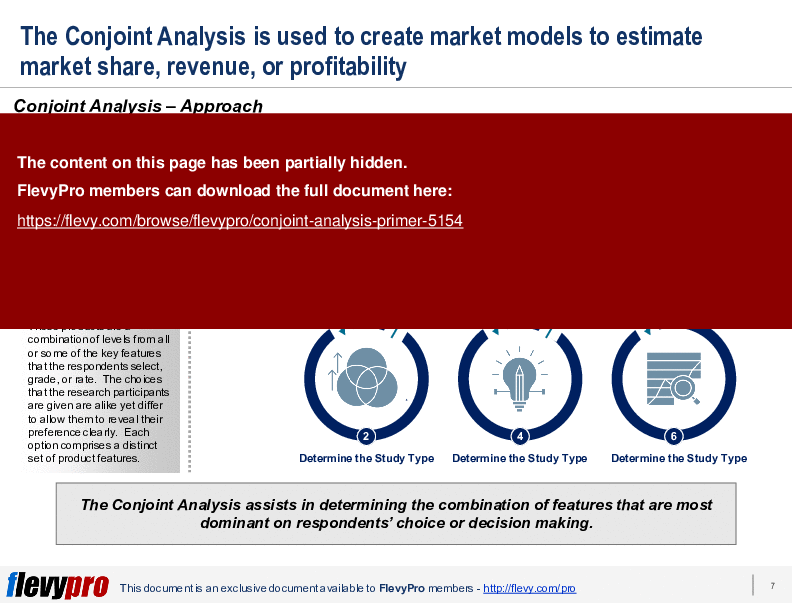
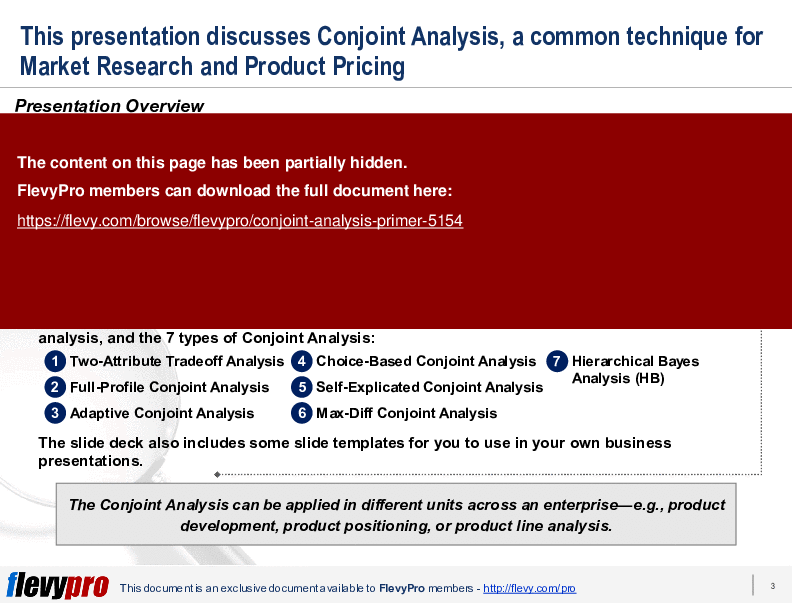
In contrast to directly inquiring from the respondents about the most important feature in a product, Conjoint Analysis makes the survey participants assess potential product profiles. These product profiles comprise various linked—or conjoined—product features, therefore the analysis is termed "Conjoint Analysis." The Conjoint Analysis can be applied in different units across an enterprise—e.g., product development, product positioning, or product line analysis.
This presentation provides a detailed overview of the Conjoint Analysis, the key phases of the analysis, and the 7 types of Conjoint Analysis:
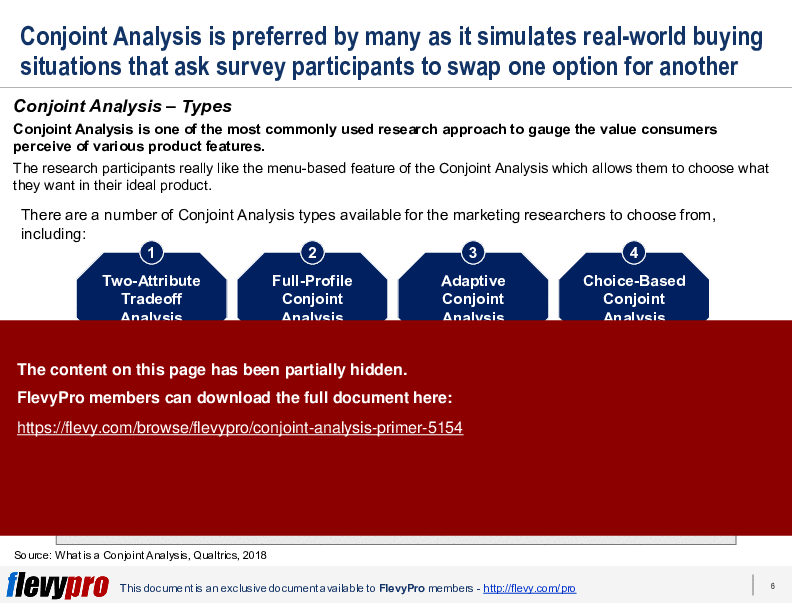
1. Two-Attribute Tradeoff Analysis
2. Full-Profile Conjoint Analysis
3. Adaptive Conjoint Analysis
4. Choice-Based Conjoint Analysis
5. Self-Explicated Conjoint Analysis
6. Max-Diff Conjoint Analysis
7. Hierarchical Bayes Analysis (HB)
The slide deck also includes some slide templates for you to use in your own business presentations.
The Conjoint Analysis Primer also delves into practical applications across various industries, including tourism and agriculture. It provides real-world examples that illustrate how Conjoint Analysis can be used to gauge customer preferences and optimize product offerings. This PPT is a must-have for executives looking to leverage data-driven insights to refine their product strategies and enhance market positioning.
The presentation includes detailed templates to facilitate the design and implementation of Conjoint Analysis in your organization. These templates are designed to streamline the process, from determining the study type to analyzing the data, ensuring that you can efficiently gather and interpret valuable consumer insights. This resource is essential for any executive aiming to stay ahead in a competitive market.
Got a question about this document? Email us at flevypro@flevy.com.
Executive Summary
The Conjoint Analysis Primer is an essential resource for executives and consultants seeking to master product pricing strategies and optimize offerings through market research methodologies. This presentation, crafted by former consultants from McKinsey and Big 4 firms, provides a comprehensive overview of Conjoint Analysis—a powerful technique that helps identify consumer preferences, assess the impact of pricing changes, and predict product acceptance in the market. By utilizing various methodologies, including Choice-Based Conjoint and Hierarchical Bayes Analysis, this deck equips users with the tools needed to make informed decisions based on consumer insights.
Who This Is For and When to Use
• Marketing executives focused on product pricing and positioning
• Product managers involved in product development and feature evaluation
• Market researchers conducting consumer preference studies
• Business consultants advising clients on pricing strategies
Best-fit moments to use this deck:
• During product development phases to gauge consumer preferences
• When assessing the viability of new product features or pricing strategies
• For conducting market research to inform strategic decision-making
Learning Objectives
• Define Conjoint Analysis and its relevance in market research
• Identify different types of Conjoint Analysis and their applications
• Establish the steps involved in conducting a Conjoint Analysis
• Analyze consumer preferences and their implications for product offerings
• Utilize templates and examples to implement Conjoint Analysis in practice
Table of Contents
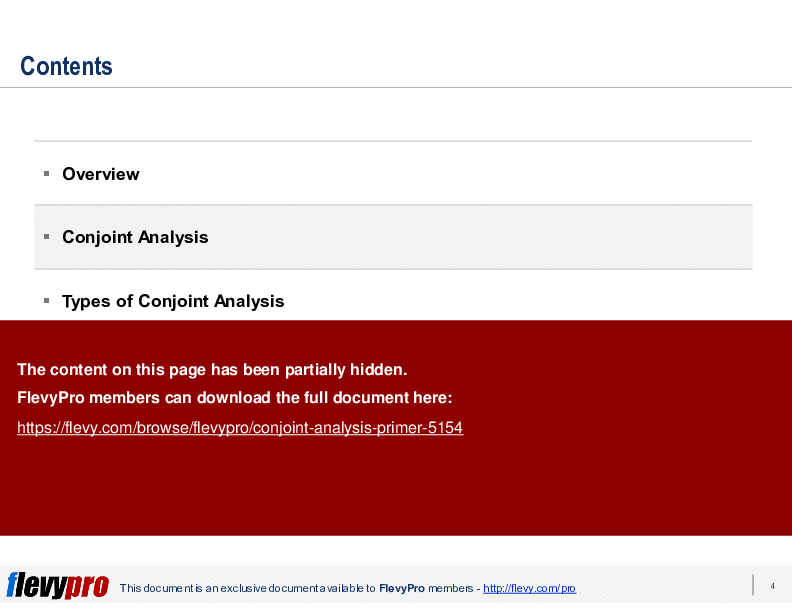
• Overview (page 3)
• Conjoint Analysis (page 5)
• Types of Conjoint Analysis (page 6)
• Conjoint Analysis Process (page 13)
• Conjoint Analysis Examples (page 16)
• Templates (page 19)
Primary Topics Covered
• Overview of Conjoint Analysis - An introduction to the methodology, its significance in market research, and its application in product pricing strategies.
• Types of Conjoint Analysis - A detailed exploration of various types, including Two-Attribute Tradeoff, Full-Profile, Adaptive, Choice-Based, Self-Explicated, Max-Diff, and Hierarchical Bayes Analysis.
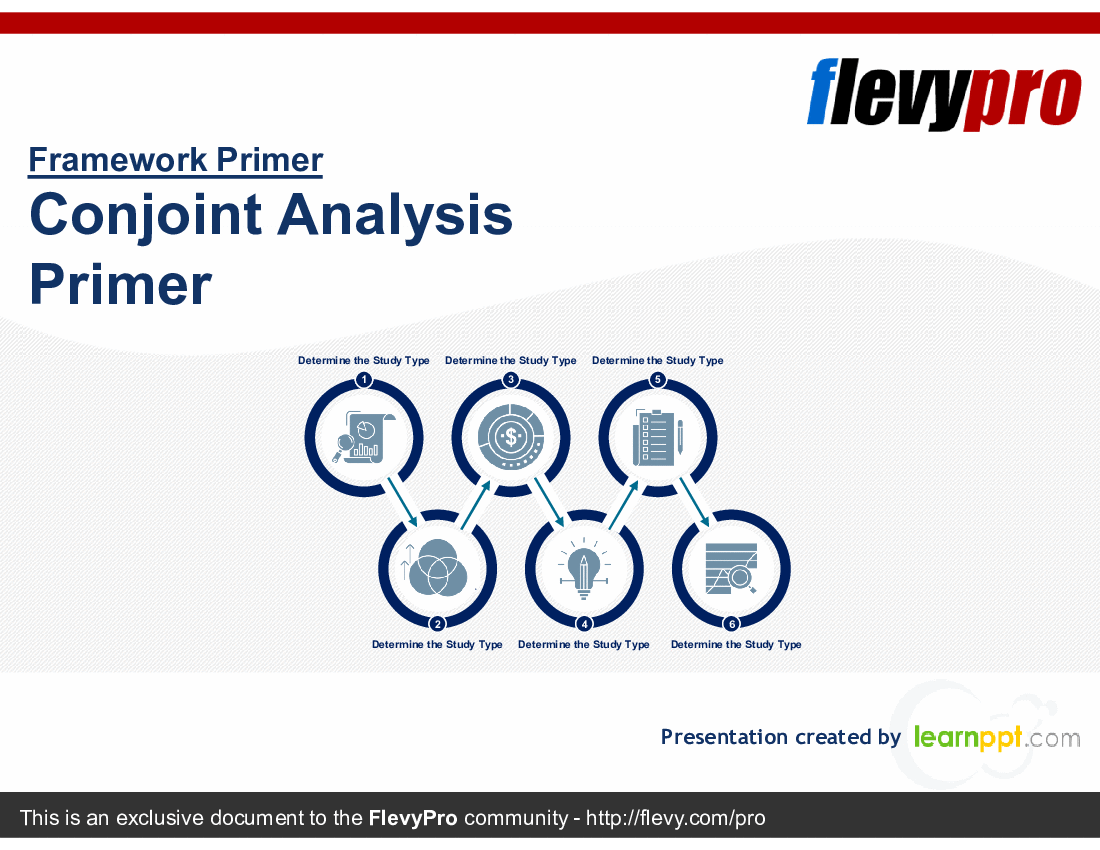
• Conjoint Analysis Process - A step-by-step guide outlining the phases of conducting Conjoint Analysis, from determining the study type to analyzing data.
• Consumer Preference Insights - Methods for interpreting data gathered through Conjoint Analysis to inform product development and marketing strategies.
• Templates for Implementation - Ready-to-use templates for conducting Conjoint Analysis in business settings.
Deliverables, Templates, and Tools
• Conjoint Analysis study type determination template
• Feature identification and categorization template
• Questionnaire design template for Conjoint Analysis
• Data collection and analysis framework
• Example profiles for various industries (e.g., tourism, agriculture)
• Presentation templates for reporting findings
Slide Highlights
• Overview slide outlining the significance of Conjoint Analysis in market research
• Types of Conjoint Analysis slide detailing the various methodologies available
• Process flowchart illustrating the steps in conducting a Conjoint Analysis
• Example slides showcasing real-world applications in tourism and agriculture
• Template slides for practical implementation of Conjoint Analysis
Potential Workshop Agenda
Introduction to Conjoint Analysis (30 minutes)
• Overview of Conjoint Analysis and its importance
• Discussion on types of Conjoint Analysis
Hands-On Application (60 minutes)
• Interactive session on identifying features and designing questionnaires
• Group activity to analyze consumer preference data
Review and Q&A (30 minutes)
• Presentation of findings from group activities
• Open floor for questions and clarifications
Customization Guidance
• Tailor the study type based on specific organizational needs and objectives
• Adjust feature sets and levels to reflect the product being analyzed
• Modify templates to align with internal branding and presentation standards
Secondary Topics Covered
• Market research methodologies and their relevance
• Statistical techniques for data analysis in Conjoint Analysis
• Case studies demonstrating successful applications of Conjoint Analysis
Topic FAQ
Document FAQ
These are questions addressed within this presentation.
What is Conjoint Analysis?
Conjoint Analysis is a statistical technique used to understand consumer preferences by evaluating how different product features influence purchasing decisions.
How can I apply Conjoint Analysis in my organization?
Utilize the templates and methodologies provided in this presentation to design and conduct your own Conjoint Analysis tailored to your specific products and market.
What types of Conjoint Analysis are available?
The presentation covers several types, including Two-Attribute Tradeoff, Full-Profile, Adaptive, Choice-Based, Self-Explicated, Max-Diff, and Hierarchical Bayes Analysis.
What are the key steps in the Conjoint Analysis process?
The key steps include determining the study type, identifying relevant features, establishing values for each feature, designing the questionnaire, collecting data, and analyzing the results.
How do I interpret the results of a Conjoint Analysis?
Analyze the data to determine which features are most valued by consumers and how they influence purchasing decisions, allowing for informed product development and pricing strategies.
Can Conjoint Analysis be used in different industries?
Yes, Conjoint Analysis is versatile and can be applied across various industries, including tourism, agriculture, and consumer goods.
What tools can assist in conducting Conjoint Analysis?
Utilize the templates and frameworks provided in this presentation, along with statistical software for data analysis.
What are the limitations of Conjoint Analysis?
Limitations may include respondent fatigue during lengthy surveys and the challenge of accurately capturing consumer preferences in complex product scenarios.
Glossary
• Conjoint Analysis - A statistical technique used to determine consumer preferences for product features.
• Choice-Based Conjoint (CBC) - A method where respondents select their preferred product profiles from a set of options.
• Hierarchical Bayes Analysis (HB) - A statistical method used to estimate individual-level preferences from aggregate data.
• Max-Diff Analysis - A technique that identifies the most and least preferred options among a set of choices.
• Self-Explicated Conjoint Analysis - A method where respondents evaluate individual features rather than full product profiles.
• Adaptive Conjoint Analysis - A dynamic approach that adjusts questions based on previous responses to enhance engagement.
• Full-Profile Conjoint Analysis - A method presenting complete product profiles for evaluation by respondents.
• Two-Attribute Tradeoff Analysis - A technique that assesses preferences by comparing 2 attributes at a time.
• Market Research - The process of gathering, analyzing, and interpreting information about a market.
• Consumer Preferences - The subjective tastes and choices of consumers regarding products and services.
• Statistical Techniques - Methods used to analyze data and draw conclusions based on statistical principles.
• Data Collection - The process of gathering information for analysis.
• Questionnaire Design - The creation of survey instruments to collect data from respondents.
• Feature Identification - The process of determining which attributes of a product are relevant to consumers.
• Survey Respondents - Individuals who participate in surveys to provide data for analysis.
• Product Profiles - Combinations of product features presented to respondents during analysis.
• Utility Score - A numerical representation of the value or preference assigned to a specific product feature.
• Experimental Design - A structured approach to conducting research that allows for the assessment of relationships between variables.
• Statistical Software - Programs used to perform statistical analysis on collected data.
• Market Share - The portion of a market controlled by a particular company or product.
• Revenue Estimation - The process of predicting future income based on various factors, including market analysis.
• Profitability - The ability of a business to generate profit relative to its expenses.
Source: Best Practices in Pricing Strategy, Market Analysis PowerPoint Slides: Conjoint Analysis Primer PowerPoint (PPTX) Presentation Slide Deck, LearnPPT Consulting
Did you need more documents?
Consider a FlevyPro subscription from $39/month. View plans here.
For $10.00 more, you can download this document plus 2 more FlevyPro documents. That's just $13 each.
|
Download our FREE Strategy & Transformation Framework Templates
Download our free compilation of 50+ Strategy & Transformation slides and templates. Frameworks include McKinsey 7-S, Balanced Scorecard, Disruptive Innovation, BCG Curve, and many more. |