
Introduction to Market Analysis   36-slide PPT PowerPoint presentation slide deck (PPT)
$29.00

Introduction to Market Analysis (36-slide PPT PowerPoint presentation slide deck (PPT)) Preview Image
Log in to unlock full preview.
Introduction to Market Analysis (36-slide PPT PowerPoint presentation slide deck (PPT)) Preview Image
Arrow   Click main image to view in full screen.

Introduction to Market Analysis (PowerPoint PPT Slide Deck)

PowerPoint (PPT) 36 Slides

Top 1,000 Best Practice $29.00
This deck is created by ex-McKinsey, BCG, Deloitte, EY, and Capgemini consultants. Explains a framework used by global strategy consulting firms for Market Analysis. Also discusses Porter's Five Forces and Value Chain Analysis.
Add to Cart


Immediate download
Free lifetime updates

MARKET RESEARCH PPT DESCRIPTION

Market analysis PPT: Learn key concepts, customer needs, competitor insights & foreign market examples. Download this professional Introduction to Market Analysis now. Introduction to Market Analysis is a 36-slide PPT PowerPoint presentation slide deck (PPT) available for immediate download upon purchase.

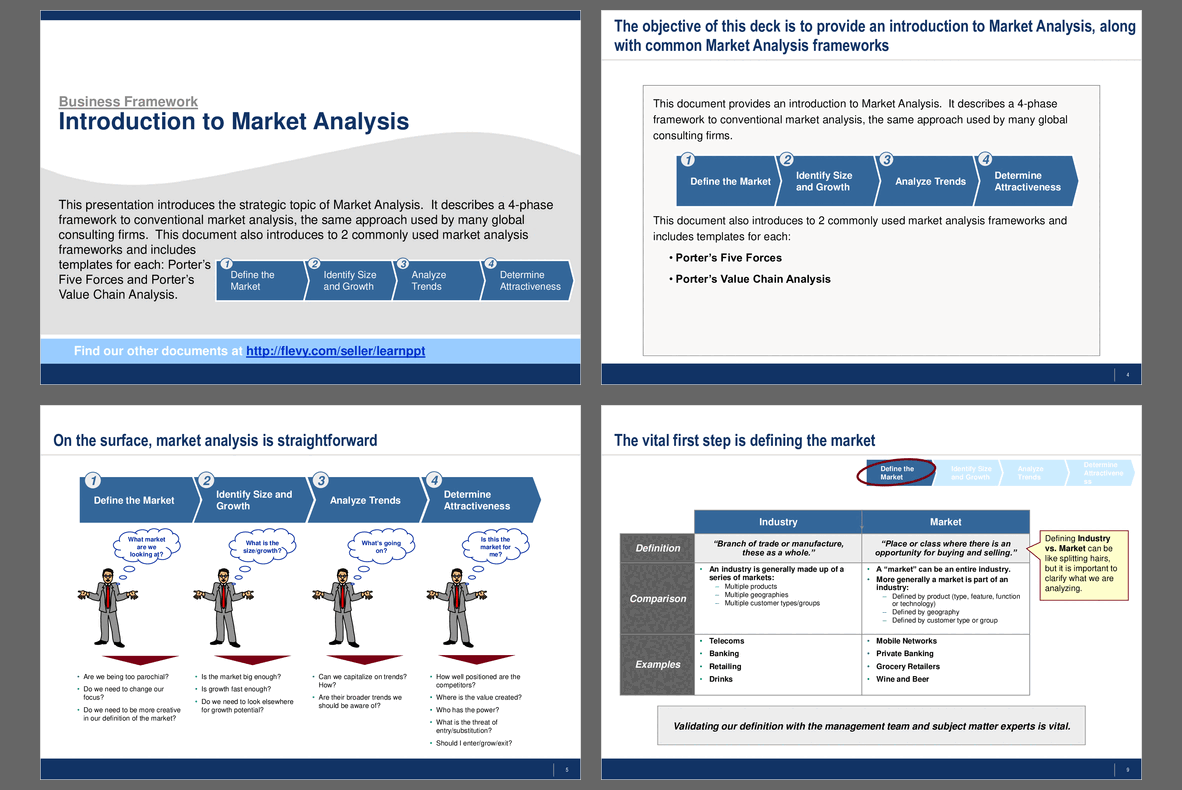
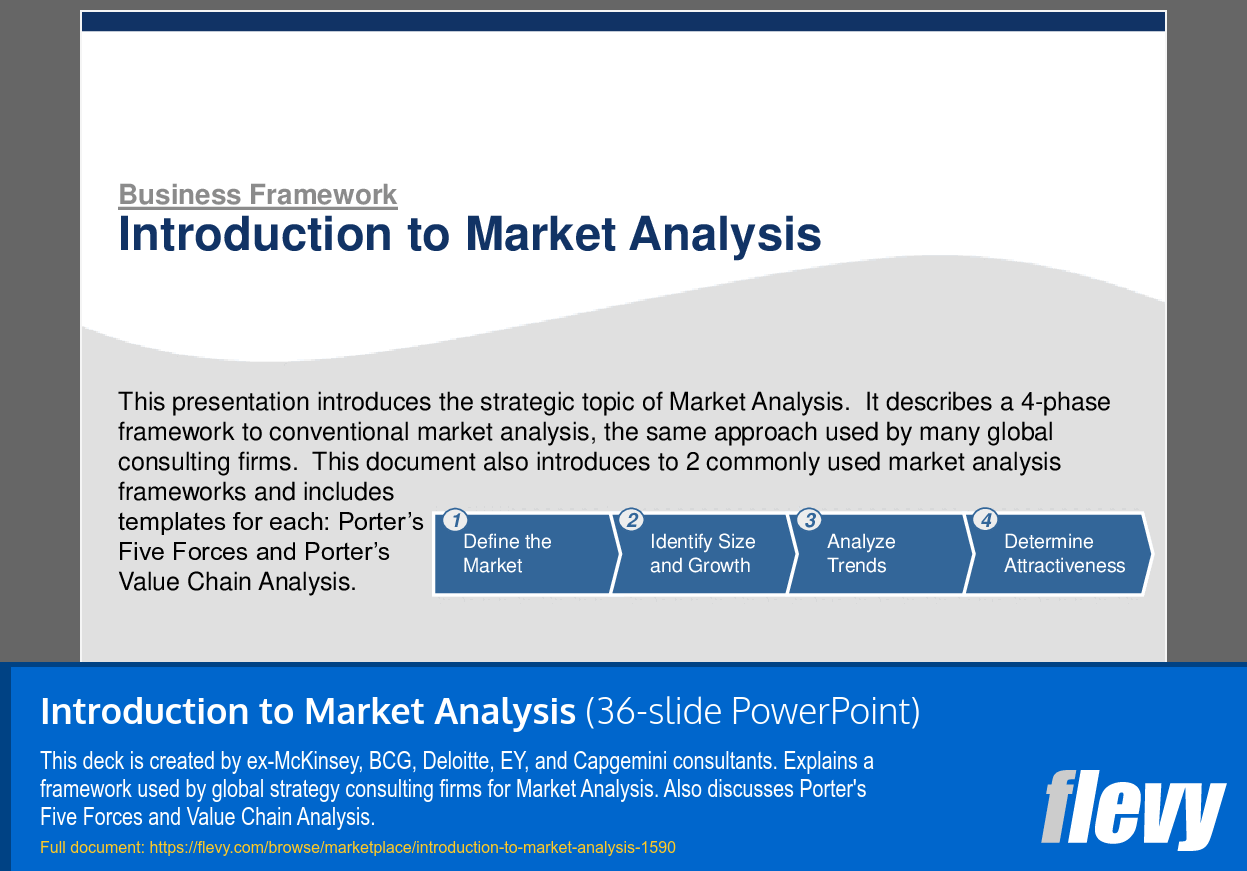
This presentation introduces the strategic topic of Market Analysis. It describes a 4-phase framework to conventional market analysis, the same approach used by many global consulting firms:
1. Define the Market
2. Identify Size and Growth
3. Analyze Trends
4. Determine Attractiveness

This document also introduces to 2 commonly used market analysis frameworks and includes templates for each:
•  Porter's Five Forces
•  Porter's Value Chain Analysis.

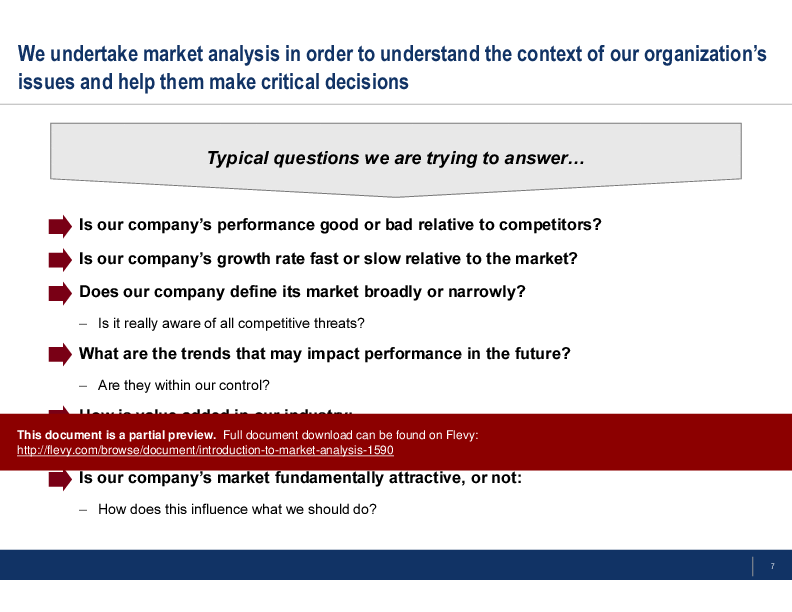
The PPT delves into critical questions that drive market analysis, such as evaluating company performance relative to competitors and assessing growth rates. It emphasizes the importance of understanding whether a company defines its market broadly or narrowly, which can significantly impact strategic decisions. This focus on practical, real-world questions ensures that the analysis is grounded in the realities of competitive business environments.

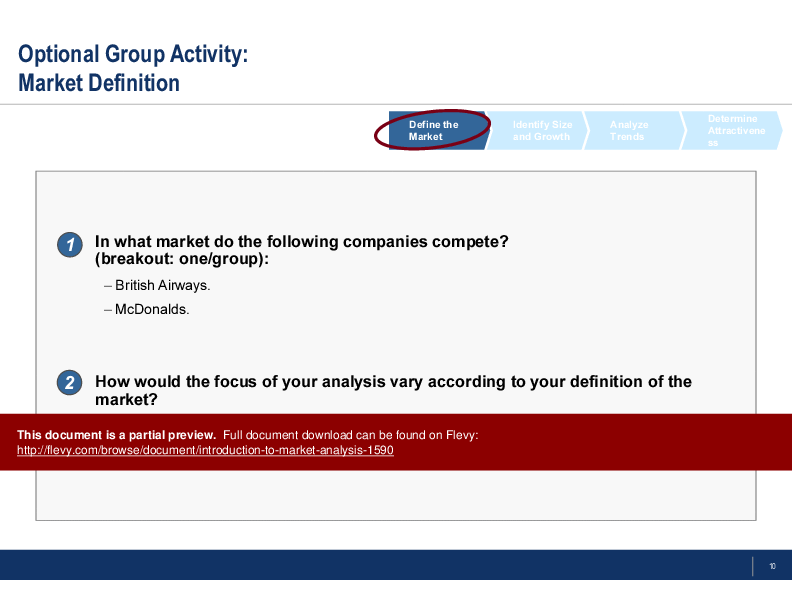
Interactive group activities are included to reinforce learning, such as defining the market for well-known companies like British Airways and McDonald's. These exercises are designed to help teams think critically about market boundaries and the implications of different market definitions. This hands-on approach facilitates a deeper understanding of market dynamics and strategic positioning.

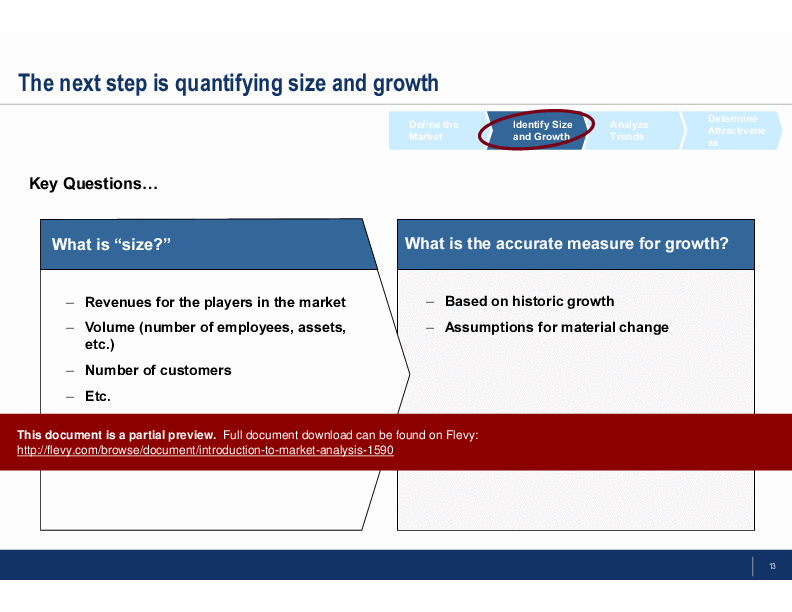
The presentation also covers the quantification of market size and growth, addressing key questions about revenue, volume, and customer numbers. It provides a structured approach to measuring growth, incorporating both historical data and assumptions for future changes. This comprehensive coverage ensures that executives have the tools needed to make informed, data-driven decisions about market opportunities and threats.

Got a question about the product? Email us at support@flevy.com or ask the author directly by using the "Ask the Author a Question" form. If you cannot view the preview above this document description, go here to view the large preview instead.

MARCUS OVERVIEW

This synopsis was written by Marcus [?] based on the analysis of the full 36-slide presentation.


Executive Summary
This presentation provides a comprehensive introduction to Market Analysis, structured around a four-phase framework commonly employed by leading global consulting firms such as McKinsey, Bain, and BCG (consulting-grade; not affiliated). It equips corporate executives and consultants with the tools to define markets, assess market size and growth, analyze trends, and determine market attractiveness. The deck also introduces 2 pivotal frameworks—Porter’s Five Forces and Porter’s Value Chain Analysis—complete with templates to facilitate practical application. By utilizing this presentation, users will enhance their strategic decision-making capabilities and gain insights into market dynamics.

Who This Is For and When to Use
•  Corporate executives seeking to understand market dynamics for strategic planning
•  Business consultants conducting market assessments for clients
•  Product managers evaluating market entry or expansion opportunities
•  Strategy teams analyzing competitive landscapes and industry trends

Best-fit moments to use this deck:
•  During strategic planning sessions to define market opportunities
•  When preparing for market entry assessments or competitive analyses
•  In workshops focused on aligning teams around market insights and strategies

Learning Objectives
•  Define the market accurately to ensure comprehensive analysis
•  Assess market size and growth using various methodologies
•  Analyze industry trends and their implications for strategic decisions
•  Utilize Porter’s Five Forces to evaluate competitive dynamics
•  Apply Value Chain Analysis to identify areas of value creation
•  Develop actionable insights from market analysis findings

Table of Contents
•  Market Analysis Overview (page 3)
•  Defining the Market (page 8)
•  Assessing the Size of a Market (page 12)
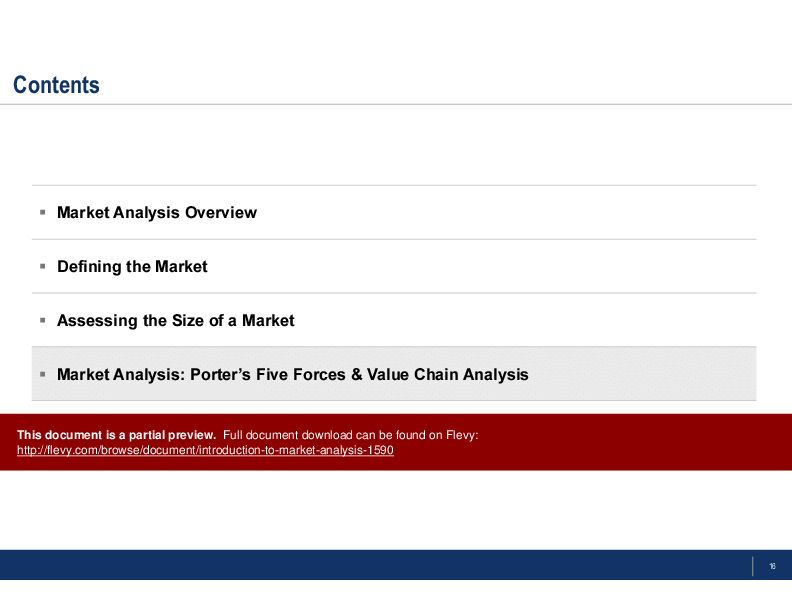
•  Market Analysis: Porter’s Five Forces & Value Chain Analysis (page 16)
•  Market Analysis Templates (page 31)

Primary Topics Covered
•  Market Definition - Understanding the distinction between industry and market is crucial for accurate analysis and strategic focus.
•  Market Size and Growth Assessment - Techniques for quantifying market size and growth, including top-down and bottom-up approaches.
•  Trend Analysis - Identifying and interpreting macro trends that impact market dynamics and consumer behavior.
•  Porter’s Five Forces - A framework for analyzing competitive forces within an industry, including supplier and buyer power, threats of new entrants, and substitutes.
•  Value Chain Analysis - Analyzing the value chain to understand cost structures and competitive advantages within the industry.
•  Market Attractiveness - Evaluating the overall attractiveness of a market based on defined criteria and insights gathered from analysis.

Deliverables, Templates, and Tools
•  Market definition template to clarify scope and focus
•  Market size assessment model for calculating growth and potential
•  Porter’s Five Forces analysis template for competitive evaluation
•  Value Chain Analysis template to map industry dynamics and cost structures
•  Trend analysis framework for identifying and assessing market trends
•  Comprehensive report outline for presenting market analysis findings

Slide Highlights
•  Overview of the four-phase market analysis framework
•  Detailed comparison of industry vs. market definitions
•  Key questions for conducting an industry analysis
•  Visual representation of Porter’s Five Forces and Value Chain
•  Examples of market size calculation methods
•  Insights into competitive dynamics and market attractiveness

Potential Workshop Agenda
Market Definition Session (60 minutes)
•  Discuss and define the target market
•  Validate definitions with stakeholders
•  Identify key competitors and market players

Market Size and Growth Assessment (90 minutes)
•  Review methodologies for calculating market size
•  Analyze historical growth rates and project future growth
•  Develop a comprehensive market size report

Competitive Dynamics Analysis (60 minutes)
•  Conduct a Porter’s Five Forces analysis
•  Identify key trends and their implications
•  Develop strategic recommendations based on findings

Customization Guidance
•  Tailor market definitions to align with specific organizational goals and contexts
•  Adjust templates to reflect unique market characteristics and competitive landscapes
•  Incorporate company-specific data and insights into the analysis frameworks

Secondary Topics Covered
•  Industry trends and their implications for market strategy
•  Competitive landscape mapping and analysis
•  Customer needs assessment and requirements
•  Financial performance metrics relevant to market analysis

FAQ
What is the primary objective of market analysis?
Market analysis aims to understand the context of an organization's issues and inform critical strategic decisions regarding market entry, growth, or exit.

How does Porter’s Five Forces framework help in market analysis?
It provides a structured approach to evaluate the competitive dynamics within an industry, helping organizations understand the forces that affect profitability and market attractiveness.

What methodologies are used to assess market size?
Common methodologies include using publicly available data, expert opinions, and both top-down and bottom-up approaches to estimate market size and growth.

Why is defining the market crucial?
A clear market definition ensures that analyses are focused and relevant, allowing organizations to identify competitive threats and opportunities effectively.

How can Value Chain Analysis enhance market understanding?
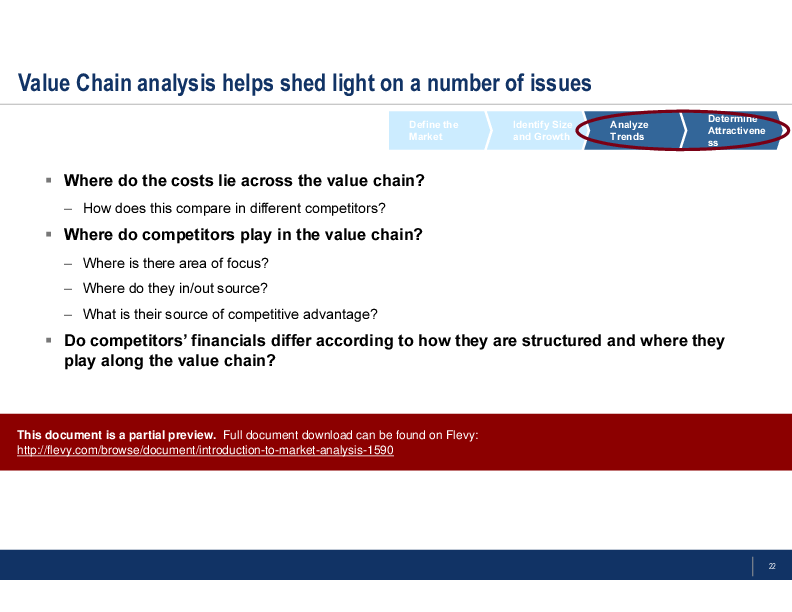
It helps organizations identify where value is created within the industry and how competitors are positioned along the value chain, informing strategic decisions.

What are the key components of a market analysis report?
A comprehensive report typically includes market definitions, size assessments, trend analyses, competitive dynamics, and strategic recommendations.

How can I customize the templates provided in this deck?
Templates can be tailored by incorporating specific market data, adjusting definitions to fit organizational contexts, and aligning frameworks with strategic objectives.

What types of trends should be analyzed in market analysis?
Macro trends such as technological advancements, consumer behavior shifts, and regulatory changes should be assessed for their potential impact on the market.

What is the significance of understanding competitive dynamics?
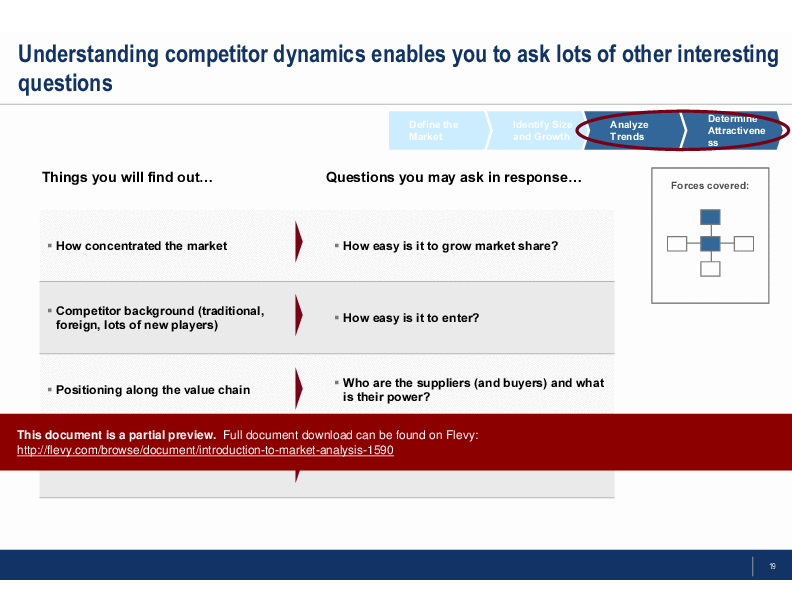
Understanding competitive dynamics enables organizations to position themselves effectively, identify opportunities for differentiation, and anticipate market shifts.

How do I validate my market analysis findings?
Validation can be achieved through stakeholder reviews, expert consultations, and cross-referencing data from multiple reliable sources.

Glossary
•  Market Analysis - The process of assessing market conditions to inform strategic decisions.
•  Porter’s Five Forces - A framework for analyzing competitive forces in an industry.
•  Value Chain Analysis - A method for examining the activities that create value within an organization.
•  Market Size - The total potential sales volume or revenue of a market.
•  Market Growth Rate - The rate at which a market's size is expected to increase over time.
•  Trend Analysis - The practice of identifying patterns or trends in market data.
•  Competitive Dynamics - The interactions and strategies of competitors within a market.
•  Customer Needs Assessment - The process of identifying and understanding customer requirements.
•  Industry Trends - Broad changes or developments that impact an industry over time.
•  Market Definition - The process of clarifying the scope and boundaries of a market.
•  Top-Down Approach - A method of estimating market size by starting with broader data and narrowing down.
•  Bottom-Up Approach - A method of estimating market size by aggregating data from individual components.
•  CAGR - Compound Annual Growth Rate, a measure of growth over multiple periods.
•  Market Attractiveness - An assessment of how appealing a market is for investment or entry.
•  Competitive Advantage - The attributes that allow an organization to outperform its competitors.
•  Market Entry Strategy - A plan for entering a new market.
•  Substitutes - Alternative products or services that fulfill the same need.
•  Barriers to Entry - Obstacles that make it difficult for new competitors to enter a market.
•  Supplier Power - The influence suppliers have on the price and quality of goods.
•  Buyer Power - The influence customers have on pricing and quality.
•  Market Concentration - The extent to which a small number of firms dominate a market.

MARKET RESEARCH PPT SLIDES

Framework for Comprehensive Market Analysis

Framework for Calculating Market Size

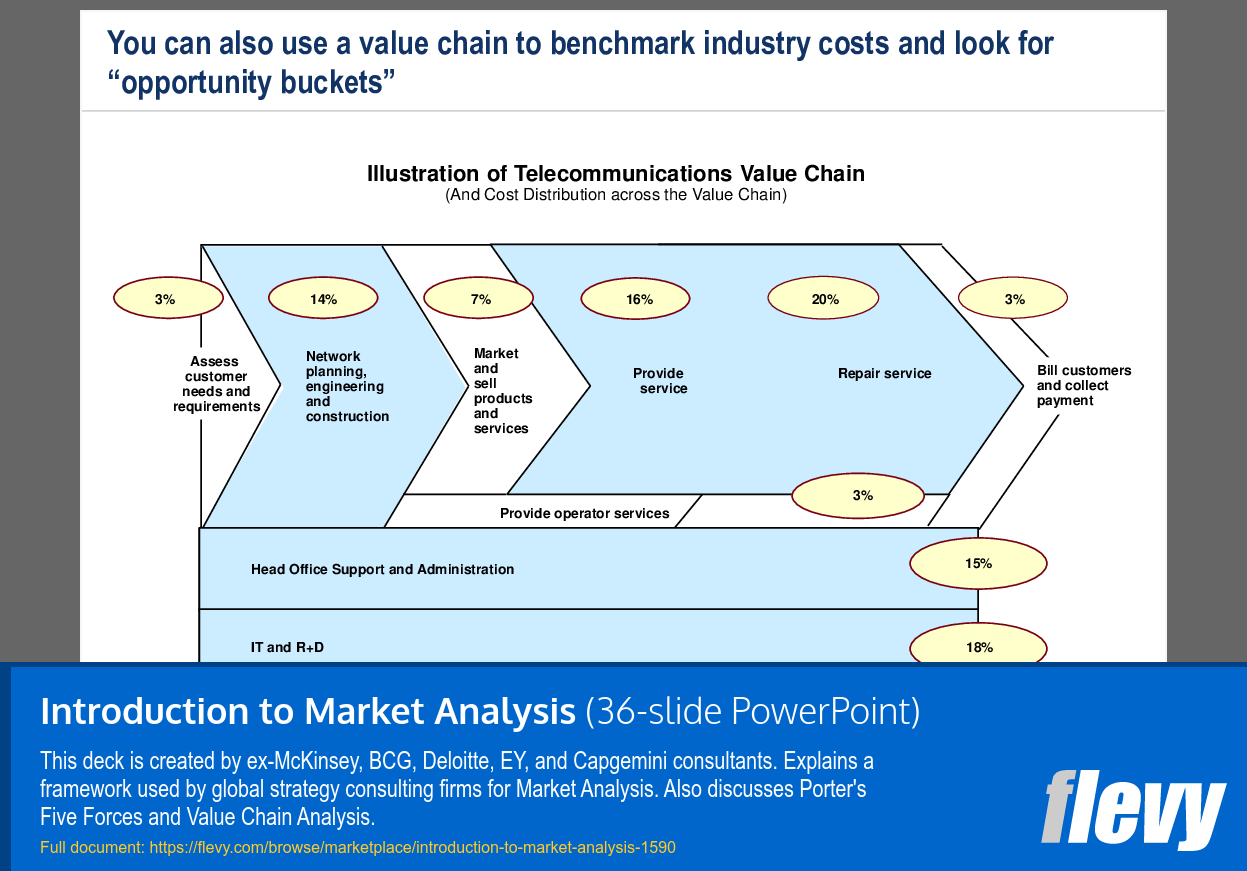
Telecommunications Value Chain and Cost Analysis

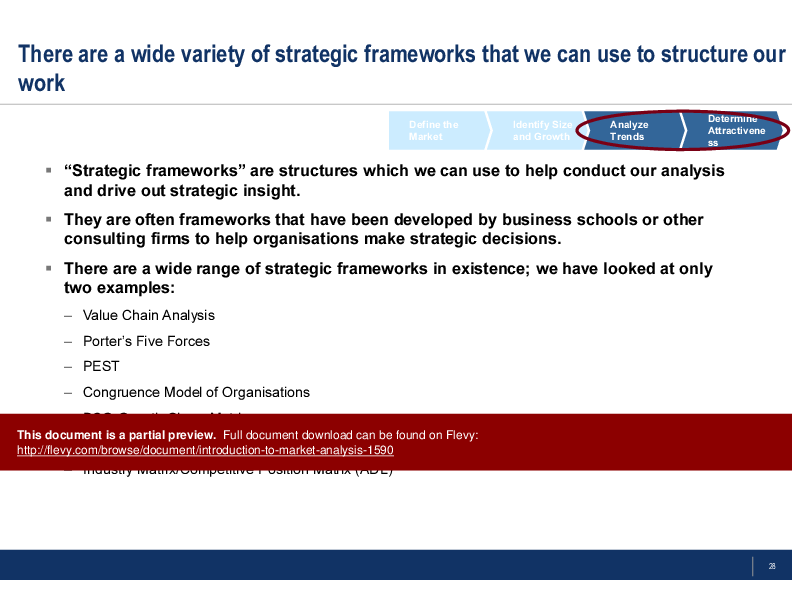
Frameworks for Analyzing Market Attractiveness

Methodology for Calculating Market Growth Rates

Understanding the Food Industry Value Chain Dynamics

Clarifying Industry and Market Definitions for Analysis

Source: Best Practices in Market Research PowerPoint Slides: Introduction to Market Analysis PowerPoint (PPT) Presentation Slide Deck, LearnPPT Consulting


$29.00
This deck is created by ex-McKinsey, BCG, Deloitte, EY, and Capgemini consultants. Explains a framework used by global strategy consulting firms for Market Analysis. Also discusses Porter's Five Forces and Value Chain Analysis.
Add to Cart
  

ABOUT THE AUTHOR

Author image
Additional documents from author: 141

We are a team of management consultants trained by top tier global consulting firms (including McKinsey, BCG, Deloitte, EY, Capgemini) with a collective experience of several decades. We specialize in business frameworks based on real-life consulting engagements.

We have served 100s of clients that range from Fortune 500 companies to tech startups to ... [read more]

Ask the Author a Question

You must be logged in to contact the author.

Click here to log in Click here register

Did you know?
The average daily rate of a McKinsey consultant is $6,625 (not including expenses). The average price of a Flevy document is $65.



Trusted by over 10,000+ Client Organizations
Since 2012, we have provided best practices to over 10,000 businesses and organizations of all sizes, from startups and small businesses to the Fortune 100, in over 130 countries.
AT&T GE Cisco Intel IBM Coke Dell Toyota HP Nike Samsung Microsoft Astrazeneca JP Morgan KPMG Walgreens Walmart 3M Kaiser Oracle SAP Google E&Y Volvo Bosch Merck Fedex Shell Amgen Eli Lilly Roche AIG Abbott Amazon PwC T-Mobile Broadcom Bayer Pearson Titleist ConEd Pfizer NTT Data Schwab


Read Customer Testimonials

 
"I am extremely grateful for the proactiveness and eagerness to help and I would gladly recommend the Flevy team if you are looking for data and toolkits to help you work through business solutions."

– Trevor Booth, Partner, Fast Forward Consulting
 
"Last Sunday morning, I was diligently working on an important presentation for a client and found myself in need of additional content and suitable templates for various types of graphics. Flevy.com proved to be a treasure trove for both content and design at a reasonable price, considering the time I "

– M. E., Chief Commercial Officer, International Logistics Service Provider
 
"[Flevy] produces some great work that has been/continues to be of immense help not only to myself, but as I seek to provide professional services to my clients, it gives me a large "tool box" of resources that are critical to provide them with the quality of service and outcomes they are expecting."

– Royston Knowles, Executive with 50+ Years of Board Level Experience
 
"As an Independent Management Consultant, I find Flevy to add great value as a source of best practices, templates and information on new trends. Flevy has matured and the quality and quantity of the library is excellent. Lastly the price charged is reasonable, creating a win-win value for "

– Jim Schoen, Principal at FRC Group
 
"As a consulting firm, we had been creating subject matter training materials for our people and found the excellent materials on Flevy, which saved us 100's of hours of re-creating what already exists on the Flevy materials we purchased."

– Michael Evans, Managing Director at Newport LLC
 
"Flevy.com has proven to be an invaluable resource library to our Independent Management Consultancy, supporting and enabling us to better serve our enterprise clients.

The value derived from our [FlevyPro] subscription in terms of the business it has helped to gain far exceeds the investment made, making a subscription a no-brainer for any growing consultancy – or in-house strategy team."

– Dean Carlton, Chief Transformation Officer, Global Village Transformations Pty Ltd.
 
"I have found Flevy to be an amazing resource and library of useful presentations for lean sigma, change management and so many other topics. This has reduced the time I need to spend on preparing for my performance consultation. The library is easily accessible and updates are regularly provided. A wealth of great information."

– Cynthia Howard RN, PhD, Executive Coach at Ei Leadership
 
"If you are looking for great resources to save time with your business presentations, Flevy is truly a value-added resource. Flevy has done all the work for you and we will continue to utilize Flevy as a source to extract up-to-date information and data for our virtual and onsite presentations!"

– Debbi Saffo, President at The NiKhar Group


Customers Also Bought These Documents


Customers Also Like These Documents

Explore Related Management Topics


Your Recently Viewed Documents
Download our FREE Strategy & Transformation Framework Templates

Download our free compilation of 50+ Strategy & Transformation slides and templates. Frameworks include McKinsey 7-S, Balanced Scorecard, Disruptive Innovation, BCG Curve, and many more.