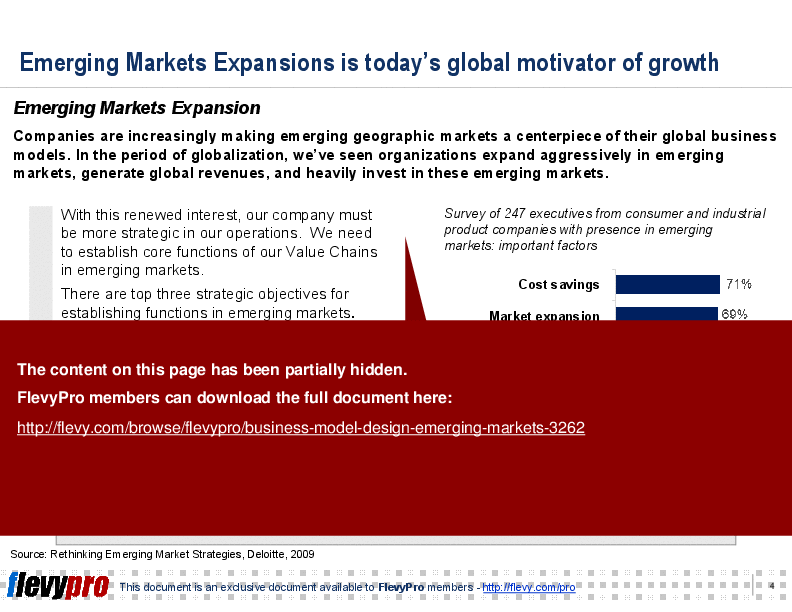

Companies are flocking into emerging markets under the banner of globalization to access low-cost sourcing in high-growth economies. Many have established fairly successful operations and realized significant cost arbitrage.
The increased expansion of companies in emerging markets is expected in the next three years. How successful our company may be in our strategic expansion requires selection of the right business model suited for emerging markets.
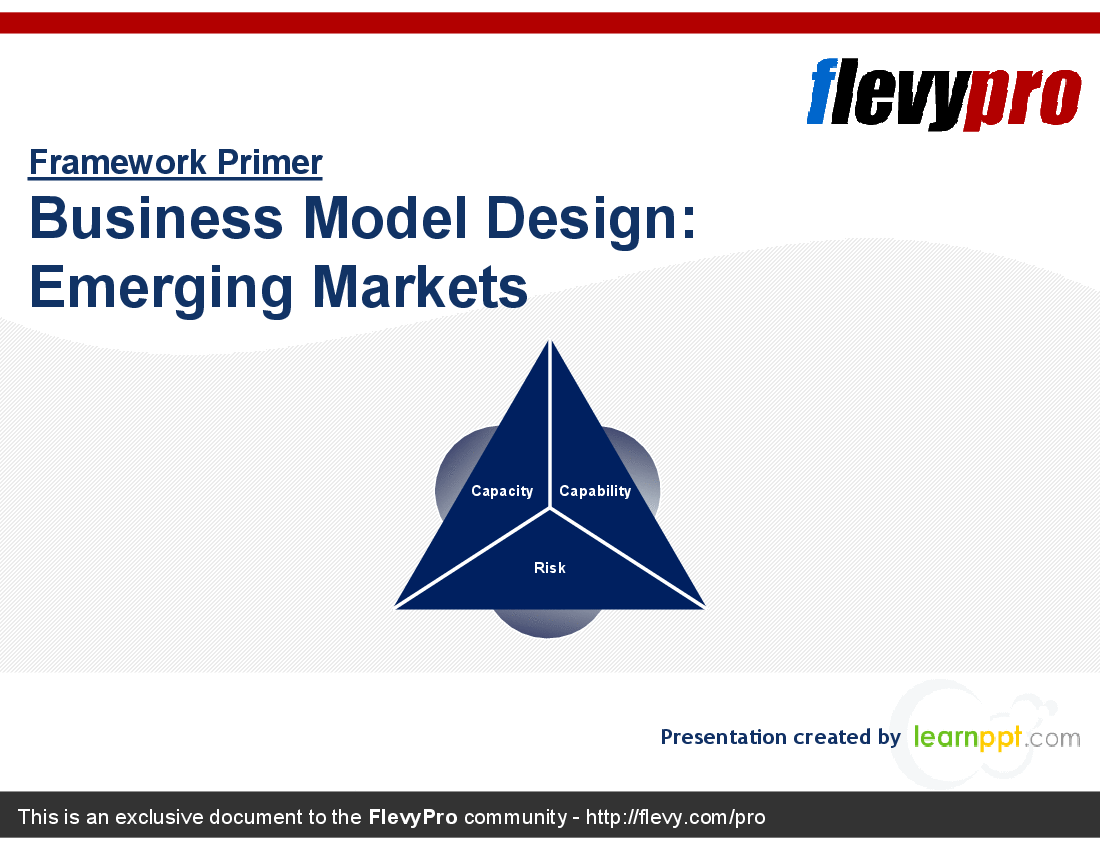
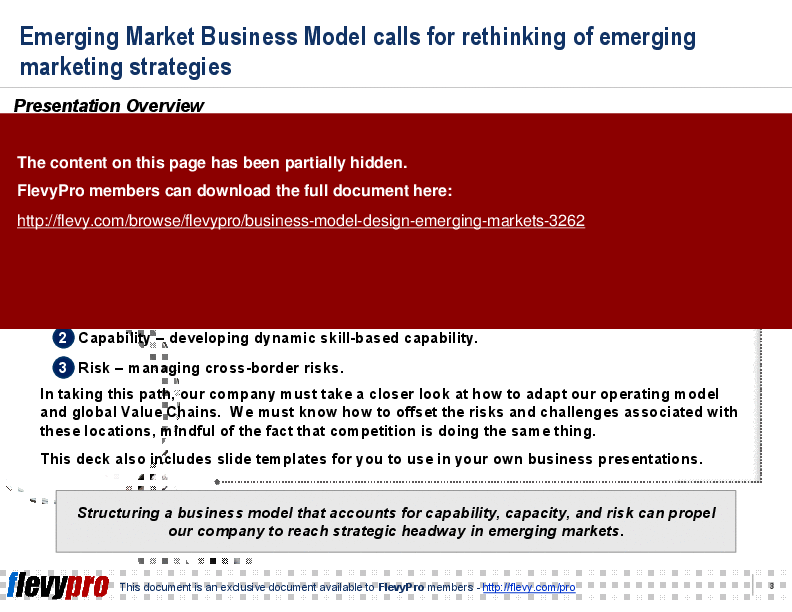
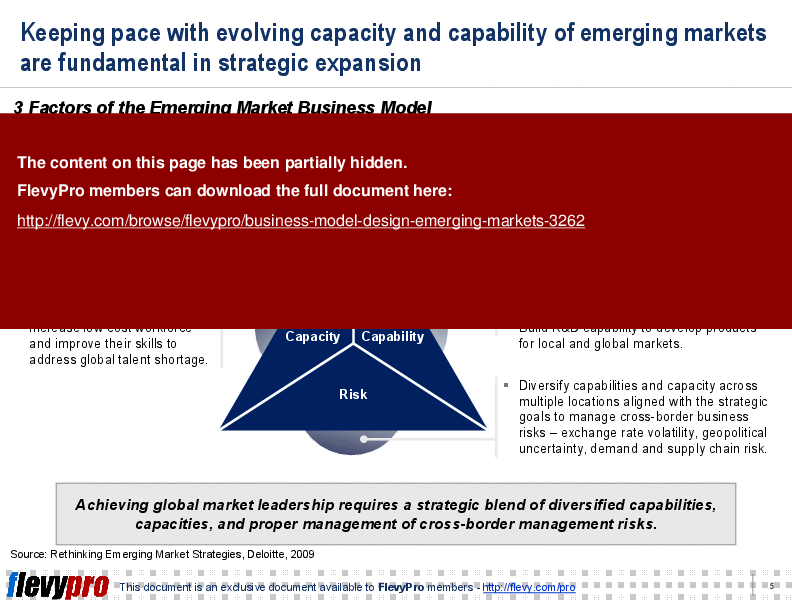
From a strategic standpoint, three factors determine the emerging market business model.
1. Capacity – increasing world class capacity both in scale and scope.
2. Capability – developing dynamic skill-based capability.
3. Risk – managing cross-border risks.
Structuring a business model that accounts for capability, capacity, and risk can propel our company to reach strategic headway in emerging markets.
In taking this path, our company must take a closer look at how to adapt our operating model and global Value Chains. We must know how to offset the risks and challenges associated with these locations, mindful of the fact that competition is doing the same thing.
This deck also includes slide templates for you to use in your own business presentations.
This PPT provides a comprehensive framework for navigating the complexities of emerging markets. It emphasizes the importance of aligning capacity, capability, and risk management with strategic goals. The insights are backed by data from a survey of 247 executives, highlighting cost savings and market expansion as critical factors.
The deck also covers key considerations for building capacities in emerging economies, such as understanding local market constraints and expanding commercial operations. It includes templates for practical application, making it a valuable resource for companies looking to establish a strong foothold in high-growth regions.
Got a question about this document? Email us at flevypro@flevy.com.
Executive Summary
The "Business Model Design: Emerging Markets" presentation offers a strategic framework tailored for companies aiming to expand into emerging markets. Developed by experienced consultants, this deck emphasizes the critical factors of capacity, capability, and risk management. It equips executives with the insights needed to adapt their operating models and global value chains effectively, ensuring successful market entry and sustained growth in high-potential regions.
Who This Is For and When to Use
• Corporate executives overseeing market expansion strategies
• Business development teams focused on emerging market opportunities
• Strategic planners and consultants advising on market entry
• Risk management professionals assessing cross-border challenges
Best-fit moments to use this deck:
• During strategic planning sessions for entering new markets
• When evaluating operational adjustments for emerging market conditions
• In workshops aimed at aligning business models with local market dynamics
Learning Objectives
• Define the essential components of a successful business model in emerging markets
• Build a framework for assessing capacity and capability in new regions
• Establish risk management strategies tailored to cross-border operations
• Identify key market entry strategies that leverage local advantages
• Develop templates for operationalizing business models in diverse environments
• Create a roadmap for aligning global value chains with local market needs
Table of Contents
• Overview (page 3)
• Emerging Market Business Model Factor: Capacity (page 7)
• Emerging Market Business Model Factor: Capability (page 10)
• Emerging Market Business Model Factor: Risk (page 13)
• Other Factors (page 15)
• Templates (page 19)
Primary Topics Covered
• Capacity - Focuses on expanding local sales and service operations, establishing world-class manufacturing, and enhancing workforce skills to meet global demand.
• Capability - Emphasizes leveraging local talent and technology to develop complex products and enhance R&D capabilities for competitive advantage.
• Risk - Addresses the importance of managing cross-border risks, including exchange rate volatility and geopolitical uncertainties, to ensure operational stability.
• Market Expansion - Highlights strategies for cost savings and speed to market as primary drivers for establishing operations in emerging markets.
• Value Chain Localization - Discusses the necessity of adapting value chains to local conditions to maximize operational effectiveness.
• Operating Model Selection - Reviews the importance of choosing the right operating model, whether wholly owned subsidiaries or joint ventures, based on strategic objectives.
Deliverables, Templates, and Tools
• Capacity assessment template for evaluating local market readiness
• Capability development framework for enhancing skill sets and technology
• Risk management checklist for identifying and mitigating cross-border risks
• Market entry strategy template to guide operational planning
• Value chain localization guide for adapting business processes
• Operating model selection matrix to evaluate strategic options
Slide Highlights
• Overview of the 3 critical factors for emerging market success: capacity, capability, and risk
• Visual representation of the emerging market business model framework
• Key considerations for building capacity in emerging economies
• Insights on developing dynamic capabilities to compete effectively
• Strategies for managing risks associated with cross-border operations
Potential Workshop Agenda
Emerging Market Strategy Session (90 minutes)
• Discuss the strategic importance of emerging markets
• Identify key factors influencing market entry decisions
• Develop a preliminary capacity and capability assessment
Risk Management Workshop (60 minutes)
• Analyze potential risks in target markets
• Create a risk mitigation plan tailored to specific challenges
• Review case studies of successful market entries
Customization Guidance
• Tailor the capacity assessment template to reflect specific regional market conditions
• Adjust the capability development framework to align with local talent availability
• Modify the risk management checklist to include country-specific risks and regulations
• Update the market entry strategy template with localized data and insights
• Adapt the value chain localization guide to fit organizational objectives and resources
Secondary Topics Covered
• Importance of understanding local market dynamics
• Strategies for transforming revenue models in emerging markets
• The role of technology in enhancing operational capabilities
• Best practices for establishing joint ventures with local partners
• Insights on navigating regulatory environments in target markets
Topic FAQ
Document FAQ
These are questions addressed within this presentation.
What are the key factors for success in emerging markets?
Success hinges on effectively managing capacity, capability, and risk while localizing value chains to meet market demands.
How can we assess our capacity for entering new markets?
Utilize the capacity assessment template to evaluate local sales and service operations, manufacturing capabilities, and workforce skills.
What strategies should we consider for risk management?
Focus on diversifying operations across multiple locations to mitigate risks related to exchange rates and geopolitical instability.
How do we determine the right operating model for our business?
Evaluate the type of business activities, market opportunities, and local regulations to select between wholly owned subsidiaries or joint ventures.
What role does local talent play in capability development?
Accessing local talent is crucial for enhancing capabilities, particularly in R&D and manufacturing, to compete effectively in emerging markets.
How can we ensure our value chain is optimized for local conditions?
Adapt your value chain processes to reflect local market needs, regulations, and cultural nuances for improved operational effectiveness.
What are the primary objectives for establishing functions in emerging markets?
Focus on cost savings, market expansion, and speed to market as key drivers for operationalizing business strategies.
How can we leverage technology in emerging markets?
Invest in complementary technology and R&D capabilities to enhance product offerings and meet local market demands effectively.
Glossary
• Capacity - The ability to expand local operations and meet global demand.
• Capability - The skills and technologies required to produce complex products.
• Risk - The potential challenges associated with cross-border operations.
• Value Chain - The series of processes that add value to products and services.
• Market Expansion - Strategies aimed at entering new geographical markets.
• Operating Model - The framework for how business activities are organized and executed.
• Joint Venture - A partnership between companies to leverage local market knowledge.
• Localization - Adapting business processes to fit local market conditions.
• R&D - Research and Development; the process of innovating and improving products.
• Geopolitical Risk - Risks arising from political instability in a region.
• Exchange Rate Volatility - Fluctuations in currency values that can impact profitability.
• Talent Pool - The available workforce with the necessary skills for business operations.
• Cost Arbitrage - The practice of taking advantage of cost differences in different markets.
• Market Dynamics - The forces that impact the supply and demand of products in a market.
• Regulatory Environment - The laws and regulations governing business operations in a region.
• Strategic Objectives - The goals that guide business decisions and actions.
• Operational Stability - The ability to maintain consistent business operations despite challenges.
• Supply Chain Risk - Risks associated with disruptions in the supply chain.
• Commercial Operations - The activities involved in selling and delivering products and services.
• Revenue Model - The strategy for generating income from business activities.
• Human Resources Capacity - The ability to manage and develop the workforce effectively.
Source: Best Practices in Business Model, Emerging Markets PowerPoint Slides: Business Model Design: Emerging Markets PowerPoint (PPT) Presentation Slide Deck, LearnPPT Consulting
Did you need more documents?
Consider a FlevyPro subscription from $39/month. View plans here.
For $10.00 more, you can download this document plus 2 more FlevyPro documents. That's just $13 each.
|
Download our FREE Strategy & Transformation Framework Templates
Download our free compilation of 50+ Strategy & Transformation slides and templates. Frameworks include McKinsey 7-S, Balanced Scorecard, Disruptive Innovation, BCG Curve, and many more. |










