
Innovative business models can reshape industries and drive tremendous growth. However, many organization find business model innovation difficult. The framework outlined in this presentation is based on the HBR article "Reinventing Your Business Model," authored by Clayton Christensen, Mark Johnson, and Henning Kagermann.
A successful business model has 3 key components:
*Customer Value Proposition. The model helps customers perform a specific "job," which alternative offerings don't effectively address.
*Profit Formula. The model generates value for your organization through such factors as revenue model, cost structure, margins, and inventory turnover.
*Key Resources and Processes. Your organization has the people, technology, products, equipment, facilities, and brand required to deliver the defined value proposition to the target customers. It also must have the processes to leverage these resources.
This document includes instruction slides, slide templates, and case examples.
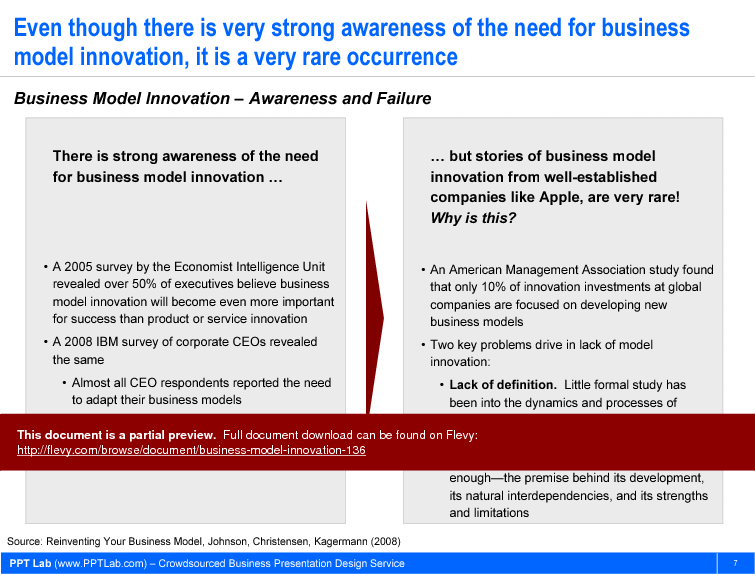
Business model innovation is often recognized, but rarely implemented effectively. Despite a strong awareness of its importance, many companies struggle to execute it successfully. This document delves into the reasons behind this phenomenon, highlighting the common pitfalls and challenges that organizations face. It provides a comprehensive approach to overcoming these obstacles, ensuring that your business model innovation efforts are not only recognized, but also successfully executed.
The presentation outlines a structured approach to business model innovation, emphasizing the need for a clear customer value proposition, a robust profit formula, and the effective utilization of key resources and processes. It includes detailed case examples and templates to guide you through the process, making it easier to understand and apply the concepts. The document also addresses the importance of patience and adaptability in the innovation process, stressing that successful business model innovation requires a balance between long-term growth and short-term profitability.
This resource is essential for any organization looking to stay competitive in today's rapidly changing market. It provides actionable insights and practical tools to help you navigate the complexities of business model innovation. Whether you're looking to adapt your existing model or create a new one, this document offers the guidance you need to achieve your goals and drive sustainable growth.
Got a question about the product? Email us at support@flevy.com or ask the author directly by using the "Ask the Author a Question" form. If you cannot view the preview above this document description, go here to view the large preview instead.
Executive Summary
This Business Model Innovation presentation is designed to empower organizations to reshape their business models and drive significant growth. Drawing insights from the HBR article "Reinventing Your Business Model," co-authored by Christensen et al., this consulting-grade (McKinsey, Bain, or BCG-quality; not affiliated) deck provides a structured framework for understanding and executing business model innovation. Buyers will gain actionable strategies to articulate customer value propositions, develop viable profit formulas, and leverage key resources and processes effectively.
Who This Is For and When to Use
• Corporate executives seeking to innovate their business models
• Integration leaders tasked with aligning new strategies across teams
• Consultants advising clients on business transformation
• Product managers aiming to refine offerings based on customer needs
Best-fit moments to use this deck:
• During strategic planning sessions focused on innovation
• When assessing the viability of existing business models
• In workshops aimed at developing new customer value propositions
• For training sessions on business model frameworks and methodologies
Learning Objectives
• Define the components of a successful business model
• Build a compelling customer value proposition that addresses key customer jobs
• Establish a profit formula that aligns with organizational goals
• Identify and leverage key resources and processes for effective execution
• Analyze existing business models for potential areas of innovation
• Develop a blueprint for a new business model that captures market opportunities
Table of Contents
• Overview (page 4)
• Business Model Innovation Approach (page 12)
• Business Model Elements (page 18)
• Case Examples (page 22)
• Templates (page 25)
Primary Topics Covered
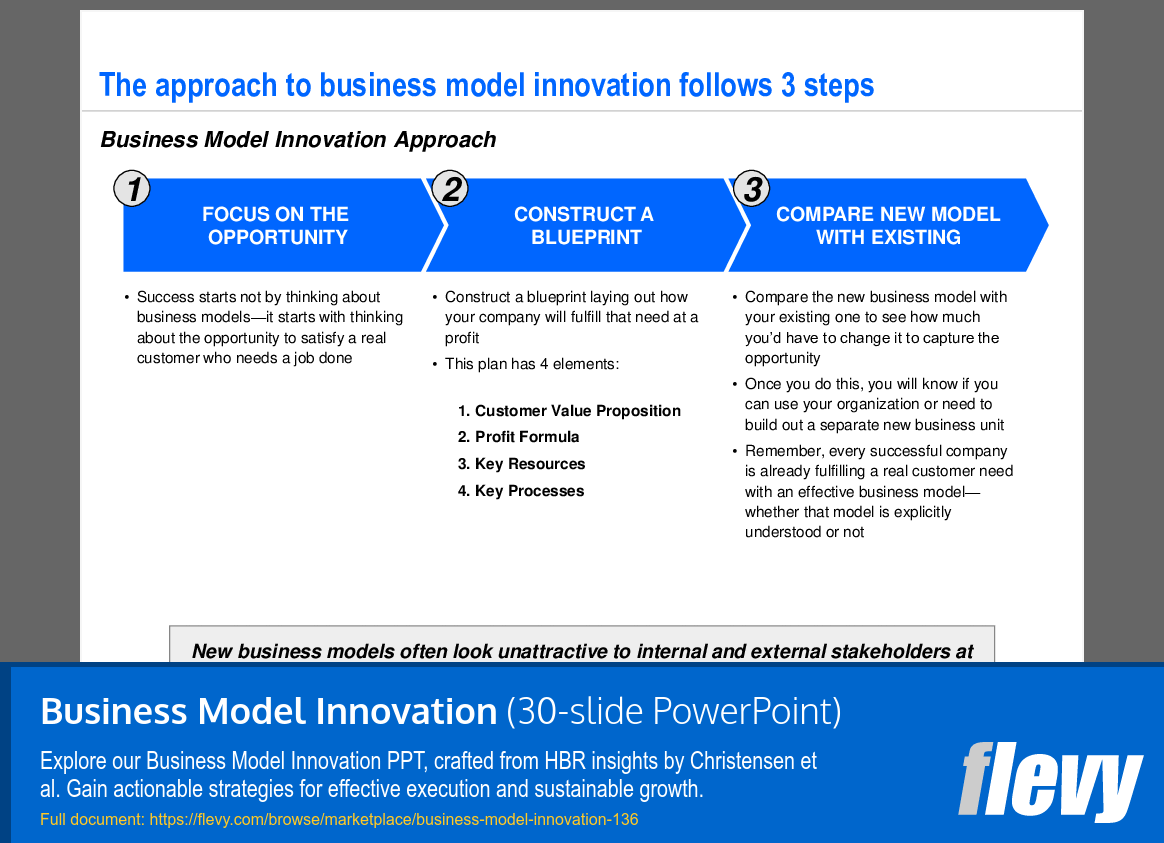
• Business Model Innovation Approach - A structured three-step process focusing on opportunity identification, blueprint construction, and comparison with existing models.
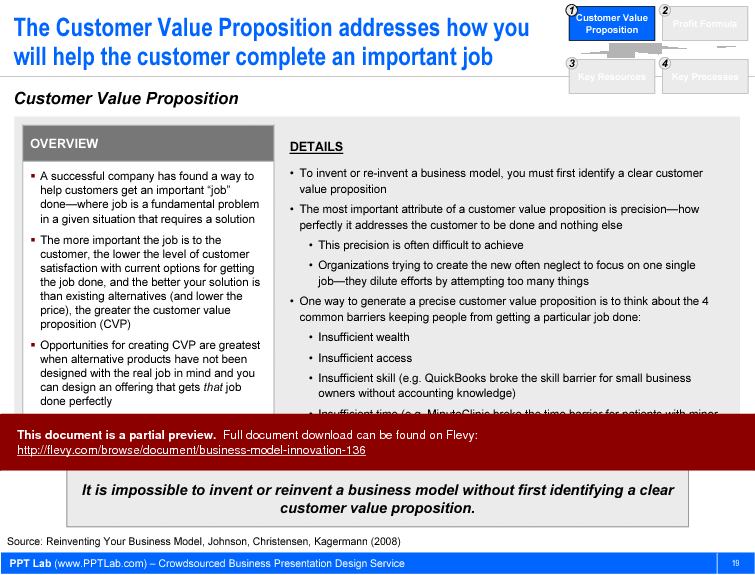
• Customer Value Proposition - Defines how a business helps customers complete essential jobs, emphasizing the importance of precision in addressing customer needs.
• Profit Formula - Outlines how a company creates value for itself while delivering value to customers, including revenue models and cost structures.
• Key Resources - Identifies essential assets required to deliver the value proposition, including technology, people, and partnerships.
• Key Processes - Describes operational and managerial processes that enable the delivery of value, focusing on scalability and efficiency.
• Institutional Barriers - Highlights the invisible rules and norms that can hinder the adoption of new business models within organizations.
Deliverables, Templates, and Tools
• Business model blueprint template for visualizing established vs. new business models
• Customer value proposition template to clarify how offerings meet customer needs
• Profit formula template to outline revenue and cost structures
• Key resources and processes template for mapping essential assets and operations
• Case study examples illustrating successful business model innovations
• Framework for assessing existing business models and identifying innovation opportunities
Slide Highlights
• Overview of the business model innovation framework, emphasizing its 3 key components
• Detailed breakdown of customer value propositions and their critical role in business success
• Visual representation of profit formulas and how they impact overall business viability
• Case examples showcasing successful business model transformations by companies like Hilti and Dow Corning
• Templates designed for immediate application in business model assessments and innovations
Potential Workshop Agenda
Business Model Innovation Overview (60 minutes)
• Introduce the concept of business model innovation and its importance
• Discuss the three-step approach to innovation
• Explore the components of a successful business model
Customer Value Proposition Development (90 minutes)
• Identify key customer jobs and unmet needs
• Workshop on crafting precise value propositions
• Present and critique value propositions in small groups
Profit Formula and Resource Mapping (90 minutes)
• Analyze existing profit formulas and identify gaps
• Workshop on mapping key resources and processes
• Develop actionable strategies for improvement
Customization Guidance
• Tailor the customer value proposition template to align with specific market segments
• Adjust the profit formula template to reflect unique cost structures and revenue models
• Modify key resources and processes templates to include organization-specific assets and capabilities
• Incorporate case examples relevant to your industry for contextual learning
Secondary Topics Covered
• The role of disruptive innovation in business model transformation
• Strategies for overcoming institutional barriers to innovation
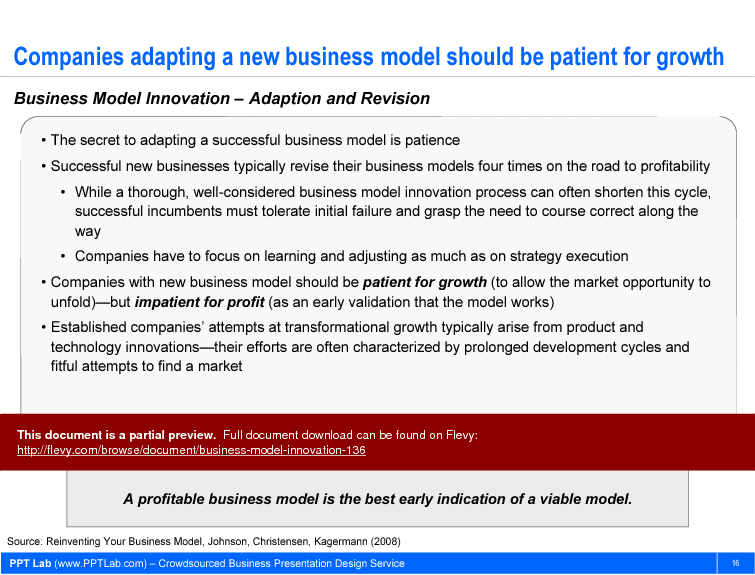
• The importance of patience in adapting new business models for growth
• Techniques for assessing market signals that indicate a need for model changes
• Examples of successful and unsuccessful business model innovations
FAQ
What is the primary focus of business model innovation?
Business model innovation focuses on redefining how a company creates, delivers, and captures value, often through new customer value propositions and profit formulas.
How can I assess if my existing business model needs to change?
Evaluate your current model by identifying customer needs it addresses, monitoring market signals, and determining if a new model could significantly alter your industry.
What are the key components of a successful business model?
A successful business model includes a clear customer value proposition, a viable profit formula, and the necessary key resources and processes to deliver value.
How do I create a compelling customer value proposition?
Identify the specific job your product or service helps customers complete, ensuring that your offering addresses unmet needs more effectively than alternatives.
What is the significance of the profit formula in a business model?
The profit formula outlines how a company generates revenue and manages costs, ensuring that the business can sustain itself financially while delivering value to customers.
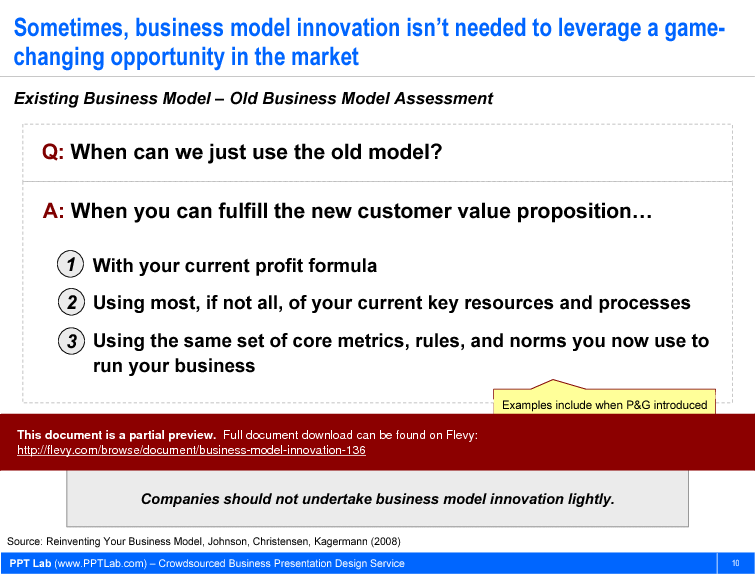
Can existing business models be adapted without complete reinvention?
Yes, many companies can adapt their existing models by refining their value propositions and profit formulas without a complete overhaul.
What institutional barriers might hinder business model innovation?
Common barriers include ingrained financial metrics, operational norms, and organizational rules that resist change and inhibit new models from taking root.
How can companies ensure they are patient for growth, but impatient for profit?
Organizations should focus on validating their business models through early profitability while allowing time for market opportunities to develop.
Glossary
• Business Model - A framework for how a company creates, delivers, and captures value.
• Customer Value Proposition - The unique value a product or service provides to customers.
• Profit Formula - The method by which a company generates revenue and manages costs.
• Key Resources - Essential assets required to deliver the value proposition.
• Key Processes - Operational processes that enable the delivery of value to customers.
• Disruptive Innovation - Innovations that create new markets and value networks, often displacing established market leaders.
• Institutional Barriers - Organizational norms and rules that inhibit change and innovation.
• Market Signals - Indicators that suggest changes in customer needs or competitive dynamics.
• Revenue Model - The strategy for generating income from customers.
• Cost Structure - The allocation of costs associated with delivering a product or service.
• Resource Velocity - The speed at which resources are utilized to support business operations.
• Operational Processes - Routine activities that support the delivery of products or services.
• Managerial Processes - Activities that govern the organization and its resources.
• Customer Jobs - Tasks or problems that customers seek to address through products or services.
• Value Creation - The process of generating value for customers and the organization.
• Market Opportunity - A favorable condition that allows a business to grow or innovate.
• Business Unit - A segment of a company that operates independently to pursue specific market opportunities.
• Competitive Advantage - A condition that allows a company to perform better than its rivals.
• Scalability - The ability of a business model to grow and manage increased demand without compromising performance.
• Innovation Investment - Resources allocated to developing new products, services, or business models.
• Customer Segmentation - The process of dividing a customer base into distinct groups with similar needs or characteristics.
Source: Best Practices in Innovation Management, Business Model Innovation, Business Model Design PowerPoint Slides: Business Model Innovation PowerPoint (PPT) Presentation Slide Deck, PPT Lab
|
Download our FREE Strategy & Transformation Framework Templates
Download our free compilation of 50+ Strategy & Transformation slides and templates. Frameworks include McKinsey 7-S, Balanced Scorecard, Disruptive Innovation, BCG Curve, and many more. |