
This framework is developed by a team of former McKinsey and Big 4 consultants. The presentation follows the headline-body-bumper slide format used by global consulting firms.
Editor Summary
9 Principles of Organizational Design is a 21-slide PowerPoint framework by LearnPPT Consulting that presents nine guiding principles for organizational redesign and includes slide templates illustrating each principle.
Read moreFor every principle the deck details current practice, a principle-guided approach, a case example, and the impact of following the principle. The overview cites McKinsey research on redesign frequency and notes executives applying more than 6 of the nine principles gain better outcomes. Sold as a digital PPT download on Flevy with immediate digital delivery.
Use this deck when an organization must redesign structure, roles, or processes in response to strategy shifts, industry disruption, regulatory change, or technology-driven transformation.
Senior executives deciding corporate organizational architecture and choosing between centralized vs. decentralized models during strategic change.
Organizational design practitioners mapping business-unit boundaries and designing individual roles and processes.
Transformation program leads updating structures after industry disruption, pandemic response, or new technology rollout.
Strategy teams preparing board-level rationale with case examples and impact metrics.
The methodical 9-principle approach echoes the structured, research-backed emphasis highlighted in McKinsey studies on redesign frequency.
Organizational Design (OD), also called Organizational Re-design, refers to the management actions of creating new roles, processes, and structures to ensure that the organization's goals can be realized. The scale of Organizational Design efforts can vary greatly—from designing the Corporate Organizational Architecture (e.g. decentralized vs. centralized model) to designing business units to designing individual roles.
Research from global consulting firm McKinsey showed that many organizations today are in a nearly permanent state of organizational flux. Within the past 2 years, almost 60% of the companies interviewed in the study experienced a redesign within the past 2 years—and an additional 25% 3 or more years ago.
This increase in Organizational Design efforts is due to the accelerating pace of strategic change driven by the disruption of industries, from local regulatory changes to global pandemics to emerging, revolutionary technologies.
As a result, companies alter the organization every time it switches direction to deliver the hope for results. Frustratingly, only less than a quarter of the Organizational Design efforts are actually successful. Companies can and should do better—much better.
To increase the odds of a successful Organizational Redesign, organizations should follow the 9 Principles of Organizational Design. These principles are discussed in depth in this framework PowerPoint presentation. For each of the Organizational Design principles, this PPT presentation breaks down the following:
• The current practice
• A principle-guided approach to OD
• Case example
• Impact of following the OD principle
By incorporating these principles, we can achieve an effective and successful Organizational Design process. These Organizational Design principles also allow us to take a methodical approach, instead of relying on intuitive decision making. Corporate Organizational Design provides organizations a rare opportunity to identify the stable organizational backbone and set up those elements ripe for dynamic change.
This Organizational Design PPT deck also includes slide templates illustrating the 9 Principles of Organizational Design for you to use in your own business presentations.
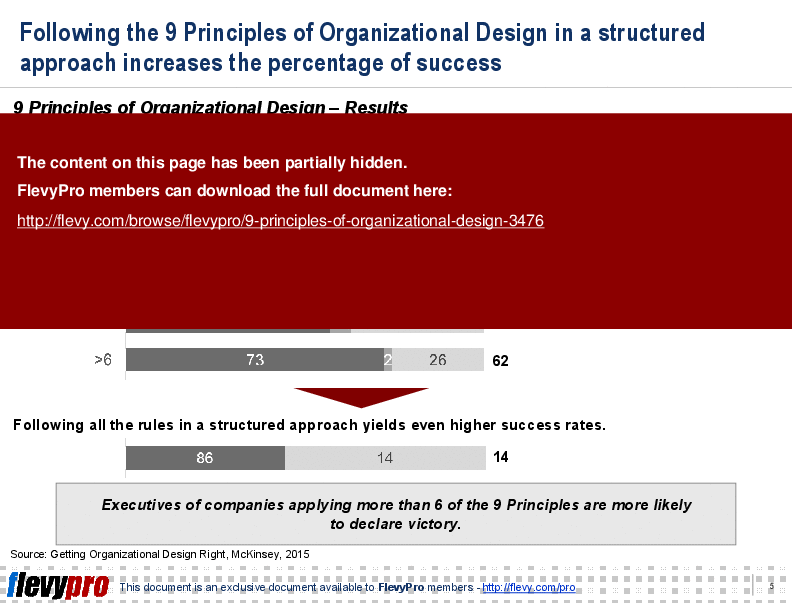
This presentation provides a structured approach to organizational design, ensuring a higher success rate. Executives applying more than six of the nine principles are more likely to achieve desired outcomes.
What are the primary components organizational design work should address?
Organizational design typically addresses roles, processes, and structures across scales from corporate architecture to business units and individual roles. Effective frameworks also evaluate current practice, define principle-guided approaches, show case examples, and estimate impact, as organized across nine principles in this category.
How common are organizational redesigns in large companies today?
McKinsey research cited in the overview indicates that almost 60% of companies experienced a redesign within the past 2 years, with an additional 25% doing so 3 or more years ago, reflecting frequent redesign activity across many organizations.
What are common reasons organizational redesigns fail to deliver results?
The overview suggests many redesigns rely on intuitive decisions rather than a methodical approach, which contributes to low success rates; fewer than a quarter of redesign efforts are successful. Applying a structured set of principles increases odds, notably when more than 6 of nine are used.
What does "corporate organizational architecture" mean in an OD context?
Corporate organizational architecture refers to high-level structural choices—such as centralized versus decentralized models—that determine reporting lines, decision rights, and governance. These choices influence business-unit design and role definitions and are explicitly discussed as part of organizational design considerations.
What should I look for when buying an organizational design toolkit or template?
Seek materials that cover roles, processes, and structures across scales, include principle-guided approaches, provide case examples, and offer presentation-ready templates for stakeholder communication. Practical toolkits in this category commonly organize content around a set of principles and include slide templates and impact descriptions.
How can presentation templates add value when planning a redesign versus building slides from scratch?
Ready templates standardize how you present current practice, principle-driven recommendations, case examples, and expected impact, reducing time spent on formatting and aligning stakeholder discussions. The value is in streamlining board or executive-ready materials and consistent framing across nine guiding principles.
I must reorganize after a merger—what elements should I prioritize first?
Prioritize corporate architecture choices, business-unit boundaries, role responsibilities, and process alignment to support new strategy and integration objectives. Use principle-guided analysis and case comparisons to test options; frameworks that map current practice to principle-led approaches and impacts can guide decisions across nine principles.
How should I present the rationale for a redesign to executives to improve buy-in?
Frame the case by documenting current practice, proposing a principle-guided approach, showing a relevant case example, and quantifying expected impact; deck templates that follow that sequence help structure executive conversations and make trade-offs explicit, typically organized across nine principles.
This PPT slide outlines the importance of a methodical approach to organizational design over intuitive decision-making. Many organizations rely on gut feelings, resulting in ineffective structures misaligned with strategic goals. A principle-guided approach involves assembling leaders with an open mindset to evaluate organizational design options through a structured lens, establishing criteria aligned with strategic aspirations. A case example of a large public pension system illustrates this: leaders initially sought a new organization based on product lines, but ultimately developed a functional health, pension, and investment model, achieving significant cost savings and new product launches over 5 years. Establishing a flexible operating model that integrates strategy, people, and assets is crucial for adapting to change and achieving long-term success.
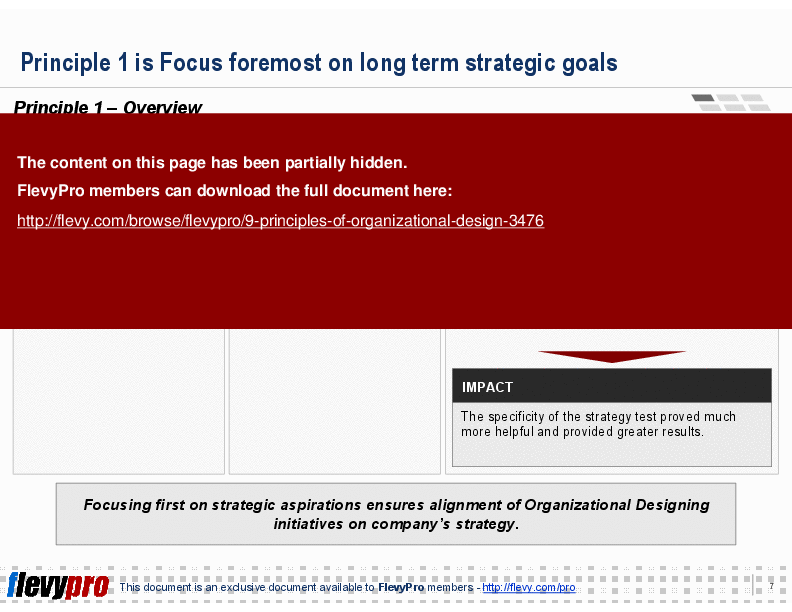
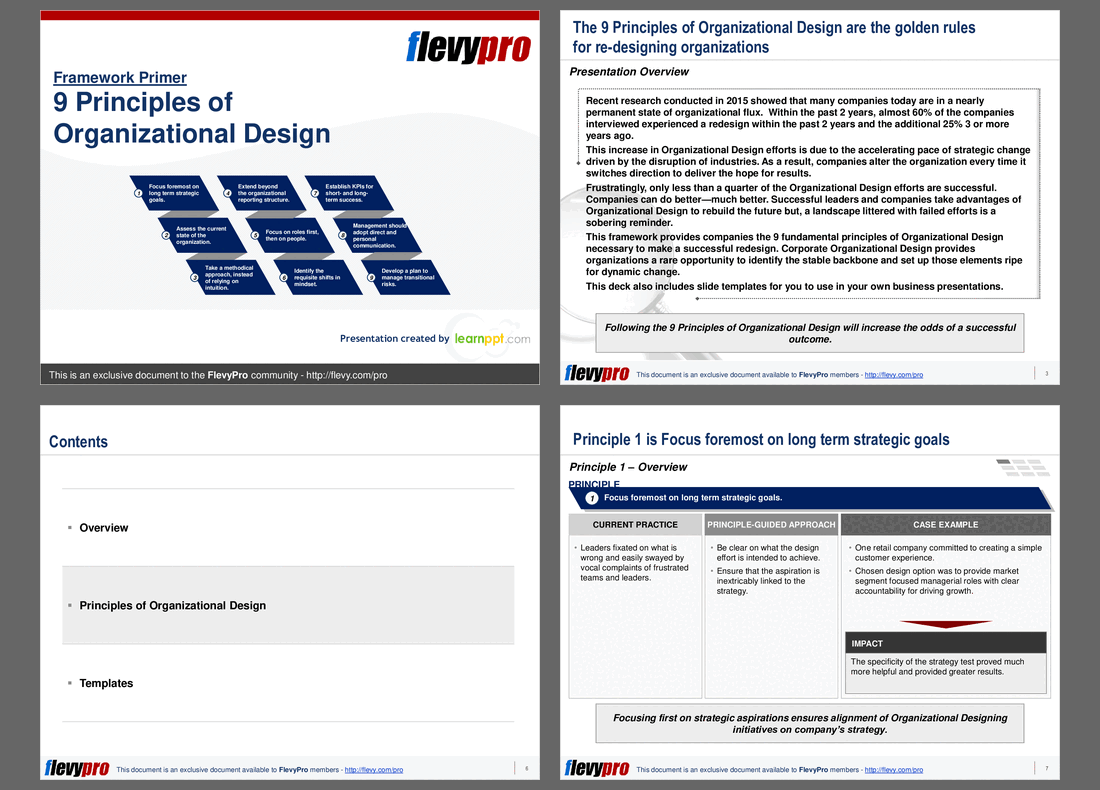
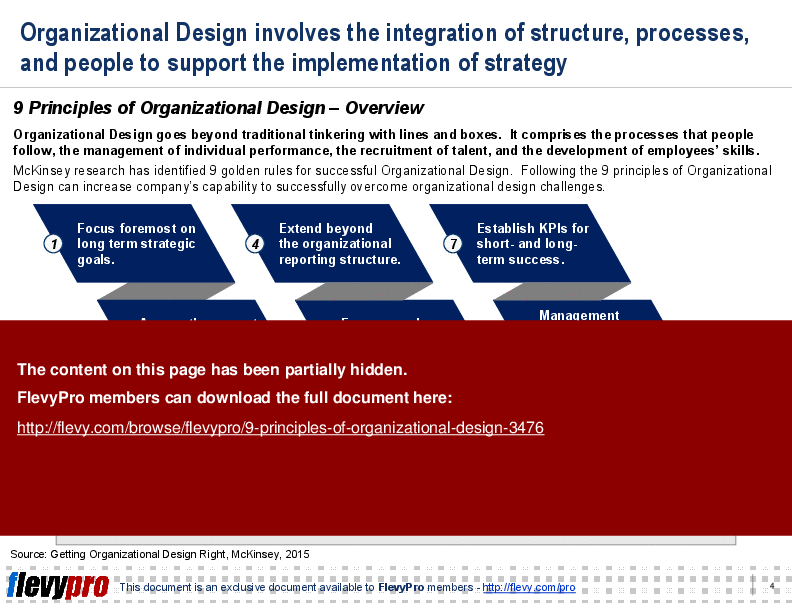
This PPT slide outlines the principle of prioritizing long-term strategic goals in organizational design. Current practices often lead leaders to focus on immediate issues, influenced by team complaints, which can detract from larger objectives. A principle-guided approach emphasizes clarity in design efforts, ensuring alignment with overarching strategy to maintain focus on long-term goals. A case example highlights a retail company enhancing customer experience by adopting market segment-focused managerial roles, establishing clear accountability for growth. This structured design approach demonstrates improved outcomes. The impact section notes that a specific, well-defined strategy yields better performance and growth, reinforcing the importance of aligning design initiatives with strategic aspirations.
This PPT slide discusses the critical role of Key Performance Indicators (KPIs) in Organizational Design. Many organizations fail to integrate performance metrics with new structures, hindering the assessment of effectiveness and alignment with strategic goals. KPIs are defined as quantifiable measures that evaluate success in achieving organizational objectives, providing insights into both short-term and long-term performance. A case example of a high-tech manufacturer illustrates the practical application of KPIs, showcasing a "war room" that displays leading indicators like orders received and customer complaints. This proactive approach enables organizations to gauge immediate impacts of changes and identify potential disruptions early, enhancing decision-making and resource allocation for improved organizational effectiveness.
The ninth principle of organizational design emphasizes the necessity of a risk management plan during transitions. Leaders often overlook this, leading to complications. Key steps include early identification of significant risks and ongoing monitoring post-implementation. Tracking operational, financial, and commercial metrics is essential, along with pulse checks on employee sentiment to assess the impact of changes. A case example highlights a Consumer Packaged Goods (CPG) company that postponed its sales and marketing reorganization before the holiday season to ensure a smooth transition without revenue loss. Structured risk management is crucial for maintaining operational stability during organizational changes, helping avoid pitfalls associated with rushed implementations.
Source: Best Practices in Organizational Design PowerPoint Slides: 9 Principles of Organizational Design PowerPoint (PPT) Presentation Slide Deck, LearnPPT Consulting
This framework is developed by a team of former McKinsey and Big 4 consultants. The presentation follows the headline-body-bumper slide format used by global consulting firms.
For $10.00 more, you can download this document plus 2 more FlevyPro documents. That's just $13 each.
ABOUT FLEVYPRO
This document is part of the FlevyPro Library, a curated knowledge base of documents for our FlevyPro subscribers.

FlevyPro is a subscription service for on-demand business frameworks and analysis tools. FlevyPro subscribers receive access to an exclusive library of curated business documents—business framework primers, presentation templates, Lean Six Sigma tools, and more—among other exclusive benefits.
The average daily rate of a McKinsey consultant is $6,625 (not including expenses). The average price of a Flevy document is $65.
Trusted by over 10,000+ Client Organizations
Since 2012, we have provided business templates to over 10,000 businesses and organizations of all sizes, from startups and small businesses to the Fortune 100, in over 130 countries.
"Flevy.com has proven to be an invaluable resource library to our Independent Management Consultancy, supporting and enabling us to better serve our enterprise clients.
The value derived from our [FlevyPro] subscription in terms of the business it has helped to gain far exceeds the investment made, making a subscription a no-brainer for any growing consultancy – or in-house strategy team."
– Dean Carlton, Chief Transformation Officer, Global Village Transformations Pty Ltd.
"Flevy is our 'go to' resource for management material, at an affordable cost. The Flevy library is comprehensive and the content deep, and typically provides a great foundation for us to further develop and tailor our own service offer."
– Chris McCann, Founder at Resilient.World
"As an Independent Management Consultant, I find Flevy to add great value as a source of best practices, templates and information on new trends. Flevy has matured and the quality and quantity of the library is excellent. Lastly the price charged is reasonable, creating a win-win value for
the customer, Flevy and the various authors. This is truly a service that benefits the consulting industry and associated clients. Thanks for providing this service.
"
– Jim Schoen, Principal at FRC Group
"I am extremely grateful for the proactiveness and eagerness to help and I would gladly recommend the Flevy team if you are looking for data and toolkits to help you work through business solutions."
– Trevor Booth, Partner, Fast Forward Consulting
"One of the great discoveries that I have made for my business is the Flevy library of training materials.
As a Lean Transformation Expert, I am always making presentations to clients on a variety of topics: Training, Transformation, Total Productive Maintenance, Culture, Coaching, Tools, Leadership Behavior, etc. Flevy
It is well worth the money to purchase these presentations. Sure, I have the knowledge and information to make my point. It is another thing to create a presentation that captures what I want to say. Flevy has saved me countless hours of preparation time that is much better spent with implementation that will actually save money for my clients.
"
– Ed Kemmerling, Senior Lean Transformation Expert at PMG
"As a consultant requiring up to date and professional material that will be of value and use to my clients, I find Flevy a very reliable resource.
The variety and quality of material available through Flevy offers a very useful and commanding source for information. Using Flevy saves me time, enhances my expertise and ends up being a good decision."
– Dennis Gershowitz, Principal at DG Associates
"Last Sunday morning, I was diligently working on an important presentation for a client and found myself in need of additional content and suitable templates for various types of graphics. Flevy.com proved to be a treasure trove for both content and design at a reasonable price, considering the time I
saved. I encountered a download issue during the ordering process. However, a quick email to Flevy's support team, even on a Sunday (!!!), resulted in assistance within less than an hour, allowing me to download the content I needed. Fantastic job, Flevy! I give 5 stars for both content/price and customer service. Thank you!
"
– M. E., Chief Commercial Officer, International Logistics Service Provider
"I have used Flevy services for a number of years and have never, ever been disappointed. As a matter of fact, David and his team continue, time after time, to impress me with their willingness to assist and in the real sense of the word. I have concluded in fact
that it is not at all just a repository of documents/resources but, in the way that David and his team manage the firm, it is like dealing with consultants always ready to assist, advise and direct you to what you really need, and they always get it right.
I am an international hospitality accomplished senior executive who has worked and lived during the past 35 years in 23 countries in 5 continents and I can humbly say that I know what customer service is, trust me.
Aside from the great and professional service that Flevy's team provide, their wide variety of material is of utmost great quality, professionally put together and most current.
Well done Flevy, keep up the great work and I look forward to continue working with you in the future and to recommend you to a variety of colleagues around the world.
"
– Roberto Pelliccia, Senior Executive in International Hospitality
Download our free compilation of 50+ slides and templates on Organizational Design, Change Management, and Corporate Culture. Methodologies include ADKAR, Burke-Litwin Change Model, McKinsey 7-S, Competing Values Framework, etc.