
This presentation is created by a team of ex-EY consultants. It provides a robust framework used by tier-1 strategy consulting firms for Organizational Design and its implementation.
Provides tools to assist with implementation of the framework
ORGANIZATIONAL DESIGN PPT DESCRIPTION
This product (Complete Organization Design Toolkit) is a 103-slide PPT PowerPoint presentation slide deck (PPTX) with a supplemental Excel document, which you can download immediately upon purchase.
Recent McKinsey research surveyed a large set of global executives and suggests that many companies, these days, are in a nearly permanent state of organizational flux. A rise in efforts in Organizational Design is attributed to the accelerating pace of structural change generated by market disruption such as the COVID-19 pandemic for example.
However, few organizational design attempts are successful. The opportunity of a successful outcome is greatly increased through following the rigorous Organization Design process.
The purpose of this Organization Design Approach framework and associated tools is to provide a standard methodology and governance framework for Organization Design projects across a Company. The Organization Design Approach and supporting Organization Design Toolkit can be used as a guide for HR Business Partners and Line Managers on how to complete an Organization Design project. It will help to drive a consistent approach to Organization Design.
The document is a comprehensive framework for organizational design and incorporates tools to assess elements such as current organizational setup and performance, and evaluation of strategic alternatives for organizational design.
The tools are useful during the design and delivery phases of engagements when in need of the following:
1. Organization Design Model
2. Organization Design Methodology
3. Organization Design Governance Framework
4. Organization Design Core Design Principles
The Organization Design Toolkit comprises of embedded tools in the PPT such as:
1. Organization Design Gap Analysis Guide (20 page PPT)
2. Full-Time Equivalent Analysis Tool (Excel)
3. RACI Tool (6 page PPT & RACI Excel template)
4. Organizational Structure Guide (18 page PPT)
5. Design Evaluation (9 page PPT)
6. Day In the Life Of Tool (7 page PPT)
7. Role Profile Guideline (5 page Word document)
The Organization Design Toolkit includes a detailed guide on developing tailored design principles to meet specific project requirements. It also provides a comprehensive framework for evaluating and selecting organizational structures, ensuring alignment with strategic business goals.
Got a question about the product? Email us at support@flevy.com or ask the author directly by using the "Ask the Author a Question" form. If you cannot view the preview above this document description, go here to view the large preview instead.
MARCUS OVERVIEW
This synopsis was written by Marcus [?] based on the analysis of the full 103-slide presentation.
Executive Summary
The COMPANY A Organization Design (OD) Approach provides a standardized methodology and governance framework for OD projects across COMPANY A, ensuring a consistent approach to organizational design. This consulting-grade toolkit, developed by ex-EY consultants, enables HR Business Partners and Line Managers to effectively complete OD projects, fostering a robust internal capability to design and implement organizational changes. The approach encompasses a comprehensive OD Model, Methodology, Governance Framework, and Core Design Principles, facilitating alignment with COMPANY A's strategic objectives and enhancing operational efficiency.
Who This Is For and When to Use
• HR Business Partners responsible for guiding OD projects.
• Line Managers involved in implementing organizational changes.
• Senior Executives overseeing strategic alignment in organizational design.
• Project Teams engaged in specific OD initiatives.
Best-fit moments to use this deck:
• During the design phase of organizational change initiatives.
• When establishing governance frameworks for OD projects.
• In the implementation phase for tracking and measuring outcomes.
Learning Objectives
• Define the key components of the Organization Design Approach.
• Build a comprehensive OD Model tailored to specific organizational needs.
• Establish a governance framework for effective project management.
• Develop tailored design principles that align with strategic objectives.
• Implement the OD methodology across various project complexities.
• Measure and learn from the outcomes of organizational design initiatives.
Primary Topics Covered
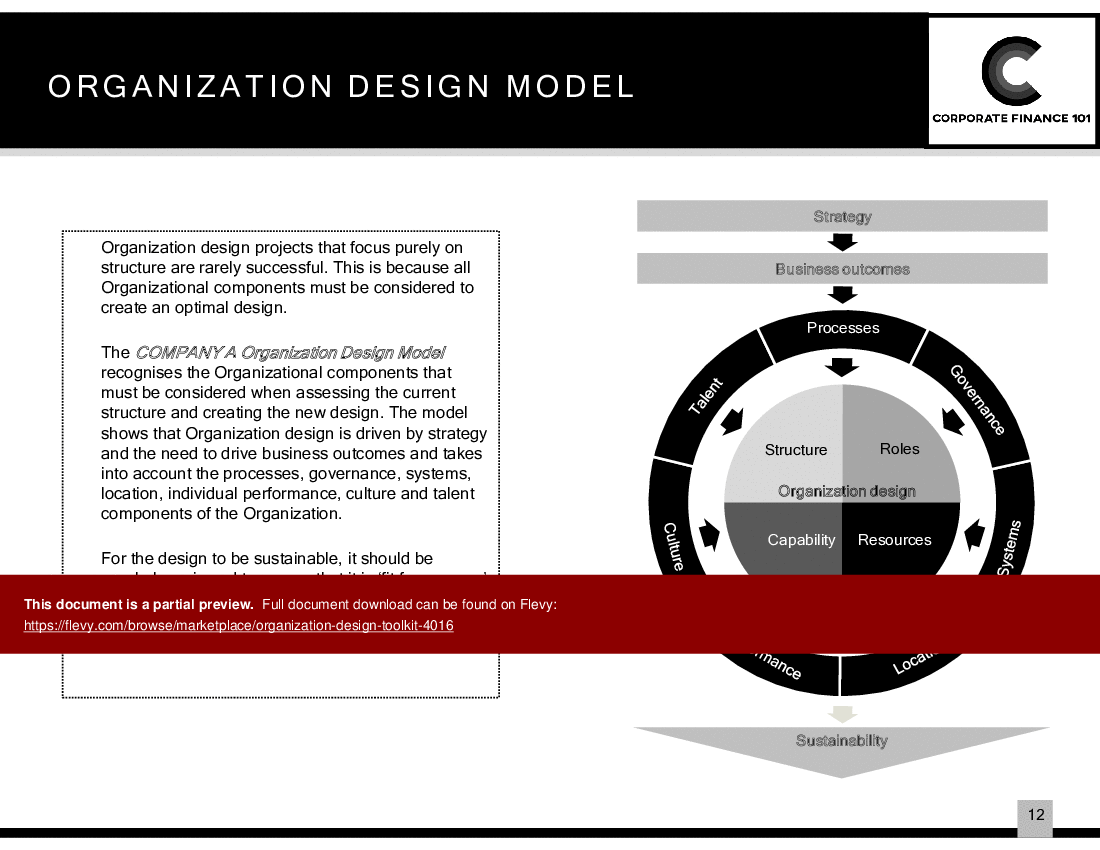
• OD Model - The framework illustrating how organizational design aligns with strategy and business outcomes, focusing on structure, roles, capabilities, and resources.
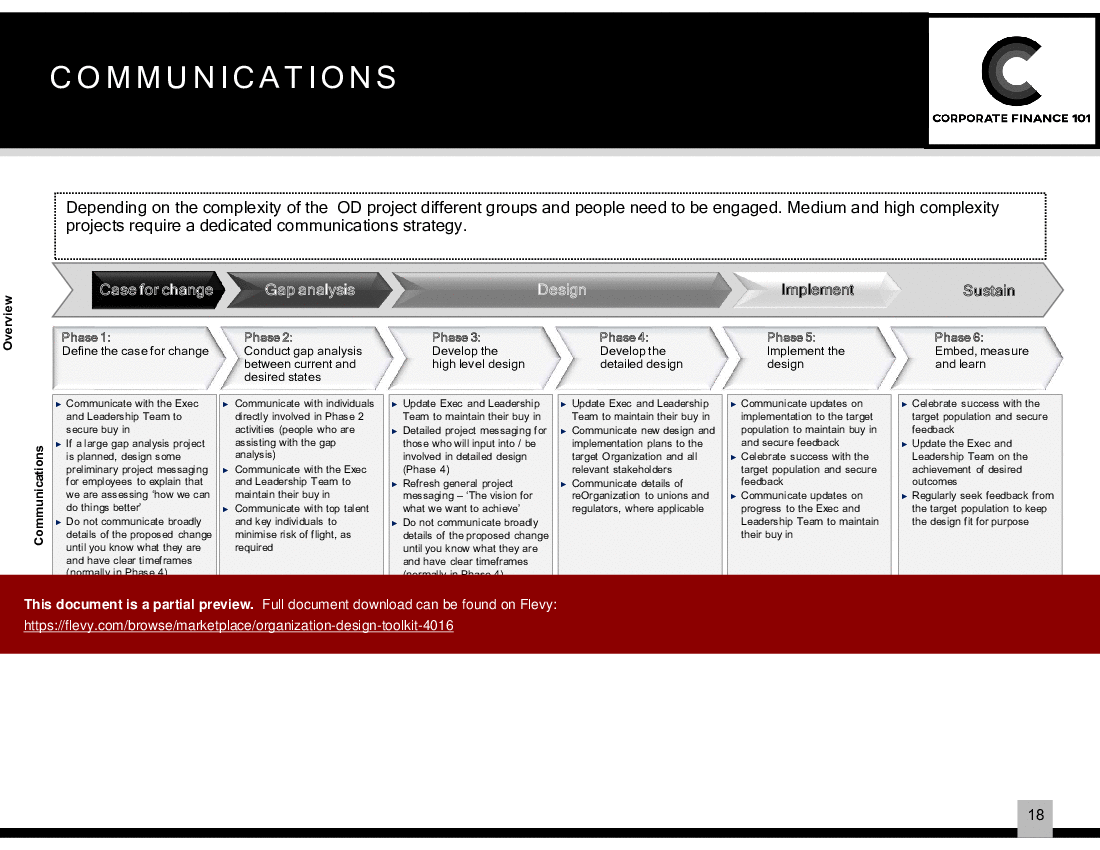
• OD Methodology - A six-phase approach guiding the execution of OD projects, from defining the case for change to embedding and measuring outcomes.
• Governance Framework - A structured approach to project management, detailing sign-off gates and stakeholder involvement based on project complexity.
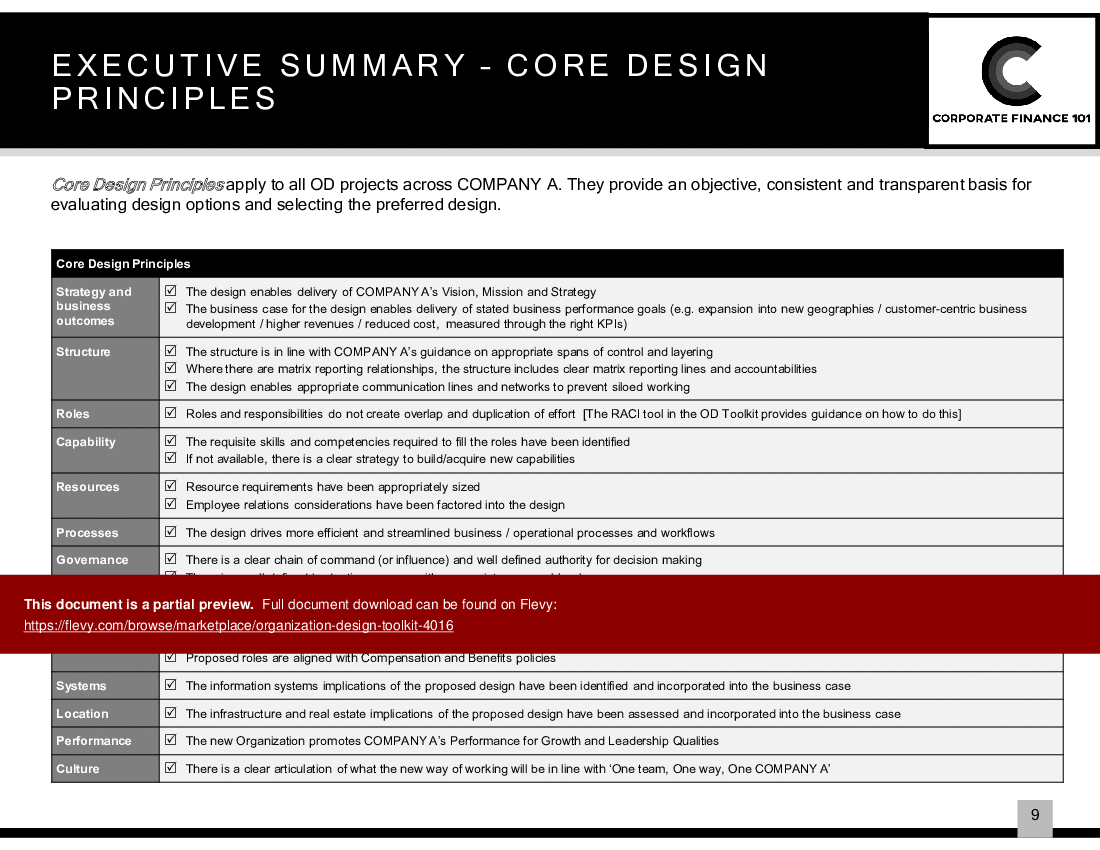
• Core Design Principles - Mandatory principles ensuring consistency across OD projects, addressing strategy, structure, roles, capabilities, resources, processes, governance, talent, systems, location, performance, and culture.
Deliverables, Templates, and Tools
• Organization Design Toolkit, including templates for gap analysis, RACI, and FTE analysis.
• Tailored Design Principles and Design Evaluation Tool for assessing design options.
• Day in the Life (DILO) Tool for visualizing new organizational roles and processes.
• Role Profile Template for defining responsibilities and accountabilities.
Slide Highlights
• Overview of the OD Approach and its significance in driving organizational change.
• Detailed breakdown of the 6 phases in the OD Methodology.
• Governance requirements and sign-off criteria for different project complexities.
• Core Design Principles that underpin all OD projects at COMPANY A.
Potential Workshop Agenda
Kick-off Session (60 minutes)
• Introduce the OD Approach and its objectives.
• Discuss the roles of HR Business Partners and Line Managers in the process.
• Outline expectations and deliverables for the workshop.
Design Principles Workshop (90 minutes)
• Collaborate on developing tailored design principles.
• Review case studies and best practices in organizational design.
• Engage in group discussions to refine design principles.
Implementation Planning Session (120 minutes)
• Create an implementation roadmap for OD projects.
• Identify key stakeholders and communication strategies.
• Develop metrics for measuring success and tracking outcomes.
Customization Guidance
• Adapt the OD Model to reflect specific organizational needs and strategic objectives.
• Tailor the governance framework based on project complexity and stakeholder involvement.
• Modify design principles to align with unique business challenges and opportunities.
Secondary Topics Covered
• Change management strategies in organizational design.
• Best practices for stakeholder engagement and communication.
• Techniques for measuring and sustaining organizational effectiveness.
• Insights into managing cultural shifts during organizational change.
FAQ What is the purpose of the Organization Design Approach?
The Organization Design Approach provides a standardized methodology and governance framework to ensure consistent and effective organizational design across COMPANY A.
Who should use the Organization Design Toolkit?
HR Business Partners and Line Managers are the primary users, guiding and implementing OD projects within their teams.
How does the OD Methodology work?
The OD Methodology consists of 6 phases: Define the case for change, Conduct gap analysis, Develop high-level design, Develop detailed design, Implement the design, and Embed, measure, and learn.
What are the Core Design Principles?
Core Design Principles are mandatory guidelines that ensure consistency in OD projects, focusing on strategy, structure, roles, capabilities, resources, processes, governance, talent, systems, location, performance, and culture.
How can I customize the OD Approach for my organization?
Customization can be achieved by adapting the OD Model, governance framework, and design principles to align with specific organizational needs and strategic objectives.
What tools are included in the Organization Design Toolkit?
The toolkit includes templates for gap analysis, RACI, FTE analysis, tailored design principles, and the Day in the Life (DILO) tool.
How do I measure the success of an OD project?
Success can be measured through defined metrics that track outcomes and benefits, ensuring alignment with strategic objectives.
What is the significance of the DILO Tool?
The DILO Tool helps visualize the impact of organizational design changes on specific roles or processes, facilitating understanding and buy-in from employees.
Glossary
• Organization Design (OD) - The process of structuring an organization to align with its strategy and objectives.
• RACI - A tool used to clarify roles and responsibilities in a project.
• FTE - Full-Time Equivalent, a measure of workforce size.
• Governance Framework - The structure that outlines decision-making processes and accountability in OD projects.
• Change Management - The approach to transitioning individuals, teams, and organizations to a desired future state.
• Tailored Design Principles - Project-specific guidelines that complement core design principles.
• Gap Analysis - The process of comparing current organizational performance with desired outcomes.
• Stakeholder Engagement - The process of involving individuals or groups who may be affected by or have an influence on an OD project.
• Performance Metrics - Standards used to measure the effectiveness and efficiency of organizational processes.
• Cultural Alignment - Ensuring that the organizational culture supports the desired changes in structure and processes.
• Design Evaluation Tool - A framework for assessing the effectiveness of proposed organizational designs against established principles.
• DILO - Day in the Life of, a tool used to illustrate the experience of a role or process in the new organizational design.
This slide outlines project governance requirements based on complexity levels: low, medium, and high. Low complexity projects, like minor team restructurings, require a Band B or C Project Sponsor, a nominated Project Lead, and oversight through existing governance committees. Key activities include progress updates and documented business rationale for changes, with formal approval from the Project Sponsor. Medium complexity projects, involving larger transformations, necessitate a Band A or Executive Project Sponsor, a nominated Project Lead, a formal project office, and a small Steering Group for oversight, along with mandated business case approvals. High complexity projects, such as organization-wide redesigns, require a robust governance structure with a Band A or Executive Project Sponsor, a nominated Project Lead, a small Steering Group, and a formal program office, ensuring comprehensive oversight and execution.
This slide outlines a structured methodology for organization design, comprising 6 key phases.
Phase 1 defines the case for change, aligning the organization design project with business objectives.
Phase 2 conducts a gap analysis to identify discrepancies between the current state and desired outcomes, establishing a baseline for design efforts.
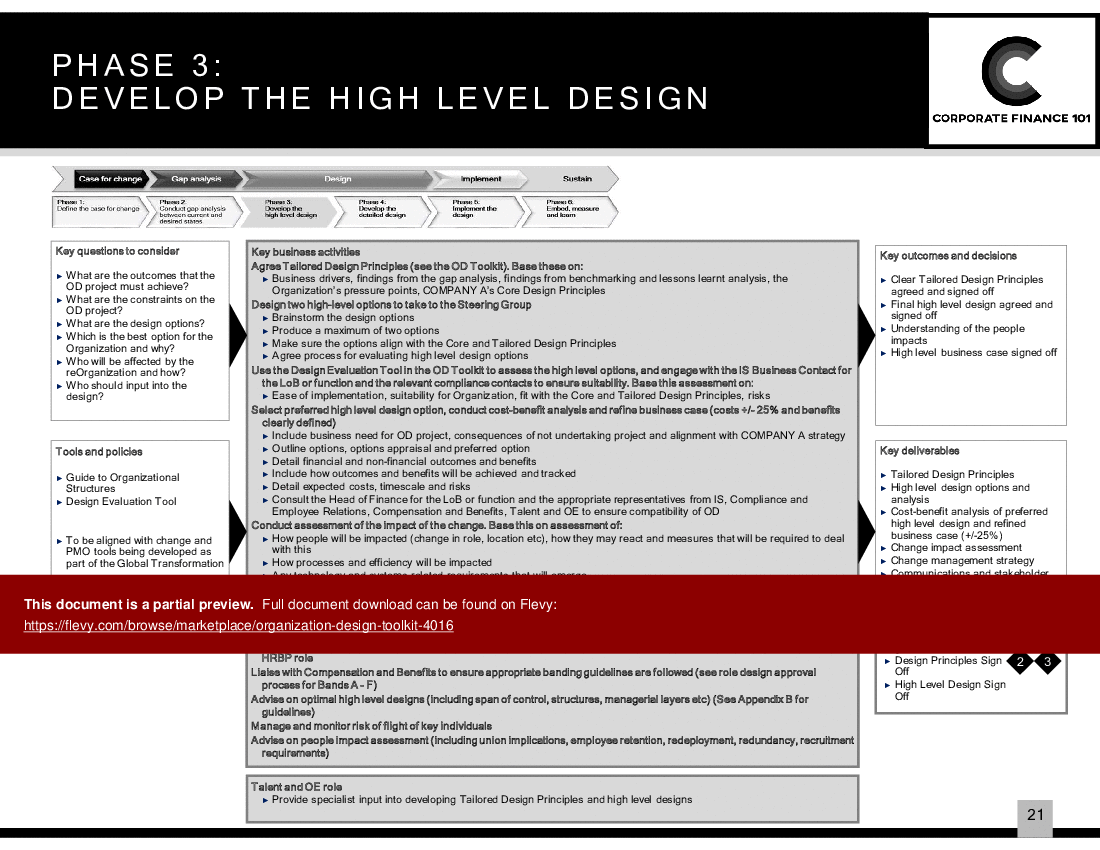
Phase 3 develops high-level design options, selecting preferred elements and assessing their impacts through stakeholder collaboration.
Phase 4 creates a comprehensive design, including a detailed business case and actionable implementation steps.
Phase 5 focuses on effective change management during the implementation of the design.
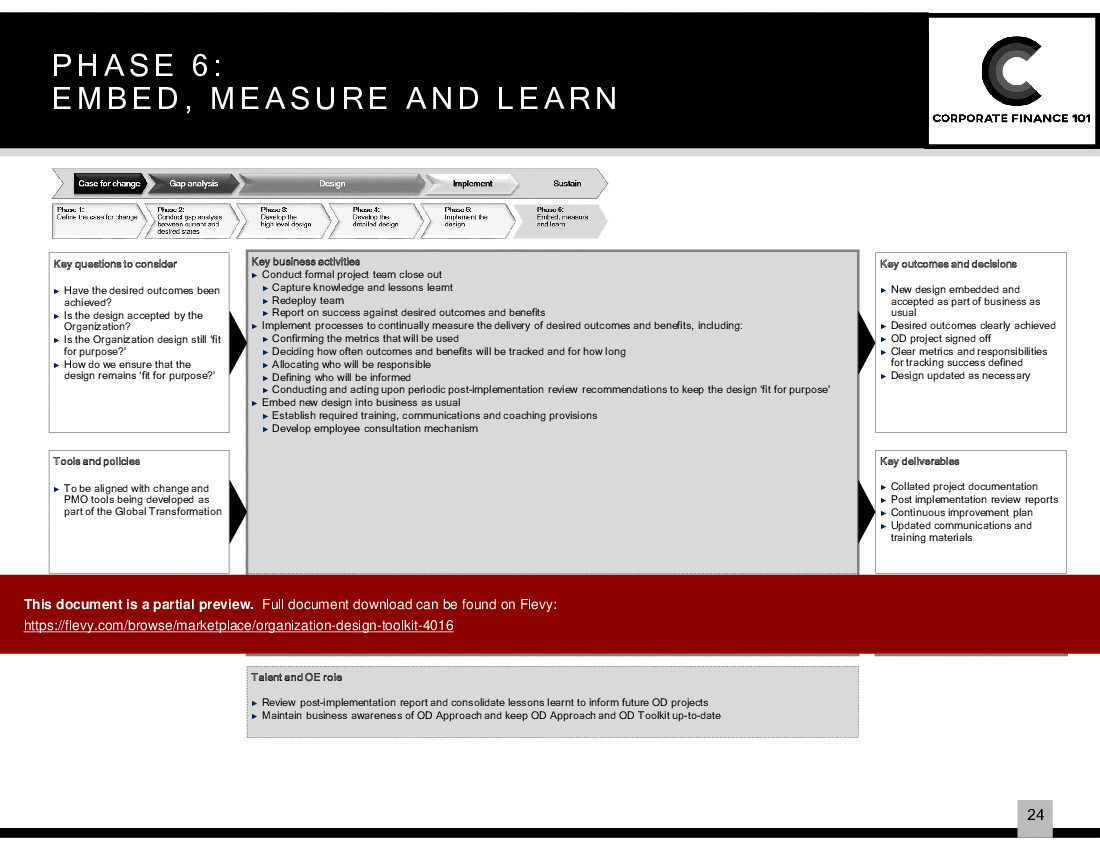
Phase 6 emphasizes ongoing evaluation and learning, enabling the organization to adapt and refine its approach for continuous improvement.
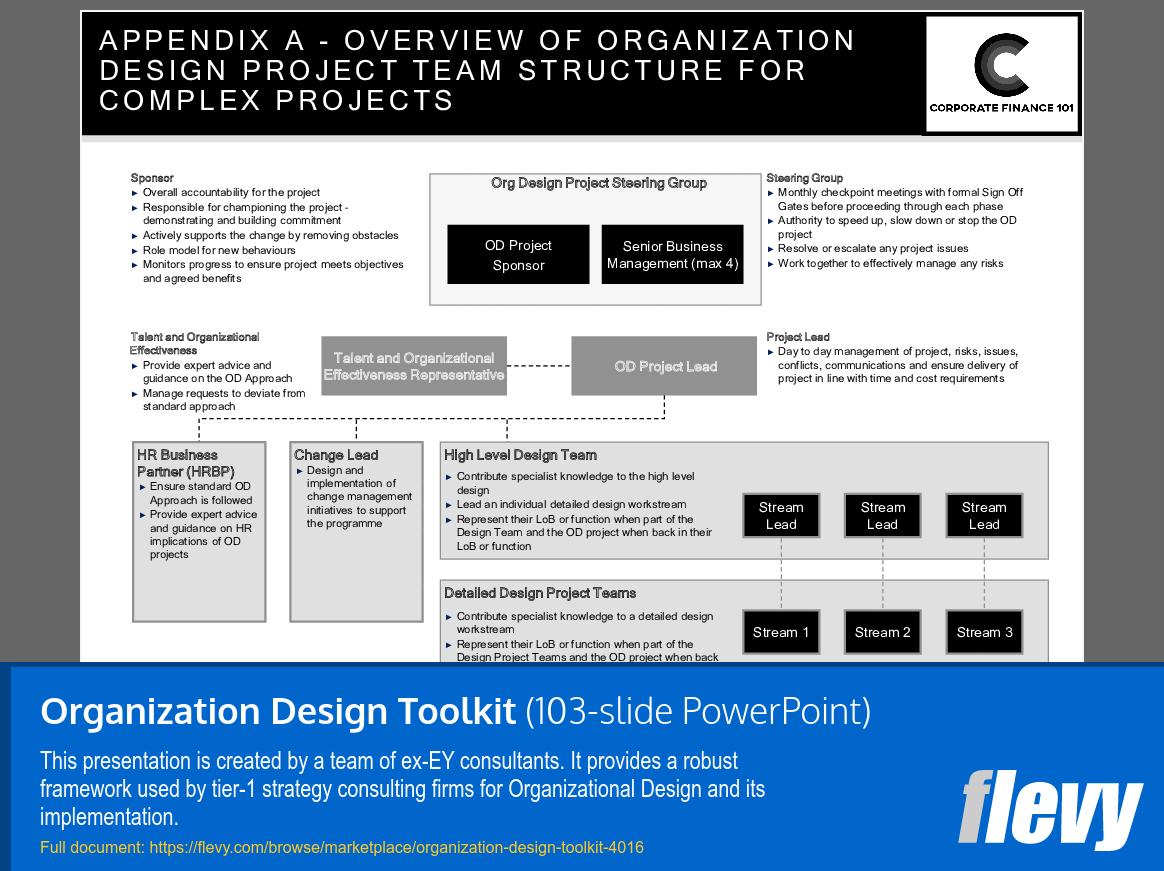
This slide outlines the organization design project team for complex projects, detailing roles and responsibilities. The "Sponsor" is accountable for project alignment with strategic objectives and removing obstacles. The "Steering Group" acts as a governance body, conducting monthly checkpoints and formal sign-offs, with authority to escalate issues, ensuring project integrity. The "OD Project Lead" manages daily operations, focusing on project delivery within time and cost constraints while navigating risks. "Talent and Organizational Effectiveness Representatives," including the "HR Business Partner," provide guidance on organizational design (OD) and HR implications. The "Change Lead" implements change management initiatives for smooth transitions. The "High Level Design Team" and "Detailed Design Project Teams" contribute specialized knowledge, addressing both high-level and detailed project aspects, ensuring a comprehensive approach to organizational design.
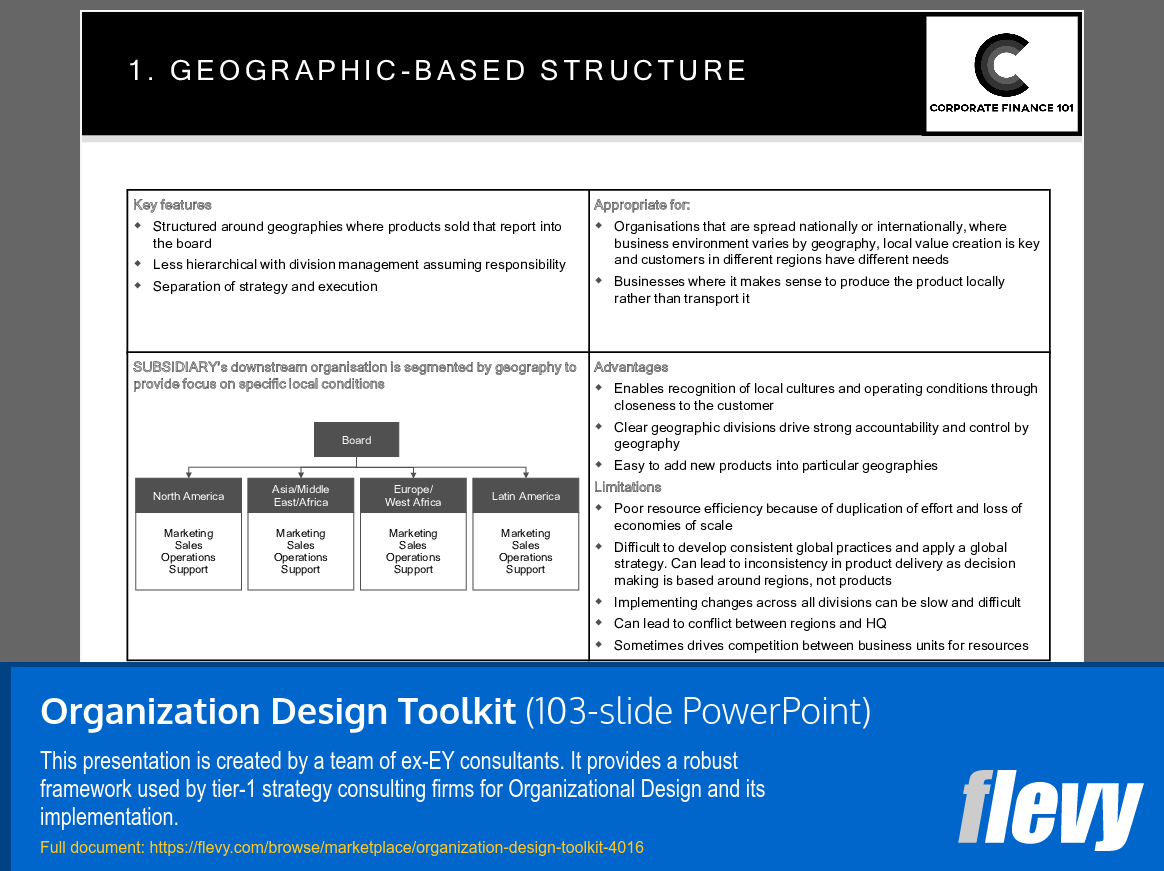
This slide presents a framework for a geographic-based organizational structure that optimizes operations by aligning with regional markets. Key features include organizing around geographies where products are sold, facilitating direct reporting to the board, and minimizing hierarchical layers to enhance division management responsibility. It identifies 2 primary categories: "Appropriate for" and "Advantages." The structure is beneficial for organizations operating across diverse national landscapes, emphasizing local business environments and customer needs. Advantages include recognition of local cultures, enhanced customer closeness, and clear geographic divisions that promote accountability. Limitations include potential inefficiencies from duplicated efforts, challenges in maintaining consistent global practices, and resource competition among business units.
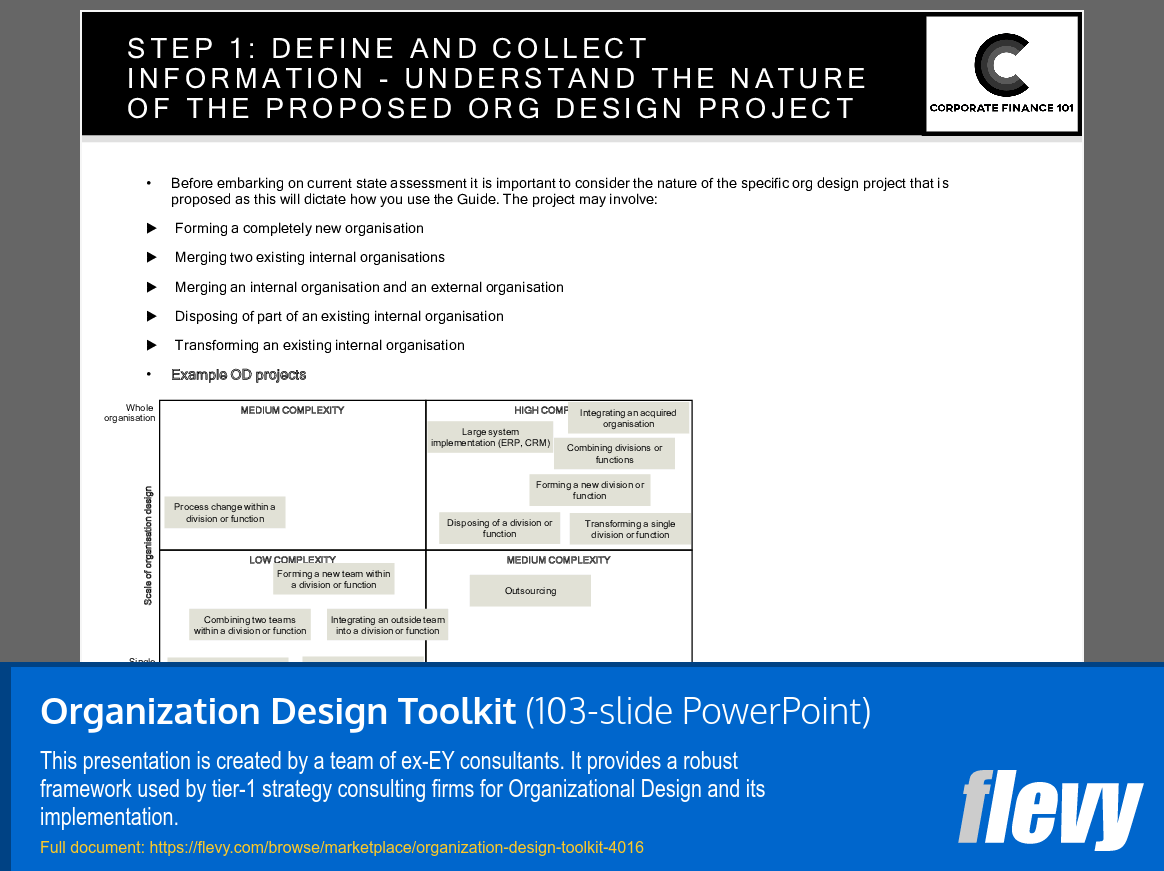
This slide categorizes organizational design projects by complexity and scale using a matrix. Projects are classified as affecting the "Whole Organization" or a "Single Business." High-complexity projects for the whole organization include large system implementations like ERP and CRM systems, requiring extensive governance and application of OD methodology. Medium complexity projects involve transforming functions or executing process changes within a function. Low complexity projects for a single business include redefining roles or forming new teams, requiring less governance. Medium complexity projects, such as outsourcing or integrating outside teams, demand careful planning, but are less daunting than high-complexity projects. This structured approach aids organizations in identifying project nature and governance needs.
The methodology for organizational design at COMPANY A consists of 6 phases tailored to project scale and complexity. The first phase defines the case for change, aligning stakeholders on the need for transformation. The second phase conducts a gap analysis to assess the current versus desired states. In the third phase, a high-level design serves as a blueprint for the detailed design in phase four, emphasizing stakeholder sign-offs. Phase 5 involves implementation, which may require iterations based on feedback. The final phase focuses on sustaining changes and measuring effectiveness. The methodology integrates the Change Management Framework, ensuring that change management considerations are addressed throughout the organizational design process.
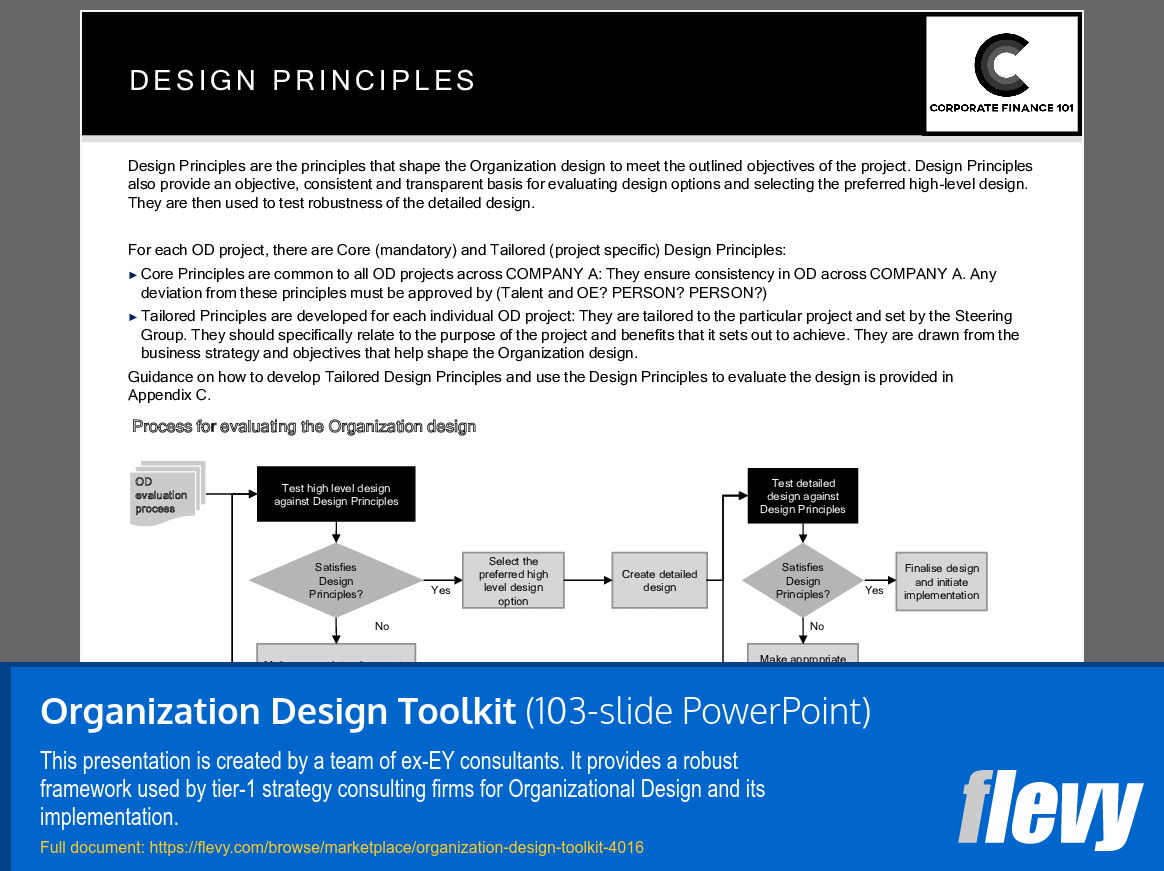
The slide outlines essential Design Principles for the Organization Design (OD) process at COMPANY A, categorized into Core and Tailored Design Principles. Core Principles are mandatory across all OD projects, ensuring consistency and requiring approval for deviations, thus establishing a governance mechanism. Tailored Principles address unique project objectives, aligning with the organization’s strategic goals. The accompanying flowchart illustrates the evaluation process, starting with testing the high-level design against the Design Principles. If compliant, the design progresses to selecting a preferred option; if not, adjustments are made. This iterative process culminates in a detailed design phase, reinforcing the importance of continuous evaluation throughout the design process.
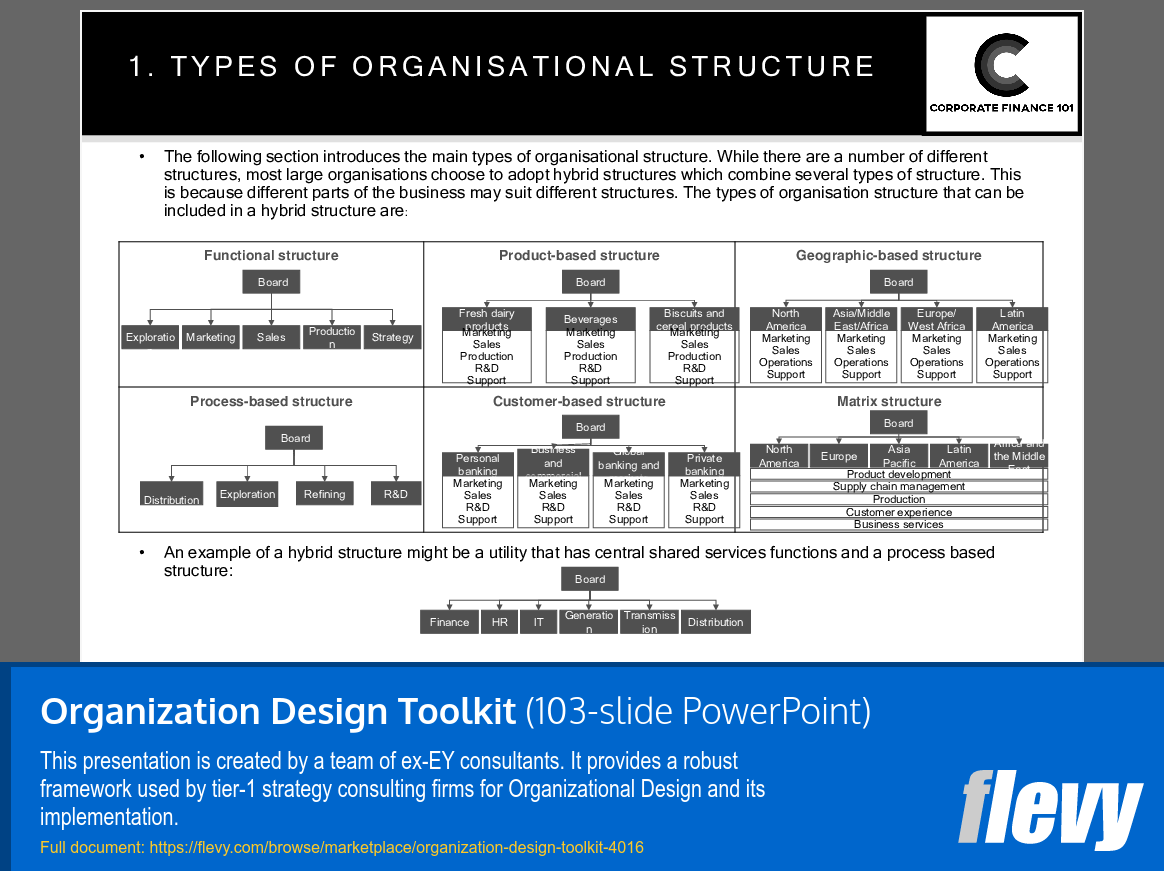
This slide outlines 5 organizational structures: Functional, Product-based, Geographic-based, Customer-based, and Matrix structures. The Functional structure organizes teams by functions like marketing and sales under a centralized board, effective for smaller organizations, but cumbersome as they scale. The Product-based structure focuses on specific product lines, enhancing accountability and performance. Geographic-based structures enable localized decision-making for multi-regional operations, while Customer-based structures organize teams around customer segments to improve service delivery. The Matrix structure promotes flexibility and collaboration across departments. Hybrid structures blend different types to meet diverse business demands, crucial for large organizations facing varying operational challenges. Selecting the right structure can optimize organizational design, improve efficiency, and enhance responsiveness to market changes.
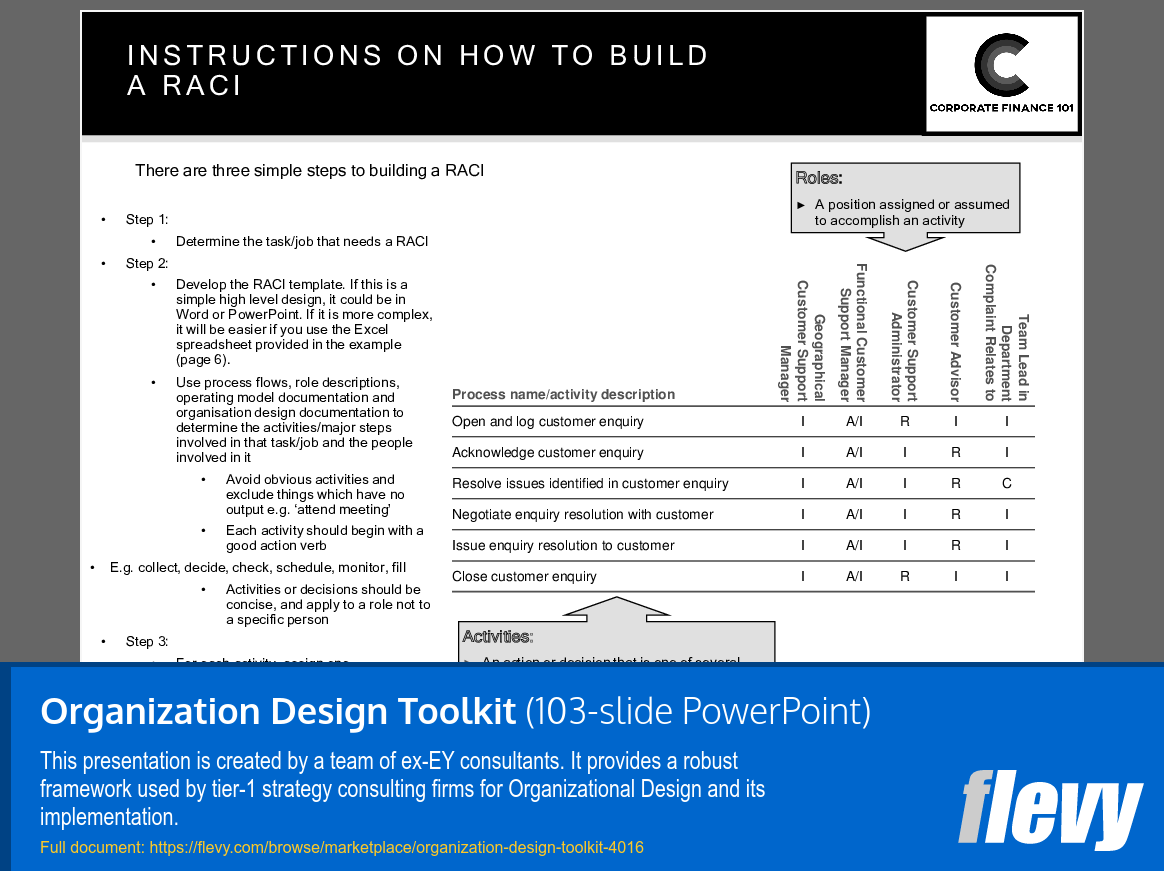
This slide outlines a structured approach to building a RACI matrix for clarifying roles and responsibilities in projects. The first step is identifying the specific task that requires a RACI matrix, ensuring relevance to organizational needs. The second step involves developing the RACI template; for simpler tasks, a basic design in Word or PowerPoint suffices, while complex tasks benefit from an Excel spreadsheet for better organization. Users are advised to leverage existing documentation, such as process flows, to outline activities and assign responsibilities. Practical tips include avoiding unnecessary activities and ensuring each task begins with a clear action verb. The final step is extracting concise activity assignments linked to specific roles rather than individuals, enhancing operational efficiency.
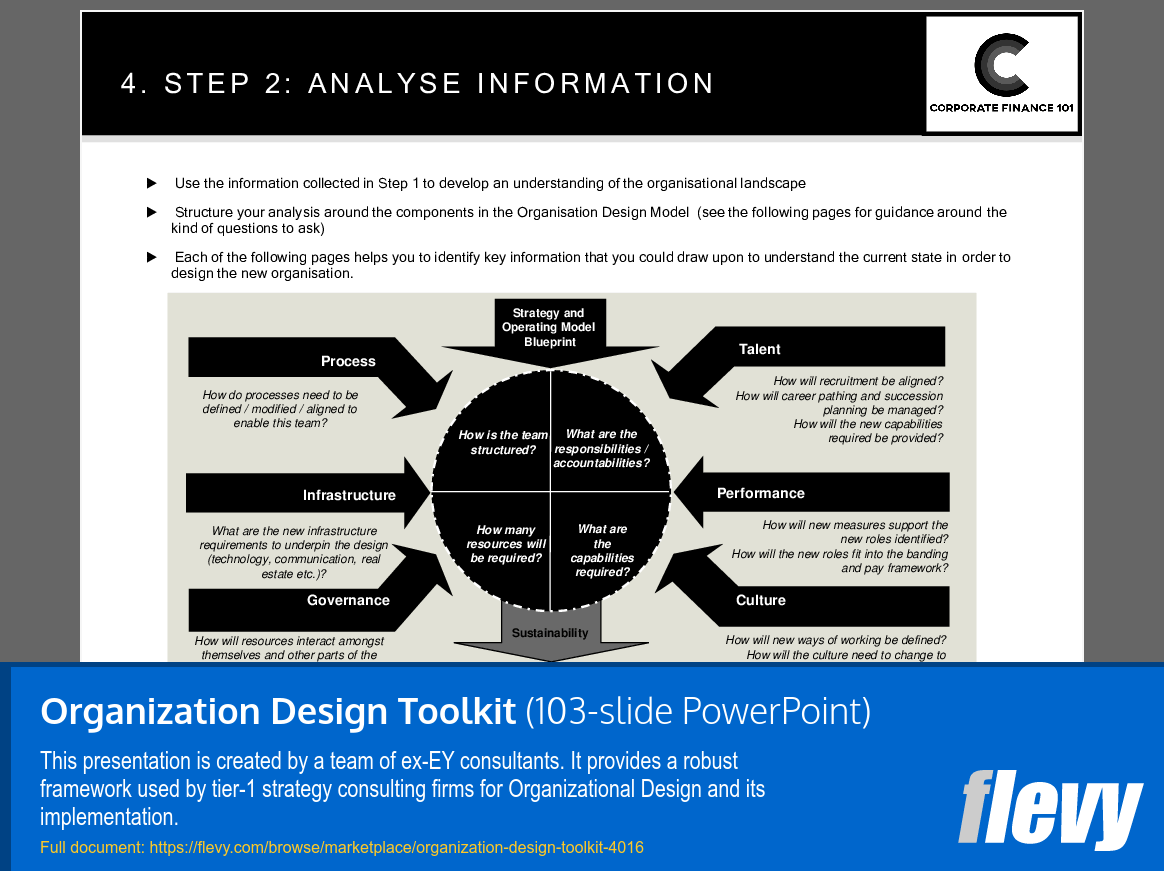
This slide outlines the second step in analyzing organizational information, focusing on understanding the organizational landscape. It utilizes data from the initial step to inform the analysis within an Organization Design Model framework. Central to the slide is a circular diagram labeled "Strategy and Operating Model Blueprint," encompassing critical areas: Process, Infrastructure, Governance, Talent, Performance, and Culture. Each area poses guiding questions, such as defining processes for team effectiveness, assessing necessary resources and technology, aligning recruitment with career development, and integrating new performance measures. Culture examines the evolution of working methods and organizational culture. These interconnected components are essential for comprehensively understanding the organization’s current state and informing the design of the new organization.
This slide outlines a structured approach to organizational design projects, emphasizing the need to define project types before conducting a current state assessment. The 5 project types include: creating a new organization, merging organizations, combining internal and external entities, divesting parts of an organization, and transforming existing structures. A matrix categorizes these projects by complexity (low to high) and scope (whole organization vs. single division). For example, forming a new team is low complexity, while integrating an acquired organization is high complexity. This framework helps executives align strategic objectives with the appropriate organizational design approach, preparing them for various challenges.
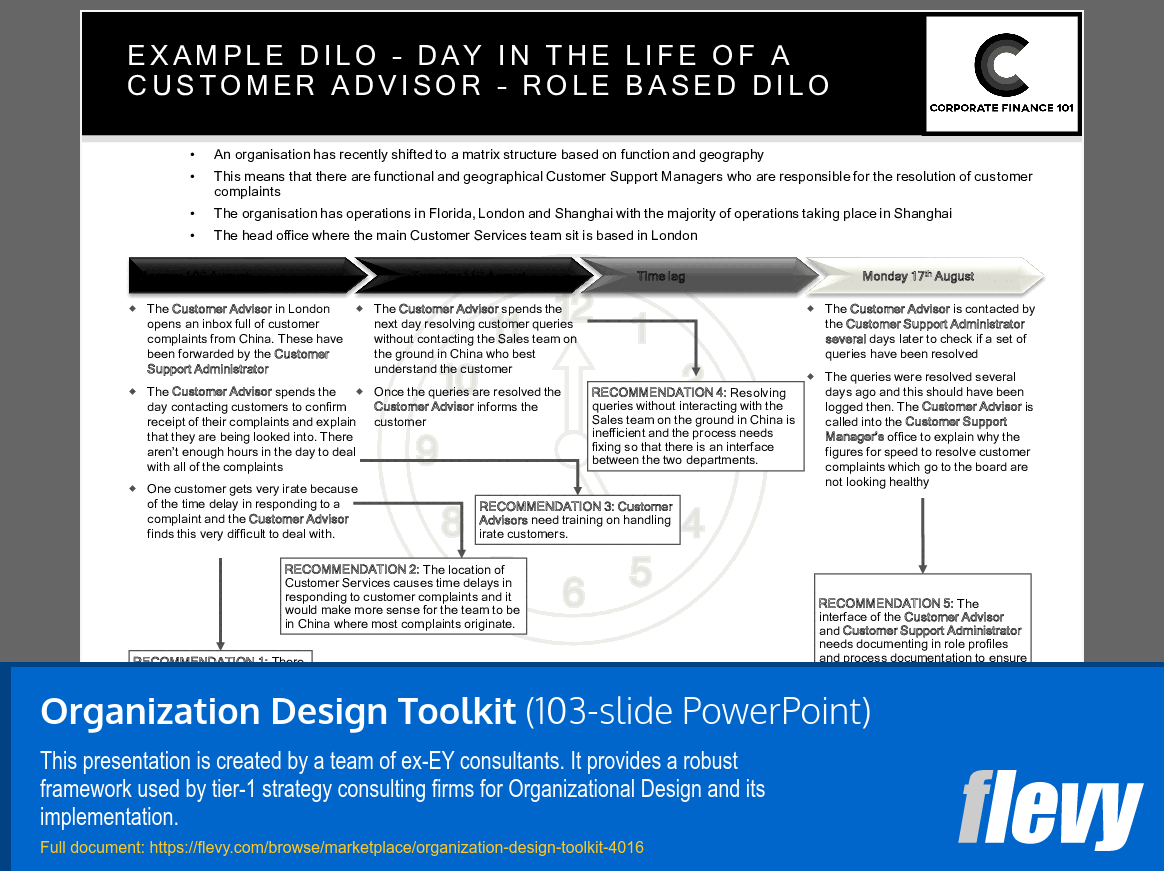
The slide outlines the responsibilities and challenges of a Customer Advisor in a matrix organizational structure, focusing on interactions with the Customer Support Administrator in London. The Advisor manages an inbox of complaints from China, indicating inefficiencies in complaint resolution and leading to customer dissatisfaction due to delays. Recommendations include enhancing integration between the Customer Advisor and the Sales team in China to streamline resolutions, relocating the Customer Services team to China for better responsiveness, and training Customer Advisors in managing irate customers to improve customer relationships. These actionable insights aim to address operational inefficiencies and enhance customer service delivery.
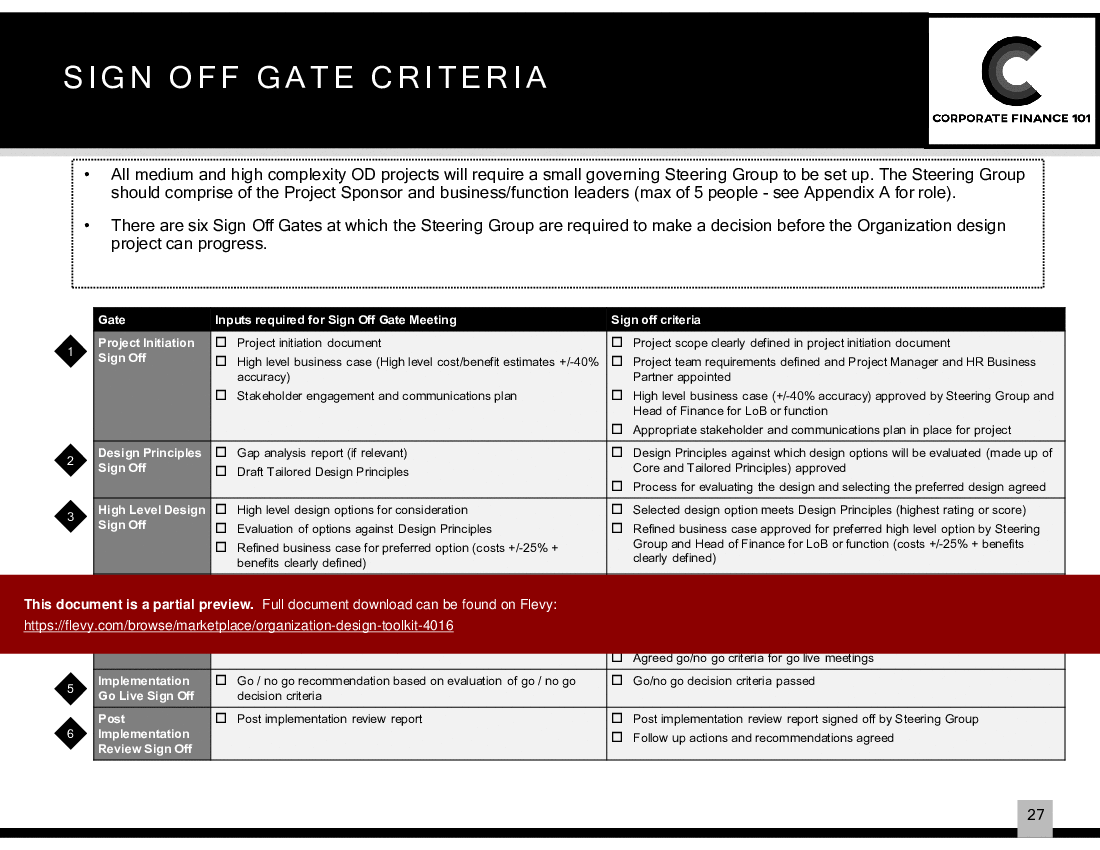
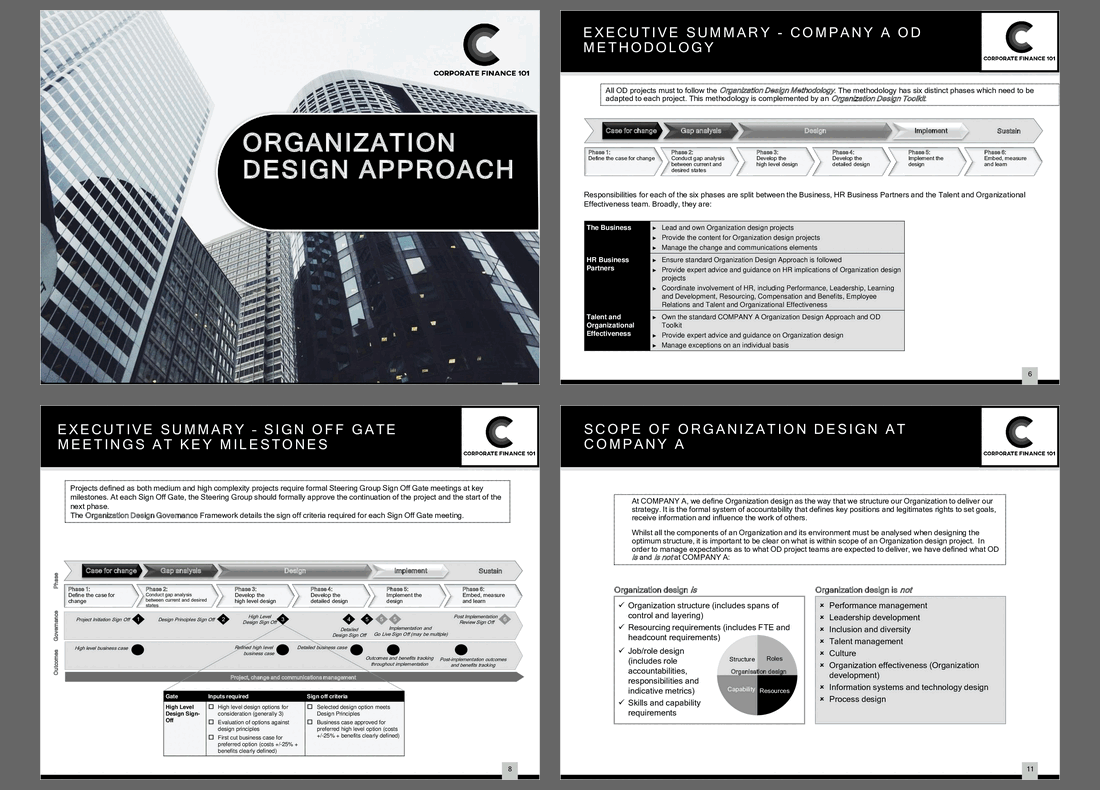
This slide outlines the Sign Off Gate meetings for managing medium to high complexity projects, employing a phased approach. Phase 1 involves defining the case for change, followed by gap analysis and high-level design development. Each phase concludes with a Sign Off meeting, requiring Steering Group approval to proceed. Specific inputs for each Sign Off include high-level design options and evaluations against design principles. The framework emphasizes expected outcomes, such as business case development and tracking benefits during implementation. The final phases focus on implementation and post-implementation review, highlighting ongoing measurement and learning. The Organization Design Governance Framework guides the criteria for each Sign Off Gate, enhancing project management, accountability, and decision-making processes.
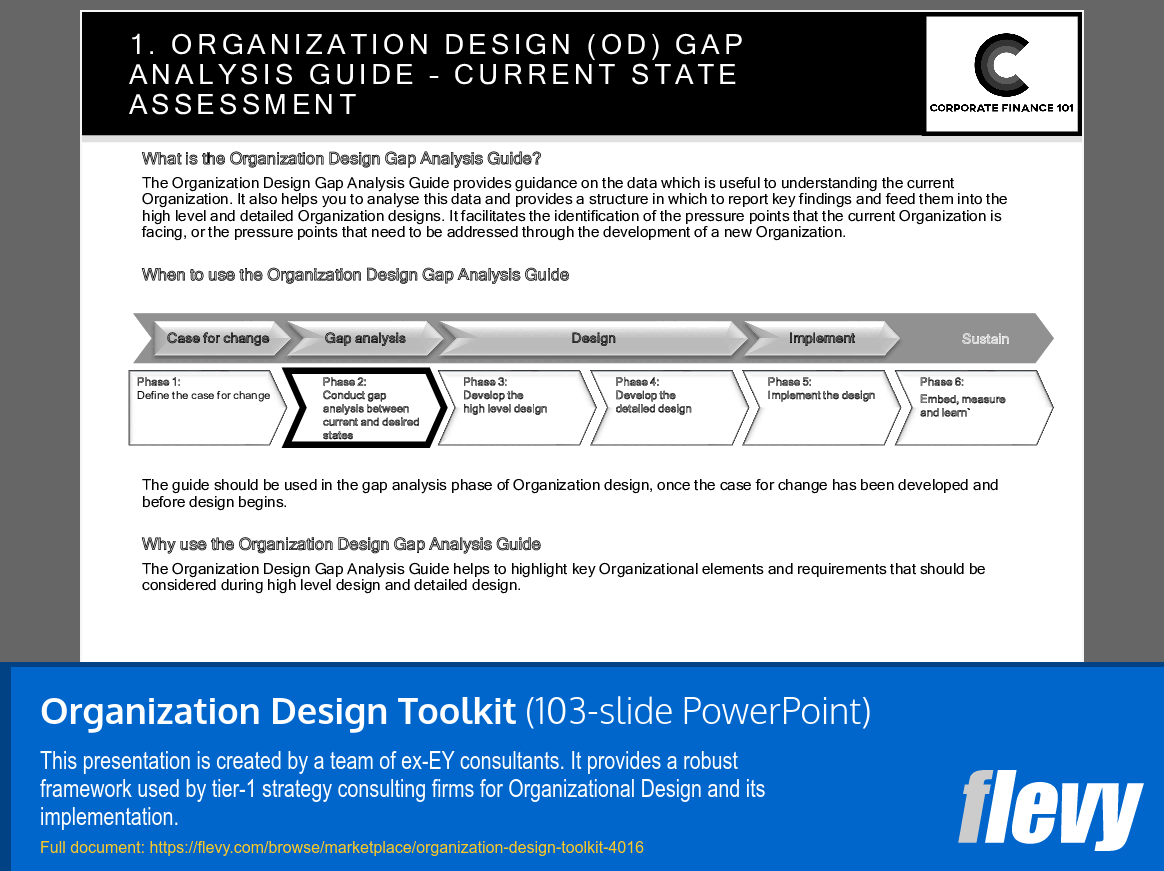
The Organization Design Gap Analysis Guide is a tool for assessing an organization's current state and identifying pressure points that necessitate a new structure. It employs a structured, phased approach: defining the case for change, conducting gap analysis between current and desired states, developing high-level and detailed designs, implementing the design, and embedding and measuring results. This methodology illuminates critical organizational elements and requirements during both design phases, enabling organizations to navigate change complexities and align design efforts with strategic objectives.
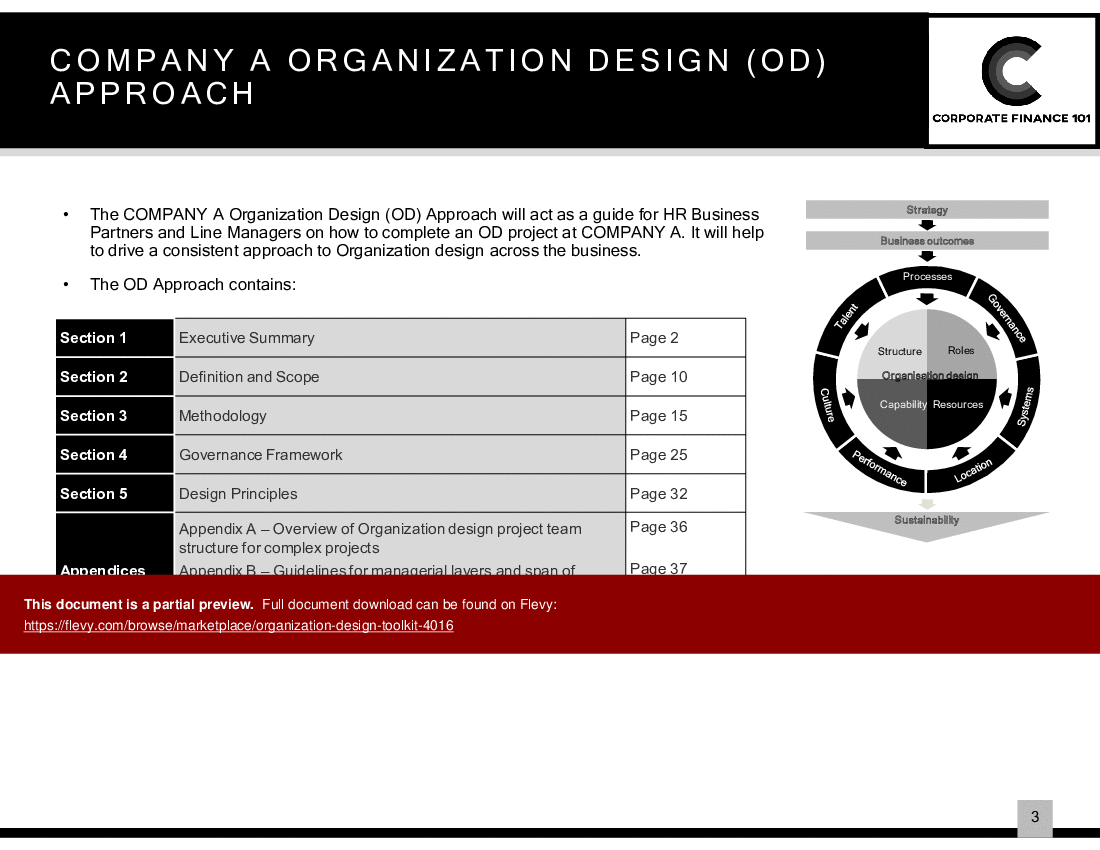
The COMPANY A Organization Design Model emphasizes a holistic approach to organizational design, integrating key components such as strategy, processes, governance, systems, and talent. Successful design aligns with overarching strategy and specific business outcomes, illustrating the interconnectedness of these elements. Changes in one area can impact others, necessitating a comprehensive perspective. Individual performance, culture, and location are critical factors, indicating that customization based on COMPANY A's unique characteristics is essential. The model also stresses the sustainability of design through regular reviews to ensure alignment with strategic objectives, adapting to changing business environments for ongoing effectiveness. This framework enhances understanding of how organizational elements interact and supports a strategic, integrated design approach.
Organization Design at Company A focuses on structuring the organization to align with strategic goals, establishing a formal system of accountability that clarifies key positions and their authority. It encompasses 4 primary components: organization structure (spans of control and layering), resourcing requirements (full-time equivalent and headcount needs), job and role design (accountabilities and performance metrics), and necessary skills and capabilities. The scope excludes performance management, leadership development, and inclusion and diversity, clarifying that these areas, while important, are outside the direct focus of Organization Design projects. This demarcation helps stakeholders streamline efforts and resources for effective organizational restructuring aligned with strategic objectives.
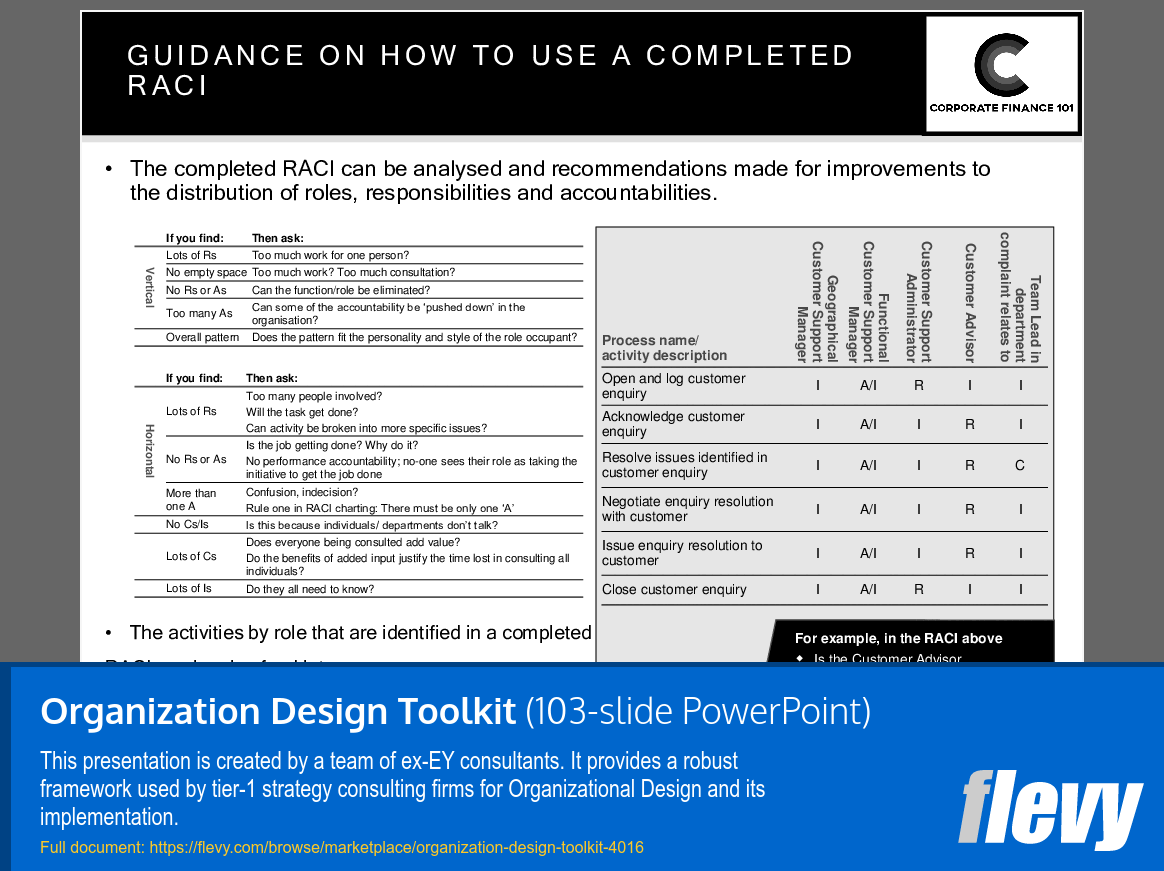
This slide analyzes a completed RACI (Responsible, Accountable, Consulted, Informed) chart, focusing on roles, responsibilities, and accountabilities within organizations. Key questions for evaluating the RACI chart include identifying signs of role overload, such as excessive responsibilities assigned to one person or too much consultation, which can indicate inefficiencies. This analysis can lead to actionable recommendations for redistributing tasks to enhance clarity and efficiency. Additionally, the slide details processes related to customer inquiries, specifying who is responsible, accountable, consulted, or informed for activities like logging, acknowledging, resolving, and closing inquiries. This practical application of the RACI framework helps organizations refine operational processes and improve team alignment and effectiveness.
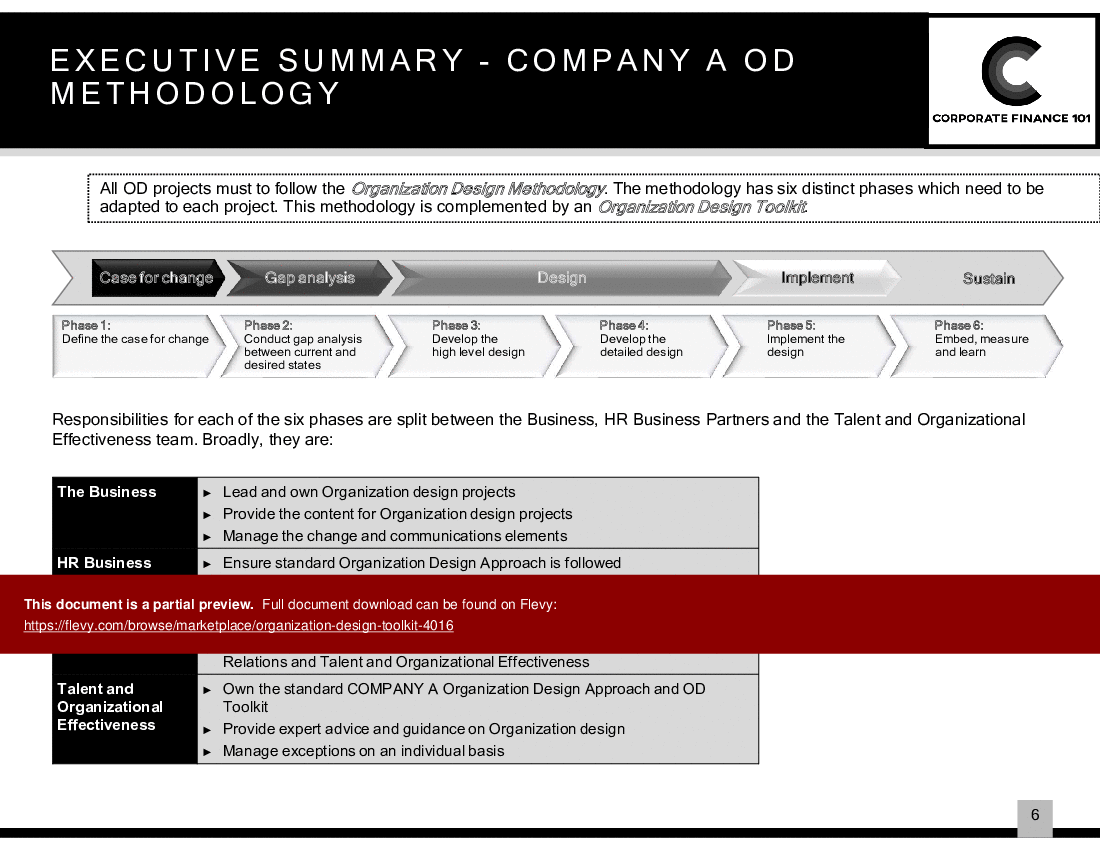
This slide outlines a structured approach to Organization Design (OD) projects, emphasizing a six-phase methodology tailored to specific projects. The phases include defining the case for change, conducting a gap analysis, and progressing through design and implementation stages. Responsibilities are divided among 3 key groups: The Business, HR Business Partners, and the Talent and Organizational Effectiveness team. The Business leads OD projects, managing change and communication. HR Business Partners ensure adherence to the standard OD approach, providing guidance on HR implications and coordinating functions like performance management and talent development. The Talent and Organizational Effectiveness team owns the standard OD approach and toolkit, offering expert advice to tailor the design process to organizational needs.
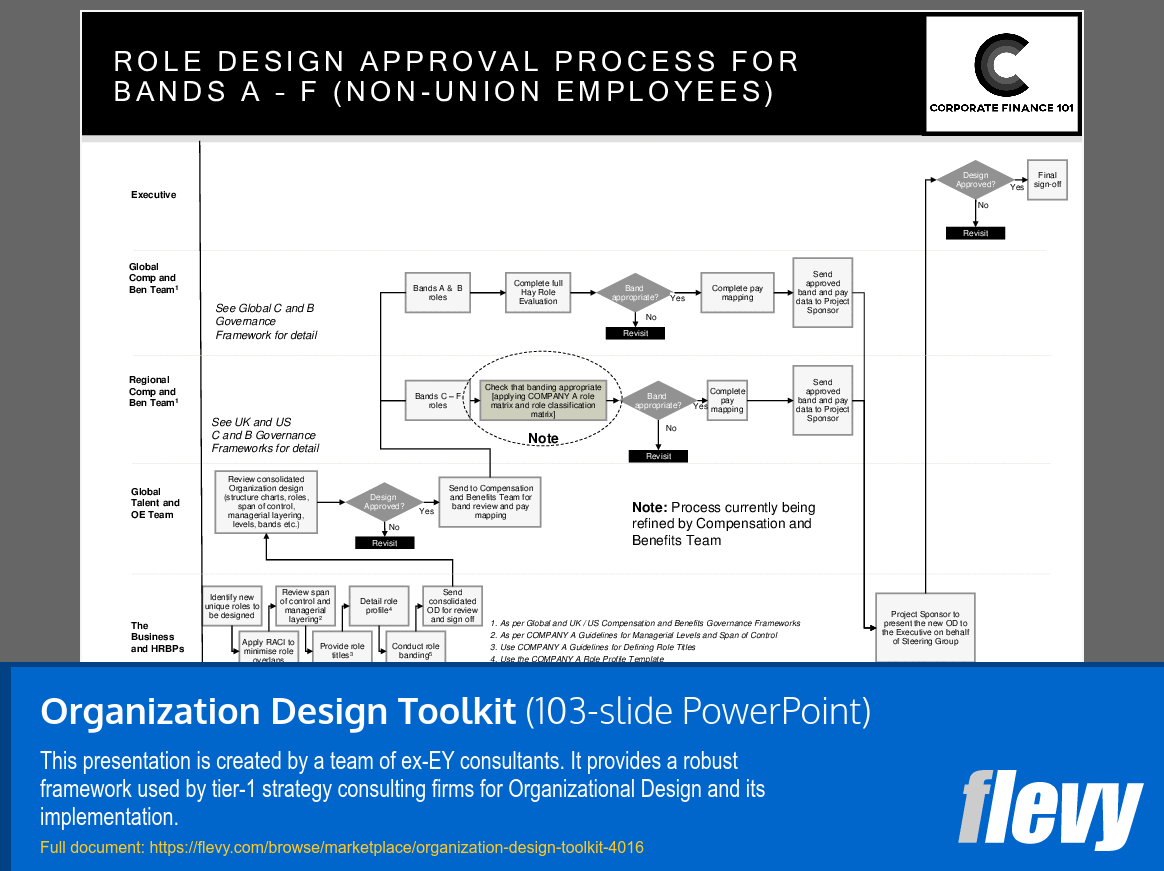
The slide outlines the design approval process for non-union employees across bands A through F. It begins with Executive involvement, referencing the Global Compensation and Benefits Team and the Global C and B Governance Framework for compliance. The flowchart splits into 2 paths: Bands A & B require a complete Hay Role Evaluation followed by a pay mapping exercise, while Bands C through F involve checking banding appropriateness against the COMPANY A role matrix. If deemed appropriate, pay mapping occurs; otherwise, revisions are necessary. The process is being refined by the Compensation and Benefits Team, culminating in sending approved band and pay data to the Project Sponsor for sign-off, ensuring stakeholder alignment in role design and compensation.
Source: Best Practices in Organizational Design, Gap Analysis, Bain PowerPoint PowerPoint Slides: Complete Organization Design Toolkit PowerPoint (PPTX) Presentation Slide Deck, Corporate Finance 101
This presentation is created by a team of ex-EY consultants. It provides a robust framework used by tier-1 strategy consulting firms for Organizational Design and its implementation.
Corporate Finance 101 consists of ex EY and Grant Thornton consultants who have experience helping professionals across disciplines, with a focus on strategy consulting and transaction advisory.
These documents are prepared to help you increase the impact of your business communication and save you valuable time.
The documents are based upon techniques learned while working at
... [read more] multinational consultancy firms. The products were then refined during the course of consulting engagements with organisations across the world.
The average daily rate of a McKinsey consultant is $6,625 (not including expenses). The average price of a Flevy document is $65.
Trusted by over 10,000+ Client Organizations
Since 2012, we have provided best practices to over 10,000 businesses and organizations of all sizes, from startups and small businesses to the Fortune 100, in over 130 countries.
Read Customer Testimonials
"As a consultant requiring up to date and professional material that will be of value and use to my clients, I find Flevy a very reliable resource.
The variety and quality of material available through Flevy offers a very useful and commanding source for information. Using Flevy saves me time, enhances my expertise and ends up being a good decision."
– Dennis Gershowitz, Principal at DG Associates
"I have used FlevyPro for several business applications. It is a great complement to working with expensive consultants. The quality and effectiveness of the tools are of the highest standards."
– Moritz Bernhoerster, Global Sourcing Director at Fortune 500
"FlevyPro has been a brilliant resource for me, as an independent growth consultant, to access a vast knowledge bank of presentations to support my work with clients. In terms of RoI, the value I received from the very first presentation I downloaded paid for my subscription many times over! The
quality of the decks available allows me to punch way above my weight – it's like having the resources of a Big 4 consultancy at your fingertips at a microscopic fraction of the overhead.
"
– Roderick Cameron, Founding Partner at SGFE Ltd
"As an Independent Management Consultant, I find Flevy to add great value as a source of best practices, templates and information on new trends. Flevy has matured and the quality and quantity of the library is excellent. Lastly the price charged is reasonable, creating a win-win value for
the customer, Flevy and the various authors. This is truly a service that benefits the consulting industry and associated clients. Thanks for providing this service.
"
– Jim Schoen, Principal at FRC Group
"Flevy.com has proven to be an invaluable resource library to our Independent Management Consultancy, supporting and enabling us to better serve our enterprise clients.
The value derived from our [FlevyPro] subscription in terms of the business it has helped to gain far exceeds the investment made, making a subscription a no-brainer for any growing consultancy – or in-house strategy team."
– Dean Carlton, Chief Transformation Officer, Global Village Transformations Pty Ltd.
"One of the great discoveries that I have made for my business is the Flevy library of training materials.
As a Lean Transformation Expert, I am always making presentations to clients on a variety of topics: Training, Transformation, Total Productive Maintenance, Culture, Coaching, Tools, Leadership Behavior, etc. Flevy
It is well worth the money to purchase these presentations. Sure, I have the knowledge and information to make my point. It is another thing to create a presentation that captures what I want to say. Flevy has saved me countless hours of preparation time that is much better spent with implementation that will actually save money for my clients.
"
– Ed Kemmerling, Senior Lean Transformation Expert at PMG
"Last Sunday morning, I was diligently working on an important presentation for a client and found myself in need of additional content and suitable templates for various types of graphics. Flevy.com proved to be a treasure trove for both content and design at a reasonable price, considering the time I
saved. I encountered a download issue during the ordering process. However, a quick email to Flevy's support team, even on a Sunday (!!!), resulted in assistance within less than an hour, allowing me to download the content I needed. Fantastic job, Flevy! I give 5 stars for both content/price and customer service. Thank you!
"
– M. E., Chief Commercial Officer, International Logistics Service Provider
"As a niche strategic consulting firm, Flevy and FlevyPro frameworks and documents are an on-going reference to help us structure our findings and recommendations to our clients as well as improve their clarity, strength, and visual power. For us, it is an invaluable resource to increase our impact and value."
– David Coloma, Consulting Area Manager at Cynertia Consulting
Download our free compilation of 50+ slides and templates on Organizational Design, Change Management, and Corporate Culture. Methodologies include ADKAR, Burke-Litwin Change Model, McKinsey 7-S, Competing Values Framework, etc.