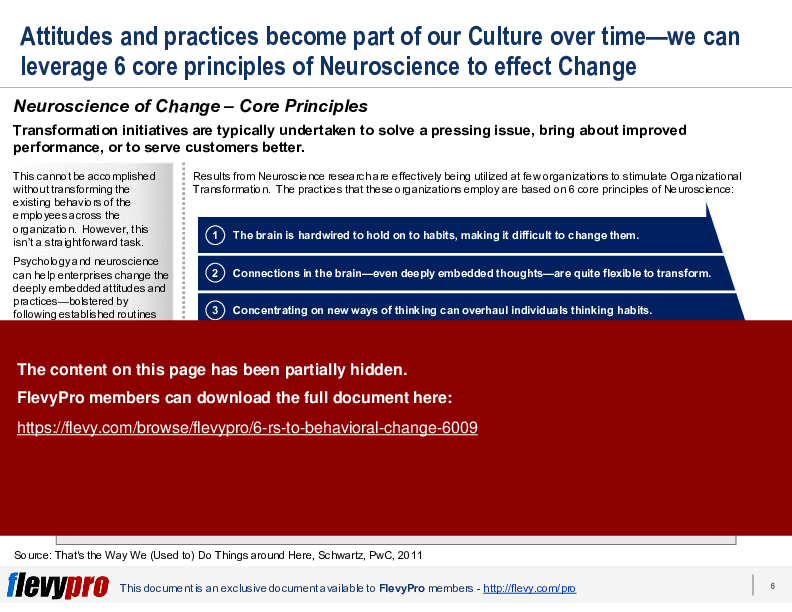

Transformation initiatives are typically undertaken to solve a pressing issue, improve performance, or to serve customers better. These initiatives necessitate changing the existing behaviors of the employees across the organization. However, this isn't a straightforward task.
Ingrained behaviors and practices aren't considered burdening until the organization's performance keeps declining considerably over time. That's when the leaders think about changing these beliefs and habitual actions.
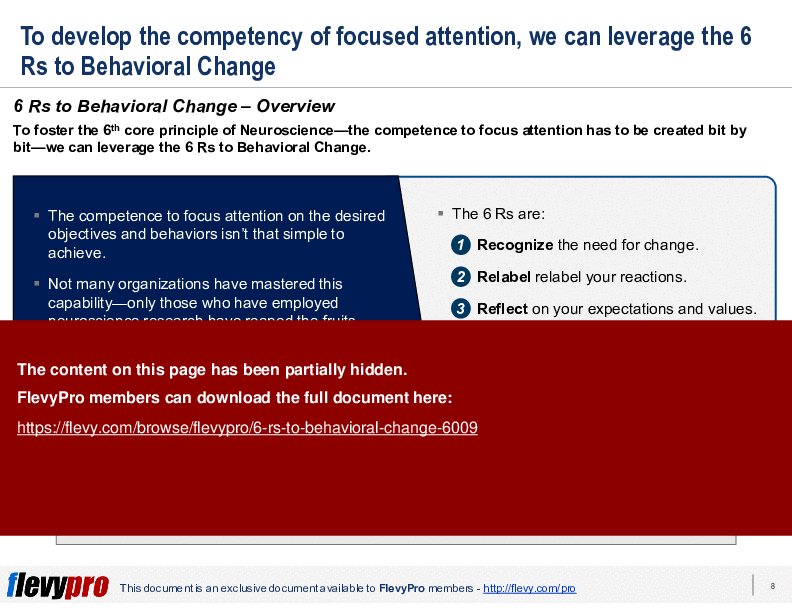
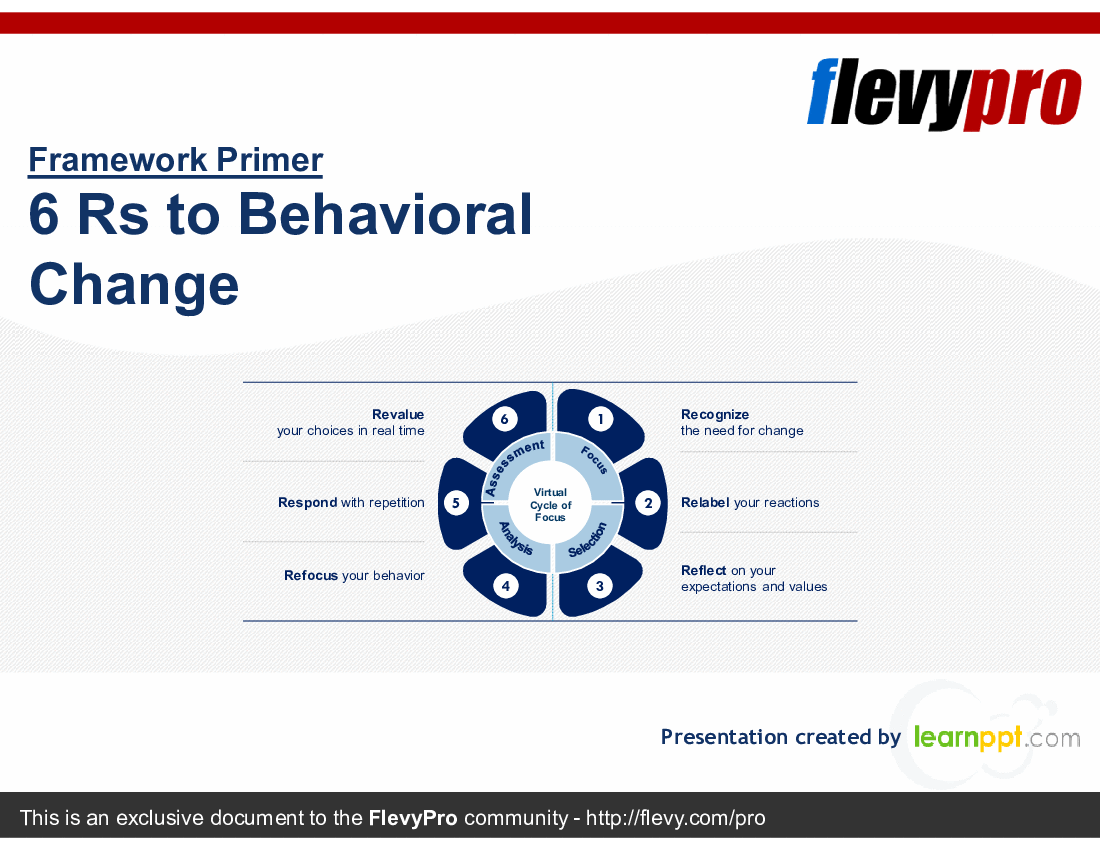
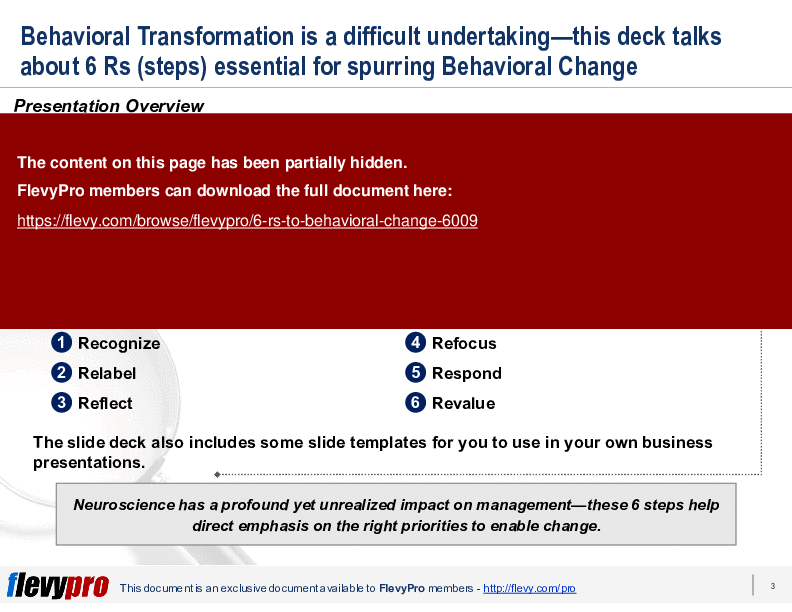
This deck deliberates on 6 Rs—or steps—critical to render deeply embedded Behavioral Change:
1. Recognize
2. Relabel
3. Reflect
4. Refocus
5. Respond
6. Revalue
The slide deck also includes some slide templates for you to use in your own business presentations.
The 6 Rs framework is grounded in the latest neuroscience research, offering a structured approach to behavioral transformation. Recognizing the need for change is the first critical step, enabling leaders to identify and articulate the behaviors that require modification. Relabeling involves reclassifying these behaviors, helping individuals and teams to understand and categorize their actions more effectively. Reflecting on expectations and values ensures that the desired state is explicit and actionable, translating into daily behaviors.
Refocusing is essential for aligning individual actions with organizational goals, fostering a proactive and productive mindset. This step emphasizes the importance of stabilizing thought patterns, particularly during crises, to develop new, effective behaviors. Responding with consistent demonstration of the right behaviors is crucial for embedding these changes, with metrics in place to track progress and ensure accountability. Revaluing choices in real-time helps in making instinctive, positive decisions that align with organizational values and enhance performance.
The Virtuous Cycle of Focus framework encapsulates these 6 Rs, providing a comprehensive model for continuous improvement. This cycle enables individuals to understand shared meanings, develop best practices, and contribute to organizational growth. The deck includes templates to facilitate the application of these principles in your presentations, ensuring that you can effectively communicate and implement this transformative approach within your organization.
Got a question about this document? Email us at flevypro@flevy.com.
Executive Summary
The "6 Rs to Behavioral Change" presentation provides a structured framework designed to facilitate deep-rooted behavioral transformation within organizations. Developed by former consultants from McKinsey and the Big 4, this deck leverages insights from neuroscience to address the complexities of changing ingrained behaviors. It outlines 6 essential steps—Recognize, Relabel, Reflect, Refocus, Respond, and Revalue—that guide leaders in fostering a culture of change. By implementing this framework, organizations can effectively enhance performance, improve employee engagement, and better serve their customers.
Who This Is For and When to Use
• Corporate executives seeking to drive organizational change
• Change management leaders responsible for implementing transformation initiatives
• HR professionals focused on enhancing employee behaviors and engagement
• Consultants advising organizations on behavioral change strategies
Best-fit moments to use this deck:
• During the launch of a new transformation initiative
• In workshops aimed at improving organizational culture
• When addressing performance issues linked to employee behaviors
• For training sessions focused on change management methodologies
Learning Objectives
• Define the 6 Rs framework and its relevance to behavioral change
• Build a comprehensive understanding of neuroscience principles in change management
• Establish actionable steps for leaders to facilitate behavioral transformation
• Create a culture of continuous improvement and adaptability within teams
• Identify and mitigate resistance to change among employees
• Develop metrics to track the effectiveness of behavioral change initiatives
Table of Contents
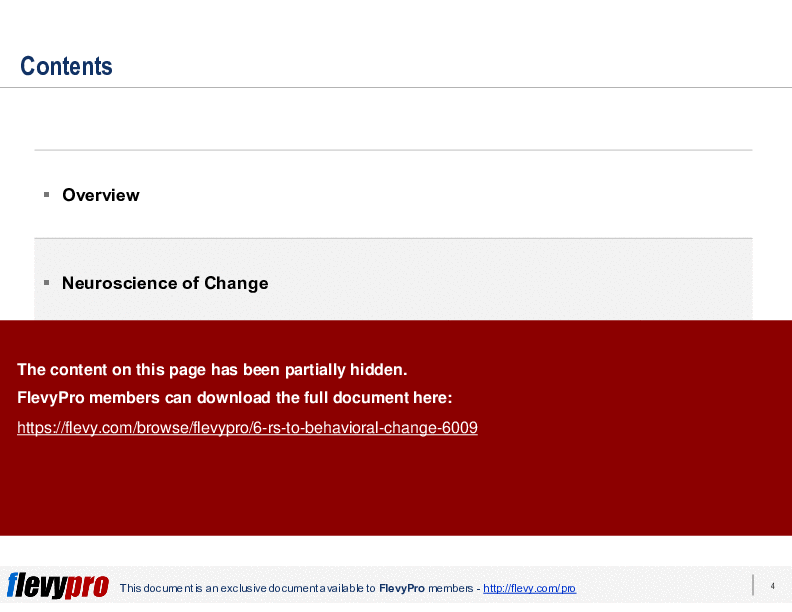
• Overview (page 3)
• Neuroscience of Change (page 5)
• 6 Rs to Behavioral Change (page 8)
• Templates (page 16)
Primary Topics Covered
• Overview of Behavioral Change - The presentation introduces the complexities of behavioral transformation and the necessity of changing ingrained practices for improved performance.
• Neuroscience of Change - Insights into how neuroscience can facilitate understanding of employee behaviors and the psychological aspects of change management.
• 6 Rs Framework - A detailed exploration of the 6 steps essential for instigating behavioral change: Recognize, Relabel, Reflect, Refocus, Respond, and Revalue.
• Implementation Strategies - Practical guidance on how to apply the 6 Rs in organizational settings to drive effective change.
• Cultural Transformation - Discussion on how the 6 Rs can contribute to a broader cultural shift within organizations.
• Templates and Tools - Provision of templates to assist in the application of the 6 Rs framework in real-world scenarios.
Deliverables, Templates, and Tools
• Framework overview template for presenting the 6 Rs
• Neuroscience principles template for understanding the psychological aspects of change
• Action plan template for implementing the 6 Rs in organizational settings
• Metrics tracking template to measure the effectiveness of behavioral changes
• Communication strategy template for engaging employees in the change process
• Workshop agenda template for facilitating discussions around the 6 Rs
Slide Highlights
• Overview of the 6 Rs framework and its significance in behavioral change
• Visual representation of the Virtual Cycle of Focus, illustrating the interconnectedness of the 6 Rs
• Key insights from neuroscience research that support the framework
• Practical examples of how each of the 6 Rs can be applied in organizational contexts
• Templates for action plans and metrics tracking to aid in implementation
Potential Workshop Agenda
Introduction to the 6 Rs (30 minutes)
• Overview of the framework and its relevance
• Discussion on the importance of behavioral change
Deep Dive into Each R (90 minutes)
• Explore each step in detail: Recognize, Relabel, Reflect, Refocus, Respond, Revalue
• Group activities to identify current behaviors and desired changes
Action Planning (60 minutes)
• Develop individual action plans for applying the 6 Rs
• Share plans with peers for feedback and refinement
Customization Guidance
• Adapt the framework to align with specific organizational goals and values
• Modify templates to reflect unique terminology and metrics relevant to the organization
• Incorporate case studies or examples from the organization to enhance relatability
• Tailor workshop agendas to focus on specific challenges faced by the organization
Secondary Topics Covered
• The role of leadership in driving behavioral change
• Strategies for overcoming resistance to change
• The impact of organizational culture on behavioral transformation
• Techniques for fostering employee engagement during change initiatives
Topic FAQ
Document FAQ
These are questions addressed within this presentation.
What are the 6 Rs?
The 6 Rs are Recognize, Relabel, Reflect, Refocus, Respond, and Revalue, which serve as steps to facilitate behavioral change within organizations.
How can neuroscience aid in behavioral change?
Neuroscience provides insights into how people think and behave, helping organizations understand the psychological barriers to change and how to overcome them.
What types of organizations can benefit from this framework?
Any organization looking to improve performance, enhance employee engagement, or implement significant changes can benefit from the 6 Rs framework.
How can I measure the success of behavioral change initiatives?
Success can be measured through metrics such as employee engagement scores, performance indicators, and feedback from stakeholders regarding the change process.
Can the 6 Rs be applied in small organizations?
Yes, the 6 Rs framework is versatile and can be effectively applied in organizations of any size to foster behavioral change.
What is the role of leadership in the 6 Rs framework?
Leadership plays a crucial role in modeling desired behaviors, communicating the vision for change, and supporting employees throughout the transformation process.
How long does it take to see results from implementing the 6 Rs?
The timeline for results can vary based on the organization and the specific behaviors being targeted,, but consistent application of the framework can lead to noticeable improvements over time.
Are there any templates included in the presentation?
Yes, the presentation includes templates for action planning, metrics tracking, and communication strategies to assist in implementing the 6 Rs framework.
Glossary
• 6 Rs - A framework consisting of Recognize, Relabel, Reflect, Refocus, Respond, and Revalue for driving behavioral change.
• Neuroscience - The study of the nervous system, particularly in relation to behavior and cognitive functions.
• Behavioral Change - The process of altering behaviors to improve performance and outcomes within an organization.
• Virtual Cycle of Focus - A framework illustrating the interconnected steps of the 6 Rs in fostering behavioral change.
• Cultural Transformation - A fundamental change in the values, beliefs, and behaviors of an organization.
• Engagement - The emotional commitment of employees to their organization and its goals.
• Resistance to Change - The reluctance of individuals or groups to adapt to new methods or practices.
• Action Plan - A detailed plan outlining steps to achieve specific goals or objectives.
• Metrics Tracking - The process of measuring and analyzing performance indicators to assess progress.
• Leadership - The act of guiding and influencing individuals or teams towards achieving goals.
• Employee Engagement - The level of commitment and involvement an employee has towards their organization.
• Organizational Culture - The shared values, beliefs, and practices that shape the behavior of individuals within an organization.
Source: Best Practices in Change Management, Behavioral Economics, Organizational Behavior PowerPoint Slides: 6 Rs to Behavioral Change PowerPoint (PPTX) Presentation Slide Deck, LearnPPT Consulting
Did you need more documents?
Consider a FlevyPro subscription from $39/month. View plans here.
For $10.00 more, you can download this document plus 2 more FlevyPro documents. That's just $13 each.
|
Download our FREE Organization, Change, & Culture, Templates
Download our free compilation of 50+ slides and templates on Organizational Design, Change Management, and Corporate Culture. Methodologies include ADKAR, Burke-Litwin Change Model, McKinsey 7-S, Competing Values Framework, etc. |