
Leadership at the top is a team sport. The CEO must rely on his or her senior level teams to accomplish important goals, manage change, and help spread the company's priorities and values throughout the organization.
But, in a volatile and uncertain business environment, companies are finding it harder to keep up. Top teams must therefore be more than just high performing. They also need to adapt and thrive in these turbulent times.
Instilling Adaptive Leadership Team Development in our company's DNA prepares our teams in times of business uncertainties. It can, in fact, be seen as a source of Competitive Advantage.
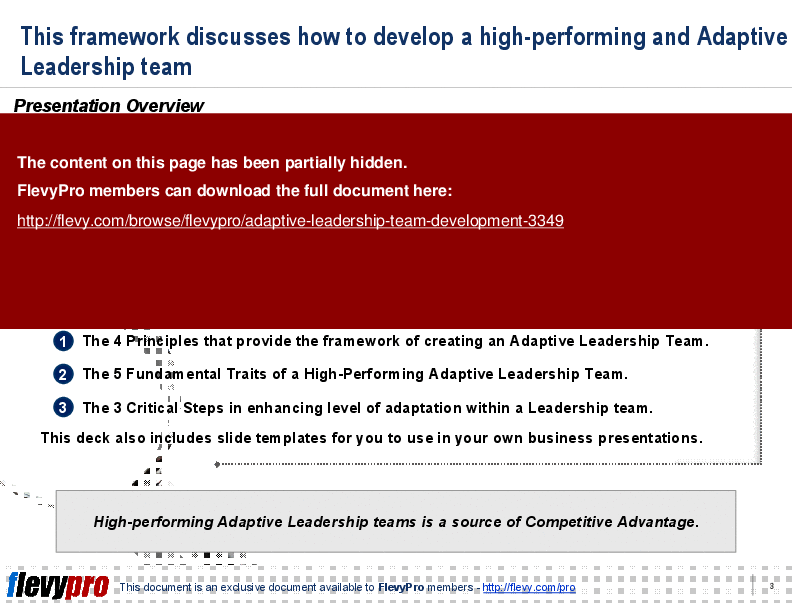
This presentation presents 3 important business frameworks that will prepare our company in our Adaptive Leadership Team Development Journey.
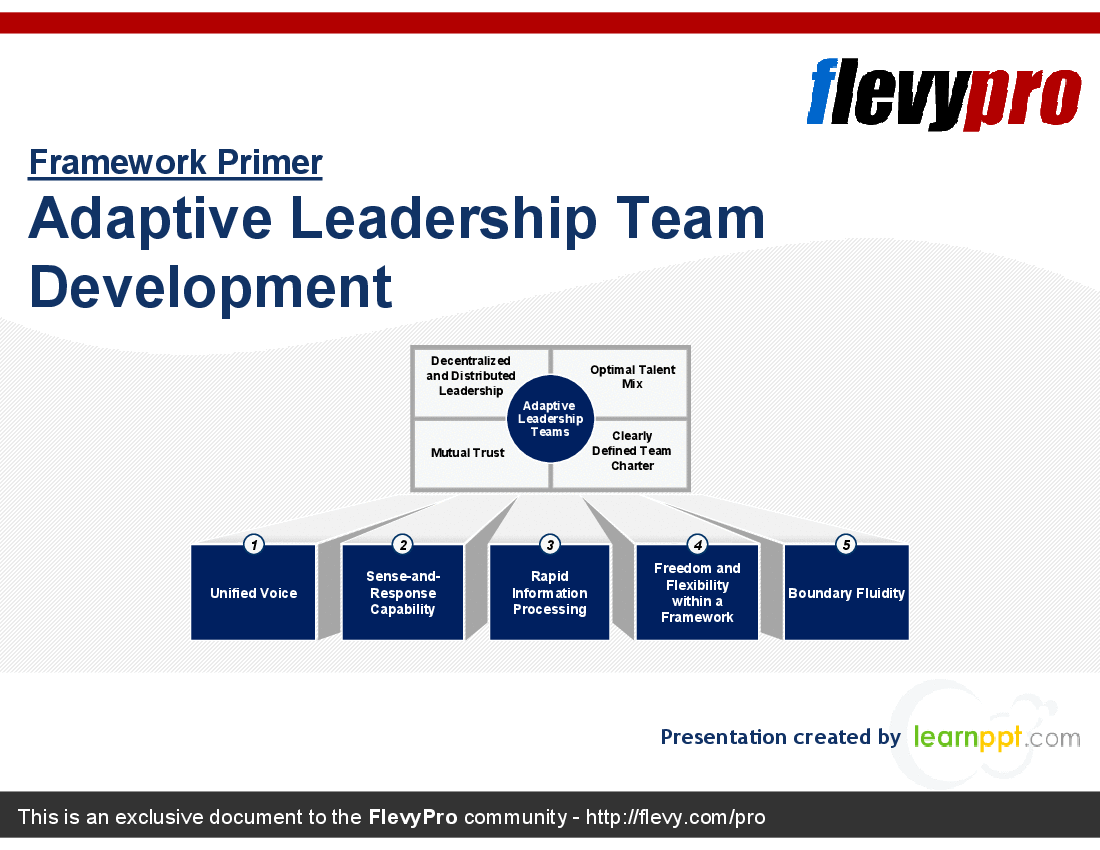
1. The 4 Principles that provide the framework of creating an Adaptive Leadership Team.
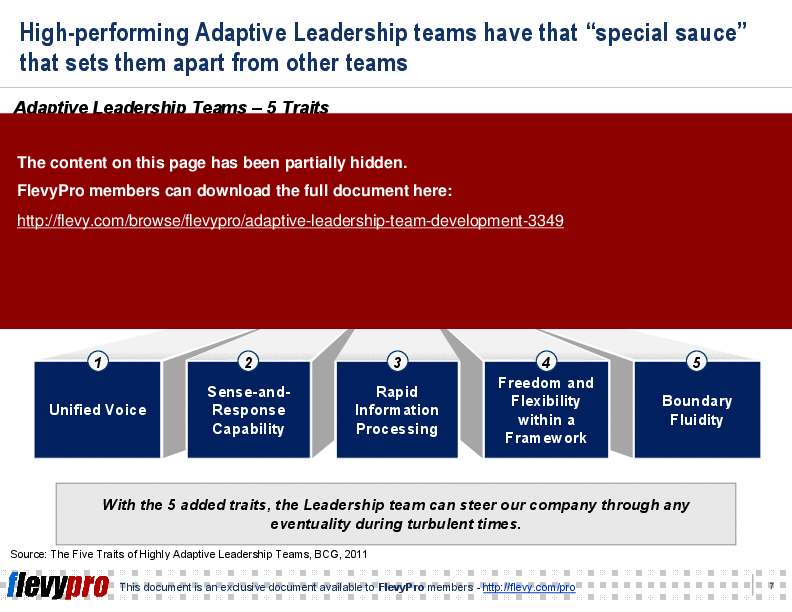
2. The 5 Fundamental Traits of a High-Performing Adaptive Leadership Team.
3. The 3 Critical Steps in enhancing level of adaptation within a Leadership team.
This deck also includes slide templates for you to use in your own business presentations.
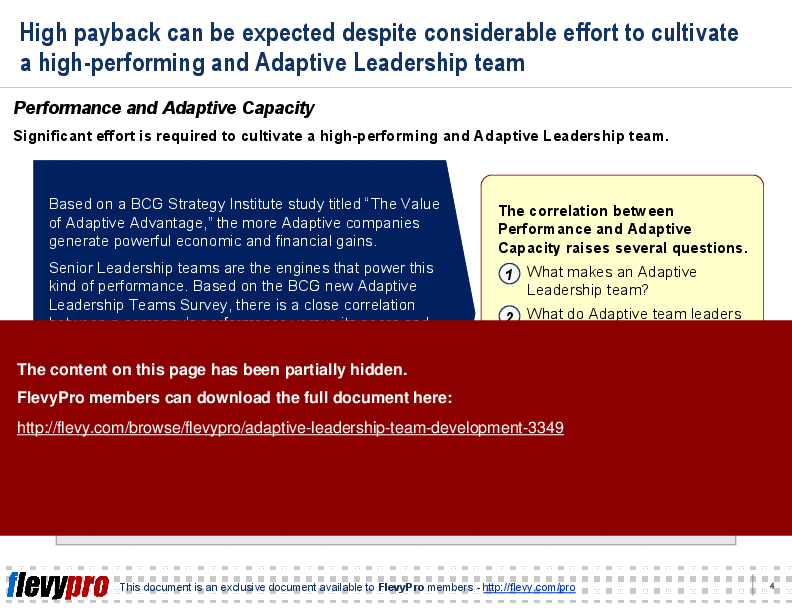
The presentation delves into the correlation between performance and adaptive capacity, highlighting the significant economic and financial gains that adaptive companies can achieve. It references a BCG Strategy Institute study, underscoring the importance of senior leadership teams in driving performance. The PPT also poses critical questions about what makes an adaptive leadership team and how they can enhance their adaptive capacity.
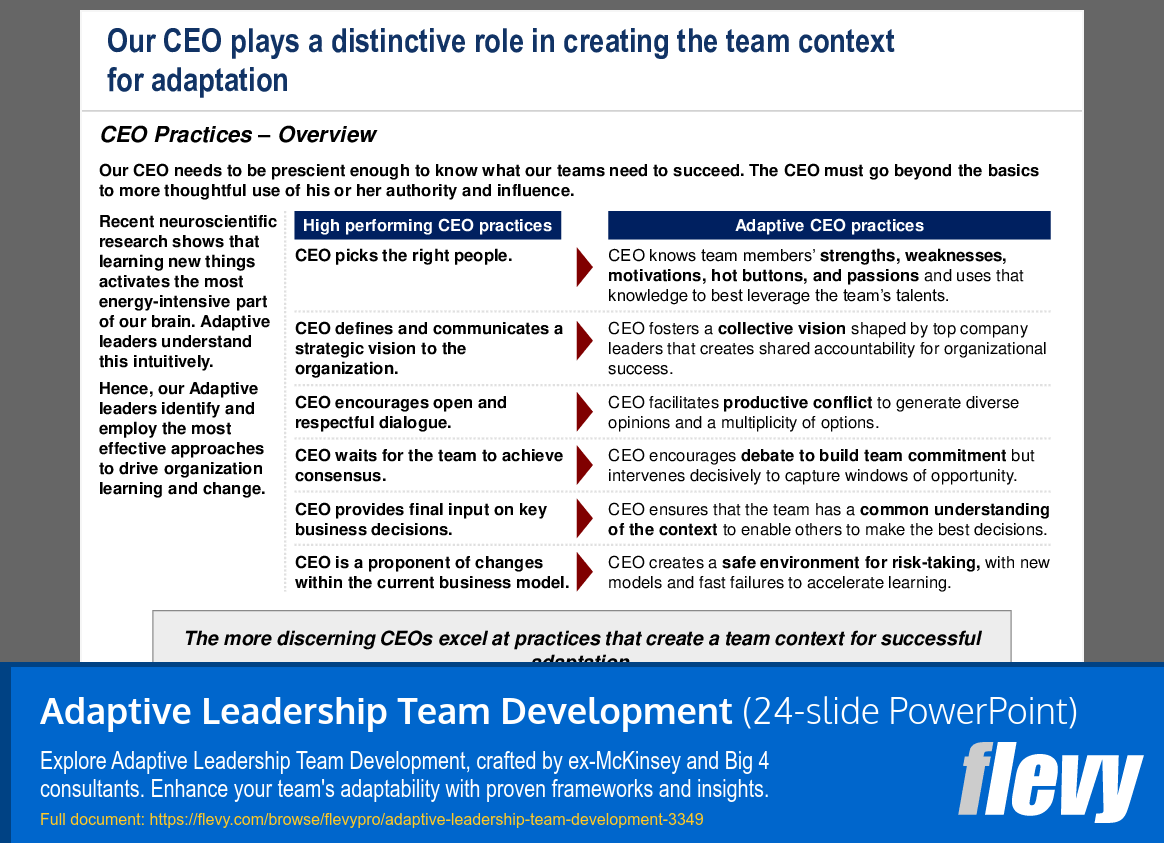
The deck provides actionable insights into CEO practices that foster a conducive environment for adaptation. It outlines the steps adaptive leaders can take to increase their team's adaptability, such as reinforcing teamwork basics, reflecting on leader-team relationships, and assessing performance across adaptive traits. This resource is essential for any executive looking to cultivate a high-performing, adaptive leadership team capable of navigating turbulent business environments.
Got a question about this document? Email us at flevypro@flevy.com.
Executive Summary
The Adaptive Leadership Team Development presentation is designed to equip corporate executives and leadership teams with essential frameworks for enhancing adaptability in a volatile business environment. Developed by former McKinsey and Big 4 consultants, this presentation outlines the critical principles and traits that define high-performing adaptive leadership teams. By implementing these frameworks, organizations can foster a culture of mutual trust, decentralized leadership, and rapid information processing, ultimately leading to improved performance and competitive advantage.
Who This Is For and When to Use
• Corporate executives seeking to enhance team adaptability and performance
• Leadership teams aiming to navigate complex business challenges
• HR and organizational development professionals focused on team dynamics
• Change management leaders looking to instill adaptive practices
• Consultants working with organizations on leadership development
Best-fit moments to use this deck:
• During leadership retreats focused on team development
• In workshops aimed at enhancing organizational adaptability
• When initiating change management initiatives
• For strategic planning sessions to align leadership goals
Learning Objectives
• Define the characteristics of adaptive leadership teams
• Build frameworks for decentralized and distributed leadership
• Establish mutual trust and a unified voice within teams
• Identify and cultivate the 5 fundamental traits of high-performing adaptive teams
• Develop strategies for rapid information processing and decision-making
• Create a clearly defined team charter to guide team dynamics
Table of Contents
• Overview (page 3)
• Adaptive Leadership Teams (page 5)
• Traits of High-performing Adaptive Leadership Teams (page 6)
• CEO Practices (page 15)
• Templates (page 18)
Primary Topics Covered
• Adaptive Leadership Teams - This section introduces the concept of adaptive leadership teams and their significance in today’s business landscape.
• Traits of High-performing Adaptive Leadership Teams - Discusses 5 key traits that distinguish high-performing adaptive teams, including unified voice and boundary fluidity.
• CEO Practices - Outlines effective practices for CEOs to foster an adaptive team environment and enhance team performance.
• Templates - Provides practical templates for implementing the discussed frameworks in organizational settings.
Deliverables, Templates, and Tools
• Framework for decentralized and distributed leadership
• Template for creating a clearly defined team charter
• Guidelines for fostering mutual trust within teams
• Tools for assessing team performance against adaptive traits
• Rapid information processing framework for decision-making
• Template for evaluating CEO practices in team adaptation
Slide Highlights
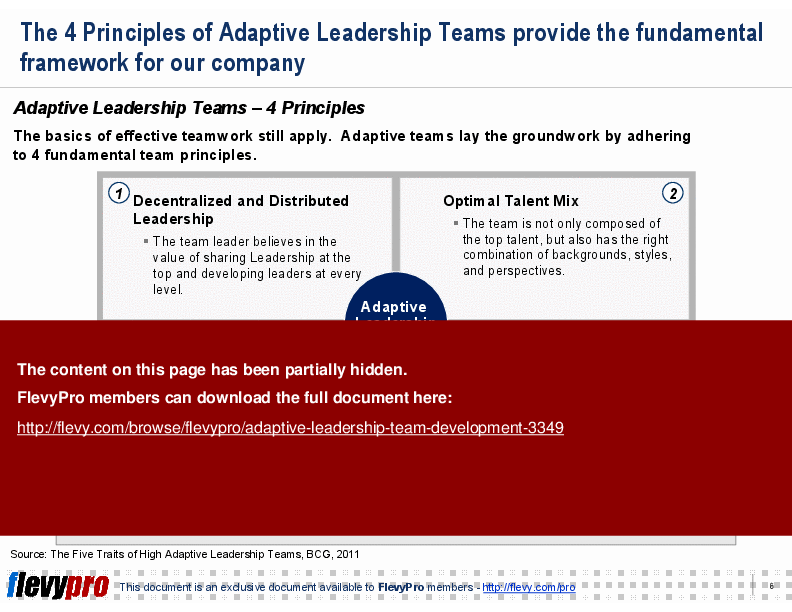
• Overview of the 4 principles of adaptive leadership teams
• Detailed breakdown of the 5 traits of high-performing adaptive teams
• Visual representation of CEO practices that enhance team adaptability
• Practical templates for immediate application in organizational settings
Potential Workshop Agenda
Introduction to Adaptive Leadership (30 minutes)
• Overview of adaptive leadership concepts
• Discussion on the importance of adaptability in leadership
Traits of High-performing Teams (60 minutes)
• Explore the 5 traits of adaptive teams
• Group activities to identify traits within participants' teams
CEO Practices for Adaptation (45 minutes)
• Review effective practices for CEOs
• Role-playing scenarios to apply practices in real-world contexts
Customization Guidance
• Tailor the frameworks to align with your organization’s specific goals and values
• Adjust the templates to incorporate your company’s terminology and metrics
• Modify workshop activities to fit the unique dynamics of your leadership team
Secondary Topics Covered
• The role of decentralized leadership in team effectiveness
• Strategies for fostering a culture of mutual trust
• Techniques for rapid information processing in decision-making
• The importance of boundary fluidity in adaptive teams
Topic FAQ
Document FAQ
These are questions addressed within this presentation.
What is an adaptive leadership team?
An adaptive leadership team is characterized by its ability to respond effectively to changing business environments through decentralized leadership and mutual trust.
How can I assess my team’s adaptability?
Utilize the frameworks and templates provided in this presentation to evaluate your team against the 5 traits of high-performing adaptive teams.
What are the benefits of decentralized leadership?
Decentralized leadership empowers team members at all levels, fostering innovation, agility, and a sense of ownership among team members.
How do I implement the principles outlined in this presentation?
Start by introducing the frameworks in team meetings, followed by workshops that encourage open dialogue and collaboration among team members.
What role does the CEO play in fostering an adaptive team?
The CEO sets the tone for adaptability by selecting the right team members, fostering a collective vision, and creating an environment conducive to open dialogue and risk-taking.
Can these frameworks be applied to any organization?
Yes, the principles of adaptive leadership are applicable across various industries and organizational structures.
How do I create a clearly defined team charter?
Use the provided template to outline goals, roles, ground rules, and accountabilities for your team.
What are the 5 traits of high-performing adaptive teams?
The 5 traits include unified voice, sense-and-response capability, rapid information processing, freedom and flexibility within a framework, and boundary fluidity.
Glossary
• Adaptive Leadership Teams - Teams that can effectively respond to changing business environments.
• Decentralized Leadership - Leadership structure where decision-making is distributed among team members.
• Mutual Trust - The foundation of open communication and collaboration within a team.
• Unified Voice - A consistent articulation of the team’s vision and goals.
• Boundary Fluidity - The ability of team members to shift roles and responsibilities as needed.
• Rapid Information Processing - The capability to synthesize information quickly for decision-making.
• Team Charter - A document that outlines the goals, roles, and responsibilities of a team.
• CEO Practices - Effective strategies employed by CEOs to foster team adaptability.
• Performance and Adaptive Capacity - The relationship between a team's adaptability and its overall performance.
• High-performing Teams - Teams that consistently achieve their goals and adapt to challenges.
• Framework - A structured approach to developing adaptive leadership teams.
• Templates - Tools provided for practical application of the frameworks discussed.
Source: Best Practices in Leadership, Team Building PowerPoint Slides: Adaptive Leadership Team Development PowerPoint (PPT) Presentation Slide Deck, LearnPPT Consulting
Did you need more documents?
Consider a FlevyPro subscription from $39/month. View plans here.
For $10.00 more, you can download this document plus 2 more FlevyPro documents. That's just $13 each.
|
Download our FREE Organization, Change, & Culture, Templates
Download our free compilation of 50+ slides and templates on Organizational Design, Change Management, and Corporate Culture. Methodologies include ADKAR, Burke-Litwin Change Model, McKinsey 7-S, Competing Values Framework, etc. |