 Click main image to view in full screen.
Building a Market Model and Market Sizing – PowerPoint PPTX Template
PowerPoint (PPTX) 22 Slides


MARKET RESEARCH PPT TEMPLATE DESCRIPTION
A key choice in any business strategy is 'where to play'. This understanding the market that the business chooses to compete in with a clear understanding of key customer, geographies, products, growth, value, competitors and shares etc.
A fundamental requirement for any market assessment is the ability to 'size' the market to help a business understand and make choices on the dynamics and drivers mentioned before.
Market sizing is an art – being a mixture of hard data and subjective inputs and having a clear methodology is an essential requirement to ensure these elements are managed correctly.
This powerpoint document is a Market Sizing 101 for those interested in developing a basic framework and methodology to build their skills upon.
This document delves into the objectives of market sizing, providing a structured approach to gathering and validating data from various sources such as industry reports, competitor data, and client financials. It emphasizes the importance of conducting thorough interviews to ensure the accuracy and reliability of the data collected. The step-by-step methodology outlined in this presentation ensures that all relevant segments, time periods, and data details are meticulously considered.
The framework presented in this document guides you through the process of building and structuring a market model, using real-world examples to illustrate key concepts. It covers essential aspects like market volume, retail sales value, wholesale value, and market profit, ensuring a comprehensive understanding of the market landscape. The document also highlights the significance of reviewing and validating data sources to maintain the integrity of the market model.
By following the detailed steps and best practices outlined, executives can make informed decisions based on robust market assessments. This document is an invaluable resource for those looking to enhance their market sizing capabilities and drive strategic growth initiatives.
Got a question about the product? Email us at support@flevy.com or ask the author directly by using the "Ask the Author a Question" form. If you cannot view the preview above this document description, go here to view the large preview instead.
PRESENTATION DEEP DIVE ANALYSIS
This deep-dive analysis was generated from the full 22-slide PowerPoint presentation.
Executive Summary
This presentation titled "Building a Market Model and Market Sizing" is designed to equip corporate executives and consultants with a structured approach to market sizing, akin to McKinsey, Bain, or BCG-quality methodologies (consulting-grade; not affiliated). It provides a comprehensive framework for understanding market dynamics, identifying growth opportunities, and establishing strategic priorities. By utilizing this presentation, users will be able to effectively measure market potential, validate findings through data triangulation, and draw actionable conclusions to inform business strategy.
Who This Is For and When to Use
• Corporate strategists and business development teams assessing new market opportunities
• Market analysts and consultants tasked with conducting market research and sizing
• Product managers looking to prioritize product development based on market potential
• Executives making strategic decisions regarding resource allocation and market entry
Best-fit moments to use this deck:
• During initial market assessments for new product launches or market entries
• When evaluating competitive positioning and identifying potential growth segments
• In strategic planning sessions to align on market opportunities and priorities
Learning Objectives
• Define the objectives and importance of market sizing in strategic planning
• Build a structured market model using a step-by-step approach
• Identify relevant market segments and data sources for effective analysis
• Validate findings through triangulation of multiple data sources
• Draw actionable conclusions from market sizing results to inform business strategy
• Communicate insights effectively to stakeholders for decision-making
Table of Contents
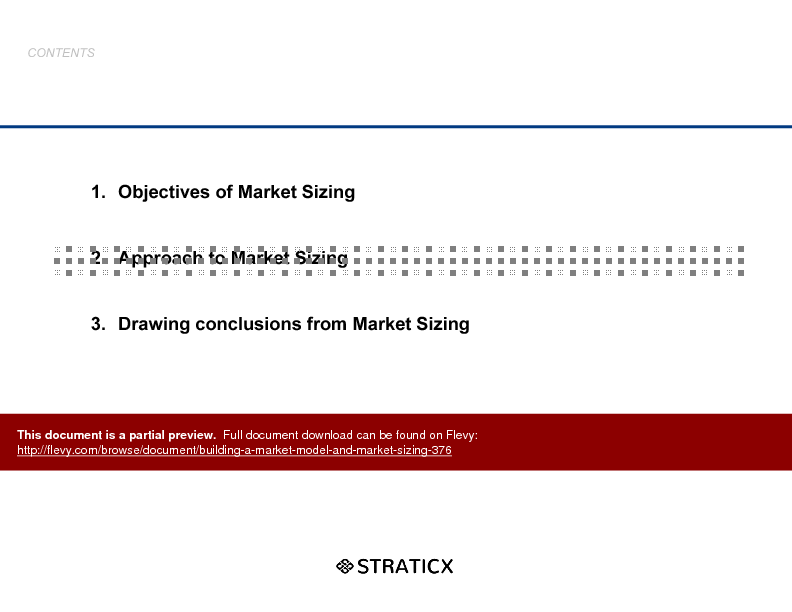
• Objectives of Market Sizing (page 3)
• Approach to Market Sizing (page 5)
• Drawing Conclusions from Market Sizing (page 15)
Primary Topics Covered
• Objectives of Market Sizing - Market sizing helps businesses understand their market environment, identify growth opportunities, measure market potential, and prioritize strategic initiatives.
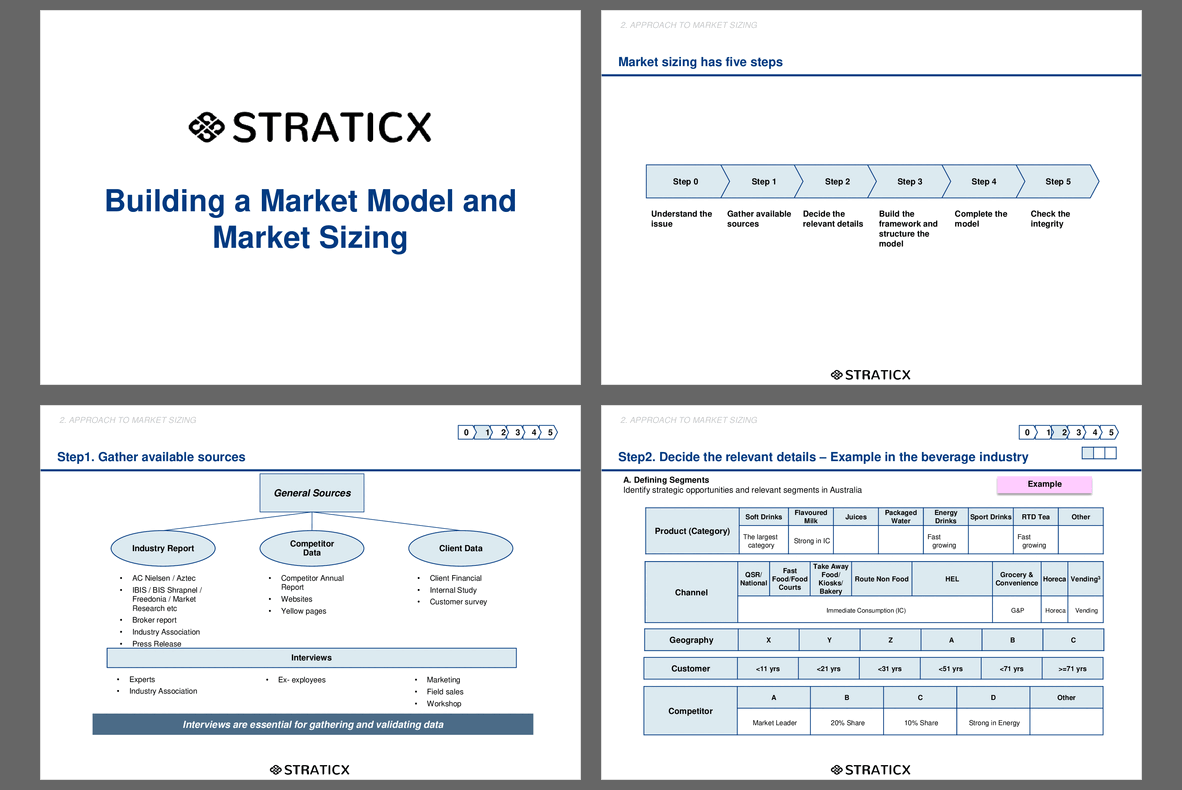
• Approach to Market Sizing - The market sizing process consists of 5 steps: understanding the issue, gathering sources, deciding relevant details, building the model, and checking integrity.
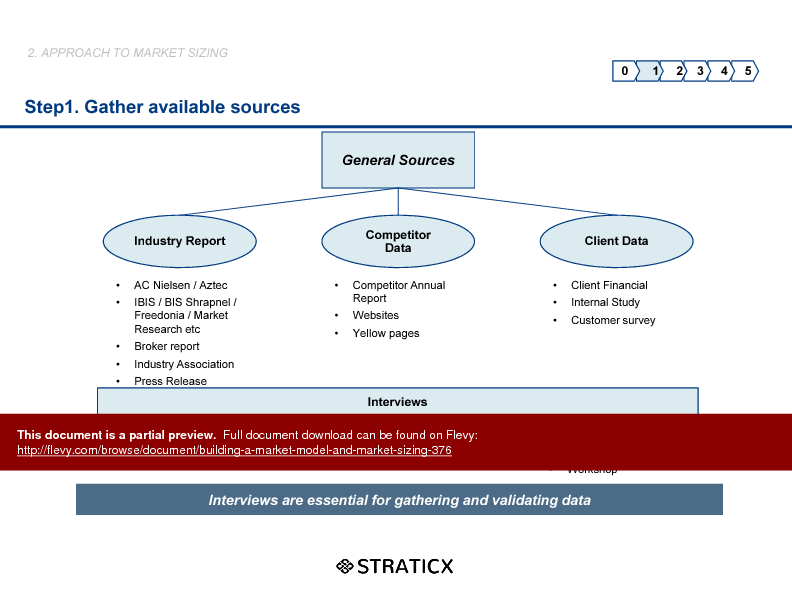
• Data Sources for Market Sizing - Key sources include industry reports, competitor data, client data, and interviews with experts to validate findings.
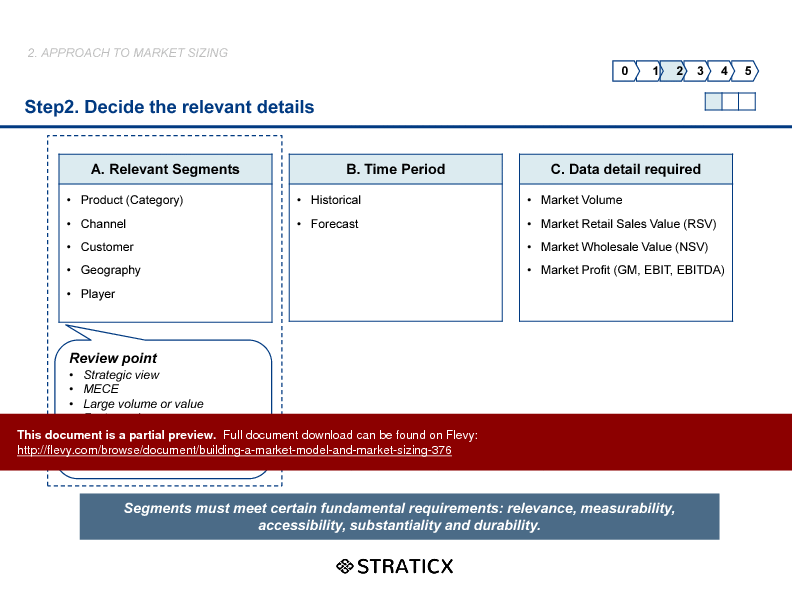
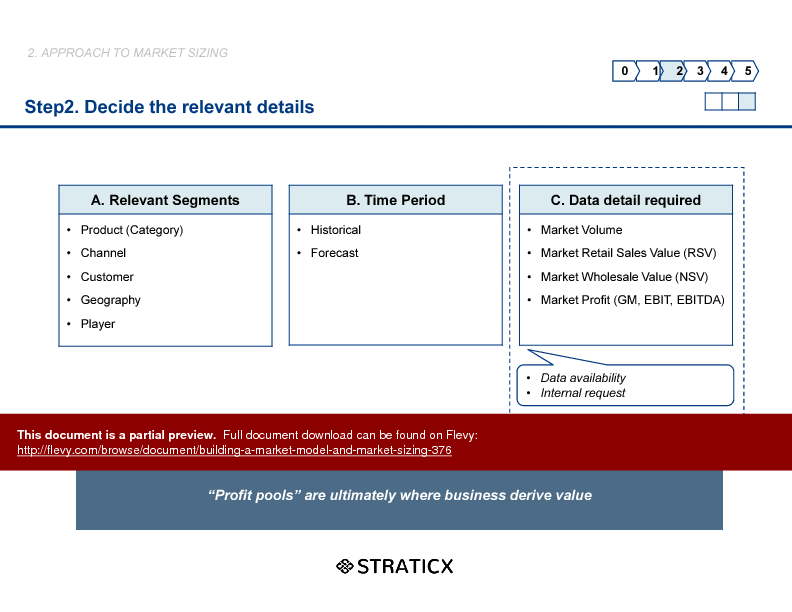
• Relevant Segments - Identifying relevant segments involves categorizing by product, channel, customer, geography, and player to ensure comprehensive market analysis.
• Time Period Considerations - Historical and forecast data are essential for understanding market trends and projecting future growth.
• Model Integrity and Validation - Ensuring the model's integrity through validation of data sources and assumptions is critical for reliable market sizing outcomes.
Deliverables, Templates, and Tools
• Market sizing framework template that outlines the five-step approach
• Data source checklist for gathering relevant market information
• Excel model structure for integrating raw and derived data into a single framework
• Validation checklist for ensuring data integrity and reliability
• Communication plan template for presenting findings to stakeholders
Slide Highlights
• Overview of market sizing objectives emphasizing the importance of understanding market dynamics
• Step-by-step breakdown of the market sizing approach, illustrating each phase of the process
• Examples of relevant segments and data sources for effective market analysis
• Insights on validating findings through triangulation of multiple data points
• Conclusion slide summarizing key findings and actionable initiatives
Potential Workshop Agenda
Market Sizing Overview (60 minutes)
• Discuss the objectives of market sizing and its significance in strategy
• Review the five-step approach to market sizing
Data Gathering Techniques (90 minutes)
• Identify and evaluate various data sources for market analysis
• Conduct brainstorming sessions to gather insights from team members
Building the Market Model (120 minutes)
• Develop a structured market model using Excel
• Validate assumptions and check the integrity of the model
Customization Guidance
• Tailor the market model framework to fit specific industry needs and organizational objectives
• Adjust the data sources checklist based on available internal and external resources
• Modify the communication plan template to align with stakeholder preferences and organizational culture
Secondary Topics Covered
• Importance of triangulating data sources for reliable market sizing
• Strategies for identifying and prioritizing market segments
• Techniques for forecasting market trends based on historical data
• Methods for analyzing competitive positioning within the market
• Best practices for communicating market insights to stakeholders
Topic FAQ
What are the typical steps to build a market sizing model?
A common structured process starts by defining the issue, gathering available data sources, selecting relevant market details, building the framework or Excel model, and finally checking model integrity through validation. Flevy's Building a Market Model and Market Sizing presents this as a five-step approach.Which data sources should I prioritize when estimating market size?
Prioritize industry reports, competitor data, client financials, and expert interviews to cross-check figures and assumptions. The product specifically calls out these sources and provides a data source checklist to guide collection and verification of inputs.How do I validate and ensure integrity of market sizing results?
Validate by triangulating multiple independent sources, challenging assumptions, and using a validation checklist to document checks and sensitivity analysis. The presentation emphasizes triangulation and includes a validation checklist for integrity.How should historical and forecast data be used in market sizing?
Use historical data to identify trends and base rates, then apply forecast data to project future growth and align outcomes with strategic plans. The deck highlights both historical and forecast data as essential for trend analysis and projections.What should I look for when buying a market sizing template or toolkit?
Look for a clear stepwise framework, a data source checklist, an editable Excel model structure, validation/checklists, and templates for stakeholder communication—features that Building a Market Model and Market Sizing explicitly includes.How much time should I allocate to an initial facilitated market sizing workshop?
The sample agenda in the presentation suggests a structured workshop of about 270 minutes total: 60 minutes for overview, 90 minutes for data gathering techniques, and 120 minutes for building the market model, with the model build receiving 120 minutes.I need to size a market after a merger—what practical approach should I follow?
Define the issue, identify relevant segments by product, channel, customer, geography, and player, gather industry and competitor data plus client financials, and triangulate via expert interviews. The material recommends following the five-step approach and segmenting by product and geography.How can an Excel market model capture retail sales, wholesale value, and market profit?
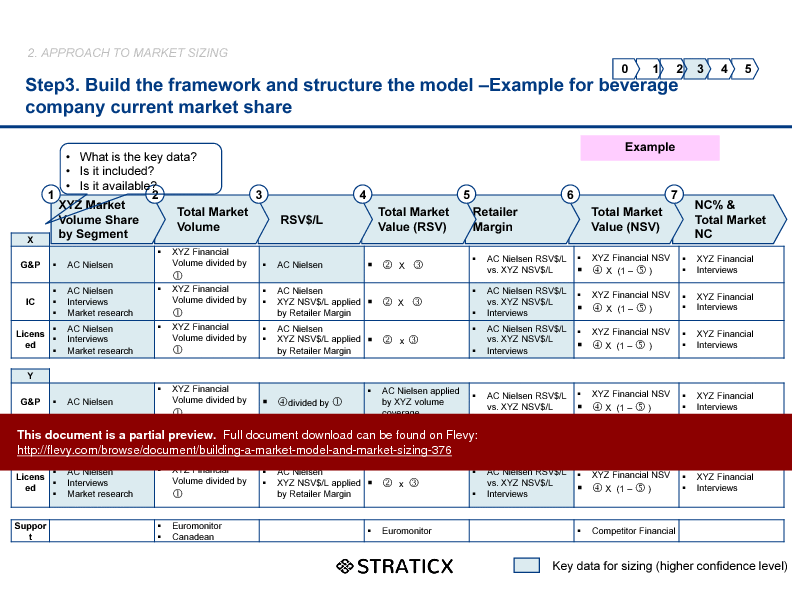
Structure the workbook to integrate raw inputs and derived calculations, separate measures like market volume, retail sales value, wholesale value, and market profit, and include time-period rows for historical and forecast analysis; the presentation supplies an Excel model structure for this purpose.Document FAQ
These are questions addressed within this presentation.
What is the primary objective of market sizing?
Market sizing aims to help businesses understand their market environment, identify growth opportunities, measure market potential, and prioritize strategic initiatives.
What are the key steps in the market sizing approach?
The market sizing approach consists of 5 steps: understanding the issue, gathering available sources, deciding relevant details, building the framework, and checking the integrity of the model.
What types of data sources should be considered for market sizing?
Key data sources include industry reports, competitor data, client financials, and interviews with experts to validate findings.
How can I ensure the integrity of my market model?
Validate and challenge the model's assumptions and data sources throughout the process to ensure reliability and accuracy.
What are relevant segments in market sizing?
Relevant segments can include product categories, distribution channels, customer demographics, geographic regions, and competitive players.
How should historical and forecast data be used in market sizing?
Historical data helps capture trends, while forecast data aligns with strategic plans to project future market growth.
What is the significance of triangulating data sources?
Triangulating data sources enhances the reliability of market sizing results by cross-verifying findings from multiple perspectives.
How can I effectively communicate market sizing findings?
Use a structured communication plan that highlights key insights, conclusions, and actionable initiatives tailored to stakeholder preferences.
Glossary
• Market Sizing - The process of estimating the size and potential of a market for a specific product or service.
• Relevant Segments - Categories used to define and analyze specific parts of the market based on product, channel, customer, geography, or player.
• Triangulation - The method of validating findings by cross-referencing multiple data sources to ensure accuracy.
• Data Integrity - The accuracy and reliability of data used in market analysis and modeling.
• Forecast Data - Projections of future market conditions based on historical trends and strategic planning.
• Historical Data - Past market performance data used to identify trends and inform future projections.
• Competitive Positioning - The process of defining how a business differentiates itself from competitors in the market.
• Excel Model - A structured framework in Excel used to integrate and analyze market data.
• Stakeholder Communication - The process of conveying insights and findings to relevant parties involved in decision-making.
• Market Opportunity - The potential for growth and revenue generation within a specific market segment.
• Assumption Validation - The process of confirming the accuracy of assumptions made during market analysis.
• Strategic Planning - The process of defining an organization's direction and making decisions on allocating resources to pursue that strategy.
MARKET RESEARCH PPT TEMPLATES
Source: Best Practices in Market Research, Market Sizing PowerPoint Slides: Building a Market Model and Market Sizing PowerPoint (PPTX) Presentation Slide Deck, STRATICX




























