
The Lean Leader Green Belt Series are designed and developed specifically for Team Leaders and Supervisors. These series are at a higher standard than the shop floor series. When a staff member completes all the 12 modules he / she can be awarded a "Lean Leader" certificate and can lead his team in the successful application of various Lean principles.
The 12 are modules:
1. Lead Change – 116 slides
2. Implement a Lean System – 44 slides
3. Facilitate Continuous Improvement – 46 slides
4. Problem Solving – 40 slides
5. Lead 5S – 72 slides
6. Improve Cost Factors – 50
7. Facilitate Quick Changeovers – 70 slides
8. Facilitate JIT – 46 slides
9. Facilitate Proactive Maintenance – 82 slides
10. Mistake Proof a Process – 49 slides
11. Facilitate Balanced Scorecard Approach – 37 slides
12. Ensure Process Improvements are Sustained – 49 slides
The 3rd Module "Lead Continuous Improvement" covers the following topics:
• Introduction to Continuous Improvement activities
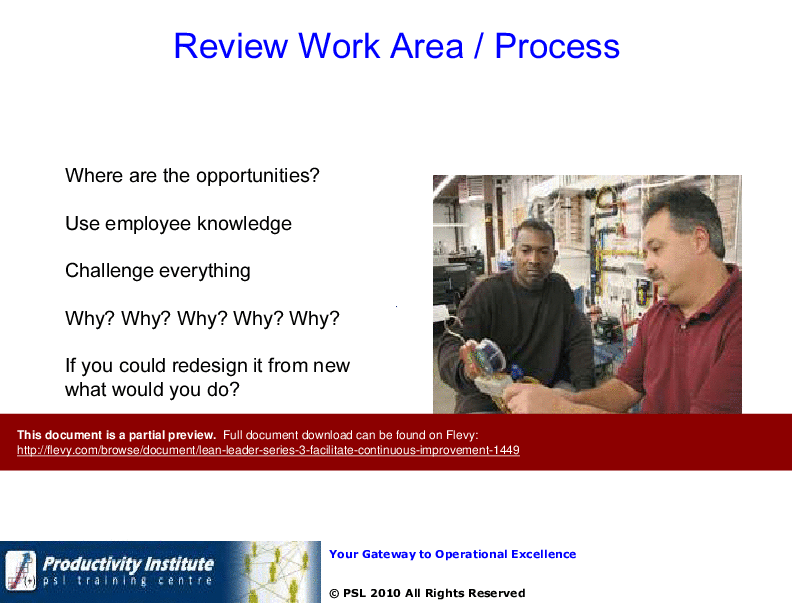
• Identification of areas/processes for improvement
• Methods associated with facilitating continuous improvement
• Workplace projects
You can also buy all the 12 modules at a 25% discounted as a bundled product.
Also add other presentations depending on your requirements, such as Kanban Implementation, Heijunka Implementation, Lean Assessment, and Lean Leader and Lean Culture Surveys.
The "Facilitate Continuous Improvement" module empowers leaders to instill a Kaizen culture within their teams. It emphasizes practical, actionable strategies for identifying improvement opportunities and implementing effective solutions. Participants will engage in hands-on activities that foster collaboration and innovation, ensuring that every team member contributes to the continuous improvement process. This module not only enhances individual skills, but also drives collective accountability, making it essential for organizations aiming for operational excellence.
By integrating quick and easy Kaizen practices, leaders can create an environment where small, incremental changes lead to significant results. The focus on real-world applications and group activities ensures that participants leave with a clear understanding of how to apply these principles in their own workplaces. This module is a vital investment for any organization committed to fostering a culture of continuous improvement and operational efficiency.
Got a question about the product? Email us at support@flevy.com or ask the author directly by using the "Ask the Author a Question" form. If you cannot view the preview above this document description, go here to view the large preview instead.
Executive Summary
The Lean Leader Training Package, Module 3 - Facilitate Continuous Improvement, is designed to empower organizations to cultivate a culture of continuous improvement through the Kaizen methodology. This training equips participants with practical tools and techniques to identify areas for enhancement, implement effective improvement strategies, and sustain operational excellence. By leveraging the PDCA (Plan-Do-Check-Act) cycle, attendees will learn to lock in improvements and foster a collaborative environment that encourages every employee to contribute ideas for process enhancement.
Who This Is For and When to Use
• Continuous Improvement Managers and Leaders
• Operations Managers and Team Leaders
• Quality Assurance Professionals
• Lean Practitioners and Consultants
Best-fit moments to use this deck:
• During team workshops focused on process improvement initiatives
• When launching a new Kaizen program or event
• For training sessions aimed at enhancing employee engagement in continuous improvement
Learning Objectives
• Define the principles of the Kaizen culture and its significance in continuous improvement.
• Identify key areas and processes suitable for improvement within an organization.
• Implement the PDCA cycle effectively to ensure sustainable improvements.
• Facilitate workplace projects that engage employees in continuous improvement activities.
• Develop a structured approach to conducting Kaizen events and activities.
• Create an implementation plan that outlines roles, responsibilities, and timelines for improvement initiatives.
Table of Contents
• Introduction to Continuous Improvement (page 3)
• Kaizen Culture Overview (page 5)
• PDCA Cycle Explanation (page 7)
• Types of Kaizen Activities (page 10)
• Planning and Implementation of Kaizen Events (page 12)
• Follow-Up and Review Processes (page 15)
• Tools and Templates for Continuous Improvement (page 18)
Primary Topics Covered
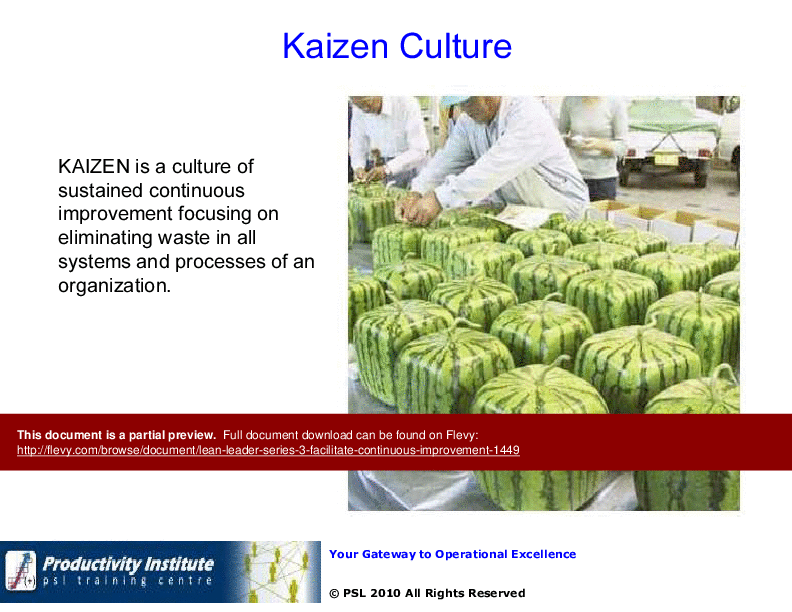
• Kaizen Culture - The Kaizen culture emphasizes gradual, continuous improvement involving all employees to eliminate waste and enhance processes.
• PDCA Cycle - The PDCA cycle serves as a foundational framework for implementing continuous improvement, ensuring that changes are systematically planned, executed, checked, and acted upon.
• Types of Kaizen Activities - Various Kaizen activities, including Quick and Easy Kaizen and Kaizen Events, provide structured approaches for continuous improvement.
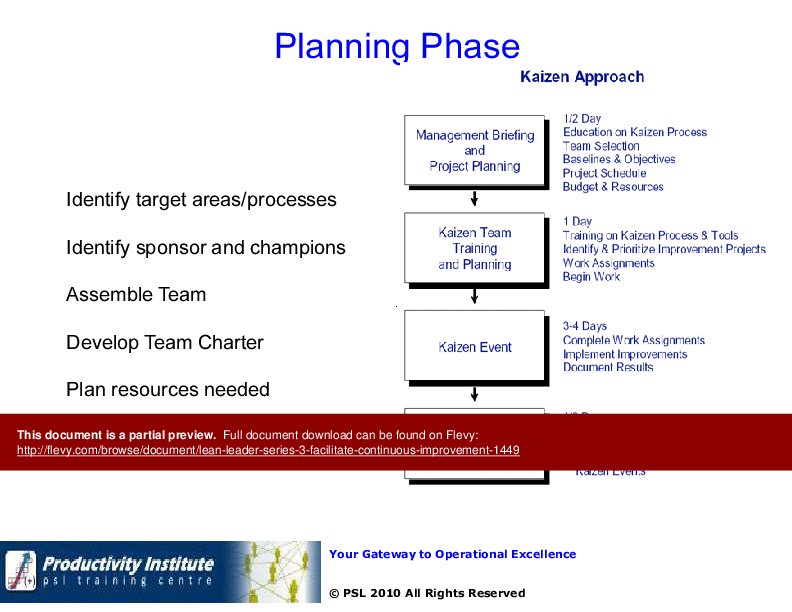
• Planning Phase for Kaizen Events - Identifying target areas, assembling teams, and developing charters are critical steps in planning effective Kaizen events.
• Implementation Strategies - Techniques for executing improvement initiatives, including setting clear goals and measuring progress, are essential for success.
• Celebrating Success - Recognizing and celebrating improvements fosters a positive environment and encourages ongoing participation in continuous improvement efforts.
Deliverables, Templates, and Tools
• Improvement Opportunity Sheet for documenting potential enhancements.
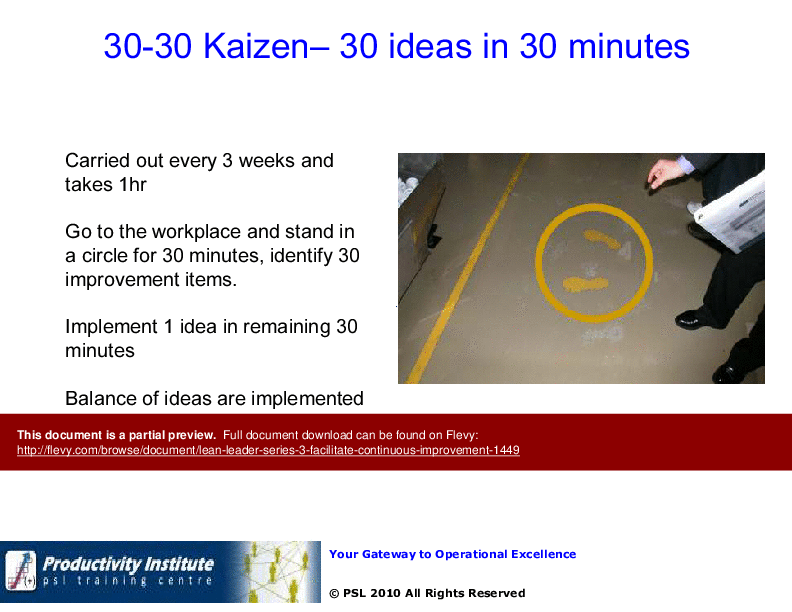
• 30-30 Kaizen Check Sheet for tracking quick improvement ideas.
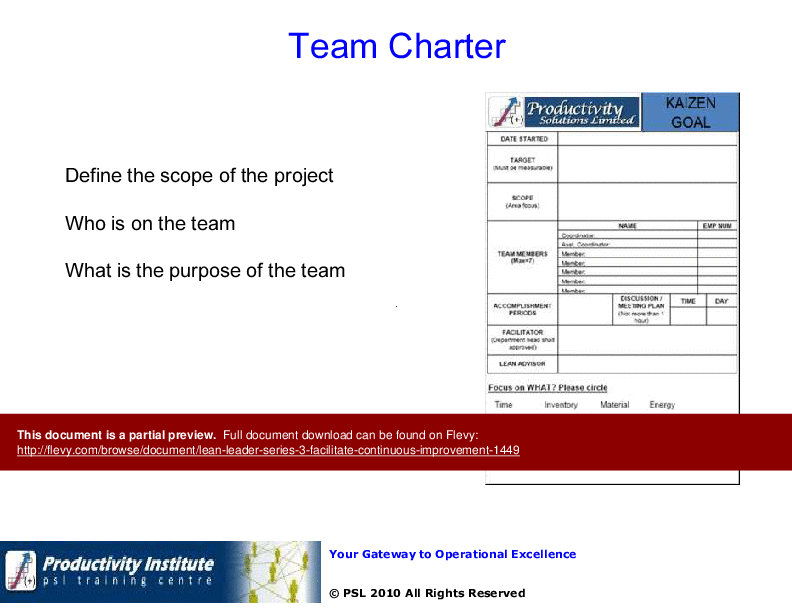
• Kaizen Team Charter template to define project scope and team roles.
• Action Plan template for outlining implementation steps and responsibilities.
Slide Highlights
• Overview of the Kaizen culture and its impact on organizational improvement.
• Detailed explanation of the PDCA cycle as a continuous improvement tool.
• Examples of successful Quick and Easy Kaizen initiatives.
• Framework for planning and executing effective Kaizen events.
• Strategies for measuring and celebrating improvement successes.
Potential Workshop Agenda
Kaizen Introduction Session (90 minutes)
• Discuss the principles of Kaizen and its relevance to continuous improvement.
• Engage in group activities to identify potential improvement areas.
Kaizen Event Planning Session (120 minutes)
• Develop team charters and identify target processes for improvement.
• Plan resources and outline the implementation strategy for Kaizen events.
Follow-Up and Review Session (60 minutes)
• Review progress on implemented Kaizen activities and gather feedback.
• Discuss outcomes and lessons learned from the Kaizen initiatives.
Customization Guidance
• Tailor the training materials to reflect specific organizational processes and terminology.
• Adjust the Kaizen event planning templates to align with company goals and resources.
• Incorporate real-world examples from the organization to enhance relatability and engagement.
Secondary Topics Covered
• Employee engagement strategies in continuous improvement.
• Techniques for identifying and eliminating waste in processes.
• Best practices for sustaining improvements over time.
• Methods for fostering a culture of continuous improvement organization-wide.
Topic FAQ
Document FAQ
These are questions addressed within this presentation.
What is Kaizen?
Kaizen is a Japanese term that signifies gradual and continuous improvement, involving all employees in enhancing processes without significant capital investment.
How does the PDCA cycle work?
The PDCA cycle consists of 4 stages: Plan, Do, Check, and Act, which together create a systematic approach for implementing and sustaining improvements.
What are Quick and Easy Kaizen activities?
These are small, daily improvement suggestions made by employees that can lead to significant enhancements when aggregated over time.
How long does a Kaizen event typically last?
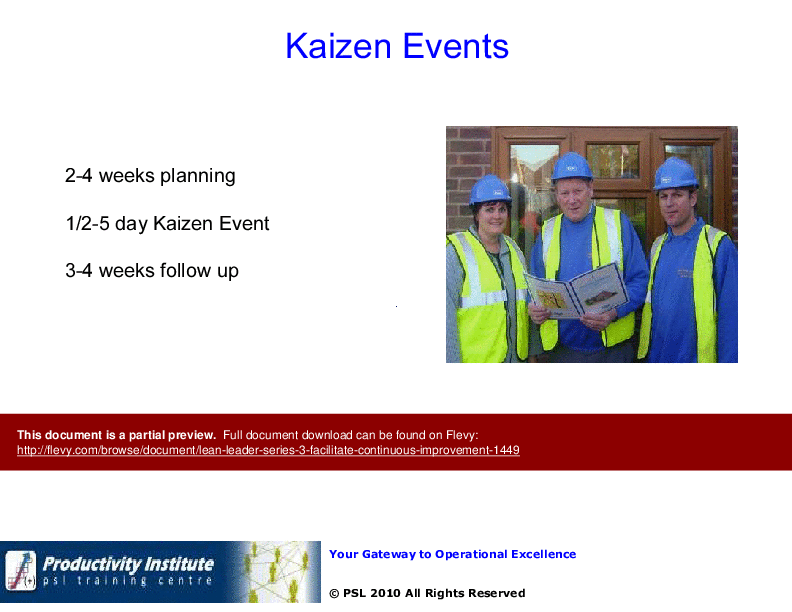
Kaizen events generally require 2-4 weeks of planning and can last from half a day to 5 days, followed by 3-4 weeks of follow-up.
What tools are included in the training package?
The training package includes templates such as the Improvement Opportunity Sheet, Kaizen Team Charter, and Action Plan to facilitate continuous improvement efforts.
How can we measure the success of Kaizen initiatives?
Success can be measured through key performance indicators such as quality, cost savings, throughput, and employee engagement metrics.
What role do team members play in Kaizen events?
Team members are responsible for identifying improvement opportunities, participating in planning and execution, and monitoring progress throughout the event.
How can we encourage employee participation in Kaizen activities?
Fostering a culture of recognition and providing platforms for sharing ideas can significantly enhance employee engagement in Kaizen initiatives.
Glossary
• Kaizen - Continuous improvement methodology focusing on small, incremental changes.
• PDCA Cycle - A four-step process (Plan-Do-Check-Act) for continuous improvement.
• Quick and Easy Kaizen - Daily improvement suggestions made by employees.
• Kaizen Event - A focused improvement initiative typically lasting several days.
• Team Charter - A document outlining the scope, goals, and members of a Kaizen team.
• Improvement Opportunity Sheet - A tool for documenting potential areas for enhancement.
• Action Plan - A structured outline of tasks, responsibilities, and timelines for implementing improvements.
• Waste - Any activity that does not add value to a process or product.
• Employee Engagement - The level of commitment and involvement an employee has towards their organization and its values.
• Continuous Improvement - Ongoing efforts to improve products, services, or processes.
• Performance Indicators - Metrics used to measure the success of an organization in achieving its objectives.
• Lean - A systematic approach to minimizing waste within a manufacturing system without sacrificing productivity.
• Value Stream Mapping - A visual tool used to analyze and design the flow of materials and information required to bring a product to a customer.
• 5S - A methodology that focuses on organizing and managing the workspace and work flow effectively and efficiently.

• Mistake Proofing - Techniques used to prevent errors in processes.
• Flow - The smooth and efficient movement of products or information through a process.
• OEE (Overall Equipment Effectiveness) - A measure of how well a manufacturing operation is utilized compared to its full potential.
• DIFOTIS (Delivery In Full On Time In Specification) - A metric that measures the reliability of delivery performance.
• Team Building - Activities that promote cooperation and teamwork among employees.
• Standard Work - Documented procedures that define the most efficient way to perform a task.
Source: Best Practices in Kaizen, Continuous Improvement PowerPoint Slides: Lean Leader GB Series 3 - Facilitate Continuous Improvement PowerPoint (PPTX) Presentation Slide Deck, OpEx Academy NZ
This document is available as part of the following discounted bundle(s):
Save %!
Lean Leader / Green Belt Training Series - 12 Modules
This bundle contains 12 total documents. See all the documents to the right.
|
Receive our FREE presentation on Operational Excellence
This 50-slide presentation provides a high-level introduction to the 4 Building Blocks of Operational Excellence. Achieving OpEx requires the implementation of a Business Execution System that integrates these 4 building blocks. |