
Lean Leader GB Series 6 - Improve Cost Factors   50-slide PPT PowerPoint presentation slide deck (PPTX)
$29.00

Lean Leader GB Series 6 - Improve Cost Factors (50-slide PPT PowerPoint presentation slide deck (PPTX)) Preview Image
Log in to unlock full preview.
Lean Leader GB Series 6 - Improve Cost Factors (50-slide PPT PowerPoint presentation slide deck (PPTX)) Preview Image
Arrow   Click main image to view in full screen.

Lean Leader GB Series 6 - Improve Cost Factors (PowerPoint PPTX Slide Deck)

PowerPoint (PPTX) 50 Slides

$29.00
This presentation is developed by a pioneer in Lean and certified LSS Master Black Belt who has trained over 5,000+ students globally, from Directors, CEOs, GMs, to shop floor staff. He's endorsed by CMI Consortium, NZTE, HERA, NZPICS, CBAFF.
Add to Cart


Immediate download
Fully editable PowerPoint
Free lifetime updates

BENEFITS OF THIS POWERPOINT DOCUMENT

  1. Understand what drives cost and how to reduce it

PPT DESCRIPTION

Editor Summary Lean Leader GB Series 6 - Improve Cost Factors is a 50-slide PowerPoint (PPTX) training module from OpEx Academy NZ, developed by a Lean pioneer and certified LSS Master Black Belt who has trained over 5,000 students and is endorsed by CMI Consortium, NZTE, HERA, NZPICS, and CBAFF. Read more

The Lean Leader Green Belt Series are designed and developed specifically for Team Leaders and Supervisors. These series are at a higher standard than the shop floor series. When a staff member completes all the 12 modules he / she can be awarded a "Lean Leader" certificate and can lead his team in the successful application of various Lean principles.

The 12 are modules:
1. Lead Change – 116 slides
2. Implement a Lean System – 44 slides
3. Facilitate Continuous Improvement – 46 slides
4. Problem Solving – 40 slides
5. Lead 5S – 72 slides
6. Improve Cost Factors – 50
7. Facilitate Quick Changeovers – 70 slides
8. Facilitate JIT – 46 slides
9. Facilitate Proactive Maintenance – 82 slides
10. Mistake Proof a Process – 49 slides
11. Facilitate Balanced Scorecard Approach – 37 slides
12. Ensure Process Improvements are Sustained – 49 slides

The 6th Module "Improve Cost Factors" covers the following topics:
•  Introduction to Cost Factors in the Workplace
•  Identification of activities for improvement
•  Methods associated with controlling and reducing costs
•  Justifying changes in the workplace
•  Workplace projects

You can also buy all the 12 modules at a 25% discounted as a bundled product.
Also add other presentations depending on your requirements, such as Kanban Implementation, Heijunka Implementation, Lean Assessment, and Lean Leader and Lean Culture Surveys.

Got a question about the product? Email us at support@flevy.com or ask the author directly by using the "Ask the Author a Question" form. If you cannot view the preview above this document description, go here to view the large preview instead.

MARCUS OVERVIEW

This synopsis was written by Marcus [?] based on the analysis of the full 50-slide presentation.


Executive Summary
The Lean Leader Training Package, Module 6 - Improve Cost Factors, is designed to equip teams with the knowledge and tools necessary to identify, analyze, and reduce costs within their work practices. This module emphasizes the importance of understanding cost factors in manufacturing and service environments, enabling participants to implement effective strategies for cost control and continuous improvement. By applying Lean principles, teams will learn how to justify changes that enhance productivity, quality, and profitability.

Who This Is For and When to Use
•  Team leaders and managers responsible for operational efficiency
•  Continuous improvement practitioners seeking to reduce costs
•  Employees involved in process optimization and waste reduction
•  Finance and operations teams focused on cost management

Best-fit moments to use this deck:
•  During team training sessions aimed at improving cost awareness
•  When initiating workplace projects focused on cost reduction
•  In strategic planning meetings to align cost management with business goals

Learning Objectives
•  Define key cost factors and their impact on business operations
•  Identify activities within work practices that can be improved for cost efficiency
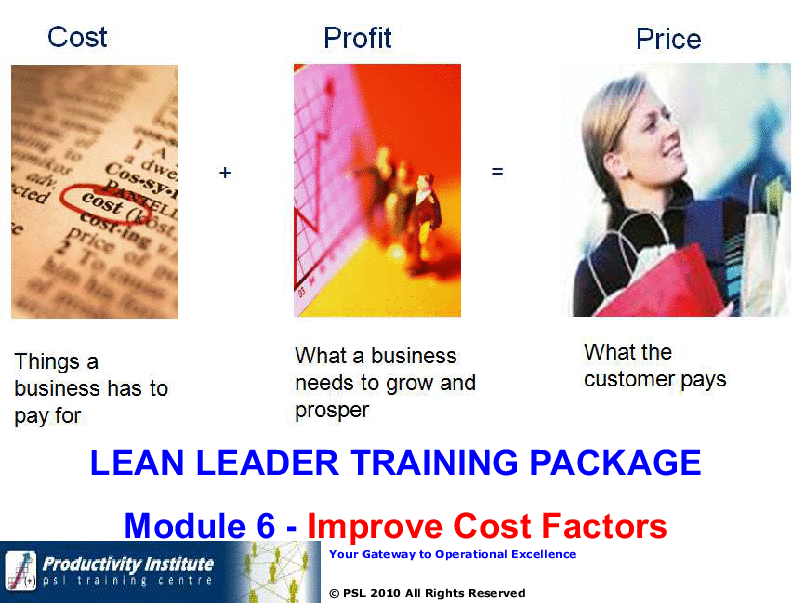
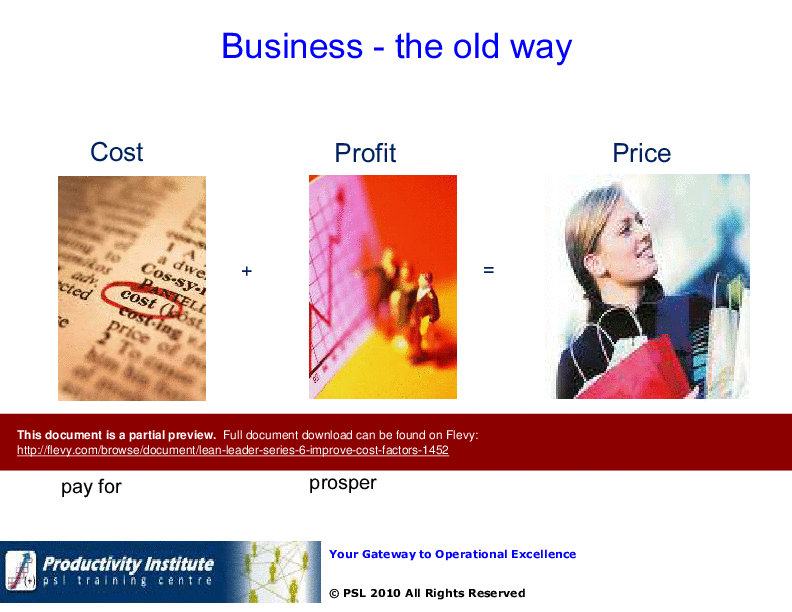
•  Analyze the relationship between costs, pricing, and profitability
•  Justify necessary changes to stakeholders by demonstrating cost-benefit analysis
•  Implement strategies for controlling and reducing operational costs
•  Measure the impact of cost reduction initiatives on overall performance

Table of Contents
•  Introduction to Cost Factors (page 3)
•  Identifying Activities for Improvement (page 5)
•  Methods for Controlling Costs (page 8)
•  Justifying Changes in the Workplace (page 12)
•  Group Activities and Case Studies (page 15)
•  Measuring Results and Continuous Improvement (page 20)

Primary Topics Covered
•  Cost Factors in Business - Understanding how costs affect profit and pricing strategies is essential for operational success.
•  Identifying Waste - Recognizing activities that do not add value helps in pinpointing areas for improvement.
•  Cost of Defects - Analyzing the financial impact of defects and rework on overall costs is crucial for quality management.
•  Cost of Overproduction - Evaluating the implications of producing more than necessary and its effects on inventory and cash flow.
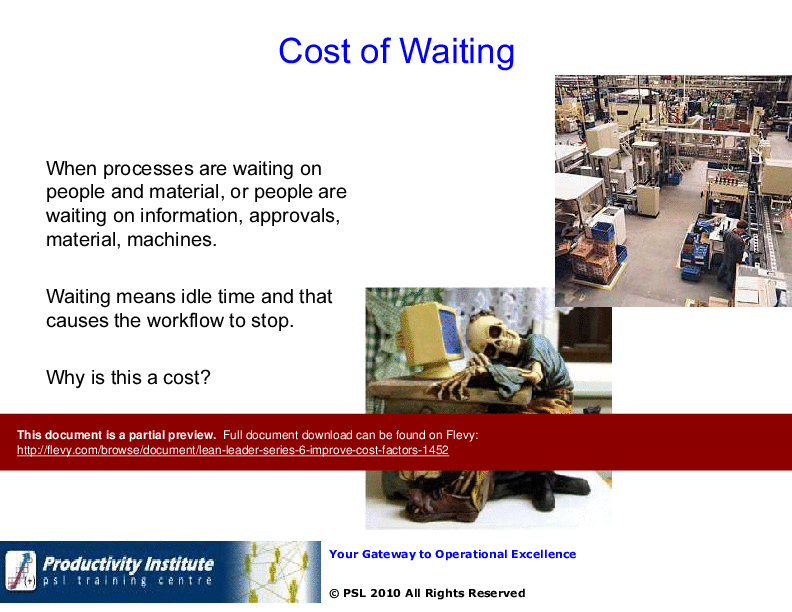
•  Cost of Waiting - Understanding how idle time impacts workflow and productivity, leading to increased costs.
•  Environmental Costs - Addressing costs associated with waste management and energy consumption to promote sustainability.

Deliverables, Templates, and Tools
•  Cost identification form for analyzing cost components
•  Cost benefit analysis template to evaluate proposed changes
•  Implementation checklist to ensure all steps are followed during cost reduction projects
•  Project evidence documentation for tracking progress and results
•  Group activity worksheets for collaborative cost analysis

Slide Highlights
•  Overview of cost factors and their significance in business operations
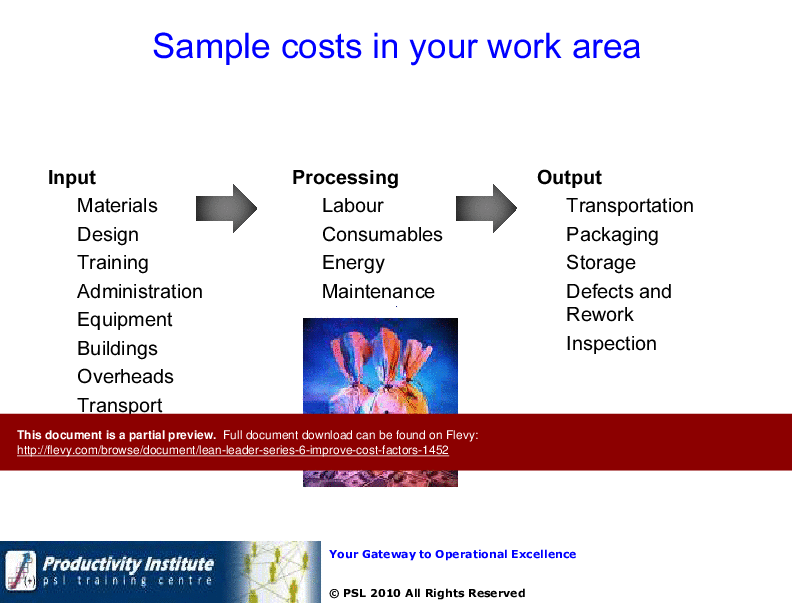
•  Visual representation of typical manufacturing costs, emphasizing labor and materials
•  Group activity slides that encourage team participation in identifying cost components
•  Case studies illustrating successful cost reduction strategies in various industries
•  Measurement metrics for evaluating the success of cost reduction initiatives

Potential Workshop Agenda
Introduction to Cost Factors (30 minutes)
•  Discuss the importance of understanding cost factors
•  Review key concepts and definitions

Group Activity: Identifying Costs (45 minutes)
•  Break into teams to categorize costs in their work areas
•  Present findings to the larger group

Methods for Cost Control (30 minutes)
•  Explore various strategies for managing and reducing costs
•  Discuss real-world applications and case studies

Wrap Up and Next Steps (15 minutes)
•  Summarize key takeaways from the session
•  Outline action items for implementing cost reduction strategies

Customization Guidance
•  Tailor the cost identification form to reflect specific industry terminology and cost components relevant to your organization
•  Adjust the cost benefit analysis template to include metrics that align with your business goals
•  Modify group activities to focus on particular challenges faced by your team or department

Secondary Topics Covered
•  Fixed vs. Variable Costs
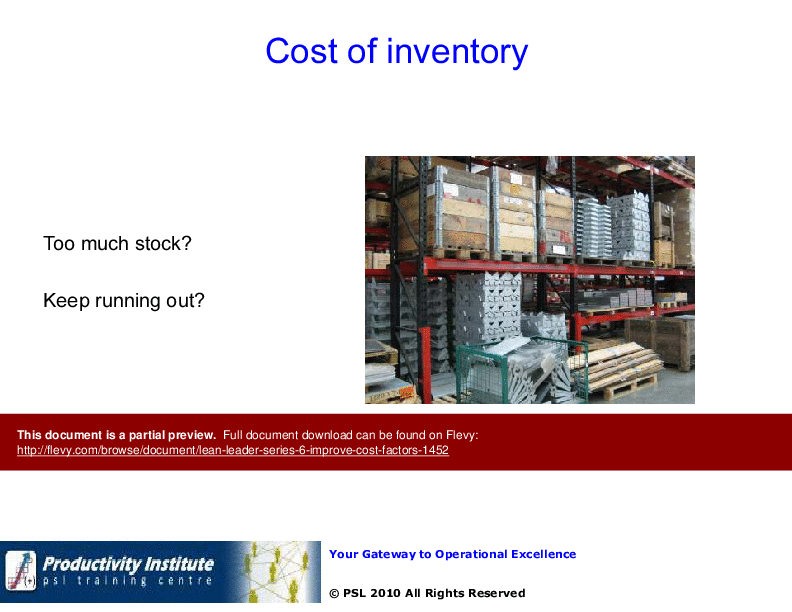
•  Impact of Inventory Management on Costs
•  Strategies for Effective Resource Utilization
•  Importance of Employee Engagement in Cost Reduction
•  Environmental Sustainability and Cost Efficiency

Topic FAQ

What are the primary cost factors I should consider in my workplace?

Primary cost factors commonly include labor, materials, overhead, and energy consumption; these elements drive product and service costs and influence pricing and profitability. The Lean Leader GB Series 6 highlights labor, materials, overhead, and energy consumption.

Which types of waste tend to drive the biggest cost increases?

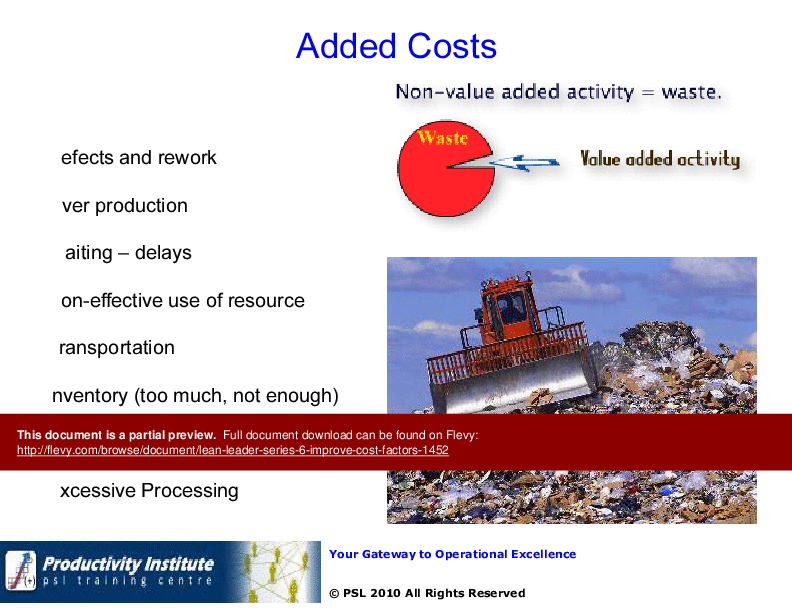
Typical wastes that increase costs include defects, overproduction, waiting, non-effective use of resources, transportation, inventory, motion, and excessive processing; identifying these wastes helps target improvement efforts. Common wastes listed include defects and overproduction.

How can I measure whether a cost-reduction initiative is working?

Measure changes in unit costs, material costs, labor hours per unit, and maintenance costs to assess impact on efficiency and total cost. The module recommends tracking unit costs and labor hours per unit.

What’s the best way to justify a process change to stakeholders?

Prepare a clear cost-benefit analysis showing expected savings, productivity improvements, and performance impact; include implementation steps and evidence requirements to build confidence. The resource provides a cost benefit analysis template.

What should I look for in a Lean cost-reduction training deck for supervisors?

Look for practical workshop content, templates for cost identification and cost-benefit analysis, group activities, and customization guidance so supervisors can apply learnings to their environment. A useful deck includes 50 slides and a cost identification form.

How much time should I plan for a typical cost-reduction workshop?

A sample workshop agenda in the module allocates time for introduction, a 45-minute group activity, methods discussion, and wrap-up; the suggested agenda totals about a two-hour (120-minute) session. The sample agenda totals 120 minutes.

I need to run a session to identify shop-floor cost drivers—what activities work best?

Break into teams to map and categorize costs in work areas, use a cost identification form to capture components, and have teams present findings for discussion and prioritization. The module prescribes a 45-minute group activity using a cost identification form.

How can Lean tools help reduce environmental costs like energy and waste disposal?

Apply waste-identification exercises to capture environmental cost components, track energy consumption and waste-management expenses, and prioritize improvements that reduce resource use and disposal costs. The module addresses environmental costs via energy consumption metrics.

Document FAQ
These are questions addressed within this presentation.

What are the key cost factors to consider in my workplace?
Key cost factors include labor, materials, overhead, and energy consumption. Understanding these will help identify areas for improvement.

How can I justify cost reduction initiatives to my team?
Present a clear cost-benefit analysis that outlines potential savings, productivity improvements, and the overall impact on business performance.

What methods can I use to measure the success of cost reduction efforts?
Track unit costs, material costs, labor hours per unit, and maintenance costs to evaluate the effectiveness of implemented changes.

How do I engage my team in identifying cost-saving opportunities?
Facilitate group activities that encourage collaboration and brainstorming, allowing team members to share insights and experiences.

What are common types of waste to look for?
Common types of waste include defects, overproduction, waiting, non-effective use of resources, transportation, inventory, motion, and excessive processing.

How can I ensure continuous improvement in cost management?
Establish a culture of continuous improvement by regularly reviewing processes, encouraging feedback, and adapting strategies based on results.

What is the role of leadership in cost reduction initiatives?
Leadership plays a crucial role in setting the vision, providing resources, and fostering an environment that supports cost-saving efforts.

How often should I review cost management strategies?
Regular reviews should be conducted quarterly or bi-annually to assess progress and make necessary adjustments to strategies.

Glossary
•  Cost Factors - Elements that contribute to the total expenses incurred in production or service delivery.
•  Waste - Activities that do not add value and increase costs or time.
•  Cost-Benefit Analysis - A systematic approach to estimating the strengths and weaknesses of alternatives.
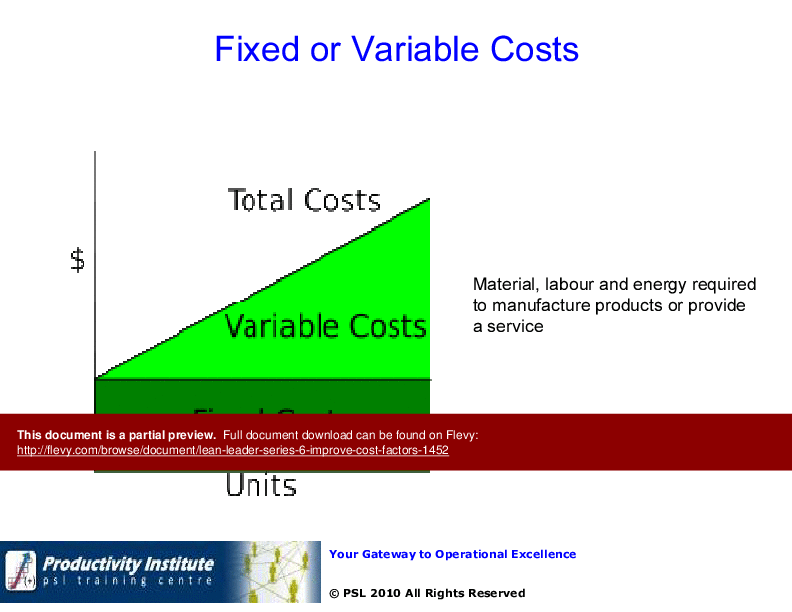
•  Fixed Costs - Costs that do not change with the level of production or sales.
•  Variable Costs - Costs that vary directly with the level of production.
•  Lean Principles - Methodologies aimed at minimizing waste while maximizing productivity.
•  Continuous Improvement - Ongoing efforts to enhance products, services, or processes.
•  Defects - Products or services that do not meet quality standards, resulting in rework or scrap.
•  Overproduction - Producing more than what is needed, leading to excess inventory.
•  Idle Time - Periods when resources are not being utilized effectively.
•  Environmental Costs - Expenses related to waste management and energy consumption.
•  Process Costs - Costs associated with the activities involved in producing a product or service.
•  Product Costs - Costs that are directly tied to the production of goods.
•  Business Overheads - Indirect costs that are not directly tied to production, but are necessary for business operations.
•  Resource Utilization - The effective use of resources to maximize productivity and minimize waste.
•  Stakeholders - Individuals or groups with an interest in the outcome of a project or initiative.
•  Implementation Plan - A detailed outline of the steps required to execute a project or initiative.
•  Cost Reduction - Strategies aimed at lowering expenses while maintaining quality and efficiency.
•  Profit Margin - The difference between the cost of producing a product and its selling price.
•  Operational Efficiency - The ability to deliver products or services in the most cost-effective manner without compromising quality.

Source: Lean Leader GB Series 6 - Improve Cost Factors PowerPoint (PPTX) Presentation Slide Deck, OpEx Academy NZ


$29.00
This presentation is developed by a pioneer in Lean and certified LSS Master Black Belt who has trained over 5,000+ students globally, from Directors, CEOs, GMs, to shop floor staff. He's endorsed by CMI Consortium, NZTE, HERA, NZPICS, CBAFF.
Add to Cart
  

ABOUT THE AUTHOR

Author image
Additional documents from author: 88

Vishnu Rayapeddi is an experienced management consultant and trainer specializing in implementing continuous process improvements. Vishnu is a pioneer in Lean Management which combines the power of Lean Thinking, TOC, Six Sigma, TQM, TWI, Balanced Scorecard, cGMP and other best-class methodologies such as, DMAIC, Value Stream Mapping, Root Cause Analysis, 5S, Quick Changeovers, Quality and ... [read more]

Ask the Author a Question

You must be logged in to contact the author.

Click here to log in Click here register

Did you know?
The average daily rate of a McKinsey consultant is $6,625 (not including expenses). The average price of a Flevy document is $65.

Bundle and save! You can save up to % with bundles!

View bundle(s)


Trusted by over 10,000+ Client Organizations
Since 2012, we have provided business templates to over 10,000 businesses and organizations of all sizes, from startups and small businesses to the Fortune 100, in over 130 countries.
AT&T GE Cisco Intel IBM Coke Dell Toyota HP Nike Samsung Microsoft Astrazeneca JP Morgan KPMG Walgreens Walmart 3M Kaiser Oracle SAP Google E&Y Volvo Bosch Merck Fedex Shell Amgen Eli Lilly Roche AIG Abbott Amazon PwC T-Mobile Broadcom Bayer Pearson Titleist ConEd Pfizer NTT Data Schwab


Read Customer Testimonials

 
"I like your product. I'm frequently designing PowerPoint presentations for my company and your product has given me so many great ideas on the use of charts, layouts, tools, and frameworks. I really think the templates are a valuable asset to the job."

– Roberto Fuentes Martinez, Senior Executive Director at Technology Transformation Advisory
 
"Flevy is now a part of my business routine. I visit Flevy at least 3 times each month.

Flevy has become my preferred learning source, because what it provides is practical, current, and useful in this era where the business world is being rewritten.

In today's environment where there are so "

– Omar Hernán Montes Parra, CEO at Quantum SFE
 
"I have used FlevyPro for several business applications. It is a great complement to working with expensive consultants. The quality and effectiveness of the tools are of the highest standards."

– Moritz Bernhoerster, Global Sourcing Director at Fortune 500
 
"[Flevy] produces some great work that has been/continues to be of immense help not only to myself, but as I seek to provide professional services to my clients, it gives me a large "tool box" of resources that are critical to provide them with the quality of service and outcomes they are expecting."

– Royston Knowles, Executive with 50+ Years of Board Level Experience
 
"FlevyPro provides business frameworks from many of the global giants in management consulting that allow you to provide best in class solutions for your clients."

– David Harris, Managing Director at Futures Strategy
 
"My FlevyPro subscription provides me with the most popular frameworks and decks in demand in today’s market. They not only augment my existing consulting and coaching offerings and delivery, but also keep me abreast of the latest trends, inspire new products and service offerings for my practice, and educate me "

– Bill Branson, Founder at Strategic Business Architects
 
"One of the great discoveries that I have made for my business is the Flevy library of training materials.

As a Lean Transformation Expert, I am always making presentations to clients on a variety of topics: Training, Transformation, Total Productive Maintenance, Culture, Coaching, Tools, Leadership Behavior, etc. Flevy "

– Ed Kemmerling, Senior Lean Transformation Expert at PMG
 
"I am extremely grateful for the proactiveness and eagerness to help and I would gladly recommend the Flevy team if you are looking for data and toolkits to help you work through business solutions."

– Trevor Booth, Partner, Fast Forward Consulting


Save with Bundles

This document is available as part of the following discounted bundle(s):

Save %!
Lean Leader / Green Belt Training Series - 12 Modules

This bundle contains 12 total documents. See all the documents to the right.

$325.00


Add Bundle & Save


Customers Also Bought These Documents


Customers Also Like These Documents

Explore Templates on Related Management Topics


Your Recently Viewed Documents
Download our FREE Strategy & Transformation Framework Templates

Download our free compilation of 50+ Strategy & Transformation slides and templates. Frameworks include McKinsey 7-S, Balanced Scorecard, Disruptive Innovation, BCG Curve, and many more.