
In a world where efficiency and excellence are paramount, FitSM emerges as a beacon of streamlined service management. This lightweight, standards-based framework is meticulously designed to empower organizations, especially those in the Information and Communication Technology (ICT) sector, to implement service management practices that are both efficient and effective. FitSM is particularly tailored for the agile needs of small and medium-sized enterprises (SMEs) and public-sector organizations, offering them a practical alternative to more intricate frameworks such as ITIL or ISO/IEC 20000.
The Essence of FitSM:
1. Standardization: At its core, FitSM draws from a series of international standards, embodying a commitment to quality and excellence. It seamlessly incorporates ISO/IEC 20000 (IT Service Management) and ISO 9001 (Quality Management) into its framework, setting a solid foundation for service management.
2. Lightweight Nature: FitSM shines through its simplicity. It's designed to be pragmatic and straightforward, offering an accessible path to effective service management, particularly beneficial for organizations with limited resources.
3. Modularity: FitSM is a framework built on flexibility. Its modular structure allows organizations to cherry-pick components that align with their specific requirements. This adaptability ensures that service management practices are tailored to meet unique circumstances.
4. Processes and Practices: FitSM outlines a comprehensive set of processes and practices that underpin service management. These encompass service design, transition, operation, and continuous improvement, forming the bedrock of effective service delivery.
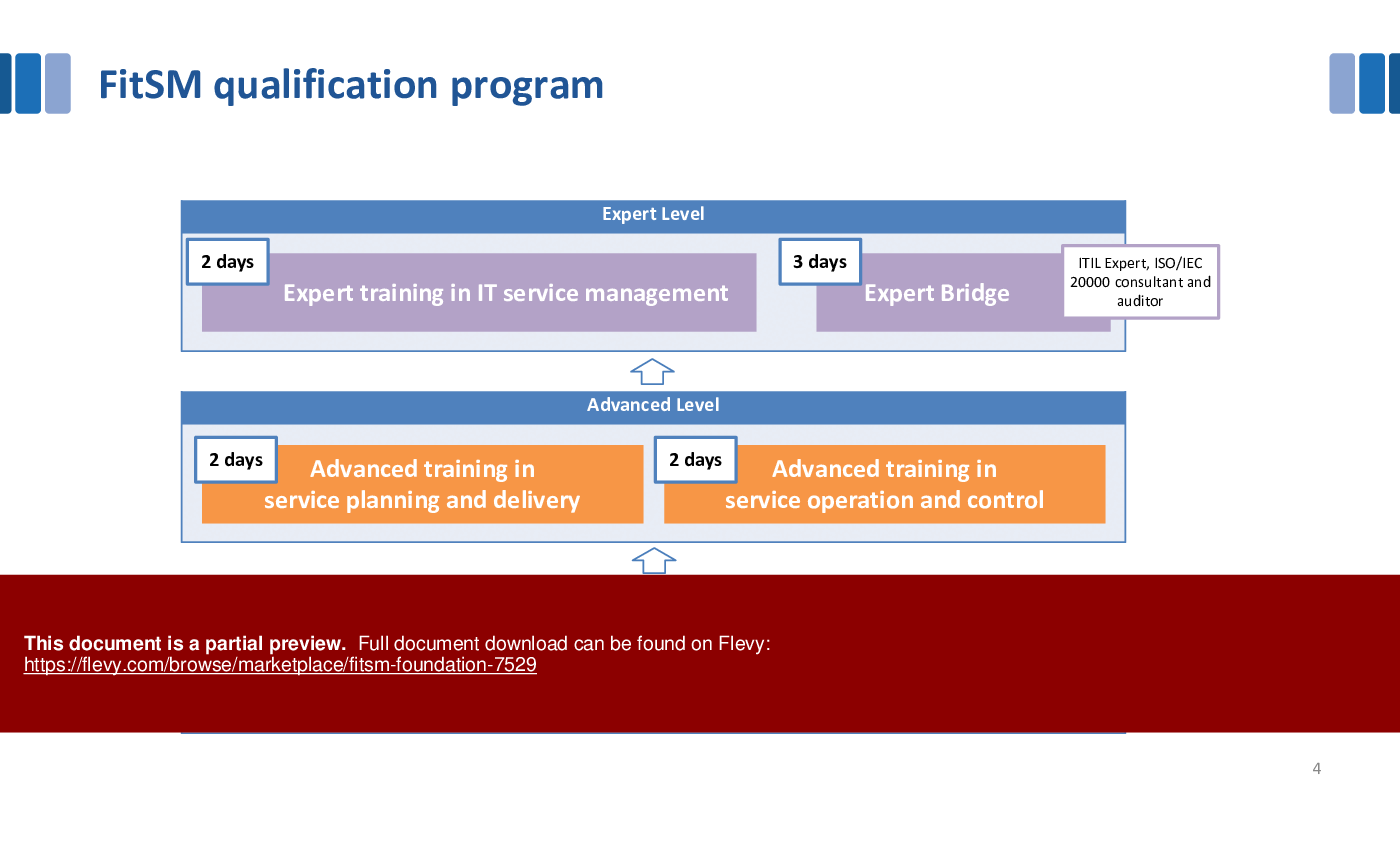
5. Certification: FitSM recognizes the importance of adherence to its principles and practices. To this end, it offers organizations and individuals the opportunity to attain FitSM certification, available at various levels, including Foundation, Advanced, and Expert.
6. Scalability: Although initially envisioned for SMEs, FitSM transcends boundaries. Larger organizations can seamlessly scale up their service management practices by incorporating additional processes and practices as needed.
7. Alignment with Other Standards: FitSM is designed with compatibility in mind. It gracefully integrates with other industry standards and frameworks, including ITIL and ISO/IEC 20000, ensuring that organizations can harmonize their practices seamlessly.
8. Community and Support: FitSM thrives as a community-driven framework. A vibrant network of practitioners provides resources, documentation, and training materials, offering robust support for organizations venturing into FitSM adoption and implementation.
In essence, this 113-slide document serves as an exhaustive training manual, delving deep into FitSM as a flexible, lightweight, and standards-based framework for service management. It is the choice for organizations seeking to elevate their service management practices without navigating the complexities of larger frameworks. FitSM's adaptability and simplicity are a testament to the power of streamlined, yet standards-driven, service management practices.
Got a question about the product? Email us at support@flevy.com or ask the author directly by using the "Ask the Author a Question" form. If you cannot view the preview above this document description, go here to view the large preview instead.
Executive Summary
The FitSM Foundation training deck provides a comprehensive introduction to IT Service Management (ITSM) based on the FitSM standards. Developed by experts with extensive consulting backgrounds, this training equips participants with essential knowledge of ITSM concepts, the structure of FitSM standards, and the underlying process framework. Upon completion, participants will be prepared to achieve the Foundation Certificate in IT Service Management, issued by APMG International, enhancing their capabilities in managing IT services effectively.
Who This Is For and When to Use
• IT Service Managers seeking foundational knowledge in ITSM
• Project Managers involved in IT service delivery
• IT professionals aiming to enhance their service management skills
• Organizations transitioning to or adopting FitSM standards
Best-fit moments to use this deck:
• During onboarding for new IT service management roles
• As a preparatory resource for the FitSM Foundation exam
• For workshops focused on implementing ITSM practices within organizations
Learning Objectives
• Define key IT service management concepts and terms
• Understand the purpose and structure of FitSM standards
• Identify the process framework underlying FitSM
• Explain the requirements defined in FitSM-1
• Prepare for the Foundation Certificate exam in IT Service Management
Table of Contents
• Purpose of FitSM (page 2)
• FitSM Foundation Exam Overview (page 3)
• FitSM Qualification Program (page 4)
• Training Agenda Topics (page 5)
• IT Service Management: Introduction, Terms & Concepts (page 6)
• Benefits, Risks & Challenges of Implementing ITSM (page 104)
• Related Standards & Frameworks (page 108)
Primary Topics Covered
• IT Service Management Concepts - Introduction to the fundamental principles of IT service management, including definitions and key terms.
• FitSM Standards Family - Overview of the FitSM standards, including their structure and purpose, emphasizing their lightweight nature suitable for various organizations.
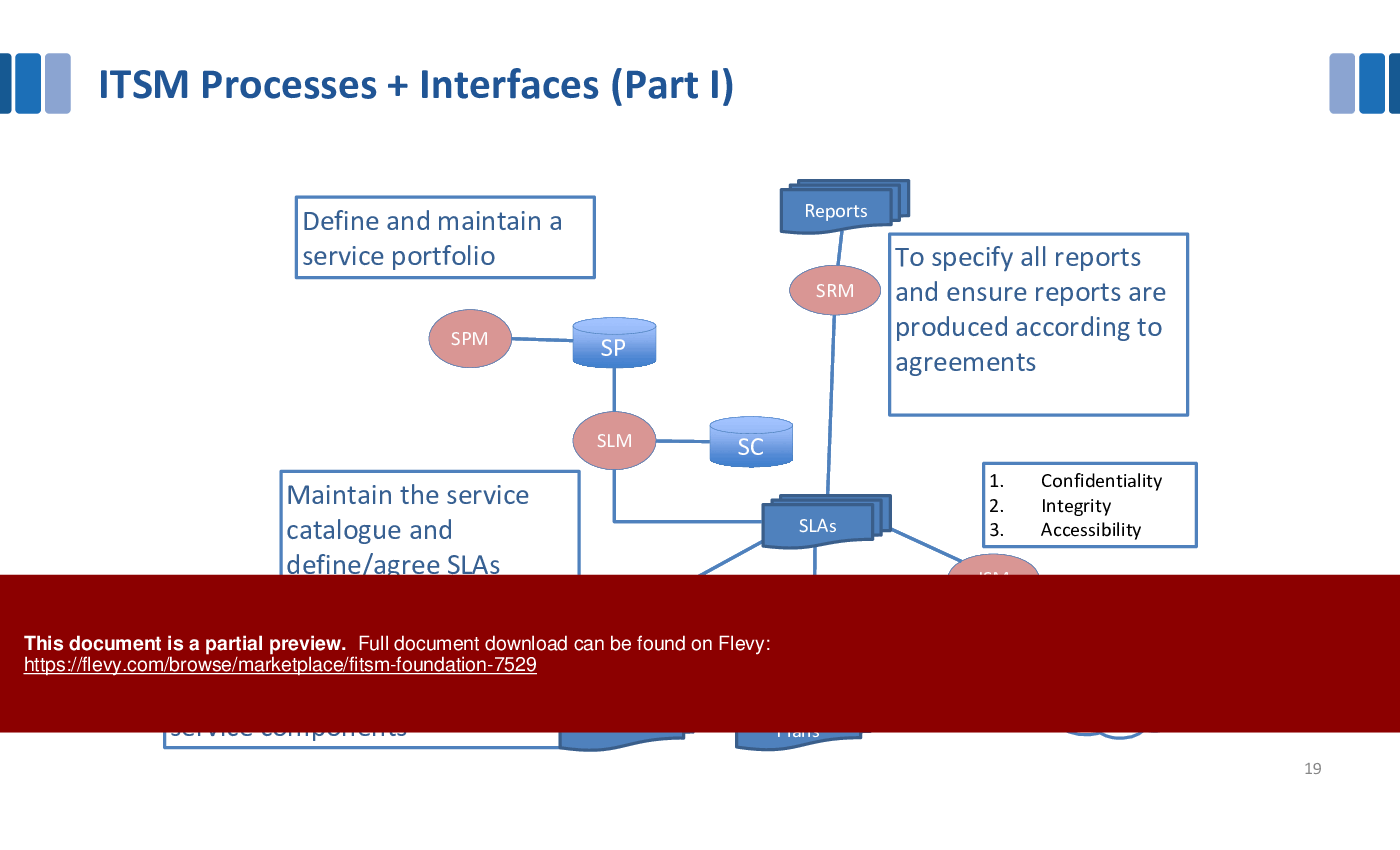
• Service Portfolio Management - Processes for defining and maintaining a service portfolio, including requirements for service catalogues.
• Service Level Management - Establishing, agreeing, and monitoring service levels through service level agreements (SLAs) and operational level agreements (OLAs).
• Incident and Service Request Management - Processes for restoring normal service operation and managing user service requests effectively.
• Continual Service Improvement - Framework for identifying and implementing improvements in service management practices.
Deliverables, Templates, and Tools
• Service portfolio template for documenting services offered
• SLA and OLA templates for establishing service agreements
• Incident management workflow diagram for tracking service disruptions
• Continuous improvement plan template for ongoing service enhancements
• Configuration management database (CMDB) outline for tracking configuration items
Slide Highlights
• Overview of FitSM standards and their significance in IT service management
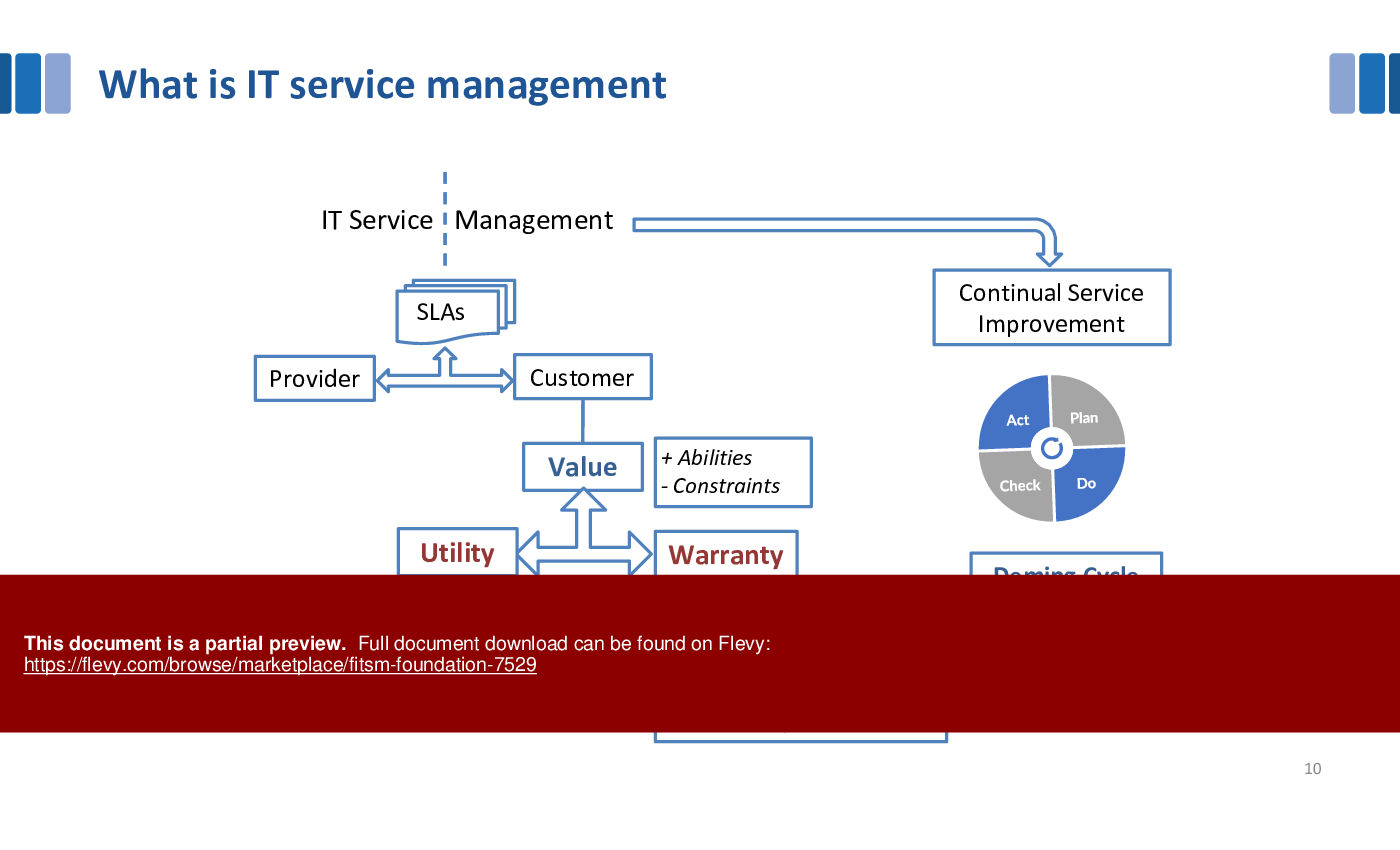
• Visual representation of the ITSM process model and its components
• Key definitions and concepts related to IT service management
• Summary of the FitSM qualification program and its levels
• Challenges and benefits of implementing ITSM in federated environments
Potential Workshop Agenda
FitSM Foundation Overview (60 minutes)
• Introduction to FitSM and its importance in ITSM
• Overview of the training agenda and objectives
ITSM Concepts and Framework (90 minutes)
• Discussion of key ITSM terms and concepts
• Exploration of the FitSM standards family and their applications
Exam Preparation Session (60 minutes)
• Review of exam structure and question types
• Practice questions and discussion of answers
Customization Guidance
• Tailor the service portfolio template to reflect specific organizational services and offerings
• Adapt SLAs and OLAs to align with organizational goals and customer expectations
• Modify the incident management workflow to fit existing processes and tools used in the organization
Secondary Topics Covered
• Information Security Management (ISM) principles
• Customer and Supplier Relationship Management (CRM and SUPPM)
• Change Management and Release Management processes
• Risk management strategies within ITSM
Topic FAQ
Document FAQ
These are questions addressed within this presentation.
What is FitSM?
FitSM is a family of standards for lightweight IT service management, designed to be simple and applicable to service providers of any type and scale.
What does the FitSM Foundation exam entail?
The exam consists of 20 multiple-choice questions, with a passing requirement of at least 65% correct answers.
How long is the FitSM Foundation training?
The training is structured as a one-day course, covering essential ITSM concepts and FitSM standards.
What certification is awarded upon completion?
Participants receive the Foundation Certificate in IT Service Management, issued by APMG International.
How can organizations benefit from implementing FitSM?
Implementing FitSM can lead to improved service delivery, better alignment with customer needs, and enhanced organizational efficiency.
What are the key components of IT service management?
Key components include service portfolio management, service level management, incident management, and continual service improvement.
How does FitSM relate to other ITSM frameworks?
FitSM is designed to complement other frameworks like ITIL and ISO/IEC 20000, providing a simpler alternative for organizations.
What are the challenges of implementing ITSM in federated environments?
Challenges include coordinating multiple service providers, ensuring consistent processes, and managing diverse stakeholder expectations.
Glossary
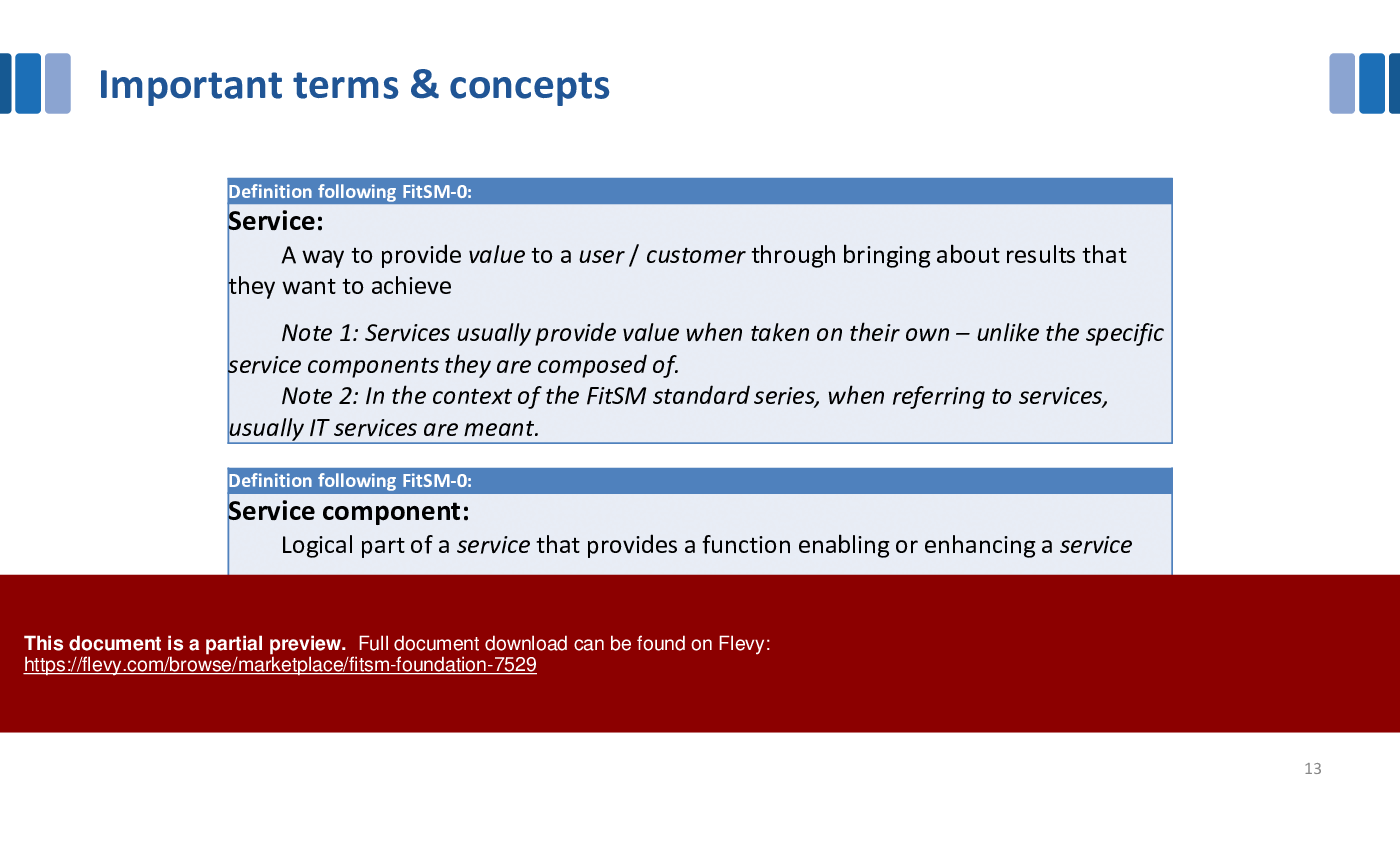
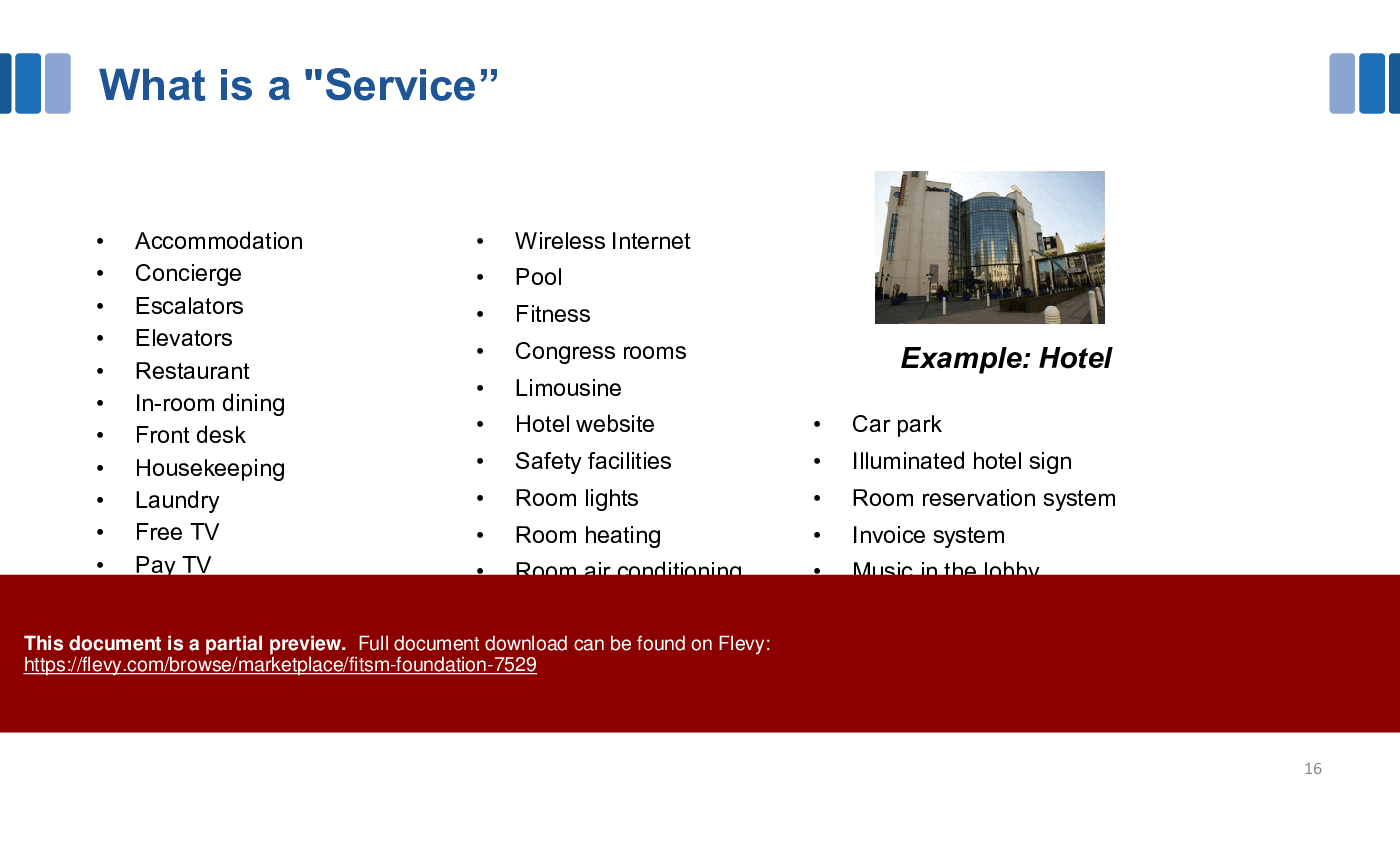
• Service - A means of delivering value to a customer by enabling outcomes they want to achieve.
• Service Level Agreement (SLA) - A documented agreement between a service provider and a customer that defines service expectations.
• Incident - An unplanned interruption to a service or a reduction in the quality of a service.
• Change Management - The process of managing changes to configuration items in a controlled manner.
• Configuration Management Database (CMDB) - A database used to store information about configuration items and their relationships.
• Continual Service Improvement (CSI) - A process focused on identifying and implementing improvements to services and service management.
• Service Portfolio - An internal list detailing all services offered by a service provider, including those in preparation, live, and discontinued.
• Operational Level Agreement (OLA) - An agreement between a service provider and another part of the organization to provide a service component.
• Underpinning Agreement (UA) - A documented agreement between a service provider and an external supplier specifying service components to be provided.
• Problem - The underlying cause of one or more incidents that requires further investigation.
• Known Error - A problem that has not yet been resolved, but has a documented workaround.
• Risk Management - The process of identifying, assessing, and controlling risks to minimize their impact on services.
• Service Availability - The ability of a service to perform its intended function at a specific time.
• Service Continuity - The ability to maintain service operation during exceptional situations or disasters.
• Capacity Management - The process of ensuring sufficient capacity to meet service performance requirements.
• Information Security Management (ISM) - The process of managing information security to protect confidentiality, integrity, and accessibility of assets.
Source: Best Practices in SLM PowerPoint Slides: FitSM Foundation PowerPoint (PPTX) Presentation Slide Deck, RadVector Consulting
|
Download our FREE Strategy & Transformation Framework Templates
Download our free compilation of 50+ Strategy & Transformation slides and templates. Frameworks include McKinsey 7-S, Balanced Scorecard, Disruptive Innovation, BCG Curve, and many more. |










