
The Lean Leader Green Belt Series are designed and developed specifically for Team Leaders and Supervisors. These series are at a higher standard than the shop floor series. When a staff member completes all the 12 modules he / she can be awarded a "Lean Leader" certificate and can lead his team in the successful application of various Lean principles.

The 12 are modules:
1. Lead Change – 116 slides
2. Implement a Lean System – 44 slides
3. Facilitate Continuous Improvement – 46 slides
4. Problem Solving – 40 slides
5. Lead 5S – 72 slides
6. Improve Cost Factors – 50
7. Facilitate Quick Changeovers – 70 slides
8. Facilitate JIT – 46 slides
9. Facilitate Proactive Maintenance – 82 slides
10. Mistake Proof a Process – 49 slides
11. Facilitate Balanced Scorecard Approach – 37 slides
12. Ensure Process Improvements are Sustained – 49 slides
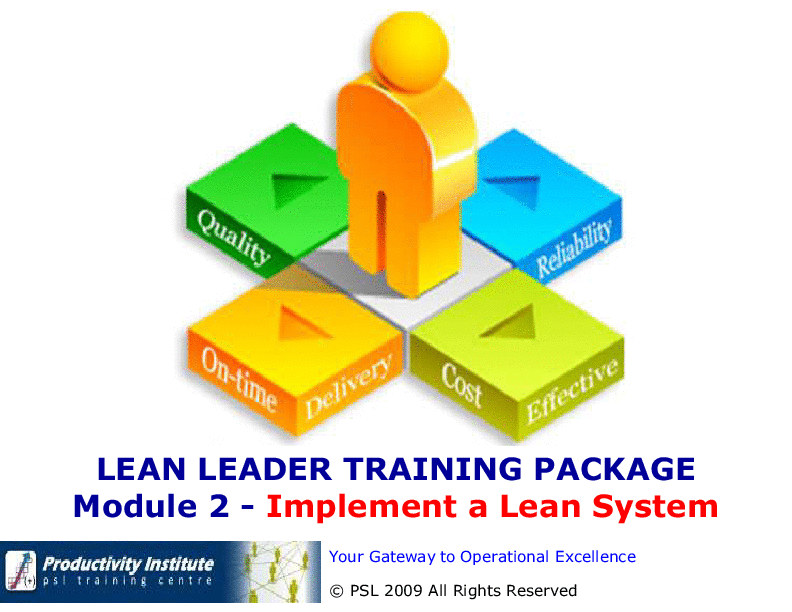
The 2nd Module "Implement a Lean System" covers the following topics:
1. Introduction to Lean Manufacturing
2. Implementation of Lean Manufacturing Systems
3. Prioritization of activities
4. Workplace projects
You can also buy all the 12 modules at a 25% discounted as a bundled product.
Also add other presentations depending on your requirements, such as Kanban Implementation, Heijunka Implementation, Lean Assessment, and Lean Leader and Lean Culture Surveys.
Got a question about the product? Email us at support@flevy.com or ask the author directly by using the "Ask the Author a Question" form. If you cannot view the preview above this document description, go here to view the large preview instead.
Executive Summary
The "Lean Leader Training Package: Module 2 - Implement a Lean System" presentation is designed to equip organizations with the knowledge and tools necessary to implement Lean Manufacturing principles effectively. This training package focuses on enhancing productivity, quality, cost efficiency, delivery performance, safety, and employee morale. Participants will learn to prioritize activities, optimize workplace projects, and apply Lean practices to achieve operational excellence. By leveraging proven methodologies, this module empowers teams to drive continuous improvement and maximize customer value.
Who This Is For and When to Use
• Operations Managers seeking to enhance manufacturing efficiency
• Quality Assurance Teams focused on reducing defects and improving processes
• Project Managers overseeing Lean initiatives and workplace projects
• Executive Leaders aiming to foster a culture of continuous improvement
Best-fit moments to use this deck:
• During Lean transformation initiatives to align teams on implementation strategies
• In training sessions for new employees to instill Lean principles from the outset
• When assessing current manufacturing practices and identifying areas for improvement
Learning Objectives
• Define Lean Manufacturing and its core principles
• Build a roadmap for implementing Lean systems within an organization
• Establish prioritization criteria for Lean activities
• Apply Lean tools to enhance productivity and quality
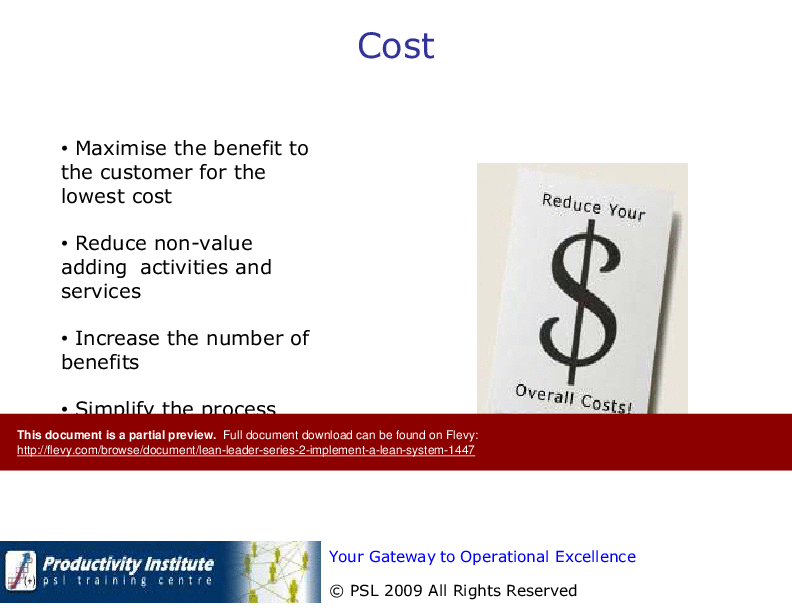
• Maximize customer value through effective cost management
• Monitor and assess the impact of Lean initiatives on overall performance
Table of Contents
• Introduction to Lean Manufacturing (page 3)
• Implementation of Lean Manufacturing Systems (page 5)
• Prioritization of Activities (page 8)
• Workplace Projects (page 10)
• Lean Tools and Techniques (page 12)
• Assessing Lean Implementation (page 15)
Primary Topics Covered
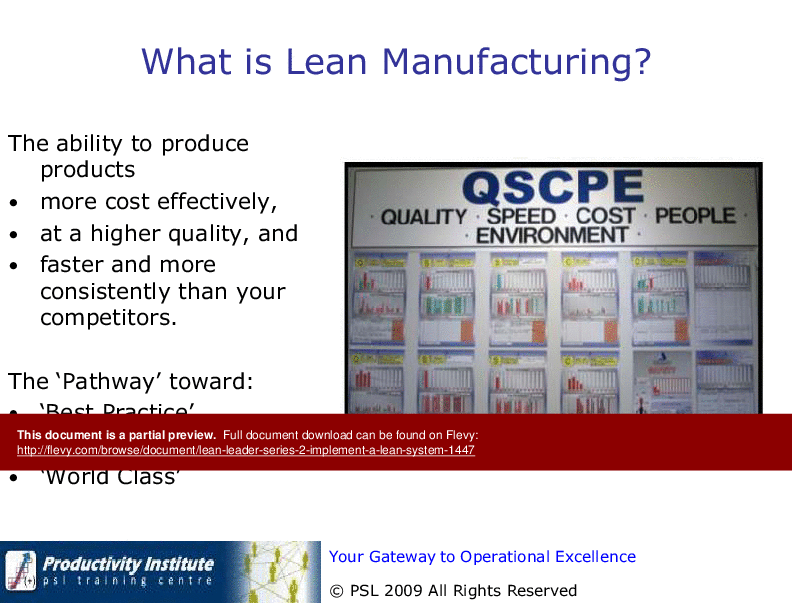
• Lean Manufacturing Definition - Lean Manufacturing focuses on producing goods more cost-effectively, with higher quality, and faster than competitors.
• Implementation Strategies - Detailed steps for implementing Lean systems, including prioritization of activities and project management.
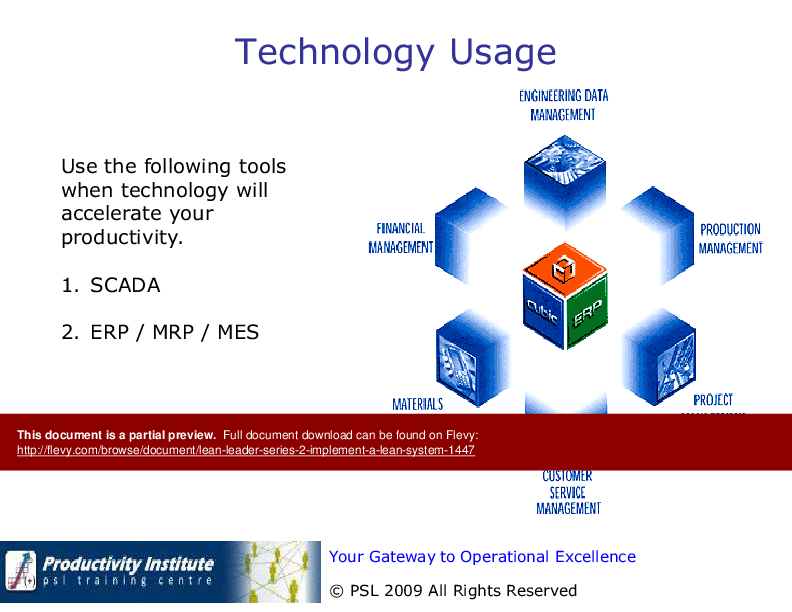
• Lean Tools - Overview of essential Lean tools such as Total Productive Maintenance, Six Sigma, and Just in Time methodologies.
• Performance Metrics - Key performance indicators to measure improvements in productivity, quality, cost, delivery, safety, and morale.
• Customer Value Maximization - Strategies to enhance customer satisfaction through improved service levels and quality.
• Continuous Improvement Framework - A structured approach to ongoing assessment and refinement of Lean practices.
Deliverables, Templates, and Tools
• Improvement Opportunity Sheet for identifying areas of enhancement
• Action Plan template to outline steps for Lean implementation
• Assessment checklists to evaluate Lean project outcomes
• Performance metrics dashboard for tracking progress
• Lean project presentation guidelines for team reporting
Slide Highlights
• Introduction to Lean Manufacturing with a focus on competitive advantage
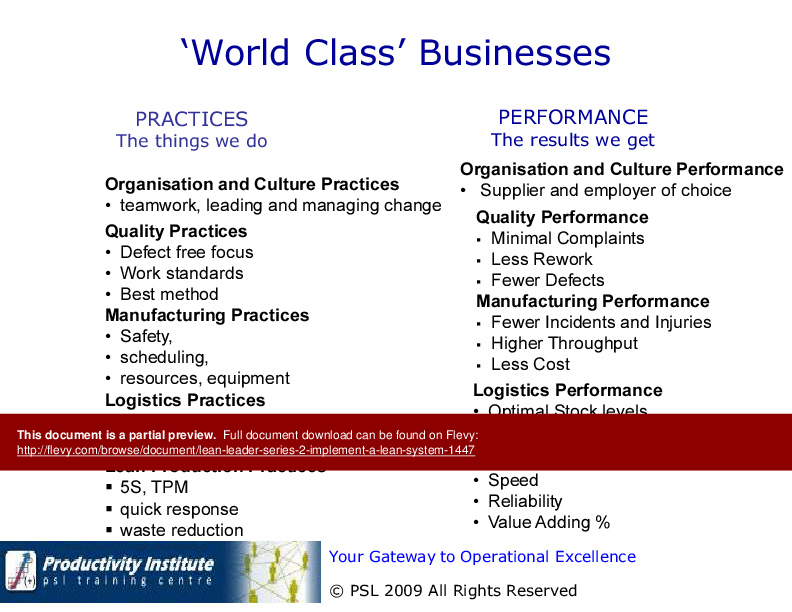
• Visual representation of 'World Class' businesses and their manufacturing practices
• Tools for productivity enhancement and quality assurance
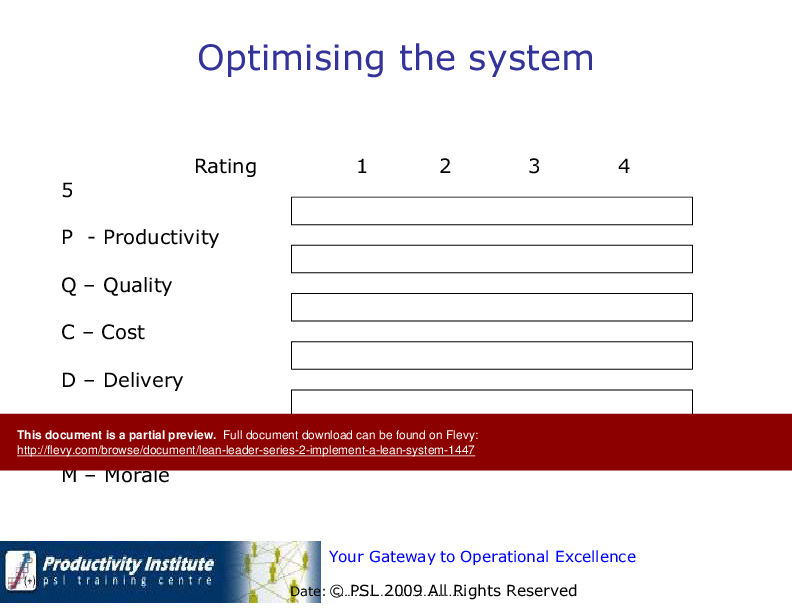
• Framework for prioritizing activities using PQCDSM (Productivity, Quality, Cost, Delivery, Safety, Morale)
• Group activity templates for action planning and project presentations
Potential Workshop Agenda
Lean Implementation Overview (60 minutes)
• Introduce Lean principles and benefits
• Discuss implementation strategies and tools
• Review case studies of successful Lean transformations
Group Activity and Action Planning (90 minutes)
• Identify key areas for improvement using PQCDSM
• Develop action plans for workplace projects
• Present findings and strategies to the group
Customization Guidance
• Tailor the action plan templates to reflect specific organizational goals and metrics
• Adjust the prioritization criteria based on industry-specific challenges and opportunities
• Incorporate company-specific examples in group activities to enhance relevance
Secondary Topics Covered
• Best practices in Lean Manufacturing
• The role of leadership in fostering a Lean culture
• Techniques for engaging employees in Lean initiatives
• Industry-specific Lean applications and solutions
Topic FAQ
Document FAQ
These are questions addressed within this presentation.
What is Lean Manufacturing?
Lean Manufacturing is a methodology aimed at reducing waste and improving efficiency in production processes, enabling companies to deliver higher quality products at lower costs.
How can we measure the success of Lean implementation?
Success can be measured using key performance indicators such as productivity rates, defect rates, customer satisfaction scores, and overall cost reductions.
What tools are essential for Lean implementation?
Key tools include Total Productive Maintenance, Six Sigma, Just in Time, and various quality management frameworks that support continuous improvement.
How do we prioritize Lean activities?
Prioritization can be guided by the PQCDSM framework, focusing on productivity, quality, cost, delivery, safety, and morale to identify the most impactful areas for improvement.
What role does employee morale play in Lean initiatives?
High employee morale is crucial for successful Lean implementation, as engaged employees are more likely to contribute to continuous improvement efforts and embrace change.
Can Lean practices be applied to service industries?
Yes, Lean principles can be adapted to service industries by focusing on reducing waste in processes, improving service delivery, and enhancing customer satisfaction.
What are common challenges in implementing Lean?
Common challenges include resistance to change, lack of leadership support, insufficient training, and difficulty in sustaining improvements over time.
How often should we assess our Lean initiatives?
Regular assessments should be conducted at defined intervals, such as quarterly or biannually, to ensure continuous improvement and alignment with organizational goals.
Glossary
• Lean Manufacturing - A production practice that considers the expenditure of resources in any aspect other than the direct creation of value for the end customer to be wasteful.
• Total Productive Maintenance (TPM) - A proactive approach to maintenance that aims to maximize the operational efficiency of equipment.
• Six Sigma - A set of techniques and tools for process improvement aimed at reducing defects and variability.
• Just in Time (JIT) - An inventory management strategy that aligns raw-material orders with production schedules.
• PQCDSM - A framework for prioritizing Lean activities based on Productivity, Quality, Cost, Delivery, Safety, and Morale.
• Continuous Improvement - Ongoing efforts to improve products, services, or processes over time.
• Action Plan - A detailed plan outlining actions needed to achieve a specific goal.
• Improvement Opportunity Sheet - A tool for identifying and documenting areas for potential improvement within processes.
• Performance Metrics - Quantifiable measures used to gauge a company's performance against its objectives.
• Employee Engagement - The emotional commitment that employees have to their organization and its goals.
• Waste Reduction - The process of eliminating waste in order to improve efficiency and productivity.
• Customer Value - The perceived benefit that a customer receives from a product or service relative to its cost.
Source: Best Practices in Lean PowerPoint Slides: Lean Leader GB Series 2 - Implement a Lean System PowerPoint (PPT) Presentation Slide Deck, OpEx Academy NZ
This document is available as part of the following discounted bundle(s):
Save %!
Lean Leader / Green Belt Training Series - 12 Modules
This bundle contains 12 total documents. See all the documents to the right.
|
Receive our FREE presentation on Operational Excellence
This 50-slide presentation provides a high-level introduction to the 4 Building Blocks of Operational Excellence. Achieving OpEx requires the implementation of a Business Execution System that integrates these 4 building blocks. |