
The Lean Leader Green Belt Series are designed and developed specifically for Team Leaders and Supervisors. These series are at a higher standard than the shop floor series. When a staff member completes all the 12 modules he / she can be awarded a "Lean Leader" certificate and can lead his team in the successful application of various Lean principles.
The 12 are modules:
1. Lead Change – 116 slides
2. Implement a Lean System – 44 slides
3. Facilitate Continuous Improvement – 46 slides
4. Problem Solving – 40 slides
5. Lead 5S – 72 slides
6. Improve Cost Factors – 50
7. Facilitate Quick Changeovers – 70 slides
8. Facilitate JIT – 46 slides
9. Facilitate Proactive Maintenance – 82 slides
10. Mistake Proof a Process – 49 slides
11. Facilitate Balanced Scorecard Approach – 37 slides
12. Ensure Process Improvements are Sustained – 49 slides
The 10th Module "Mistake Proof a Process" covers the following topics:
• Introduction to Mistake Proofing in the Workplace
• Identification of activities for improvement
• Methods associated with controlling and reducing mistakes
• Implementing changes in the workplace
• Workplace projects
You can also buy all the 12 modules at a 25% discounted as a bundled product.
Also add other presentations depending on your requirements, such as Kanban Implementation, Heijunka Implementation, Lean Assessment, and Lean Leader and Lean Culture Surveys.
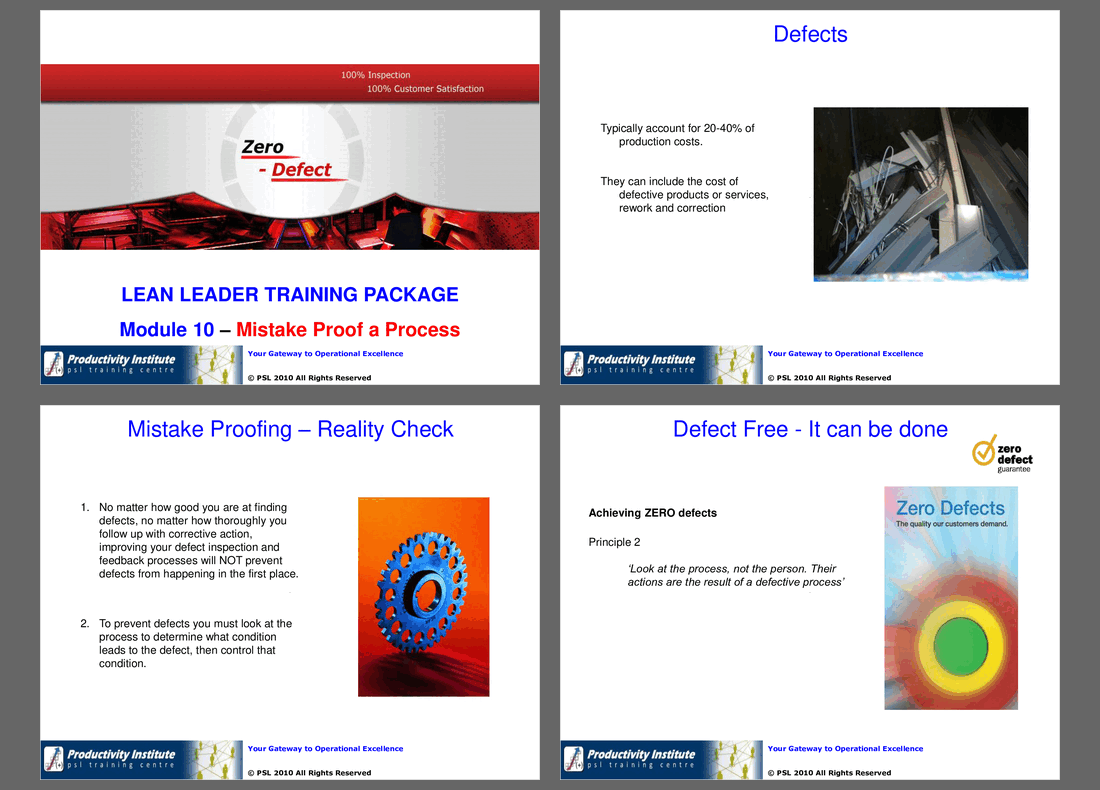
The "Mistake Proof a Process" module emphasizes practical, hands-on techniques for achieving zero defects by controlling process performance. It includes group activities to identify and mitigate sources of non-conformance, and provides real-world examples of mistake-proofing applications. Participants will learn to design systems that ensure processes are done correctly the first time, every time. The module also covers the implementation of permanent solutions through collaboration with team members, ensuring changes are effectively integrated and sustained.
Got a question about the product? Email us at support@flevy.com or ask the author directly by using the "Ask the Author a Question" form. If you cannot view the preview above this document description, go here to view the large preview instead.
Executive Summary
The "Lean Leader GB Series 10 - Mistake Proof a Process" presentation is a comprehensive training resource designed to equip supervisors and team leaders with effective mistake-proofing strategies. Developed by a certified LSS Master Black Belt with extensive global experience, this presentation focuses on identifying and controlling defects in workplace processes. By implementing the techniques outlined, organizations can significantly reduce production costs associated with defects, enhance quality, and foster a culture of continuous improvement.
Who This Is For and When to Use
• Supervisors and team leaders responsible for process improvement initiatives
• Quality assurance professionals focused on defect reduction
• Lean practitioners and consultants implementing mistake-proofing techniques
• Operations managers seeking to enhance production efficiency
Best-fit moments to use this deck:
• During team training sessions on quality management and process improvement
• When initiating a Lean transformation project focused on defect reduction
• As part of a workshop aimed at fostering a culture of continuous improvement
Learning Objectives
• Define mistake-proofing and its importance in operational excellence
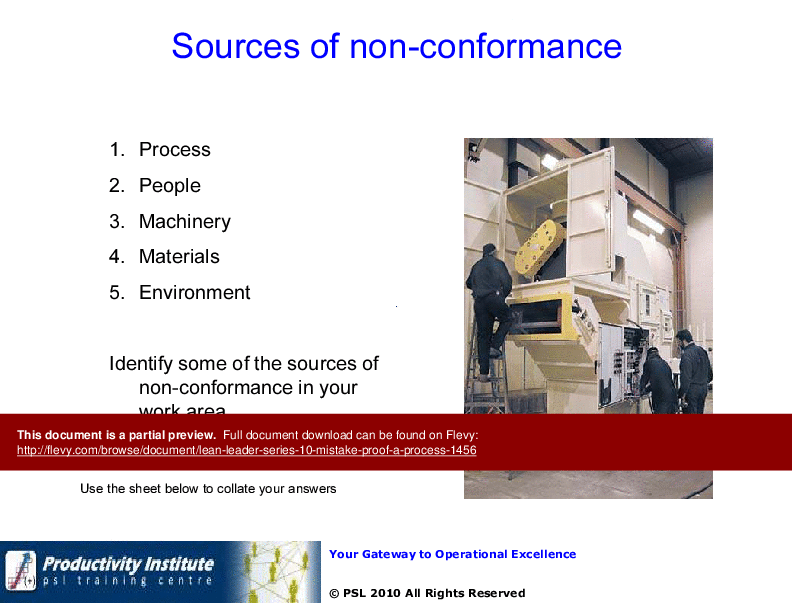
• Identify common sources of defects and non-conformance in processes
• Analyze critical control points to prevent defects from occurring
• Develop and implement effective mistake-proofing techniques
• Monitor and validate the effectiveness of implemented solutions
• Foster team involvement in identifying and solving process issues
Table of Contents
• Introduction to Mistake Proofing in the Workplace (page 3)
• Identification of Activities for Improvement (page 5)
• Methods for Controlling and Reducing Mistakes (page 7)
• Implementing Changes in the Workplace (page 10)
• Workplace Projects (page 12)
• Tools and Templates (page 15)
• Recommended Reading and Resources (page 18)
Primary Topics Covered
• Defect Identification - Understanding the financial impact of defects, which can account for 20-40% of production costs.
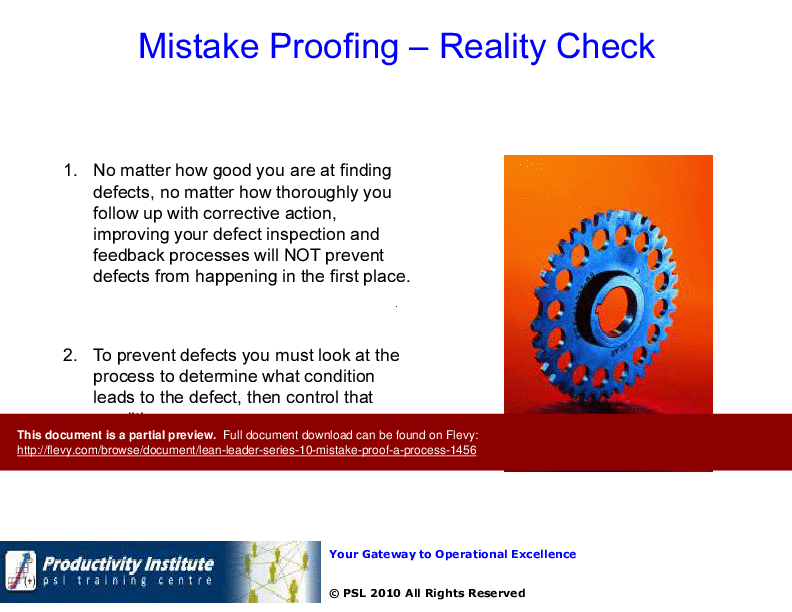
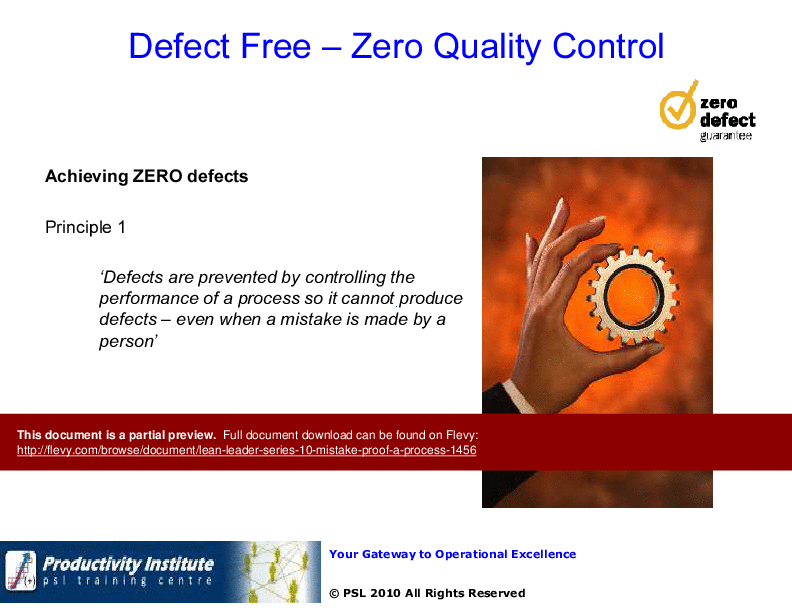
• Zero Defects Philosophy - Emphasizing the goal of achieving zero defects by controlling processes rather than blaming individuals.
• Critical Control Points - Identifying key steps in processes where controls can be applied to prevent defects.
• Mistake-Proofing Techniques - Exploring various techniques such as elimination, replacement, prevention, facilitation, detection, and mitigation to reduce errors.
• Human Factors - Recognizing the role of attention activators in minimizing human error during processes.
• Continuous Improvement - Encouraging a culture of ongoing assessment and enhancement to maintain quality standards.
Deliverables, Templates, and Tools
• Improvement Opportunity Sheet for identifying potential areas for mistake-proofing
• Action Plan template for implementing mistake-proofing strategies
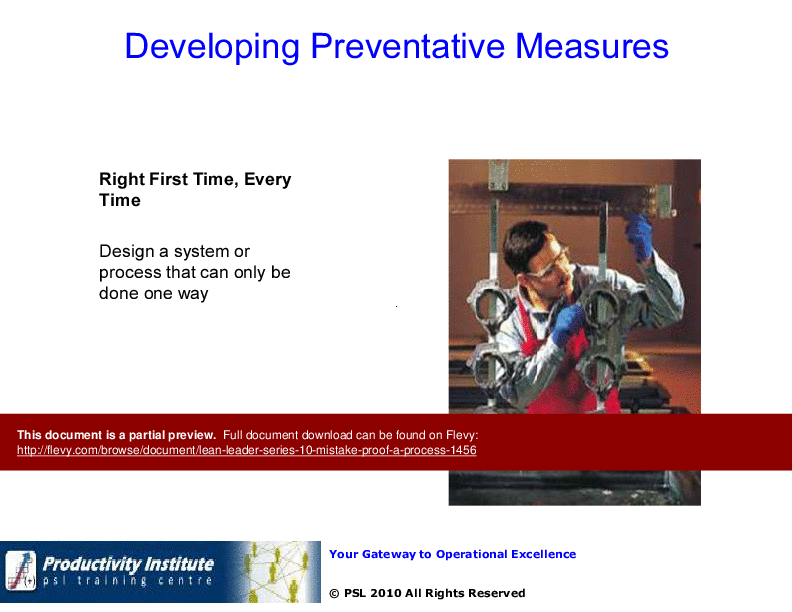
• Validation strategy for testing and ensuring processes achieve "Right First Time, Every Time" results
• Documentation for monitoring and auditing new processes
Slide Highlights
• Overview of the financial impact of defects on production costs
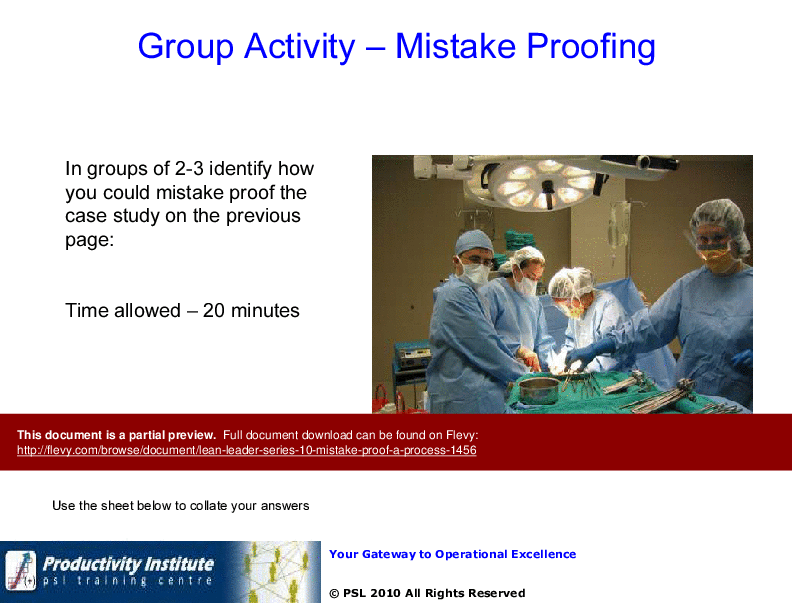
• Case study illustrating the consequences of process failures in a medical setting
• Visual representation of the zero defects philosophy and its principles
• Step-by-step guide on the 7 steps for error-proofing processes
• Techniques for engaging team members in the mistake-proofing process
Potential Workshop Agenda
Introduction to Mistake Proofing (30 minutes)
• Overview of the importance of mistake-proofing
• Discussion on common sources of defects
Group Activity on Mistake Proofing (45 minutes)
• Identify potential errors in a case study
• Collaborate on developing mistake-proofing strategies
Implementation and Monitoring Session (60 minutes)
• Discuss the steps for implementing mistake-proofing techniques
• Develop a monitoring plan to assess effectiveness
Customization Guidance
• Tailor the action plan to reflect specific workplace processes and challenges
• Adjust the templates to align with organizational terminology and metrics
• Incorporate team-specific examples in group activities for relevance
Secondary Topics Covered
• Categories of error and strategies for prevention
• The role of teamwork in enhancing process improvement
• Methods for analyzing variability and non-conformance in processes
• Importance of testing and validation in mistake-proofing
FAQ
What is mistake-proofing?
Mistake-proofing is a set of techniques aimed at preventing defects in processes by redesigning tasks to eliminate the possibility of error.

How can I identify critical control points in my process?
Critical control points can be identified by analyzing the steps in your process where defects are likely to occur and implementing controls at those points.
What are some common mistake-proofing techniques?
Common techniques include elimination, replacement, prevention, facilitation, detection, and mitigation, each designed to address different aspects of error prevention.
How do I involve my team in the mistake-proofing process?
Encouraging team members to share their insights and experiences can lead to more effective solutions. Group activities and discussions can facilitate this involvement.
What should I monitor after implementing mistake-proofing techniques?
Monitor the effectiveness of the new processes by comparing results against expected outcomes and making adjustments as necessary.
When should I start error-proofing?
Error-proofing should begin as early as possible during the design phase of products and processes to minimize the potential for defects.
How can I ensure continuous improvement in my processes?
Establish a culture of continuous improvement by regularly reviewing processes, seeking feedback, and making iterative enhancements based on observed results.
What resources are available for further learning?
Recommended resources include books, DVDs, and websites focused on mistake-proofing and Lean methodologies.
Glossary
• Mistake-Proofing - Techniques aimed at preventing defects in processes.
• Zero Defects - A philosophy focused on eliminating defects in production.
• Critical Control Points - Steps in a process where controls can be applied to prevent defects.
• Continuous Improvement - Ongoing efforts to enhance products, services, or processes.
• Error Prevention - Strategies designed to eliminate the potential for human error.
• Attention Activators - Tools or signals that help minimize human error.

• Defect - An imperfection or shortcoming in a product or process.
• Non-Conformance - Failure to meet specified requirements or standards.
• Validation - The process of ensuring that a system or process meets its intended purpose.
• Process Design - The planning and structuring of a process to achieve specific outcomes.
• Root Cause Analysis - A method for identifying the underlying reasons for defects.
• Team Involvement - Engaging team members in process improvement initiatives.
Source: Best Practices in Mistake-Proofing PowerPoint Slides: Lean Leader GB Series 10 - Mistake Proof a Process PowerPoint (PPTX) Presentation Slide Deck, OpEx Academy NZ
This document is available as part of the following discounted bundle(s):
Save %!
Lean Leader / Green Belt Training Series - 12 Modules
This bundle contains 12 total documents. See all the documents to the right.
|
Receive our FREE presentation on Operational Excellence
This 50-slide presentation provides a high-level introduction to the 4 Building Blocks of Operational Excellence. Achieving OpEx requires the implementation of a Business Execution System that integrates these 4 building blocks. |