
Supply Chain Performance & Metrics document gives an overview of key performance metrics used to measure the operating effectiveness of a supply chain. The metrics are categorized for each stage of the supply chain with definition provided at the back of the document.
The objective of this document is define a bench marking framework capable of:
• Comparing generic metric performances for use on projects.
• Capturing further bench marking data in a consistent format.
The task:
• Develop an overview of the different metrics to measure supply chain performance.
• Select the most important metrics that can be used across industries.
• Discuss how the most important metrics link other operational metrics within each stage of the supply
chain.
• Suggest how the XYZ should continue concerning this topic.
See also "Supply Chain Strategy Tools & Techniques"
See also "4 Stage Model Supply Chain Assessment"
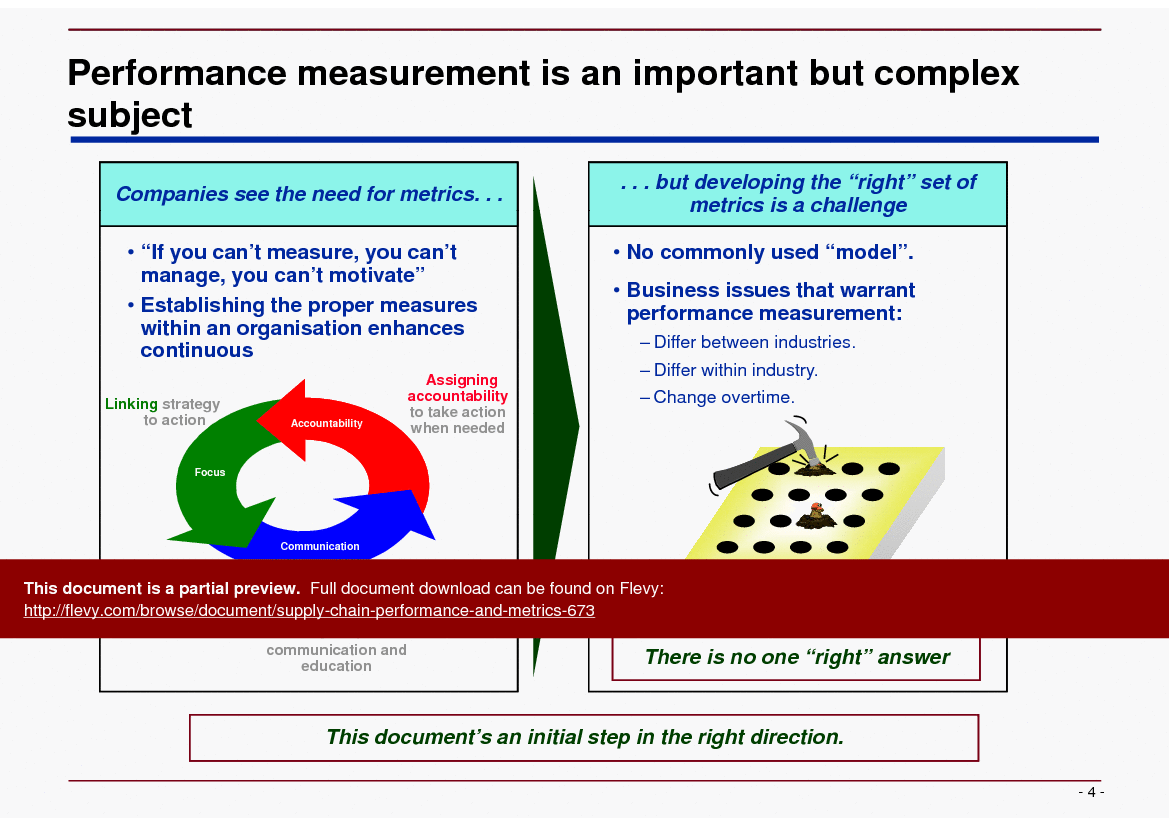
This document emphasizes the importance of performance measurement in supply chain management, highlighting that while metrics are essential for managing and motivating, developing the right set of metrics is a challenge. It addresses the need for a tailored approach, as business issues vary between and within industries and evolve over time. The document serves as an initial step in the right direction, providing a framework for linking strategy to action, assigning accountability, and enhancing communication and education.
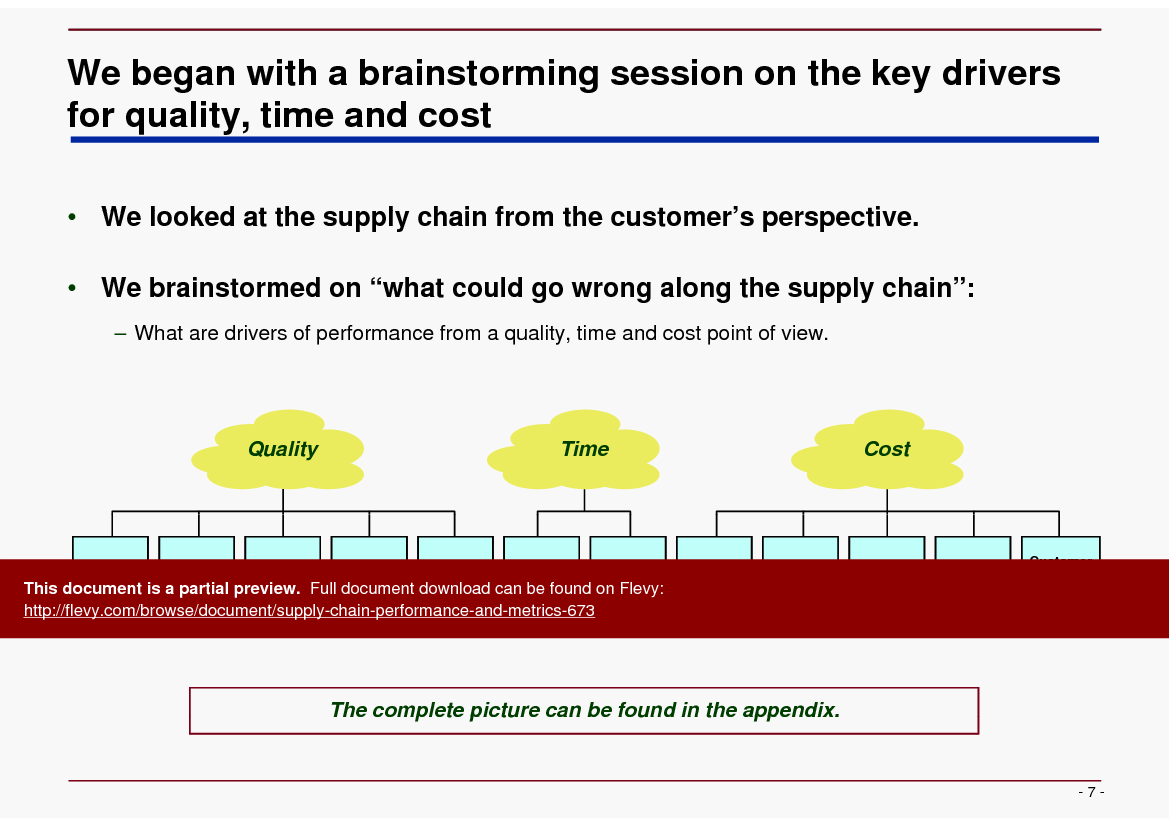
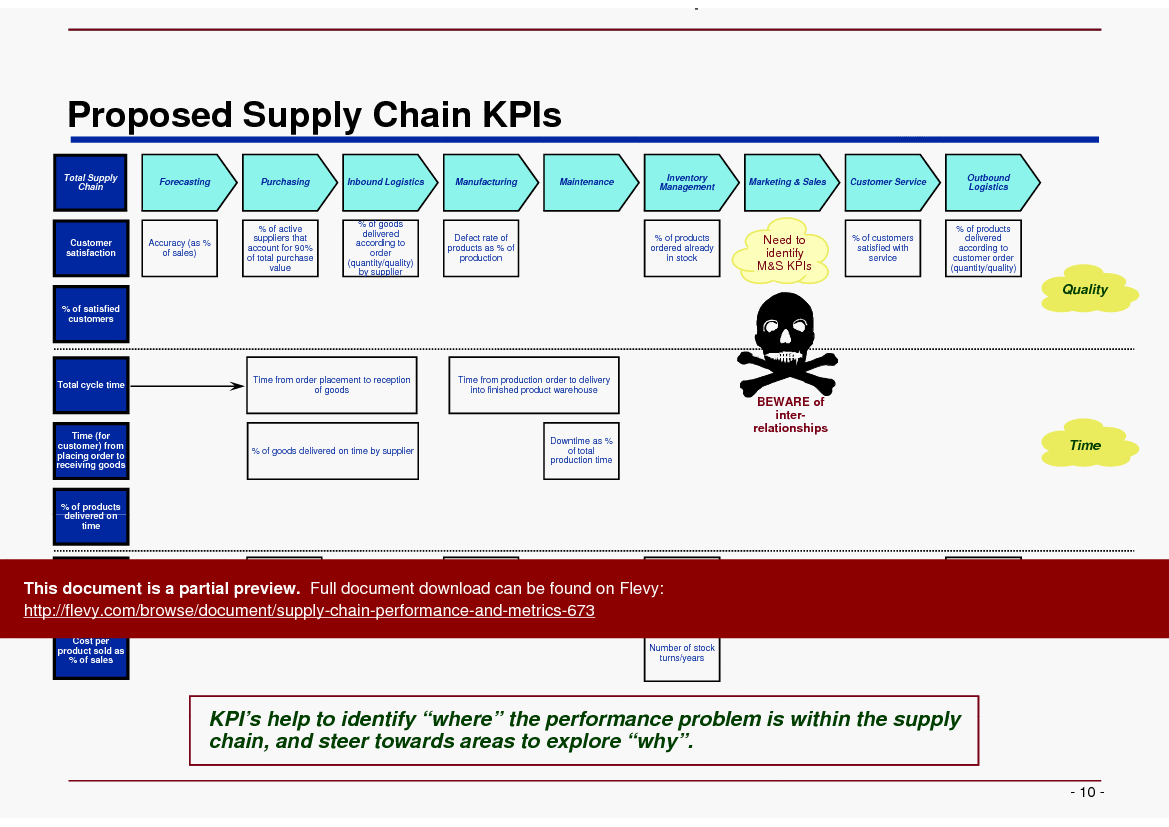
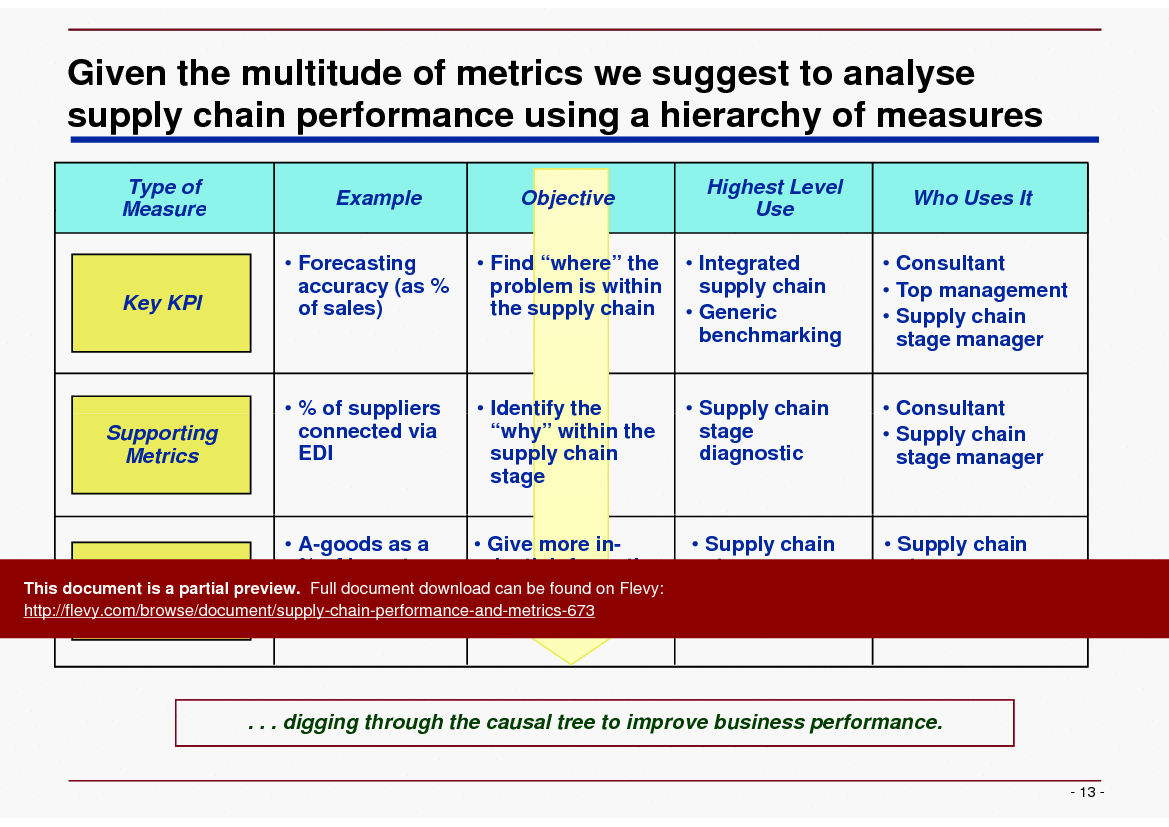
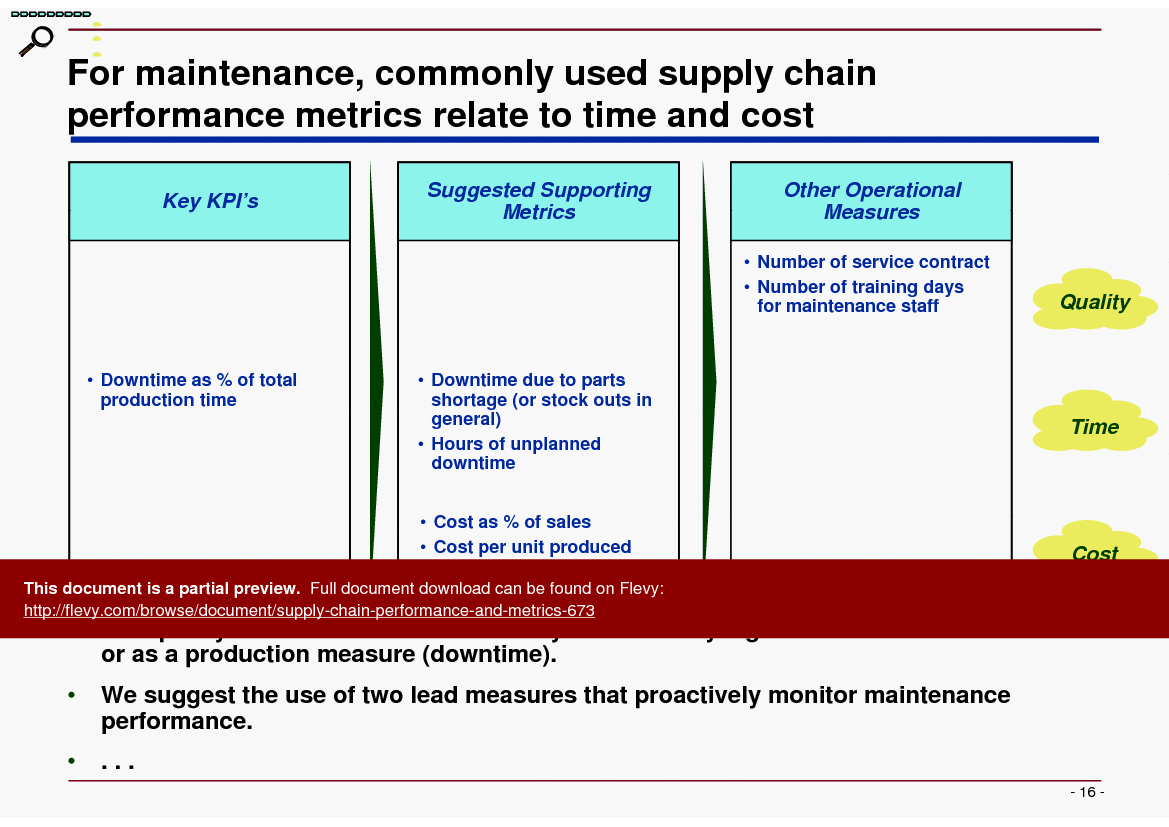
We also began with a brainstorming session on the key drivers for quality, time, and cost, examining the supply chain from the customer's perspective. This led to the identification of potential performance issues and the development of KPIs to pinpoint where problems lie within the supply chain. The document includes a hierarchy of measures, suggesting key KPIs and supporting metrics to dig through the causal tree and improve business performance.
Got a question about the product? Email us at support@flevy.com or ask the author directly by using the "Ask the Author a Question" form. If you cannot view the preview above this document description, go here to view the large preview instead.
Executive Summary
This document provides a detailed overview of supply chain performance metrics essential for organizations aiming to enhance operational efficiency. It outlines a benchmarking framework designed to compare performance metrics across various industries and capture benchmarking data consistently. By identifying key performance indicators (KPIs) and linking them to operational metrics, this resource equips executives and consultants with the tools to assess and improve supply chain effectiveness.
Who This Is For and When to Use
• Supply Chain Executives responsible for performance measurement and improvement
• Operations Managers seeking to optimize supply chain processes
• Consultants focused on benchmarking and performance analysis
• Data Analysts tasked with collecting and interpreting supply chain metrics
Best-fit moments to use this deck:
• During strategy sessions aimed at enhancing supply chain efficiency
• When establishing performance benchmarks across different projects
• For training sessions on supply chain metrics and KPIs
Learning Objectives
• Define key supply chain performance metrics and their importance
• Identify critical KPIs that drive operational effectiveness
• Analyze the interrelationships between different supply chain metrics
• Develop a benchmarking framework for consistent performance evaluation
• Establish a causal tree to understand the drivers of supply chain performance
• Tailor metrics to align with organizational strategic objectives
Table of Contents
• Overview of Supply Chain Performance Metrics (page 1)
• Benchmarking Framework Objectives (page 2)
• Key Performance Indicators (KPIs) (page 10)
• Metrics by Supply Chain Stage (page 11)
• Causal Relationships in Supply Chain Metrics (page 24)
• Appendix: KPI Definitions (page 18)
Primary Topics Covered
• Benchmarking Framework - A structured approach to compare supply chain performance metrics across industries, facilitating consistent evaluation and improvement.
• Key Performance Indicators (KPIs) - Essential metrics that provide insights into supply chain effectiveness, including accuracy, customer satisfaction, and cost efficiency.
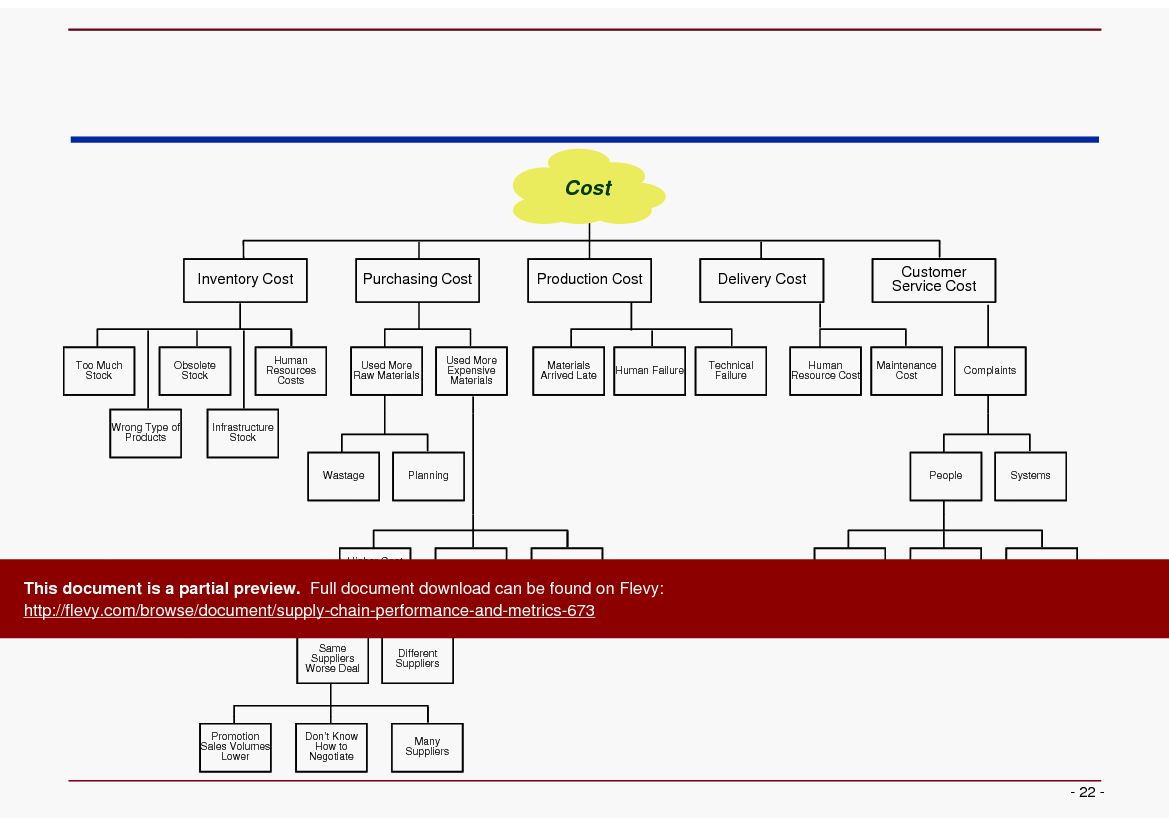
• Causal Relationships - An exploration of how various metrics interconnect, forming a causal tree that illustrates the drivers of performance across the supply chain.
• Operational Effectiveness Metrics - Specific metrics tailored to each stage of the supply chain, including forecasting, purchasing, and logistics, to monitor and enhance performance.
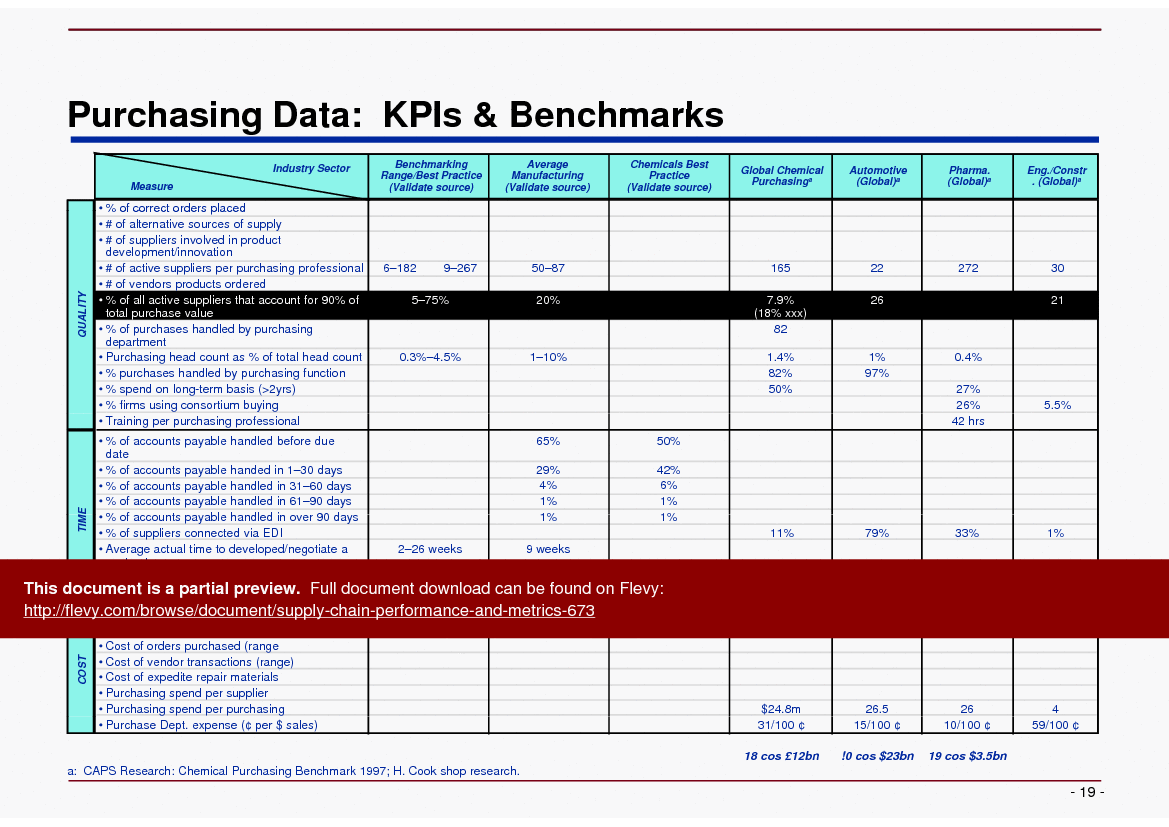
• Data Sources for Benchmarking - Identification of reliable sources for benchmarking data, including industry associations and research organizations.
• Customization of Metrics - Guidance on tailoring metrics to align with specific organizational goals and industry standards.
Deliverables, Templates, and Tools
• Benchmarking framework template for comparing supply chain metrics
• KPI selection guide to identify the most relevant metrics for various industries
• Causal tree model to visualize the relationships between performance metrics
• Performance measurement dashboard template for tracking key metrics
• Data collection framework for consistent benchmarking across projects
• Reporting template for communicating supply chain performance to stakeholders
Slide Highlights
• Overview of the supply chain performance metrics framework
• Causal tree illustrating the interrelationships between quality, time, and cost metrics
• Detailed breakdown of KPIs for each stage of the supply chain
• Visual representation of benchmarking data sources and their relevance
• Summary slide outlining the key objectives of the benchmarking framework
Potential Workshop Agenda
Introduction to Supply Chain Metrics (60 minutes)
• Overview of supply chain performance metrics and their importance
• Discussion on key performance indicators and their applications
Benchmarking Framework Development (90 minutes)
• Collaborative session to develop a benchmarking framework
• Identification of relevant KPIs for various supply chain stages
Causal Relationships Analysis (60 minutes)
• Exploration of the causal tree model and its application
• Group activity to identify interrelationships between metrics
Customization Guidance
• Tailor the benchmarking framework to align with specific industry standards
• Adjust KPIs based on organizational strategic objectives and operational goals
• Incorporate company-specific data sources for more accurate benchmarking
Secondary Topics Covered
• Industry-specific variations in supply chain metrics
• The role of technology in enhancing supply chain performance measurement
• Challenges in data collection and analysis for supply chain metrics
• Best practices for continuous improvement in supply chain performance
Topic FAQ
Document FAQ
These are questions addressed within this presentation.
What are the key performance indicators for supply chain management?
Key performance indicators include metrics such as forecasting accuracy, customer satisfaction rates, and total supply chain costs as a percentage of sales.
How can I customize the metrics for my organization?
Metrics can be tailored by aligning them with your organization's strategic objectives and selecting KPIs that reflect your specific operational goals.
What is the purpose of a causal tree in supply chain metrics?
A causal tree helps visualize the interrelationships between various performance metrics, allowing organizations to understand the drivers of supply chain performance.
How do I ensure consistent data collection for benchmarking?
Establish a standardized data collection framework that includes clear definitions of metrics and reliable data sources to ensure consistency across projects.
What are some common challenges in measuring supply chain performance?
Challenges include data availability, the complexity of interrelated metrics, and the need for alignment with strategic objectives.
How can I use this document in training sessions?
This document can serve as a foundational resource for training sessions focused on supply chain metrics, benchmarking, and performance improvement strategies.
What data sources are recommended for benchmarking?
Recommended data sources include industry associations, research organizations, and benchmarking studies specific to your sector.
How often should supply chain metrics be reviewed?
Metrics should be reviewed regularly, ideally on a quarterly basis, to ensure they remain aligned with organizational goals and industry standards.
Glossary
• KPI - Key Performance Indicator, a measurable value that demonstrates how effectively a company is achieving key business objectives.
• Benchmarking - The process of comparing business processes and performance metrics to industry bests and best practices from other companies.
• Causal Tree - A visual representation of the relationships between different performance metrics, illustrating how they influence one another.
• Operational Effectiveness - The ability to deliver products or services efficiently and effectively, maximizing value for customers.
• Data Sources - Various origins of information used for benchmarking and performance measurement, including industry reports and academic research.
• Performance Measurement - The process of evaluating the efficiency and effectiveness of an organization's operations.
• Supply Chain Management - The management of the flow of goods and services, including all processes that transform raw materials into final products.
• Continuous Improvement - Ongoing efforts to improve products, services, or processes over time.
• Quality Metrics - Measurements that assess the degree to which a product or service meets specified requirements.
• Cost Metrics - Measurements that evaluate the expenses associated with producing goods or services.
• Time Metrics - Measurements that assess the duration of processes within the supply chain.
• Forecasting Accuracy - The degree to which a forecast aligns with actual outcomes, typically expressed as a percentage.
• Supplier Performance - Metrics that evaluate the effectiveness and reliability of suppliers in meeting their obligations.
• Customer Satisfaction - A measure of how products and services meet or surpass customer expectations.
• Inventory Management - The supervision of non-capitalized assets (inventory) and stock items.
• Logistics - The detailed coordination of complex operations involving people, facilities, and supplies.
• Purchasing - The process of acquiring goods and services, including the selection of suppliers.
• Manufacturing - The process of converting raw materials into finished goods.
• Inbound Logistics - The transportation, warehousing, and receiving of goods into a business.
• Outbound Logistics - The transportation, warehousing, and distribution of goods to customers.
• Maintenance - The process of preserving or restoring a product or system to a state of operational efficiency.
• Marketing & Sales - Activities related to promoting and selling products or services.
Source: Best Practices in Supply Chain Analysis PDF: Supply Chain Performance & Metrics PDF (PDF) Document, Documents & Files
This document is available as part of the following discounted bundle(s):
Save %!
Supply Chain Toolkit
This bundle contains 3 total documents. See all the documents to the right.
|
Receive our FREE presentation on Operational Excellence
This 50-slide presentation provides a high-level introduction to the 4 Building Blocks of Operational Excellence. Achieving OpEx requires the implementation of a Business Execution System that integrates these 4 building blocks. |










