
Lean Leader GB Series 9 - Facilitate Proactive Maintenance   82-slide PPT PowerPoint presentation slide deck (PPTX)
$59.00

Lean Leader GB Series 9 - Facilitate Proactive Maintenance (82-slide PPT PowerPoint presentation slide deck (PPTX)) Preview Image
Log in to unlock full preview.
Lean Leader GB Series 9 - Facilitate Proactive Maintenance (82-slide PPT PowerPoint presentation slide deck (PPTX)) Preview Image
Arrow   Click main image to view in full screen.

Lean Leader GB Series 9 - Facilitate Proactive Maintenance (PowerPoint PPTX Slide Deck)

PowerPoint (PPTX) 82 Slides

$59.00
This presentation is developed by a pioneer in Lean and certified LSS Master Black Belt who has trained over 5,000+ students globally, from Directors, CEOs, GMs, to shop floor staff. He's endorsed by CMI Consortium, NZTE, HERA, NZPICS, CBAFF.
Add to Cart


Immediate download
Fully editable PowerPoint
Free lifetime updates

OEE PPT DESCRIPTION

Editor Summary Lean Leader GB Series 9 - Facilitate Proactive Maintenance is an 82-slide PowerPoint developed by a certified Lean Six Sigma Master Black Belt who has trained over 5,000 students and is endorsed by CMI Consortium, NZTE, HERA, NZPICS, and CBAFF. Read more

The Lean Leader Green Belt Series are designed and developed specifically for Team Leaders and Supervisors. These series are at a higher standard than the shop floor series. When a staff member completes all the 12 modules he / she can be awarded a "Lean Leader" certificate and can lead his team in the successful application of various Lean principles.

The 12 are modules:
1. Lead Change – 116 slides
2. Implement a Lean System – 44 slides
3. Facilitate Continuous Improvement – 46 slides
4. Problem Solving – 40 slides
5. Lead 5S – 72 slides
6. Improve Cost Factors – 50
7. Facilitate Quick Changeovers – 70 slides
8. Facilitate JIT – 46 slides
9. Facilitate Proactive Maintenance – 82 slides
10. Mistake Proof a Process – 49 slides
11. Facilitate Balanced Scorecard Approach – 37 slides
12. Ensure Process Improvements are Sustained – 49 slides

The 9th Module "Facilitate Proactive Maintenance Strategy" covers the following topics:
•  Why Equipment Fails
•  Measuring Equipment Performance
•  Getting it under control
•  Maintenance Strategies
•  Improving and monitoring equipment
•  Maintenance standards for operators
•  Workplace projects

You can also buy all the 12 modules at a 25% discounted as a bundled product.
Also add other presentations depending on your requirements, such as Kanban Implementation, Heijunka Implementation, Lean Assessment, and Lean Leader and Lean Culture Surveys.

Got a question about the product? Email us at support@flevy.com or ask the author directly by using the "Ask the Author a Question" form. If you cannot view the preview above this document description, go here to view the large preview instead.

MARCUS OVERVIEW

This synopsis was written by Marcus [?] based on the analysis of the full 82-slide presentation.


Executive Summary
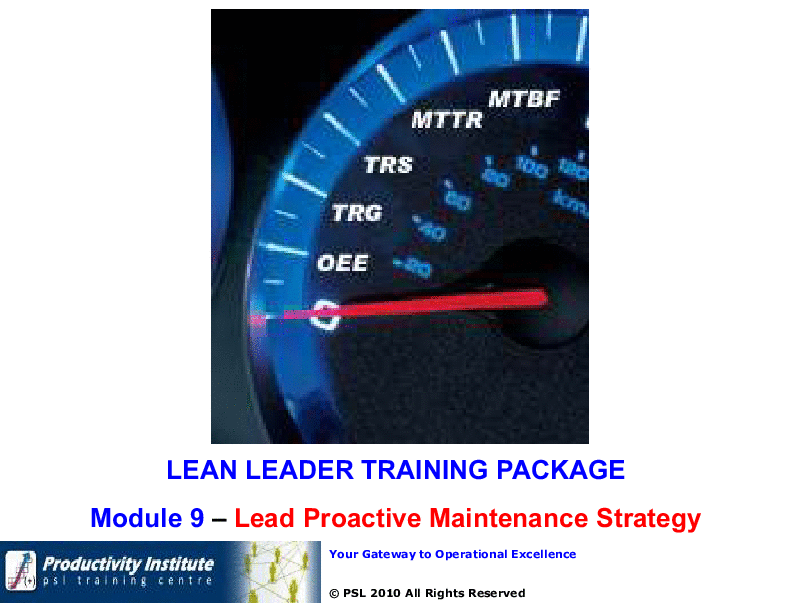
The Lean Leader GB Series 9 presentation on Proactive Maintenance Strategy equips organizations with essential tools to enhance equipment performance and reduce failures. Developed by a certified LSS Master Black Belt, this training package focuses on identifying equipment failure causes, implementing effective maintenance strategies, and utilizing performance metrics like Overall Equipment Effectiveness (OEE). Participants will learn to prioritize maintenance efforts, stabilize equipment, and foster team knowledge, ultimately driving operational excellence.

Who This Is For and When to Use
•  Maintenance Managers and Supervisors focused on improving equipment reliability
•  Operations Leaders aiming to enhance overall productivity
•  Quality Assurance Teams responsible for minimizing defects and rework
•  Continuous Improvement Practitioners implementing Lean methodologies

Best-fit moments to use this deck:
•  During maintenance strategy development sessions
•  When addressing recurring equipment failures
•  As part of training for new maintenance staff
•  In workshops aimed at improving OEE metrics

Learning Objectives
•  Define the major causes of equipment failure and their impact on operations
•  Build a framework for proactive maintenance and equipment stabilization
•  Establish metrics to measure equipment performance effectively
•  Identify and implement maintenance strategies tailored to specific equipment needs
•  Create a culture of continuous improvement within maintenance teams
•  Analyze OEE data to pinpoint opportunities for performance enhancement

Table of Contents
•  Introduction to Proactive Maintenance (page 3)
•  Understanding Equipment Performance (page 5)
•  Measuring Equipment Performance (page 10)
•  Maintenance Strategies Overview (page 15)
•  Group Activities and Discussions (page 20)
•  OEE Calculation and Analysis (page 25)
•  Continuous Improvement Practices (page 30)
•  Workplace Projects and Implementation (page 35)

Primary Topics Covered
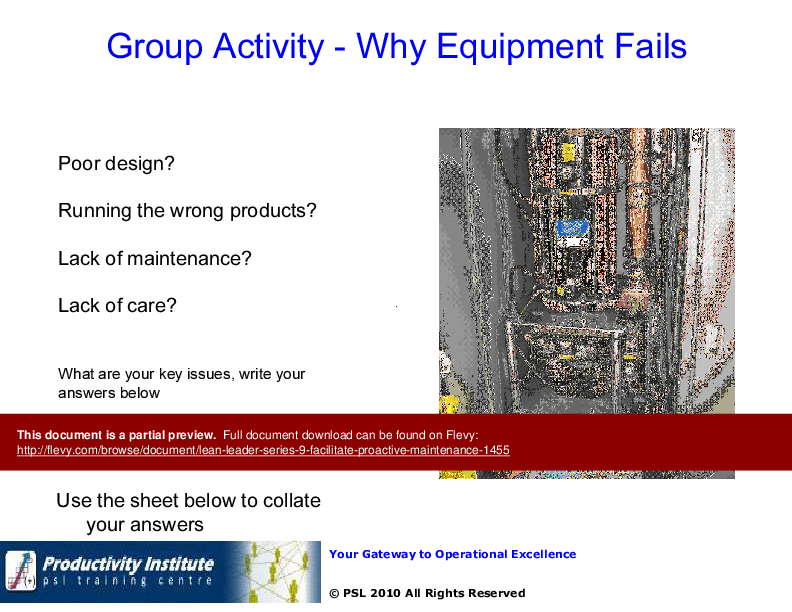
•  Equipment Failure Causes - Identifies contamination, lubrication issues, and overload as primary contributors to equipment failure.
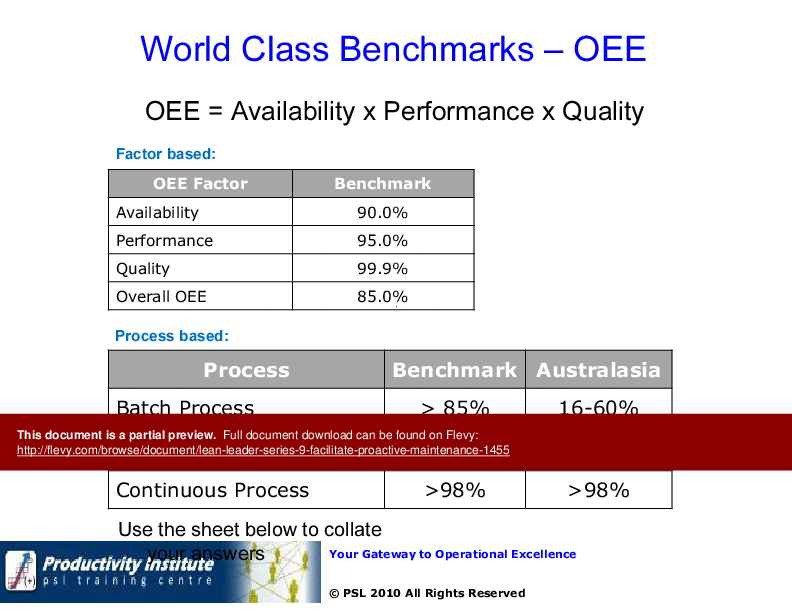
•  Measuring Equipment Performance - Introduces metrics such as OEE to assess equipment efficiency and identify losses.
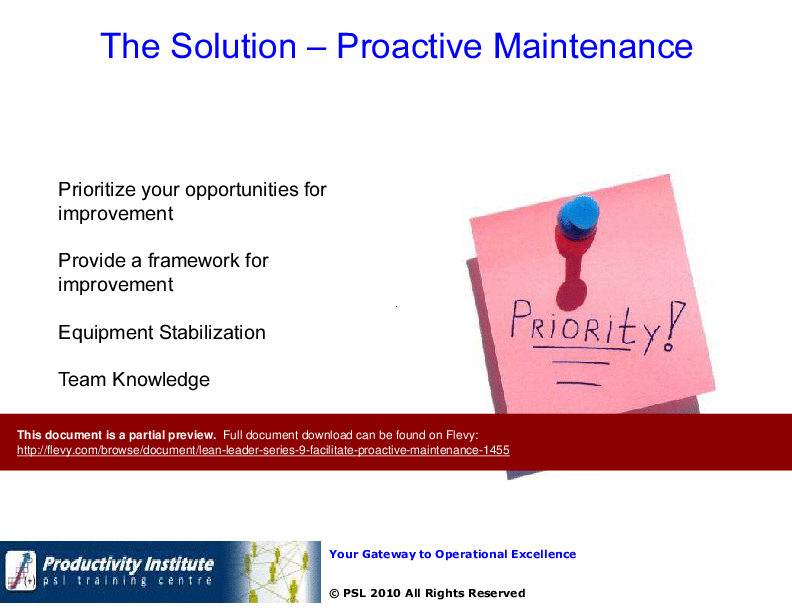
•  Proactive Maintenance Framework - Establishes a structured approach to prioritize maintenance tasks and improve equipment stability.
•  Maintenance Strategies - Discusses Total Productive Maintenance (TPM) and Reliability Centred Maintenance (RCM) as effective strategies for reducing breakdowns.
•  OEE Analysis - Provides a comprehensive overview of how to calculate and interpret OEE to enhance operational performance.
•  Continuous Improvement - Encourages the development of action plans based on initial inspections and ongoing monitoring of equipment performance.

Deliverables, Templates, and Tools
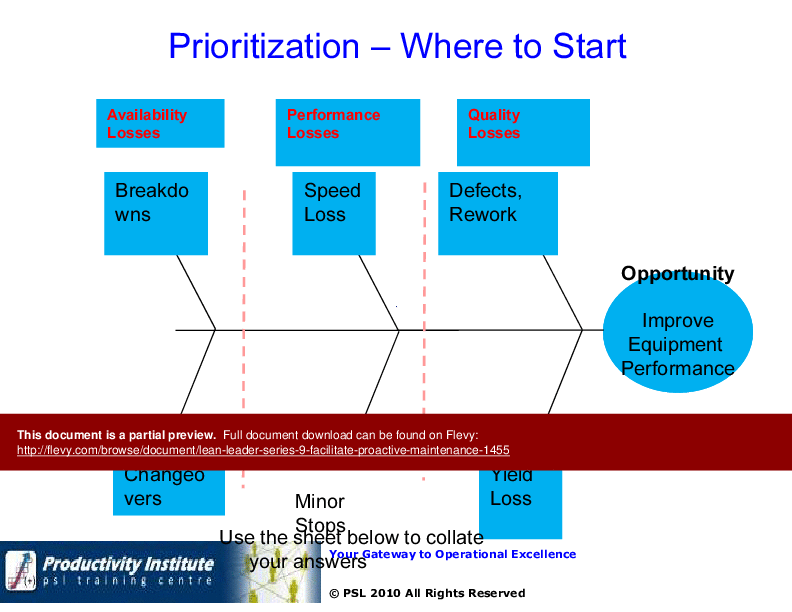
•  OEE Fishbone Diagram template for visualizing performance issues
•  Improvement Opportunity Sheet for identifying areas for enhancement
•  Action Plan template for tracking maintenance initiatives
•  Operator Inspection Checklists for routine equipment checks
•  Tagging System for managing maintenance actions during inspections
•  Visual Management tools for monitoring lubrication and alignment

Slide Highlights
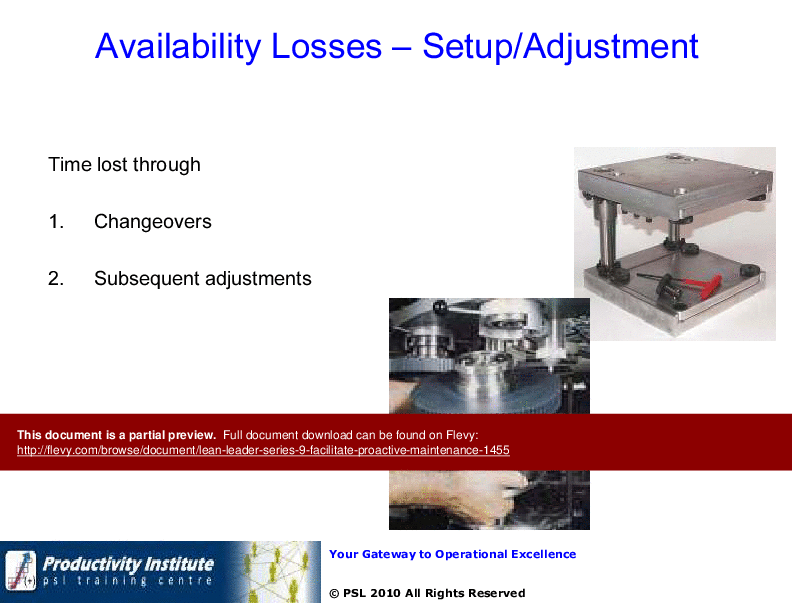
•  Overview of the major contributors to equipment failure, emphasizing lubrication and contamination
•  Detailed explanation of OEE calculation and its significance in performance monitoring
•  Group activities designed to engage participants in identifying equipment-related problems
•  Visual aids for demonstrating effective maintenance practices and strategies
•  Actionable insights on implementing continuous improvement processes

Potential Workshop Agenda
Introduction to Proactive Maintenance (30 minutes)
•  Overview of equipment failure causes and their impact
•  Discussion on measuring equipment performance

Group Activities (60 minutes)
•  Identify key issues affecting equipment reliability
•  Collaborate on developing improvement strategies

OEE Calculation and Analysis (45 minutes)
•  Hands-on session calculating OEE based on provided data
•  Discuss findings and implications for maintenance practices

Continuous Improvement Practices (30 minutes)
•  Develop action plans based on initial inspections
•  Share insights and strategies for ongoing monitoring

Customization Guidance
•  Tailor the maintenance strategies to align with specific equipment types and operational needs.
•  Adjust the OEE calculation examples to reflect actual production data from your facility.
•  Incorporate company-specific terminology and metrics into the training materials.

Secondary Topics Covered
•  Visual Management techniques for effective maintenance oversight
•  Lubrication standards and best practices to prevent equipment failure
•  Vibration control measures to enhance equipment longevity
•  Contamination management strategies to maintain operational cleanliness
•  Operator training and inspection protocols for consistent performance

Topic FAQ

What are the most common causes of equipment failure I should investigate first?

Common contributors to equipment failure identified in maintenance frameworks include contamination, improper lubrication, and overload conditions; these factors accelerate wear, increase breakdown risk, and can cause quality loss. The Lean Leader GB Series 9 highlights contamination, lubrication, and overload as primary contributors to failure.

How does Overall Equipment Effectiveness (OEE) help prioritize maintenance work?

OEE breaks equipment performance into availability, performance, and quality components, allowing teams to quantify losses and target the largest contributors to downtime or defects. Using OEE enables data-driven prioritization of stabilization and improvement work, as shown in the deck’s OEE Calculation and Analysis section (page 25).

What is the practical difference between Total Productive Maintenance (TPM) and Reliability Centred Maintenance (RCM)?

TPM focuses on operator involvement, preventive routines, and maximizing uptime through routine checks and visual management, while RCM prioritizes maintenance based on equipment criticality and failure modes to allocate resources. The presentation discusses both TPM and RCM as complementary maintenance strategies, TPM and RCM.

What features should a proactive maintenance training deck include when I’m choosing materials?

Useful features include identification of failure causes, OEE measurement and analysis, hands-on group activities, and practical templates such as operator inspection checklists, action plans, and fishbone diagrams. Flevy's Lean Leader GB Series 9 - Facilitate Proactive Maintenance explicitly includes these templates and workshop activities, including Operator Inspection Checklists and an Action Plan template.

How long should I plan a workshop that uses a maintenance training deck like this?

The sample workshop agenda in the presentation organizes sessions into focused blocks: Introduction (30 minutes), Group Activities (60 minutes), OEE Calculation and Analysis (45 minutes), and Continuous Improvement Practices (30 minutes), totaling about 165 minutes for a structured half-day session, or roughly 2.75 hours.

My plant has recurring breakdowns—what immediate steps should the maintenance team take?

Start with root-cause analysis focused on contamination, lubrication, and overload; implement operator inspection checklists and tagging during inspections; capture and prioritize findings on an Improvement Opportunity Sheet; then translate those into tracked Action Plans to stabilize equipment, using the Improvement Opportunity Sheet.

How can visual management be used to reduce maintenance errors and missed lubrication/alignment issues?

Visual management provides clear cues for equipment status, lubrication levels, and alignment, helping operators and maintenance staff detect deviations quickly. Integrating visual cues with regular inspections and tagging systems standardizes responses and supports ongoing monitoring using Visual Management tools.

Are pre-built maintenance templates worth purchasing for a reliability program?

Pre-built templates standardize inspections, root-cause capture, and follow-up, reducing setup time and improving consistency; useful templates include OEE Fishbone Diagrams, Improvement Opportunity Sheets, Action Plans, Operator Inspection Checklists, and tagging systems. Flevy's Lean Leader GB Series 9 supplies these templates, including an OEE Fishbone Diagram template.

Document FAQ
These are questions addressed within this presentation.

What is the primary goal of proactive maintenance?
Proactive maintenance aims to identify and address potential equipment failures before they occur, thereby enhancing reliability and reducing downtime.

How does OEE help in maintenance strategy?
OEE provides a clear metric for evaluating equipment performance, allowing teams to identify specific areas for improvement and track the effectiveness of maintenance efforts.

What are the key contributors to equipment failure?
The main contributors include contamination, lubrication issues, and overload conditions, which can lead to significant operational disruptions.

How can we implement continuous improvement in maintenance?
By regularly monitoring equipment performance, engaging teams in identifying issues, and developing actionable improvement plans, organizations can foster a culture of continuous enhancement.

What maintenance strategies are recommended?
Total Productive Maintenance (TPM) and Reliability Centred Maintenance (RCM) are effective strategies that focus on maximizing equipment uptime and minimizing failures.

How often should equipment inspections be conducted?
Inspections should be conducted regularly, with frequency determined by equipment usage and operational demands, to ensure optimal performance.

What role do operators play in maintenance?
Operators are crucial in identifying potential issues, conducting routine inspections, and providing feedback on equipment performance to maintenance teams.

How can visual management aid in maintenance practices?
Visual management tools help streamline maintenance processes by providing clear indicators of equipment status, lubrication levels, and alignment, making it easier for operators to monitor performance.

Glossary
•  Overall Equipment Effectiveness (OEE) - A metric that measures the efficiency of a manufacturing process.
•  Total Productive Maintenance (TPM) - A maintenance approach focused on proactive and preventive maintenance to maximize equipment uptime.
•  Reliability Centred Maintenance (RCM) - A strategy that prioritizes maintenance based on the criticality of equipment and potential failure modes.
•  Lubrication Standards - Guidelines for the proper application and maintenance of lubricants to prevent equipment failure.
•  Visual Management - Techniques that use visual cues to communicate equipment status and maintenance needs effectively.
•  Contamination Control - Practices aimed at minimizing the introduction of contaminants that can degrade equipment performance.
•  Vibration Analysis - The process of monitoring and analyzing vibrations in machinery to identify potential issues.
•  Inspection Checklists - Standardized forms used to ensure thorough and consistent equipment inspections.
•  Action Plan - A documented strategy outlining specific steps to address identified maintenance issues.
•  Improvement Opportunity Sheet - A tool for capturing and prioritizing potential enhancements in maintenance practices.
•  Equipment Stabilization - The process of ensuring that equipment operates reliably and consistently over time.
•  Performance Metrics - Quantitative measures used to assess equipment efficiency and effectiveness.
•  Housekeeping - The practice of maintaining cleanliness in the workplace to prevent contamination and equipment damage.
•  Breakdown Analysis - The examination of equipment failures to identify root causes and prevent recurrence.
•  Operator Training - Instruction provided to operators to enhance their skills in equipment monitoring and maintenance practices.
•  Maintenance Strategy - A planned approach to managing and executing maintenance activities effectively.
•  Continuous Improvement - Ongoing efforts to enhance products, services, or processes through incremental improvements.
•  Failure Mode Effect Analysis (FMEA) - A systematic method for evaluating potential failure modes within a system.
•  Downtime - The period during which equipment is not operational due to maintenance or failure.
•  Production Efficiency - A measure of how effectively resources are utilized in the production process.
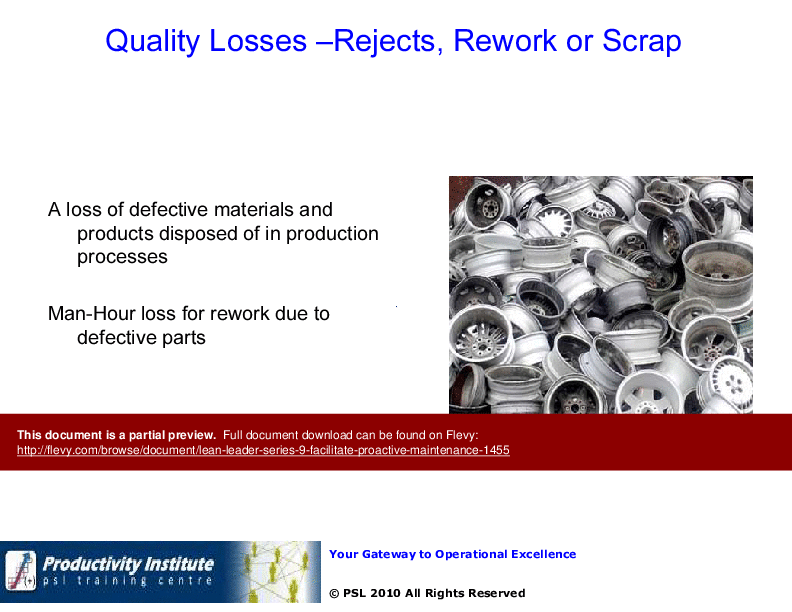
•  Quality Loss - The reduction in product quality due to defects or rework during the manufacturing process.

Source: Best Practices in OEE PowerPoint Slides: Lean Leader GB Series 9 - Facilitate Proactive Maintenance PowerPoint (PPTX) Presentation Slide Deck, OpEx Academy NZ


$59.00
This presentation is developed by a pioneer in Lean and certified LSS Master Black Belt who has trained over 5,000+ students globally, from Directors, CEOs, GMs, to shop floor staff. He's endorsed by CMI Consortium, NZTE, HERA, NZPICS, CBAFF.
Add to Cart
  

ABOUT THE AUTHOR

Author image
Additional documents from author: 88

Vishnu Rayapeddi is an experienced management consultant and trainer specializing in implementing continuous process improvements. Vishnu is a pioneer in Lean Management which combines the power of Lean Thinking, TOC, Six Sigma, TQM, TWI, Balanced Scorecard, cGMP and other best-class methodologies such as, DMAIC, Value Stream Mapping, Root Cause Analysis, 5S, Quick Changeovers, Quality and ... [read more]

Ask the Author a Question

You must be logged in to contact the author.

Click here to log in Click here register

Did you know?
The average daily rate of a McKinsey consultant is $6,625 (not including expenses). The average price of a Flevy document is $65.

Bundle and save! You can save up to % with bundles!

View bundle(s)


Trusted by over 10,000+ Client Organizations
Since 2012, we have provided business templates to over 10,000 businesses and organizations of all sizes, from startups and small businesses to the Fortune 100, in over 130 countries.
AT&T GE Cisco Intel IBM Coke Dell Toyota HP Nike Samsung Microsoft Astrazeneca JP Morgan KPMG Walgreens Walmart 3M Kaiser Oracle SAP Google E&Y Volvo Bosch Merck Fedex Shell Amgen Eli Lilly Roche AIG Abbott Amazon PwC T-Mobile Broadcom Bayer Pearson Titleist ConEd Pfizer NTT Data Schwab


Read Customer Testimonials

 
"If you are looking for great resources to save time with your business presentations, Flevy is truly a value-added resource. Flevy has done all the work for you and we will continue to utilize Flevy as a source to extract up-to-date information and data for our virtual and onsite presentations!"

– Debbi Saffo, President at The NiKhar Group
 
"The wide selection of frameworks is very useful to me as an independent consultant. In fact, it rivals what I had at my disposal at Big 4 Consulting firms in terms of efficacy and organization."

– Julia T., Consulting Firm Owner (Former Manager at Deloitte and Capgemini)
 
"FlevyPro provides business frameworks from many of the global giants in management consulting that allow you to provide best in class solutions for your clients."

– David Harris, Managing Director at Futures Strategy
 
"Last Sunday morning, I was diligently working on an important presentation for a client and found myself in need of additional content and suitable templates for various types of graphics. Flevy.com proved to be a treasure trove for both content and design at a reasonable price, considering the time I "

– M. E., Chief Commercial Officer, International Logistics Service Provider
 
"Flevy is now a part of my business routine. I visit Flevy at least 3 times each month.

Flevy has become my preferred learning source, because what it provides is practical, current, and useful in this era where the business world is being rewritten.

In today's environment where there are so "

– Omar Hernán Montes Parra, CEO at Quantum SFE
 
"As a young consulting firm, requests for input from clients vary and it's sometimes impossible to provide expert solutions across a broad spectrum of requirements. That was before I discovered Flevy.com.

Through subscription to this invaluable site of a plethora of topics that are key and crucial to consulting, I "

– Nishi Singh, Strategist and MD at NSP Consultants
 
"Flevy is our 'go to' resource for management material, at an affordable cost. The Flevy library is comprehensive and the content deep, and typically provides a great foundation for us to further develop and tailor our own service offer."

– Chris McCann, Founder at Resilient.World
 
"FlevyPro has been a brilliant resource for me, as an independent growth consultant, to access a vast knowledge bank of presentations to support my work with clients. In terms of RoI, the value I received from the very first presentation I downloaded paid for my subscription many times over! The "

– Roderick Cameron, Founding Partner at SGFE Ltd


Save with Bundles

This document is available as part of the following discounted bundle(s):

Save %!
Lean Leader / Green Belt Training Series - 12 Modules

This bundle contains 12 total documents. See all the documents to the right.

$325.00


Add Bundle & Save


Customers Also Bought These Documents


Customers Also Like These Documents

Explore Related Management Topics

5S


Your Recently Viewed Documents
Receive our FREE presentation on Operational Excellence

This 50-slide presentation provides a high-level introduction to the 4 Building Blocks of Operational Excellence. Achieving OpEx requires the implementation of a Business Execution System that integrates these 4 building blocks.