
The Lean Leader Green Belt Series are designed and developed specifically for Team Leaders and Supervisors. These series are at a higher standard than the shop floor series. When a staff member completes all the 12 modules he / she can be awarded a "Lean Leader" certificate and can lead his team in the successful application of various Lean principles.

The 12 are modules:
1. Lead Change – 116 slides
2. Implement a Lean System – 44 slides
3. Facilitate Continuous Improvement – 46 slides
4. Problem Solving – 40 slides
5. Lead 5S – 72 slides
6. Improve Cost Factors – 50
7. Facilitate Quick Changeovers – 70 slides
8. Facilitate JIT – 46 slides
9. Facilitate Proactive Maintenance – 82 slides
10. Mistake Proof a Process – 49 slides
11. Facilitate Balanced Scorecard Approach – 37 slides
12. Ensure Process Improvements are Sustained – 49 slides
The 12th Module "Ensure Process Improvements Are Sustained" covers the following topics:
• Introduction to Sustaining Improvement activities
• Identification of areas/processes for improvement
• Methods associated with facilitating sustainable improvements
• Workplace projects
• What improvement activities did you decide to sustain?
• What was your plan?
• What results did you achieve?
• What outstanding activities still need completing?
You can also buy all the 12 modules at a 25% discounted as a bundled product.
Also add other presentations depending on your requirements, such as Kanban Implementation, Heijunka Implementation, Lean Assessment, and Lean Leader and Lean Culture Surveys.
Got a question about the product? Email us at support@flevy.com or ask the author directly by using the "Ask the Author a Question" form. If you cannot view the preview above this document description, go here to view the large preview instead.
Executive Summary
The "Lean Leader GB Series 12 - Ensure Improvements Are Sustained" presentation is designed to empower organizations in maintaining and enhancing process improvements. Developed by a certified LSS Master Black Belt with extensive global training experience, this module focuses on the critical aspects of sustaining improvements through structured methodologies like PDCA (Plan-Do-Check-Act). Buyers will gain actionable insights into implementing sustainable practices, ensuring continuous improvement, and fostering a culture that embraces change.
Who This Is For and When to Use
• Lean practitioners and continuous improvement teams
• Operations managers and process improvement leaders
• Quality assurance professionals focused on sustaining gains
• Training and development teams responsible for workforce skills
Best-fit moments to use this deck:
• During the implementation of new processes or systems
• When assessing the effectiveness of current improvement initiatives
• In training sessions aimed at enhancing team skills in sustaining improvements
Learning Objectives
• Define the PDCA cycle and its role in continuous improvement.
• Identify key areas for improvement within existing processes.
• Establish methods for locking in improvements through standard work practices.
• Develop strategies for effective communication during implementation.
• Create a sustainment plan for ongoing process improvements.
• Evaluate the effectiveness of improvements through audits and corrective actions.
Table of Contents
• Introduction to Sustaining Improvement Activities (page 3)
• Continuous Improvement Overview (page 5)
• Locking Improvements In (page 7)
• Sustaining Process Improvement (page 9)
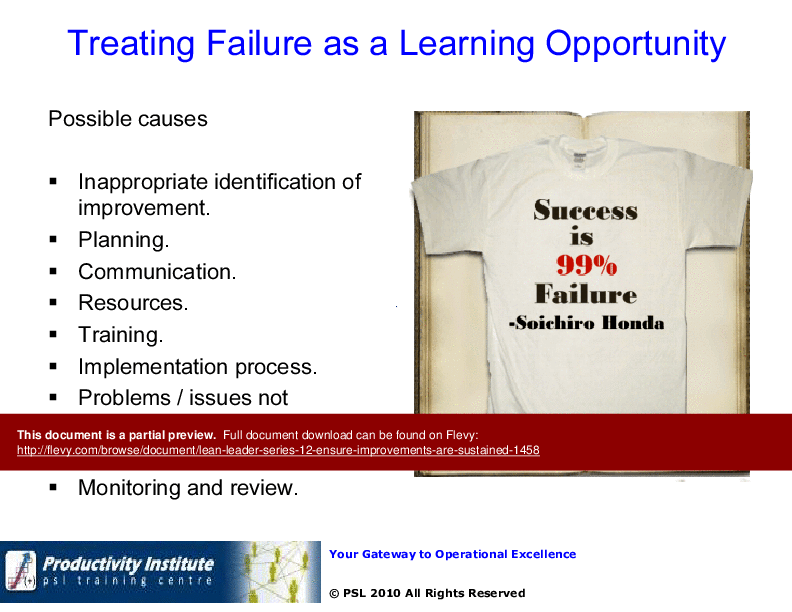
• Treating Failure as a Learning Opportunity (page 11)
• The Improvement Process (page 13)
• Implementation Strategies (page 15)
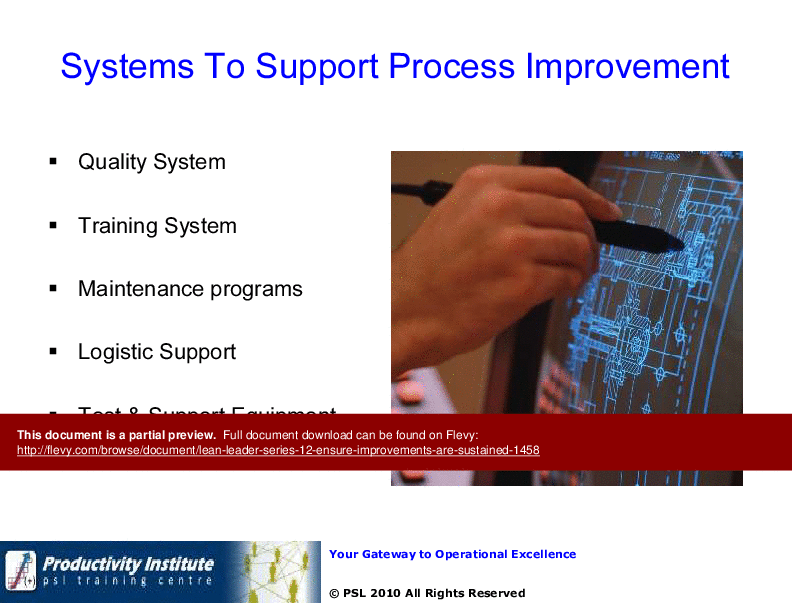
• Systems to Support Process Improvement (page 17)
• Review Phase and Auditing (page 19)
• Workplace Project Presentation (page 21)
Primary Topics Covered
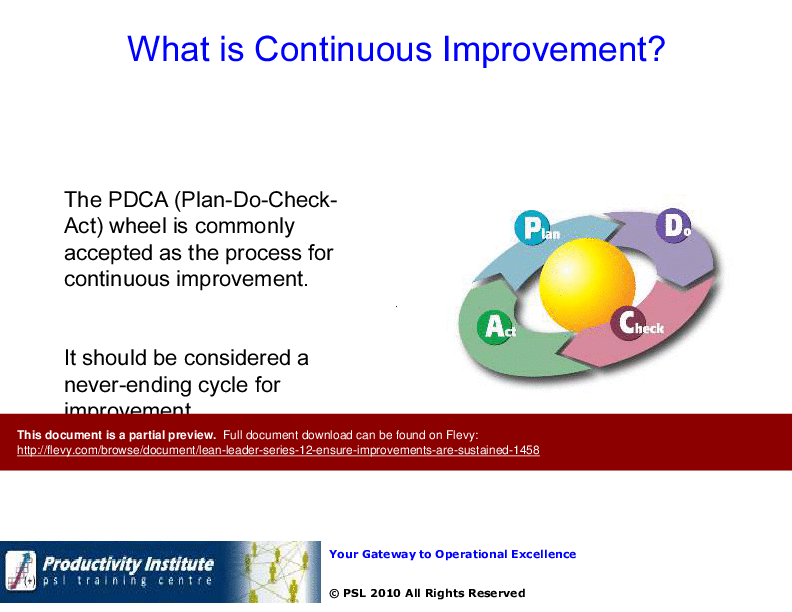
• Continuous Improvement - The PDCA cycle serves as a framework for ongoing enhancements, emphasizing that improvement is a never-ending process.
• Locking Improvements In - Standardizing new processes ensures that improvements are maintained and can be audited effectively.
• Sustaining Process Improvement - Focus on the "Check" and "Act" phases of PDCA to evaluate and institutionalize successful changes.
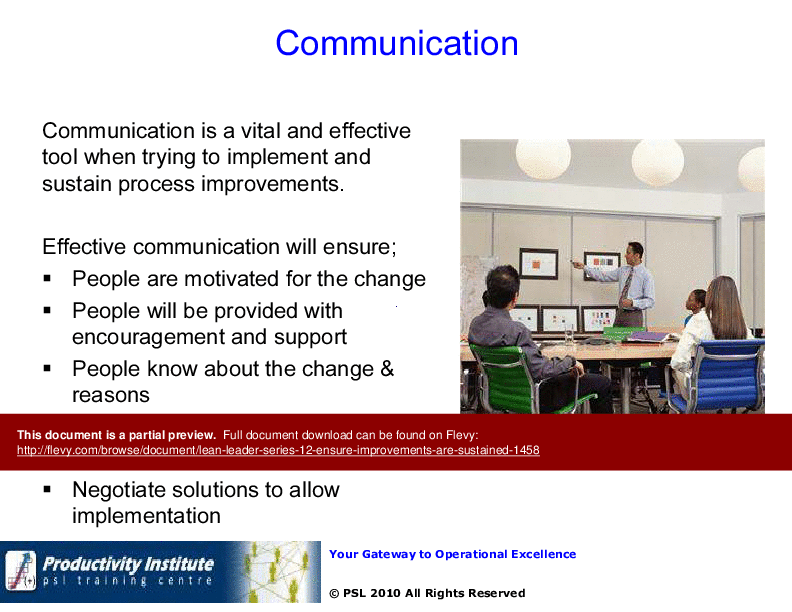
• Communication Strategies - Effective communication is crucial for motivating teams and ensuring everyone understands the changes being implemented.
• Training and Workforce Skills - Adequate training is essential for the successful adoption of new systems and processes.
• Audit and Review - Establishing measures and indicators for assessing the effectiveness of improvements and implementing corrective actions as needed.
Deliverables, Templates, and Tools
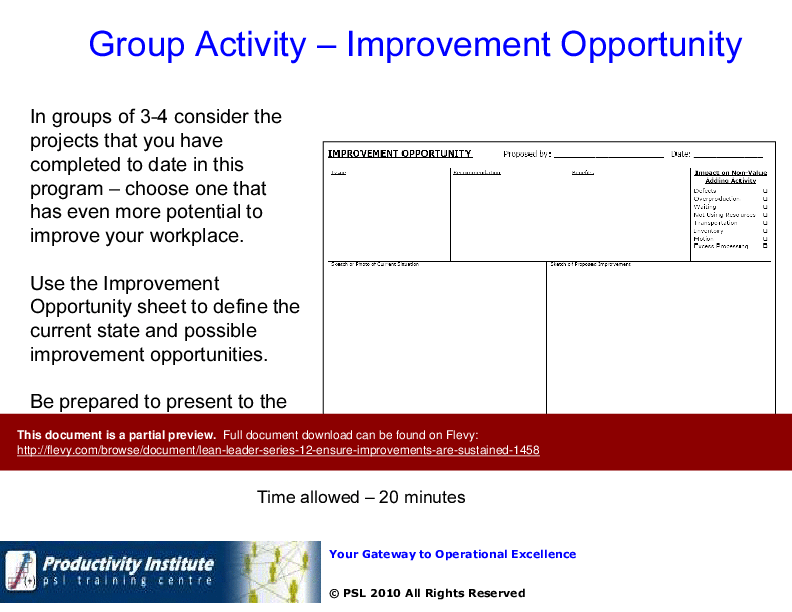
• Improvement Opportunity Sheet for identifying potential areas for enhancement.
• Action Plan template for outlining steps to implement and sustain improvements.
• Audit checklist for evaluating the effectiveness of implemented changes.
• Communication plan template to ensure effective information exchange during implementation.
• Training Needs Analysis framework to assess skill gaps in the workforce.
Slide Highlights
• Overview of the PDCA cycle illustrating the continuous improvement process.
• Strategies for locking in improvements with standard work practices.
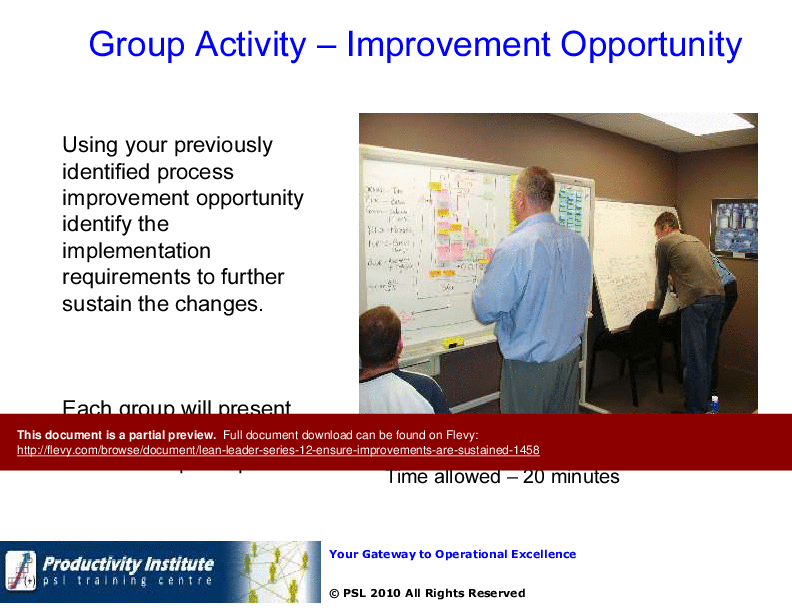
• Group activity slides that encourage collaborative identification of improvement opportunities.
• Visual aids demonstrating the importance of communication in sustaining improvements.
• Audit process flowchart outlining steps for effective evaluation of changes.
Potential Workshop Agenda
Introduction to Sustaining Improvements (60 minutes)
• Discuss the importance of sustaining improvements and the PDCA cycle.
• Identify areas for improvement through group activities.
Implementation Strategies (90 minutes)
• Develop communication plans and training needs analyses.
• Create action plans for sustaining improvements.
Review and Audit Phase (60 minutes)
• Establish measures and indicators for assessing improvements.
• Discuss the audit process and corrective actions.
Customization Guidance
• Tailor the Improvement Opportunity Sheet to reflect specific organizational processes and challenges.
• Adjust training plans based on the unique skill sets of team members involved in the improvement initiatives.
• Modify communication strategies to align with organizational culture and existing communication channels.
Secondary Topics Covered
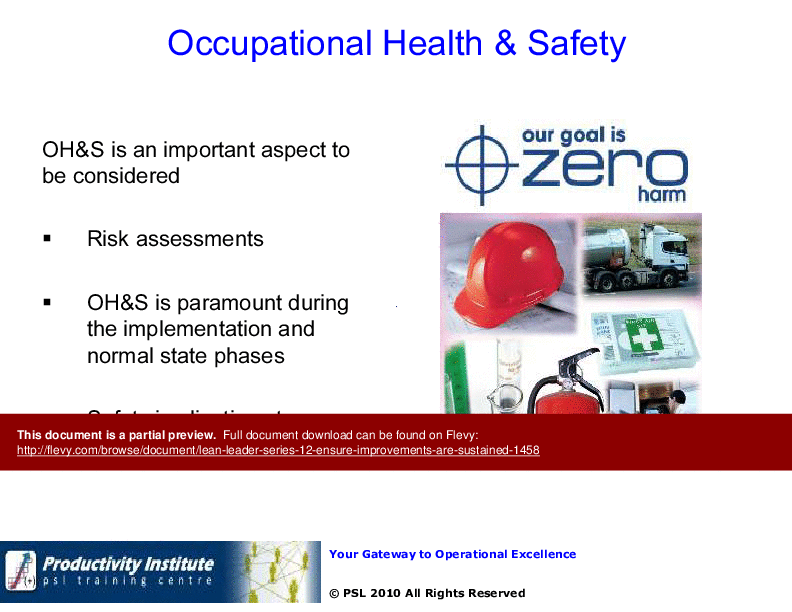
• Occupational health and safety considerations during implementation.
• Resource allocation and management for improvement projects.
• Methods for effective monitoring and supervision of improvement initiatives.
• Best practices for documenting changes and maintaining quality control.Document FAQ
These are questions addressed within this presentation.
What is the PDCA cycle?
The PDCA (Plan-Do-Check-Act) cycle is a continuous improvement framework that emphasizes iterative progress through planning, executing, evaluating, and adjusting processes.
How can we ensure that improvements are sustained?
Improvements can be sustained by standardizing new practices, conducting regular audits, and fostering a culture of continuous improvement within the organization.
What role does communication play in sustaining improvements?
Effective communication ensures that all team members are informed, motivated, and engaged in the improvement process, facilitating smoother transitions and adherence to new practices.
What are some common barriers to sustaining improvements?
Barriers may include inadequate training, lack of resources, poor communication, and insufficient monitoring of implemented changes.
How often should audits be conducted?
Audits should be conducted regularly, based on the complexity of the changes implemented and the specific needs of the organization, to ensure ongoing compliance and effectiveness.
What is an Improvement Opportunity Sheet?
An Improvement Opportunity Sheet is a tool used to identify and document potential areas for process enhancement, helping teams focus their efforts effectively.
How do we measure the success of implemented improvements?
Success can be measured through established Key Performance Indicators (KPIs), feedback from team members, and performance audits that assess the impact of changes.
What corrective actions should be taken if improvements are not effective?
Identify the root causes of underperformance, document corrective action requests, and ensure follow-up audits to verify that changes have been effectively implemented.
Glossary
• PDCA - Plan-Do-Check-Act; a continuous improvement cycle.
• Standard Work - Documented procedures that ensure consistent execution of processes.
• Continuous Improvement - Ongoing efforts to enhance products, services, or processes.
• Audit - A systematic examination of a process or system to ensure compliance and effectiveness.
• Training Needs Analysis - A process for identifying gaps in skills and knowledge within a workforce.
• Key Performance Indicators (KPIs) - Metrics used to evaluate the success of an organization in achieving its objectives.
• Corrective Action Request (CAR) - A document requesting action to address a non-conformance or deficiency.
• Occupational Health & Safety (OH&S) - Regulations and practices aimed at ensuring workplace safety.
• Resource Allocation - The distribution of resources among various projects or business units.
• Quality System - A structured system that documents processes, procedures, and responsibilities for achieving quality policies and objectives.
• Communication Plan - A strategy for ensuring effective information exchange during projects.
• Sustainment Plan - A structured approach for maintaining improvements over time.
Source: Best Practices in Continuous Improvement PowerPoint Slides: Lean Leader GB Series 12 - Ensure Improvements Are Sustained PowerPoint (PPTX) Presentation Slide Deck, OpEx Academy NZ
This document is available as part of the following discounted bundle(s):
Save %!
Lean Leader / Green Belt Training Series - 12 Modules
This bundle contains 12 total documents. See all the documents to the right.
|
Receive our FREE presentation on Operational Excellence
This 50-slide presentation provides a high-level introduction to the 4 Building Blocks of Operational Excellence. Achieving OpEx requires the implementation of a Business Execution System that integrates these 4 building blocks. |