
The Lean Leader Green Belt Series are designed and developed specifically for Team Leaders and Supervisors. These series are at a higher standard than the shop floor series. When a staff member completes all the 12 modules he / she can be awarded a "Lean Leader" certificate and can lead his team in the successful application of various Lean principles.
The 12 are modules:
1. Lead Change – 116 slides
2. Implement a Lean System – 44 slides
3. Facilitate Continuous Improvement – 46 slides
4. Problem Solving – 40 slides
5. Lead 5S – 72 slides
6. Improve Cost Factors – 50
7. Facilitate Quick Changeovers – 70 slides
8. Facilitate JIT – 46 slides
9. Facilitate Proactive Maintenance – 82 slides
10. Mistake Proof a Process – 49 slides
11. Facilitate Balanced Scorecard Approach – 37 slides
12. Ensure Process Improvements are Sustained – 49 slides
The 7th Module "Facilitate Quick Changeovers" covers the following topics:
• Define Changeovers and understanding SMED concept
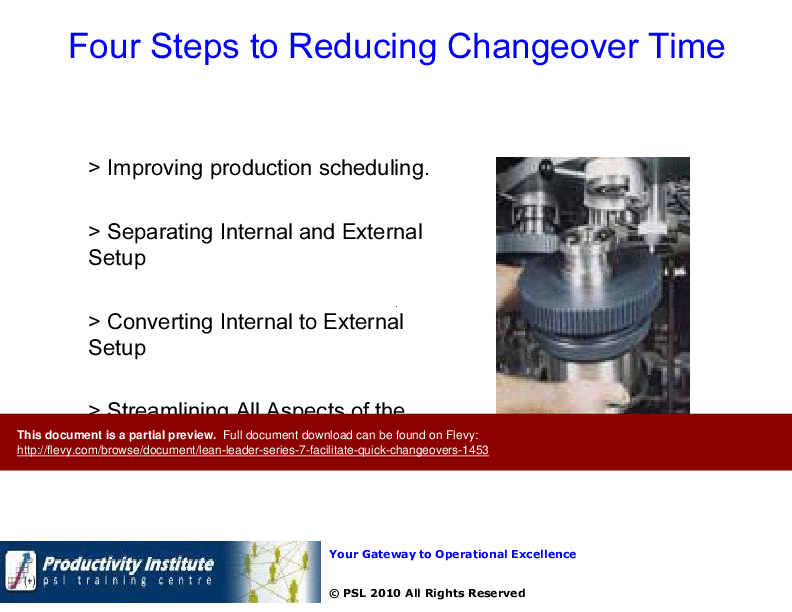
• 4 Steps to set-up reduction
1. Improving production scheduling.
2. Separating Internal and External Setup
3. Converting Internal to External Setup
4. Streamlining All Aspects of the Setup Operation
• Workplace Project
• Check-lists for set-up reduction
You can also buy all the 12 modules at a 25% discounted as a bundled product.
Also add other presentations depending on your requirements, such as Kanban Implementation, Heijunka Implementation, Lean Assessment, and Lean Leader and Lean Culture Surveys.
Got a question about the product? Email us at support@flevy.com or ask the author directly by using the "Ask the Author a Question" form. If you cannot view the preview above this document description, go here to view the large preview instead.
Executive Summary
The Lean Leader GB Series 7 presentation on Quick Changeovers is an essential resource for organizations aiming to enhance operational efficiency through effective setup reduction techniques. Developed by a certified LSS Master Black Belt with extensive global training experience, this presentation focuses on the SMED (Single Minute Exchange of Die) methodology. It equips leaders and teams with the knowledge to minimize changeover times, thereby increasing production flexibility, reducing inventory levels, and improving overall scheduling. By implementing the strategies outlined in this deck, organizations can achieve significant cost savings and operational excellence.
Who This Is For and When to Use
• Lean practitioners and continuous improvement teams looking to enhance production efficiency
• Manufacturing managers and supervisors responsible for operational workflows
• Quality assurance teams focused on defect reduction and process optimization
• Project managers overseeing production scheduling and resource allocation
Best-fit moments to use this deck:
• During Lean training sessions aimed at improving changeover processes
• When initiating Kaizen events focused on setup reduction
• In workshops designed to streamline production scheduling and inventory management
• As a reference for ongoing improvement projects targeting operational efficiency
Learning Objectives
• Define changeovers and articulate the SMED concept
• Build a comprehensive understanding of the 4 steps to setup reduction
• Establish effective production scheduling techniques to minimize changeovers
• Identify and separate internal and external setup tasks
• Convert internal tasks to external tasks to enhance efficiency
• Streamline all aspects of the setup operation for optimal performance
Table of Contents
• Introduction to Changeovers (page 3)
• Understanding SMED (page 5)
• Importance of Setup Reduction (page 7)
• Four Steps to Reducing Changeover Time (page 10)
• Case Studies on Setup Reduction (page 15)
• Setup Reduction Goals and Checklists (page 20)
• Workplace Project Guidelines (page 25)
• Changeover Standards Development (page 30)
• Conclusion and Further Reading (page 35)
Primary Topics Covered
• Changeover Definition - The time taken from the end of one production run to the start of another, emphasizing the need for efficiency.
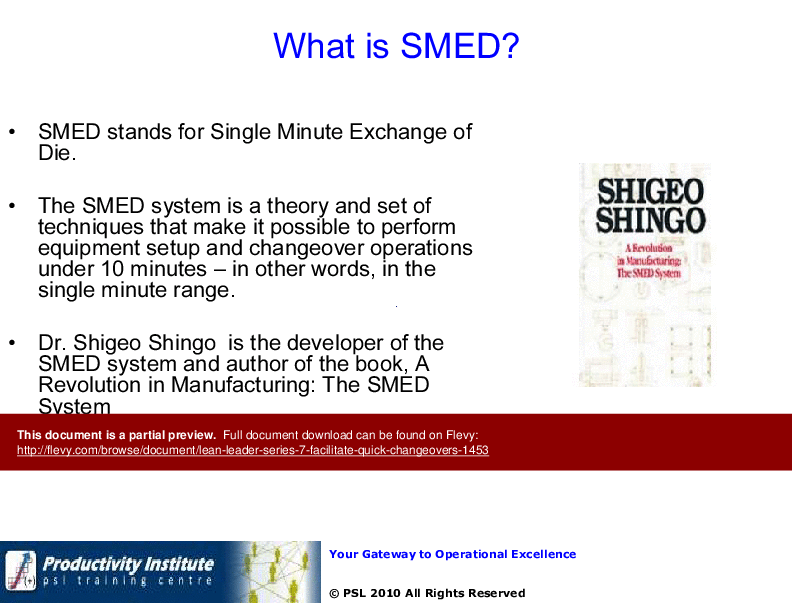
• SMED Concept - A methodology aimed at reducing setup times to under 10 minutes, enhancing production flexibility.
• Setup Reduction Techniques - Strategies for improving production scheduling and separating internal from external setup tasks.
• Case Studies - Real-world examples demonstrating the impact of effective changeover strategies on operational efficiency.
• Setup Reduction Goals - Establishing targets for setup reduction, including the 50 Percent Rule and the theoretical goal of zero setup.
• Workplace Project Implementation - Guidelines for applying learned techniques in a manufacturing environment to drive continuous improvement.
Deliverables, Templates, and Tools
• Setup combination worksheets for documenting changeover processes
• Checklists for assessing current changeover practices and identifying improvement areas
• Observation sheets for tracking internal and external setup tasks
• Project plan forms for implementing action plans related to setup reduction
• Standard operating procedure templates for consistent changeover practices
• Improvement opportunity sheets for documenting and analyzing changeover challenges
Slide Highlights
• Visual representation of the changeover process, illustrating time loss and efficiency gains
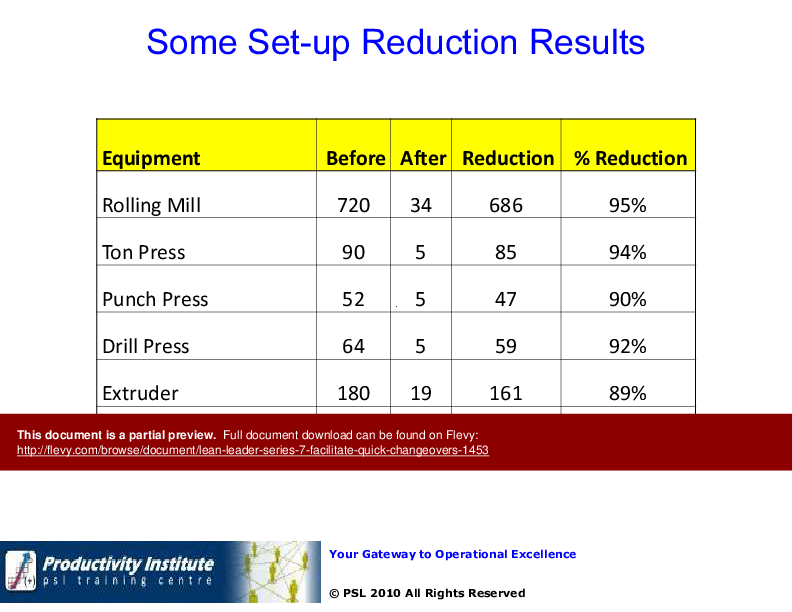
• Case study slides showcasing significant cost savings from reduced changeover times
• Flowcharts detailing the 4 steps to effective setup reduction
• Comparison slides between traditional and world-class setup processes
• Checklists for assessing setup reduction maturity across different phases
Potential Workshop Agenda
Introduction to Changeovers (30 minutes)
• Define changeovers and discuss their impact on production
• Overview of the SMED concept and its benefits
SMED Techniques and Implementation (60 minutes)
• Discuss the 4 steps to reducing changeover time
• Group activity to identify internal vs. external setup tasks
Case Study Analysis (45 minutes)
• Review real-world examples of successful setup reduction
• Discuss lessons learned and applicable strategies
Action Planning and Wrap-Up (30 minutes)
• Develop individual action plans for implementing changeover improvements
• Share key takeaways and next steps for continuous improvement
Customization Guidance
• Tailor the presentation to include specific examples from your organization’s changeover processes
• Adjust the case studies to reflect industry-specific challenges and solutions
• Incorporate company-specific terminology and metrics for clarity and relevance
• Modify the action planning section to align with existing operational goals and timelines
Secondary Topics Covered
• The role of workplace organization in reducing setup times
• Techniques for mistake-proofing the changeover process
• Ergonomic considerations during changeovers to enhance safety
• The importance of teamwork and resource availability in rapid changeovers
• Continuous improvement methodologies applicable to setup reduction
Topic FAQ
Document FAQ
These are questions addressed within this presentation.
What is the SMED methodology?
SMED stands for Single Minute Exchange of Die, a system designed to reduce setup times to under 10 minutes, enhancing production efficiency.
How can setup reduction impact inventory levels?
By minimizing changeover times, organizations can operate with smaller batch sizes and more frequent runs, leading to reduced inventory levels.
What are the 4 steps to reducing changeover time?
The 4 steps include improving production scheduling, separating internal and external setup tasks, converting internal tasks to external tasks, and streamlining all aspects of the setup operation.
Can you provide examples of successful setup reduction?
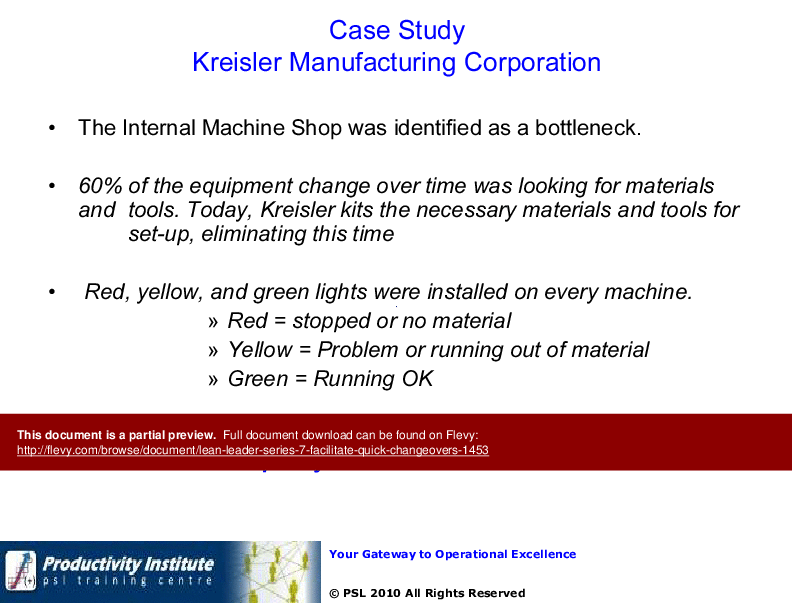
Case studies, such as those from Allied Tube and Kreisler Manufacturing, demonstrate significant cost savings and efficiency improvements through effective changeover strategies.
How do I implement a quick changeover project in my organization?
Utilize the provided project guidelines and templates to document activities, set goals, and track progress toward reducing changeover times.
What tools can help in the setup reduction process?
Observation sheets, checklists, and project plan forms are valuable tools for assessing current practices and implementing improvements.
What is the theoretical goal of a setup reduction program?
The ultimate goal is to eliminate the need for setup entirely, typically achieved through dedicated equipment and continuous improvement efforts.
How can I ensure my team is trained in quick changeover techniques?
Develop a training plan that includes hands-on practice, standard operating procedures, and regular reviews to reinforce learning.
What role does ergonomics play in changeovers?
Analyzing risks and hazards associated with changeovers helps ensure operator safety and efficiency, minimizing physical strain during the process.
How can I measure the success of my setup reduction efforts?
Track key performance indicators such as changeover times, production uptime, and cost savings to evaluate the effectiveness of implemented strategies.
Glossary
• Changeover - The process of transitioning from one production run to another.
• SMED - Single Minute Exchange of Die, a methodology for reducing setup times.

• Setup Reduction - Techniques aimed at minimizing the time and resources required for changeovers.
• Internal Setup - Tasks that can only be performed when the machine is not running.
• External Setup - Tasks that can be performed while the machine is still running.
• Kaizen - A continuous improvement methodology focused on incremental changes.
• Takt Time - The maximum allowable time to produce a product to meet customer demand.
• Lean Manufacturing - A production practice that considers the expenditure of resources in any aspect other than the direct creation of value for the end customer to be wasteful and thus a target for elimination.
• Workplace Organization - The arrangement of tools, materials, and equipment to enhance efficiency and safety.
• Mistake Proofing - Techniques designed to prevent errors in the production process.
• Ergonomics - The study of people's efficiency in their working environment, focusing on optimizing human well-being and overall system performance.
• Continuous Improvement - Ongoing efforts to improve products, services, or processes over time.
• Project Plan - A formal document that outlines the objectives, scope, and steps needed to achieve a specific goal.
• Observation Sheet - A tool used to document processes and identify areas for improvement.
• Improvement Opportunity Sheet - A form for recording potential enhancements to current practices.
• Standard Operating Procedure (SOP) - A set of written instructions that document a routine or repetitive activity.
• 5S - A methodology for organizing and managing the workspace and work flow efficiently and effectively.
• Point of Use Storage (POUS) - A storage method that places tools and materials close to where they are needed to minimize movement and time waste.
• Changeover Master Plan - A comprehensive strategy for reducing changeover times across all relevant processes.
• Lean Maturity - The level of implementation and integration of Lean principles within an organization.
Source: Best Practices in Setup Reduction PowerPoint Slides: Lean Leader GB Series 7 - Facilitate Quick Changeovers PowerPoint (PPT) Presentation Slide Deck, OpEx Academy NZ
This document is available as part of the following discounted bundle(s):
Save %!
Lean Leader / Green Belt Training Series - 12 Modules
This bundle contains 12 total documents. See all the documents to the right.
|
Receive our FREE presentation on Operational Excellence
This 50-slide presentation provides a high-level introduction to the 4 Building Blocks of Operational Excellence. Achieving OpEx requires the implementation of a Business Execution System that integrates these 4 building blocks. |