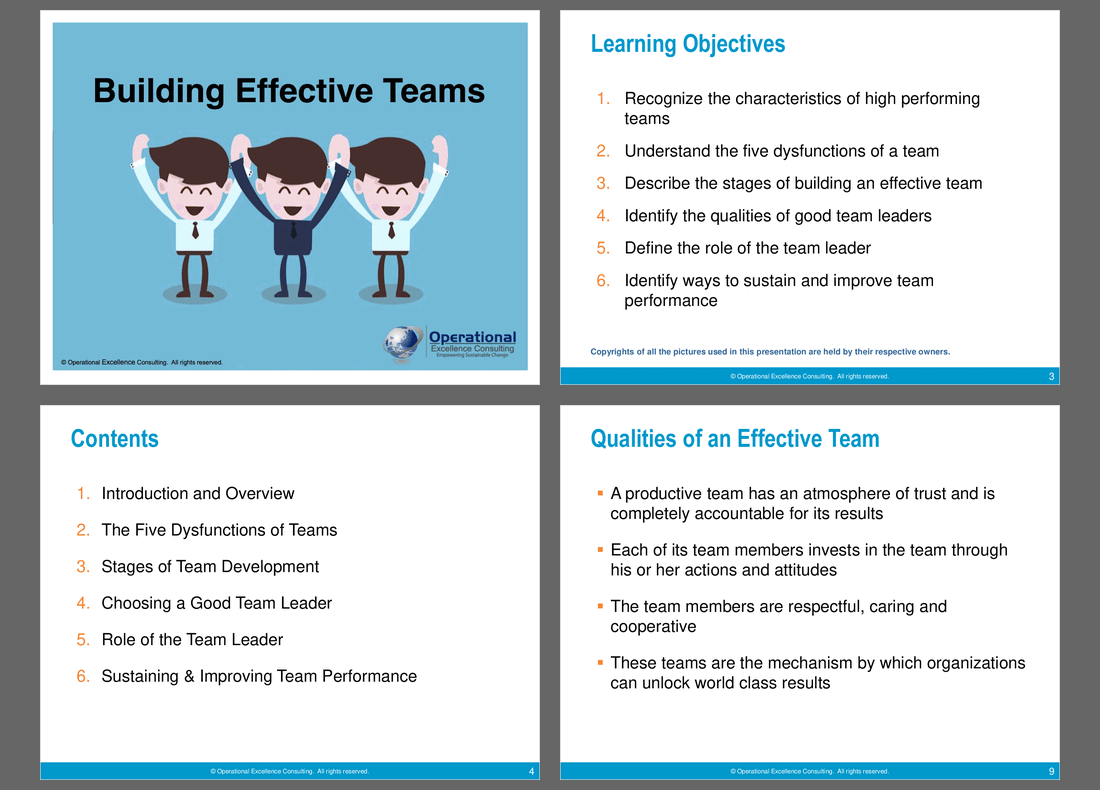

Building Effective Teams   111-slide PPT PowerPoint presentation slide deck (PPTX)
$69.00

Building Effective Teams (111-slide PPT PowerPoint presentation slide deck (PPTX)) Preview Image
Log in to unlock full preview.
Building Effective Teams (111-slide PPT PowerPoint presentation slide deck (PPTX)) Preview Image
Arrow   Click main image to view in full screen.

Building Effective Teams (PowerPoint PPTX Slide Deck)

PowerPoint (PPTX) + Zip archive file (ZIP) 111 Slides

Top 1,000 Best Practice $69.00
Developed by a seasoned Team Building Facilitator with global experience at Microsoft & IBM, this presentation is your guide to mastering the art of team building, providing you with strategies to enhance productivity and collaboration.
Add to Cart


Immediate download
Fully editable PowerPoint
Free lifetime updates

BENEFITS OF THIS POWERPOINT DOCUMENT

  1. Provides a holistic framework for building effective teams based on Patrick Lencioni's Five Dysfunctions of Teams.
  2. Provides guidance on the Stages of Team Development based on Bruce Tucker's approach to team management.
  3. Includes a Blue-Green Game as a classroom activity.

TEAM MANAGEMENT PPT DESCRIPTION

Editor Summary Building Effective Teams is a 111-slide PowerPoint training presentation (PPTX with supplemental ZIP) by Operational Excellence Consulting and a seasoned Team Building Facilitator with global experience at Microsoft & IBM, focused on diagnosing and improving team dynamics. Read more

In today's flexible working model where employees work from home and the office, the ongoing challenges of creating the magical bond between team members can be elusive.

Moreover, it has become increasingly challenging, since we have been moving from the emphasis on social skills to technical and managerial skills. And as a result, the body of traditions and knowledge concerning the magic of teams have been lost.

Good teamwork is the ability to effectively collaborate with teammates, with the work, and with a common goal or purpose. According to the LinkedIn Learning 2020 Workplace Learning Report, collaboration skill is among the top five critical soft skills that organizations are hiring for and training for in 2020.

Based on world-renowned Patrick Lencioni's and Bruce Tuckman's work on team management, this uniquely blended team building presentation provides you with the much needed practical guidance on how to identify dysfunctional teams and put in place a process to build effective and collaborative teams in your organization.

|||||||||||||||||||||||||||||||||||||||||||||||||||||||||||||||||||||||||||||||||||||||||||||||||||||||||||||||||||||||||||||||||||||||||||||||||||||||
This training package includes:
1. Building Effective Teams training presentation (PowerPoint format)
2. Blue-Green Game (PowerPoint & Word formats) – FREE
|||||||||||||||||||||||||||||||||||||||||||||||||||||||||||||||||||||||||||||||||||||||||||||||||||||||||||||||||||||||||||||||||||||||||||||||||||||||

LEARNING OBJECTIVES

1. Recognize the characteristics of high performing teams.
2. Understand the five dysfunctions of a team.
3. Describe the stages of building an effective team.
4. Identify the qualities of good team leaders.
5. Define the role of the team leader.
6. Identify ways to sustain and improve team performance.

CONTENTS

1. Introduction and Overview
2. The Five Dysfunctions of Teams
3. Stages of Team Development
4. Choosing a Good Team Leader
5. Role of the Team Leader
6. Sustaining & Improving Team Performance

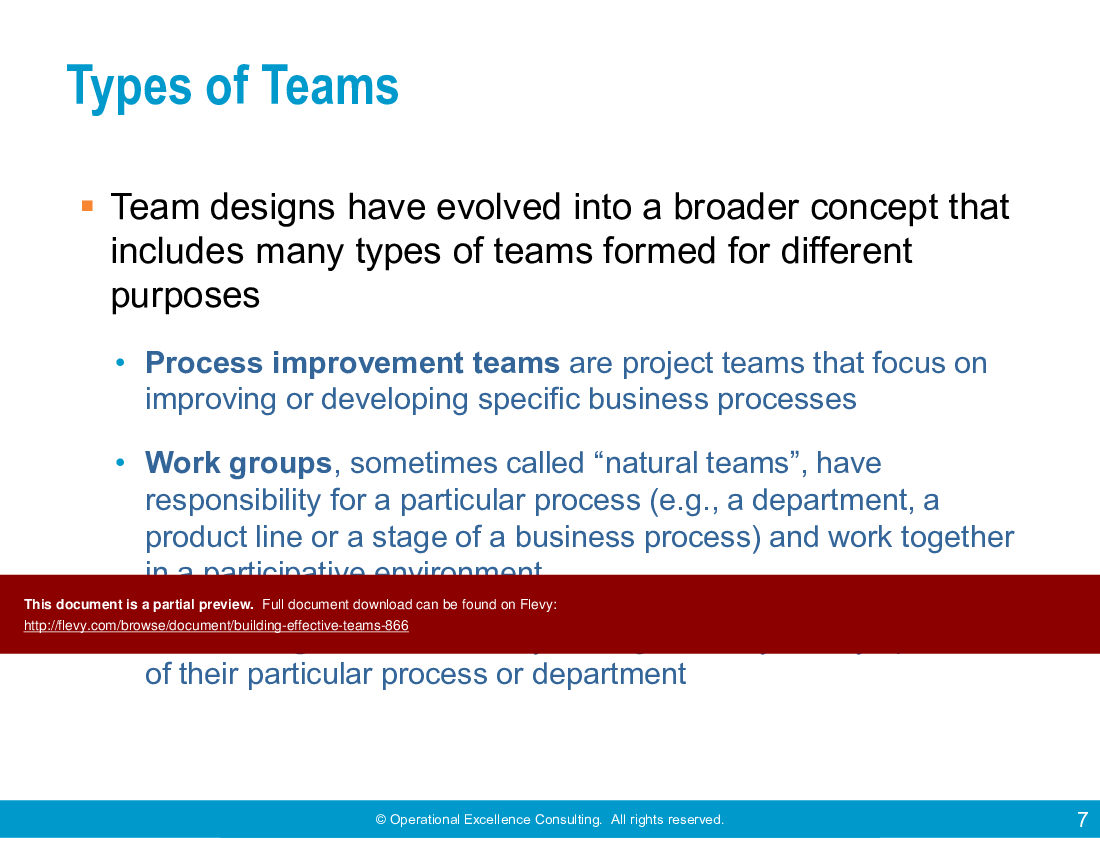
This document also delves into the various types of teams and their specific purposes within an organization. It highlights the importance of conflict management and accountability in driving team success.

Got a question about the product? Email us at support@flevy.com or ask the author directly by using the "Ask the Author a Question" form. If you cannot view the preview above this document description, go here to view the large preview instead.

MARCUS OVERVIEW

This synopsis was written by Marcus [?] based on the analysis of the full 111-slide presentation.


Executive Summary
The "Building Effective Teams" presentation is a comprehensive training resource designed to enhance team dynamics and performance. Developed by Operational Excellence Consulting, this presentation provides actionable insights into the characteristics of high-performing teams, the 5 dysfunctions of teams, and the stages of team development. It equips leaders with the tools necessary to foster collaboration, accountability, and trust within their teams, ultimately driving organizational success. By utilizing this presentation, executives and team leaders will be able to identify dysfunctions, implement effective team-building strategies, and sustain high performance over time.

Who This Is For and When to Use
•  Team leaders and managers seeking to improve team dynamics
•  HR professionals involved in team development and training
•  Organizational development consultants focusing on team effectiveness
•  Executives aiming to enhance collaboration and productivity within teams

Best-fit moments to use this deck:
•  During team-building workshops or retreats
•  As part of leadership training programs
•  When addressing team dysfunctions or performance issues
•  In onboarding programs for new team leaders

Learning Objectives
•  Recognize the characteristics of high-performing teams
•  Understand the 5 dysfunctions of a team
•  Describe the stages of building an effective team
•  Identify the qualities of good team leaders
•  Define the role of the team leader
•  Identify ways to sustain and improve team performance

Table of Contents
•  Introduction and Overview (page 1)
•  The Five Dysfunctions of Teams (page 2)
•  Stages of Team Development (page 3)
•  Choosing a Good Team Leader (page 4)
•  Role of the Team Leader (page 5)
•  Sustaining & Improving Team Performance (page 6)

Primary Topics Covered
•  Introduction to Teams - Defines a team as a group of individuals working interdependently towards a common goal.
•  Five Dysfunctions of Teams - Discusses Patrick Lencioni's model highlighting absence of trust, fear of conflict, lack of commitment, avoidance of accountability, and inattention to results.
•  Stages of Team Development - Outlines Tuckman’s model: Forming, Storming, Norming, and Performing, detailing characteristics and outcomes of each stage.
•  Qualities of Effective Team Leaders - Identifies essential traits and skills that contribute to successful leadership within teams.
•  Sustaining Team Performance - Provides strategies for maintaining high performance, including clear goals, empowerment, and recognition.
•  Team Member Development - Discusses how to assess and support team members based on their profiles and needs.

Deliverables, Templates, and Tools
•  Team assessment tools for evaluating performance and dynamics
•  Frameworks for identifying and addressing team dysfunctions
•  Guidelines for effective team leadership and management
•  Templates for setting team goals and tracking progress
•  Exercises for team-building and enhancing trust

Slide Highlights
•  Overview of the Five Dysfunctions of Teams with visual representation
•  Stages of Team Development illustrated with key characteristics
•  Practical tips for managing teams effectively
•  Quotes from leadership experts to reinforce key concepts
•  Actionable strategies for overcoming common team challenges

Potential Workshop Agenda
Introduction to Team Dynamics (60 minutes)
•  Overview of team concepts and importance
•  Discussion on team roles and responsibilities

Understanding Team Dysfunctions (90 minutes)
•  Deep dive into Lencioni’s Five Dysfunctions
•  Group activities to identify dysfunctions within teams

Stages of Team Development (60 minutes)
•  Exploration of Tuckman’s model
•  Interactive session on navigating team stages

Leadership and Team Performance (90 minutes)
•  Identifying qualities of effective leaders
•  Strategies for sustaining high team performance

Customization Guidance
•  Tailor the presentation to reflect specific organizational goals and team structures
•  Modify case studies and examples to align with the audience's industry
•  Adjust the duration and depth of sessions based on participant experience levels
•  Incorporate company-specific terminology and frameworks for relevance

Secondary Topics Covered
•  Importance of trust and communication in teams
•  Conflict resolution strategies for teams
•  Techniques for fostering collaboration and innovation
•  Metrics for measuring team performance and success

Topic FAQ

What core models should I use to analyze and improve team performance?

Two widely used models are Patrick Lencioni’s Five Dysfunctions of a Team, which highlights behavioral barriers like absence of trust, and Bruce Tuckman’s stages of team development (Forming, Storming, Norming, Performing). These models are central to many team interventions and are covered together in the material, including the Four stages.

How can I tell if my team is experiencing dysfunctions that need intervention?

Common signs include decreased productivity, frequent unresolved conflicts, unclear roles, and low engagement. These symptoms map directly to Lencioni’s Five Dysfunctions—absence of trust, fear of conflict, lack of commitment, avoidance of accountability, and inattention to results—which the presentation helps teams identify.

What practical steps help sustain higher team performance after training?

Sustaining performance typically involves setting clear goals, empowering members, fostering open communication, and recognizing achievements. Structured follow-up using goal-setting and progress-tracking templates, plus periodic team assessments, supports ongoing improvement and is provided as part of the toolkit with templates for setting and tracking goals.

What should I look for when buying a team-building training deck for workshops?

Seek decks that explicitly cover diagnostic models (e.g., Five Dysfunctions), include assessment tools, offer ready-made exercises, provide a sample workshop agenda with timings, and give customization guidance. The presence of team assessment tools and a potential workshop agenda are useful practical features to evaluate.

Are downloadable team-building templates cost-effective for small teams with limited budgets?

Templates can save preparation time and provide repeatable structure for workshops, leader onboarding, and follow-up assessments—valuable when internal design capacity is limited. Flevy’s Building Effective Teams includes a 111-slide presentation plus a free Blue-Green Game and ready-to-use templates, which can be used immediately.

I need to onboard new team leaders quickly—what content should the training include?

Onboarding for new leaders should cover recognizing characteristics of high-performing teams, the role and qualities of a team leader, conflict management, and stages of team development. Flevy’s Building Effective Teams addresses these areas and provides leader-focused guidance and exercises for training on choosing and defining the leader role.

How can I structure a half-day intervention to address team conflict using proven material?

Focus a half-day on a diagnostic session and targeted skill-building: use a condensed dive into Lencioni’s dysfunctions paired with an interactive session on navigating Tuckman’s stages, supported by assessment tools and trust-building exercises. The source material includes a suggested 90-minute session on Understanding Team Dysfunctions.

What instruments help measure team progress after a team-building program?

Use periodic team assessment tools, feedback mechanisms, and templates for tracking team goals and performance metrics. The presentation explicitly lists team assessment tools and templates for setting and monitoring team goals as resources to measure and sustain progress.

Document FAQ
These are questions addressed within this presentation.

What are the 5 dysfunctions of a team?
The 5 dysfunctions include absence of trust, fear of conflict, lack of commitment, avoidance of accountability, and inattention to results.

How can I identify if my team is experiencing dysfunctions?
Look for signs such as decreased productivity, conflicts, unclear roles, and lack of engagement among team members.

What are the stages of team development?
The stages are Forming, Storming, Norming, and Performing, each representing different phases of team dynamics and maturity.

What qualities should a team leader possess?
Effective team leaders should have strong communication skills, a clear vision, the ability to inspire, and a commitment to team development.

How can I sustain high team performance?
Sustain performance by setting clear goals, empowering team members, fostering open communication, and recognizing achievements.

What tools can help improve team dynamics?
Utilize team assessment tools, feedback mechanisms, and structured team-building exercises to enhance collaboration and performance.

How do I address conflicts within my team?
Encourage open dialogue, establish ground rules for discussions, and facilitate conflict resolution through structured processes.

What role does trust play in team effectiveness?
Trust is foundational for effective teamwork, enabling open communication, collaboration, and a willingness to take risks.

Glossary
•  Team - A group of individuals working interdependently towards a common goal.
•  Dysfunction - A failure to function effectively within a team context.
•  Trust - The reliance on the integrity and ability of team members.
•  Conflict - A disagreement or clash between team members.
•  Commitment - The dedication of team members to team goals and objectives.
•  Accountability - The obligation of team members to take responsibility for their actions.
•  Performance - The effectiveness of a team in achieving its goals.
•  Leadership - The act of guiding and directing a group towards achieving objectives.
•  Collaboration - Working together to achieve a common goal.
•  Empowerment - Granting team members the authority and confidence to make decisions.
•  Feedback - Information provided regarding performance or behavior.
•  Development - The process of improving skills and capabilities within a team.

Source: Best Practices in Team Management PowerPoint Slides: Building Effective Teams PowerPoint (PPTX) Presentation Slide Deck, Operational Excellence Consulting


$69.00
Developed by a seasoned Team Building Facilitator with global experience at Microsoft & IBM, this presentation is your guide to mastering the art of team building, providing you with strategies to enhance productivity and collaboration.
Add to Cart
  

ABOUT THE AUTHOR

Author image
Additional documents from author: 257
Terms of usage (for all documents from this author)

Operational Excellence Consulting, founded in 2009 by Allan Ung, draws from extensive experience at Microsoft, IBM, and Underwriters Laboratories (UL). We specialize in strategy deployment, customer experience design, and operational excellence, applying Design Thinking, Lean, and Systems Thinking to maximize customer value and minimize waste.

Our ... [read more]

Ask the Author a Question

You must be logged in to contact the author.

Click here to log in Click here register

Did you know?
The average daily rate of a McKinsey consultant is $6,625 (not including expenses). The average price of a Flevy document is $65.

Bundle and save! You can save up to % with bundles!

View bundle(s)


Trusted by over 10,000+ Client Organizations
Since 2012, we have provided business templates to over 10,000 businesses and organizations of all sizes, from startups and small businesses to the Fortune 100, in over 130 countries.
AT&T GE Cisco Intel IBM Coke Dell Toyota HP Nike Samsung Microsoft Astrazeneca JP Morgan KPMG Walgreens Walmart 3M Kaiser Oracle SAP Google E&Y Volvo Bosch Merck Fedex Shell Amgen Eli Lilly Roche AIG Abbott Amazon PwC T-Mobile Broadcom Bayer Pearson Titleist ConEd Pfizer NTT Data Schwab


Read Customer Testimonials

 
"I have found Flevy to be an amazing resource and library of useful presentations for lean sigma, change management and so many other topics. This has reduced the time I need to spend on preparing for my performance consultation. The library is easily accessible and updates are regularly provided. A wealth of great information."

– Cynthia Howard RN, PhD, Executive Coach at Ei Leadership
 
"As a small business owner, the resource material available from FlevyPro has proven to be invaluable. The ability to search for material on demand based our project events and client requirements was great for me and proved very beneficial to my clients. Importantly, being able to easily edit and tailor "

– Michael Duff, Managing Director at Change Strategy (UK)
 
"[Flevy] produces some great work that has been/continues to be of immense help not only to myself, but as I seek to provide professional services to my clients, it gives me a large "tool box" of resources that are critical to provide them with the quality of service and outcomes they are expecting."

– Royston Knowles, Executive with 50+ Years of Board Level Experience
 
"Last Sunday morning, I was diligently working on an important presentation for a client and found myself in need of additional content and suitable templates for various types of graphics. Flevy.com proved to be a treasure trove for both content and design at a reasonable price, considering the time I "

– M. E., Chief Commercial Officer, International Logistics Service Provider
 
"If you are looking for great resources to save time with your business presentations, Flevy is truly a value-added resource. Flevy has done all the work for you and we will continue to utilize Flevy as a source to extract up-to-date information and data for our virtual and onsite presentations!"

– Debbi Saffo, President at The NiKhar Group
 
"As a consulting firm, we had been creating subject matter training materials for our people and found the excellent materials on Flevy, which saved us 100's of hours of re-creating what already exists on the Flevy materials we purchased."

– Michael Evans, Managing Director at Newport LLC
 
"My FlevyPro subscription provides me with the most popular frameworks and decks in demand in today’s market. They not only augment my existing consulting and coaching offerings and delivery, but also keep me abreast of the latest trends, inspire new products and service offerings for my practice, and educate me "

– Bill Branson, Founder at Strategic Business Architects
 
"I am extremely grateful for the proactiveness and eagerness to help and I would gladly recommend the Flevy team if you are looking for data and toolkits to help you work through business solutions."

– Trevor Booth, Partner, Fast Forward Consulting


Save with Bundles

This document is available as part of the following discounted bundle(s):

Save %!
Team Excellence Toolkit

This bundle contains 2 total documents. See all the documents to the right.

$89.00


Add Bundle & Save


Customers Also Bought These Documents


Customers Also Like These Documents

Explore Templates on Related Management Topics


Your Recently Viewed Documents
Download our FREE Organization, Change, & Culture, Templates

Download our free compilation of 50+ slides and templates on Organizational Design, Change Management, and Corporate Culture. Methodologies include ADKAR, Burke-Litwin Change Model, McKinsey 7-S, Competing Values Framework, etc.