
This product (How to Deliver Effective Presentations) is a 41-slide PPT PowerPoint presentation slide deck (PPT), which you can download immediately upon purchase.
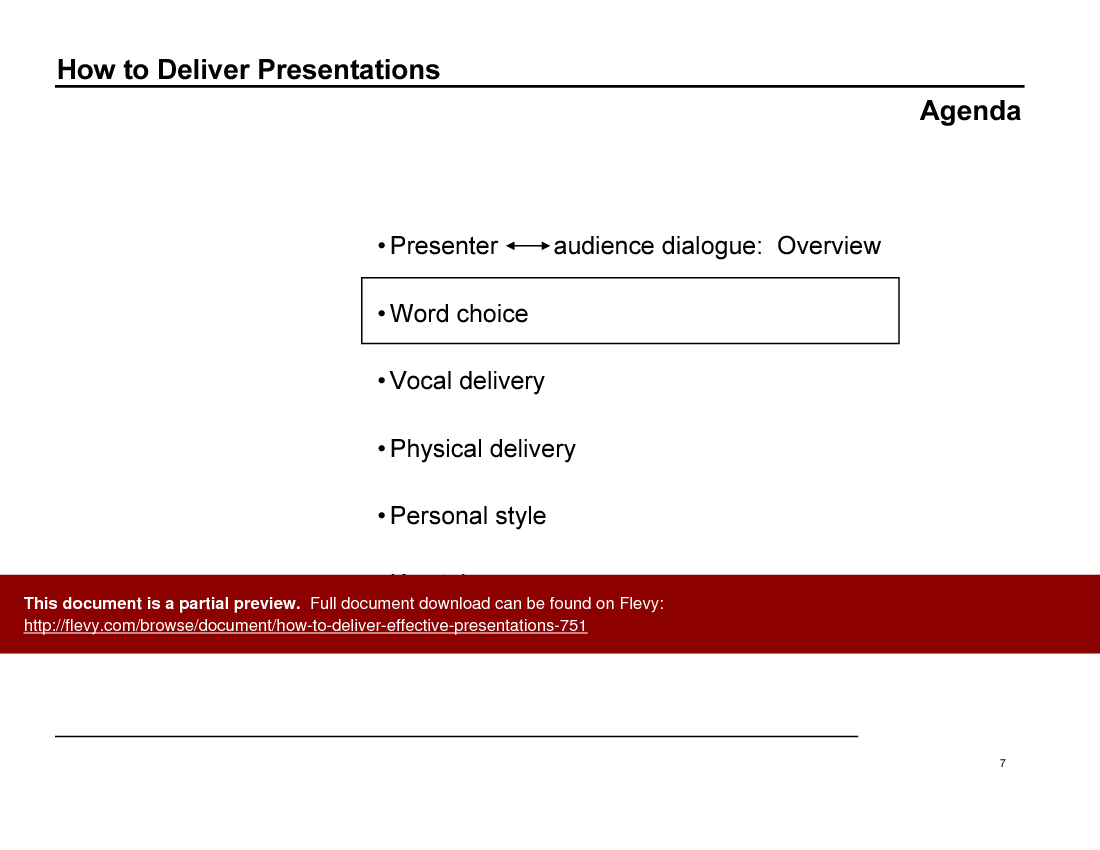
This presentation sets out effective ways to deliver a presentation. The approach covers:
• Word choice
• Vocal delivery
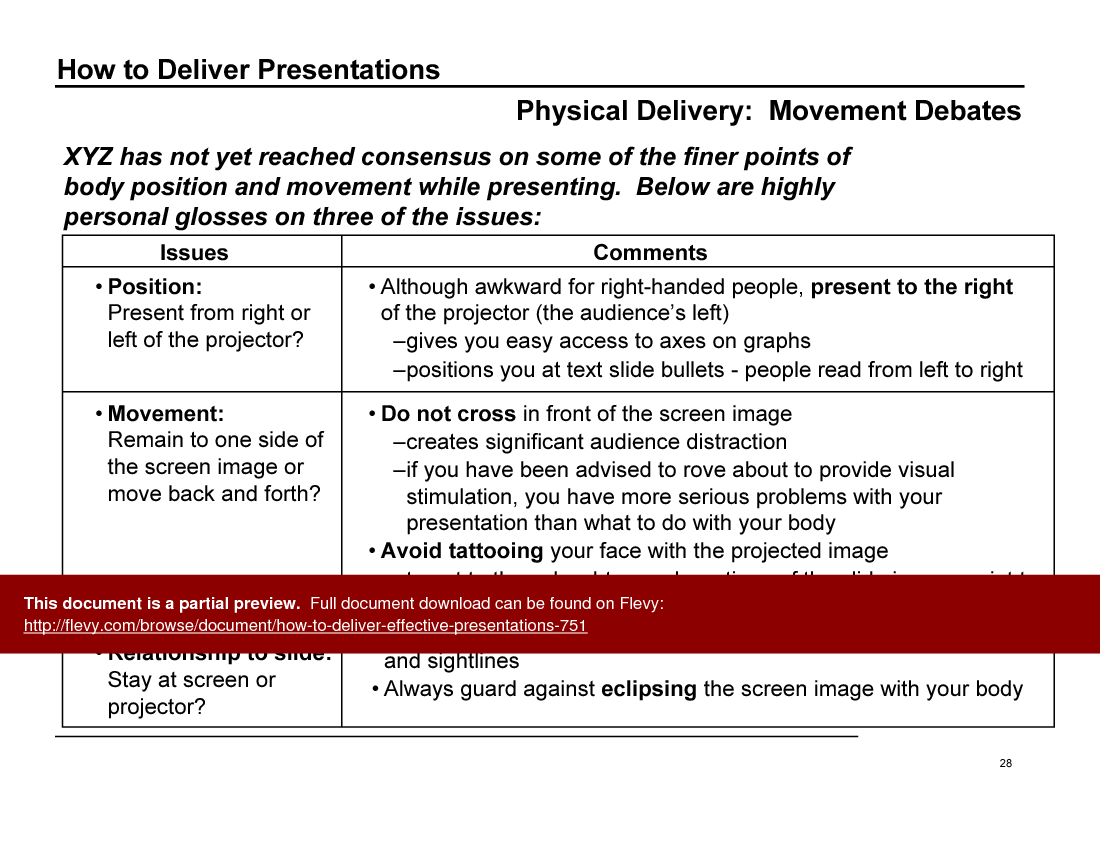
• Physical delivery
• Personal style
This is one of a series of training materials used by a global consulting firm for new hire training.
It is also a supplement to our other document, "Building Effective Presentations."
This document dives deep into the nuances of effective presentations, offering actionable insights on word choice, vocal delivery, physical delivery, and personal style. It emphasizes the importance of using active voice and direct speech to eliminate barriers to audience engagement. The section on word choice highlights common bad habits and provides better alternatives to enhance clarity and impact.
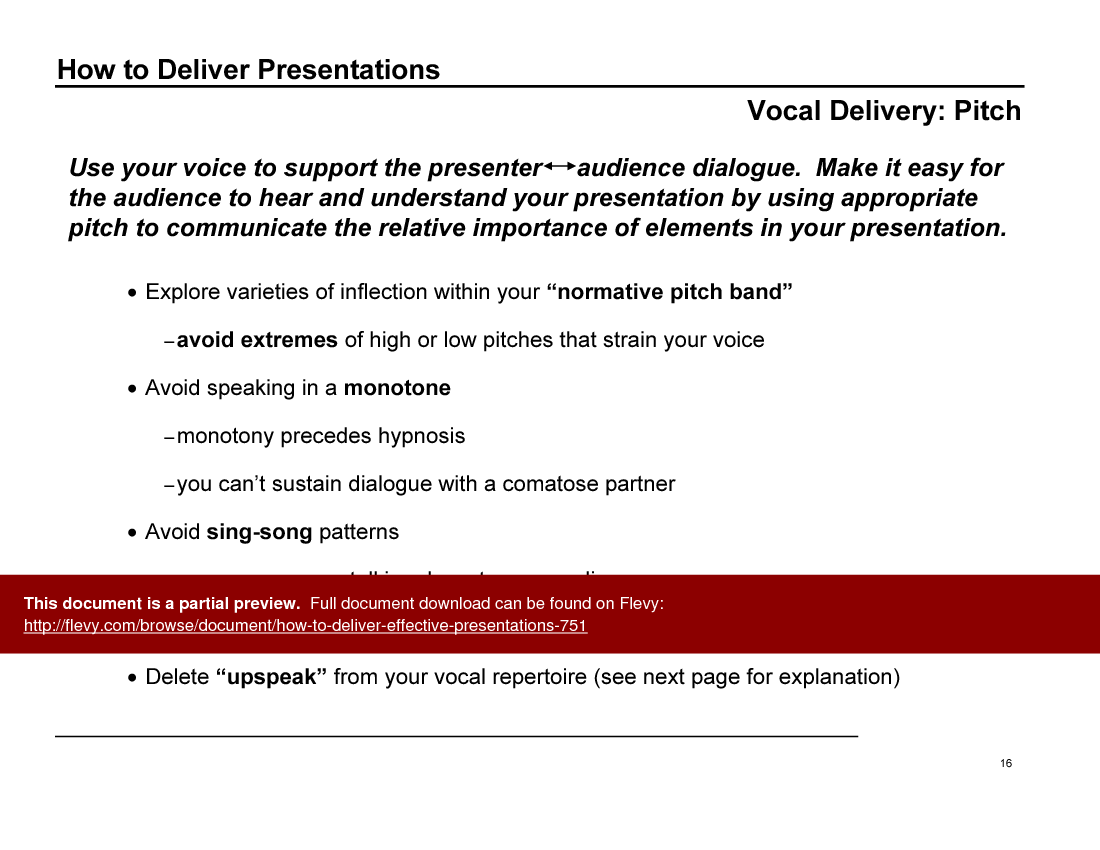
The guide also covers vocal delivery in detail, discussing pitch and tone. It advises against extremes in pitch and monotone speech, which can disengage the audience. Instead, it encourages exploring inflections within a normative pitch band to maintain interest. The document also addresses the impact of regional accents and offers strategies to manage them effectively.
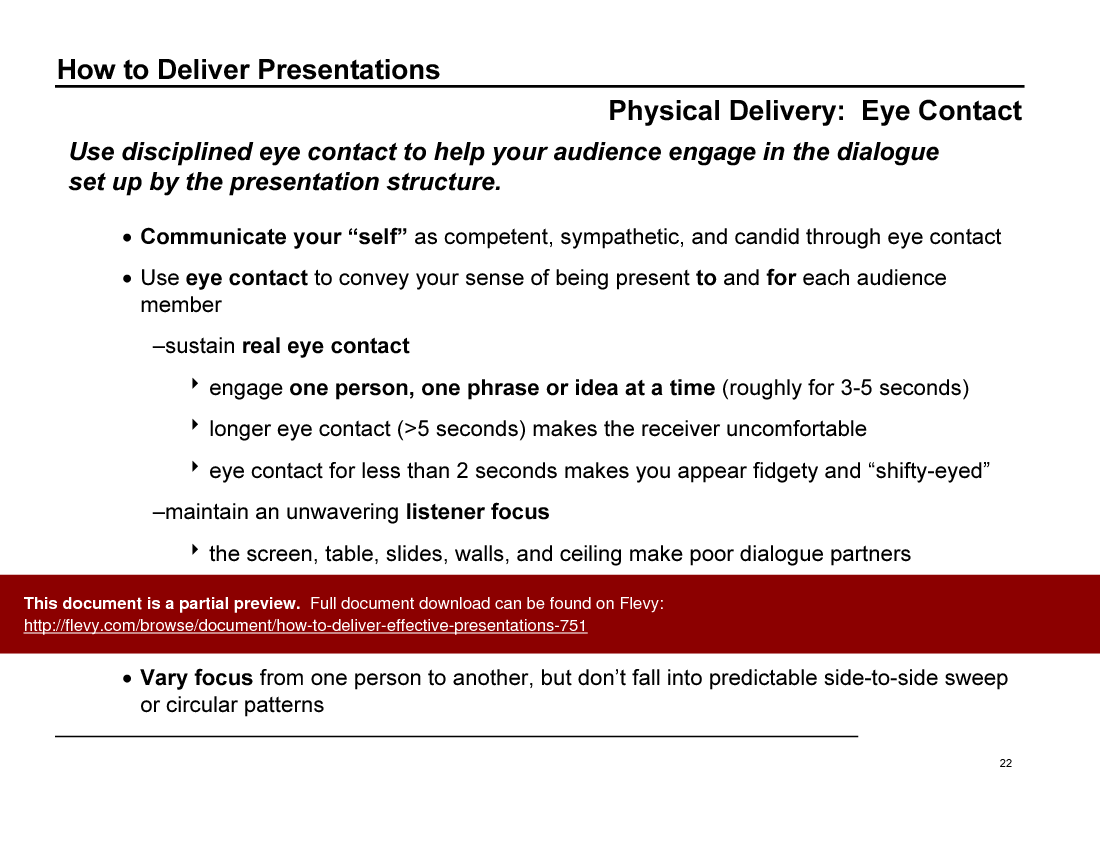
Physical delivery is another critical focus. The document outlines the importance of disciplined eye contact and avoiding idiosyncratic gestures that can distract from the message. It provides practical tips on maintaining an unwavering listener focus and varying eye contact to engage each audience member effectively.
The document tackles common fears associated with presenting. It offers remedies for overcoming the fear of performing poorly, fear of the audience, and fear that the presentation will not stand up to scrutiny. Techniques such as visualization, physical relaxation, and anticipating objections are discussed to help presenters build confidence and deliver compelling presentations.
Got a question about the product? Email us at support@flevy.com or ask the author directly by using the "Ask the Author a Question" form. If you cannot view the preview above this document description, go here to view the large preview instead.
This PPT slide focuses on enhancing presentation effectiveness by addressing common weak word choices and grammatical constructions that can diminish a presenter's authority. It categorizes these terms into 3 sections: weak phrases, comments on their impact, and suggested alternatives.
In the first section, phrases like “conduct an analysis of” and “take into consideration” are critiqued for their verbosity. The slide advises presenters to use simpler verbs such as “analyze” and “consider.” This shift not only streamlines communication, but also strengthens the message’s clarity.
The second section highlights the phrase “To tell the truth, layoffs are inevitable.” It points out that this wording suggests a lack of transparency. Instead, the slide recommends a more direct approach: “Are layoffs inevitable? Yes.” This change encourages a more straightforward dialogue, fostering trust and engagement with the audience.
Finally, the slide critiques phrases like “This slide/bar/data says…” and “What this slide means is…” It emphasizes that the data should not be personified. Instead, presenters should position themselves as the interpreters of the insights, suggesting a more assertive phrasing: “From our analysis, we concluded that…” This approach not only clarifies the presenter’s role, but also enhances the overall impact of the presentation.
Overall, the slide serves as a practical guide for refining language to improve audience engagement and convey confidence. By adopting these recommendations, presenters can significantly elevate their communication effectiveness.
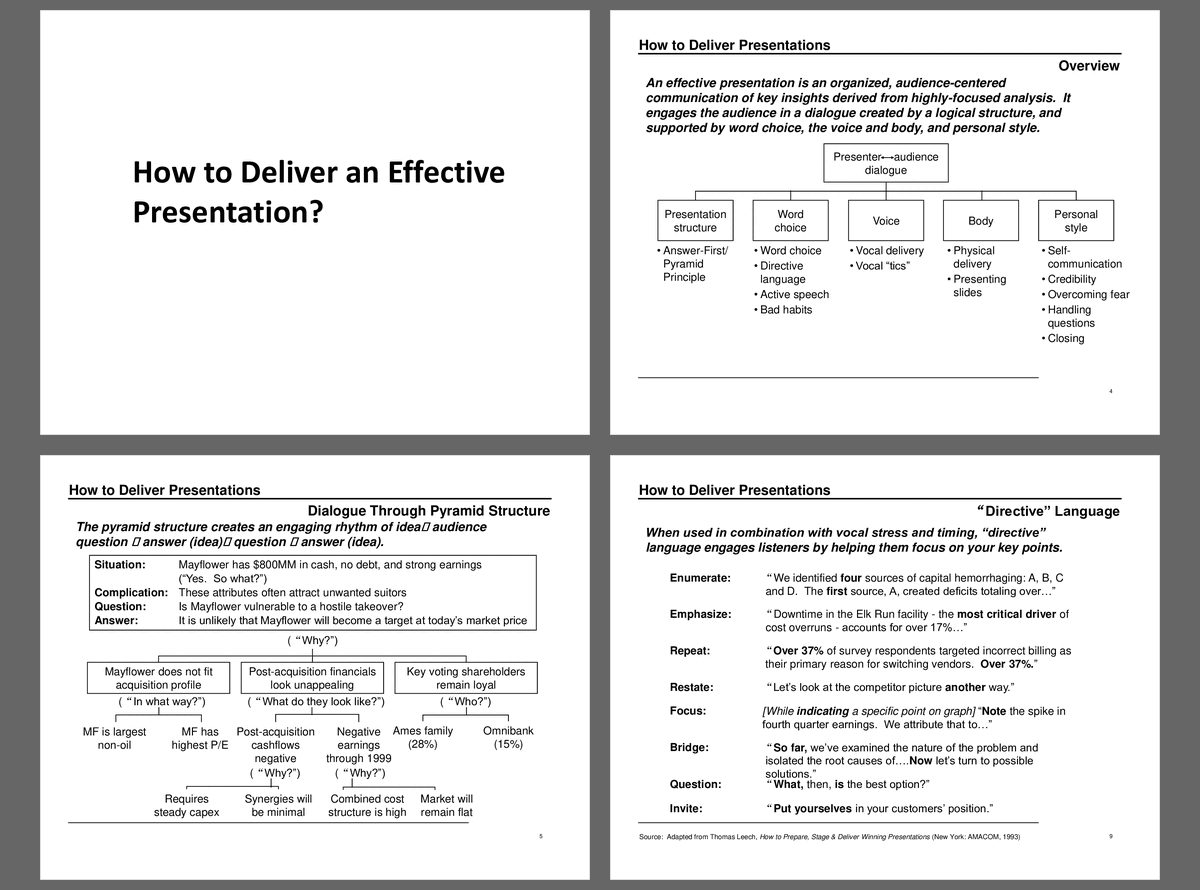
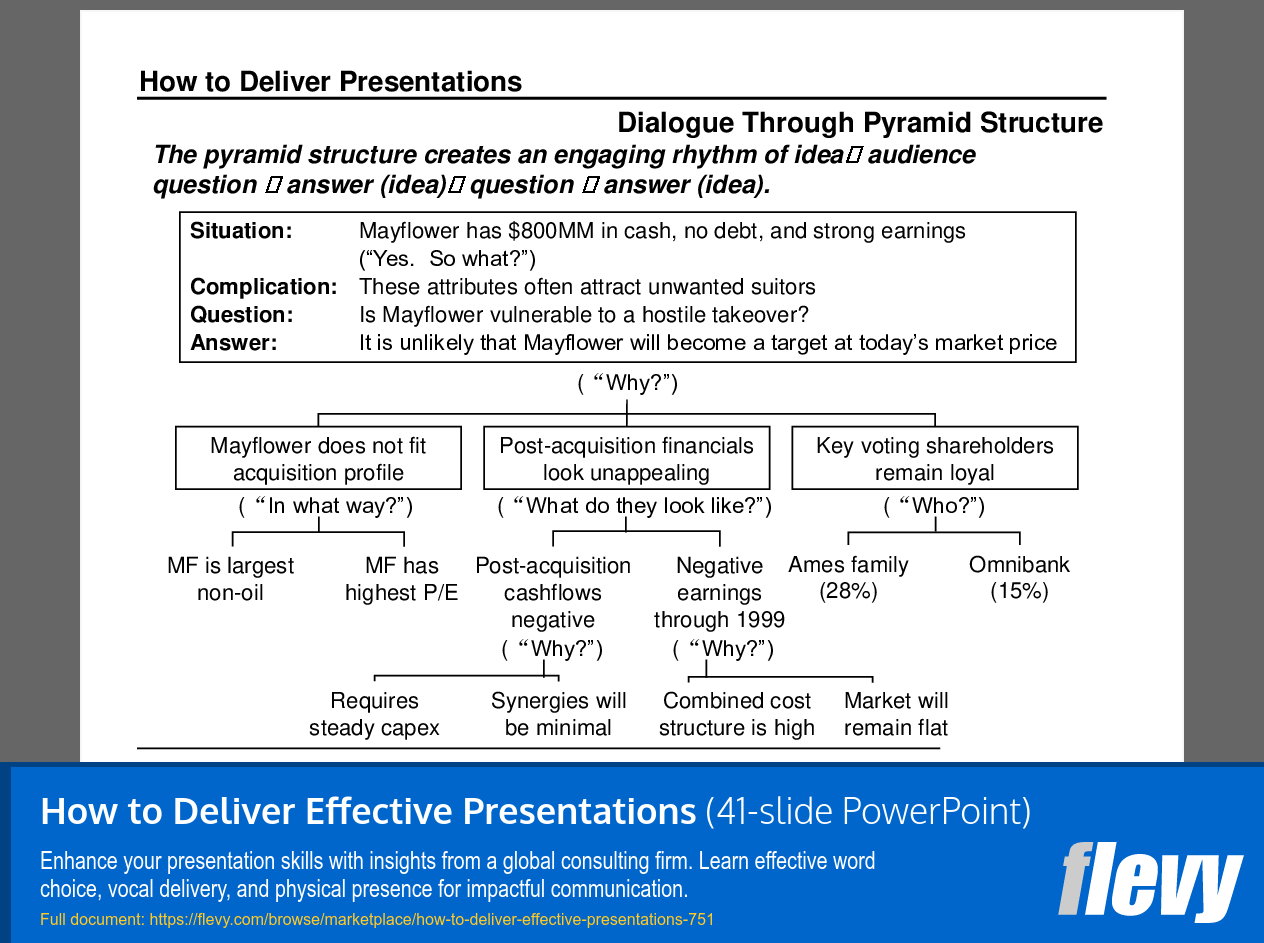
This PPT slide outlines a structured approach to delivering presentations using a pyramid framework. It emphasizes the importance of engaging the audience through a rhythm of ideas, questions, and answers. The central focus is on the case of Mayflower, which possesses significant financial resources, including $800 million in cash, no debt, and strong earnings. However, the slide poses a critical question: Is Mayflower vulnerable to a hostile takeover?
The analysis begins with the situation, highlighting Mayflower's financial strengths, but quickly transitions to the complication. It suggests that these strengths might attract unwanted suitors, prompting the inquiry into potential vulnerabilities. The answer provided indicates that, at the current market price, Mayflower is unlikely to become a target for acquisition.
The slide further breaks down the reasoning into 3 key areas: acquisition profile, post-acquisition financials, and shareholder loyalty. Each area is accompanied by probing questions that guide the audience through the thought process. For instance, the first branch questions how Mayflower fits into the acquisition profile, noting that it is the largest non-oil company and has the highest price-to-earnings ratio.
The second branch addresses the unattractiveness of post-acquisition financials, pointing out negative cash flows and high combined cost structures. Lastly, the loyalty of key shareholders, such as the Ames family and Omnibank, is emphasized, indicating that their commitment further shields Mayflower from takeover threats.
This structured dialogue not only clarifies complex ideas, but also engages the audience in critical thinking, making it a powerful tool for effective presentations.
This PPT slide outlines strategies for overcoming the common fears associated with public speaking. It categorizes these fears into 3 main areas: fear of performing poorly, fear of the audience, and fear that one's message will not withstand scrutiny. Each category is paired with practical remedies aimed at alleviating anxiety and enhancing presentation skills.
For the fear of performing poorly, the slide emphasizes the importance of understanding one's physiological responses during presentations, such as dry throat or trembling. Visualization techniques are suggested to mentally prepare for success. Additionally, physical relaxation methods, like deep breathing, are recommended to help manage tension. The slide encourages leveraging the energy generated by fear to maintain alertness and engagement.
The second category addresses the fear of the audience. It advises against viewing the audience as adversaries and instead promotes a mindset of enthusiasm and confidence in one’s right to share ideas. The suggested self-affirmation reinforces the value of the speaker's contributions, helping to shift focus from anxiety to engagement.
Lastly, the fear that one's message may not hold up under scrutiny is tackled by stressing the necessity of thorough preparation. Anticipating potential objections and being ready to address them is crucial. The slide concludes with a reminder that while practice does not guarantee perfection, it significantly improves performance.
Overall, this slide serves as a practical guide for individuals looking to enhance their presentation capabilities by addressing common fears with actionable strategies.
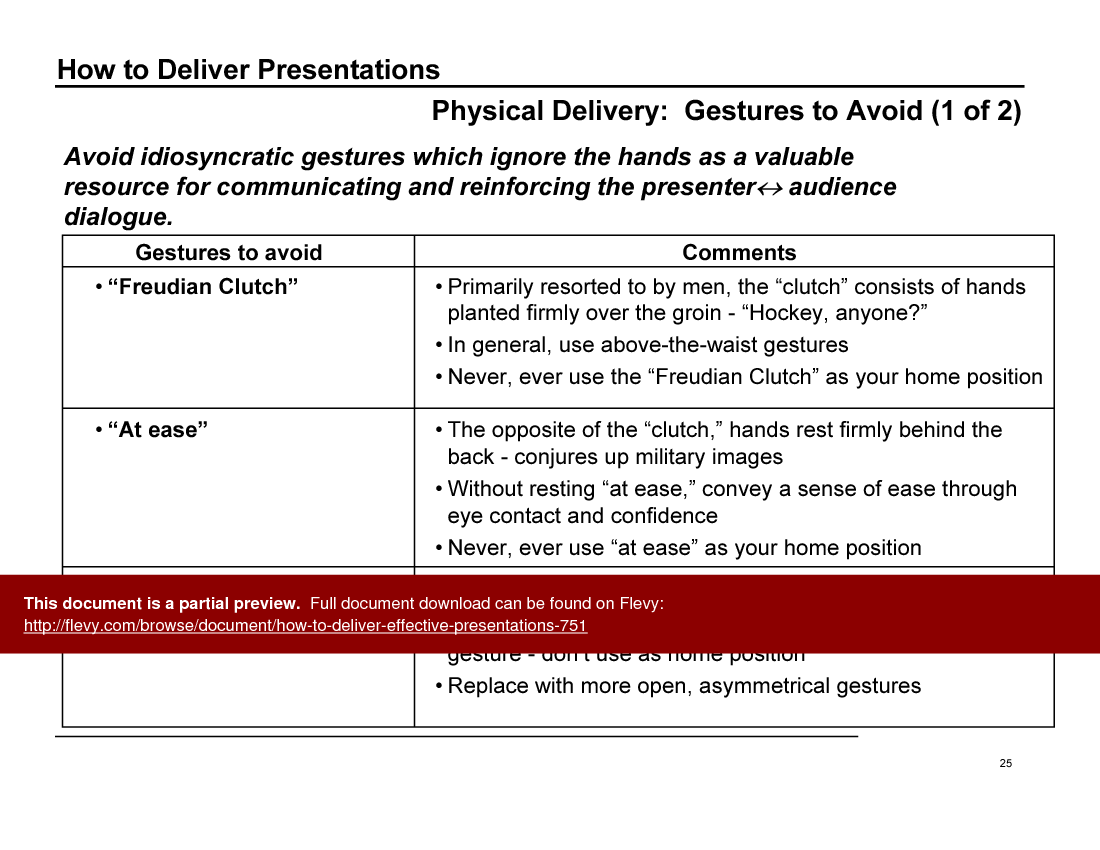
This PPT slide focuses on physical delivery in presentations, specifically highlighting gestures that should be avoided to enhance communication effectiveness. It categorizes 3 specific gestures: the "Freudian Clutch," "At ease," and "The Diva," providing insights into why these gestures can undermine the presenter's message.
The "Freudian Clutch" is described as a gesture predominantly used by men, where hands are placed firmly over the groin. This position can evoke negative connotations and distract from the intended message. The slide advises against using this gesture as a home position, suggesting that presenters should instead utilize gestures above the waist to maintain engagement.
Next, the "At ease" position is characterized by hands resting behind the back. This stance can inadvertently project a military demeanor, which may not be suitable for all presentation contexts. The commentary emphasizes the importance of conveying ease through eye contact and confidence, rather than adopting this closed-off posture.
Lastly, "The Diva" gesture involves hands clasped at the navel, which is described as tense and defensive. This position can signal discomfort and detract from the presenter's authority. The recommendation is to replace this with more open and asymmetrical gestures that foster a connection with the audience.
Overall, the slide serves as a practical guide for presenters to refine their physical delivery by avoiding specific gestures that can detract from their message. By adopting more effective hand movements, presenters can enhance their communication and better engage their audience.
This PPT slide outlines the essential components of delivering effective presentations, emphasizing the importance of audience engagement and structured communication. It begins with a clear definition of an effective presentation as one that is organized and centered around the audience's needs. The text suggests that successful presentations stem from a logical structure and are supported by various elements, including word choice, vocal delivery, physical presence, and personal style.
The slide is structured into 5 main categories: Presentation Structure, Word Choice, Voice, Body, and Personal Style. Each category contains subtopics that provide further detail on what constitutes effective communication. For instance, under Presentation Structure, the "Answer-First/Pyramid Principle" is highlighted, indicating a preference for clarity and directness in delivering key insights.
Word choice is critical, with emphasis on using directive language and active speech while avoiding bad habits that can detract from the message. The Voice section discusses vocal delivery and the impact of vocal tics, which can undermine authority if not managed properly.
The Body category focuses on physical delivery and the effective use of slides, suggesting that non-verbal cues play a significant role in audience perception. Lastly, Personal Style covers aspects such as self-communication, credibility, and techniques for overcoming fear, which are vital for establishing rapport with the audience.
Overall, the slide serves as a comprehensive overview for anyone looking to enhance their presentation skills, providing actionable insights that can lead to more impactful communication.
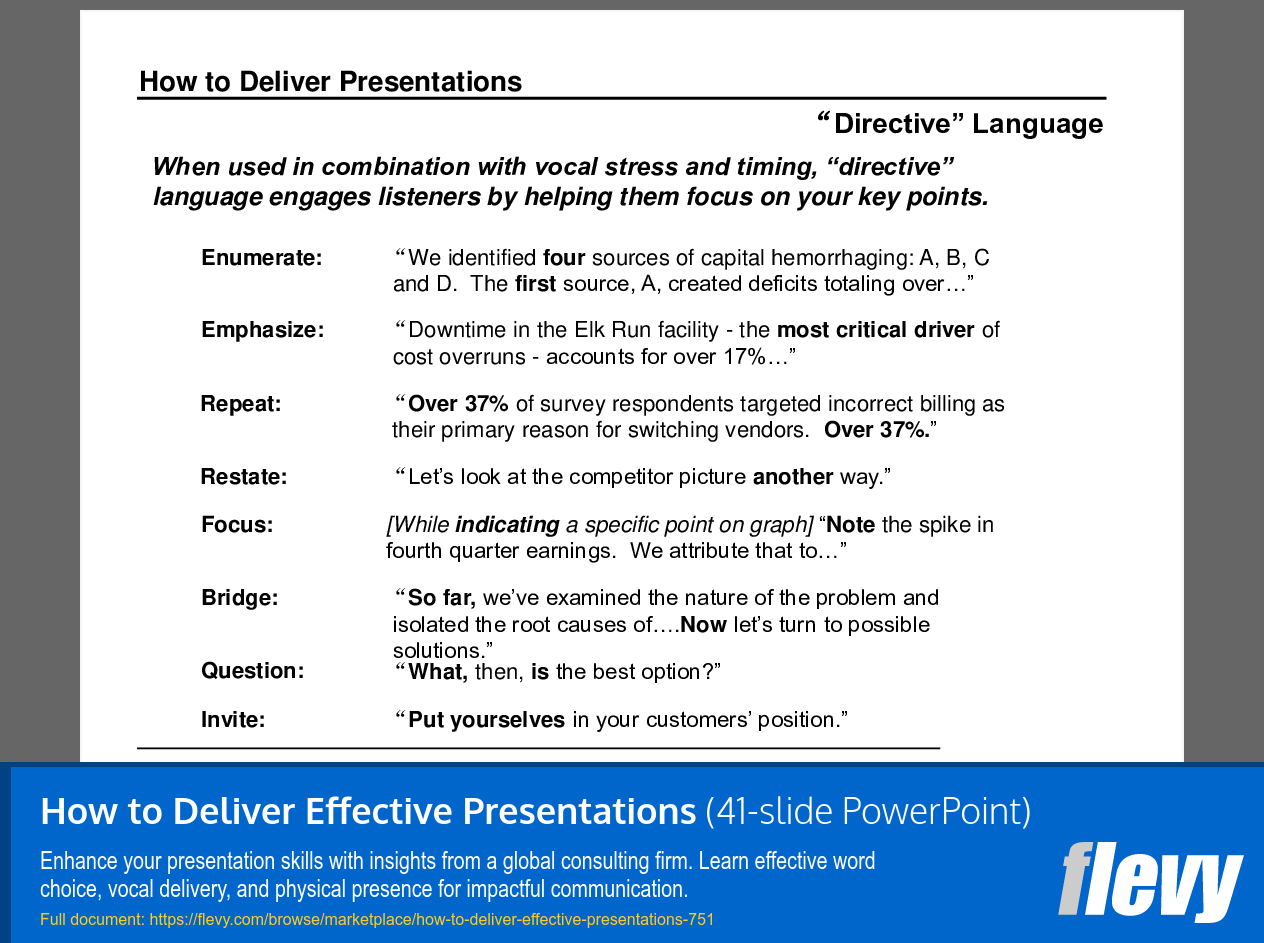
This PPT slide titled "How to Deliver Presentations" outlines the concept of "directive" language, emphasizing its role in enhancing audience engagement during presentations. The structure is divided into several key components, each illustrating a specific technique that can be employed to maintain listener focus on critical points.
The first technique, "Enumerate," suggests clearly identifying and listing key sources or factors, which helps in organizing information and making it digestible. For instance, mentioning "four sources of capital hemorrhaging" sets a clear framework for the audience.
Next is "Emphasize," which highlights the importance of vocal stress to draw attention to significant data, such as the critical driver of cost overruns. This technique encourages presenters to spotlight essential information, making it resonate more with the audience.
"Repeat" reinforces key statistics, like the 37% of survey respondents indicating a specific issue. This repetition not only aids retention, but also underscores the relevance of the information presented.
The "Restate" technique prompts presenters to reframe discussions, encouraging a fresh perspective on the subject matter. This can be particularly useful when transitioning between topics.
"Focus" directs attention to specific visual elements, such as graphs, ensuring that the audience understands the context and implications of the data being presented.
"Bridge" serves as a transition tool, linking previous points to upcoming discussions, while "Question" invites audience engagement, prompting them to think critically about the content.
Finally, "Invite" encourages empathy by asking the audience to consider the perspective of customers, fostering a deeper connection to the material. Collectively, these techniques provide a robust framework for delivering impactful presentations.
This PPT slide emphasizes the importance of effectively presenting insights using a structured approach known as the HOT process. It outlines a clear methodology for engaging an audience during presentations. The primary focus is on how to communicate insights rather than merely displaying data.
Key points include the necessity of addressing anticipated questions from the audience, which helps in reinforcing the relevance of the insights being presented. The slide advises against relinquishing the communicator's role to the slide content. Phrases like “This slide says…” are discouraged as they detract from the speaker's authority and create a disconnect between the presenter and the audience. Instead, the presenter should actively engage with the audience, positioning themselves as the expert guiding the discussion.
The slide also highlights the importance of extracting relevant observations that align with the presentation objectives. This ensures that the content remains focused and impactful. Monitoring audience reactions is another critical element; understanding their responses—whether agreement, enthusiasm, skepticism, or confusion—can guide the presenter in adjusting their delivery for maximum effectiveness.
Lastly, the slide suggests transitioning smoothly to the next highlight or insight, maintaining the flow of the presentation. This structured approach not only enhances clarity, but also fosters a more interactive and engaging experience for the audience. By following these guidelines, presenters can significantly improve their communication effectiveness and ensure their insights resonate with the audience.
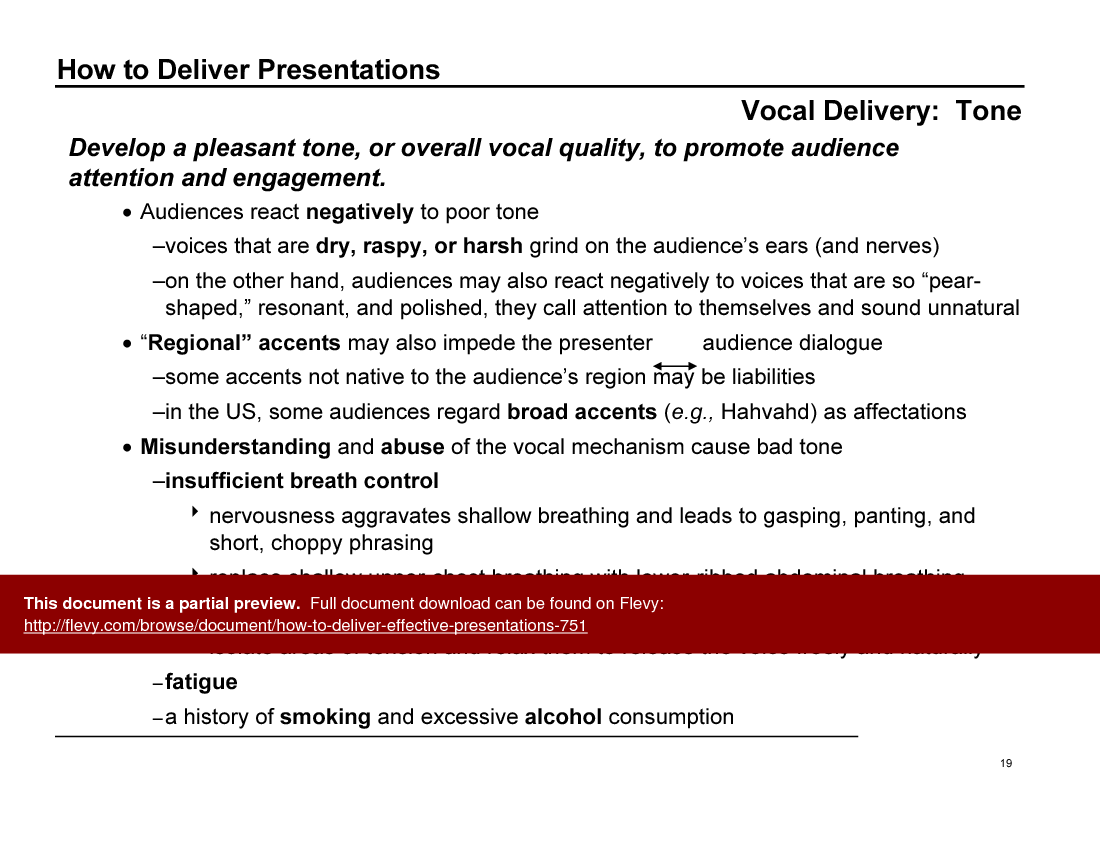
This PPT slide focuses on the importance of vocal delivery, specifically the tone, in effective presentations. It emphasizes that audiences respond negatively to poor vocal quality, which can include voices that are dry, raspy, or harsh. Such tones can distract and irritate listeners, making it hard for them to engage with the content. Conversely, overly polished voices may also be perceived unfavorably, as they can come off as unnatural and self-centered.
Regional accents are highlighted as potential barriers to effective communication. Accents that are not familiar to the audience can hinder dialogue and understanding. In the U.S., for example, broad accents might be viewed as affectations, which could detract from the speaker's credibility.
The slide also addresses common misunderstandings and misuses of vocal mechanics that lead to poor tone. Insufficient breath control is a significant factor, where nervousness can exacerbate shallow breathing, resulting in gasping or choppy speech. The slide suggests replacing shallow upper-chest breathing with deeper, lower-ribbed abdominal breathing to improve vocal delivery.
Tension in the mouth, throat, or jaw can also negatively impact vocal quality. The slide advises isolating and relaxing these areas to enhance voice projection. Lastly, it mentions that a history of smoking and excessive alcohol consumption can contribute to poor vocal tone, further emphasizing the need for presenters to be mindful of their vocal health. Overall, the slide serves as a guide for improving vocal delivery to foster better audience engagement.
MARCUS DESCRIPTION
This deep dive was written by Marcus [?] based on the analysis of the full document.
Executive Summary
This presentation deck, titled "How to Deliver Effective Presentations," is designed to enhance presentation skills through a structured approach that mirrors the quality of McKinsey, Bain, or BCG (consulting-grade; not affiliated). It focuses on key elements such as word choice, vocal delivery, physical presence, and personal style to foster impactful communication. Buyers will gain the ability to engage audiences effectively, articulate insights clearly, and manage the dynamics of presenter-audience dialogue.
Who This Is For and When to Use
• Corporate executives seeking to improve their presentation skills
• Consultants aiming to deliver compelling client presentations
• Team leaders preparing for stakeholder engagements
• Trainers and facilitators conducting workshops or seminars
Best-fit moments to use this deck:
• Preparing for high-stakes presentations to executives or clients
• Conducting training sessions on effective communication
• Enhancing team presentations for project updates or proposals
• Engaging in public speaking events or conferences
Learning Objectives
• Define the core elements of an effective presentation
• Build a structured narrative using the Pyramid Principle
• Establish effective word choice that resonates with the audience
• Develop vocal delivery techniques to enhance engagement
• Master physical delivery skills, including eye contact and gestures
• Create a personal presentation style that conveys credibility
• Presenter Audience Dialogue - Engaging the audience through a structured dialogue that fosters interaction and understanding.
• Word Choice - Selecting language that meets audience expectations and enhances clarity while avoiding jargon and filler words.
• Vocal Delivery - Utilizing pace, pitch, volume, and tone to emphasize key points and maintain audience interest.
• Physical Delivery - Employing eye contact, gestures, and movement to reinforce the presentation and engage the audience.
• Personal Style - Developing a unique presentation style that reflects personal values and enhances credibility.
• Handling Questions - Techniques for effectively managing audience questions to foster dialogue and clarity.
Deliverables, Templates, and Tools
• Presentation outline template for structuring key insights
• Checklist for effective word choice and language use
• Vocal delivery practice guide focusing on pace and tone
• Physical delivery guide detailing eye contact and gesture techniques
• Personal style assessment tool for developing authentic presentation styles
• Q&A preparation template for anticipating audience inquiries
Slide Highlights
• Overview slide illustrating the importance of audience engagement
• Pyramid structure slide demonstrating the rhythm of idea-audience interaction
• Vocal delivery techniques slide emphasizing the role of pace and volume
• Gestures to avoid slide showcasing common distracting physical habits
• Key takeaways slide summarizing essential presentation skills
Potential Workshop Agenda
Introduction and Overview (30 minutes)
• Discuss the importance of effective presentations
• Introduce the Pyramid Principle for structuring content
Word Choice and Vocal Delivery (60 minutes)
• Explore effective language and vocal techniques
• Practice exercises for active speech and tone
Physical Delivery and Personal Style (60 minutes)
• Engage in activities focusing on eye contact and gestures
• Develop personal presentation styles through peer feedback
Q&A and Closing (30 minutes)
• Address participant questions and concerns
• Summarize key insights and next steps
Customization Guidance
• Tailor the presentation outline to fit specific audience needs and contexts
• Adjust word choice examples to align with industry-specific terminology
• Incorporate personal anecdotes or examples to enhance relatability
• Modify vocal delivery practices based on audience size and setting
• Adapt physical delivery techniques to suit the presentation environment
Secondary Topics Covered
• Audience engagement strategies
• Techniques for managing presentation anxiety
• Best practices for using visual aids effectively
• Strategies for handling difficult questions during Q&A
• The role of storytelling in presentations
FAQ
What is the Pyramid Principle?
The Pyramid Principle is a structured approach to presenting ideas that creates a rhythm of idea-audience interaction, enhancing engagement and clarity.
How can I improve my word choice in presentations?
Focus on using clear, direct language that resonates with your audience, avoiding jargon and filler words to maintain engagement.
What techniques can I use to enhance my vocal delivery?
Vary your pace, pitch, and volume to emphasize key points and maintain audience interest throughout your presentation.
How important is eye contact during a presentation?
Eye contact is crucial for establishing connection and credibility with your audience, making them feel engaged and valued.
What should I do if I feel nervous before presenting?
Practice your material thoroughly, visualize success, and use relaxation techniques to manage anxiety and build confidence.
How can I handle audience questions effectively?
Anticipate potential questions, actively listen to each inquiry, and respond thoughtfully to foster a productive dialogue.
What are some common physical delivery mistakes to avoid?
Avoid distracting gestures, excessive movement, and failing to maintain eye contact, as these can disengage your audience.
How can I develop my personal presentation style?
Identify your comfort level with various presentation styles, practice regularly, and seek feedback to refine your approach.
Glossary
• Presenter Audience Dialogue - The interactive communication between the presenter and the audience that enhances engagement.
• Pyramid Principle - A structured method for organizing presentation content to facilitate audience understanding.
• Vocal Delivery - The use of voice elements such as pace, pitch, and volume to convey messages effectively.
• Physical Delivery - The use of body language, gestures, and movement to reinforce presentation content.
• Personal Style - An individual's unique approach to presenting that reflects their values and enhances credibility.
• Key Takeaways - Essential insights and lessons learned from a presentation.
• Active Speech - Engaging language that eliminates barriers to audience participation.
• Eye Contact - Sustained visual engagement with audience members to build connection and credibility.
• Gestures - Physical movements used to emphasize points and enhance communication.
• Q&A - A session for addressing audience questions and fostering dialogue.
• Presentation Anxiety - The fear or nervousness experienced before or during a presentation.
• Visual Aids - Tools such as slides or charts used to support and enhance presentations.
Source: Best Practices in Presentation Delivery PowerPoint Slides: How to Deliver Effective Presentations PowerPoint (PPT) Presentation Slide Deck, Documents & Files
Since 2012, we have provided best practices to over 10,000 businesses and organizations of all sizes, from startups and small businesses to the Fortune 100, in over 130 countries.
"The wide selection of frameworks is very useful to me as an independent consultant. In fact, it rivals what I had at my disposal at Big 4 Consulting firms in terms of efficacy and organization."
– Julia T., Consulting Firm Owner (Former Manager at Deloitte and Capgemini)
"As a young consulting firm, requests for input from clients vary and it's sometimes impossible to provide expert solutions across a broad spectrum of requirements. That was before I discovered Flevy.com.
Through subscription to this invaluable site of a plethora of topics that are key and crucial to consulting, I
have been able to exceed expectations and deliver quality advice and solutions to my clients. The quality and expertise of the authors are exemplary and gives me great confidence to use as part of my service offerings.
I highly recommend this company for any consultant wanting to apply international best practice standards in their service offerings.
"
– Nishi Singh, Strategist and MD at NSP Consultants
"FlevyPro has been a brilliant resource for me, as an independent growth consultant, to access a vast knowledge bank of presentations to support my work with clients. In terms of RoI, the value I received from the very first presentation I downloaded paid for my subscription many times over! The
quality of the decks available allows me to punch way above my weight – it's like having the resources of a Big 4 consultancy at your fingertips at a microscopic fraction of the overhead.
"
– Roderick Cameron, Founding Partner at SGFE Ltd
"One of the great discoveries that I have made for my business is the Flevy library of training materials.
As a Lean Transformation Expert, I am always making presentations to clients on a variety of topics: Training, Transformation, Total Productive Maintenance, Culture, Coaching, Tools, Leadership Behavior, etc. Flevy
It is well worth the money to purchase these presentations. Sure, I have the knowledge and information to make my point. It is another thing to create a presentation that captures what I want to say. Flevy has saved me countless hours of preparation time that is much better spent with implementation that will actually save money for my clients.
"
– Ed Kemmerling, Senior Lean Transformation Expert at PMG
"[Flevy] produces some great work that has been/continues to be of immense help not only to myself, but as I seek to provide professional services to my clients, it gives me a large "tool box" of resources that are critical to provide them with the quality of service and outcomes they are expecting."
– Royston Knowles, Executive with 50+ Years of Board Level Experience
"FlevyPro provides business frameworks from many of the global giants in management consulting that allow you to provide best in class solutions for your clients."
– David Harris, Managing Director at Futures Strategy
"As a small business owner, the resource material available from FlevyPro has proven to be invaluable. The ability to search for material on demand based our project events and client requirements was great for me and proved very beneficial to my clients. Importantly, being able to easily edit and tailor
the material for specific purposes helped us to make presentations, knowledge sharing, and toolkit development, which formed part of the overall program collateral. While FlevyPro contains resource material that any consultancy, project or delivery firm must have, it is an essential part of a small firm or independent consultant's toolbox.
"
– Michael Duff, Managing Director at Change Strategy (UK)
"Last Sunday morning, I was diligently working on an important presentation for a client and found myself in need of additional content and suitable templates for various types of graphics. Flevy.com proved to be a treasure trove for both content and design at a reasonable price, considering the time I
saved. I encountered a download issue during the ordering process. However, a quick email to Flevy's support team, even on a Sunday (!!!), resulted in assistance within less than an hour, allowing me to download the content I needed. Fantastic job, Flevy! I give 5 stars for both content/price and customer service. Thank you!
"
– M. E., Chief Commercial Officer, International Logistics Service Provider
Save with Bundles

This document is available as part of the following discounted bundle(s):
Download our free compilation of 50+ Strategy & Transformation slides and templates. Frameworks include McKinsey 7-S, Balanced Scorecard, Disruptive Innovation, BCG Curve, and many more.