
Customers, these days, demand ever-higher levels of personalized products and services to suit their needs. Their demand is grounded on technological disruption and access to up-to-date information. Thus, they believe that in an economy characterized by disruption and operational innovations that make customization possible, they have an excellent chance of getting it.
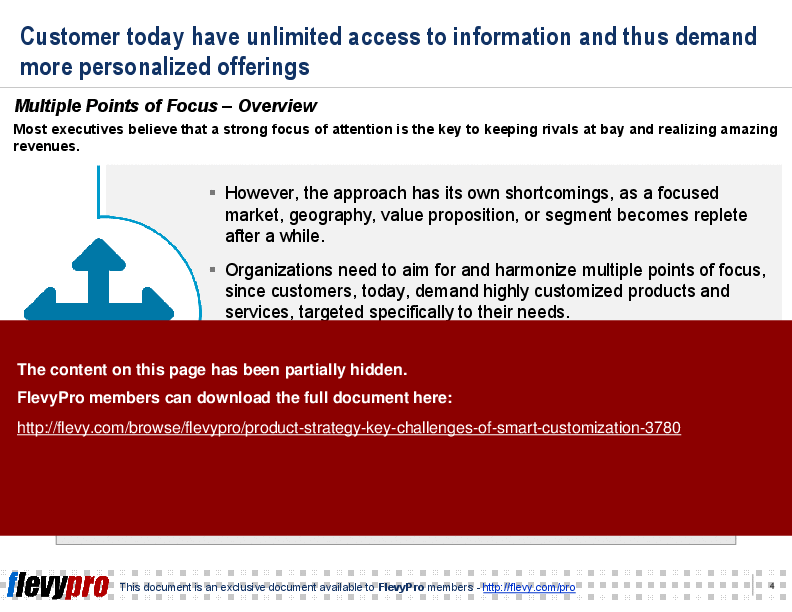
However, leadership at most supplier organizations believe that a strong focus of attention is the key to keeping rivals at bay and realizing amazing revenues. But the approach has its own shortcomings, as a focused market, geography, value proposition, or segment becomes replete after a while. Organizations need to aim for and harmonize multiple points of focus to keep up with the fragmenting demand of their customers.
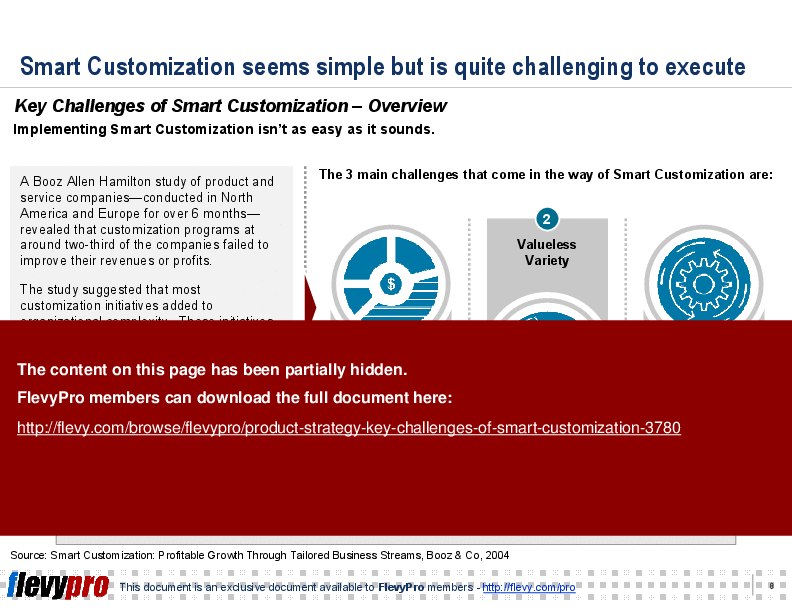
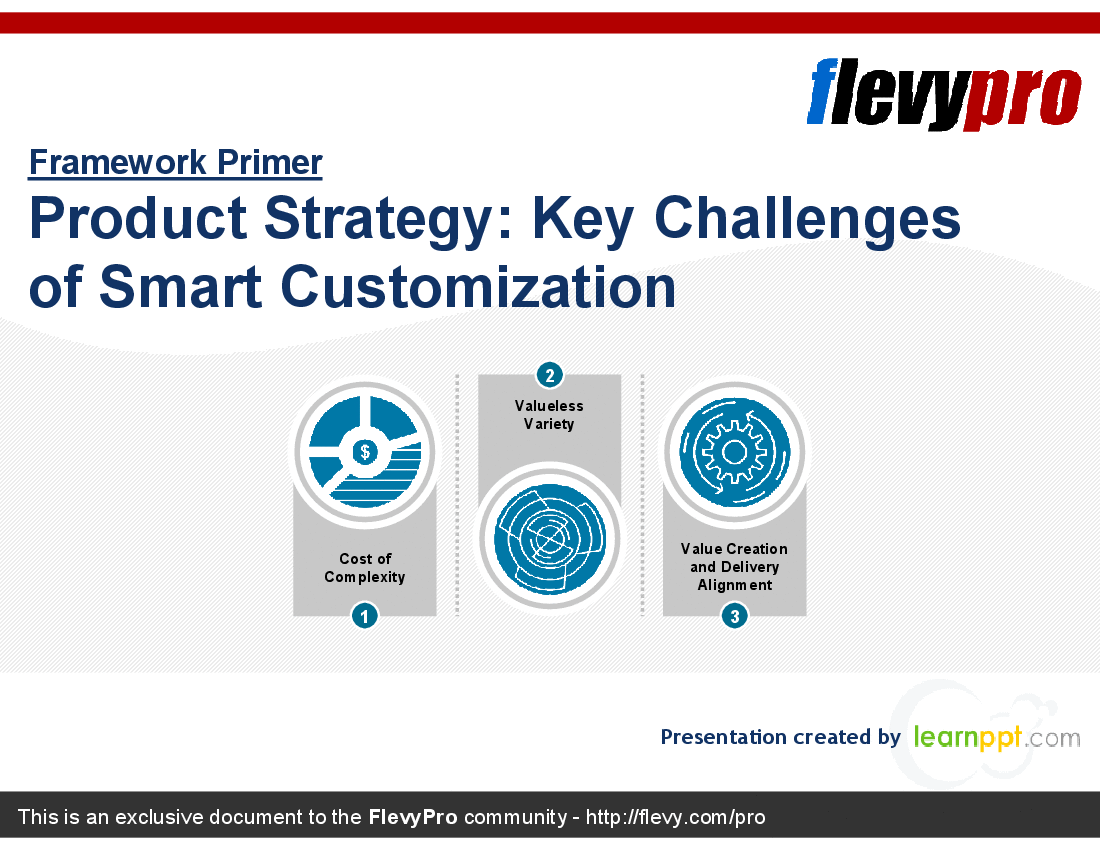
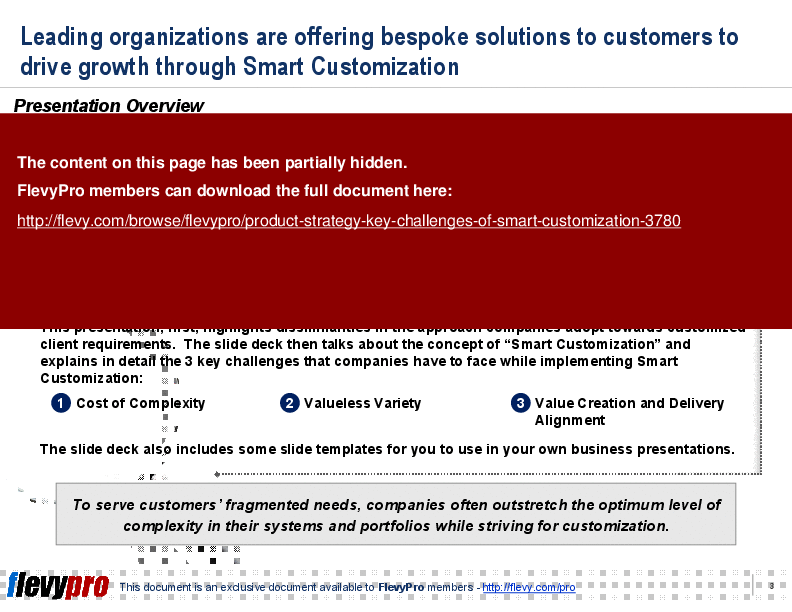
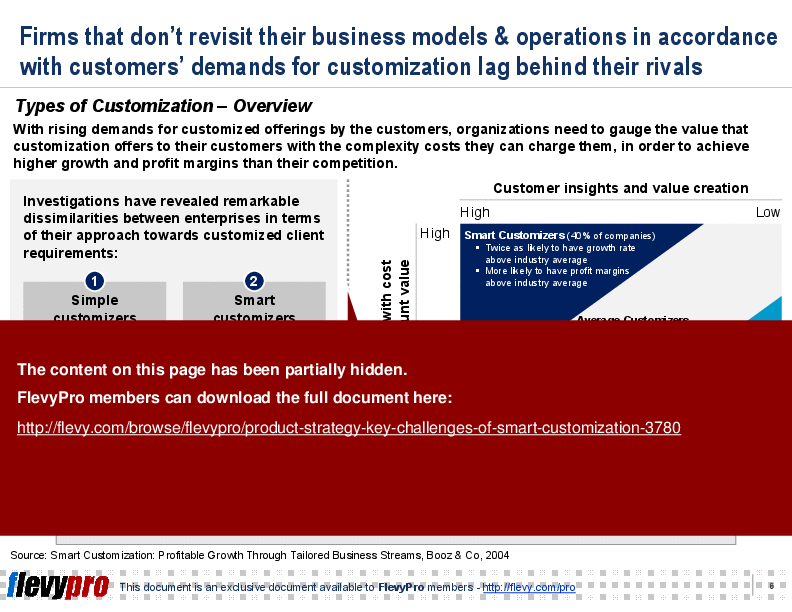
This presentation, first, highlights dissimilarities in the approach companies adopt towards customized client requirements. The slide deck then talks about the concept of "Smart Customization" and explains in detail the 3 key challenges that companies have to face while implementing Smart Customization:
1. Cost of Complexity
2. Valueless Variety
3. Value Creation and Delivery Alignment
The slide deck also includes some slide templates for you to use in your own business presentations.
The presentation delves into the intricacies of balancing customer demands with operational efficiency. It provides a comprehensive analysis of how organizations can avoid the pitfalls of over-customization, which often leads to increased costs and diminished returns. The PPT emphasizes the importance of aligning value creation with delivery mechanisms to ensure that customization efforts translate into tangible business benefits.
Executives will find actionable insights on how to streamline their customization strategies. The slide deck includes detailed frameworks and templates designed to help organizations assess and refine their approaches to smart customization. This resource is essential for leaders looking to enhance their competitive edge by offering tailored solutions without compromising on profitability.
Got a question about this document? Email us at flevypro@flevy.com.
Executive Summary
The "Product Strategy: Key Challenges of Smart Customization" presentation provides a comprehensive exploration of the complexities organizations face when implementing smart customization. Developed by former consultants from McKinsey and the Big 4, this expert slide deck outlines the critical challenges of balancing customer demands with operational efficiency. It emphasizes the need for organizations to adapt their business models to meet evolving customer expectations while avoiding unnecessary complexity. By leveraging insights from this presentation, corporate executives and consultants can enhance their strategies for delivering tailored solutions that drive growth and profitability.
Who This Is For and When to Use
• Corporate executives seeking to refine product strategies and enhance customer engagement
• Product managers focused on developing customized offerings that align with market demands
• Strategy consultants advising clients on operational efficiency and market positioning
• Business leaders aiming to understand the implications of customization on profitability and growth
Best-fit moments to use this deck:
• During strategic planning sessions focused on product development and market differentiation
• When assessing the impact of customization on operational efficiency and cost management
• In workshops aimed at aligning organizational capabilities with customer expectations
Learning Objectives
• Define smart customization and its significance in today’s market landscape
• Analyze the cost implications of complexity in product offerings
• Identify the sources of valueless variety and how to mitigate them
• Establish alignment between value creation and delivery systems
• Develop strategies to enhance customer satisfaction through tailored offerings
• Implement best practices for managing customization without increasing operational complexity
Table of Contents
• Overview (page 3)
• Smart Customization (page 5)
• Cost of Complexity (page 10)
• Valueless Variety (page 14)
• Value Creation and Delivery Alignment (page 18)
• Templates (page 21)
Primary Topics Covered
• Smart Customization - This concept involves tailoring products and services to meet the specific needs of customers while balancing operational efficiency.
• Cost of Complexity - Organizations often face challenges in managing the costs associated with increased complexity in their offerings, which can divert resources from core initiatives.
• Valueless Variety - The tendency to create unnecessary product variations can dilute brand value and confuse customers, leading to inefficiencies.
• Value Creation and Delivery Alignment - Successful organizations align their offerings with customer needs, ensuring that value is delivered effectively and efficiently.
• Customization Strategies - Best practices for implementing smart customization while maintaining operational effectiveness and customer satisfaction.
• Market Segmentation - Understanding how to segment markets based on customer needs and preferences to optimize product offerings.
Deliverables, Templates, and Tools
• Customization strategy template for aligning product offerings with customer expectations
• Cost-benefit analysis framework to evaluate the impact of customization on profitability
• Market segmentation model to identify and target key customer segments effectively
• Performance metrics dashboard to track the effectiveness of customization initiatives
• Risk assessment tool for managing the complexities associated with product customization
• Communication plan template for articulating customization strategies to stakeholders
Slide Highlights
• Overview of smart customization and its relevance in today’s competitive landscape
• Analysis of the cost implications of complexity in product offerings
• Visual representation of the performance curve illustrating the relationship between customization and profitability
• Case studies demonstrating successful implementation of smart customization strategies
• Frameworks for assessing customer needs and aligning product offerings accordingly
Potential Workshop Agenda
Smart Customization Overview Session (60 minutes)
• Discuss the importance of smart customization in current market dynamics
• Review key challenges and strategies for effective implementation
Cost of Complexity Analysis (90 minutes)
• Identify areas of unnecessary complexity within current offerings
• Develop action plans to streamline product lines and reduce costs
Valueless Variety Workshop (60 minutes)
• Explore case studies of organizations that have successfully reduced product variations
• Brainstorm strategies for maintaining simplicity while meeting customer needs
Customization Guidance
• Tailor the presentation to reflect specific industry challenges and customer segments
• Update templates with relevant metrics and KPIs that align with organizational goals
• Incorporate case studies or examples from the organization to illustrate key points
Secondary Topics Covered
• The role of technology in enabling smart customization
• Strategies for managing customer expectations in a rapidly changing market
• The impact of organizational culture on customization initiatives
• Best practices for training teams on customization strategies
• The importance of feedback loops in refining customization efforts
Topic FAQ
Document FAQ
These are questions addressed within this presentation.
What is smart customization?
Smart customization refers to the practice of tailoring products and services to meet specific customer needs while balancing operational efficiency and cost management.
Why is the cost of complexity a challenge?
The cost of complexity arises when organizations expand their product offerings without adequately assessing the associated costs, leading to resource diversion and inefficiencies.
How can organizations avoid valueless variety?
Organizations can avoid valueless variety by conducting thorough market research to understand customer preferences and by streamlining their product offerings to focus on high-value items.
What is the relationship between value creation and delivery alignment?
Value creation involves developing products that meet customer needs, while delivery alignment ensures that the organization’s processes and systems effectively support the delivery of that value.
How can this presentation be customized for my organization?
The presentation can be tailored by incorporating specific industry examples, updating metrics to reflect organizational goals, and aligning templates with internal processes.
What tools are included in the presentation?
The presentation includes templates for strategy development, cost-benefit analysis, market segmentation, and performance tracking.
How can I implement the strategies discussed in the presentation?
Implementation involves assessing current practices, identifying areas for improvement, and developing action plans that align with the insights provided in the presentation.
What are the key takeaways from the case studies?
Key takeaways include the importance of understanding customer needs, the value of streamlined offerings, and the need for continuous evaluation of customization strategies.
Glossary
• Smart Customization - Tailoring products and services to meet specific customer needs.
• Cost of Complexity - The financial implications of increased complexity in product offerings.
• Valueless Variety - Unnecessary product variations that do not add value to customers.
• Value Creation - The process of developing offerings that meet customer needs effectively.
• Delivery Alignment - Ensuring that organizational processes support the effective delivery of value.
• Market Segmentation - The practice of dividing a market into distinct groups of buyers.
• Performance Metrics - Quantitative measures used to assess the effectiveness of strategies.
• Customization Strategy - A plan for tailoring offerings to meet customer demands.
• Risk Assessment - The process of identifying and evaluating risks associated with customization.
• Communication Plan - A strategy for conveying customization initiatives to stakeholders.
• Feedback Loop - A system for gathering and analyzing customer feedback to refine offerings.
• Case Study - An in-depth analysis of a particular instance of smart customization implementation.
Source: Best Practices in Product Strategy, Smart Customization PowerPoint Slides: Product Strategy: Key Challenges of Smart Customization PowerPoint (PPT) Presentation Slide Deck, LearnPPT Consulting
Did you need more documents?
Consider a FlevyPro subscription from $39/month. View plans here.
For $10.00 more, you can download this document plus 2 more FlevyPro documents. That's just $13 each.
|
Download our FREE Strategy & Transformation Framework Templates
Download our free compilation of 50+ Strategy & Transformation slides and templates. Frameworks include McKinsey 7-S, Balanced Scorecard, Disruptive Innovation, BCG Curve, and many more. |