
Scenario Planning: Oxford Approach   28-slide PPT PowerPoint presentation slide deck (PPTX)
$29.00

Scenario Planning: Oxford Approach (28-slide PPT PowerPoint presentation slide deck (PPTX)) Preview Image
Log in to unlock full preview.
Scenario Planning: Oxford Approach (28-slide PPT PowerPoint presentation slide deck (PPTX)) Preview Image
Arrow   Click main image to view in full screen.

Scenario Planning: Oxford Approach (PowerPoint PPTX Slide Deck)

PowerPoint (PPTX) 28 Slides FlevyPro Document

Top 1,000 Best Practice $29.00
FlevyPro price: FREE (included in subscription)
This framework is developed by a team of former McKinsey and Big 4 consultants. The presentation follows the headline-body-bumper slide format used by global consulting firms.
Add to Cart


Immediate download
Free lifetime updates

SCENARIO PLANNING PPT DESCRIPTION

Editor Summary Scenario Planning: Oxford Approach is a 28-slide PowerPoint presenting the Oxford Approach to scenario planning, outlining 5 core characteristics and the 3 scenario types (probabilistic, normative, plausibility). Read more

Financial uncertainties, unpredictable national and international scenarios, environmental hazards, and technological breakthroughs have taken organizations by a surprise.

This has led leaders to turn to Scenario Planning in order to come up with multiple possible scenarios—developed using diverse perspectives on potential future outcomes from teams of subject matter experts. Scenarios encompass plausible, but unpredictably important, situations and problems.

Scenario Planning is a Strategic Planning tool—that gained recognition in 1960s and 1970s—used to develop workable, longstanding Strategic Plans. The classic method to Scenario Planning allows analysts to create simulations for senior management to make informed decisions. By preparing for predicted scenarios in advance, organizations can avoid weaknesses or effectively reduce their adverse effects than tackling real-life problems when facing emergencies.

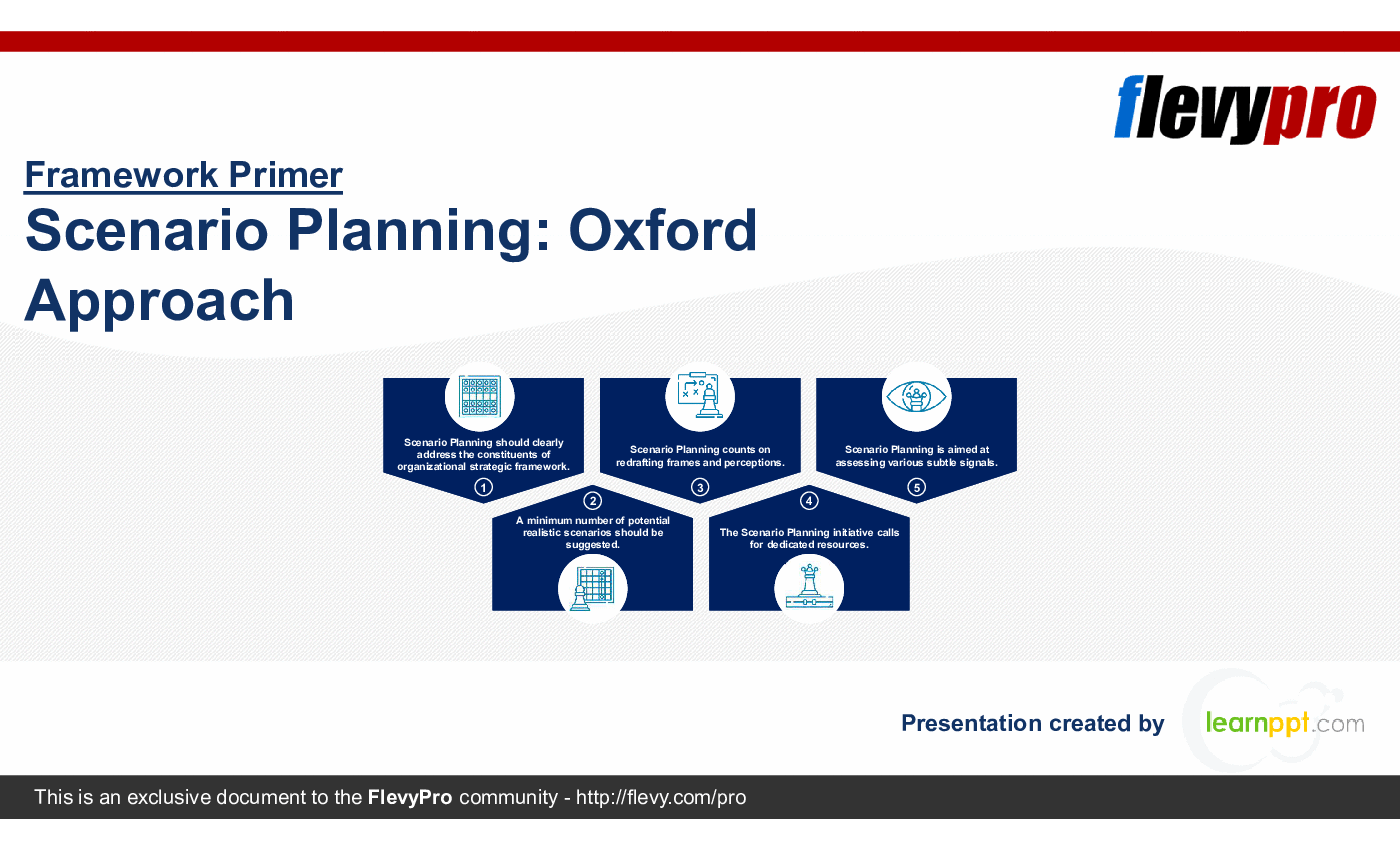
This presentation discusses the 5 core characteristics of the Oxford Approach to Scenario Planning.

The slide deck also includes 2 case studies on how organizations utilized and implemented Scenario Planning to effectively foresee plausible future scenarios and plan interventions accordingly.

The slide deck also includes some slide templates for you to use in your own business presentations

The Oxford Approach to Scenario Planning is a comprehensive methodology that delves into understanding the immediate and external business environments. It emphasizes the importance of gathering insights from a diverse range of stakeholders to develop realistic and actionable scenarios. This approach is particularly effective in turbulent times, helping organizations navigate through uncertainty by focusing on rational, thought-out scenarios rather than relying on probabilities.

This slide deck also includes detailed case studies, such as the implementation process at Rolls-Royce and the Royal Society of Chemistry. These case studies illustrate how Scenario Planning can be applied to foresee future trends and make strategic decisions. The presentation is equipped with templates that can be customized for your own business needs, making it a practical tool for any strategic planning initiative.

Got a question about this document? Email us at flevypro@flevy.com.

MARCUS OVERVIEW

This synopsis was written by Marcus [?] based on the analysis of the full 28-slide presentation.


Executive Summary
The Scenario Planning: Oxford Approach presentation provides a robust framework for organizations to anticipate future challenges and vulnerabilities. This strategic tool, rooted in the principles established in the 1960s and 1970s, enables teams to develop multiple plausible scenarios based on diverse expert perspectives. By employing this method, organizations can proactively prepare for uncertainties, mitigating risks and enhancing strategic decision-making. The presentation includes case studies demonstrating successful implementations and offers editable templates for immediate application.

Who This Is For and When to Use
•  Corporate strategists and executives responsible for long-term planning
•  Risk management teams assessing potential future disruptions
•  Business analysts seeking to enhance strategic frameworks
•  Consulting professionals guiding organizations through scenario planning

Best-fit moments to use this deck:
•  During strategic planning sessions to explore various future scenarios
•  When assessing organizational vulnerabilities in uncertain environments
•  In workshops aimed at fostering collaborative strategic discussions

Learning Objectives
•  Define the core principles of the Oxford Approach to Scenario Planning
•  Develop multiple plausible scenarios based on organizational contexts
•  Assess vulnerabilities and opportunities through scenario analysis
•  Create actionable strategies informed by scenario outcomes
•  Facilitate collaborative discussions among stakeholders to enhance strategic insights
•  Implement templates for effective scenario planning in organizational settings

Table of Contents
•  Overview (page 3)
•  Scenario Planning (page 5)
•  Oxford Approach (page 8)
•  Case Studies (page 14)
•  Templates (page 20)

Primary Topics Covered
•  Scenario Planning Overview - An introduction to the concept of scenario planning and its significance in strategic decision-making.
•  Types of Scenario Planning - Exploration of probabilistic, normative, and plausibility perspectives in scenario development.
•  Oxford Approach Characteristics - Key features of the Oxford Approach, emphasizing the need for dedicated resources and a focus on plausible outcomes.
•  Contextual Environment Analysis - Understanding the external factors affecting organizational strategy through scenario planning.
•  Case Studies - Real-world examples from Rolls-Royce and the Royal Society of Chemistry illustrating the application of the Oxford Approach.
•  Templates for Implementation - Editable templates to facilitate scenario planning in various organizational contexts.

Deliverables, Templates, and Tools
•  Scenario Planning framework template for structured analysis
•  Editable case study templates for documenting scenario outcomes
•  Checklist for assessing organizational vulnerabilities
•  Scenario development worksheets for collaborative team sessions
•  Presentation slides for sharing scenario planning insights with stakeholders
•  Guidelines for conducting effective scenario planning workshops

Slide Highlights
•  Overview of the Oxford Approach to Scenario Planning
•  Detailed breakdown of the 3 types of scenario planning
•  Visual representation of the contextual environment impacting organizations
•  Case study insights from Rolls-Royce and the Royal Society of Chemistry
•  Templates designed for immediate use in scenario planning initiatives

Potential Workshop Agenda
Introduction to Scenario Planning (30 minutes)
•  Overview of the Oxford Approach
•  Discussion on the importance of scenario planning

Scenario Development Session (90 minutes)
•  Group work to create plausible scenarios
•  Presentation of scenarios and feedback session

Strategic Implications Discussion (60 minutes)
•  Analyze the impact of scenarios on current strategies
•  Identify actionable steps based on scenario outcomes

Customization Guidance
•  Tailor scenario templates to reflect specific organizational contexts and strategic goals
•  Adjust workshop agendas to accommodate team availability and focus areas
•  Incorporate organizational terminology and metrics into scenario planning discussions

Secondary Topics Covered
•  The role of external factors in shaping organizational strategies
•  Best practices for engaging stakeholders in the scenario planning process
•  Techniques for assessing and prioritizing vulnerabilities

Topic FAQ

What are the core principles of the Oxford Approach to scenario planning?

The Oxford Approach emphasizes analyzing the contextual environment, focusing on plausible rather than probable outcomes, dedicating resources to structured work, and drawing on diverse expert perspectives to inform strategy. The deck describes these as 5 core characteristics and frames scenario building around plausibility and stakeholder input, summarized across 5 core characteristics.

What types of scenario planning should I consider when developing scenarios?

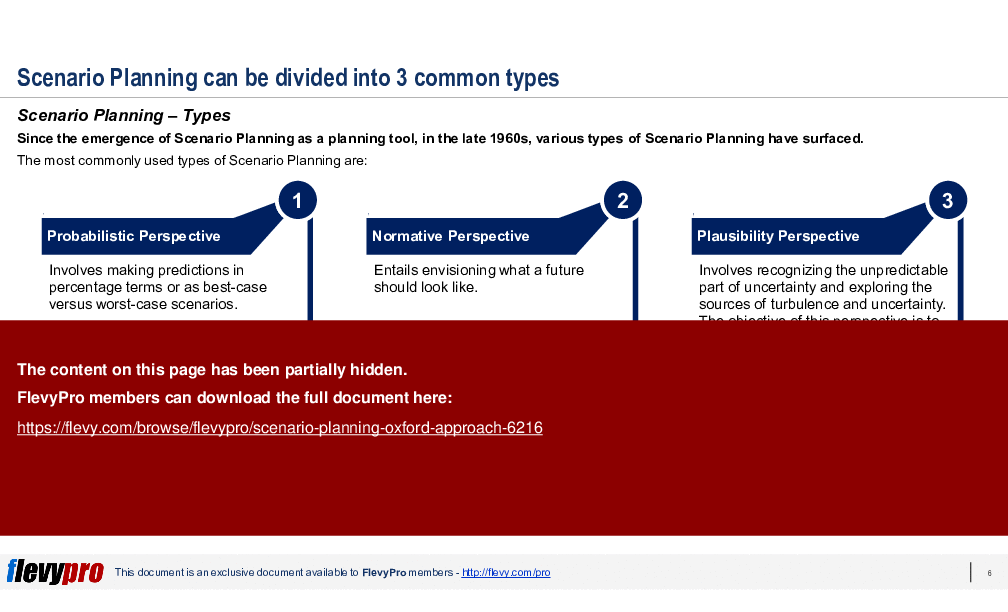
Scenario development can follow probabilistic, normative, or plausibility perspectives: probabilistic uses likelihood estimates, normative defines desired futures, and plausibility explores unpredictably important outcomes. The Scenario Planning: Oxford Approach slide deck explains these 3 perspectives and how to apply each in scenario construction, highlighting all 3 perspectives.

How many scenarios should an organization develop for effective planning?

To maintain focus and clarity, the deck recommends keeping the number of plausible scenarios to a minimum, typically around 4 to five. The presentation reiterates that limiting scenarios helps stakeholders compare strategic implications more effectively, recommending 4 to 5 scenarios.

How do case studies help illustrate scenario planning in practice?

Case studies demonstrate how organizations structured the process, assessed contextual factors, and translated scenarios into strategic actions. The deck includes 2 real-world examples showing implementation and outcomes, specifically the Rolls‑Royce and Royal Society of Chemistry case studies.

What should I look for when choosing a scenario planning toolkit or slide deck?

Look for a clear framework template, editable scenario worksheets, a vulnerabilities checklist, workshop agenda guidance, and real case studies to demonstrate application. The Scenario Planning: Oxford Approach deck contains these elements to support facilitation and documentation, including scenario development worksheets and a workshop agenda.

How can templates in a scenario planning package save time and add value?

Editable templates reduce preparation time, standardize outputs for stakeholder review, and make it easier to capture contextual analysis, scenario narratives, and strategic implications. The slide deck supplies editable templates, checklists, and presentation slides that can be customized, with templates located beginning at page 20.

I need to assess organizational vulnerabilities in an uncertain environment—what practical steps should I follow?

Begin with contextual-environment analysis, convene diverse internal and external experts, develop a small set of plausible scenarios in collaborative sessions, then map vulnerabilities and derive actionable responses. The deck supports this sequence with a vulnerabilities checklist and scenario development worksheets to document findings and actions.

How do I run a half-day scenario planning workshop with limited time?

The deck provides a suggested agenda that fits a half-day: a 30-minute introduction to the Oxford Approach, a 90-minute group scenario development session, and a 60-minute strategic implications discussion. Use the provided worksheets and presentation slides to structure the 30/90/60 minute agenda.

Document FAQ
These are questions addressed within this presentation.

What is Scenario Planning?
Scenario Planning is a strategic tool that helps organizations anticipate and prepare for potential future challenges by developing multiple plausible scenarios.

How does the Oxford Approach differ from traditional scenario planning?
The Oxford Approach emphasizes understanding the contextual environment and focuses on plausible rather than probable outcomes, fostering deeper strategic insights.

What are the key benefits of using the Oxford Approach?
Organizations can better anticipate vulnerabilities, enhance strategic decision-making, and foster collaboration among stakeholders through structured scenario analysis.

How many scenarios should be developed?
It is recommended to keep the number of plausible scenarios to a minimum, typically around 4 to five, to maintain focus and clarity.

Who should be involved in the scenario planning process?
Involving a diverse group of stakeholders, including internal teams and external experts, enriches the scenario development process and enhances the quality of insights.

What types of scenarios can be created?
Scenarios can be developed from probabilistic, normative, and plausibility perspectives, allowing for a comprehensive exploration of potential futures.

How can the templates be customized for my organization?
Templates can be tailored by incorporating specific organizational metrics, terminology, and strategic objectives relevant to your context.

What are the next steps after developing scenarios?
Organizations should analyze the implications of each scenario on their strategies and identify actionable steps to mitigate risks or capitalize on opportunities.

Glossary
•  Scenario Planning - A strategic method for anticipating future challenges and opportunities through the development of multiple plausible scenarios.
•  Oxford Approach - A framework for scenario planning that focuses on contextual analysis and plausible outcomes.
•  Plausibility Perspective - A scenario planning approach that emphasizes understanding unpredictable uncertainties.
•  Probabilistic Perspective - A method of scenario planning that involves making predictions based on likelihoods.
•  Normative Perspective - A scenario planning approach that envisions desired future states.
•  Contextual Environment - External factors that influence an organization's strategic landscape.
•  Stakeholders - Individuals or groups with an interest in the outcomes of the scenario planning process.
•  Vulnerabilities - Potential weaknesses that could impact an organization's performance in various scenarios.
•  Case Study - An analysis of real-world applications of scenario planning to illustrate its effectiveness.
•  Templates - Pre-designed frameworks for facilitating scenario planning activities.
•  Workshop - A collaborative session aimed at developing scenarios and strategic insights.
•  Strategic Planning - The process of defining an organization's direction and making decisions on allocating resources to pursue that direction.
•  Expert Perspectives - Insights from knowledgeable individuals that inform the scenario planning process.
•  Actionable Steps - Concrete actions derived from scenario analysis to guide organizational strategy.
•  Collaboration - The process of working together among stakeholders to enhance scenario planning outcomes.
•  Risk Management - The identification and assessment of risks, followed by coordinated efforts to minimize, monitor, and control the probability or impact of unfortunate events.
•  Investment Initiatives - Proposed projects or actions that require financial resources and are evaluated based on scenario outcomes.
•  Long-term Planning - Strategic planning that focuses on goals and objectives over an extended time frame.
•  Strategic Insights - Key understandings derived from scenario analysis that inform decision-making.

SCENARIO PLANNING PPT SLIDES

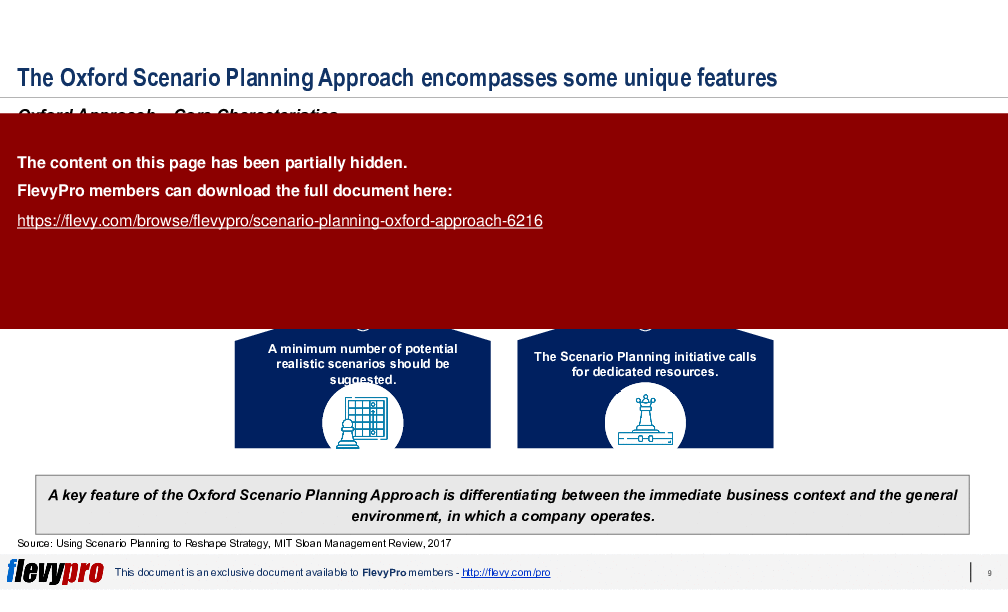
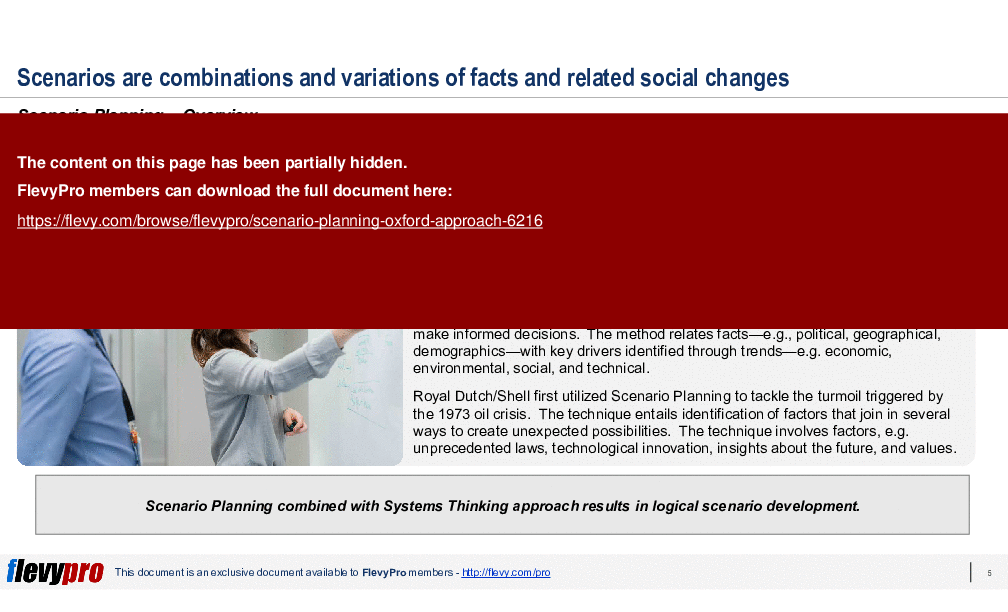
Core Characteristics of the Oxford Scenario Planning Approach

Types of Scenario Planning: Perspectives Explained

Understanding the Oxford Scenario Planning Framework

Future Scenario Planning for Chemical Sciences

Source: Best Practices in Strategic Planning, Scenario Planning PowerPoint Slides: Scenario Planning: Oxford Approach PowerPoint (PPTX) Presentation Slide Deck, LearnPPT Consulting


$29.00
FlevyPro price: FREE (included in subscription)
This framework is developed by a team of former McKinsey and Big 4 consultants. The presentation follows the headline-body-bumper slide format used by global consulting firms.
Add to Cart
  

Did you need more documents?

Consider a FlevyPro subscription from $39/month. View plans here.

For $10.00 more, you can download this document plus 2 more FlevyPro documents. That's just $13 each.

ABOUT FLEVYPRO

This document is part of the FlevyPro Library, a curated knowledge base of documents for our FlevyPro subscribers.

FlevyPro is a subscription service for on-demand business frameworks and analysis tools. FlevyPro subscribers receive access to an exclusive library of curated business documents—business framework primers, presentation templates, Lean Six Sigma tools, and more—among other exclusive benefits.

Click here to learn more about FlevyPro and its benefits.

Did you know?
The average daily rate of a McKinsey consultant is $6,625 (not including expenses). The average price of a Flevy document is $65.


Trusted by over 10,000+ Client Organizations
Since 2012, we have provided business templates to over 10,000 businesses and organizations of all sizes, from startups and small businesses to the Fortune 100, in over 130 countries.
AT&T GE Cisco Intel IBM Coke Dell Toyota HP Nike Samsung Microsoft Astrazeneca JP Morgan KPMG Walgreens Walmart 3M Kaiser Oracle SAP Google E&Y Volvo Bosch Merck Fedex Shell Amgen Eli Lilly Roche AIG Abbott Amazon PwC T-Mobile Broadcom Bayer Pearson Titleist ConEd Pfizer NTT Data Schwab


Read Customer Testimonials

 
"My FlevyPro subscription provides me with the most popular frameworks and decks in demand in today’s market. They not only augment my existing consulting and coaching offerings and delivery, but also keep me abreast of the latest trends, inspire new products and service offerings for my practice, and educate me "

– Bill Branson, Founder at Strategic Business Architects
 
"One of the great discoveries that I have made for my business is the Flevy library of training materials.

As a Lean Transformation Expert, I am always making presentations to clients on a variety of topics: Training, Transformation, Total Productive Maintenance, Culture, Coaching, Tools, Leadership Behavior, etc. Flevy "

– Ed Kemmerling, Senior Lean Transformation Expert at PMG
 
"Flevy is our 'go to' resource for management material, at an affordable cost. The Flevy library is comprehensive and the content deep, and typically provides a great foundation for us to further develop and tailor our own service offer."

– Chris McCann, Founder at Resilient.World
 
"I have used FlevyPro for several business applications. It is a great complement to working with expensive consultants. The quality and effectiveness of the tools are of the highest standards."

– Moritz Bernhoerster, Global Sourcing Director at Fortune 500
 
"Flevy is now a part of my business routine. I visit Flevy at least 3 times each month.

Flevy has become my preferred learning source, because what it provides is practical, current, and useful in this era where the business world is being rewritten.

In today's environment where there are so "

– Omar Hernán Montes Parra, CEO at Quantum SFE
 
"As a consultant requiring up to date and professional material that will be of value and use to my clients, I find Flevy a very reliable resource.

The variety and quality of material available through Flevy offers a very useful and commanding source for information. Using Flevy saves me time, enhances my expertise and ends up being a good decision."

– Dennis Gershowitz, Principal at DG Associates
 
"Last Sunday morning, I was diligently working on an important presentation for a client and found myself in need of additional content and suitable templates for various types of graphics. Flevy.com proved to be a treasure trove for both content and design at a reasonable price, considering the time I "

– M. E., Chief Commercial Officer, International Logistics Service Provider
 
"I have found Flevy to be an amazing resource and library of useful presentations for lean sigma, change management and so many other topics. This has reduced the time I need to spend on preparing for my performance consultation. The library is easily accessible and updates are regularly provided. A wealth of great information."

– Cynthia Howard RN, PhD, Executive Coach at Ei Leadership


Customers Also Bought These Documents


Customers Also Like These Documents

Explore Templates on Related Management Topics


Your Recently Viewed Documents
Download our FREE Strategy & Transformation Framework Templates

Download our free compilation of 50+ Strategy & Transformation slides and templates. Frameworks include McKinsey 7-S, Balanced Scorecard, Disruptive Innovation, BCG Curve, and many more.