
Most Product Managers have relatively narrow roles and decision rights on product portfolios are fragmented on various functions. This creates incoherence between a company's product and its overall Corporate Strategy.
What is needed is a more accountable decision rights that align responsibility for results to one person who also has cross-functional decision-making authority. This realignment is at the core of Strong-form Product Management.
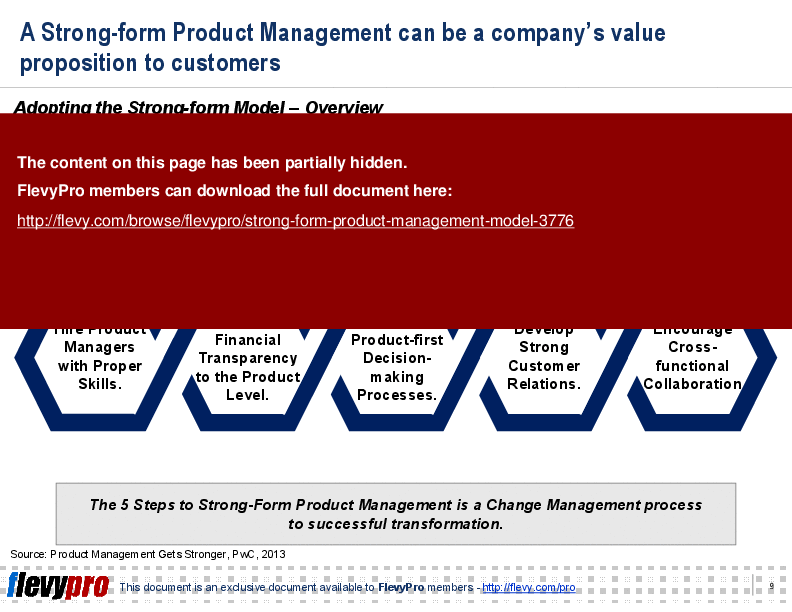
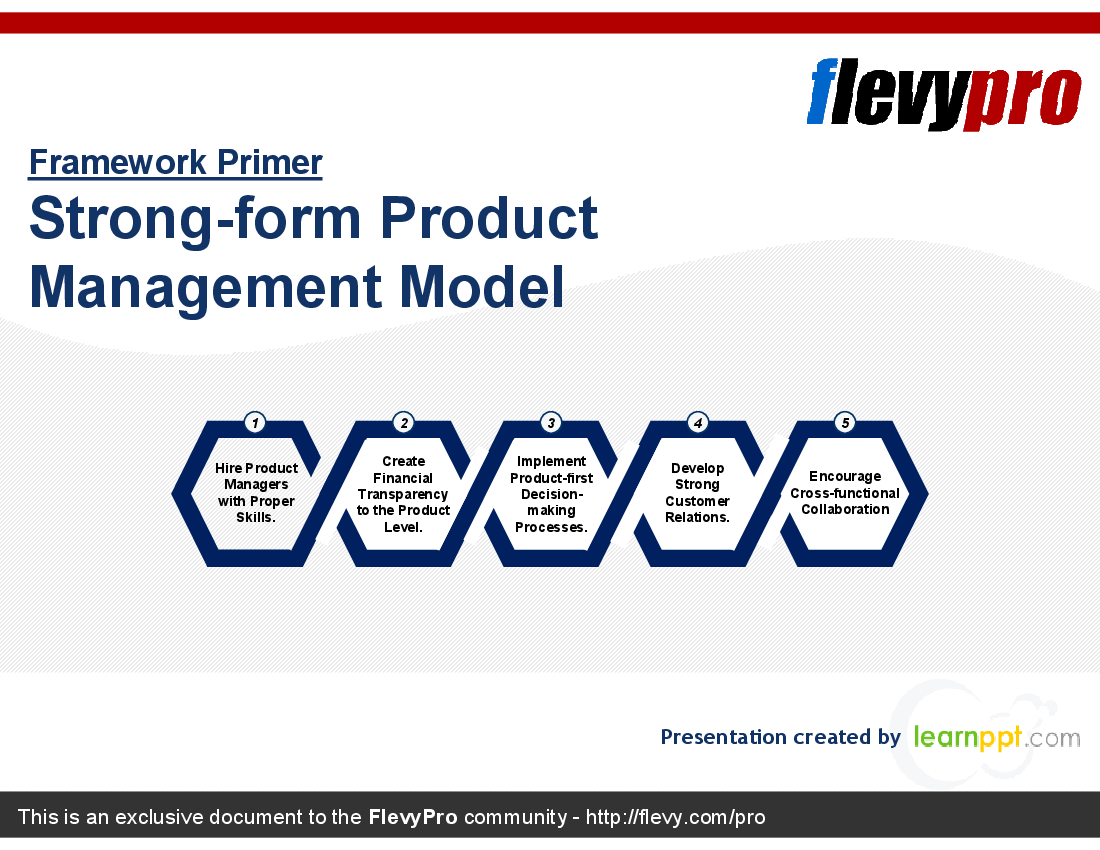
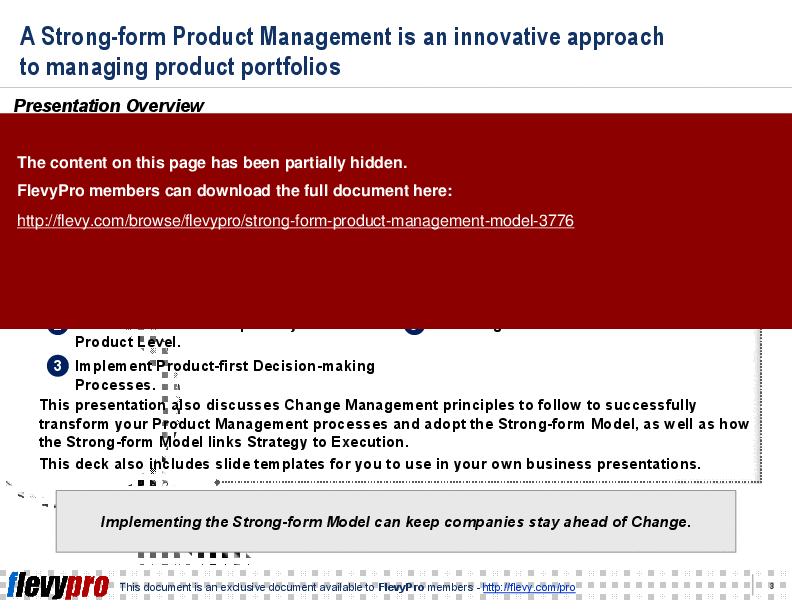
This presentation provides the basic framework on Strong-form Product Management Model. Adopting a Strong-form Product Management Model begins with 5 essential steps.
1. Hire Product Managers with Proper Skills.
2. Create Financial Transparency to the Product Level.
3. Implement Product-first Decision-making Processes.
4. Develop Strong Customer Relations.
5. Encourage Cross-functional Collaboration.
This presentation also discusses Change Management principles to follow to successfully transform your Product Management processes and adopt the Strong-form Model, as well as how the Strong-form Model links Strategy to Execution.
This deck also includes slide templates for you to use in your own business presentations.
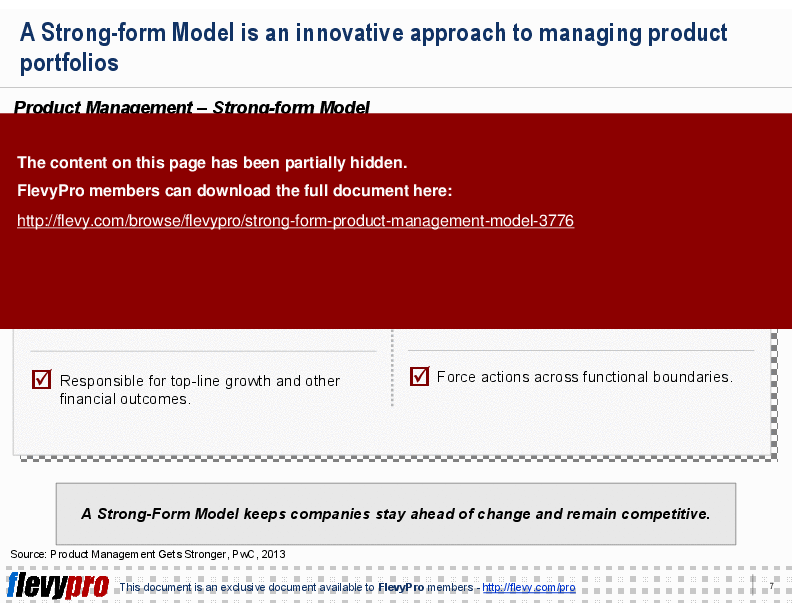
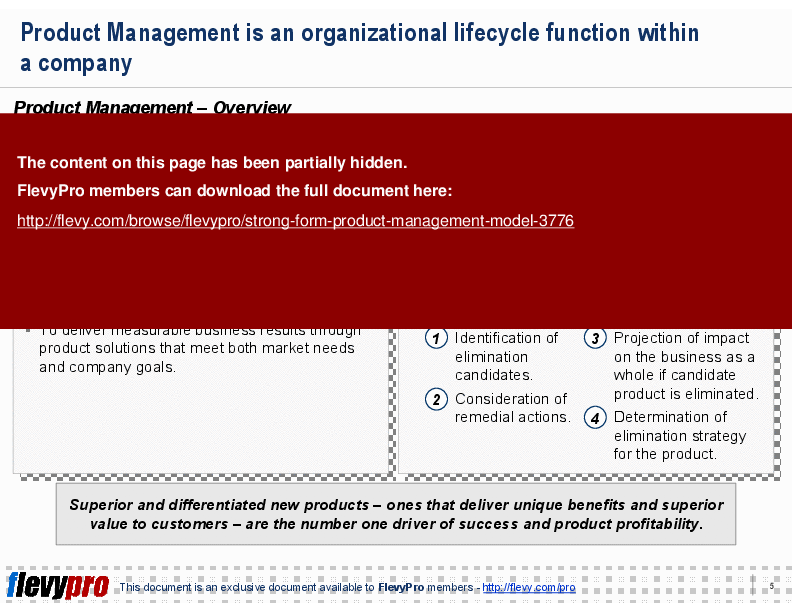
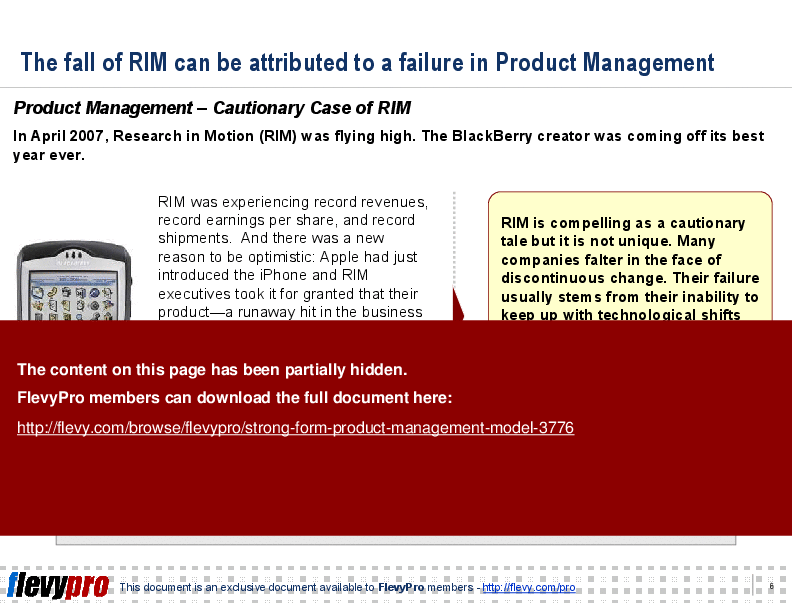
This presentation delves into the organizational lifecycle function of Product Management, emphasizing the importance of delivering measurable business results aligned with both market needs and company goals. It provides a comprehensive overview of the Strong-form Product Management Model, highlighting its role in driving top-line growth and enforcing actions across functional boundaries. The case study of RIM serves as a cautionary tale, illustrating the critical need for robust Product Management to avoid becoming obsolete in a rapidly changing market.
The deck also includes actionable insights on hiring Product Managers with the right skills, creating financial transparency, and implementing product-first decision-making processes. It underscores the necessity of developing strong customer relations and fostering cross-functional collaboration to stay ahead of change and remain competitive. This resource is indispensable for companies looking to transform their Product Management approach and ensure coherence from strategy to execution.
Got a question about this document? Email us at flevypro@flevy.com.
Executive Summary
The Strong-form Product Management Model presentation provides a comprehensive framework for enhancing product management processes within organizations. Developed by experienced consultants, this model emphasizes the need for cohesive decision-making and accountability in product management. By adopting this model, companies can align their product strategies with overall corporate objectives, ensuring that product managers have the authority and resources to drive results. The presentation outlines 5 essential steps for implementing this model, focusing on hiring skilled product managers, fostering financial transparency, and encouraging cross-functional collaboration.
Who This Is For and When to Use
• Product Managers seeking to enhance their decision-making authority and accountability
• Corporate executives aiming to align product strategies with business goals
• Change management leaders involved in transforming product management processes
• Consultants advising organizations on product management best practices
Best-fit moments to use this deck:
• During strategic planning sessions to align product management with corporate strategy
• When initiating change management initiatives to improve product management effectiveness
• For training sessions focused on developing product management skills and competencies
Learning Objectives
• Define the Strong-form Product Management Model and its significance in modern organizations
• Build a framework for hiring and training effective product managers
• Establish processes for financial transparency at the product level
• Implement product-first decision-making processes to enhance accountability
• Develop strong customer relationships to inform product development
• Encourage cross-functional collaboration to streamline product management
Table of Contents
• Overview (page 3)
• Product Management (page 5)
• Adopting the Strong-form Model (page 9)
• Change Management (page 16)
• Templates (page 19)
Primary Topics Covered
• Overview of Product Management - Discusses the role of product management in optimizing product portfolios and delivering measurable business results.
• Strong-form Product Management Model - Introduces the model that aligns decision rights with accountability for results, enhancing product management effectiveness.
• Five Steps to Strong-form Product Management - Outlines the essential steps: hiring skilled product managers, creating financial transparency, implementing decision-making processes, developing customer relations, and fostering collaboration.
• Change Management Principles - Details the principles necessary for successfully adopting the Strong-form Model, including leadership involvement and establishing metrics for success.
• Templates for Implementation - Provides slide templates to assist in applying the Strong-form Product Management Model in business presentations.
Deliverables, Templates, and Tools
• Framework for hiring and developing product managers
• Financial transparency model for product-level insights
• Decision-making process templates for product management
• Customer relationship management strategies
• Collaboration frameworks for cross-functional teams
• Change management planning templates
Slide Highlights
• Overview of the Strong-form Product Management Model emphasizing accountability
• Five essential steps for implementing the Strong-form Model
• Case study on the fall of RIM as a cautionary tale for ineffective product management
• Visual frameworks outlining the relationship between product management and corporate strategy
• Change management principles for adopting the Strong-form Model
Potential Workshop Agenda
Introduction to Strong-form Product Management (60 minutes)
• Overview of the Strong-form Model and its importance
• Discussion on the role of product managers in the model
Implementing Financial Transparency (90 minutes)
• Strategies for creating financial insights at the product level
• Workshop on measuring product performance
Cross-functional Collaboration Session (60 minutes)
• Techniques for fostering collaboration among teams
• Role-playing scenarios to enhance communication
Customization Guidance
• Tailor the hiring framework to align with your organization's specific competencies
• Adjust financial transparency metrics to reflect your product lines and market conditions
• Modify decision-making processes to fit your organizational structure and culture
Secondary Topics Covered
• The impact of effective product management on corporate strategy
• Techniques for managing product life cycles
• Best practices for product elimination decisions
• The role of technology in enhancing product management processes
Topic FAQ
Document FAQ
These are questions addressed within this presentation.
What is the Strong-form Product Management Model?
The Strong-form Product Management Model is an innovative approach that aligns decision rights with accountability, enabling product managers to drive outcomes effectively.
How can financial transparency improve product management?
Financial transparency allows product managers to gain insights into product performance, identify unprofitable products, and make informed decisions to enhance profitability.
What are the key steps in adopting the Strong-form Model?
The key steps include hiring skilled product managers, creating financial transparency, implementing product-first decision-making processes, developing strong customer relations, and encouraging cross-functional collaboration.
Why is cross-functional collaboration important in product management?
Cross-functional collaboration ensures that all relevant teams contribute to product development, leading to better decision-making and more successful product outcomes.
How can organizations measure the success of the Strong-form Model?
Success can be measured through established metrics, such as product profitability, market share growth, and customer satisfaction levels.
What role does change management play in adopting this model?
Change management is critical for guiding organizations through the transition to the Strong-form Model, ensuring that all stakeholders understand and embrace the new processes.
What tools are included in the presentation for implementation?
The presentation includes templates for hiring frameworks, financial transparency models, decision-making processes, and collaboration strategies.
How does this model relate to overall corporate strategy?
The Strong-form Model aligns product management with corporate strategy by ensuring that product decisions support broader business objectives.
What are the risks of not adopting the Strong-form Model?
Failing to adopt this model can lead to fragmented decision-making, misalignment with corporate strategy, and ultimately, reduced product success and profitability.
Glossary
• Strong-form Product Management - An approach that aligns decision rights with accountability for results in product management.
• Financial Transparency - The practice of providing detailed financial insights at the product level to inform decision-making.
• Cross-functional Collaboration - The process of different teams working together to achieve common product goals.
• Change Management - The structured approach to transitioning individuals, teams, and organizations to a desired future state.
• Product Life Cycle - The stages a product goes through from development to decline.
• Product Manager - A professional responsible for guiding the success of a product and leading cross-functional teams.
• Decision-making Authority - The power to make choices that affect product outcomes and strategy.
• Customer Relations - The management of interactions with customers to enhance satisfaction and loyalty.
• Corporate Strategy - The overarching plan that guides an organization’s direction and decision-making.
• Accountability - The obligation of product managers to report on and take responsibility for product performance.
• Metrics for Success - Quantifiable measures used to assess the effectiveness of product management practices.
• Organizational Barriers - Challenges that impede collaboration and communication across different teams.
Source: Best Practices in Product Strategy, Product Management PowerPoint Slides: Strong-form Product Management Model PowerPoint (PPT) Presentation Slide Deck, LearnPPT Consulting
Did you need more documents?
Consider a FlevyPro subscription from $39/month. View plans here.
For $10.00 more, you can download this document plus 2 more FlevyPro documents. That's just $13 each.
|
Download our FREE Strategy & Transformation Framework Templates
Download our free compilation of 50+ Strategy & Transformation slides and templates. Frameworks include McKinsey 7-S, Balanced Scorecard, Disruptive Innovation, BCG Curve, and many more. |