
This framework is developed by a team of former McKinsey and Big 4 consultants. The presentation follows the headline-body-bumper slide format used by global consulting firms.
Explore platform business models with insights from ex-McKinsey & Big 4 consultants. Analyze Integrator, Product, and MSP strategies for digital transformation. Platform Business Models is a 31-slide PPT PowerPoint presentation slide deck (PPTX) available for immediate download upon purchase.
Enabled by new capabilities in the Digital Age, many organizations are trying to shift from a Products to Platform business model. The drive behind such a shift can also be attributed to the huge success of platform companies—e.g., Amazon, Google, and Apple. These organizations started out as a retailer, search engine, and computer manufacturer, respectively, but later transformed into Platform models.
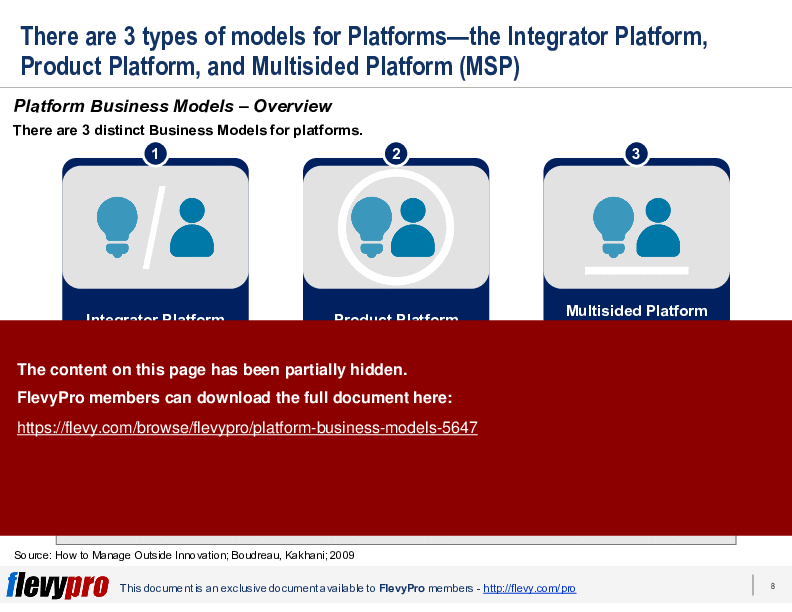
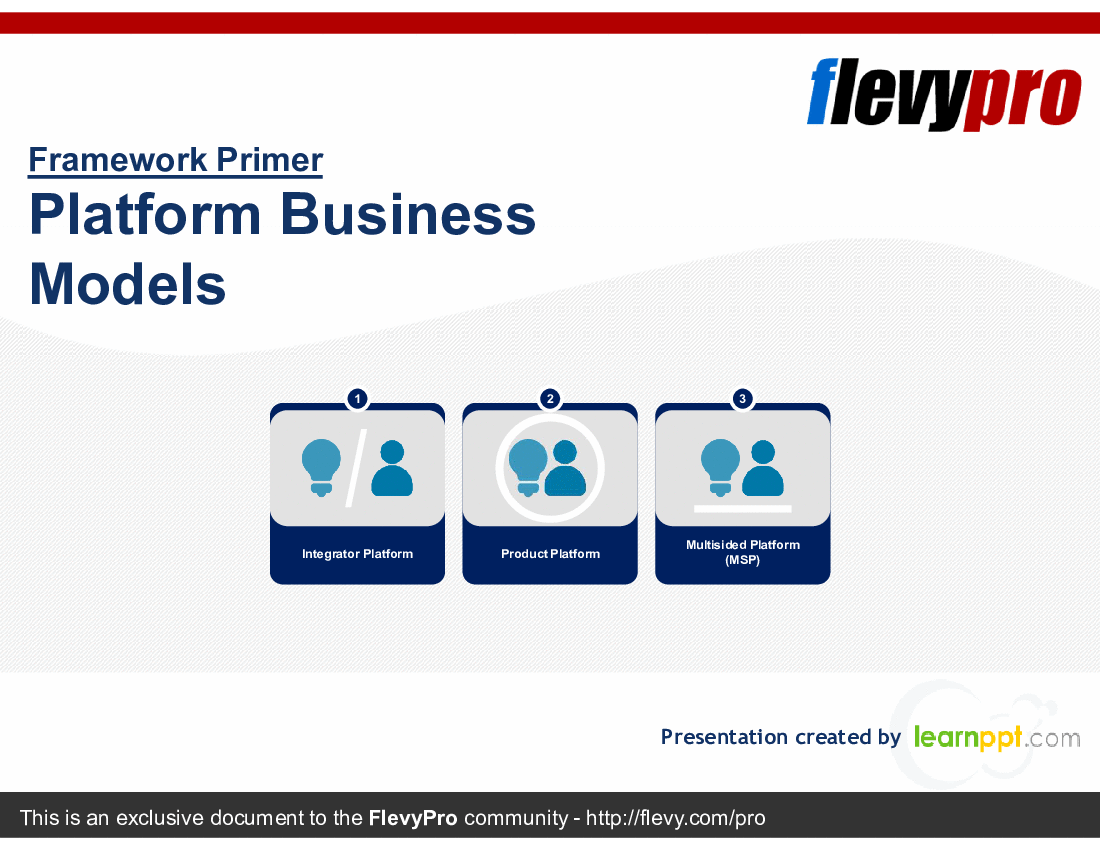
In creating a Platform, there are 3 distinct Business Models that exist:
Each type of Platform Business Model has a different degree of control for the platform—and likewise, different level of autonomy for the participants. Building and managing a successful platform is difficult—it requires carefully balancing strategic tradeoffs among various participant groups. We examine each model in depth and provide numerous examples.
Additional topics discussed include Open Innovation, Markets vs. Communities, Type of Product Platforms, Platform Design, among others.
This deck also includes slide templates for you to utilize in your own business presentations.
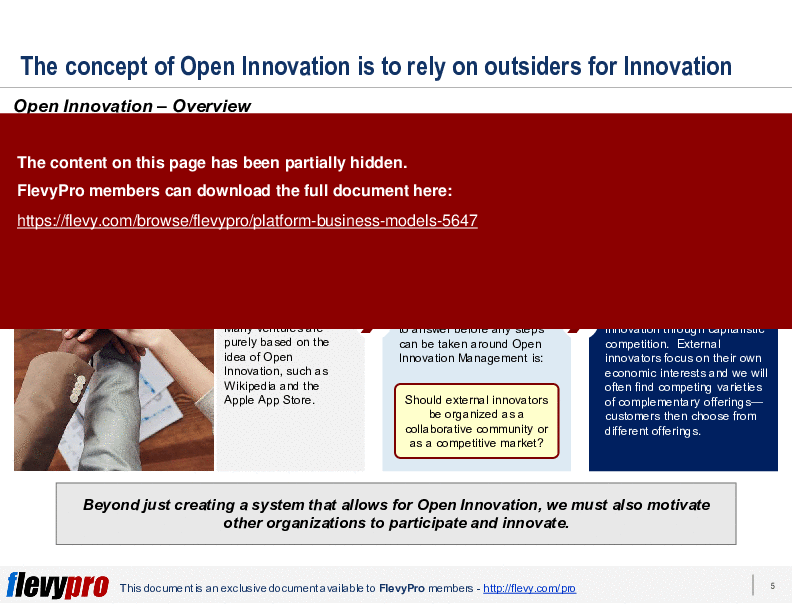
This presentation delves into the intricacies of Open Innovation, emphasizing the pivotal decision between competitive markets and collaborative communities. It outlines the contrasting dynamics and governance structures of these two approaches, providing a comprehensive analysis to help you navigate the complexities of Open Innovation Management. The framework also explores the critical role of external innovators and how their contributions can be harnessed effectively within different market structures.
The PPT further breaks down the three primary platform business models—Integrator, Product, and Multisided Platforms (MSP)—highlighting their unique control mechanisms and participant autonomy. Detailed examples and case studies illustrate the practical applications and strategic considerations for each model. This resource is essential for executives aiming to leverage platform strategies to drive innovation and growth in their organizations.
This PPT slide outlines 4 strategic decisions for developing a Multi-Sided Platform (MSP) strategy: number of sides, platform design, pricing structure, and governance.
The "Number of Sides" refers to the distinct user groups interacting within the platform, influencing its structure and user engagement dynamics.
"Platform Design" encompasses the technical architecture and user experience, critical for enhancing user satisfaction and retention.
The "Pricing Structure" involves monetization strategies, such as subscription models and transaction fees, balancing user needs and revenue generation.
"Governance" includes rules and policies for interactions, essential for maintaining trust and smooth operations.
These interconnected decisions require careful analysis to create a robust MSP that meets market demands.
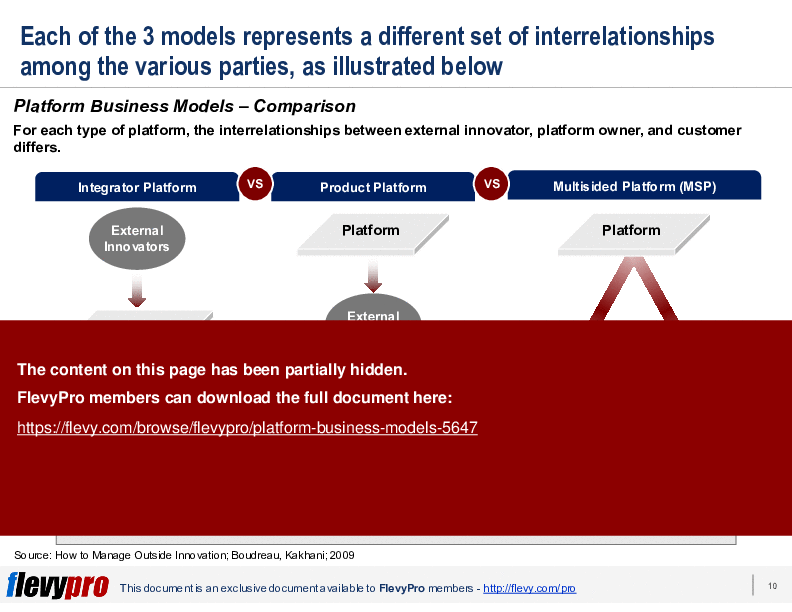
This PPT slide presents an overview of 3 distinct platform business models: Integrator Platform, Product Platform, and Multisided Platform (MSP). The Integrator Platform mediates between external innovators and customers, creating value through facilitated interactions while maintaining control over engagement. The Product Platform allows external innovators direct access to customers, fostering innovation and responsiveness without intermediary constraints. The Multisided Platform (MSP) enables direct transactions between external innovators and customers, promoting openness and flexibility without gatekeeping by the platform owner. A critical difference among these models is the level of control exercised by the platform owner, impacting operational dynamics and strategic positioning.
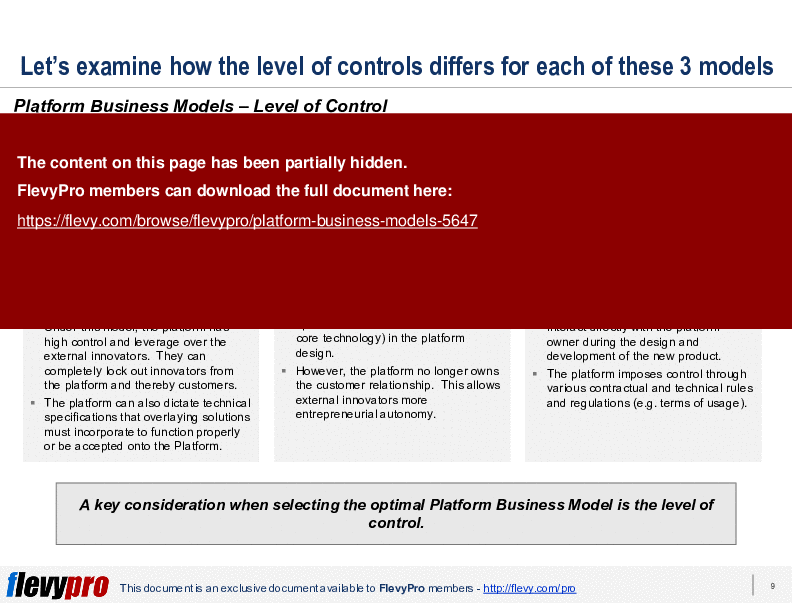
This PPT slide analyzes 3 platform business models: Integrator Platform, Product Platform, and Multisided Platform (MSP), focusing on control levels and autonomy for innovators. The Integrator Platform exerts the highest control, allowing the platform to dictate technical specifications and lock out external innovators, ensuring quality and consistency. The Product Platform provides some control while granting greater autonomy to innovators, who can engage directly with customers, fostering innovation and responsiveness. The Multisided Platform (MSP) offers the least control, allowing innovators to operate independently during development, with platform control exercised through contractual frameworks. This model can create a dynamic ecosystem, but may challenge quality coherence. The level of control influences innovation strategies and market engagement.
This PPT slide compares integrator platforms in competitive markets and collaborative communities. Examples of competitive markets include Apple Inc.'s iPhone, showcasing dominance in the mobile ecosystem, InnoCentive for scientific problem-solving, and Local Motors Inc. for automotive innovation. Ryz and TopCoder Inc. represent footwear and software development, respectively. In collaborative communities, Threadless exemplifies a user-driven T-shirt design platform, while Google Android highlights a collaborative software development model. The key distinction lies in operational models: Apple employs a market-driven approach, whereas Android fosters community engagement. Understanding these differences is essential for stakeholders assessing partnerships or investments in platform-based businesses.
This PPT slide provides an overview of Product Platforms, defining them as specialized systems that integrate features from various categories, enhancing functionalities for B2B and B2C markets. The 4 categories include:
1. Aggregation Platforms: Facilitate transactions and connect users through a hub-and-spoke model, streamlining processes and improving transaction efficiency.
2. Social Platforms: Foster social interactions and mesh relationship networks, enhancing collaboration and user loyalty.
3. Mobilization Platforms: Promote collective action and teamwork to achieve shared goals, vital for organizations focused on collaboration.
4. Learning Platforms: Facilitate knowledge sharing and trust-based relationships, supporting continuous improvement.
These platforms leverage strengths from different types to enhance operational capabilities.
The Product Platform model highlights the role of external innovators who utilize foundational technology to sell products directly to consumers, impacting customer relationships. This model risks eroding revenue and margins for standardized products as third-party customization increases, indicating a shift in market dynamics that could disrupt traditional pricing strategies. Innovators often set their own prices and control technical developments, enabling tailored features for B2B and B2C markets. The effectiveness of a product platform relies on its reach and perceived value, with broader appeal attracting more participants. Businesses must navigate challenges related to control and customer engagement while exploring opportunities for innovation and market expansion.
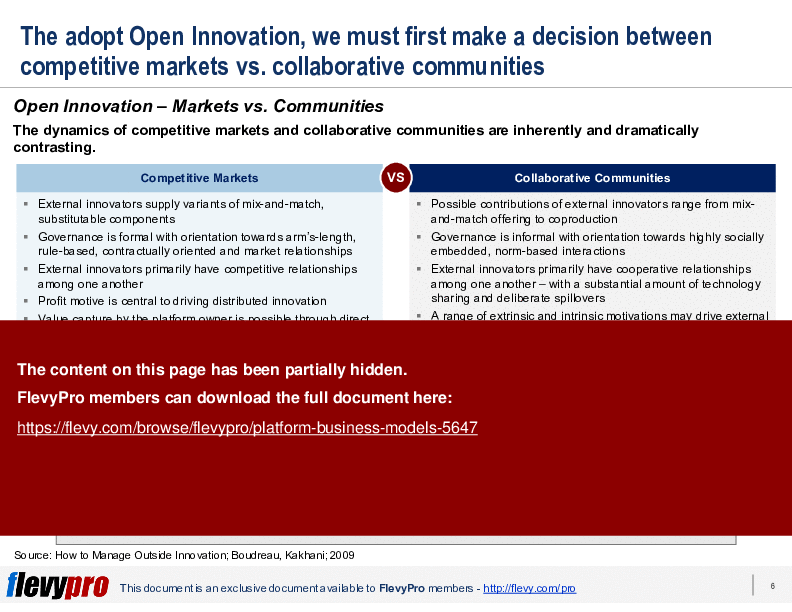
This PPT slide outlines the dynamics of competitive markets versus collaborative communities in open innovation. Competitive markets feature external innovators providing interchangeable components under a formal governance structure, focusing on profit through contracts and licensing agreements. In contrast, collaborative communities adopt an informal governance style, encouraging cooperative relationships and technology sharing, with contributions ranging from simple components to co-production. Value capture in collaborative models is linked to increased platform demand driven by community innovations. Examples include competitive markets like Nintendo Wii and Apple App Store, contrasted with open-source communities like Linux and Ethereum, illustrating the strategic choices organizations face in open innovation approaches.
Source: Best Practices in Business Model, Platform Strategy PowerPoint Slides: Platform Business Models PowerPoint (PPTX) Presentation Slide Deck, LearnPPT Consulting
This framework is developed by a team of former McKinsey and Big 4 consultants. The presentation follows the headline-body-bumper slide format used by global consulting firms.
For $10.00 more, you can download this document plus 2 more FlevyPro documents. That's just $13 each.
ABOUT FLEVYPRO
This document is part of the FlevyPro Library, a curated knowledge base of documents for our FlevyPro subscribers.

FlevyPro is a subscription service for on-demand business frameworks and analysis tools. FlevyPro subscribers receive access to an exclusive library of curated business documents—business framework primers, presentation templates, Lean Six Sigma tools, and more—among other exclusive benefits.
The average daily rate of a McKinsey consultant is $6,625 (not including expenses). The average price of a Flevy document is $65.
Trusted by over 10,000+ Client Organizations
Since 2012, we have provided business templates to over 10,000 businesses and organizations of all sizes, from startups and small businesses to the Fortune 100, in over 130 countries.
"As a niche strategic consulting firm, Flevy and FlevyPro frameworks and documents are an on-going reference to help us structure our findings and recommendations to our clients as well as improve their clarity, strength, and visual power. For us, it is an invaluable resource to increase our impact and value."
– David Coloma, Consulting Area Manager at Cynertia Consulting
"The wide selection of frameworks is very useful to me as an independent consultant. In fact, it rivals what I had at my disposal at Big 4 Consulting firms in terms of efficacy and organization."
– Julia T., Consulting Firm Owner (Former Manager at Deloitte and Capgemini)
"If you are looking for great resources to save time with your business presentations, Flevy is truly a value-added resource. Flevy has done all the work for you and we will continue to utilize Flevy as a source to extract up-to-date information and data for our virtual and onsite presentations!"
– Debbi Saffo, President at The NiKhar Group
"FlevyPro provides business frameworks from many of the global giants in management consulting that allow you to provide best in class solutions for your clients."
– David Harris, Managing Director at Futures Strategy
"I have used Flevy services for a number of years and have never, ever been disappointed. As a matter of fact, David and his team continue, time after time, to impress me with their willingness to assist and in the real sense of the word. I have concluded in fact
that it is not at all just a repository of documents/resources but, in the way that David and his team manage the firm, it is like dealing with consultants always ready to assist, advise and direct you to what you really need, and they always get it right.
I am an international hospitality accomplished senior executive who has worked and lived during the past 35 years in 23 countries in 5 continents and I can humbly say that I know what customer service is, trust me.
Aside from the great and professional service that Flevy's team provide, their wide variety of material is of utmost great quality, professionally put together and most current.
Well done Flevy, keep up the great work and I look forward to continue working with you in the future and to recommend you to a variety of colleagues around the world.
"
– Roberto Pelliccia, Senior Executive in International Hospitality
"As a consulting firm, we had been creating subject matter training materials for our people and found the excellent materials on Flevy, which saved us 100's of hours of re-creating what already exists on the Flevy materials we purchased."
– Michael Evans, Managing Director at Newport LLC
"I like your product. I'm frequently designing PowerPoint presentations for my company and your product has given me so many great ideas on the use of charts, layouts, tools, and frameworks. I really think the templates are a valuable asset to the job."
– Roberto Fuentes Martinez, Senior Executive Director at Technology Transformation Advisory
"[Flevy] produces some great work that has been/continues to be of immense help not only to myself, but as I seek to provide professional services to my clients, it gives me a large "tool box" of resources that are critical to provide them with the quality of service and outcomes they are expecting."
– Royston Knowles, Executive with 50+ Years of Board Level Experience
Download our free compilation of 50+ Strategy & Transformation slides and templates. Frameworks include McKinsey 7-S, Balanced Scorecard, Disruptive Innovation, BCG Curve, and many more.