
Multisided Platform (MSP) Strategy   34-slide PPT PowerPoint presentation slide deck (PPTX)
$29.00

Multisided Platform (MSP) Strategy (34-slide PPT PowerPoint presentation slide deck (PPTX)) Preview Image
Log in to unlock full preview.
Multisided Platform (MSP) Strategy (34-slide PPT PowerPoint presentation slide deck (PPTX)) Preview Image
Arrow   Click main image to view in full screen.

Multisided Platform (MSP) Strategy (PowerPoint PPTX Slide Deck)

PowerPoint (PPTX) 34 Slides FlevyPro Document

Top 1,000 Best Practice $29.00
FlevyPro price: FREE (included in subscription)
This framework is developed by a team of former McKinsey and Big 4 consultants. The presentation follows the headline-body-bumper slide format used by global consulting firms.
Add to Cart


Immediate download
Free lifetime updates

BUSINESS MODEL DESIGN PPT DESCRIPTION

Editor Summary Multisided Platform (MSP) Strategy is a 34-slide PowerPoint presentation by PPT Lab that explains how organizations can shift from product to platform business models. Read more

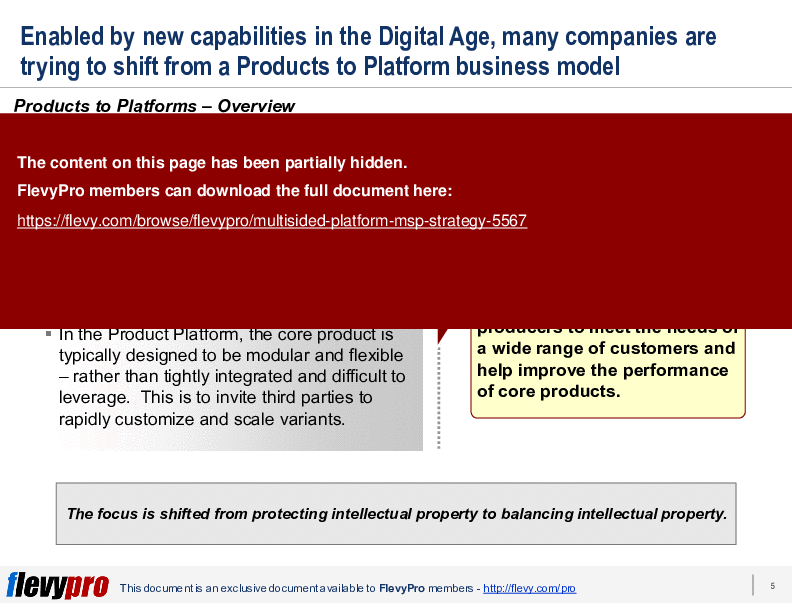
Enabled by new capabilities in the Digital Age, many organizations are trying to shift from a Products to Platform business model. The drive behind such a shift can also be attributed to the huge success of platform companies—e.g., Amazon, Google, and Apple. These organizations started out as a retailer, search engine, and computer manufacturer, respectively, but later transformed into platform models.

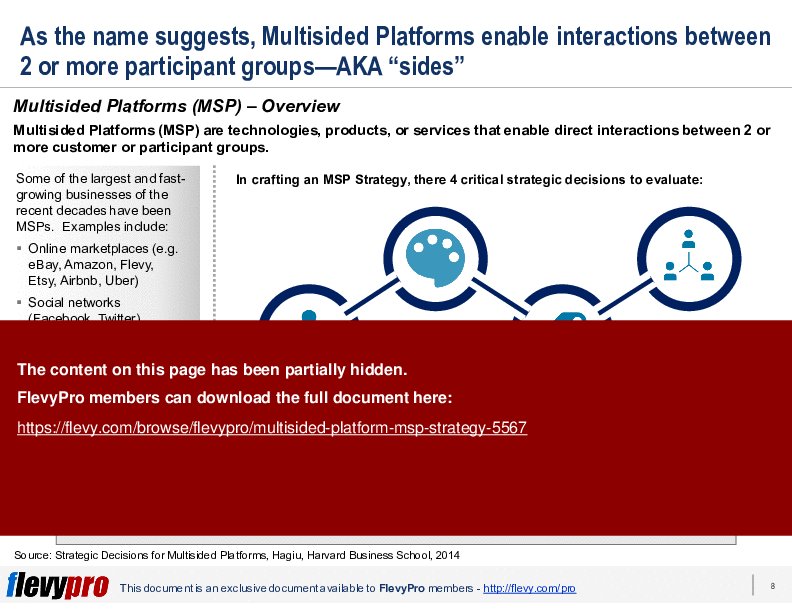
These platforms are referred to as Multisided Platforms (MSPs). MSPs are technologies, products, or services that enable direct interactions between 2 or more customer or participant groups—and include some of the most successful companies in recent decades.
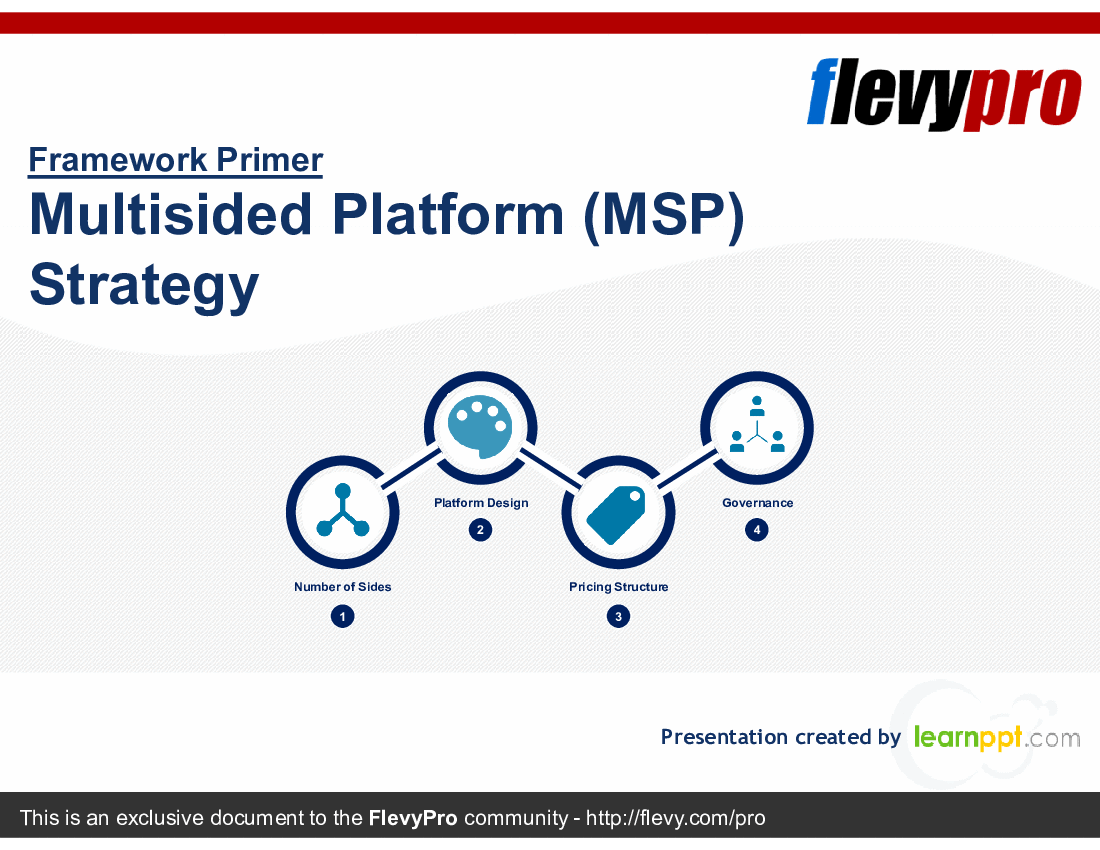
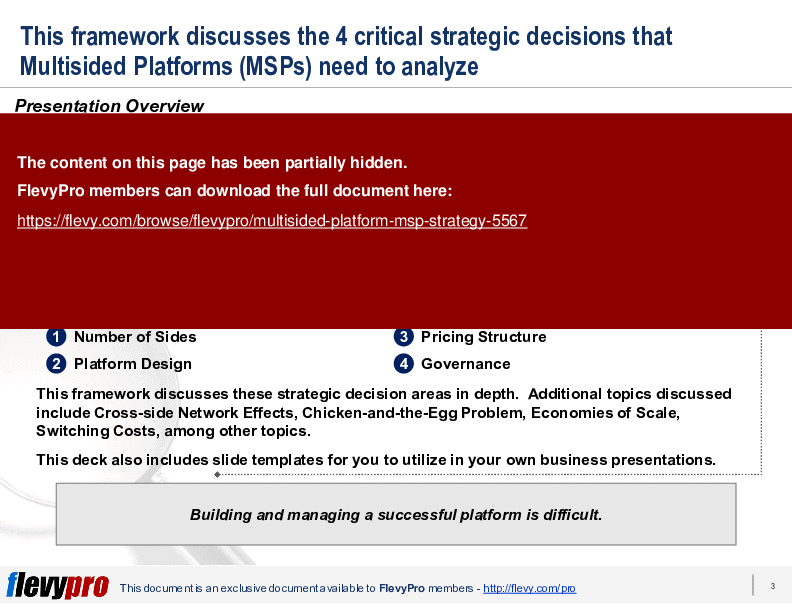
In crafting an MSP Strategy, there 4 critical strategic decisions to evaluate:

1. Number of Sides
2. Platform Design
3. Pricing Structure
4. Governance

This framework discusses these strategic decision areas in depth. Additional topics discussed include Cross-side Network Effects, Chicken-and-the-Egg Problem, Economies of Scale, Switching Costs, among other topics.

This deck also includes slide templates for you to utilize in your own business presentations.

This presentation provides a comprehensive exploration of the critical strategic decisions necessary for developing a successful Multisided Platform (MSP). The framework delves into the nuances of determining the number of sides, designing the platform, structuring pricing, and establishing governance. Each section is meticulously detailed to ensure that you can make informed, strategic choices that align with your business objectives.

The PPT also addresses common challenges MSPs face, such as the chicken-and-egg problem, cross-side network effects, and economies of scale. By understanding these barriers and leveraging the included slide templates, you will be well-equipped to navigate the complexities of building and managing a robust MSP. This resource is indispensable for executives seeking to transition to or optimize a platform business model.

Got a question about this document? Email us at flevypro@flevy.com.

MARCUS OVERVIEW

This synopsis was written by Marcus [?] based on the analysis of the full 34-slide presentation.


Executive Summary
The Multisided Platform (MSP) Strategy presentation provides a robust framework for understanding and implementing successful MSPs in the Digital Age. Created by experienced consultants, this presentation outlines critical strategic decisions that organizations must evaluate to transition from traditional products to platform-based business models. It covers essential areas such as the number of sides, platform design, pricing structure, and governance, enabling executives to make informed decisions that drive platform success. The accompanying templates facilitate practical application in business presentations.

Who This Is For and When to Use
•  Corporate executives leading digital transformation initiatives
•  Strategy consultants advising on platform business models
•  Product managers responsible for platform development
•  Business development teams exploring new revenue streams

Best-fit moments to use this deck:
•  During strategic planning sessions for transitioning to a platform model
•  When evaluating the feasibility and design of a new MSP
•  In workshops focused on pricing strategies and governance frameworks
•  For stakeholder presentations on MSP opportunities and challenges

Learning Objectives
•  Define the concept of Multisided Platforms and their significance in modern business
•  Analyze the critical decisions involved in crafting an MSP strategy
•  Evaluate the implications of the number of sides on platform success
•  Design effective platform features that balance stakeholder interests
•  Develop a pricing structure that maximizes revenue while ensuring participation
•  Establish governance rules that foster fair interactions among platform participants

Table of Contents
•  Overview (page 3)
•  Products to Platforms (page 5)
•  Multisided Platforms (MSP) (page 8)
•  Strategic Decisions (page 14)
•  Number of Sides (page 14)
•  Platform Design (page 17)
•  Pricing Structure (page 20)
•  Governance (page 24)
•  Templates (page 27)

Primary Topics Covered
•  Overview of MSPs - An introduction to Multisided Platforms, their characteristics, and their role in enabling interactions between multiple participant groups.
•  Strategic Decisions - A detailed examination of the key strategic decisions necessary for crafting a successful MSP strategy, including the number of sides, platform design, pricing structure, and governance.
•  Challenges in MSPs - Insights into common challenges faced by MSPs, such as the chicken-and-egg problem, resistance from key participants, and complexity in management.
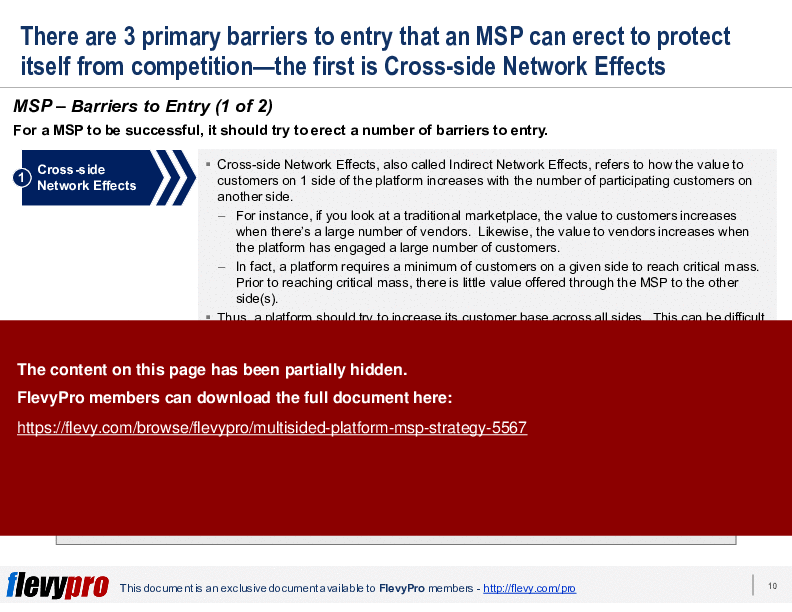
•  Barriers to Entry - Discussion of barriers that MSPs can create to protect themselves from competition, including cross-side network effects, switching costs, and economies of scale.

Deliverables, Templates, and Tools
•  Template for evaluating the number of sides in an MSP
•  Framework for platform design decision-making
•  Pricing structure model for MSPs
•  Governance rules template for MSP interactions
•  Checklist for assessing potential challenges in MSP implementation
•  Presentation slides for stakeholder engagement on MSP strategy

Slide Highlights
•  Overview of Multisided Platforms and their significance in the Digital Age
•  Strategic decisions framework outlining the number of sides, platform design, pricing, and governance
•  Visual representation of challenges and barriers to entry for MSPs
•  Case studies of successful MSPs illustrating best practices and lessons learned

Potential Workshop Agenda
Introduction to MSPs (30 minutes)
•  Overview of Multisided Platforms and their importance
•  Discussion of key characteristics and examples

Strategic Decision-Making Session (60 minutes)
•  Evaluate the number of sides for your platform
•  Discuss platform design features and their implications

Pricing and Governance Workshop (60 minutes)
•  Develop a pricing strategy tailored to your MSP
•  Establish governance rules to ensure fair interactions

Customization Guidance
•  Adapt the number of sides based on industry-specific needs and market conditions
•  Tailor platform design features to meet the unique preferences of participant groups
•  Modify pricing strategies to reflect the competitive landscape and customer price sensitivity
•  Customize governance rules to align with organizational values and stakeholder expectations

Secondary Topics Covered
•  Cross-side network effects and their impact on platform value
•  The chicken-and-egg problem and strategies to overcome it
•  Economies of scale and their relevance in MSPs
•  The role of switching costs in customer retention

Topic FAQ

What are the core strategic decisions when building a multisided platform?

The primary strategic decisions are determining the optimal number of participant sides, selecting platform design features, defining a pricing structure across sides, and setting governance rules to manage interactions. These 4 critical strategic decisions form the core framework for MSP strategy.

How do cross-side network effects influence platform value and growth?

Cross-side network effects occur when the value to one participant group rises as more users join the other side(s), increasing platform utility and attractiveness. MSP strategies often aim to amplify these effects to build scale and defensibility by deliberately growing complementary sides and network density, known as cross-side network effects.

What is the chicken-and-egg problem for multisided platforms and how is it described?

The chicken-and-egg problem is the difficulty of attracting users on multiple sides simultaneously when each side’s participation depends on the other reaching critical mass. MSP planning addresses this by sequencing incentives, targeted subsidies, or go-to-market tactics to build at least one active side first, known as the chicken-and-egg problem.

What should I look for in an MSP strategy template for a workshop or presentation?

Look for templates that help evaluate the number of sides, guide platform design decisions, model pricing across sides, define governance rules, and include a checklist for implementation risks plus stakeholder-ready slides. Flevy’s Multisided Platform (MSP) Strategy includes these specific templates, including a pricing-structure model.

How should I assess the cost versus value of buying MSP presentation templates?

Assess whether the templates map to your immediate needs—feasibility analysis, pricing design, governance, and stakeholder presentations—and if they speed up workshop preparation or executive alignment. The deck’s included assets (number-of-sides evaluator, pricing model, governance template) are practical attributes to compare against price.

I need to present an MSP proposal to executives—what key topics should the slide deck cover?

Executive proposals should cover the recommended number of sides and rationale, proposed platform design and core features, pricing and cross-subsidization strategy, governance rules to ensure fair interactions, and anticipated challenges including barriers to entry. Flevy’s Multisided Platform (MSP) Strategy supplies presentation slides for stakeholder engagement.

How do I determine the optimal number of sides for my platform concept?

Evaluate market needs, potential for revenue diversification, participant interdependencies, and added complexity from each additional side. Decisions should weigh value creation against management complexity and switching costs, supported by a structured assessment like a template for evaluating the number of sides.

What factors should guide pricing decisions across different sides of an MSP?

Pricing should reflect each side’s price sensitivity, the value they obtain from platform interactions, and opportunities for cross-subsidization to stimulate participation. Effective MSP pricing balances revenue with growth incentives and can be built using a pricing-structure model to test scenarios.

Document FAQ
These are questions addressed within this presentation.

What are Multisided Platforms?
Multisided Platforms (MSPs) are technologies, products, or services that facilitate direct interactions between 2 or more participant groups, creating value through these interactions.

What are the key strategic decisions for MSPs?
The key decisions include the number of sides, platform design, pricing structure, and governance rules, each of which significantly impacts the platform's success.

How do I determine the optimal number of sides for my platform?
Evaluate the market needs and the potential for revenue diversification, while considering the complexity and dependencies that additional sides may introduce.

What challenges do MSPs typically face?
Common challenges include the chicken-and-egg problem, resistance from key participants, and the complexity of managing multiple stakeholder interests.

How can I create barriers to entry for my MSP?
Focus on establishing cross-side network effects, high switching costs, and economies of scale to deter competition and enhance customer loyalty.

What is the importance of governance in MSPs?
Governance ensures that all participant groups are treated fairly and that interactions on the platform adhere to established rules, which is crucial for maintaining trust and engagement.

How can I effectively price my MSP services?
Consider the price sensitivity of each side, the value they derive from the platform, and the potential for cross-subsidization between sides to optimize revenue.

What templates are included in this presentation?
The presentation includes templates for evaluating the number of sides, platform design, pricing structure, and governance rules, which can be customized for specific needs.

Glossary
•  Multisided Platform (MSP) - A platform that facilitates interactions between multiple participant groups.
•  Cross-side Network Effects - The phenomenon where the value to one side of the platform increases as more users join the other side.
•  Chicken-and-Egg Problem - A challenge faced by MSPs in attracting users to both sides when neither side has reached critical mass.
•  Switching Costs - The costs incurred by users when switching from one platform to another, which can deter them from leaving.
•  Economies of Scale - Cost advantages gained as production volume increases, reducing the average cost per user.
•  Governance Rules - Guidelines that dictate who can join the platform and how participants can interact with each other.
•  Pricing Structure - The strategy used to determine how much to charge each side of the platform.
•  Stakeholder Interests - The varying needs and expectations of different participant groups on the platform.
•  Platform Design - The process of deciding which features and functionalities to include in the platform.
•  Revenue Diversification - The strategy of generating income from multiple sources or participant groups within the platform.
•  Market Conditions - The external factors that influence the viability and success of an MSP.
•  Participant Groups - The different sides of the platform, such as buyers, sellers, and advertisers.
•  Value Proposition - The unique value that the platform offers to its users compared to alternatives.
•  User Engagement - The level of interaction and participation of users on the platform.
•  Market Failure - A situation where the allocation of goods and services is not efficient, often due to poor governance or excessive competition.
•  Stakeholder Engagement - The process of involving all relevant parties in decision-making and governance.
•  Platform Ecosystem - The network of participants and third-party developers that interact with the platform.
•  Revenue Model - The framework for how the platform generates income from its users.
•  Market Dynamics - The forces that impact the supply and demand of the platform's services.
•  Innovation - The introduction of new ideas, products, or services that enhance the platform's value.
•  Competitive Landscape - The environment in which the platform operates, including competitors and market trends.

BUSINESS MODEL DESIGN PPT SLIDES

Comparative Analysis of Multisided Platform Pricing Structures

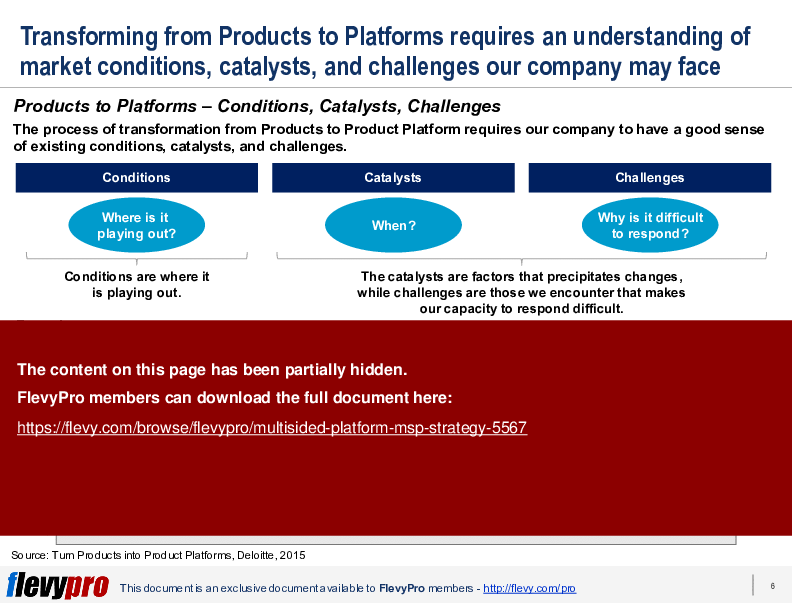
Framework for Transitioning to Platform Models

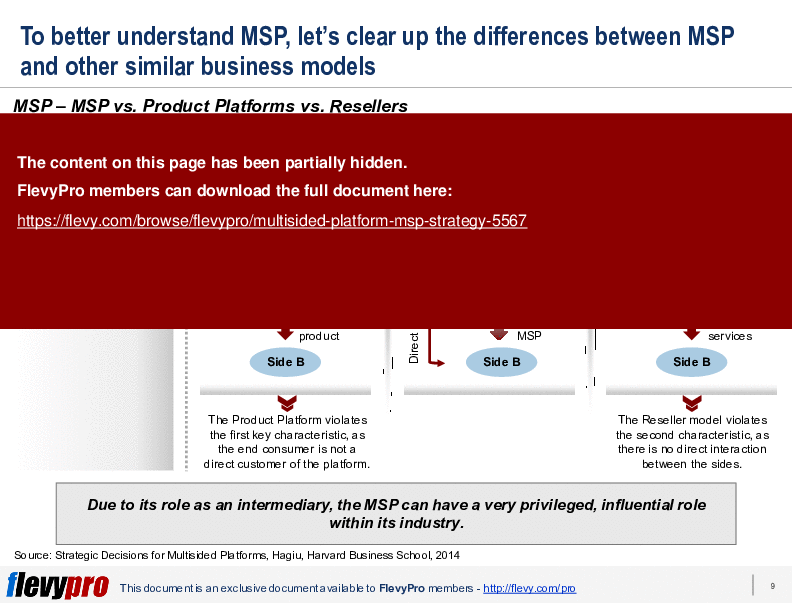
Distinguishing Multisided Platforms from Other Models

Strategic Framework for Multisided Platform Success

Key Trade-offs in Multisided Platform Strategy

Strategic Considerations in Multisided Platform Feature Design

Key Governance Trade-offs for Multisided Platforms

Source: Best Practices in Pricing Strategy, Business Model, Platform Strategy PowerPoint Slides: Multisided Platform (MSP) Strategy PowerPoint (PPTX) Presentation Slide Deck, PPT Lab


$29.00
FlevyPro price: FREE (included in subscription)
This framework is developed by a team of former McKinsey and Big 4 consultants. The presentation follows the headline-body-bumper slide format used by global consulting firms.
Add to Cart
  

Did you need more documents?

Consider a FlevyPro subscription from $39/month. View plans here.

For $10.00 more, you can download this document plus 2 more FlevyPro documents. That's just $13 each.

ABOUT FLEVYPRO

This document is part of the FlevyPro Library, a curated knowledge base of documents for our FlevyPro subscribers.

FlevyPro is a subscription service for on-demand business frameworks and analysis tools. FlevyPro subscribers receive access to an exclusive library of curated business documents—business framework primers, presentation templates, Lean Six Sigma tools, and more—among other exclusive benefits.

Click here to learn more about FlevyPro and its benefits.

Did you know?
The average daily rate of a McKinsey consultant is $6,625 (not including expenses). The average price of a Flevy document is $65.


Trusted by over 10,000+ Client Organizations
Since 2012, we have provided business templates to over 10,000 businesses and organizations of all sizes, from startups and small businesses to the Fortune 100, in over 130 countries.
AT&T GE Cisco Intel IBM Coke Dell Toyota HP Nike Samsung Microsoft Astrazeneca JP Morgan KPMG Walgreens Walmart 3M Kaiser Oracle SAP Google E&Y Volvo Bosch Merck Fedex Shell Amgen Eli Lilly Roche AIG Abbott Amazon PwC T-Mobile Broadcom Bayer Pearson Titleist ConEd Pfizer NTT Data Schwab


Read Customer Testimonials

 
"Flevy.com has proven to be an invaluable resource library to our Independent Management Consultancy, supporting and enabling us to better serve our enterprise clients.

The value derived from our [FlevyPro] subscription in terms of the business it has helped to gain far exceeds the investment made, making a subscription a no-brainer for any growing consultancy – or in-house strategy team."

– Dean Carlton, Chief Transformation Officer, Global Village Transformations Pty Ltd.
 
"As a consultant requiring up to date and professional material that will be of value and use to my clients, I find Flevy a very reliable resource.

The variety and quality of material available through Flevy offers a very useful and commanding source for information. Using Flevy saves me time, enhances my expertise and ends up being a good decision."

– Dennis Gershowitz, Principal at DG Associates
 
"The wide selection of frameworks is very useful to me as an independent consultant. In fact, it rivals what I had at my disposal at Big 4 Consulting firms in terms of efficacy and organization."

– Julia T., Consulting Firm Owner (Former Manager at Deloitte and Capgemini)
 
"[Flevy] produces some great work that has been/continues to be of immense help not only to myself, but as I seek to provide professional services to my clients, it gives me a large "tool box" of resources that are critical to provide them with the quality of service and outcomes they are expecting."

– Royston Knowles, Executive with 50+ Years of Board Level Experience
 
"As a small business owner, the resource material available from FlevyPro has proven to be invaluable. The ability to search for material on demand based our project events and client requirements was great for me and proved very beneficial to my clients. Importantly, being able to easily edit and tailor "

– Michael Duff, Managing Director at Change Strategy (UK)
 
"As an Independent Management Consultant, I find Flevy to add great value as a source of best practices, templates and information on new trends. Flevy has matured and the quality and quantity of the library is excellent. Lastly the price charged is reasonable, creating a win-win value for "

– Jim Schoen, Principal at FRC Group
 
"One of the great discoveries that I have made for my business is the Flevy library of training materials.

As a Lean Transformation Expert, I am always making presentations to clients on a variety of topics: Training, Transformation, Total Productive Maintenance, Culture, Coaching, Tools, Leadership Behavior, etc. Flevy "

– Ed Kemmerling, Senior Lean Transformation Expert at PMG
 
"Last Sunday morning, I was diligently working on an important presentation for a client and found myself in need of additional content and suitable templates for various types of graphics. Flevy.com proved to be a treasure trove for both content and design at a reasonable price, considering the time I "

– M. E., Chief Commercial Officer, International Logistics Service Provider


Customers Also Bought These Documents


Customers Also Like These Documents

Explore Templates on Related Management Topics


Your Recently Viewed Documents
Download our FREE Strategy & Transformation Framework Templates

Download our free compilation of 50+ Strategy & Transformation slides and templates. Frameworks include McKinsey 7-S, Balanced Scorecard, Disruptive Innovation, BCG Curve, and many more.