
Index Pricing Strategy   22-slide PPT PowerPoint presentation slide deck (PPT)
$29.00

Index Pricing Strategy (22-slide PPT PowerPoint presentation slide deck (PPT)) Preview Image
Log in to unlock full preview.
Index Pricing Strategy (22-slide PPT PowerPoint presentation slide deck (PPT)) Preview Image
Arrow   Click main image to view in full screen.

Index Pricing Strategy (PowerPoint PPT Slide Deck)

PowerPoint (PPT) 22 Slides FlevyPro Document

$29.00
FlevyPro price: FREE (included in subscription)
This framework is developed by a team of former McKinsey and Big 4 consultants. The presentation follows the headline-body-bumper slide format used by global consulting firms.
Add to Cart


Immediate download
Free lifetime updates

PRICING STRATEGY PPT DESCRIPTION

Editor Summary Index Pricing Strategy is a 22-slide PowerPoint by LearnPPT Consulting that explains how to set and update prices using market or raw-material indices. Read more

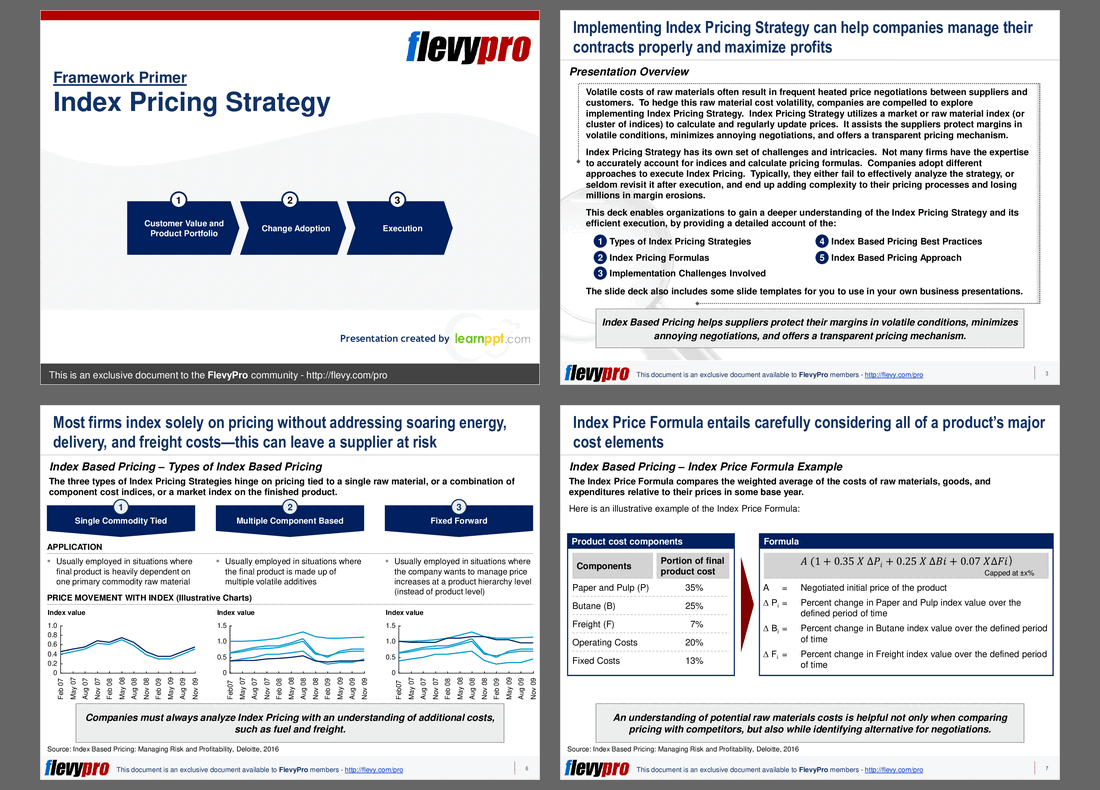
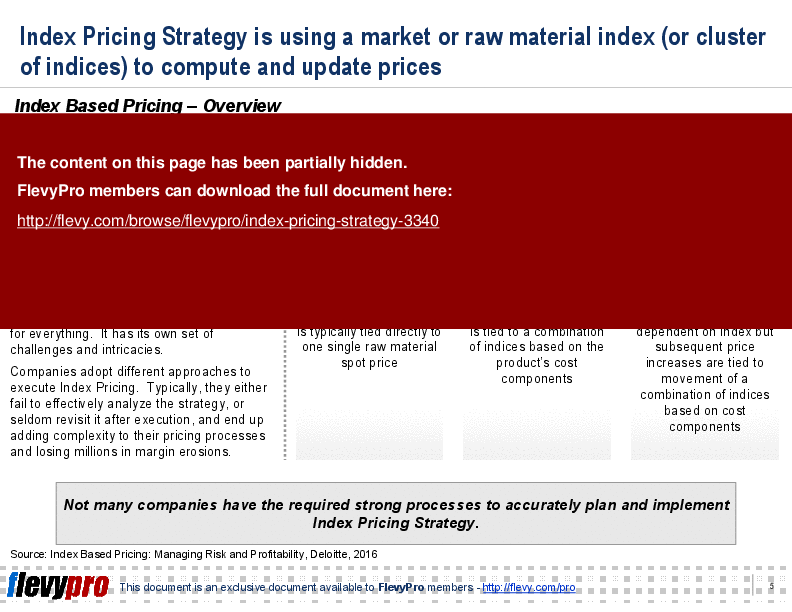
Volatile costs of raw materials often result in frequent heated price negotiations between suppliers and customers. To hedge this raw material cost volatility, companies are compelled to explore implementing Index Pricing Strategy. Index Pricing Strategy utilizes a market or raw material index (or cluster of indices) to calculate and regularly update prices.

Index Based Pricing assists the suppliers protect margins in volatile conditions, minimizes annoying negotiations, and offers a transparent pricing mechanism. It helps suppliers protect their margins in volatile conditions, minimizes annoying negotiations, and offers a transparent pricing mechanism.

Index Pricing Strategy has its own set of challenges and intricacies. Not many firms have the expertise to accurately account for indices and calculate pricing formulas. Companies adopt different approaches to execute Index Pricing. Typically, they either fail to effectively analyze the strategy, or seldom revisit it after execution, and end up adding complexity to their pricing processes and losing millions in margin erosions.

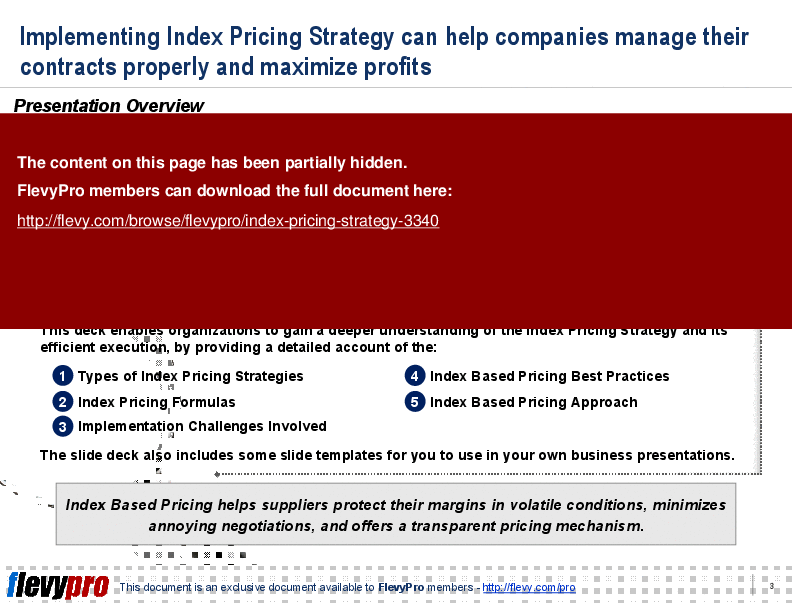
This deck enables organizations to gain a deeper understanding of the Index Pricing Strategy and its efficient execution, by providing a detailed account of the:

1. Types of Index Pricing Strategies
2. Index Pricing Formulas
3. Implementation Challenges Involved
4. Index Based Pricing Best Practices
5. 3-Phase Index Based Pricing Approach

The slide deck also includes some slide templates for you to use in your own business presentations.

This comprehensive presentation also delves into the practical aspects of Index Pricing Strategy, offering actionable insights and real-world examples. It covers the nuances of different pricing models, such as Single Commodity Tied, Multiple Component Based, and Fixed Forward strategies. The deck highlights critical challenges and provides best practices to overcome them, ensuring your pricing mechanisms are robust and adaptable. With detailed templates and step-by-step guides, this PPT is an invaluable resource for any executive looking to implement or refine their Index Pricing Strategy effectively.

Got a question about this document? Email us at flevypro@flevy.com.

MARCUS OVERVIEW

This synopsis was written by Marcus [?] based on the analysis of the full 22-slide presentation.


Executive Summary
The Index Pricing Strategy presentation provides a comprehensive framework for organizations looking to implement effective pricing mechanisms based on market or raw material indices. This strategy is particularly beneficial in industries with volatile raw material costs, such as Chemicals and Metals, where it helps minimize price negotiations and protects profit margins. The presentation outlines various types of index pricing strategies, their formulas, best practices, and the challenges associated with implementation. By utilizing this framework, organizations can enhance their pricing strategies, ensuring transparency and efficiency in contract management.

Who This Is For and When to Use
•  Pricing Strategy Managers responsible for developing and executing pricing frameworks
•  Supply Chain Managers overseeing procurement and cost management
•  Financial Analysts focused on pricing models and profitability analysis
•  Business Development Teams negotiating contracts with customers
•  Consultants advising clients on pricing strategies and market positioning

Best-fit moments to use this deck:
•  During the development of new pricing strategies in response to market volatility
•  When revisiting existing pricing agreements to enhance profitability
•  In training sessions for teams on index pricing methodologies and best practices

Learning Objectives
•  Define the Index Pricing Strategy and its relevance in volatile markets
•  Analyze different types of index pricing strategies and their applications
•  Construct effective index pricing formulas that reflect true cost components
•  Identify common challenges in implementing index pricing and develop solutions
•  Establish best practices for executing index pricing strategies
•  Evaluate the impact of index pricing on contract negotiations and profitability

Table of Contents
•  Overview (page 3)
•  Index Based Pricing (page 5)
•  Index Pricing Strategy Approach (page 11)
•  Templates (page 15)

Primary Topics Covered
•  Index Based Pricing Overview - An introduction to index pricing and its significance in managing raw material cost volatility.
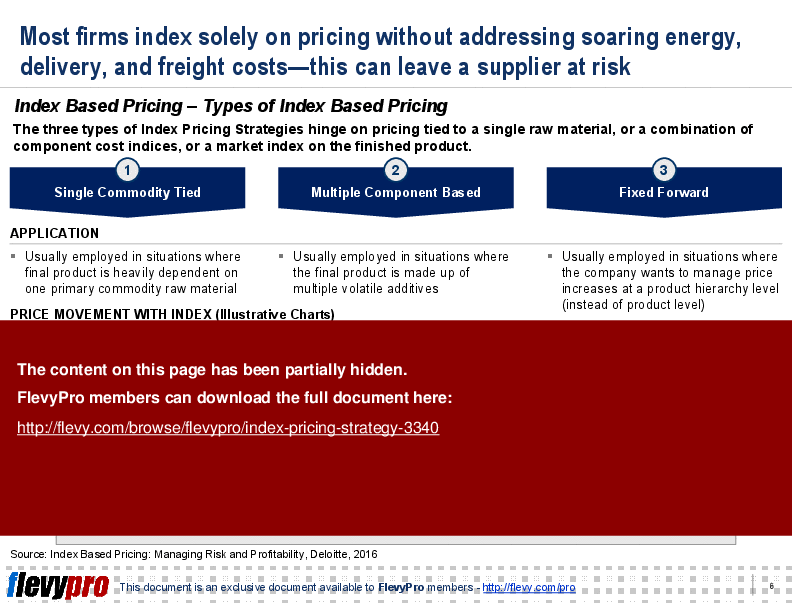
•  Types of Index Pricing Strategies - A breakdown of 3 key strategies: Single Commodity Tied, Multiple Component Based, and Fixed Forward.
•  Index Price Formula - Detailed explanation of how to construct pricing formulas based on weighted average costs of raw materials.
•  Implementation Challenges - Common pitfalls organizations face when adopting index pricing and strategies to overcome them.
•  Best Practices for Index Pricing - Recommendations for effectively implementing index pricing strategies to enhance profitability.
•  Change Adoption - Guidance on aligning organizational structures and processes to support index pricing strategies.

Deliverables, Templates, and Tools
•  Template for constructing index pricing formulas
•  Checklist for evaluating index pricing strategies
•  Best practices guide for implementing index pricing
•  Framework for assessing customer and product suitability for index pricing
•  Sample index pricing agreements for reference
•  Template for tracking index movements and pricing adjustments

Slide Highlights
•  Overview of Index Pricing Strategy and its benefits in volatile markets
•  Visual representation of the 3 types of index pricing strategies
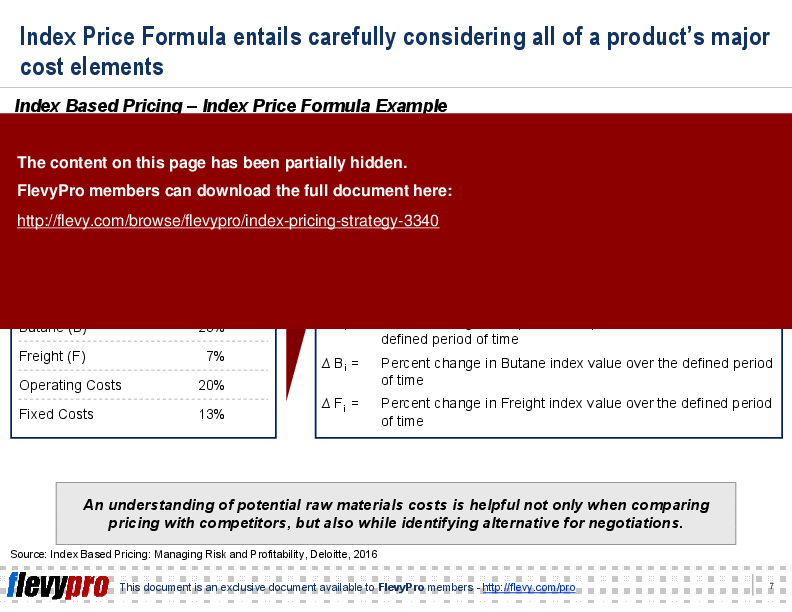
•  Formula example illustrating the calculation of index-based pricing
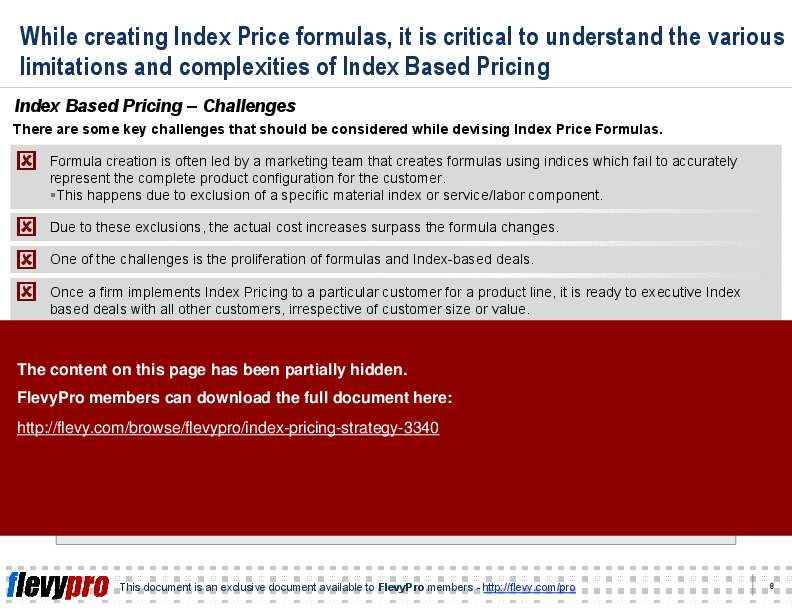
•  Challenges slide highlighting common pitfalls in index pricing implementation
•  Best practices slide summarizing key recommendations for effective execution

Potential Workshop Agenda
Index Pricing Fundamentals (60 minutes)
•  Introduction to index pricing concepts and benefits
•  Discussion of market volatility and its impact on pricing

Index Pricing Strategy Development (90 minutes)
•  Breakout sessions to analyze different index pricing strategies
•  Group work on constructing index pricing formulas

Implementation Best Practices (60 minutes)
•  Review of common challenges and solutions
•  Sharing of best practices and lessons learned from case studies

Customization Guidance
•  Tailor the index pricing formulas to reflect specific cost components relevant to your products
•  Adjust the templates to align with your organization’s pricing policies and governance structures
•  Incorporate industry-specific indices that are applicable to your market conditions

Secondary Topics Covered
•  The role of market indices in pricing strategy
•  Customer segmentation and its impact on pricing decisions
•  The importance of transparency in pricing negotiations
•  The relationship between index pricing and profitability metrics
•  Strategies for revisiting and revising long-term pricing agreements

Topic FAQ

What is an index pricing strategy and when is it appropriate to use one?

An index pricing strategy ties selling prices to market or raw-material indices and updates prices based on index movements. It is appropriate where input costs are volatile and frequent negotiations occur, for example in raw-material industries such as Chemicals and Metals.

What are the common types of index pricing approaches companies use?

Organizations commonly use 3 approaches: Single Commodity Tied (linked to one primary raw material), Multiple Component Based (weighted mix of indices), and Fixed Forward (initial fixed price with later index-linked increases). These are the 3 types outlined in the Index Pricing Strategy deck.

How is an index-price formula typically constructed?

An index-price formula compares the weighted average of relevant raw-material costs and adjusts selling prices according to index movement percentages. Practical construction requires selecting indices, weights, and adjustment timing; see the template for constructing index pricing formulas in Flevy's Index Pricing Strategy for a ready example.

What implementation challenges should organizations expect when adopting index pricing?

Common challenges include inaccurate or poorly designed formulas, proliferation of custom variations across customers, operational difficulty updating contracts and prices, and organizational change adoption issues. These challenges often lead to margin erosion if not managed carefully, such as inaccurate formula creation and contract-update difficulties.

How often should index-linked pricing agreements be reviewed and why?

Index pricing agreements should be revisited periodically to ensure continued alignment with market conditions and cost structures; the guidance in the deck recommends reviewing agreements approximately every 2 years to avoid outdated clauses and margin erosion.

What features are most useful when selecting an index pricing toolkit or template set?

Look for practical components: a formula construction template, index-tracking tool, sample index-linked agreements, a checklist to evaluate strategy suitability, and implementation best-practices. Flevy's Index Pricing Strategy includes these specific templates and tools to support rollout.

How can I assess which customers or products are suitable for index pricing?

Assess customer size, margin potential, and willingness to accept index linkage; evaluate product exposure to raw-material cost swings and contract complexity. The deck recommends using a suitability framework that scores customers and products on those attributes.

What systems or tools are recommended to operationalize index pricing across an organization?

ERP systems and pricing software are useful to manage formulas, apply mass price changes, and maintain consistency; operational templates such as an index-tracking template and sample agreements help integrate index pricing into systems and processes.

Document FAQ
These are questions addressed within this presentation.

What is Index Pricing Strategy?
Index Pricing Strategy involves using market or raw material indices to calculate and regularly update prices, helping organizations manage pricing in volatile conditions.

What are the types of Index Pricing Strategies?
There are 3 main types: Single Commodity Tied, Multiple Component Based, and Fixed Forward, each catering to different pricing scenarios.

How do I create an Index Price Formula?
An Index Price Formula compares the weighted average of raw material costs and adjusts prices based on index movements over time.

What challenges are associated with Index Pricing?
Common challenges include inaccurate formula creation, proliferation of variations, and difficulties in updating contracts based on index movements.

What are the best practices for implementing Index Pricing?
Best practices include timely reflection of input costs in pricing, systematic tracking of index movements, and regular review of pricing agreements.

How can I assess customer suitability for Index Pricing?
Evaluate customer size, margin potential, and willingness to engage in index-based agreements to determine suitability.

What tools can assist in managing Index Pricing?
Utilizing ERP systems and pricing software can help manage formulas, apply mass price changes, and maintain consistency across pricing strategies.

How often should Index Pricing agreements be reviewed?
Agreements should be revisited periodically, ideally every 2 years, to ensure they remain aligned with market conditions and cost structures.

What is the impact of Index Pricing on negotiations?
Index Pricing can simplify negotiations by providing a transparent pricing mechanism,, but it requires careful management to avoid margin erosion.

Glossary
•  Index Pricing - A pricing strategy based on market or raw material indices.
•  Single Commodity Tied - Pricing strategy linked to one primary raw material.
•  Multiple Component Based - Pricing strategy based on a combination of indices.
•  Fixed Forward - Pricing strategy where initial prices are not index-dependent, but subsequent increases are.
•  Formula - A mathematical expression used to calculate index-based prices.
•  Margin Erosion - Loss of profit margins due to ineffective pricing strategies.
•  Cost Components - Various elements that contribute to the total cost of a product.
•  Transparency - Clarity in pricing mechanisms and agreements.
•  ERP - Enterprise Resource Planning system used for managing business processes.
•  Best Practices - Recommended methods for achieving optimal results in pricing strategies.
•  Change Adoption - The process of integrating new pricing strategies within an organization.
•  Customer Segmentation - The division of customers into groups based on shared characteristics.

PRICING STRATEGY PPT SLIDES

Understanding the Index Price Formula for Strategic Pricing

Best Practices for Implementing Index Based Pricing

Three-Phase Framework for Index Pricing Strategy

Understanding Index Based Pricing Strategies

Key Challenges in Developing Index Price Formulas

Source: Best Practices in Pricing Strategy, Raw Materials PowerPoint Slides: Index Pricing Strategy PowerPoint (PPT) Presentation Slide Deck, LearnPPT Consulting


$29.00
FlevyPro price: FREE (included in subscription)
This framework is developed by a team of former McKinsey and Big 4 consultants. The presentation follows the headline-body-bumper slide format used by global consulting firms.
Add to Cart
  

Did you need more documents?

Consider a FlevyPro subscription from $39/month. View plans here.

For $10.00 more, you can download this document plus 2 more FlevyPro documents. That's just $13 each.

ABOUT FLEVYPRO

This document is part of the FlevyPro Library, a curated knowledge base of documents for our FlevyPro subscribers.

FlevyPro is a subscription service for on-demand business frameworks and analysis tools. FlevyPro subscribers receive access to an exclusive library of curated business documents—business framework primers, presentation templates, Lean Six Sigma tools, and more—among other exclusive benefits.

Click here to learn more about FlevyPro and its benefits.

Did you know?
The average daily rate of a McKinsey consultant is $6,625 (not including expenses). The average price of a Flevy document is $65.


Trusted by over 10,000+ Client Organizations
Since 2012, we have provided business templates to over 10,000 businesses and organizations of all sizes, from startups and small businesses to the Fortune 100, in over 130 countries.
AT&T GE Cisco Intel IBM Coke Dell Toyota HP Nike Samsung Microsoft Astrazeneca JP Morgan KPMG Walgreens Walmart 3M Kaiser Oracle SAP Google E&Y Volvo Bosch Merck Fedex Shell Amgen Eli Lilly Roche AIG Abbott Amazon PwC T-Mobile Broadcom Bayer Pearson Titleist ConEd Pfizer NTT Data Schwab


Read Customer Testimonials

 
"As a consulting firm, we had been creating subject matter training materials for our people and found the excellent materials on Flevy, which saved us 100's of hours of re-creating what already exists on the Flevy materials we purchased."

– Michael Evans, Managing Director at Newport LLC
 
"Flevy is now a part of my business routine. I visit Flevy at least 3 times each month.

Flevy has become my preferred learning source, because what it provides is practical, current, and useful in this era where the business world is being rewritten.

In today's environment where there are so "

– Omar Hernán Montes Parra, CEO at Quantum SFE
 
"I have used FlevyPro for several business applications. It is a great complement to working with expensive consultants. The quality and effectiveness of the tools are of the highest standards."

– Moritz Bernhoerster, Global Sourcing Director at Fortune 500
 
"[Flevy] produces some great work that has been/continues to be of immense help not only to myself, but as I seek to provide professional services to my clients, it gives me a large "tool box" of resources that are critical to provide them with the quality of service and outcomes they are expecting."

– Royston Knowles, Executive with 50+ Years of Board Level Experience
 
"As a niche strategic consulting firm, Flevy and FlevyPro frameworks and documents are an on-going reference to help us structure our findings and recommendations to our clients as well as improve their clarity, strength, and visual power. For us, it is an invaluable resource to increase our impact and value."

– David Coloma, Consulting Area Manager at Cynertia Consulting
 
"If you are looking for great resources to save time with your business presentations, Flevy is truly a value-added resource. Flevy has done all the work for you and we will continue to utilize Flevy as a source to extract up-to-date information and data for our virtual and onsite presentations!"

– Debbi Saffo, President at The NiKhar Group
 
"Flevy is our 'go to' resource for management material, at an affordable cost. The Flevy library is comprehensive and the content deep, and typically provides a great foundation for us to further develop and tailor our own service offer."

– Chris McCann, Founder at Resilient.World
 
"I like your product. I'm frequently designing PowerPoint presentations for my company and your product has given me so many great ideas on the use of charts, layouts, tools, and frameworks. I really think the templates are a valuable asset to the job."

– Roberto Fuentes Martinez, Senior Executive Director at Technology Transformation Advisory


Customers Also Bought These Documents


Customers Also Like These Documents

Explore Templates on Related Management Topics


Your Recently Viewed Documents
Download our FREE Strategy & Transformation Framework Templates

Download our free compilation of 50+ Strategy & Transformation slides and templates. Frameworks include McKinsey 7-S, Balanced Scorecard, Disruptive Innovation, BCG Curve, and many more.