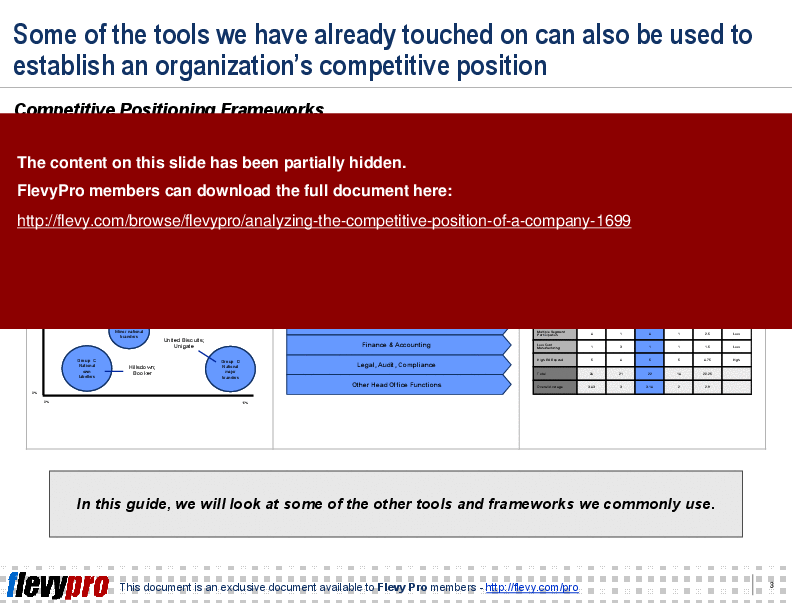

Some of the tools already touched on in previous decks can also be used to establish an organization's competitive position. In this guide, we will look at some of the other tools and frameworks we commonly use:
• Competitive / Company Profiling
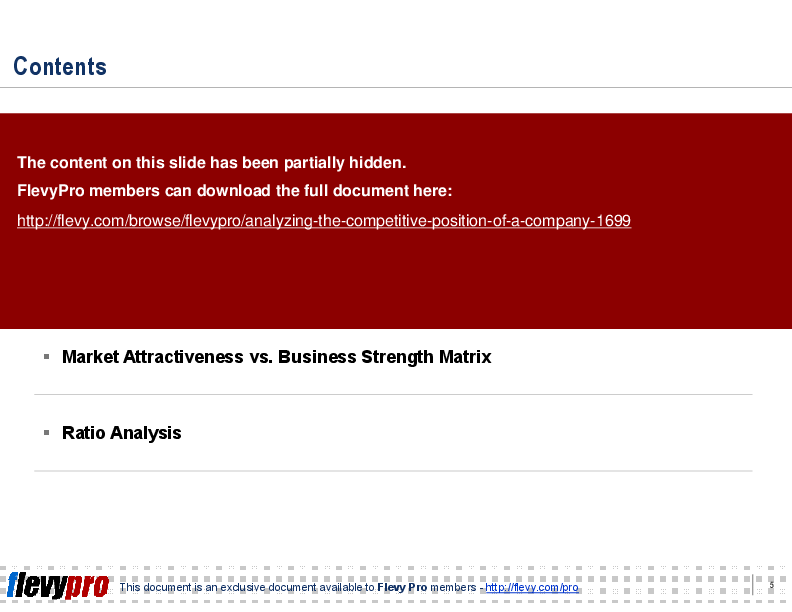
• Market Attractiveness vs. Business Strength Matrix
• Ratio Analysis
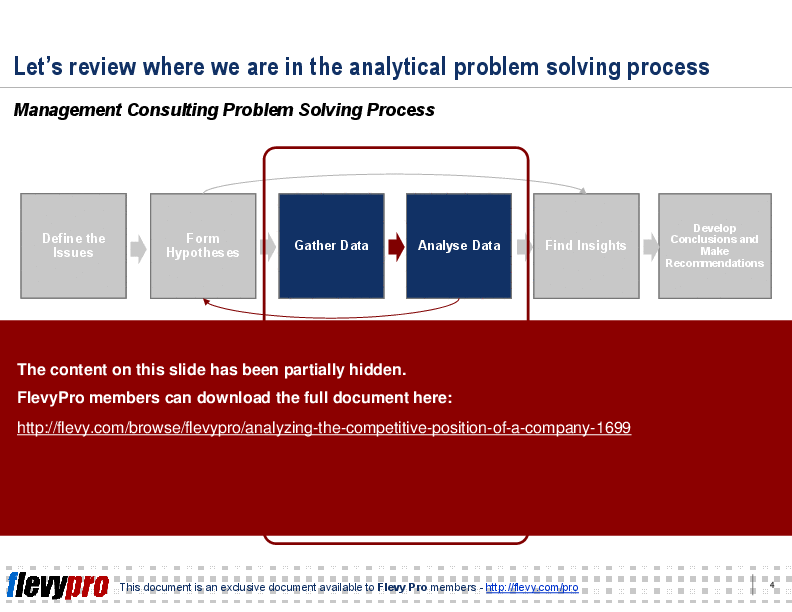
This PPT dives deep into the analytical problem-solving process, guiding you through each critical step from defining issues to developing actionable recommendations. The structured approach ensures that you gather and analyze data effectively, leading to insightful conclusions. This is not just a theoretical guide; it provides practical frameworks and methodologies that can be directly applied to real-world business scenarios.
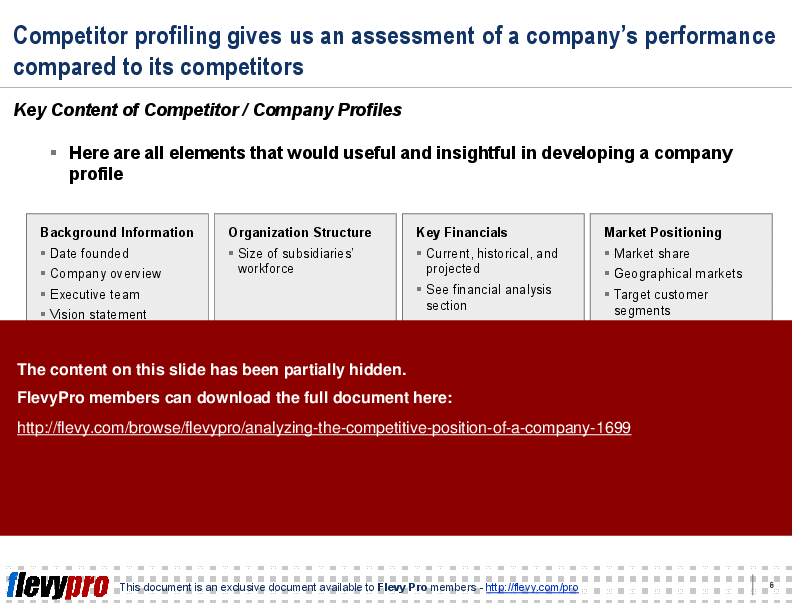
Competitor profiling is a key focus, offering a comprehensive assessment of a company's performance relative to its competitors. The document outlines essential elements such as background information, organizational structure, key financials, and market positioning. These profiles enable you to identify strengths, weaknesses, and strategic opportunities within your industry, providing a solid foundation for competitive analysis.
The market attractiveness vs. business strength matrix is another powerful tool included in this guide. This matrix helps you compare the performance of different businesses within their markets, offering visual representations and actionable insights. By positioning businesses according to market attractiveness and business strength, you can make informed strategic decisions that drive growth and competitive advantage.
Got a question about this document? Email us at flevypro@flevy.com.
Executive Summary
The "Analyzing the Competitive Position of a Company" PowerPoint presentation is designed to equip business leaders and consultants with essential frameworks and tools for evaluating a company's competitive landscape. This comprehensive deck covers critical methodologies such as competitor profiling, market attractiveness analysis, and financial ratio assessments. By utilizing these frameworks, users can effectively position their organization within the market, identify strengths and weaknesses, and make informed strategic decisions.
Who This Is For and When to Use
• Corporate executives seeking to understand their competitive landscape
• Business consultants conducting market analysis for clients
• Strategic planners involved in competitive positioning
• Financial analysts assessing company performance against peers
Best-fit moments to use this deck:
• During strategic planning sessions to evaluate market positioning
• When conducting competitor analysis for mergers or acquisitions
• In workshops focused on developing business strategies
• For financial assessments and performance evaluations
Learning Objectives
• Define key competitive positioning frameworks for analysis
• Build comprehensive competitor profiles to assess market standing
• Establish a market attractiveness vs. business strength matrix
• Analyze financial ratios to evaluate company performance
• Identify strategic insights from competitor profiling
• Develop actionable recommendations based on analytical findings
Table of Contents
• Overview & Review (page 1)
• Competitor / Company Profiling (page 5)
• Market Attractiveness vs. Business Strength Matrix (page 12)
• Ratio Analysis (page 15)
Primary Topics Covered
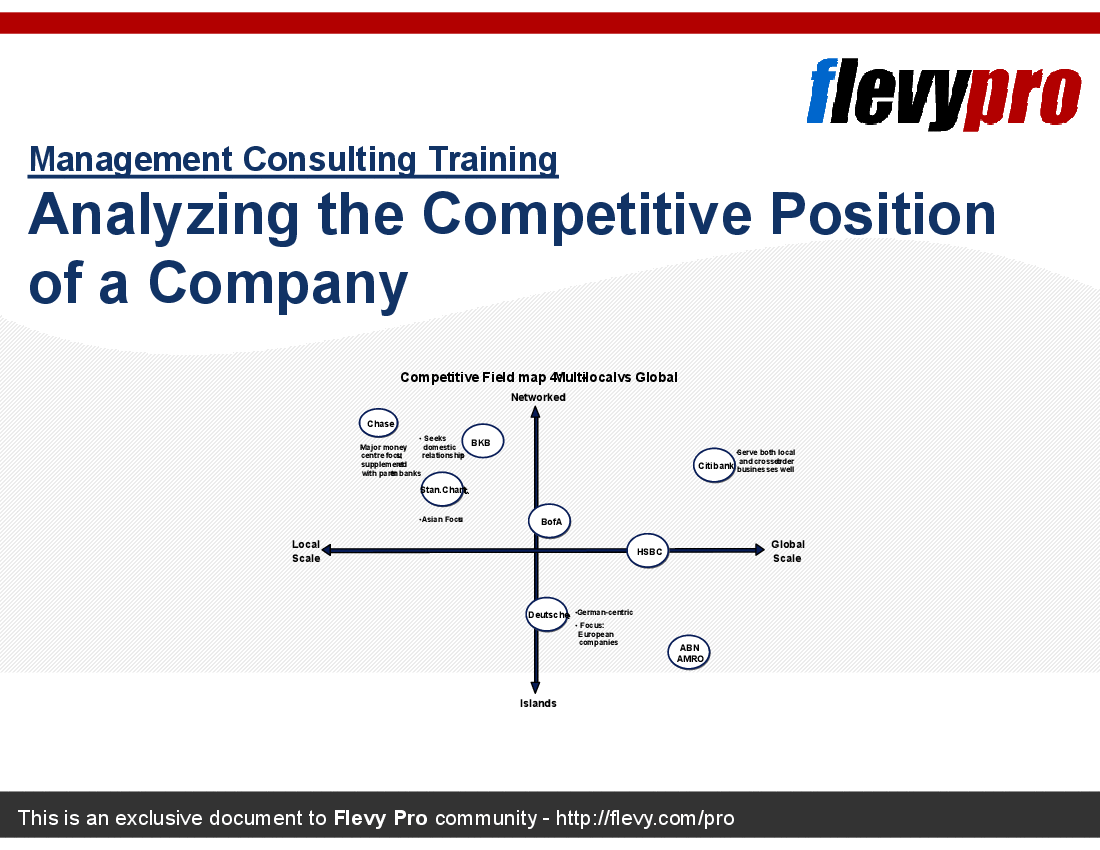
• Competitor Profiling - A structured approach to assess a company's performance relative to its competitors, including key financials, market positioning, and strategic issues.
• Market Attractiveness vs. Business Strength Matrix - A portfolio analysis tool that positions businesses based on market attractiveness and competitive strength, guiding strategic decisions.
• Financial Ratio Analysis - An evaluation of key financial ratios that diagnose a firm's health relative to competitors, covering profitability, liquidity, solvency, and investment metrics.
• Competitive Positioning Frameworks - Various analytical tools, including strategic groups analysis and value chain comparisons, to establish competitive positioning.
• Insights and Limitations of Profiling - Understanding the strengths and weaknesses of competitor profiling as a tool for strategic analysis.
• Guiding Principles for Analysis - Best practices for conducting competitor analysis effectively and efficiently.
Deliverables, Templates, and Tools
• Competitor profile templates for structured data capture
• Market attractiveness vs. business strength matrix models
• Financial ratio analysis frameworks for performance evaluation
• Strategic insights summary templates for actionable recommendations
• Profiling guidelines to streamline competitor analysis processes
Slide Highlights
• Overview of competitor profiling methodologies and their applications
• Visual representation of the market attractiveness vs. business strength matrix
• Key financial ratios and their implications for company performance
• Insights derived from competitor profiling and strategic positioning
• Guiding principles for effective competitor analysis
Potential Workshop Agenda
Introduction to Competitive Analysis (30 minutes)
• Overview of competitive positioning frameworks
• Importance of competitor profiling
Hands-on Competitor Profiling Session (60 minutes)
• Develop competitor profiles using provided templates
• Analyze market positioning and strategic insights
Financial Ratio Analysis Workshop (45 minutes)
• Review key financial ratios and their implications
• Conduct ratio analysis on selected companies
Strategic Recommendations Discussion (30 minutes)
• Present findings from competitor profiling and financial analysis
• Develop actionable strategies based on insights gained
Customization Guidance
• Tailor competitor profiles to reflect specific industry metrics and benchmarks
• Adjust financial ratio analysis to focus on key performance indicators relevant to your organization
• Modify the market attractiveness matrix to include factors specific to your business context
• Incorporate company-specific strategic issues into the profiling framework
Secondary Topics Covered
• Strategic group analysis for competitive positioning
• Value chain comparisons for operational insights
• Importance of market share and growth potential in analysis
• Challenges in competitor profiling and data collection
Topic FAQ
Document FAQ
These are questions addressed within this presentation.
What is the purpose of competitor profiling?
Competitor profiling provides a structured assessment of a company's performance relative to its competitors, highlighting strengths, weaknesses, and strategic positioning.
How does the market attractiveness vs. business strength matrix work?
This matrix positions businesses based on how attractive their market is and their competitive strength within that market, guiding strategic decision-making.
What types of financial ratios are analyzed?
Key financial ratios include profitability ratios, liquidity ratios, solvency ratios, and investment ratios, each providing insights into different aspects of a company's financial health.
What are the limitations of competitor profiling?
While competitor profiling offers valuable insights, it may not capture dynamic market changes and often requires benchmarking over time for effective analysis.
How can I customize the templates provided in this deck?
Templates can be tailored by incorporating industry-specific metrics, adjusting focus areas based on strategic goals, and aligning with company-specific challenges.
What is the significance of financial ratio analysis?
Financial ratio analysis helps diagnose a firm's financial health relative to competitors and identifies areas for potential improvement.
How can I effectively present the findings from this analysis?
Utilize the provided templates to summarize insights clearly, focusing on actionable recommendations that align with strategic objectives.
What are the key factors to consider in competitor profiling?
Key factors include market share, financial performance, product offerings, and strategic positioning within the industry.
What is the best way to gather data for competitor profiles?
Data can be gathered from various sources, including company websites, financial reports, and industry analysis, ensuring comprehensive coverage of relevant information.
Glossary
• Competitor Profiling - The process of assessing a company's performance relative to its competitors.
• Market Attractiveness - The degree to which a market is favorable for business operations.
• Business Strength - The competitive position of a business within its market.
• Financial Ratios - Metrics used to evaluate a company's financial performance.
• SWOT Analysis - A framework for identifying strengths, weaknesses, opportunities, and threats.
• Value Chain - A model that describes the full range of activities required to create a product or service.
• Strategic Group - A group of firms within an industry that follow similar strategies.
• PEST Analysis - A framework for analyzing the external environment affecting an organization.
• Ratio Analysis - The evaluation of financial ratios to assess a company's performance.
• Portfolio Analysis - A method for evaluating the performance of various business units or investments.
• Benchmarking - Comparing business processes and performance metrics to industry bests.
• Market Share - The portion of a market controlled by a particular company or product.
• Liquidity Ratios - Ratios that measure a company's ability to meet short-term obligations.
• Profitability Ratios - Ratios that assess a company's ability to generate profit relative to its revenue.
• Solvency Ratios - Ratios that indicate a company's ability to meet long-term debts.
• Investment Ratios - Ratios that reflect the market's perception of a company's value.
• Strategic Insights - Key takeaways from analysis that inform strategic decision-making.
• Competitive Positioning - The process of establishing a brand or product in a way that distinguishes it from competitors.
• Market Dynamics - The forces that impact the supply and demand of goods and services in a market.
• Data Collection - The process of gathering information for analysis.
• Actionable Recommendations - Specific suggestions for actions based on analysis findings.
Source: Best Practices in Market Analysis, Competitive Analysis, Ratio Analysis, Company Analysis, Positioning PowerPoint Slides: Analyzing the Competitive Position of a Company PowerPoint (PPT) Presentation Slide Deck, LearnPPT Consulting
Did you need more documents?
Consider a FlevyPro subscription from $39/month. View plans here.
For $10.00 more, you can download this document plus 2 more FlevyPro documents. That's just $13 each.
This document is available as part of the following discounted bundle(s):
Save %!
Consulting Training - Industry & Market Analysis
This bundle contains 6 total documents. See all the documents to the right.

|
Download our FREE Strategy & Transformation Framework Templates
Download our free compilation of 50+ Strategy & Transformation slides and templates. Frameworks include McKinsey 7-S, Balanced Scorecard, Disruptive Innovation, BCG Curve, and many more. |