Editor Summary
Issue-Based Work Planning and Hypothesis Problem Solving is a 25-slide PowerPoint (PPTX) developed by STRATICX in a consulting-grade format akin to McKinsey, Bain, or BCG-quality (not affiliated), presenting a 6-section methodology for problem definition, issue-tree creation, hypothesis generation, data identification, and workplan development.
Read moreIncludes 5 templates/tools: issue tree template, hypothesis generation framework, data collection matrix, Gantt chart template, and brainstorming guidelines. Targeted at corporate executives, consultants, project managers, and business analysts. Sold as a digital download on Flevy.
Use this deck when teams face complex business problems and need a hypothesis-driven structure — for example at project kickoffs, during complex analytical challenges, or in skills-building workshops. Users:
Corporate executives aligning a cross-functional team on an overriding question at project kickoff.
Consultants building MECE issue trees and testable hypotheses to guide analyses.
Project managers drafting Gantt-based workplans and assigning analytical tasks.
Business analysts mapping hypotheses to data sources with a data collection matrix.
The approach uses a hypothesis-led, MECE issue-tree structure reflecting problem-structuring techniques used at McKinsey, Bain, and BCG.
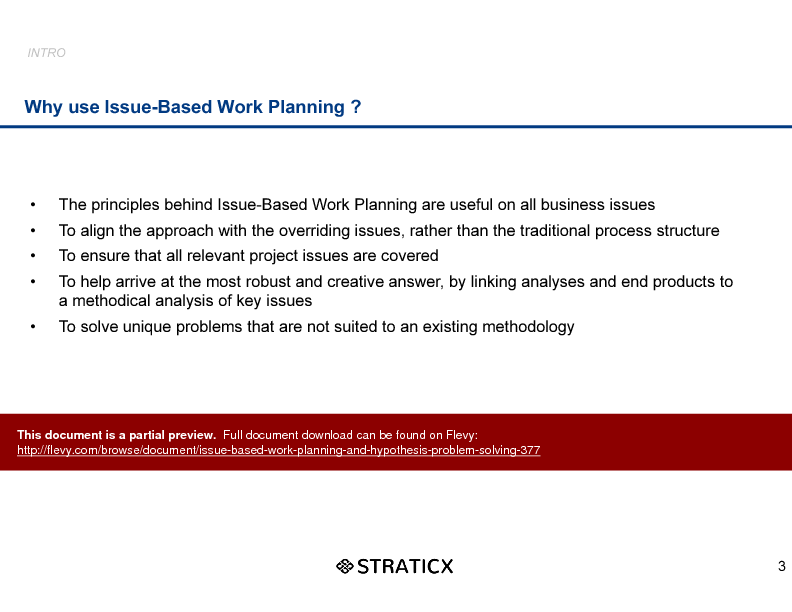
The principles behind Issue-Based Work Planning are a powerful concept for use on all business issues and help to align the approach with the overriding issues, rather than the traditional process structure.
They help ensure that all relevant project issues are covered and to arrive at the most robust and creative answer, by linking analyses and end products to a methodical analysis of key issues.
This powerpoint is suitable for anyone who is looking for a robust methodology to solve the most complex of issues.
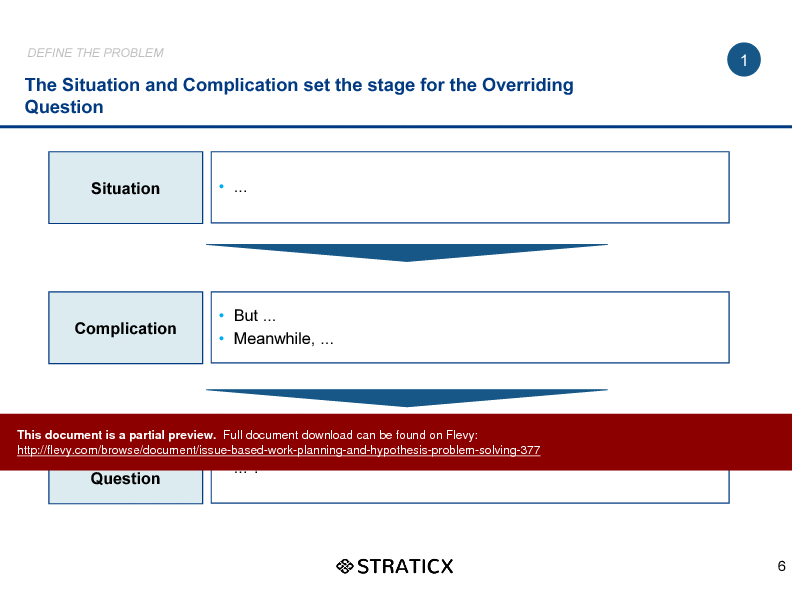
This document provides a structured approach to dissecting complex business problems by breaking them down into manageable components. By defining the situation and identifying complications, it sets the stage for formulating the overriding question that drives the analysis. This method ensures that every angle of the problem is explored, leading to more comprehensive and effective solutions.
The use of issue trees allows for a systematic exploration of first and second-level issues, ensuring that all potential factors are considered. This hierarchical approach not only clarifies the problem, but also helps in identifying the most critical issues that need immediate attention. The document emphasizes the importance of revisiting the overriding question to refine the focus of the work continuously.
Hypothesis generation and validation are key components of this methodology. By establishing clear, testable hypotheses, the framework ensures that solutions are not only innovative, but also practical and actionable. The matrix of data sources further aids in gathering relevant data efficiently, making the analysis both robust and reliable. This document is an essential tool for executives looking to tackle complex business challenges with a structured, methodical approach.
Got a question about the product? Email us at support@flevy.com or ask the author directly by using the "Ask the Author a Question" form. If you cannot view the preview above this document description, go here to view the large preview instead.
MARCUS OVERVIEW
This synopsis was written by Marcus [?] based on the analysis of the full 25-slide presentation.
Executive Summary
This presentation on Issue-Based Work Planning and Hypothesis Problem Solving is crafted in a consulting-grade format, akin to McKinsey, Bain, or BCG-quality materials (not affiliated). It provides a structured methodology for tackling complex business issues by emphasizing the importance of defining problems clearly and developing hypotheses to guide analysis. Buyers will learn how to create issue trees, generate actionable hypotheses, and align their analyses with key business questions, ultimately leading to more robust and creative solutions.
Who This Is For and When to Use
• Corporate executives seeking to enhance problem-solving capabilities within their teams
• Consultants aiming to implement a structured approach to complex issues
• Project managers responsible for guiding teams through analytical tasks
• Business analysts focused on defining and addressing critical business challenges
Best-fit moments to use this deck:
• During project kickoff meetings to establish a clear problem definition
• When facing complex business challenges that require structured analysis
• In workshops aimed at developing team problem-solving skills
Learning Objectives
• Define the problem using a clear and actionable overriding question
• Develop an issue tree that breaks down complex problems into manageable components
• Generate testable hypotheses that guide analytical efforts
• Identify necessary data sources to support hypothesis testing
• Create a detailed work plan that outlines project phases and timelines
• Foster a collaborative environment for brainstorming and refining issues
Table of Contents
• Introduction to Issue-Based Work Planning (page 1)
• Importance of Defining the Problem (page 4)
• Developing an Issue Tree (page 8)
• Generating Hypotheses (page 17)
• Defining Analyses and Data Sources (page 20)
• Developing a Workplan (page 23)
Primary Topics Covered
• Problem Definition - Establishing a clear overriding question that guides the analysis and ensures focus on the decision-maker's needs.
• Issue Tree Creation - Structuring complex problems into first and second-level issues that are mutually exclusive and collectively exhaustive (MECE).
• Hypothesis Generation - Formulating testable hypotheses that provide direction for analysis and decision-making.
• Data Sources Identification - Determining relevant data sources needed to validate or invalidate hypotheses.
• Workplan Development - Creating a detailed project timeline that outlines phases, tasks, and responsibilities.
Deliverables, Templates, and Tools
• Issue tree template for visualizing problem breakdown
• Hypothesis generation framework to guide analytical focus
• Data collection matrix for organizing relevant data sources
• Gantt chart template for project planning and tracking
• Brainstorming session guidelines to foster team collaboration
Slide Highlights
• Overview of the Issue-Based Work Planning methodology
• Example of an overriding question and its components
• Visual representation of an issue tree with first and second-level issues
• Criteria for evaluating the quality of hypotheses
• Sample Gantt chart illustrating project phases and timelines
Potential Workshop Agenda
Introduction to Issue-Based Work Planning (30 minutes)
• Overview of the methodology and its importance
• Discussion on the role of problem definition
Developing an Issue Tree (60 minutes)
• Interactive session to create issue trees based on real business challenges
• Group brainstorming to identify first and second-level issues
Hypothesis Generation and Data Sources (45 minutes)
• Workshop on formulating testable hypotheses
• Identification of relevant data sources for analysis
Customization Guidance
• Tailor the overriding question to reflect specific project goals and challenges
• Adjust the issue tree structure to align with the unique context of the business issue
• Modify the Gantt chart to include specific project milestones and deadlines
Secondary Topics Covered
• Best practices for issue analysis in various business contexts
• Techniques for fostering team collaboration during problem-solving
• Strategies for iterative refinement of issue trees and hypotheses
Topic FAQ
What are the main phases of issue-based work planning?
Issue-based work planning breaks a problem into a clear overriding question, develops an issue tree, generates testable hypotheses, defines analyses and data sources, and produces a detailed workplan. The Flevy product organizes these topics across 6 sections in the deck.
How do I create a MECE issue tree for a complex problem?
Start by stating the overriding question, decompose it into first-level issues, then into second-level issues ensuring elements are mutually exclusive and collectively exhaustive. Iterate and validate completeness with stakeholders using a visual issue tree template.
How should hypotheses be written so they are testable?
Write each hypothesis to address a single issue, frame it as an educated guess that can be proven or disproven through analysis, and ensure it connects to specific data or metrics; use established criteria from a hypothesis generation framework to evaluate quality.
What should I look for in an issue-based work planning template before buying one?
Look for templates that include an issue tree visual, hypothesis framework, data collection matrix, Gantt chart for scheduling, and brainstorming guidance; identify file format and length — for example, Issue-Based Work Planning and Hypothesis Problem Solving is a 25-slide PPTX with these 5 tools.
Are paid hypothesis-driven problem-solving templates worth the cost for a small team?
Paid templates provide ready-made artifacts — issue trees, hypothesis frameworks, a data collection matrix, Gantt chart, and brainstorming guidelines — that can speed alignment in kickoffs and workshops, saving setup time; the referenced product includes 5 such deliverables.
I need to run a team workshop to teach hypothesis-driven problem solving — what agenda should I follow?
A sample workshop begins with a 30-minute introduction to the methodology and problem definition, followed by a 60-minute interactive session to build issue trees, and a 45-minute module on hypothesis generation and data sources, supported by templates for each activity.
How do I translate hypotheses into an analysis plan and identify required data?
Map each hypothesis to a specific analysis, list required metrics and sources in a data collection matrix, and sequence tasks into a workplan with responsibilities and timelines captured in a Gantt chart; use the data collection matrix and Gantt chart template to document this.
How can I use an issue-based approach at a project kickoff to align the team?
At kickoff, agree on an overriding question, co-develop an issue tree to structure the problem, generate initial testable hypotheses, and identify key data and tasks to draft a workplan; use the deck’s templates to capture the overriding question and issue tree.
Document FAQ
These are questions addressed within this presentation.
What is Issue-Based Work Planning?
Issue-Based Work Planning is a structured methodology that focuses on defining problems clearly and developing hypotheses to guide analysis, ensuring that all relevant issues are addressed.
How do I define a good overriding question?
A good overriding question should be clear, specific, actionable, and focused on what the decision-maker needs to move forward.
What is an issue tree?
An issue tree is a visual representation that breaks down a complex problem into first and second-level issues, ensuring that they are mutually exclusive and collectively exhaustive.
How do I generate testable hypotheses?
Testable hypotheses should address a single issue, be educated guesses, and be structured so they can be proven or disproven through analysis.
What is the purpose of a data collection matrix?
A data collection matrix helps organize relevant data sources needed to validate or invalidate hypotheses, ensuring efficient data gathering.
How can I customize the workplan for my project?
Customize the workplan by adjusting project phases, timelines, and specific tasks to align with your project's unique requirements.
What are the benefits of using an issue-based approach?
An issue-based approach ensures that analyses are aligned with key business questions, leading to more robust and creative solutions.
How can I foster collaboration during the brainstorming process?
Encourage team participation by using structured brainstorming sessions and ensuring that all voices are heard, avoiding the "lone wolf" approach.
Glossary
• Overriding Question - A clear statement of the problem to be solved or issue to be resolved.
• Issue Tree - A visual representation that breaks down complex problems into first and second-level issues.
• Hypothesis - An educated guess that addresses a single issue and can be tested through analysis.
• Data Collection Matrix - A framework for organizing relevant data sources for hypothesis testing.
• Gantt Chart - A visual project management tool that outlines project phases and timelines.
• MECE - An acronym for "Mutually Exclusive, Collectively Exhaustive," a principle for structuring issues.
• Brainstorming - A collaborative technique for generating ideas and solutions.
• Iterative Refinement - The process of continuously improving and adjusting analyses based on new insights.
• Project Phases - Distinct stages in a project, each with specific tasks and objectives.
• Collaboration - Working together as a team to achieve common goals.
• Analytical Task - A specific analysis required to address a defined issue.
• Business Challenge - A complex problem that requires structured analysis to resolve.
• Actionable - Capable of being acted upon or implemented.
• Data Sources - The origins of information needed for analysis.
• Operational Efficiency - The ability to deliver services effectively while minimizing costs.
• Asset Management - The management of a company's investments and resources.
• Regulator - An authority that oversees and enforces compliance within an industry.
• Stakeholder - An individual or group with an interest in the outcome of a project or decision.
• Decision Maker - An individual responsible for making final decisions based on analyses and recommendations.
• Creative Solution - An innovative approach to solving a problem.
• Methodical Analysis - A systematic approach to examining issues and data.
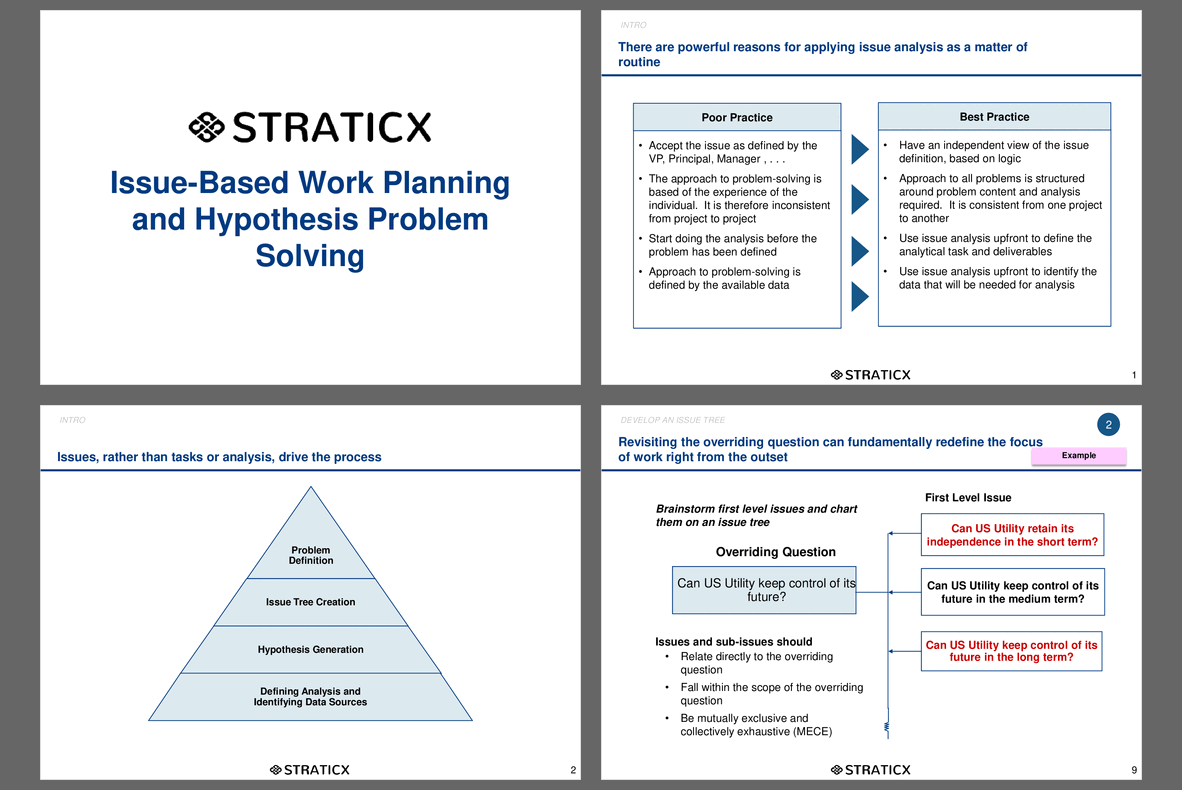
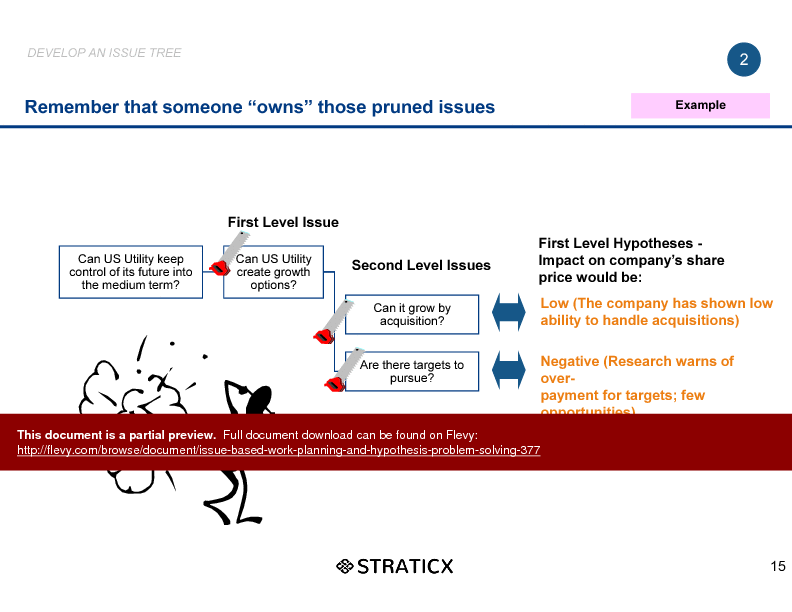
This PPT slide presents a framework for issue analysis, categorizing approaches into 4 types: Surface Drilling, Deep Drilling, Informed Exploration, and the Impact of Pruning. Surface Drilling involves average effort and surface-level knowledge, often leading to superficial conclusions. Deep Drilling requires significant effort and time, which can result in excess knowledge and inefficiencies. Informed Exploration balances depth and efficiency, leveraging expertise for optimal return on investment. The Impact of Pruning emphasizes focusing on promising areas of inquiry, enhancing analysis effectiveness by wisely allocating resources. This framework guides decision-makers in selecting appropriate analytical strategies.
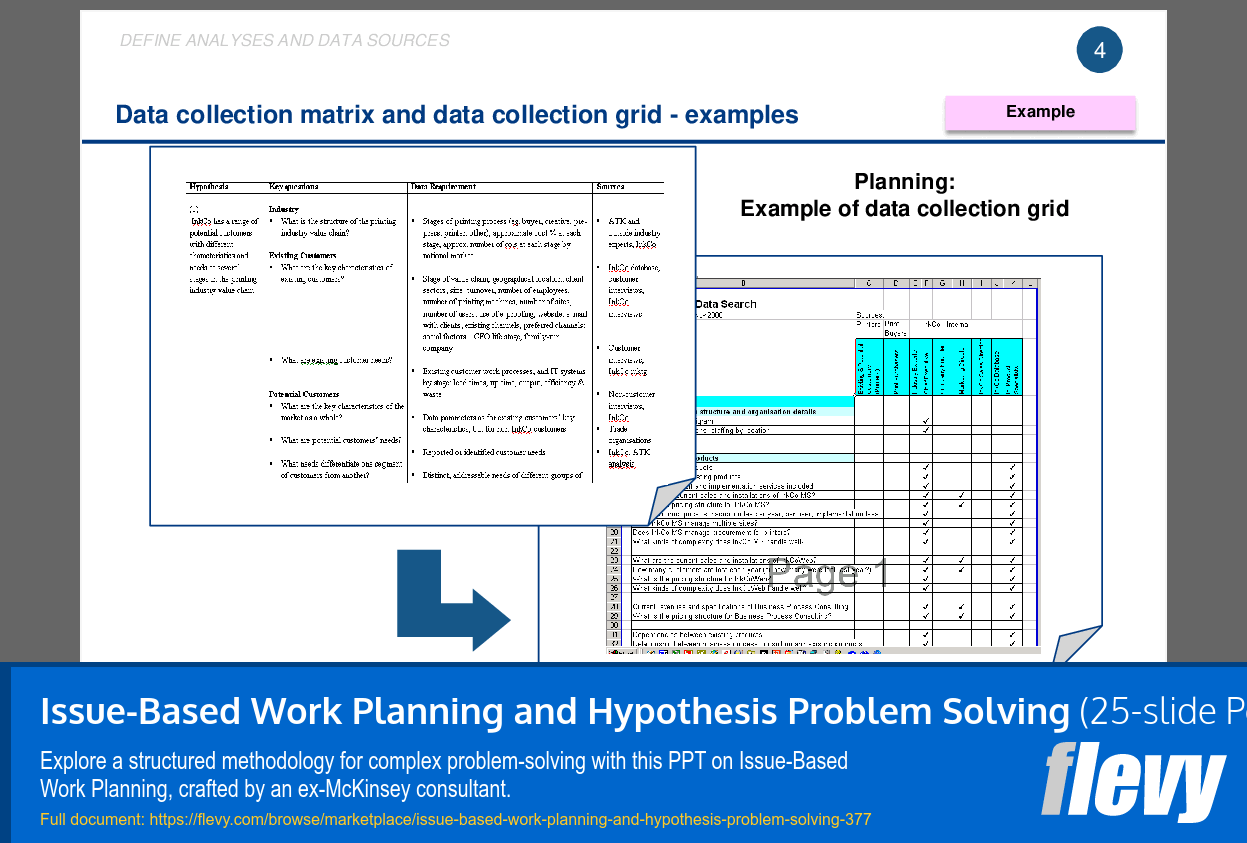
This PPT slide outlines a structured approach to data collection, emphasizing a systematic framework for gathering and analyzing information. It features a data collection matrix and grid for planning and executing data searches. Key questions guide the data collection process, categorized into 3 areas: industry, potential customers, and existing customers. The industry section prompts consideration of industry dynamics, while the potential customers section focuses on customer characteristics and needs. The existing customers segment seeks insights into current behaviors and preferences. The data collection grid lists various data sources and required information, with columns for data types and checkboxes to track collected data points. This methodology enhances data-driven decision-making and supports informed strategic choices.
This PPT slide outlines a structured problem-solving framework. At the top is "Problem Definition," essential for guiding the process. The second layer, "Issue Tree Creation," involves breaking down the main problem into manageable components for detailed examination. The third layer, "Hypothesis Generation," encourages developing potential solutions based on identified issues. At the base, "Defining Analysis and Identifying Data Sources" emphasizes the need for relevant data and analytical methods to test hypotheses. This methodology enhances organizational problem-solving capabilities and improves decision-making processes.
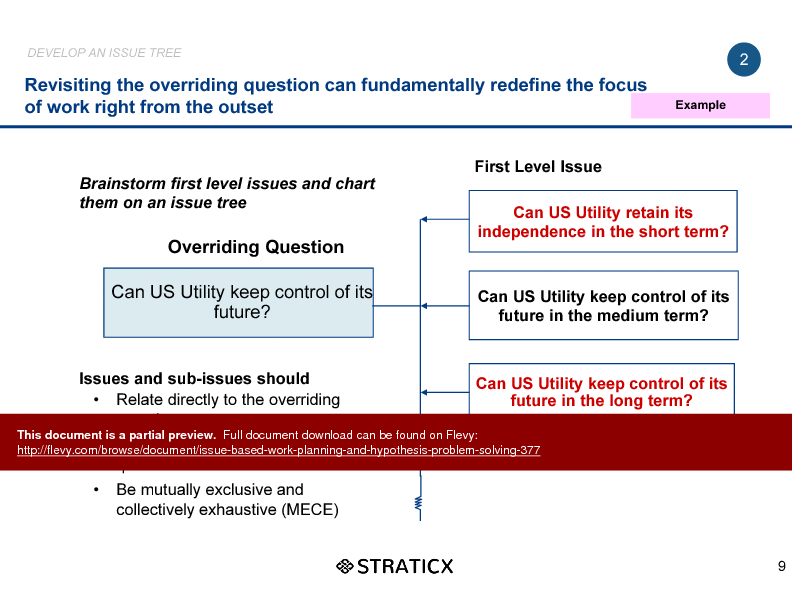
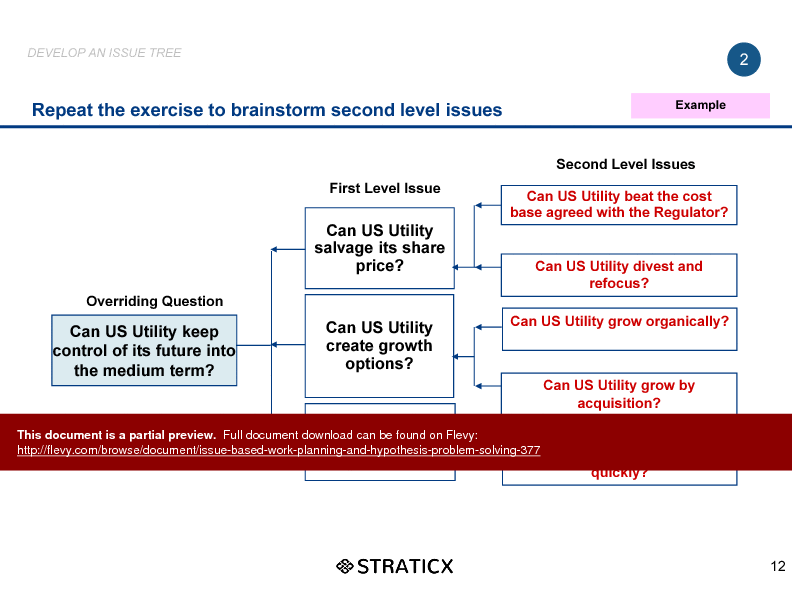
This PPT slide presents a structured approach to problem-solving centered around the overriding question: "Can US Utility keep control of its future?" First-level issues include the utility's short-term independence, medium-term control, and long-term sustainability. The framework emphasizes developing issues that are mutually exclusive and collectively exhaustive (MECE), ensuring clarity and focus. This methodology aids organizations in navigating complex challenges by framing critical questions that influence strategic discussions and decisions. By adhering to these guidelines, teams can identify unique issues that contribute to a comprehensive analysis and informed strategic choices.
This PPT slide analyzes poor and best practices in issue analysis. Poor practices include accepting issues defined by higher-ups without critical evaluation, leading to inconsistent problem-solving approaches and wasted resources. Starting analysis without clearly defining the problem can result in misguided efforts. Relying solely on available data limits the scope of analysis. Best practices advocate for a structured approach to issue definition, ensuring consistency across projects, which is essential for effective problem-solving. Conducting issue analysis upfront clarifies analytical tasks and deliverables, while early identification of necessary data enhances relevance and comprehensiveness. Adopting these best practices can improve analytical rigor and decision-making in organizations.
Source: Best Practices in Problem Solving, Work Management, Hypothesis Generation, Bain PowerPoint PowerPoint Slides: Issue-Based Work Planning and Hypothesis Problem Solving PowerPoint (PPTX) Presentation Slide Deck, STRATICX
Straticx is redefining strategy and innovation consulting through online access to high value consulting partners, who work with senior executives and boards of corporations to frame key business issues, develop hypothesis, apply structured problem solving and commercial acumen to drive development of solutions. The partners all have 10+ consulting experience covering a broad range of sectors and
... [read more] have delivered a range of engagements such as corporate and business unit strategy, business transformation, business case development, M&A, and operational improvement.
Since 2012, we have provided business templates to over 10,000 businesses and organizations of all sizes, from startups and small businesses to the Fortune 100, in over 130 countries.
"I am extremely grateful for the proactiveness and eagerness to help and I would gladly recommend the Flevy team if you are looking for data and toolkits to help you work through business solutions."
– Trevor Booth, Partner, Fast Forward Consulting
"FlevyPro provides business frameworks from many of the global giants in management consulting that allow you to provide best in class solutions for your clients."
– David Harris, Managing Director at Futures Strategy
"Flevy is our 'go to' resource for management material, at an affordable cost. The Flevy library is comprehensive and the content deep, and typically provides a great foundation for us to further develop and tailor our own service offer."
– Chris McCann, Founder at Resilient.World
"The wide selection of frameworks is very useful to me as an independent consultant. In fact, it rivals what I had at my disposal at Big 4 Consulting firms in terms of efficacy and organization."
– Julia T., Consulting Firm Owner (Former Manager at Deloitte and Capgemini)
"I like your product. I'm frequently designing PowerPoint presentations for my company and your product has given me so many great ideas on the use of charts, layouts, tools, and frameworks. I really think the templates are a valuable asset to the job."
– Roberto Fuentes Martinez, Senior Executive Director at Technology Transformation Advisory
"If you are looking for great resources to save time with your business presentations, Flevy is truly a value-added resource. Flevy has done all the work for you and we will continue to utilize Flevy as a source to extract up-to-date information and data for our virtual and onsite presentations!"
– Debbi Saffo, President at The NiKhar Group
"As a niche strategic consulting firm, Flevy and FlevyPro frameworks and documents are an on-going reference to help us structure our findings and recommendations to our clients as well as improve their clarity, strength, and visual power. For us, it is an invaluable resource to increase our impact and value."
– David Coloma, Consulting Area Manager at Cynertia Consulting
"FlevyPro has been a brilliant resource for me, as an independent growth consultant, to access a vast knowledge bank of presentations to support my work with clients. In terms of RoI, the value I received from the very first presentation I downloaded paid for my subscription many times over! The
quality of the decks available allows me to punch way above my weight – it's like having the resources of a Big 4 consultancy at your fingertips at a microscopic fraction of the overhead.
"
– Roderick Cameron, Founding Partner at SGFE Ltd
Save with Bundles
This document is available as part of the following discounted bundle(s):
Receive our FREE whitepaper on the Top 101 Consulting Frameworks
Download our 200+ page guide summarizing the Top 101 Management Consulting Frameworks. Each framework provides a structured approach to analyzing and solving a common business problem.










