
This document provides a practical guide to structured problem solving. It will help you solve strategic problems that your business face. The document provides a framework that has been tested for many years at a top tier consulting firm and investment bank. There are numerous examples given to enable better understanding of the concepts.
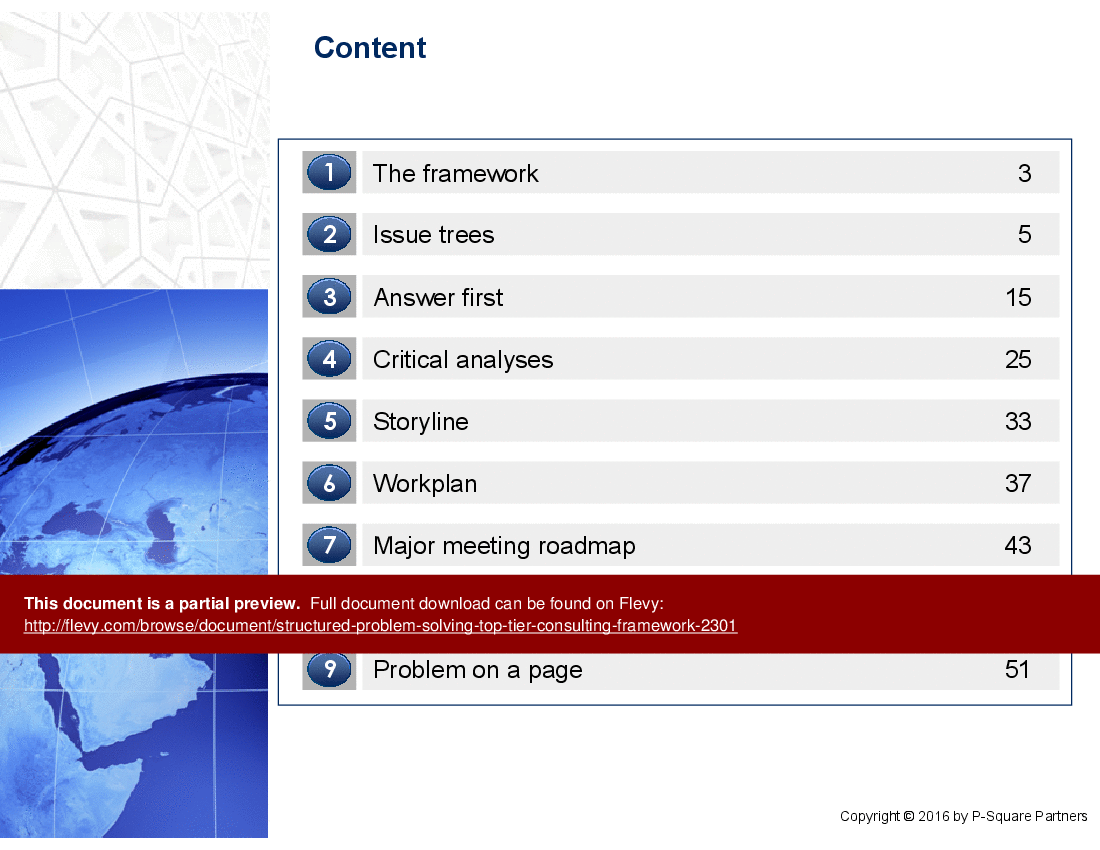
The document is structured as follow:
• The framework
• Issue trees
• Answer first
• Critical analyses
• Storyline
• Workplan
• Major meeting roadmap
• Client map
• Problem on a page
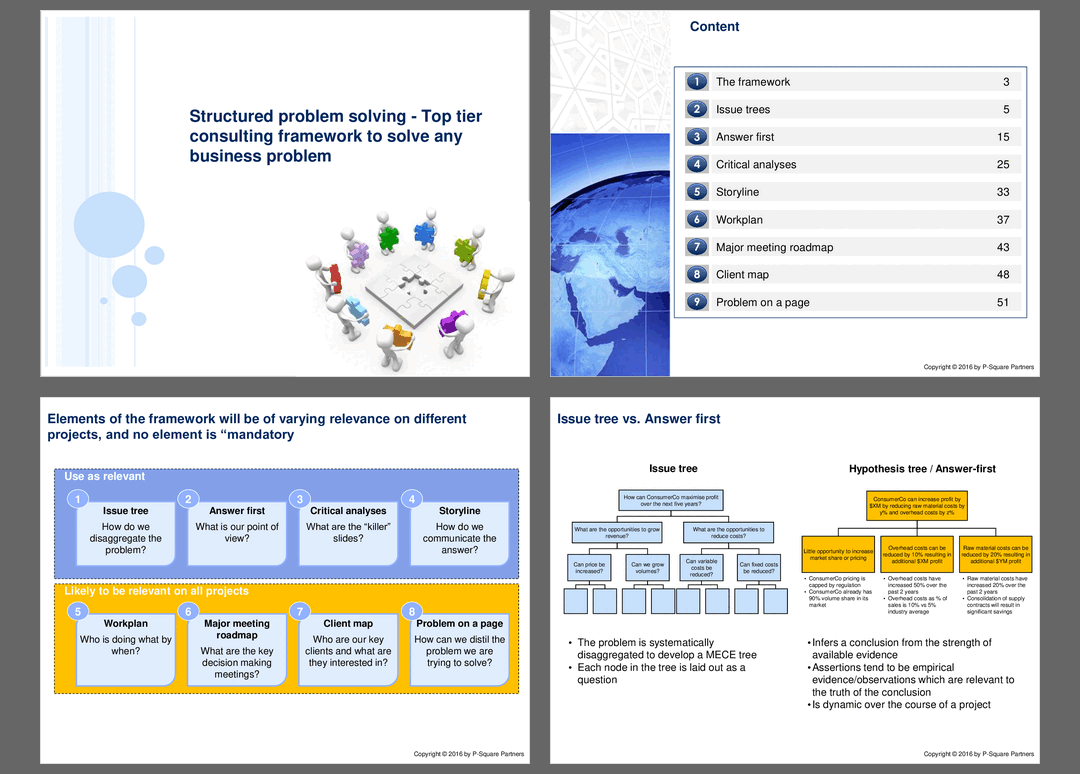
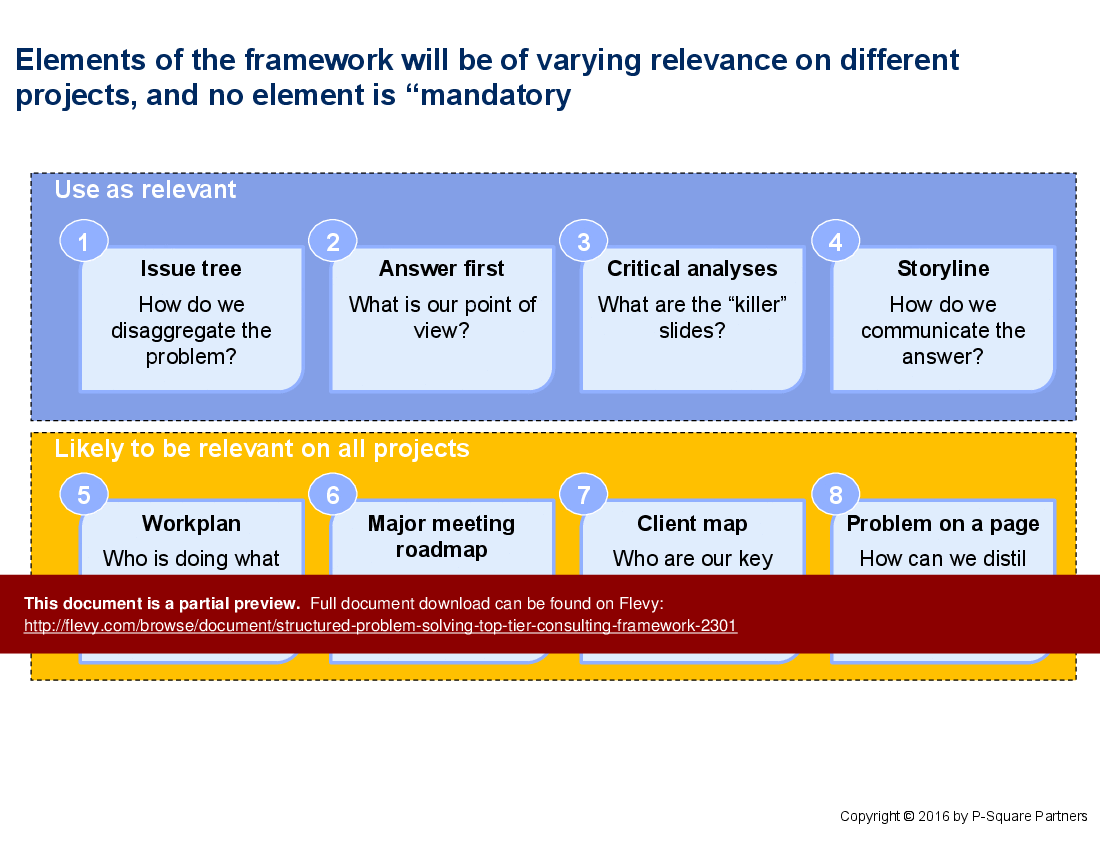
The framework outlined in this PPT is designed to be adaptable, recognizing that different projects may require different elements. The use of issue trees, answer-first approaches, critical analyses, and storylines are emphasized for their relevance to specific project needs. This flexibility ensures that the framework can be tailored to the unique challenges of any strategic problem.
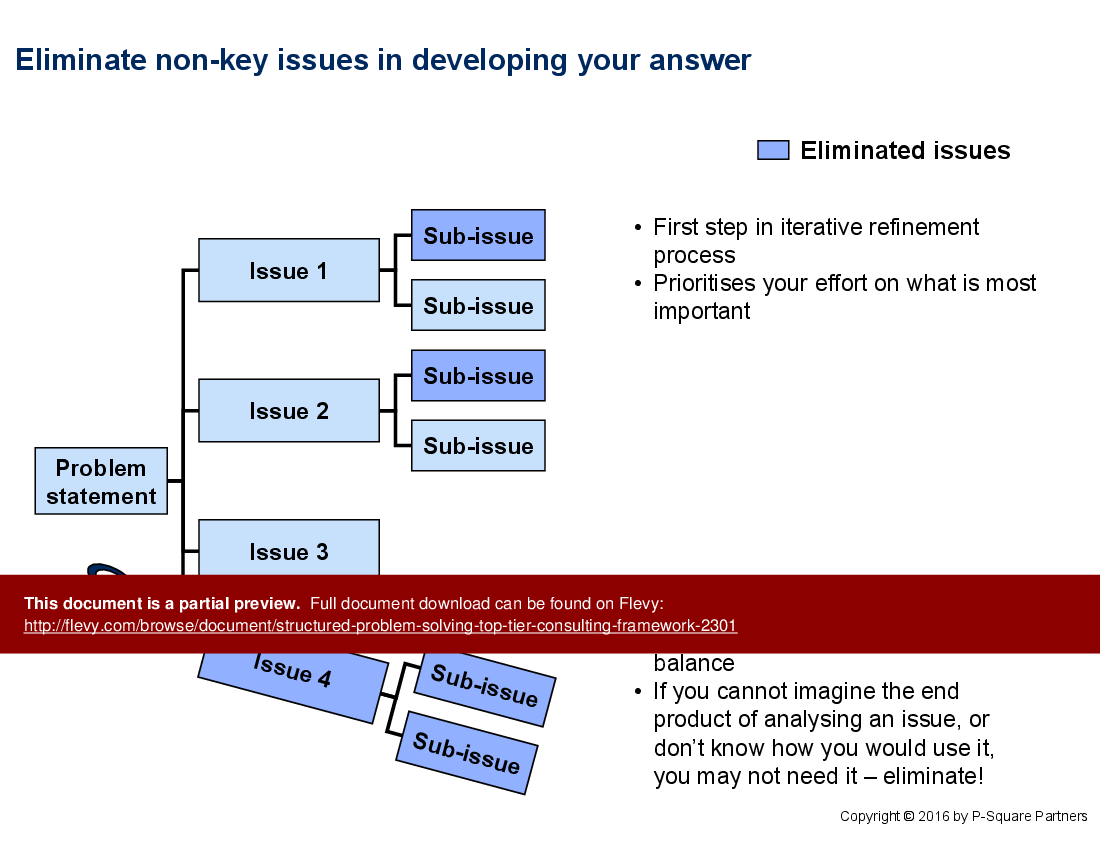
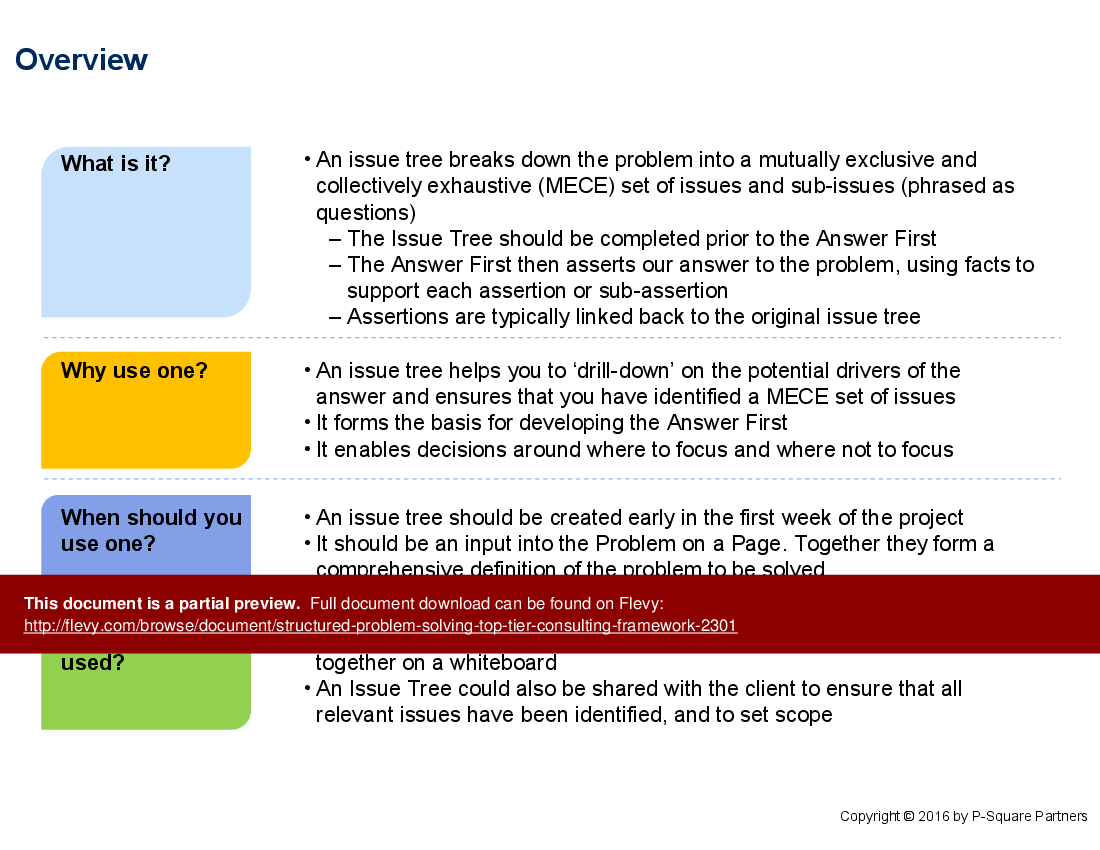
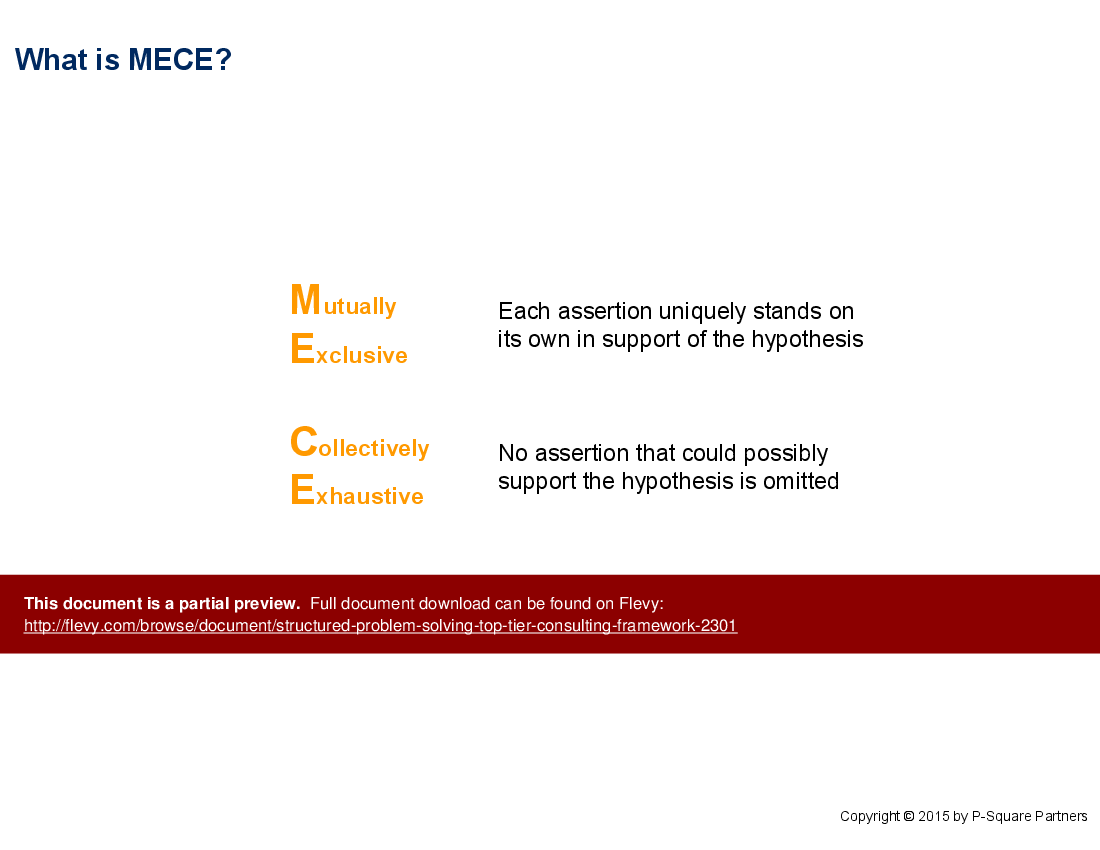
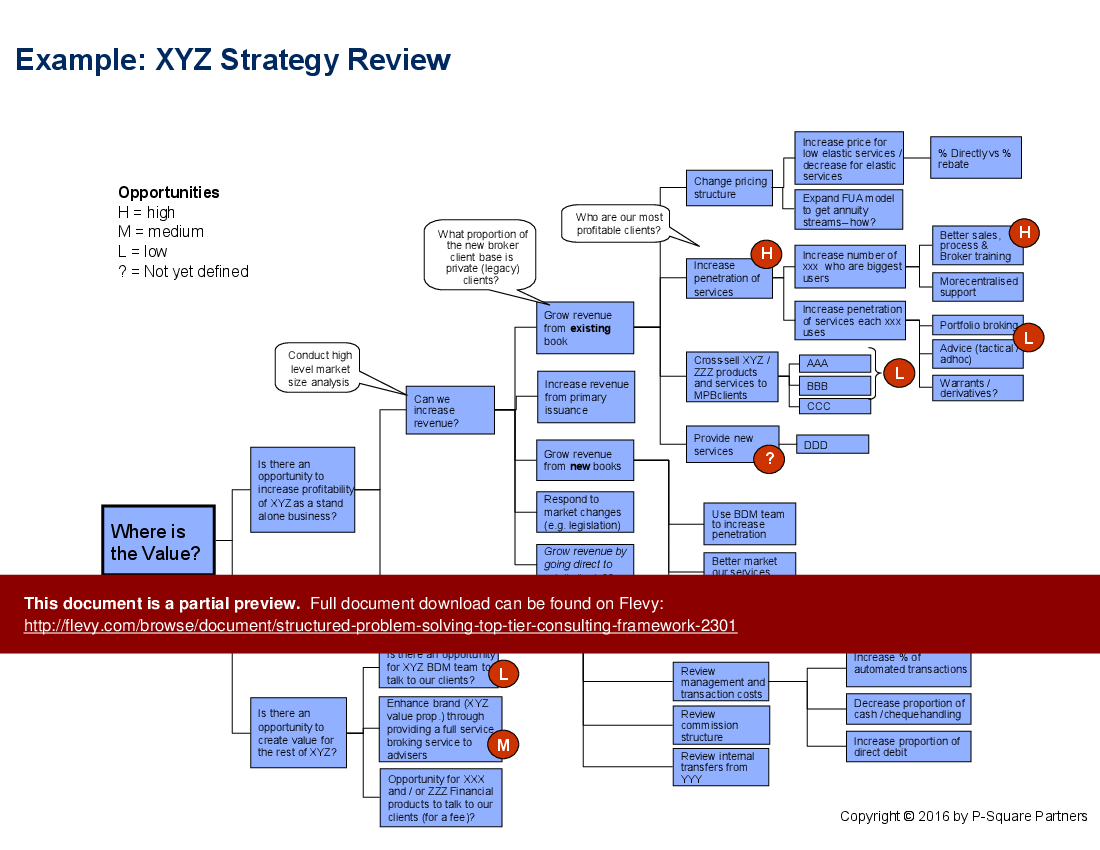
An issue tree is a critical tool for breaking down complex problems into manageable components. By identifying mutually exclusive and collectively exhaustive (MECE) sets of issues, the issue tree helps in pinpointing the root causes and structuring the problem-solving process. This methodical approach ensures that all potential drivers of the problem are considered, enabling focused and effective solutions.
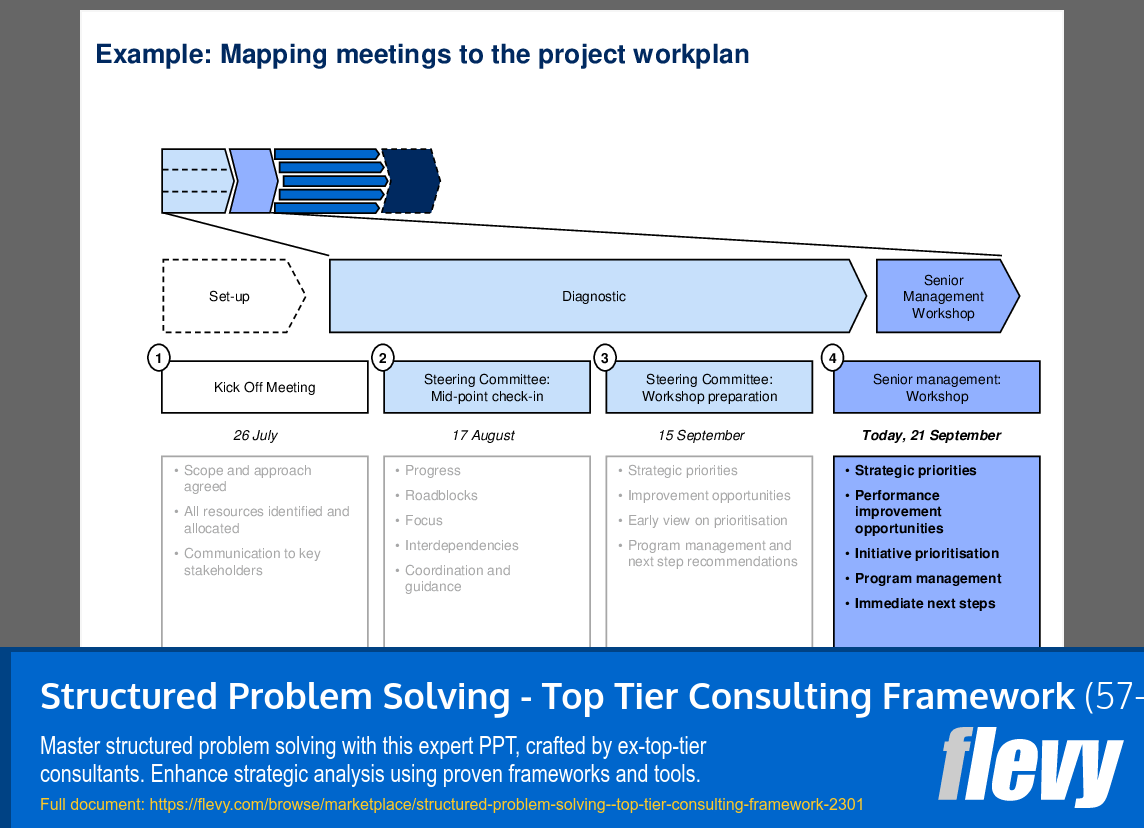
The document also provides practical guidance on developing a major meeting roadmap, which is essential for maintaining project momentum and ensuring all stakeholders are aligned. This roadmap includes scheduling key meetings, identifying decision points, and ensuring that all necessary participants are engaged. By keeping the project team and stakeholders on the same page, the roadmap helps in driving the project to successful completion.
Got a question about the product? Email us at support@flevy.com or ask the author directly by using the "Ask the Author a Question" form. If you cannot view the preview above this document description, go here to view the large preview instead.
Executive Summary
The "Structured Problem Solving - Top Tier Consulting Framework" presentation offers a comprehensive approach to tackling business challenges using proven methodologies akin to those employed by McKinsey, Bain, or BCG-quality consulting firms (consulting-grade; not affiliated). This framework equips users with the tools to dissect complex problems, formulate actionable insights, and effectively communicate solutions. By leveraging this structured approach, corporate executives and consultants will enhance their problem-solving capabilities, ensuring clarity and focus throughout the analytical process.
Who This Is For and When to Use
• Corporate executives seeking to refine their problem-solving methodologies
• Consultants aiming to enhance their analytical frameworks and deliverables
• Project managers responsible for guiding teams through complex business challenges
• Strategy teams focused on developing clear, actionable insights for stakeholders
Best-fit moments to use this deck:
• During initial project kick-offs to establish a clear problem-solving framework
• In strategy sessions where complex issues need to be dissected and addressed
• When preparing for critical client meetings to ensure structured communication of insights
Learning Objectives
• Define the structured problem-solving framework and its core components
• Build an issue tree to disaggregate complex problems into manageable parts
• Establish a clear point of view using the "Answer First" methodology
• Create critical analyses to support strategic recommendations
• Develop a compelling storyline for effective communication of insights
• Construct a detailed workplan to assign responsibilities and timelines
• Map major meetings to align stakeholders and drive decision-making
• Identify key clients and their interests to tailor communication strategies
• Summarize complex problems succinctly using the "Problem on a Page" tool
Table of Contents
• The Framework (page 3)
• Issue Trees (page 5)
• Answer First (page 15)
• Critical Analyses (page 25)
• Storyline (page 33)
• Workplan (page 37)
• Major Meeting Roadmap (page 43)
• Client Map (page 48)
• Problem on a Page (page 51)
Primary Topics Covered
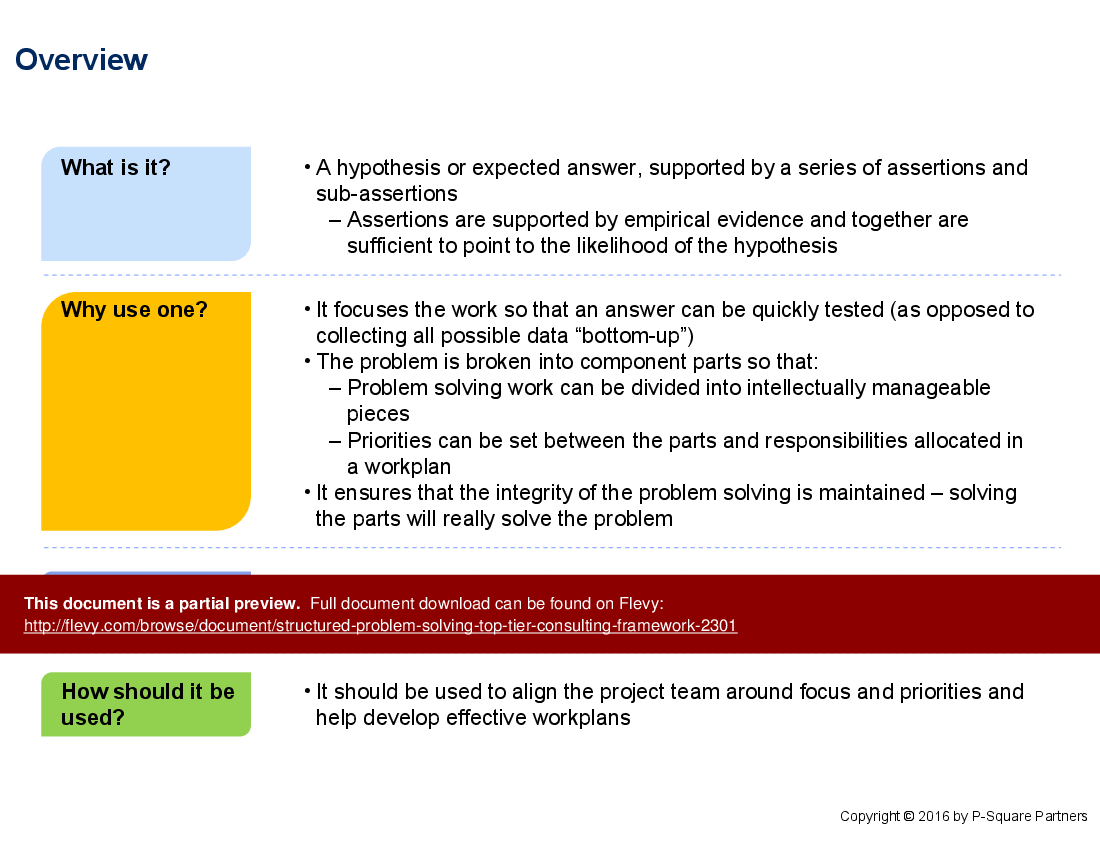
• Issue Tree - A tool for breaking down complex problems into mutually exclusive and collectively exhaustive (MECE) components, facilitating focused analysis.
• Answer First - A hypothesis-driven approach that articulates the main point of view supported by assertions and evidence, streamlining the problem-solving process.
• Critical Analyses - An outline of essential analyses required to substantiate the proposed solutions, typically presented through mock-up slides.
• Storyline - A structured narrative that guides the presentation of findings, ensuring clarity and coherence in communication.
• Workplan - A high-level overview of project activities, timelines, and responsibilities, providing a roadmap for execution.
• Major Meeting Roadmap - A schedule of key decision-making meetings, ensuring alignment among stakeholders and facilitating effective communication.
• Client Map - A strategic tool to identify key clients and their interests, enhancing engagement and tailoring communication.
• Problem on a Page - A concise summary that encapsulates the problem definition, context, and key issues, serving as a reference point throughout the project.
Deliverables, Templates, and Tools
• Issue tree template for disaggregating complex problems
• Answer First framework to articulate hypotheses and assertions
• Critical analyses slide templates for presenting key findings
• Storyline outline for structuring presentations
• Workplan template for tracking project activities and responsibilities
• Major meeting roadmap for scheduling and aligning stakeholders
• Client map template to identify and engage key clients
• Problem on a Page template for summarizing project scope and objectives
Slide Highlights
• Overview of the structured problem-solving framework, illustrating key components
• Example of an issue tree demonstrating the disaggregation of a complex problem
• The "Answer First" slide showcasing how to articulate a clear point of view
• Critical analyses slide layout emphasizing the importance of supporting evidence
• Storyline example that outlines the logical flow of a presentation
• Workplan overview highlighting major activities and timelines
• Major meeting roadmap detailing key decision points and attendees
• Client map example identifying stakeholder roles and concerns
• Problem on a Page template summarizing project objectives and success criteria
Potential Workshop Agenda
Introduction to Structured Problem Solving (60 minutes)
• Overview of the framework and its components
• Discussion on the importance of structured problem solving
• Group exercise to create an issue tree
Developing the Answer First (90 minutes)
• Workshop on formulating hypotheses and assertions
• Team discussions to refine points of view
• Review of examples and best practices
Creating Critical Analyses and Storylines (120 minutes)
• Hands-on session to develop critical analyses slides
• Collaborative work on crafting compelling storylines
• Feedback and refinement of presentations
Customization Guidance
• Tailor the issue tree to reflect specific project challenges and client contexts
• Adjust the Answer First section to align with client expectations and industry standards
• Modify critical analyses to focus on relevant data and insights for the project
• Adapt the storyline to suit the audience and communication style of stakeholders
• Update the workplan to reflect actual timelines and resource allocations
• Personalize the client map to include specific client concerns and engagement strategies
Secondary Topics Covered
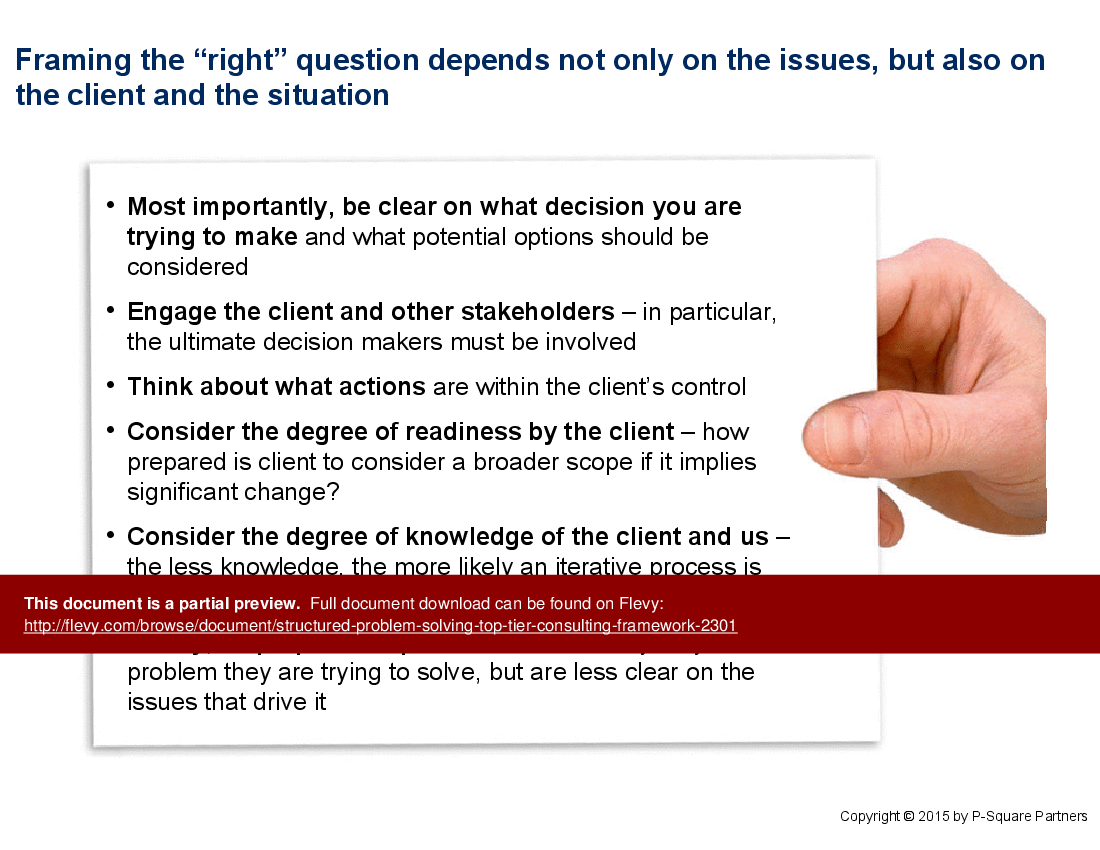
• Best practices for engaging clients in the problem-solving process
• Techniques for ensuring clarity and focus in presentations
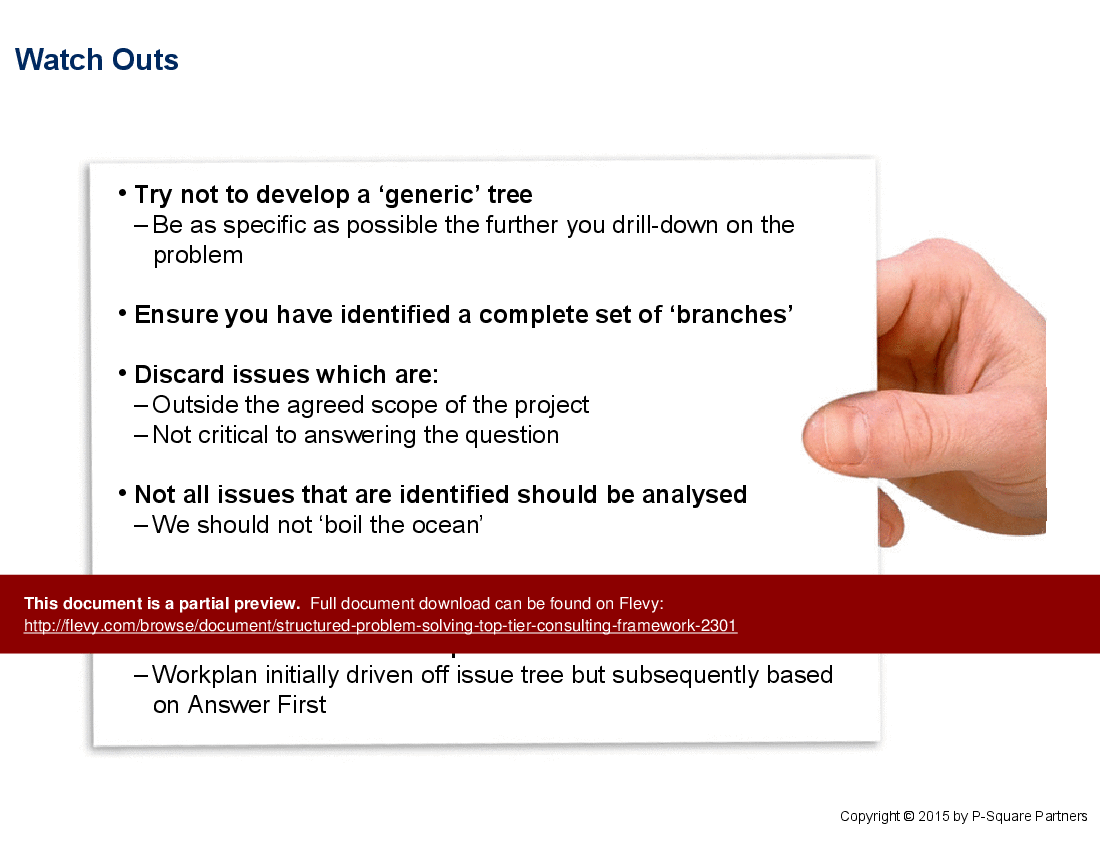
• Strategies for managing project scope and preventing scope creep
• Insights on stakeholder management and communication
• Approaches for iterative refinement of analyses and hypotheses
FAQ
What is the purpose of an issue tree?
An issue tree helps break down complex problems into manageable components, ensuring a structured approach to analysis and decision-making.
How does the "Answer First" methodology work?
The "Answer First" methodology articulates a hypothesis supported by assertions and evidence, allowing teams to focus their efforts on key issues.
What are critical analyses?
Critical analyses outline the essential pieces of analysis required to support strategic recommendations, typically presented through mock-up slides.
How can I create a compelling storyline?
A compelling storyline should provide a logical flow of information, integrating key findings and insights while addressing the audience's key questions.
What is included in a workplan?
A workplan includes a high-level map of project activities, timelines, responsibilities, and major milestones, guiding the team throughout the engagement.
How do I identify key clients?
Key clients can be identified through stakeholder mapping, focusing on their roles, concerns, and interests to tailor communication effectively.
What is the "Problem on a Page" tool?
The "Problem on a Page" tool is a concise summary that captures the problem definition, context, and key issues, serving as a reference throughout the project.
How often should I update the workplan?
The workplan should be treated as a living document, updated regularly to reflect changes in timelines, responsibilities, and project scope.
What are the main components of the major meeting roadmap?
The major meeting roadmap includes the project timeframe, key decisions/actions required, list of attendees, and pre-meeting preparations.
How do I ensure effective communication with clients?
Effective communication with clients involves understanding their concerns, tailoring messages to address their interests, and maintaining regular updates throughout the project.
Glossary
• Issue Tree - A visual representation that breaks down complex problems into manageable components.
• Answer First - A hypothesis-driven approach to articulate the main point of view.
• Critical Analyses - Key analyses required to support strategic recommendations.
• Storyline - A structured narrative guiding the presentation of findings.
• Workplan - A high-level overview of project activities and timelines.
• Major Meeting Roadmap - A schedule of key decision-making meetings.
• Client Map - A tool to identify key clients and their interests.
• Problem on a Page - A one-page summary of the problem definition and key issues.
• MECE - Mutually Exclusive and Collectively Exhaustive; a principle for structuring issues.
• Stakeholder - An individual or group with an interest in the project's outcome.
• Hypothesis - An educated guess or proposed explanation for a phenomenon.
• Assertions - Statements that support the hypothesis, backed by evidence.
• KPI - Key Performance Indicator; a measurable value that demonstrates how effectively a company is achieving its objectives.
• Scope Creep - The uncontrolled expansion of project scope without adjustments to time, cost, and resources.
• Engagement - The process of involving stakeholders in the project.
• Deliverables - Specific outputs or results produced as part of the project.
• Feedback Loop - A process where outputs of a system are circled back and used as inputs.
• Iterative Process - A method of refining and improving a product or process through repeated cycles.
• Stakeholder Management - The process of managing relationships with those who have an interest in the project.
Source: Best Practices in Problem Solving, MECE, Bain PowerPoint PowerPoint Slides: Structured Problem Solving - Top Tier Consulting Framework PowerPoint (PPT) Presentation Slide Deck, P-Square Partners
This document is available as part of the following discounted bundle(s):
Save %!
P-Square Partners Best Selling Consulting Frameworks & Tools


This bundle contains 7 total documents. See all the documents to the right.
|
Receive our FREE whitepaper on the Top 101 Consulting Frameworks
Download our 200+ page guide summarizing the Top 101 Management Consulting Frameworks. Each framework provides a structured approach to analyzing and solving a common business problem. |