



 Click main image to view in full screen. Unlock all 18 preview images:
Total Productive Maintenance - 30 Templates – Excel XLSX
Excel (XLSX)


BENEFITS OF THIS DOWNLOADABLE EXCEL DOCUMENT
- Ease of TPM implantation at shop floor.
- Ready to use and standardized across TPM practice plants.
TPM EXCEL DESCRIPTION
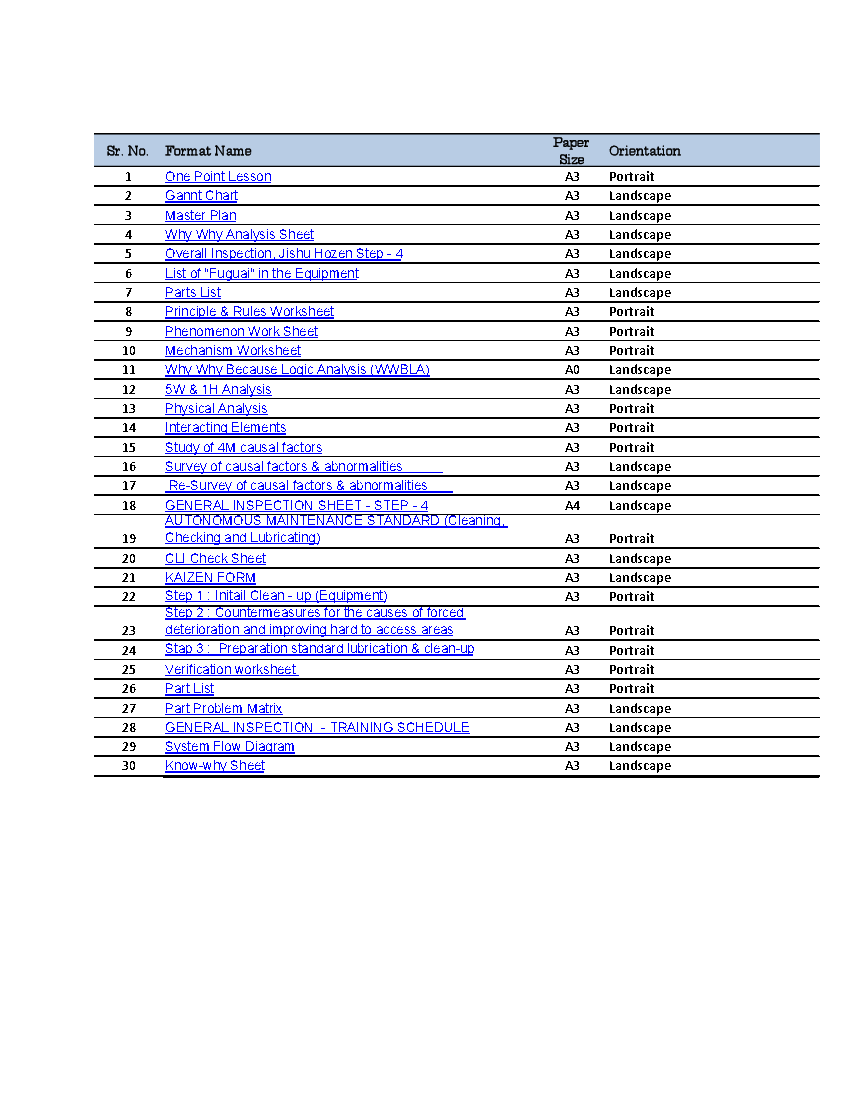
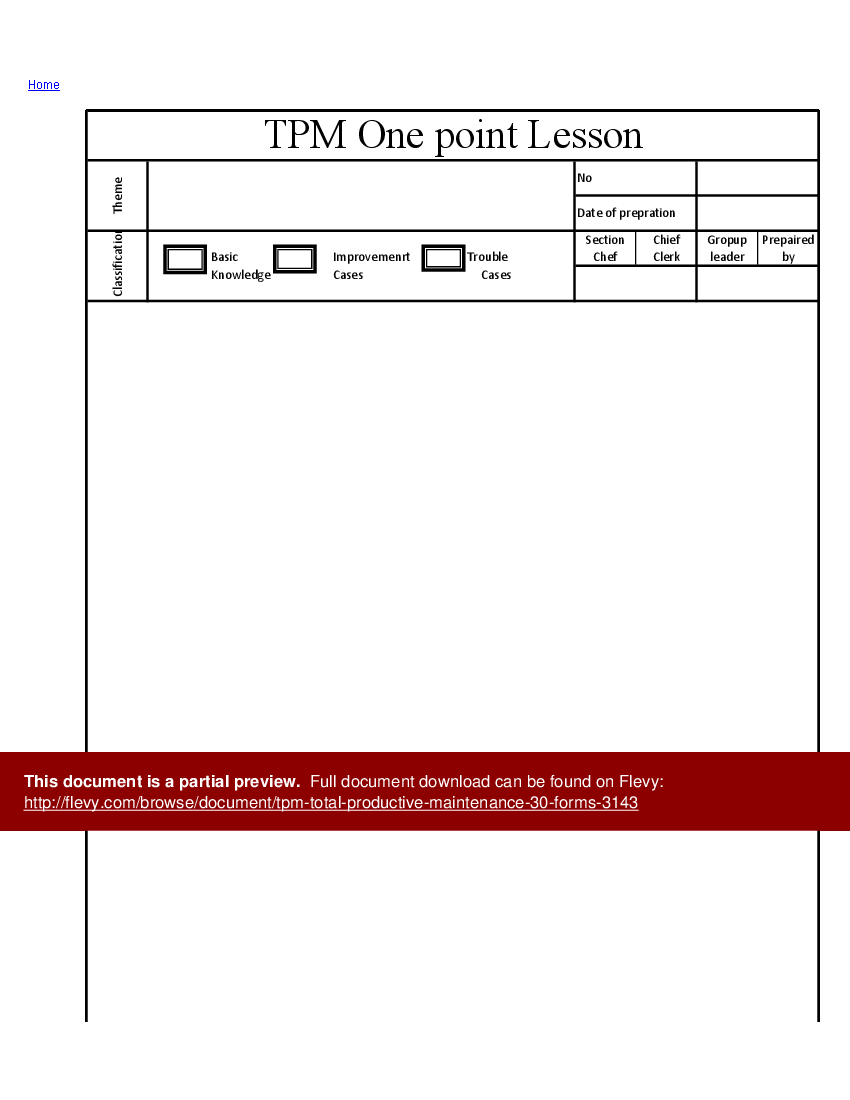
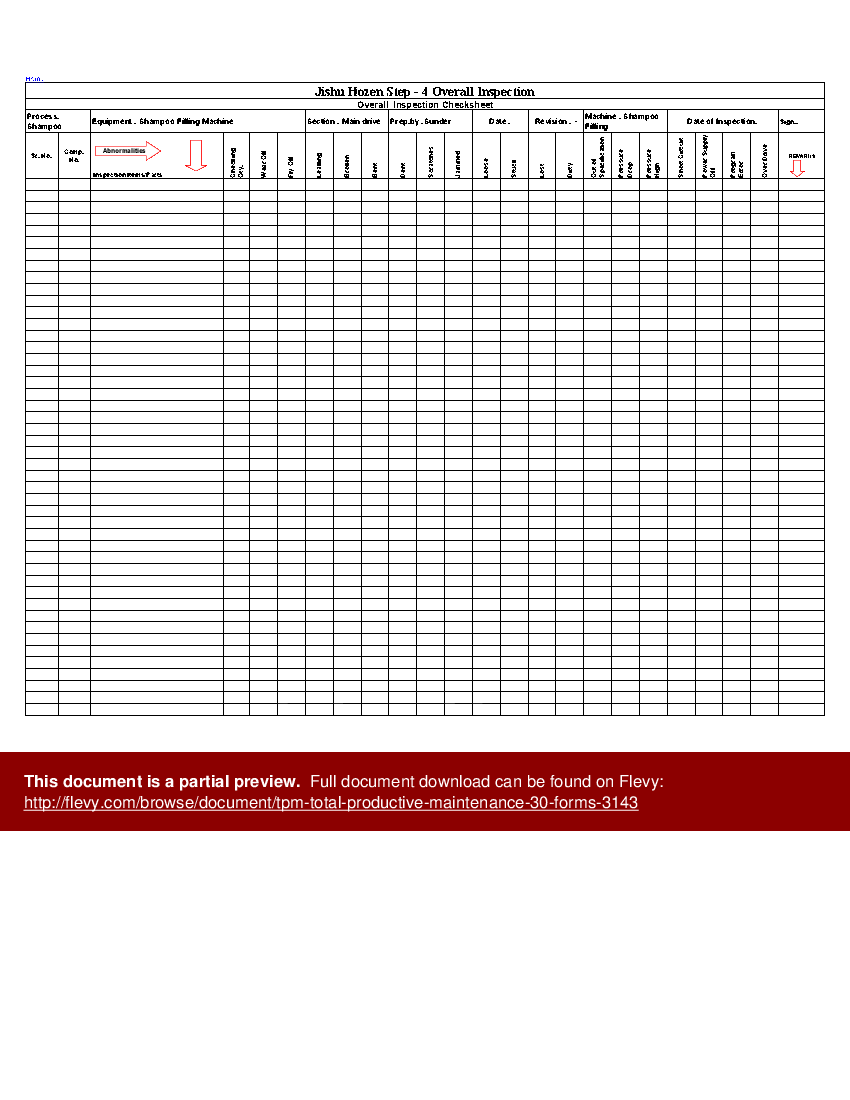
This Excel workbook contains 30 templates for Total Productive maintenance ( TPM ) concepts. Templates include OPL ( One point Lesson) Gantt Chart, Why Why Analysis, Overall Inspection, Jishu Hozen Step – 4 , List of "Fuguai" in the Equipment, Why Why Because Logic Analysis (WWBLA), Study of 4M causal factors, GENERAL INSPECTION SHEET – STEP ? 4, AUTONOMOUS MAINTENANCE STANDARD (Cleaning, Checking and Lubricating), Kaizen , Verification worksheet, Part List, Step 1 : Initial Clean – up (Equipment), Step 2 : Countermeasures for the causes of forced deterioration and improving hard to access areas, Step 3 : Preparation standard lubrication & clean-up and many more.
This documents make Implementation for TPM is easy at shop floor, it also help team to trained the team in TPM concepts,
you can also modify this documents as per your process requirement, this are well tested and experience sheets.
this documents are prepared taking reference from TPM practice organisation
The templates in this workbook are meticulously designed to cover a broad spectrum of TPM activities. From the 5W & 1H Analysis to the Physical Analysis and Interacting Elements, each template is crafted to ensure thorough documentation and analysis. These tools are essential for identifying root causes, planning corrective actions, and tracking progress in a structured manner.
The Kaizen Form and General Inspection Points templates provide a standardized approach to continuous improvement and equipment inspection. These forms facilitate the capture of critical data and ensure that all team members are aligned on maintenance standards and practices. This comprehensive suite of templates is a valuable asset for any organization committed to achieving operational excellence through Total Productive Maintenance.
Got a question about the product? Email us at support@flevy.com or ask the author directly by using the "Ask the Author a Question" form. If you cannot view the preview above this document description, go here to view the large preview instead.
TOPIC FAQ
What is Total Productive Maintenance and what activities does it cover on the shop floor?
Total Productive Maintenance (TPM) is a structured approach to maximize equipment effectiveness through operator involvement, planned maintenance, and continuous improvement. Typical shop-floor activities include autonomous maintenance (cleaning/checking/lubrication), inspections, root-cause analysis, and Kaizen improvement projects, supported by templates such as Autonomous Maintenance Standard and Kaizen Form.How does a Why-Why analysis help find root causes in maintenance problems?
Why-Why analysis iteratively asks why a failure occurred to reveal underlying causes rather than symptoms, which supports corrective action planning and prevention. TPM toolsets often pair Why-Why with logical variants like Why-Why Because Logic Analysis (WWBLA) to document causal chains and guide countermeasures using templates such as WWBLA.Which templates are commonly used to start an Autonomous Maintenance program?
Early Autonomous Maintenance activities use templates for Initial Clean-up (Step 1), cleaning and inspection standards, verification worksheets, and routines for checking and lubricating equipment. These templates define operator tasks, verification steps, and inspection points to establish routine cleaning, checking, and lubricating standards.How can Kaizen forms and Gantt charts support maintenance improvement projects?
Kaizen forms capture problem statements, proposed countermeasures, and expected benefits while Gantt charts sequence tasks, assign owners, and track milestones. Together they enable structured project planning, execution, and follow-up for maintenance improvements, using named tools like the Kaizen Form and Gantt Chart.What should I look for when selecting TPM template packs for a manufacturing plant?
Prioritize templates that are shop-floor ready, modifiable to your process, cover root-cause tools (Why-Why, 4M), inspection checklists, verification steps, and project-tracking aids. Also check the delivery file format and ability to train teams; look for editable XLSX templates for easy modification and deployment.Are pre-built TPM templates worth buying instead of building in-house?
Pre-built templates can reduce setup time by providing tested worksheets for common TPM activities and training, and they can be modified to fit processes. A relevant example is a digital workbook available as a download containing 30 shop-floor TPM templates in XLSX format.I need to train operators on basic TPM routines—what starter tools should I use?
For operator training, begin with One Point Lessons (OPL) for quick learning, Initial Clean-up Step templates, Autonomous Maintenance Standard for cleaning/checking/lubrication, and Verification worksheets to confirm competence and adherence to routines using OPL and Initial Clean-up Step templates.How do 4M causal analysis and physical analysis fit into TPM problem solving?
4M causal analysis (Man, Machine, Material, Method) structures identification of potential causes across categories, while Physical Analysis and Interacting Elements map failure modes and interactions. These analyses feed into Why-Why and corrective-action planning to prioritize fixes using templates like 4M causal factors and Physical Analysis.Source: Best Practices in TPM Excel: Total Productive Maintenance - 30 Templates Excel (XLSX) Spreadsheet, Nishil Josh