 Click main image to view in full screen.
TPM Autonomous Maintenance Audit Guide & Checklists – Excel XLSX
Excel (XLSX) + PowerPoint (PPTX) 28


BENEFITS OF THIS DOWNLOADABLE EXCEL DOCUMENT
- Audit-ready in an afternoon -- 10 pre-built AM step checklists with self-scoring rubrics, so your team starts auditing today instead of building sheets from scratch.
- See AM maturity at a glance -- one Dashboard shows every step's score, pass/fail status and a radar chart, so gaps and next actions are obvious to anyone in the room.
- Built for JIPM's 2026 Award criteria -- Step 3/Step 4 eligibility is flagged automatically, turning your routine audits into ready-made award evidence.
TPM EXCEL DESCRIPTION
TPM AUTONOMOUS MAINTENANCE (AM) AUDIT CHECKLIST TOOLKIT
Audit every step of your AM journey – from first wipe-down to full self-management – with one Excel workbook that scores itself.
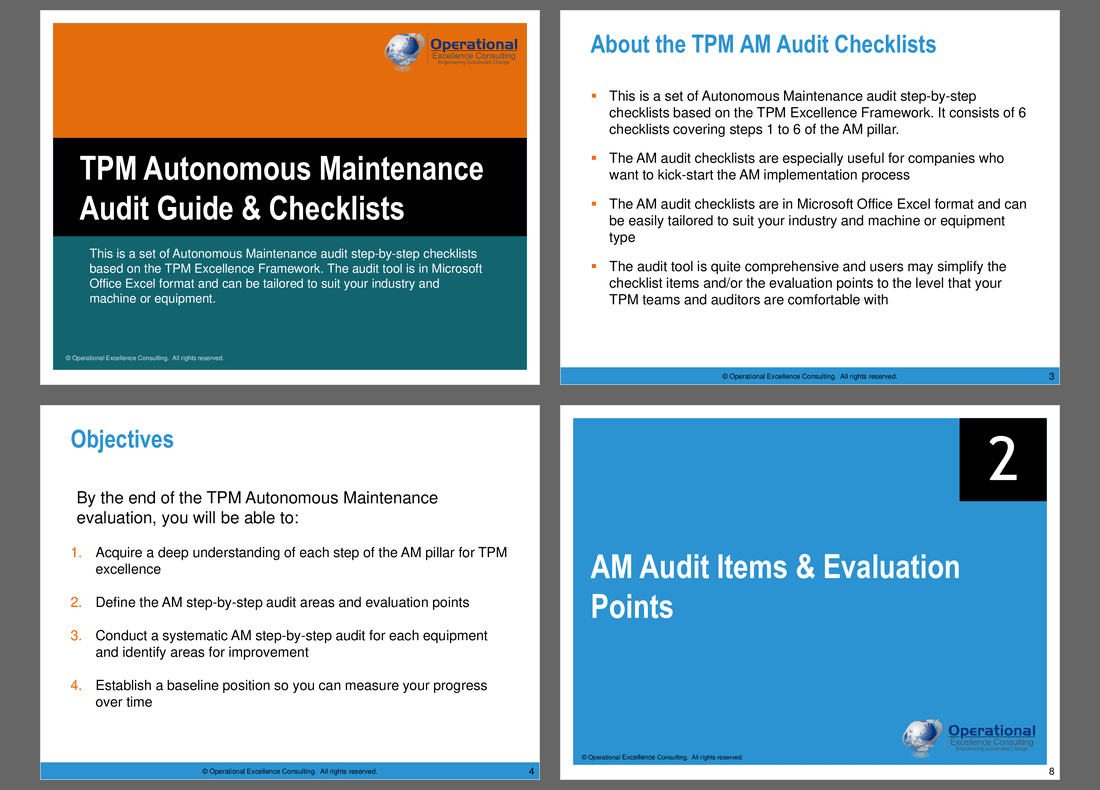
This TPM Autonomous Maintenance Audit Checklist Toolkit is a professional resource designed to help organizations implement and sustain equipment care standards. Developed by Operational Excellence Consulting, the package includes a detailed Excel workbook and a PowerPoint user guide to facilitate systematic evaluations across the seven steps of maintenance. The toolkit features ten specialized audit sheets, an AM Maturity Dashboard, and a log for tracking progress over time. These materials are specifically updated to align with the JIPM 2026 TPM Excellence Award criteria, serving as both a diagnostic tool and a source of formal evidence for award applications. By utilizing automated scoring and customizable rubrics, the toolkit enables teams to identify improvement areas and transition toward full self-management of their machinery.
WHAT YOU GET
1. OEC_TPM_AM_Audit_Toolkit.xlsx – 13 tabs:
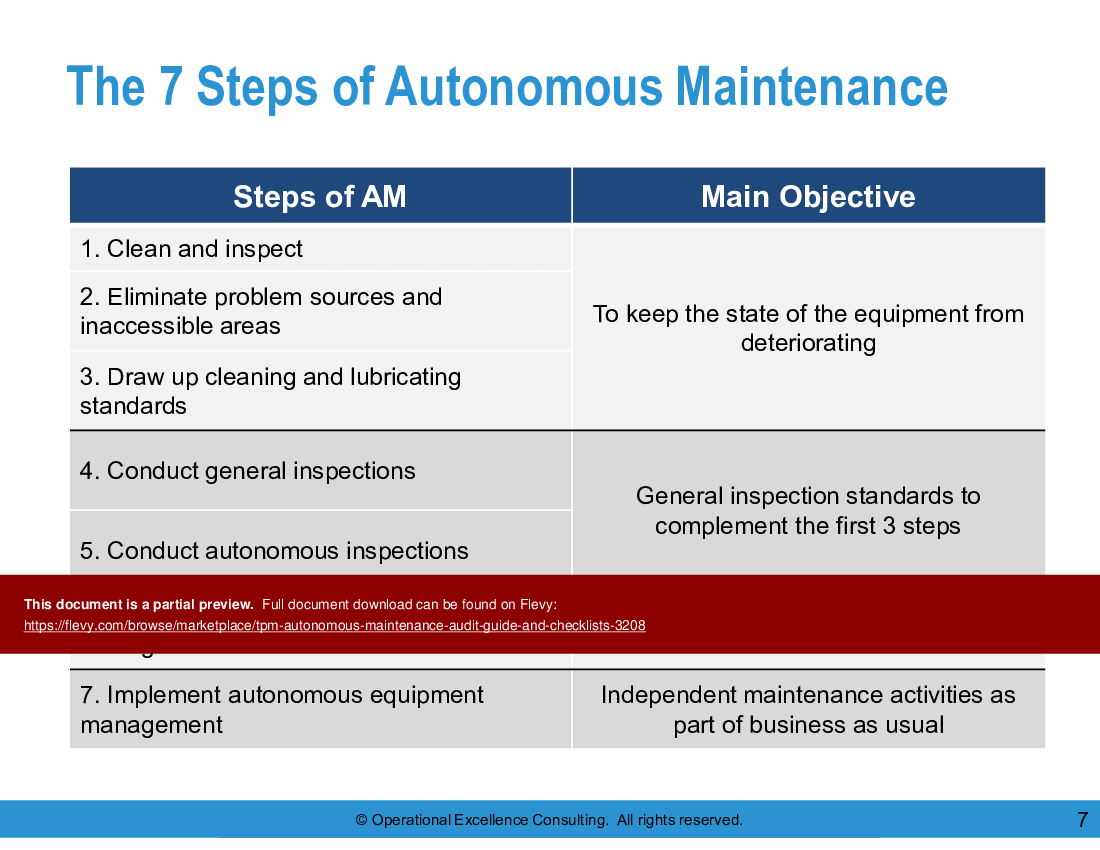
• How to Use – scoring legend, the 7 Steps of AM at a glance, and a JIPM 2026 alignment briefing
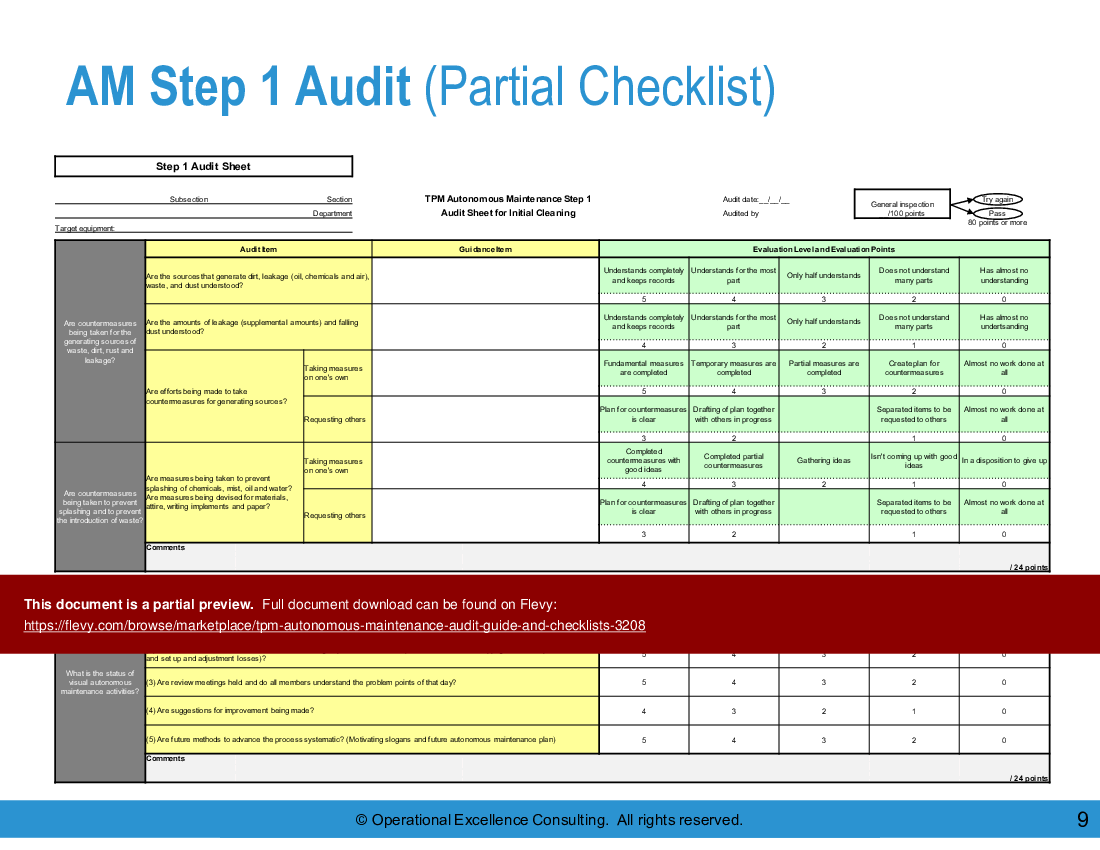
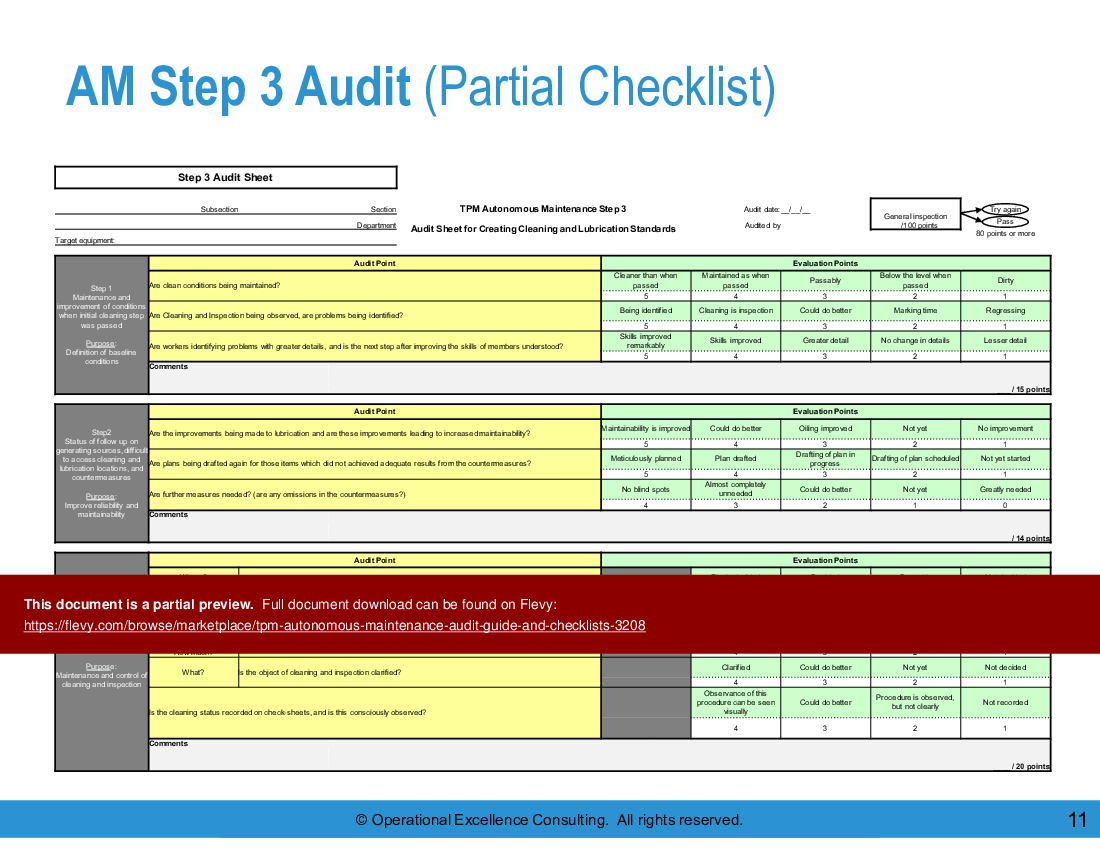
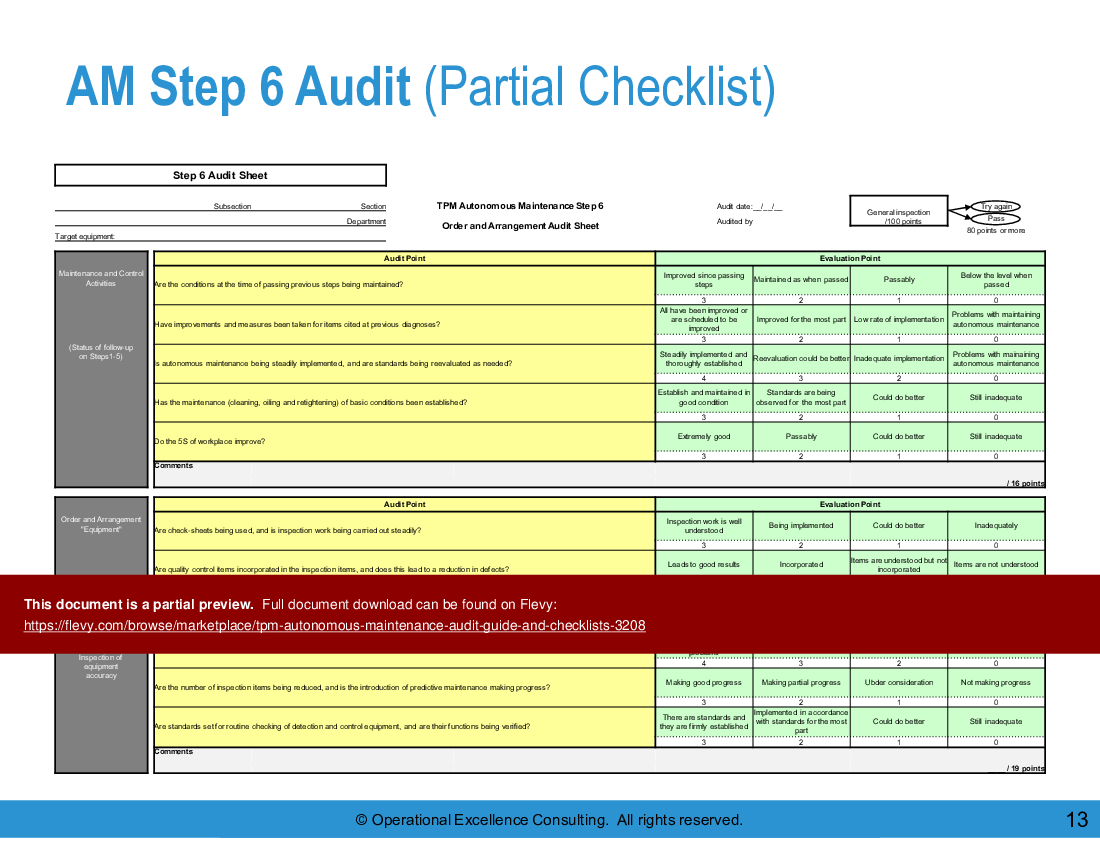
• Step 1 – 3, 5, 6 Audit Sheets – one sheet per AM step, each item scored against its own descriptive rubric (e.g. 5 = Cleaner than when passed … 1 = Dirty), with Section Subtotals and a Step Total that calculates automatically
• Step 4-1 to 4-5 Audit Sheets – General Inspection broken out by equipment domain (Lubrication, Hydraulic & Pneumatic, Drive Systems, Electrical, Nuts & Bolts), with a readiness gate and a three-tier sign-off (Autonomous self-audit / Section Manager / Senior Executive)
• AM Maturity Dashboard – every step's score, % and PASS/RETRY status in one view, with a live radar chart and a built-in JIPM eligibility check
• Audit Log – a running history of every audit conducted, ready for trend tracking over time
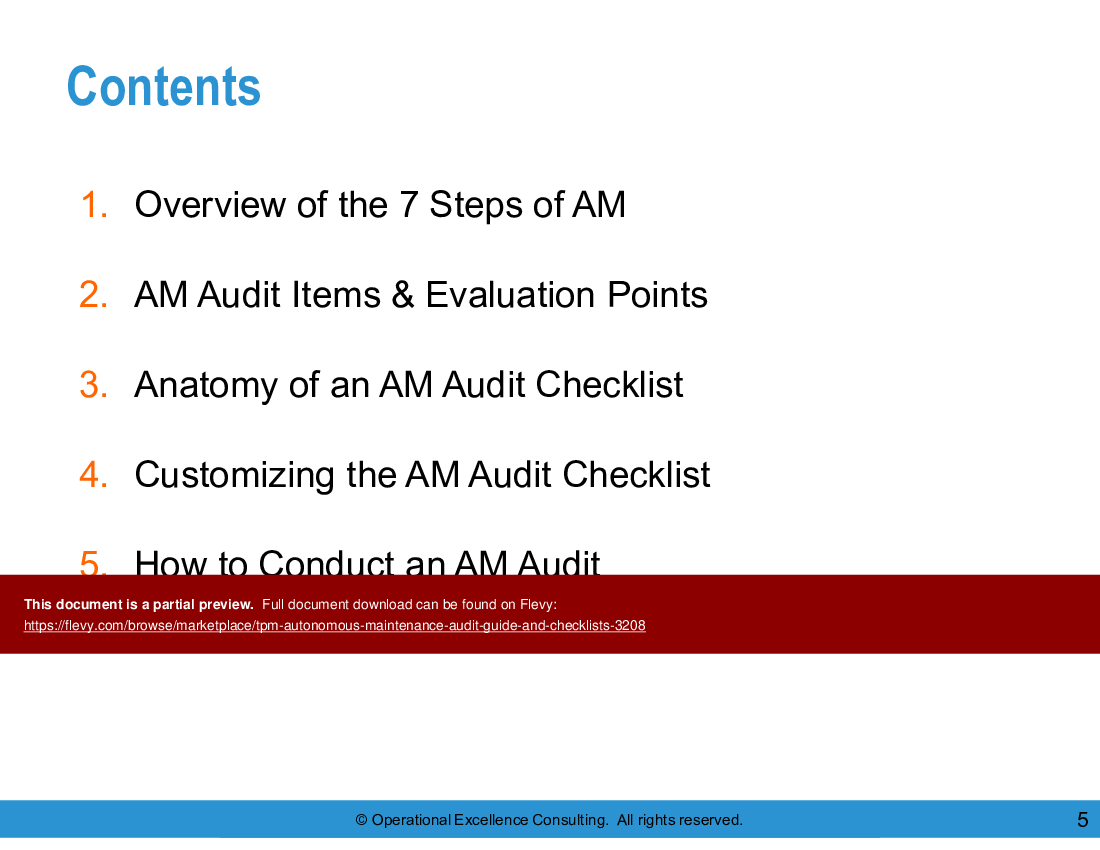
2. OEC_TPM_AM_Audit_Guide.pptx – a 25-slide guide covering the 7 Steps of AM, how the checklists are aligned to JIPM's 2026 Award criteria, the anatomy of an audit sheet, how to conduct an audit (solo or as a team), and how to customize the checklists (the ECRS method) for your own equipment and industry.
Every audit item carries a dropdown score – auditors pick the descriptor that matches what they observed, and the sheet totals itself. No manual arithmetic, no version drift between auditors.
WHY THIS TOOLKIT
• Built for the real audit, not just the paperwork. Every checklist item comes with a plain-language rubric (what "Bad" vs "Good" actually looks like on the floor), not just a blank Yes/No box.
• Covers all 7 Steps, including the tricky ones. Step 4's five equipment-domain checklists and three-tier sign-off are notoriously hard to build from scratch – they're done for you.
• Aligned to JIPM's 2026 Award criteria. The Dashboard flags the exact eligibility condition JIPM checks first: Step 3 complete, Step 4 active.
• Fully editable. Add, remove or reweight audit items – the totals and dashboard recalculate automatically. Use the ECRS method in the guide to simplify for a plant that's new to TPM.
WHO IT'S FOR
• TPM/AM pillar leaders and facilitators kick-starting or re-energizing Autonomous Maintenance
• Plant managers and section heads preparing evidence for a JIPM TPM Excellence Award application
• Maintenance and reliability engineers standardizing AM audits across multiple lines or plants
• Lean/OpEx consultants who need a credible, ready-to-deploy AM audit tool for client engagements
FREQUENTLY ASKED QUESTIONS (FAQ)
Do I need Steps 1–7 audited every time? No – audit whichever step your line is currently working through. The AM Maturity Dashboard will show you the full profile once several steps have been scored.
Why does Step 4 have five separate sheets? JIPM's General Inspection step covers distinct equipment domains (lubrication, hydraulics/pneumatics, drive systems, electrical, fasteners) that need different site-audit checklists. Categories 1, 2, 3 and 5 are shared across all five; only the Site Audit section changes.
What happened to Step 7? JIPM doesn't require a separate Step 7 sheet. Keep re-using the Step 6 sheet – Step 7 (Full Self-Management) is confirmed once your score is sustained at 80%+ across repeated audits.
Can I change the scoring scale or the audit items? Yes. The workbook is fully editable – add, remove or reword items with the ECRS approach covered in the guide, and every total, subtotal and dashboard figure recalculates from whatever items remain.
Does this replace JIPM's own Self-Checklist? No – it's a working-level audit tool that builds the operational discipline and evidence trail JIPM's Self-Checklist and assessors look for. Use it alongside, not instead of, JIPM's official award documentation.
What software do I need? Microsoft Excel and PowerPoint (2016 or later recommended). The workbook uses standard formulas and dropdown data validation – no macros, no add-ins.
About Operational Excellence Consulting
Operational Excellence Consulting (OEC) is an elite Singapore-based management training and consulting firm specializing in Lean Thinking, Total Productive Maintenance (TPM), Total Quality Management, and Six Sigma. This identical toolkit represents the precise, battle-tested templates OEC's consultants deploy during formal corporate client engagements across Asia to build lasting continuous improvement capabilities.
Got a question about the product? Email us at support@flevy.com or ask the author directly by using the "Ask the Author a Question" form. If you cannot view the preview above this document description, go here to view the large preview instead.
TOPIC FAQ
What activities are typically included in an Autonomous Maintenance (AM) program?
Autonomous Maintenance programs engage operators in routine equipment care such as daily inspections, lubrication, parts replacement, simple repairs, abnormality detection, and precision checks. These operator-led tasks form the core AM activities and are explicitly listed as 6 typical activities in the AM audit guide.How does the AM pillar structure its steps and what does the audit kit cover?
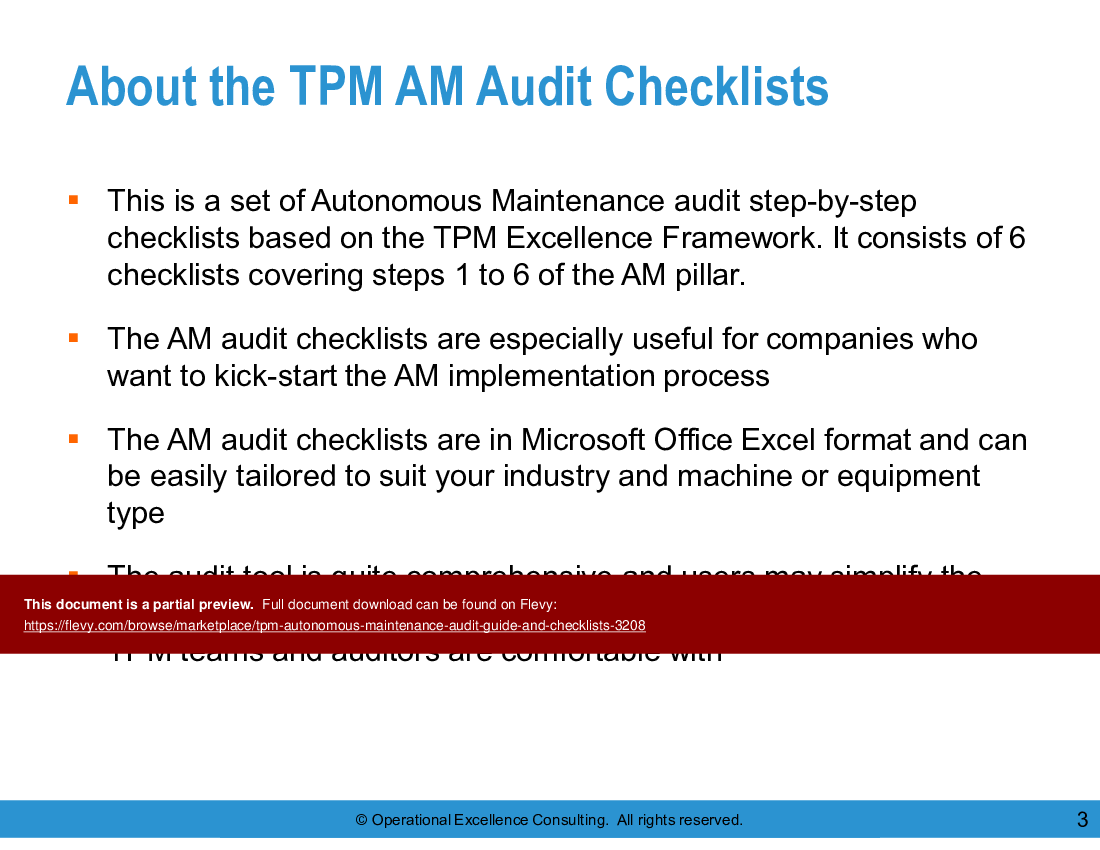
The AM pillar is organized into 7 steps that guide maturity progression; the TPM Autonomous Maintenance Audit Guide & Checklists provides an overview of all 7 steps while supplying 6 Excel audit checklists that cover AM steps 1–6.What are the basic actions to conduct an AM audit on equipment?
Conducting an AM audit involves using defined audit items and evaluation points to assess operator practices, identify knowledge or skills gaps, document equipment weaknesses, and establish a baseline position for progress measurement. The guide details how to perform these systematic audits and set a baseline position.What should I look for when choosing an AM audit checklist or template?
Look for checklists that map to AM steps, provide clear audit items and evaluation points, can be customized to specific equipment, and are provided in editable formats. The TPM Autonomous Maintenance Audit Guide & Checklists supplies editable Excel checklists tied to the TPM Excellence Framework and customization guidance, including 6 checklists.How can I adapt AM audit checklists to a specific machine or industry?
Adaptation involves tailoring audit items and evaluation points to machine components, simplifying or consolidating items to match operational needs, and applying the included instructions for customization. The product includes detailed instructions and editable Excel checklists to align AM audit items with equipment and industry requirements.If I’m starting AM from scratch, which checklist should I use first?
Begin with the AM Step 1 Audit Checklist focused on Initial Cleaning to establish basic operator practices and machine cleanliness. The TPM Autonomous Maintenance Audit Guide & Checklists provides this Step 1 audit sheet and guidance on progressing through subsequent steps using the Excel checklists.What resources or team involvement do AM audits typically require at a minimum?
AM audits require operator participation, a coordinator to run audits and record findings, and time to customize and apply checklists; they are designed to expose operator knowledge and equipment maintenance capability. The approach relies on 6 step-by-step AM audit checklists to structure the work.How do AM audits measure progress and what outcomes should I expect?
AM audits measure progress by scoring teams against defined AM audit items and evaluation points, exposing weaknesses in operator skills and equipment maintenance, and determining readiness to move to the next maturity level. The process establishes a measurable baseline position for ongoing tracking.Source: Best Practices in TPM, Jishu Hozen Excel: TPM Autonomous Maintenance Audit Guide & Checklists Excel (XLSX) Spreadsheet, Operational Excellence Consulting
ABOUT THE AUTHOR

Operational Excellence Consulting, founded in 2009 by Allan Ung, draws from extensive experience at Microsoft, IBM, and Underwriters Laboratories (UL). We specialize in strategy deployment, customer experience design, and operational excellence, applying Design Thinking, Lean, and Systems Thinking to maximize customer value and minimize waste.
Our
... [read more]
Ask the Author a Question
You must be logged in to contact the author.




























