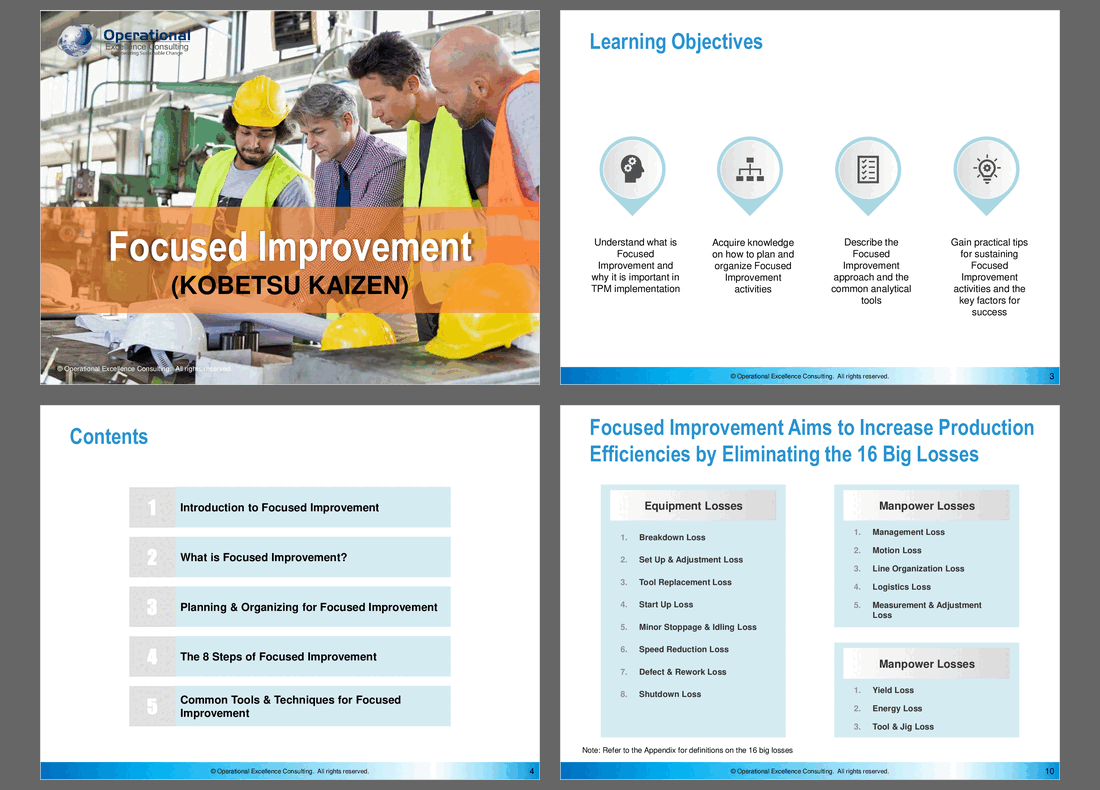

Focused Improvement is one of the key pillars of TPM. Also known as Kobetsu Kaizen in Japanese, this presentation provides shopfloor TPM teams, including production workers, maintenance technicians, engineers, and managers a strong framework for further improving equipment performance as well as eliminating the 16 big losses.

As distinguished from Autonomous Maintenance, in which the main goal is to restore basic conditions to prevent accelerated deterioration, Focused Improvement looks at weaknesses that everyone previously thought were unavoidable.
Developed by our JIPM-certified TPM Instructor, this training presentation teaches you the knowledge and skills for planning, organizing and implementing Focused Improvement activities in the workplace. It includes the step by step process and the common analytical tools and techniques for Focused Improvement.
|||||||||||||||||||||||||||||||||||||||||||||||||||||||||||||||||||||||||||||||||||||||||||||||||||||||||||||||||||||||||||||||||||||||||||||||||||||||
This training package includes:
1. Focused Improvement training presentation (PowerPoint format)
2. Focused Improvement poster (PDF format, in color and monochrome, printable in A3 size)
|||||||||||||||||||||||||||||||||||||||||||||||||||||||||||||||||||||||||||||||||||||||||||||||||||||||||||||||||||||||||||||||||||||||||||||||||||||||
LEARNING OBJECTIVES
1. Understand what is Focused Improvement and why it is important in TPM implementation.
2. Acquire knowledge on how to plan and organize Focused Improvement activities.
3. Describe the Focused Improvement approach and the common analytical tools.
4. Gain practical tips for sustaining Focused Improvement activities and the key factors for success.
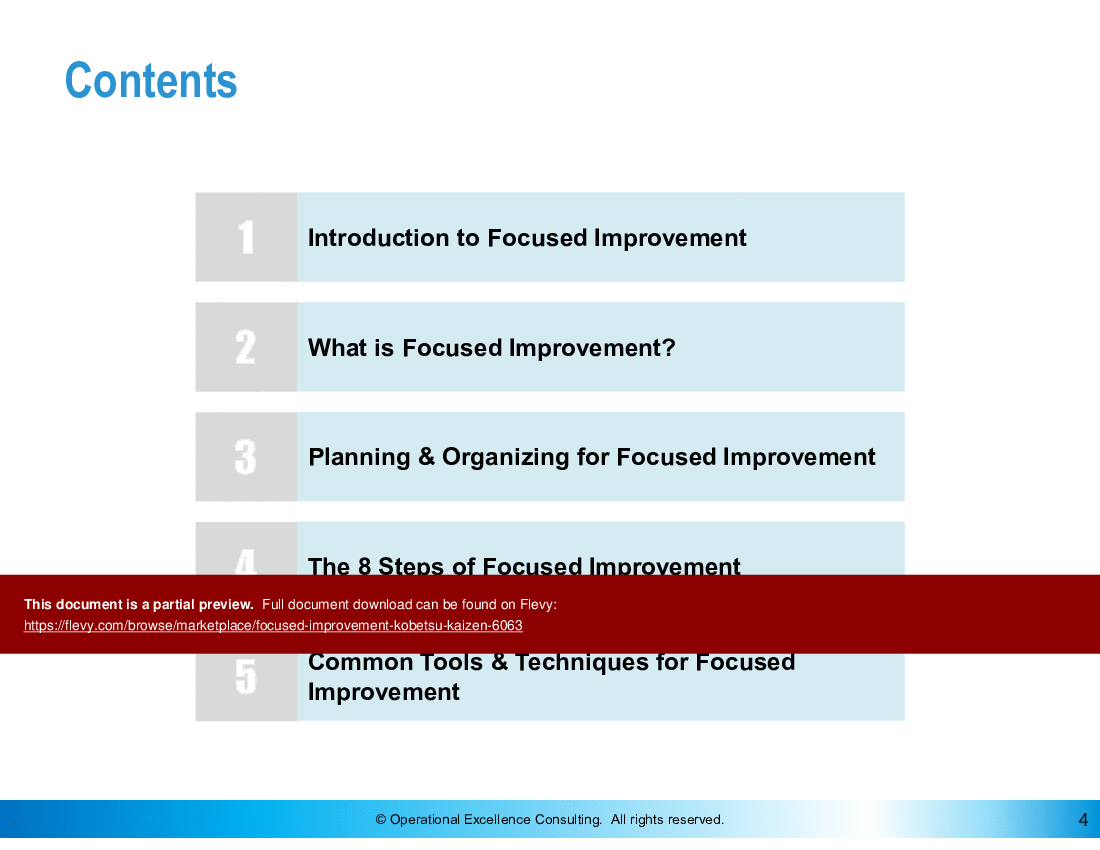
CONTENTS
1. Introduction to Focused Improvement
• Focused Improvement is One of the Key TPM Pillars
• The Two Abilities that Companies Require
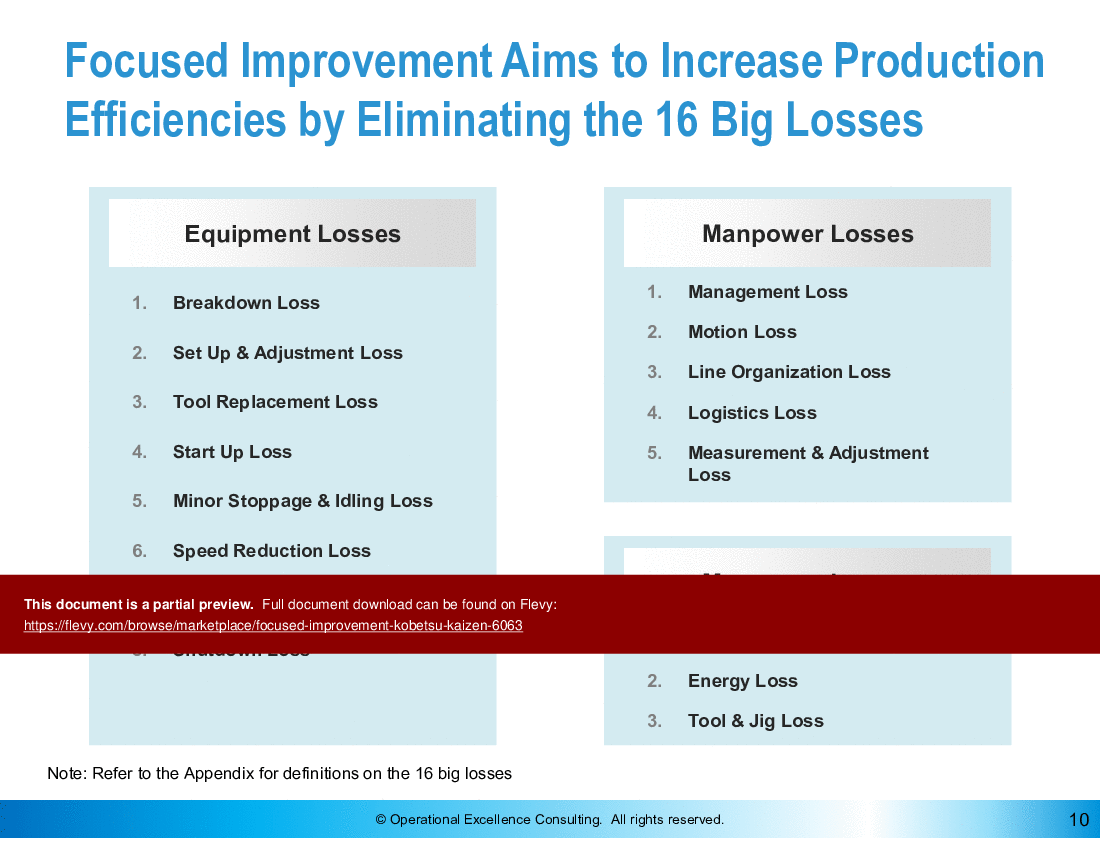
• Focused Improvement Aims to Increase Production Efficiencies by Eliminating the 16 Big Losses
• Difference Between Autonomous Maintenance & Focused Improvement
• Focused Improvement Activities Cut Across All Job Functions
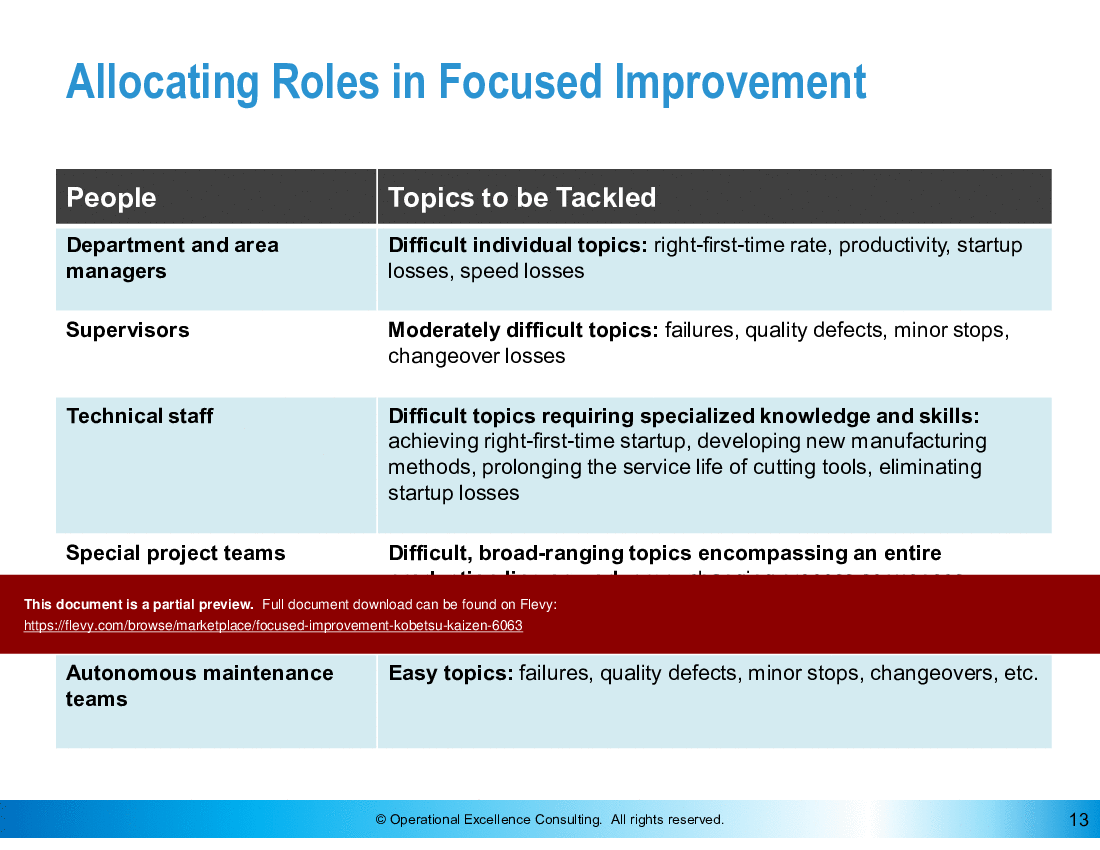
• Allocating Roles In Focused Improvement
• Focused Improvement is a Cross-Functional Management Activity
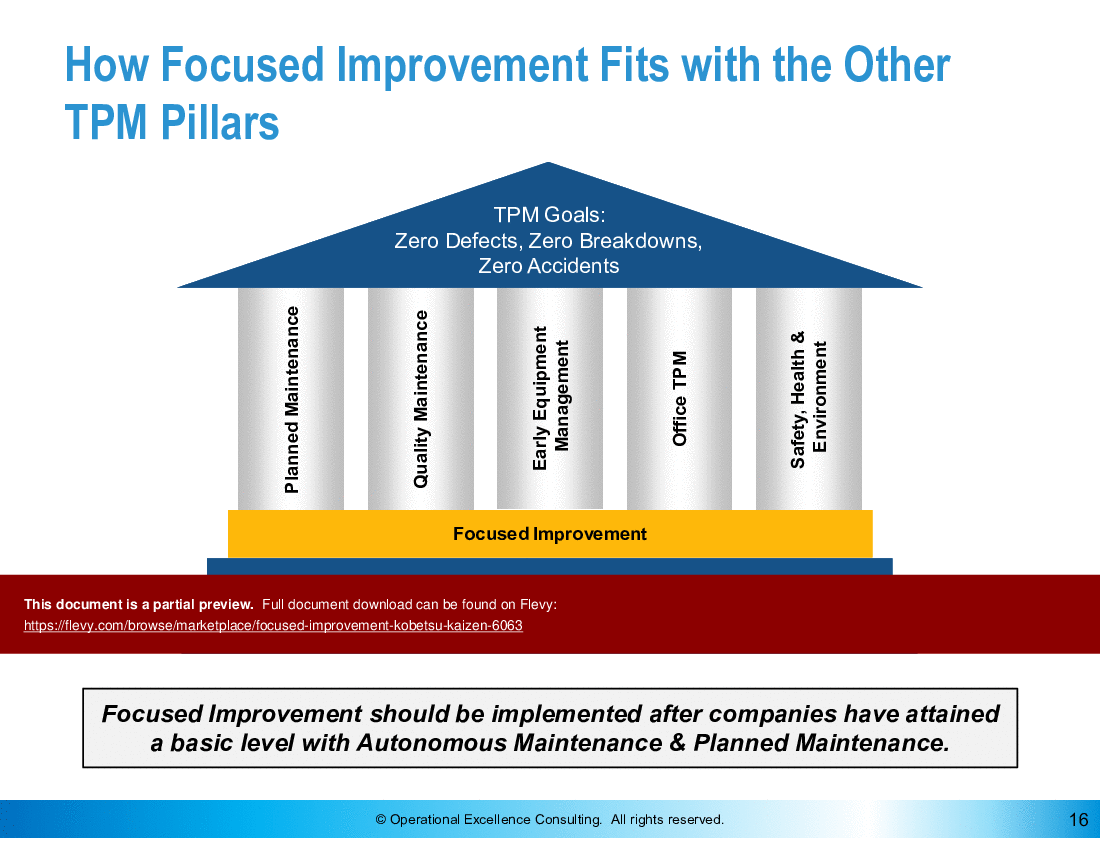
• How Focused Improvement Fits with the Other TPM Pillars
• Focused Improvement Builds on a Strong Foundation of Autonomous Maintenance
• Gains are Consolidated through Standardization
2. What is Focused Improvement?
• The Meanings of "Focused" and "Improvement"
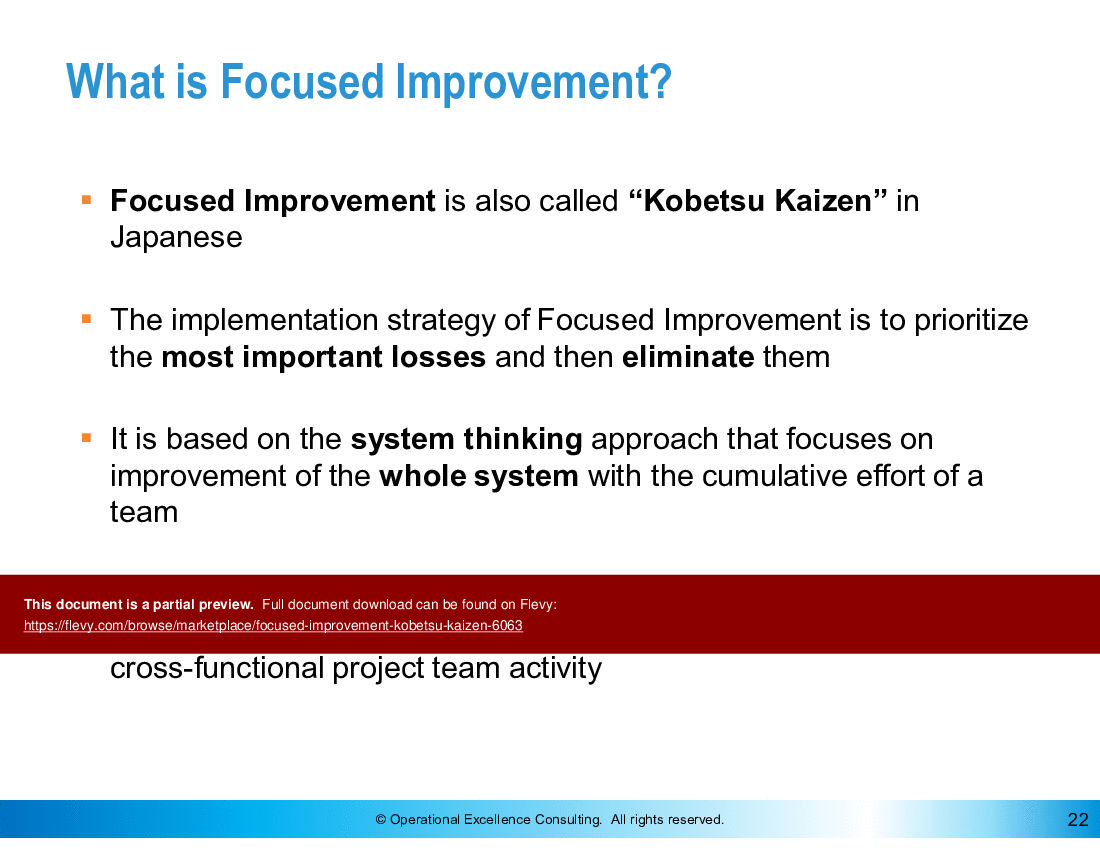
• What is Focused Improvement?
• Objective of Focused Improvement
• Benefits of Focused Improvement
• Focused Improvement – Target
• Factors Affecting Product Quality
• Examples of Focused Improvement Events
• Equipment Losses & OEE
• Improving OEE through Kaizen Event
• Kaizen Toolbox for TPM / Focused Improvement Problem Solving
3. Planning and Organizing for Focused Improvement
• TPM Implementation Structure with Focused Improvement
• Different Levels of Overlapping Teams
• Analytical Tools & Techniques for Reducing the 16 Big Losses
• Steps for Dealing with Speed Loss
• Approaches for Eliminating Minor Stoppages
• Ideas for Reducing Chronic Defects
• Getting Started: How to Implement Focused Improvement
4. The Eight Steps of Focused Improvement
• Step 1: Set the Improvement Topic
• Step 2: Understand the Situation
• Step 3: Expose & Eliminate Abnormalities
• Step 4: Analyze Causes
• Step 5: Plan Improvements
• Step 6: Implement Improvements
• Step 7: Check Results
• Step 8: Consolidate Gains
5. Common Analytical Tools and Techniques
• Cause and Effect Diagram
• 5 Whys Analysis
• P-M Analysis
• Quick Changeover (SMED)
• How to Sustain TPM & Focused Improvement Activities
• Critical Success Factors
*Note: The Japan Institute of Plant Maintenance (JIPM) is a nonprofit research, consulting, and educational organization that helps companies increase organizational efficiency and profitability through improved maintenance of manufacturing equipment, processes, and facilities. The JIPM is the sponsoring organization for the TPM Excellence Award, awarded annually to recognize excellence in company-wide maintenance systems. Based in Japan, JIPM is the innovator of methodologies that have been implemented around the world.
This comprehensive guide also covers the allocation of roles within Focused Improvement teams and provides practical examples of improvement events. The PPT outlines the eight steps of Focused Improvement, ensuring a structured approach to tackling inefficiencies.
Got a question about the product? Email us at support@flevy.com or ask the author directly by using the "Ask the Author a Question" form. If you cannot view the preview above this document description, go here to view the large preview instead.
Executive Summary
The "TPM: Focused Improvement (Kobetsu Kaizen)" presentation is a vital resource for organizations aiming to enhance their Total Productive Maintenance (TPM) practices. Developed by a JIPM-certified TPM Instructor, this deck provides a structured approach to implementing focused improvement initiatives that target specific losses in equipment performance. By utilizing proven methodologies and analytical tools, this presentation empowers teams to systematically identify and eliminate inefficiencies, ultimately driving operational excellence and achieving goals such as zero defects and reduced manufacturing costs.
Who This Is For and When to Use
• TPM Managers and Coordinators responsible for implementing TPM strategies
• Production Supervisors and Team Leaders overseeing operational efficiency
• Quality Assurance Professionals focused on defect reduction
• Continuous Improvement Teams aiming to enhance equipment effectiveness
Best-fit moments to use this deck:
• During TPM training sessions for new employees
• When initiating focused improvement projects within a production line
• For workshops aimed at analyzing and addressing specific equipment losses
• In strategic planning meetings to align TPM goals with organizational objectives
Learning Objectives
• Understand what focused improvement is and its significance in TPM implementation
• Describe the focused improvement approach and common analytical tools
• Acquire knowledge on how to plan and organize focused improvement activities
• Gain practical tips for sustaining focused improvement efforts and identifying key success factors
Table of Contents
• Introduction to Focused Improvement (page 1)
• What is Focused Improvement? (page 2)
• Planning & Organizing for Focused Improvement (page 3)
• The 8 Steps of Focused Improvement (page 4)
• Common Tools & Techniques for Focused Improvement (page 5)
Primary Topics Covered
• Focused Improvement Overview - Focused improvement, also known as Kobetsu Kaizen, is a systematic approach to eliminating specific losses in equipment performance through targeted projects.
• The 16 Big Losses - Identifies and categorizes losses that impede overall equipment effectiveness (OEE), including breakdowns, setup adjustments, and quality defects.
• TPM Excellence Framework - Focused improvement is one of the key pillars of the TPM framework, which also includes autonomous maintenance and planned maintenance.
• Cross-Functional Management - Focused improvement activities involve collaboration across various job functions, ensuring comprehensive engagement from all levels of the organization.
• Analytical Tools - Utilizes tools such as the 5 Whys, Cause-and-Effect Diagrams, and P-M Analysis to systematically address and eliminate root causes of inefficiencies.
• Implementation Steps - Outlines a structured 8-step process for executing focused improvement projects, ensuring systematic identification and resolution of issues.
Deliverables, Templates, and Tools
• Project planning templates for focused improvement initiatives
• Standard operating procedures (SOPs) for implementing focused improvement activities
• Checklists for monitoring equipment performance and maintenance
• Gantt charts for visualizing project timelines and milestones
• Data collection sheets for tracking performance metrics pre- and post-implementation
Slide Highlights
• Overview of the TPM Excellence Framework illustrating the interconnections between various TPM pillars
• Visual representation of the 16 Big Losses and their impact on OEE
• Step-by-step breakdown of the 8 Steps of Focused Improvement, providing a clear roadmap for implementation
• Examples of successful focused improvement events showcasing practical applications of the methodology
Potential Workshop Agenda
Introduction to Focused Improvement (30 minutes)
• Overview of focused improvement principles
• Discussion on the importance of eliminating the 16 Big Losses
Planning and Organizing for Focused Improvement (60 minutes)
• Identifying key topics for improvement
• Forming project teams and establishing roles
Implementing the 8 Steps of Focused Improvement (90 minutes)
• Detailed walkthrough of each step in the focused improvement process
• Group exercises to apply the steps to real-world scenarios
Customization Guidance
• Tailor the presentation to reflect specific organizational goals and objectives related to TPM
• Adjust the examples and case studies to align with the industry context of the audience
• Incorporate company-specific metrics and performance indicators for tracking progress
Secondary Topics Covered
• The role of autonomous maintenance in sustaining focused improvement gains
• Strategies for engaging employees in continuous improvement initiatives
• Best practices for measuring and reporting on OEE improvements
• Integration of focused improvement with lean manufacturing principles
Topic FAQ
Document FAQ
These are questions addressed within this presentation.
What is focused improvement?
Focused improvement, or Kobetsu Kaizen, is a targeted approach within TPM aimed at systematically eliminating specific losses that hinder equipment performance.
How does focused improvement relate to overall equipment effectiveness (OEE)?
Focused improvement directly addresses the 16 Big Losses that impact OEE, helping organizations achieve higher efficiency and productivity.
What tools are used in focused improvement?
Common tools include the 5 Whys, Cause-and-Effect Diagrams, and P-M Analysis, which help teams identify root causes of inefficiencies.
How can we sustain focused improvement efforts?
Sustaining focused improvement requires ongoing training, regular monitoring of performance metrics, and a culture of continuous improvement within the organization.
What are the key success factors for focused improvement?
Critical success factors include strong leadership support, employee engagement, clear communication of goals, and consistent application of improvement methodologies.
Glossary
• Focused Improvement - A systematic approach to eliminating specific losses in equipment performance.
• Kobetsu Kaizen - The Japanese term for focused improvement.
• Overall Equipment Effectiveness (OEE) - A metric used to measure the efficiency of manufacturing processes.
• 16 Big Losses - A classification of losses that impede OEE, including breakdowns and quality defects.
• 5 Whys - A root cause analysis tool that involves asking "why" multiple times to uncover the underlying cause of a problem.
• P-M Analysis - A systematic approach to identifying factors contributing to chronic problems in equipment performance.
• Standard Operating Procedure (SOP) - A set of written instructions detailing how to perform a specific task or process.
• Gantt Chart - A visual representation of a project schedule, showing tasks and their timelines.
• Continuous Improvement - An ongoing effort to improve products, services, or processes through incremental improvements.
• Lean Manufacturing - A production practice that considers the expenditure of resources in any aspect other than the direct creation of value for the end customer to be wasteful and thus a target for elimination.
• Autonomous Maintenance - A TPM practice where operators are trained to take care of their equipment to prevent deterioration.
• TPM Excellence Framework - A structured approach to achieving operational excellence through various TPM pillars.
Source: Best Practices in Kaizen, Organizational Focus PowerPoint Slides: TPM: Focused Improvement (Kobetsu Kaizen) PowerPoint (PPTX) Presentation Slide Deck, Operational Excellence Consulting
|
Receive our FREE presentation on Operational Excellence
This 50-slide presentation provides a high-level introduction to the 4 Building Blocks of Operational Excellence. Achieving OpEx requires the implementation of a Business Execution System that integrates these 4 building blocks. |