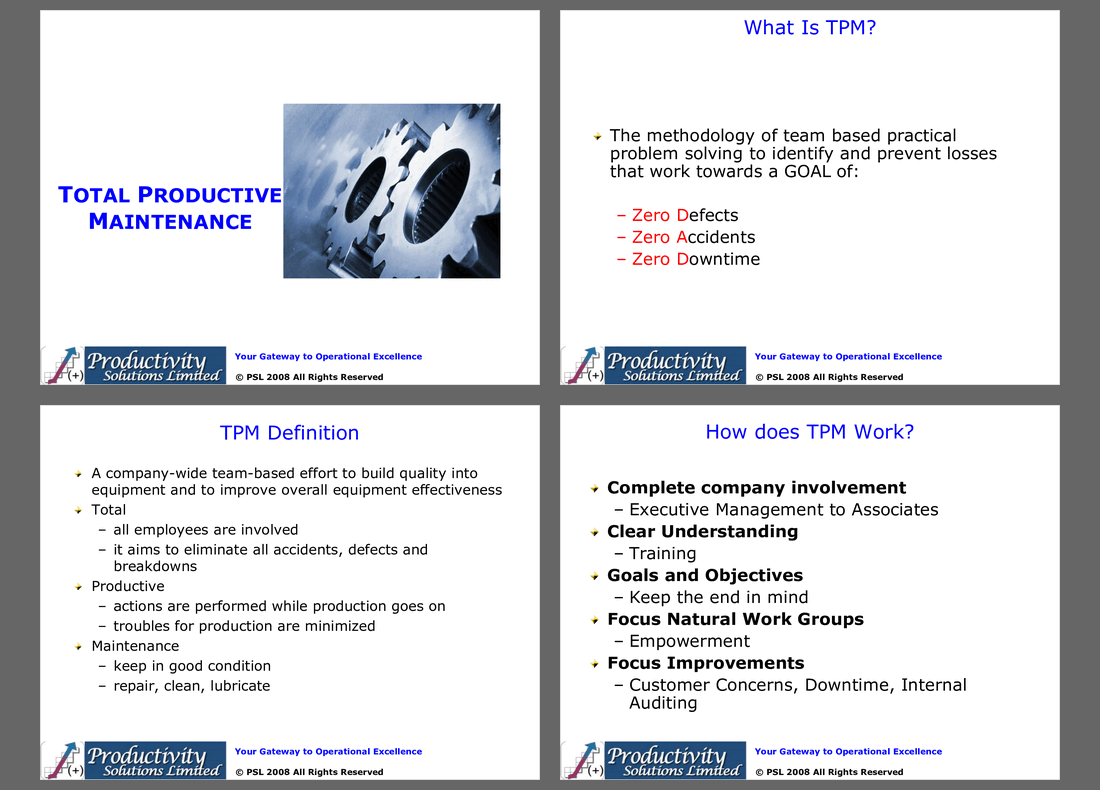

Total Productive Maintenance (TPM)   58-slide PPT PowerPoint presentation slide deck (PPT)
$39.00

Total Productive Maintenance (TPM) (58-slide PPT PowerPoint presentation slide deck (PPT)) Preview Image
Log in to unlock full preview.
Total Productive Maintenance (TPM) (58-slide PPT PowerPoint presentation slide deck (PPT)) Preview Image
Arrow   Click main image to view in full screen.

Total Productive Maintenance (TPM) (PowerPoint PPT Slide Deck)

PowerPoint (PPT) + Zip archive file (ZIP) 58 Slides

$39.00
This presentation is developed by a pioneer in Lean and certified LSS Master Black Belt who has trained over 5,000+ students globally, from Directors, CEOs, GMs, to shop floor staff. He's endorsed by CMI Consortium, NZTE, HERA, NZPICS, CBAFF.
Add to Cart


Immediate download
Fully editable PowerPoint
Free lifetime updates

BENEFITS OF THIS POWERPOINT DOCUMENT

  1. Improve your plant and equipment efficiency

LEAN PPT DESCRIPTION

Editor Summary 58-slide PowerPoint presentation with a supplemental ZIP, Total Productive Maintenance (TPM) delivers a practical TPM curriculum developed by a Lean pioneer and certified Lean Six Sigma Master Black Belt (trained 5,000+ students; endorsed by CMI Consortium, NZTE, HERA, NZPICS, CBAFF). Read more

This presentation discusses the following aspects:

1. Definition of TPM
2. Origins of TPM
3. Principles of TPM
4. 8 Major Pillars of TPM
5. Benefits of TPM
6. Maintenance Excellence Assessment Tools
7. OEE – Overall Equipment Effectiveness
8. TPM Implementation – 12 steps

Also included with this document is a bonus zip of 41 Lean documents (includes templates, case studies, articles, posters, charts, and more).

This document delves into the core elements of Total Productive Maintenance (TPM), emphasizing the importance of a company-wide, team-based approach to enhance equipment effectiveness. It outlines the critical principles of TPM, such as increasing Overall Equipment Effectiveness (OEE) and improving existing maintenance systems. The presentation also highlights the role of operators as condition monitors and the necessity of cross-functional teamwork and training to elevate maintenance skills.

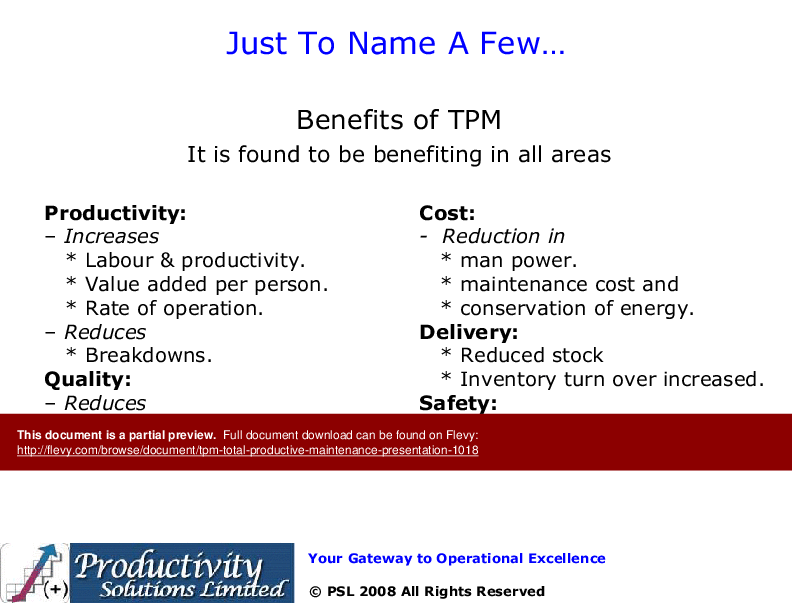
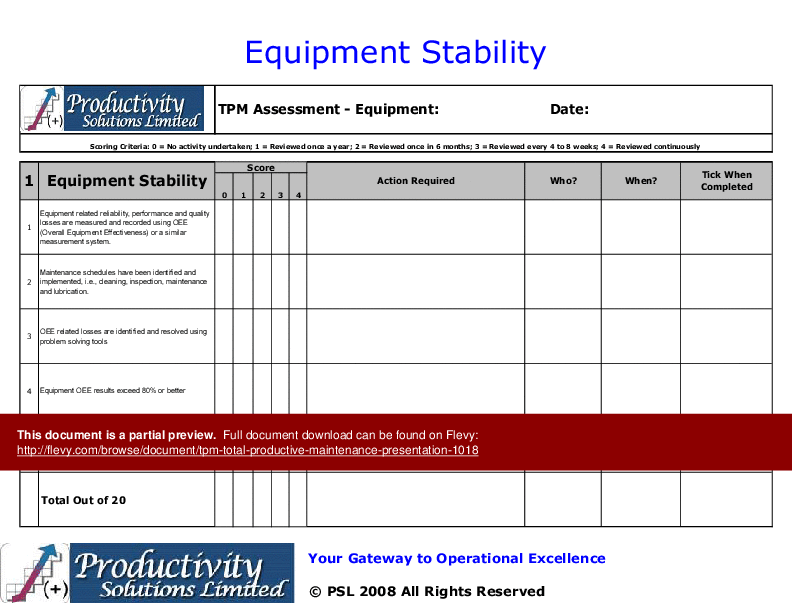
The benefits of TPM are thoroughly examined, showcasing its impact on productivity, cost reduction, delivery, and safety. The document provides a detailed assessment tool for equipment stability, ensuring that maintenance schedules are identified and implemented. It also includes a comprehensive review process to identify findings, required actions, and additional observations, fostering continuous improvement.

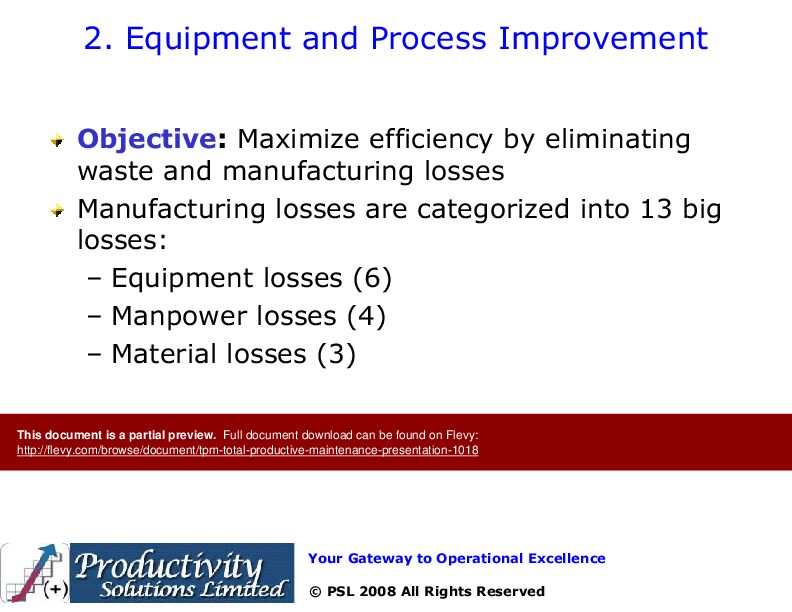
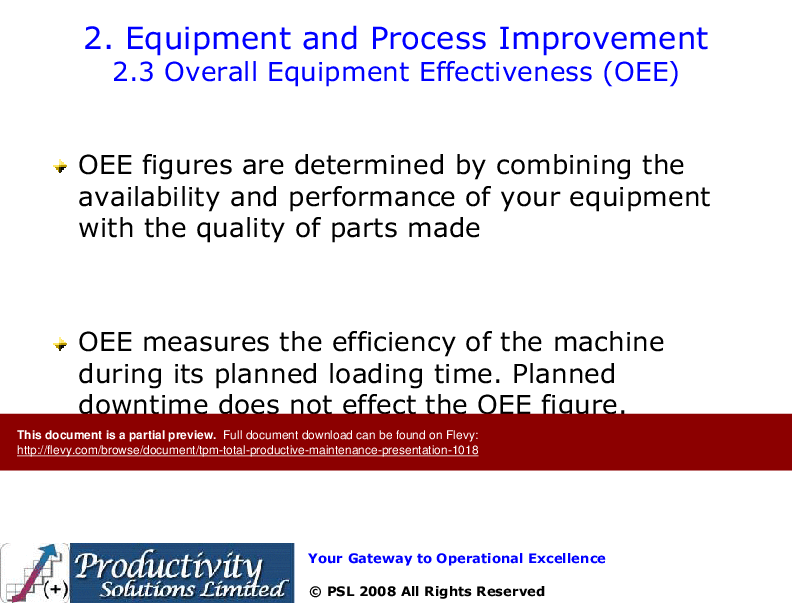
Key sections of the presentation focus on maximizing efficiency by eliminating waste and categorizing manufacturing losses. The document explains how OEE figures are determined and the significance of planned downtime in performance measures. It also covers the establishment of preventative and predictive maintenance systems, emphasizing the achievement of the natural life cycle of machine elements. The inclusion of administrative and support departments in the TPM process is also addressed, highlighting the importance of streamlining information flow.

Got a question about the product? Email us at support@flevy.com or ask the author directly by using the "Ask the Author a Question" form. If you cannot view the preview above this document description, go here to view the large preview instead.

MARCUS OVERVIEW

This synopsis was written by Marcus [?] based on the analysis of the full 58-slide presentation.


Executive Summary
The Total Productive Maintenance (TPM) presentation is a comprehensive guide designed to enhance maintenance operations and drive organizational excellence. Developed by a Lean pioneer and certified LSS Master Black Belt, this presentation equips teams with the knowledge to implement TPM principles effectively. Buyers will learn to foster a culture of proactive maintenance, aiming for zero defects, zero accidents, and zero downtime. The deck includes practical tools, frameworks, and case studies to facilitate the adoption of TPM across all levels of the organization.

Who This Is For and When to Use
•  Maintenance Managers and Supervisors focused on improving equipment reliability
•  Operations Executives seeking to enhance overall equipment effectiveness (OEE)
•  Quality Assurance Teams aiming to reduce defects and improve product quality
•  Training and Development Leaders responsible for upskilling staff on maintenance practices

Best-fit moments to use this deck:
•  During TPM training sessions for new and existing staff
•  When initiating a TPM implementation project
•  For conducting assessments of current maintenance practices

Learning Objectives
•  Define Total Productive Maintenance and its core principles
•  Build a proactive maintenance culture across all organizational levels
•  Establish metrics for measuring Overall Equipment Effectiveness (OEE)
•  Identify and eliminate equipment-related losses through structured problem-solving
•  Implement training programs to enhance operator involvement in maintenance
•  Foster cross-functional teamwork to support continuous improvement initiatives

Table of Contents
•  What Is TPM? (page 3)
•  TPM Principles (page 5)
•  Eight Major Pillars of TPM (page 8)
•  Benefits of TPM (page 10)
•  TPM Self-Assessment (page 12)
•  Equipment Stability Assessment (page 15)
•  Excellence in Maintenance Assessment (page 18)
•  Optimization of Performance Assessment (page 21)
•  TPM Implementation Steps (page 25)
•  Benefits of TPM (page 30)
•  OEE Performance Tracker (page 32)

Primary Topics Covered
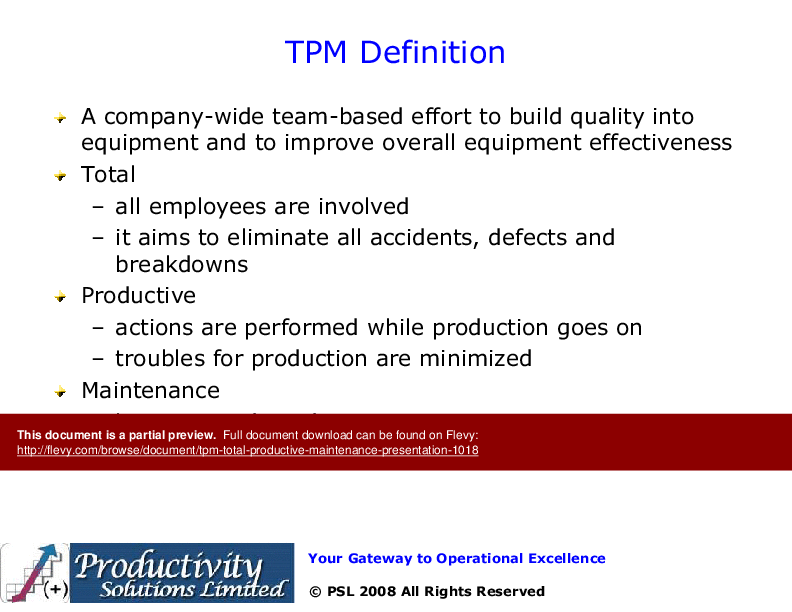
•  TPM Definition - A company-wide initiative that involves all employees in maintaining equipment to improve overall effectiveness and eliminate defects, accidents, and downtime.
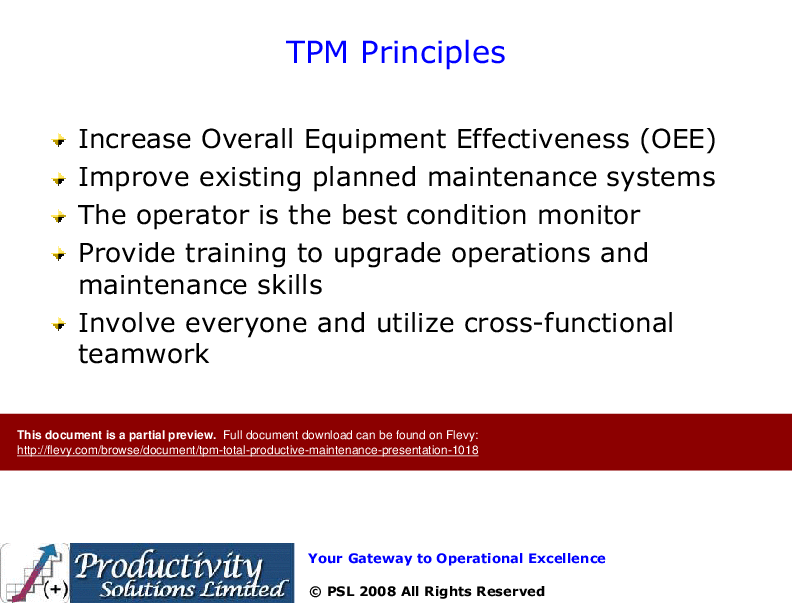
•  TPM Principles - Key principles include increasing OEE, enhancing existing maintenance systems, and promoting operator involvement in maintenance tasks.
•  Eight Major Pillars of TPM - Focus areas include Autonomous Maintenance, Planned Maintenance, Equipment and Process Improvement, and Safety Management.
•  TPM Self-Assessment - Tools for evaluating current TPM practices and identifying areas for improvement.
•  Implementation Steps - A structured approach to introducing TPM, including preparation, training, and establishing maintenance programs.
•  OEE Measurement - Framework for calculating OEE based on availability, performance, and quality yield.

Deliverables, Templates, and Tools
•  TPM Self-Assessment templates for evaluating current practices
•  Equipment Stability Assessment forms to track maintenance effectiveness
•  Excellence in Maintenance Assessment tools to gauge operational performance
•  Optimization of Performance Assessment checklists for continuous improvement
•  OEE Performance Tracker for monitoring equipment effectiveness over time
•  Training materials for operator involvement in maintenance tasks

Slide Highlights
•  Overview of TPM principles emphasizing zero defects, accidents, and downtime
•  Visual representation of the Eight Major Pillars of TPM
•  Self-assessment tools to evaluate TPM implementation progress
•  Detailed breakdown of OEE calculation methods and metrics
•  Step-by-step guide for implementing TPM across the organization

Potential Workshop Agenda
TPM Introduction Session (90 minutes)
•  Overview of Total Productive Maintenance principles
•  Discussion on the importance of OEE and its impact on operations
•  Introduction to self-assessment tools for TPM evaluation

TPM Implementation Planning (120 minutes)
•  Develop a master plan for TPM implementation
•  Identify key stakeholders and their roles in the TPM process
•  Set measurable goals and timelines for TPM initiatives

TPM Training and Development (90 minutes)
•  Conduct training sessions on autonomous maintenance practices
•  Discuss the importance of cross-functional teamwork in TPM
•  Review case studies of successful TPM implementations

Customization Guidance
•  Tailor the self-assessment tools to reflect specific organizational metrics and goals
•  Adjust training materials to align with the skill levels of your workforce
•  Incorporate company-specific examples and case studies into the presentation
•  Modify the implementation plan to fit the unique operational context of your organization

Secondary Topics Covered
•  The role of leadership in fostering a TPM culture
•  Strategies for engaging employees at all levels in maintenance practices
•  Techniques for measuring and analyzing equipment performance
•  Importance of safety and environmental management in TPM
•  Continuous improvement methodologies integrated with TPM

Topic FAQ

What are the core principles and pillars of Total Productive Maintenance?

Total Productive Maintenance is a company-wide, team-based approach focused on eliminating defects, accidents, and downtime by increasing Overall Equipment Effectiveness and promoting operator involvement. Its structure centers on the Eight Major Pillars of TPM, which include Autonomous Maintenance, Planned Maintenance, Equipment & Process Improvement, and Safety Management, totaling eight pillars.

How is Overall Equipment Effectiveness (OEE) calculated and what does it measure?

OEE measures manufacturing efficiency by combining 3 components: availability (uptime), performance (speed vs. ideal), and quality yield (good units produced). The TPM materials in this category provide a framework and calculation method for OEE based on those 3 components to track equipment effectiveness over time.

How can I evaluate my current maintenance practices before launching TPM?

Start with structured self-assessments to identify gaps: TPM Self‑Assessment templates, Equipment Stability Assessment forms, and Excellence in Maintenance Assessment tools help diagnose issues and set priorities. The Total Productive Maintenance (TPM) deck includes these assessment templates to guide evaluation and identify improvement areas.

What should I look for when purchasing a TPM training deck or toolkit?

Prioritize materials that include diagnosis tools, measurable metrics, implementation steps, and training modules: TPM Self‑Assessment templates, an OEE Performance Tracker, clear implementation steps, and operator training content. Author credentials—such as a Lean pioneer and certified LSS Master Black Belt—also indicate practitioner experience with a 12-step implementation approach.

Are templates and case studies worth the cost when buying TPM materials?

Templates and case studies reduce setup time and provide applied examples for training and rollout. Useful inclusions are TPM Self‑Assessment forms, Equipment Stability Assessment templates, and an OEE Performance Tracker, plus supplemental learning resources; this product bundle also includes a bonus ZIP of 41 Lean documents to support implementation.

After a merger we’re experiencing frequent downtime—what TPM components should we apply first?

Focus initially on Equipment Stability Assessment to identify root causes, use the OEE Performance Tracker to quantify losses, and implement Planned Maintenance and Autonomous Maintenance practices to stabilize assets. These diagnostic and corrective steps are part of a staged TPM implementation approach using assessment tools and OEE measurement.

How can I involve shop‑floor operators in maintenance without overburdening them?

Train operators in autonomous maintenance and condition monitoring so routine tasks and basic inspections become part of daily work. Use the provided training materials, SOPs, visual management, and operator-focused modules to formalize responsibilities and skill development, for example through autonomous maintenance training content and visual management tools.

What are the typical steps in a TPM implementation program and how are they organized?

TPM implementation follows a structured sequence: preparation and planning, training and operator involvement, establishing maintenance programs (preventive/predictive), using assessments and OEE to measure progress, and continuous evaluation. The author documents a detailed TPM Implementation process organized into 12 steps to guide rollout.

Document FAQ
These are questions addressed within this presentation.

What is Total Productive Maintenance (TPM)?
TPM is a holistic approach that involves all employees in maintaining equipment to improve overall effectiveness and eliminate defects, accidents, and downtime.

How can TPM benefit my organization?
Implementing TPM can lead to increased productivity, reduced maintenance costs, improved product quality, and enhanced employee satisfaction.

What are the key metrics used in TPM?
Key metrics include Overall Equipment Effectiveness (OEE), downtime, defect rates, and maintenance costs.

How do I assess my current TPM practices?
Use the TPM Self-Assessment tools provided in the presentation to evaluate your organization's current maintenance practices and identify areas for improvement.

What are the steps for implementing TPM?
The implementation process includes preparation, training, establishing maintenance programs, and continuous evaluation of TPM practices.

How can I engage my team in TPM initiatives?
Foster a culture of involvement by providing training, establishing clear goals, and recognizing contributions from all team members.

What training is required for TPM?
Training should cover both soft skills (teamwork, communication) and technical skills related to equipment maintenance and problem-solving.

How often should we review our TPM practices?
Regular reviews should be conducted using the self-assessment tools to ensure continuous improvement and alignment with organizational goals.

Glossary
•  Total Productive Maintenance (TPM) - A maintenance philosophy aimed at maximizing equipment effectiveness through employee involvement.
•  Overall Equipment Effectiveness (OEE) - A metric that measures the efficiency of a manufacturing process based on availability, performance, and quality.
•  Autonomous Maintenance - A practice where operators take responsibility for routine maintenance tasks to enhance equipment reliability.
•  Preventive Maintenance - Scheduled maintenance activities designed to prevent equipment failures and prolong lifespan.
•  Continuous Improvement - Ongoing efforts to enhance products, services, or processes through incremental improvements.
•  Cross-Functional Teamwork - Collaboration among employees from different departments to achieve common goals.
•  Failure Mode Effect Analysis (FMEA) - A systematic method for evaluating processes to identify potential failures and their impact.
•  Kaizen - A Japanese term meaning "change for better," often used in the context of continuous improvement.
•  Lean Manufacturing - A production practice that considers the expenditure of resources in any aspect other than the direct creation of value for the end customer to be wasteful and thus a target for elimination.
•  Safety Management - Practices aimed at ensuring a safe working environment and minimizing risks.
•  Quality Control - A process through which a business seeks to ensure that product quality is maintained or improved.
•  Maintenance Schedule - A plan that outlines when maintenance tasks should be performed on equipment to ensure optimal performance.
•  Root Cause Analysis - A method of problem-solving that identifies the root causes of faults or problems.
•  Visual Management - The use of visual signals to communicate information about processes, performance, and standards.
•  Standard Operating Procedures (SOPs) - Established procedures to ensure consistent performance of specific functions.
•  Performance Metrics - Measurements used to assess the efficiency and effectiveness of an organization's activities.
•  Downtime - Periods when equipment is not operational due to maintenance, breakdowns, or other issues.
•  Process Improvement - The proactive task of identifying, analyzing, and improving existing business processes for optimization.
•  Employee Engagement - The emotional commitment an employee has to the organization and its goals.
•  Training and Development - Programs designed to enhance the skills and knowledge of employees.

Source: Best Practices in Lean, TPM PowerPoint Slides: Total Productive Maintenance (TPM) PowerPoint (PPT) Presentation Slide Deck, OpEx Academy NZ


$39.00
This presentation is developed by a pioneer in Lean and certified LSS Master Black Belt who has trained over 5,000+ students globally, from Directors, CEOs, GMs, to shop floor staff. He's endorsed by CMI Consortium, NZTE, HERA, NZPICS, CBAFF.
Add to Cart
  

ABOUT THE AUTHOR

Author image
Additional documents from author: 88

Vishnu Rayapeddi is an experienced management consultant and trainer specializing in implementing continuous process improvements. Vishnu is a pioneer in Lean Management which combines the power of Lean Thinking, TOC, Six Sigma, TQM, TWI, Balanced Scorecard, cGMP and other best-class methodologies such as, DMAIC, Value Stream Mapping, Root Cause Analysis, 5S, Quick Changeovers, Quality and ... [read more]

Ask the Author a Question

You must be logged in to contact the author.

Click here to log in Click here register

Did you know?
The average daily rate of a McKinsey consultant is $6,625 (not including expenses). The average price of a Flevy document is $65.



Trusted by over 10,000+ Client Organizations
Since 2012, we have provided business templates to over 10,000 businesses and organizations of all sizes, from startups and small businesses to the Fortune 100, in over 130 countries.
AT&T GE Cisco Intel IBM Coke Dell Toyota HP Nike Samsung Microsoft Astrazeneca JP Morgan KPMG Walgreens Walmart 3M Kaiser Oracle SAP Google E&Y Volvo Bosch Merck Fedex Shell Amgen Eli Lilly Roche AIG Abbott Amazon PwC T-Mobile Broadcom Bayer Pearson Titleist ConEd Pfizer NTT Data Schwab


Read Customer Testimonials

 
"Flevy is now a part of my business routine. I visit Flevy at least 3 times each month.

Flevy has become my preferred learning source, because what it provides is practical, current, and useful in this era where the business world is being rewritten.

In today's environment where there are so "

– Omar Hernán Montes Parra, CEO at Quantum SFE
 
"FlevyPro has been a brilliant resource for me, as an independent growth consultant, to access a vast knowledge bank of presentations to support my work with clients. In terms of RoI, the value I received from the very first presentation I downloaded paid for my subscription many times over! The "

– Roderick Cameron, Founding Partner at SGFE Ltd
 
"One of the great discoveries that I have made for my business is the Flevy library of training materials.

As a Lean Transformation Expert, I am always making presentations to clients on a variety of topics: Training, Transformation, Total Productive Maintenance, Culture, Coaching, Tools, Leadership Behavior, etc. Flevy "

– Ed Kemmerling, Senior Lean Transformation Expert at PMG
 
"As a consulting firm, we had been creating subject matter training materials for our people and found the excellent materials on Flevy, which saved us 100's of hours of re-creating what already exists on the Flevy materials we purchased."

– Michael Evans, Managing Director at Newport LLC
 
"As a consultant requiring up to date and professional material that will be of value and use to my clients, I find Flevy a very reliable resource.

The variety and quality of material available through Flevy offers a very useful and commanding source for information. Using Flevy saves me time, enhances my expertise and ends up being a good decision."

– Dennis Gershowitz, Principal at DG Associates
 
"My FlevyPro subscription provides me with the most popular frameworks and decks in demand in today’s market. They not only augment my existing consulting and coaching offerings and delivery, but also keep me abreast of the latest trends, inspire new products and service offerings for my practice, and educate me "

– Bill Branson, Founder at Strategic Business Architects
 
"I have used Flevy services for a number of years and have never, ever been disappointed. As a matter of fact, David and his team continue, time after time, to impress me with their willingness to assist and in the real sense of the word. I have concluded in fact "

– Roberto Pelliccia, Senior Executive in International Hospitality
 
"As an Independent Management Consultant, I find Flevy to add great value as a source of best practices, templates and information on new trends. Flevy has matured and the quality and quantity of the library is excellent. Lastly the price charged is reasonable, creating a win-win value for "

– Jim Schoen, Principal at FRC Group


Customers Also Bought These Documents


Customers Also Like These Documents

Explore Templates on Related Management Topics


Your Recently Viewed Documents
Receive our FREE presentation on Operational Excellence

This 50-slide presentation provides a high-level introduction to the 4 Building Blocks of Operational Excellence. Achieving OpEx requires the implementation of a Business Execution System that integrates these 4 building blocks.