
 Click main image to view in full screen.
Talent Management for C-level and Beyond: Session 3 (Video Training) (PowerPoint PPTX Slide Deck)
PowerPoint (PPTX) + Zip archive file (ZIP) 33 Slides


HUMAN RESOURCES PPT DESCRIPTION
This is session 3 of an online training program on Talent Management for C-level (and beyond), developed by Dr. Charlie Bishop.
It includes:
• Training presentations
• Video training (MP4)
• Your Reputation as a Leader (PPTX)
• Manager Self-Assessment (PPTX)
Dr. Charlie Bishop is an accomplished, seasoned executive and published author. Charlie has over 20+ years of experience in senior level positions at Fortune 100 companies, including Federal Express, Baxter, and Bank of America, leading these organizations through significant changes.
Strategy ambiguity is an execution tax you cannot afford!
To assist you, we will provide information on how to build the bridge between your Organization Strategy and individual performers, that information must be understood and actionable throughout—if not, underperformance!
In this course, we will provide information as to why and how your talent architecture cannot deliver a competitive advantage without strategic clarity.
This session addresses what boardrooms see as a failure: most organizations cannot articulate their strategy in actionable terms. Solid research shows that boards give their organizations "Fs" in talent management because we operate on bad data about our talent/leadership and organizational capabilities. A root cause is upstream: poor communication of strategy.
The framework presented here solves three imperatives:
• Sense-Making (understanding strategic context),
• Focus (defining clear “Fields of Play”), and
• Energy (translating direction into workforce execution).
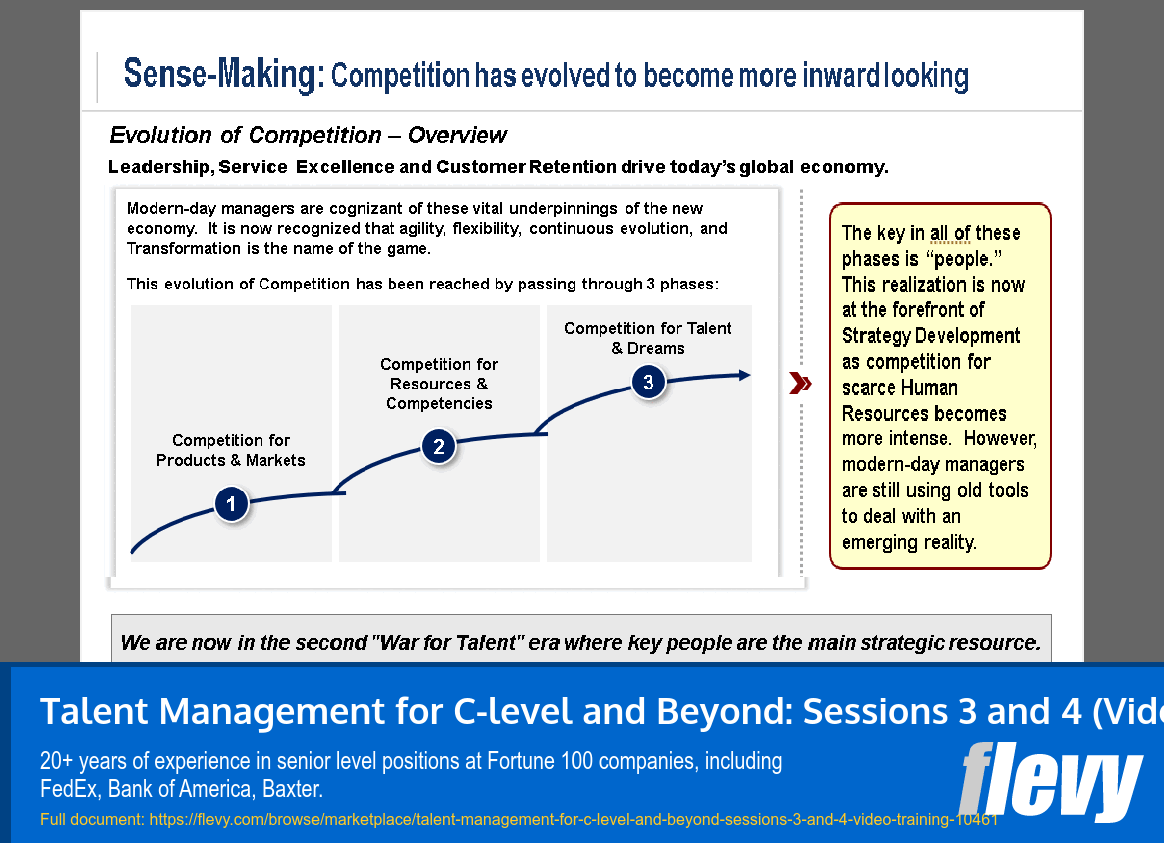
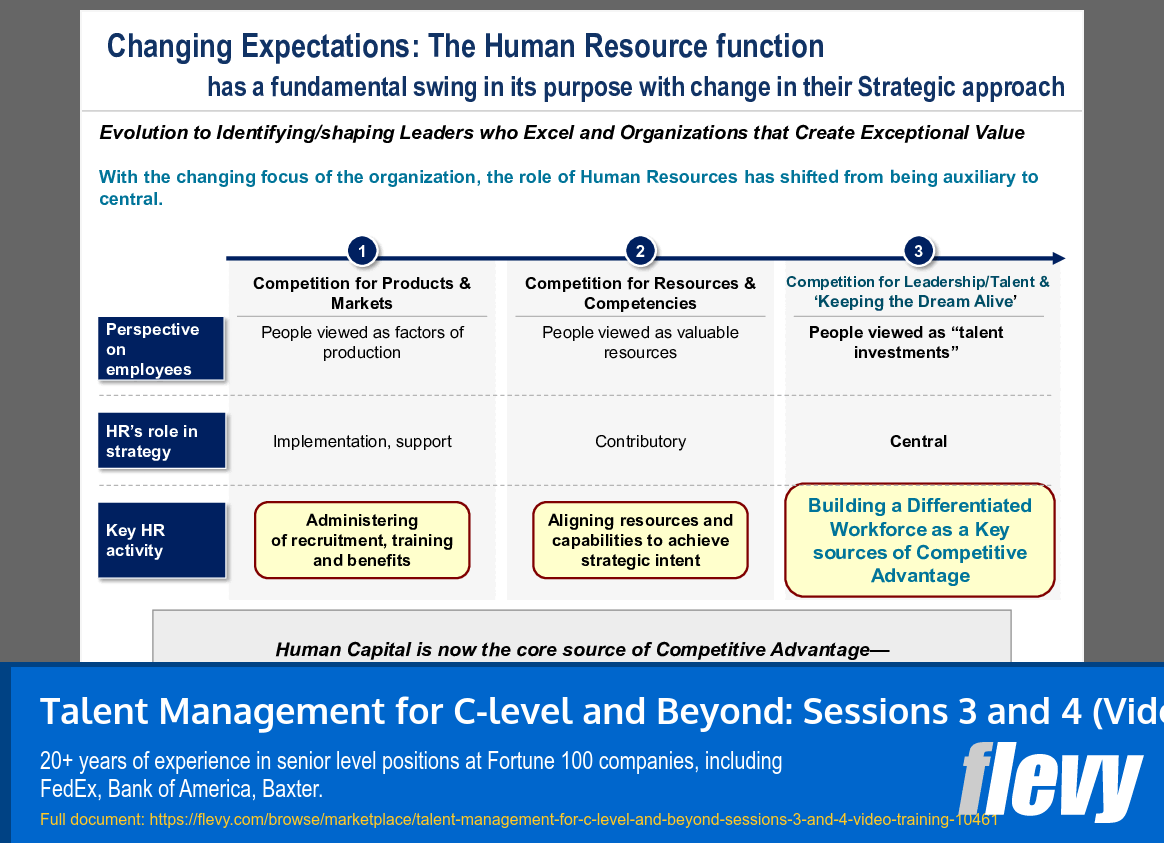
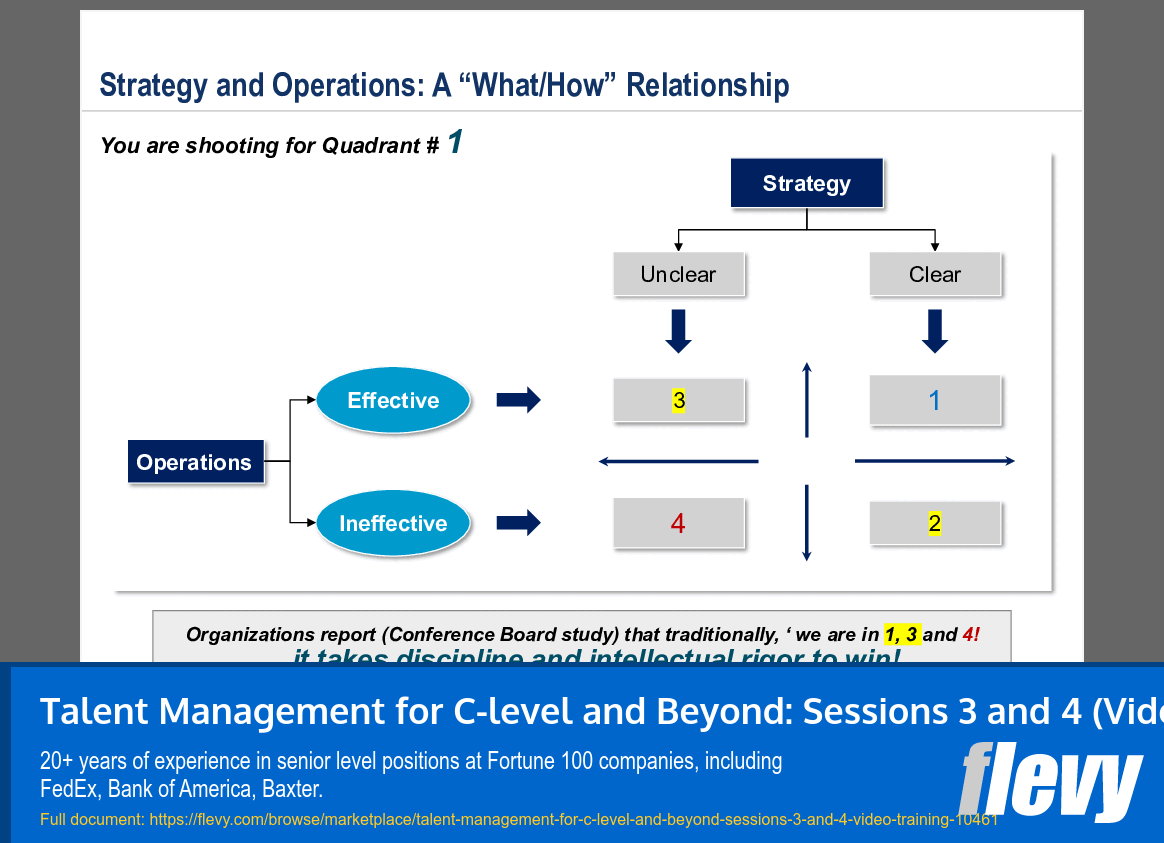
The Strategic Mandate will be covered In the session, the research from MIT Sloan Management School confirming what you've experienced: competitive advantage has migrated from products and markets to leadership and talent. Yet Conference Board studies reveal most organizations operate in strategic confusion—mixing clarity and ambiguity across strategy and operations.
We will discuss the discipline required to execute the strategy successfully:
• Clear strategy (what we'll do, for whom, with what priority)
• Effective operations (consistent execution, continuous improvement)
• Rigorous management of the crossover between the two.
Without this, you're betting on competitor incompetence—a mutually destructive race to price compression.
The correction: Strategy is directional inquiry about differentiation. Operations is continuous improvement toward consistency. Know which conversation you're having.
We will also cover some essential frameworks to assure that the strategy is better understood:
1st: Understanding the Leadership-to-Profitability Chain; of most interest is that Leadership is the foundation…if this is not ‘right’ , nothing ‘gets right’
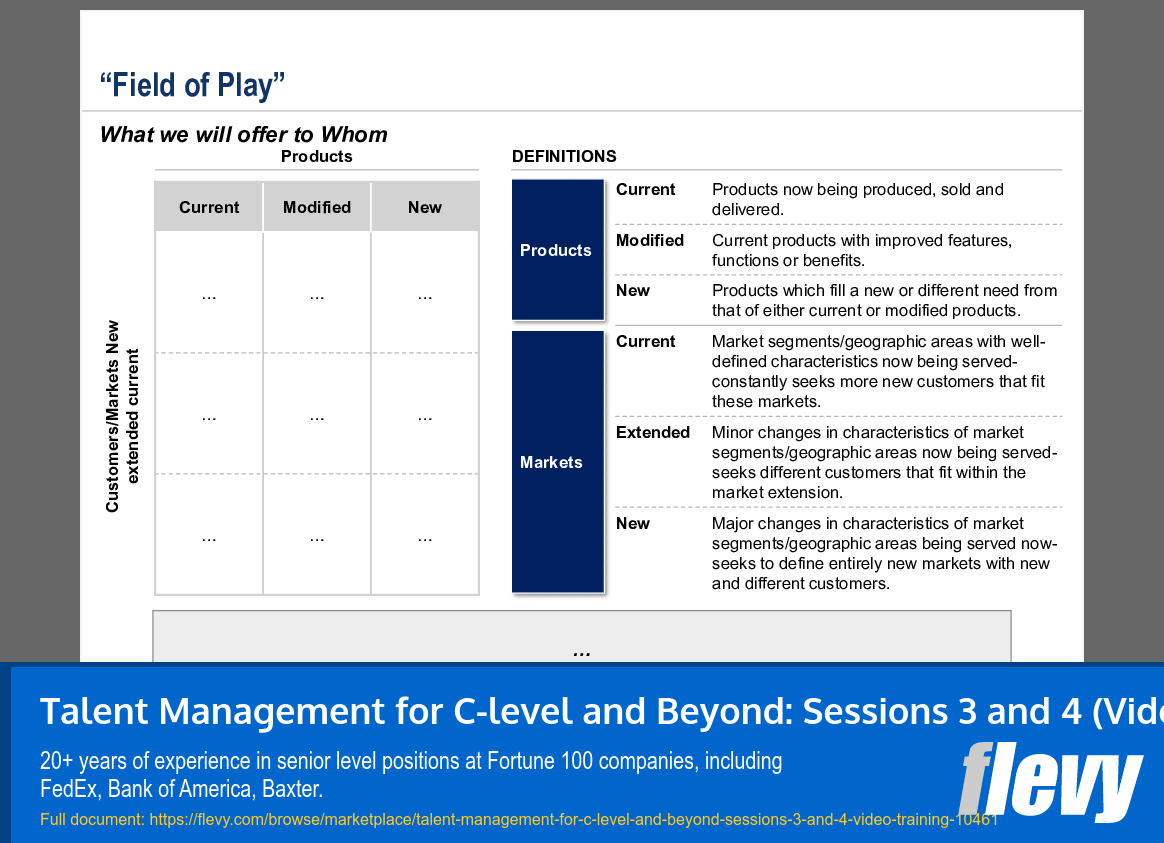
2. Defining Your “Field of Play”; The Product/Market matrix forces the hard question:
• Considering our Present and Future Customers and our Present and Proposed Product Offering: Where will growth come from?
Examples will be provided, and the value of this tool will be readily apparent. This isn't academic—it's resource allocation logic. Every cell requires explicit decisions:
• Degree of emphasis (High/Medium/Low/Zero)
• Type of activity (Sustain/Develop/Phase-Down/Opportunistic/Monitor/Explore)
Two examples will be provided to assure there is clarity for you:
• Drug store chain expanding from women's toiletries into men's healthcare products—with specific market-by-product cells defining investment levels.
• For HR/talent function: Translate this to your internal "clients." Define which services (Leader assessments, executive onboarding) to which stakeholder populations (new VPs, business units, C-suite) with what intensity.
3: Research has shown that confused individuals do not perform well.
Your workforce needs two tools:
A. Strategic Profile — Standing answers to recurring questions, such as the Strategic time frame; core beliefs, etc.
B. Our “Field of Play” cascaded to functional units — So every team knows: What do we offer? To whom? With what priority? What won't we do?
This isn't communication for communication's sake. It's eliminating the "semantic jungle" that creates strategy as platitude. Your workforce must understand not just the headline, but how to act accordingly.
Implementation Discipline
The work ahead will be covered: Developing Strategic Human Capital needs through your Executive Human Capital Committee (primary) and decentralized unit support (secondary). The talent function must provide direction via Performance-Based Training and systematic capability development.
Why This Matters Now
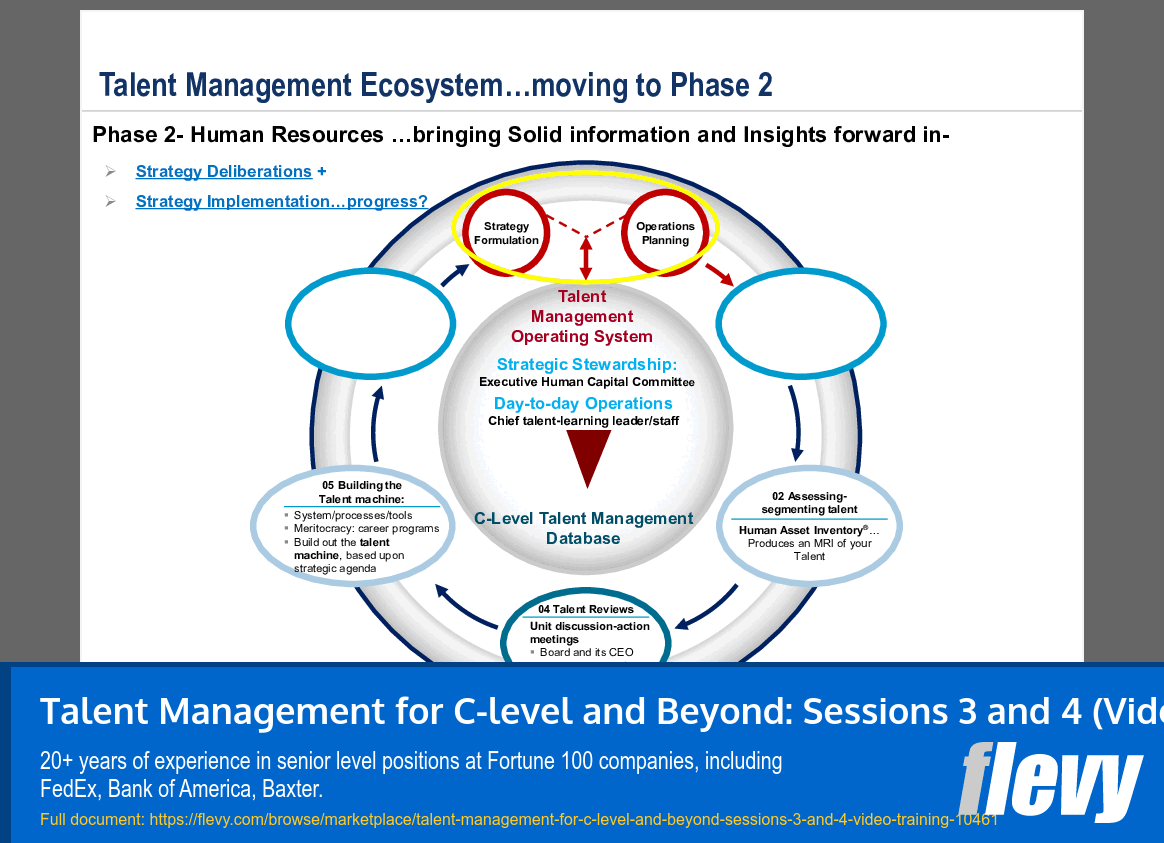
We will present information about moving to Phase 2 of the Talent Management Ecosystem: HR bringing solid information and insights into strategy deliberations and implementation progress. This requires:
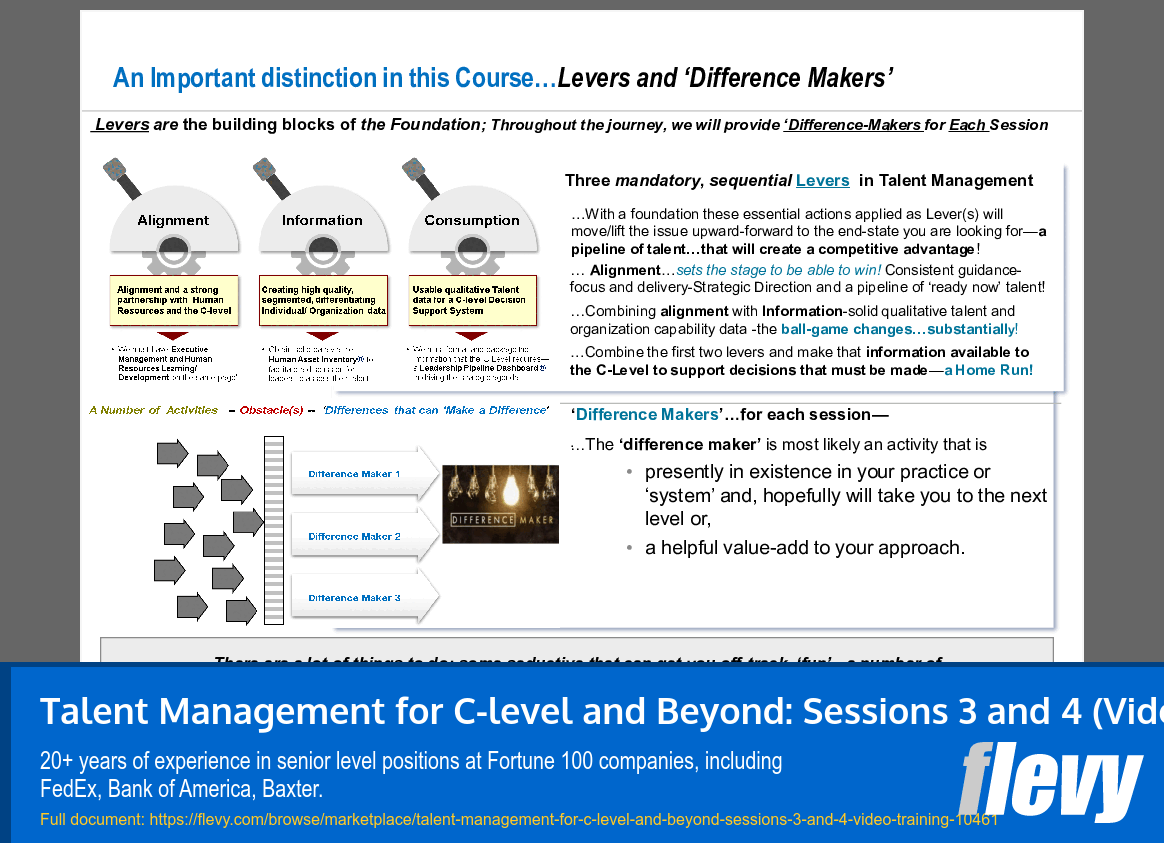
• Foundation built on three sequential, mandatory levers (Alignment, Information, C-Level Integration)
• Data infrastructure (Human Asset Inventory®, C-Level Talent Management Database)
• Governance (Executive Human Capital Committee for stewardship, Chief Talent Officer for operations)
Guidance is provided about how to build solid “People/Leadership information’ into strategy deliberations.
Bottom line for leaders: Strategy ambiguity is an execution tax you cannot afford. This session provides the frameworks to eliminate that tax, making talent investments strategic rather than reactive, creating alignment as a competitive advantage, and ensuring your workforce understands not just where you're going, but how to get there.
Dr. Bishop's program aims to change this by providing a proven framework and turnkey toolkit—scalable to any size of organization. Our methodology is a refreshing and different, common-sense approach, which will work for you and for your organization. You will learn best practices discovered in premiere organizations, such as FedEx, Baxter International, Bank of America, and other firms. You will also come to discover and understand how we have truly over-complicated this talent issue. Thus, this program will be about simplification and "common sense" workable solutions.
Got a question about the product? Email us at support@flevy.com or ask the author directly by using the "Ask the Author a Question" form. If you cannot view the preview above this document description, go here to view the large preview instead.
Source: Best Practices in Human Resources PowerPoint Slides: Talent Management for C-level and Beyond: Session 3 (Video Training) PowerPoint (PPTX) Presentation Slide Deck, Dr. Charlie Bishop
ABOUT THE AUTHOR

Dr. Charlie Bishop is an accomplished, seasoned executive and published author. Charlie has over 20+ years of experience in senior level positions at Fortune 100 companies, including Federal Express, Baxter, and Bank of America, leading these organizations through significant changes.
His book, Making Change Happen One Person at a Time, is published by AMACOM and cited by a study group
... [read more]
Ask the Author a Question
You must be logged in to contact the author.




























