 Click main image to view in full screen.
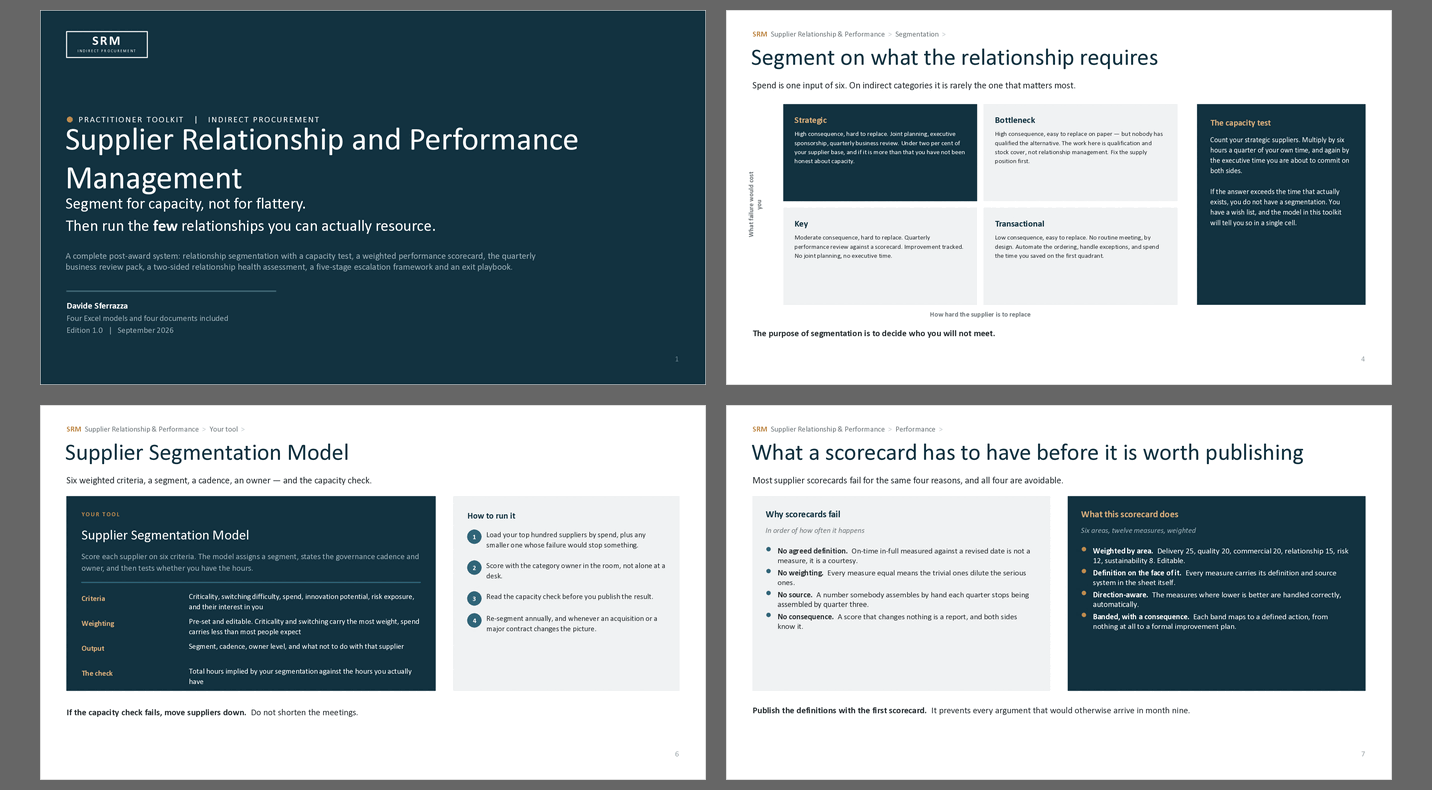
Supplier Relationship & Performance Management Toolkit – PowerPoint PPTX Template
PowerPoint (PPTX) + Zip archive file (ZIP) 17 Slides


BENEFITS OF THIS DOWNLOADABLE POWERPOINT DOCUMENT
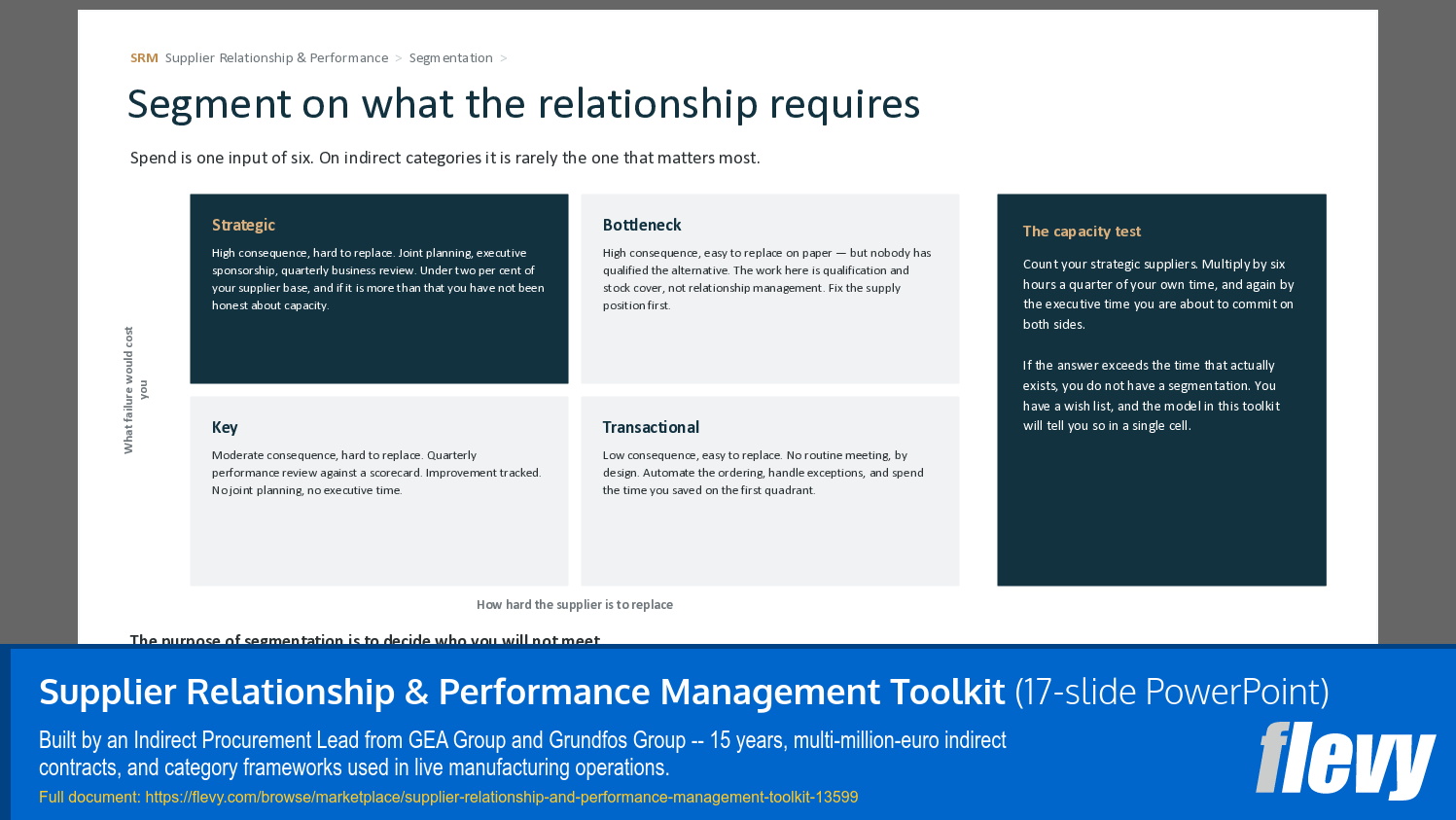
- Segment a supplier base on what the relationship requires rather than on spend, and prove in a single cell whether the hours to manage it actually exist
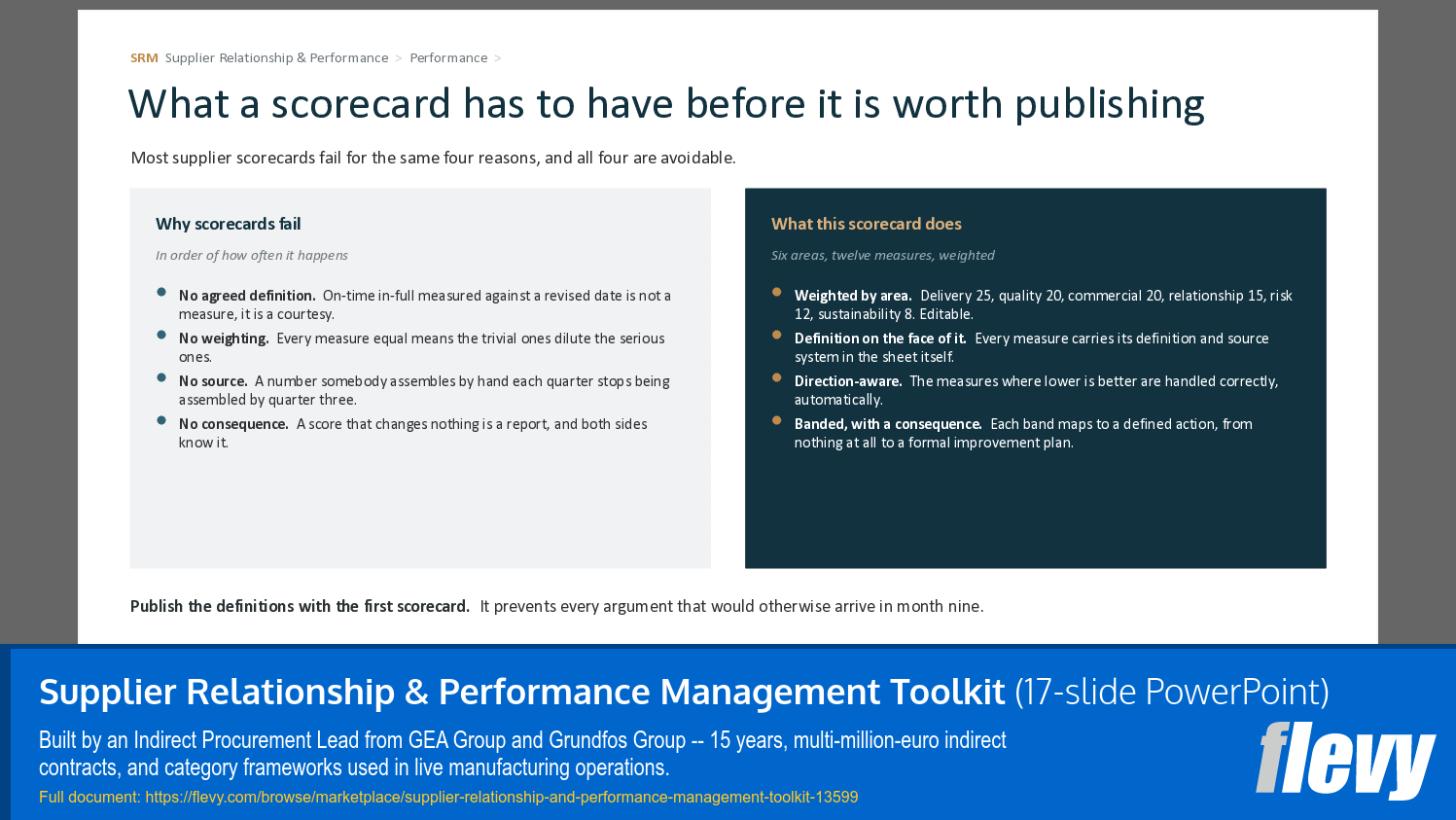
- Publish a weighted scorecard with a definition, a source system and a stated consequence for every measure, ending the argument before the first number is reported
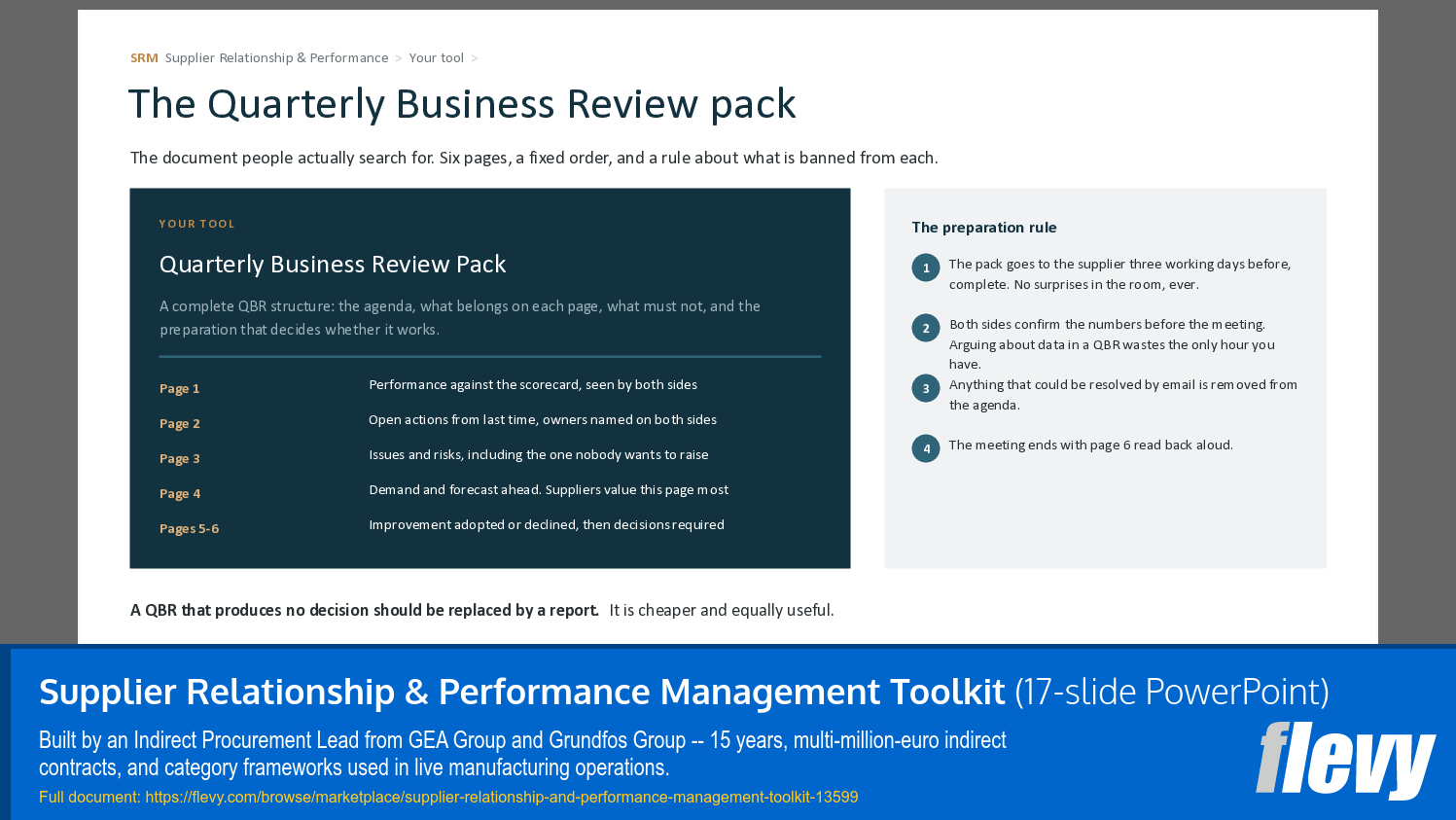
- Run a quarterly business review that produces decisions rather than a status update, with a six-page structure and a rule about what is banned from each page
PERFORMANCE MANAGEMENT PPT TEMPLATE DESCRIPTION
Sourcing decides the price. Everything after signature decides whether you actually get it. This toolkit is the post-award half of procurement, built around one uncomfortable observation: almost every organisation names more strategic suppliers than it has the capacity to manage, and the resulting dilution is worse than an honest segmentation would be.
WHAT MAKES THIS DIFFERENT
Most supplier relationship material starts from partnership. This starts from arithmetic. A quarterly business review done properly costs about six hours a quarter of category management time, and the same again on the supplier side, plus executive time twice a year. Twenty strategic suppliers is therefore most of a full-time role. The segmentation model in this pack counts those hours, compares them to the hours you actually have, and tells you in a single cell whether your segmentation is a plan or a wish list.
The second difference is that the segment nobody wants to name is treated as a legitimate outcome. Saying transactional out loud frees the supplier from performing a relationship neither side is resourcing, and frees your team for the relationships that change outcomes.
WHAT IS INCLUDED
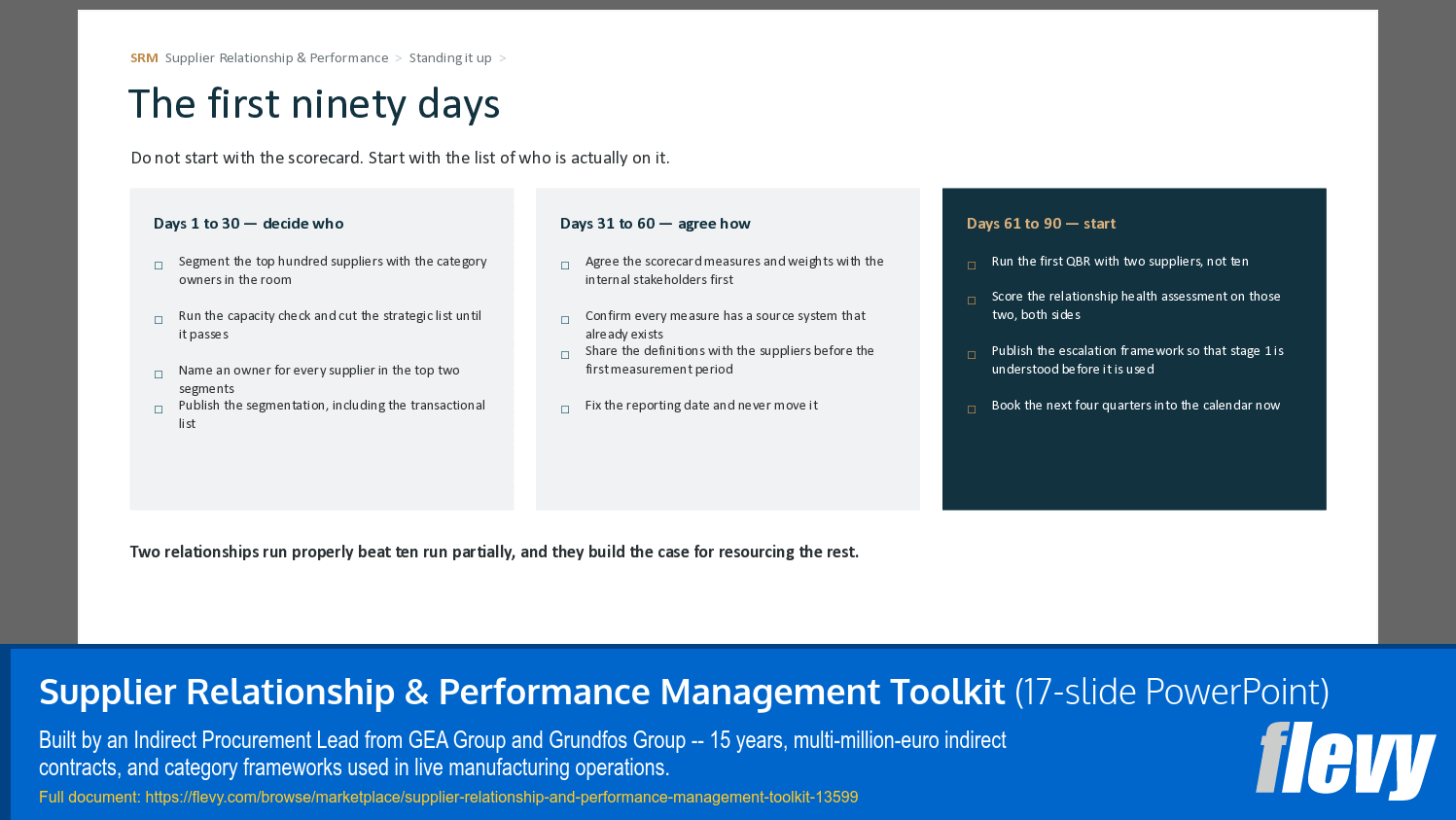
Primary document – a 16-slide guide covering where post-award value actually sits, segmentation on consequence and switching difficulty rather than spend, the four segments and what each one is for, what a scorecard needs before it is worth publishing, the twelve measures and how each gets argued about, the quarterly business review structure, what a scorecard cannot see, five stages of escalation, exit planning, the first ninety days, and four well-intentioned practices that make supplier management worse.
Working files, all unlocked with live formulas:
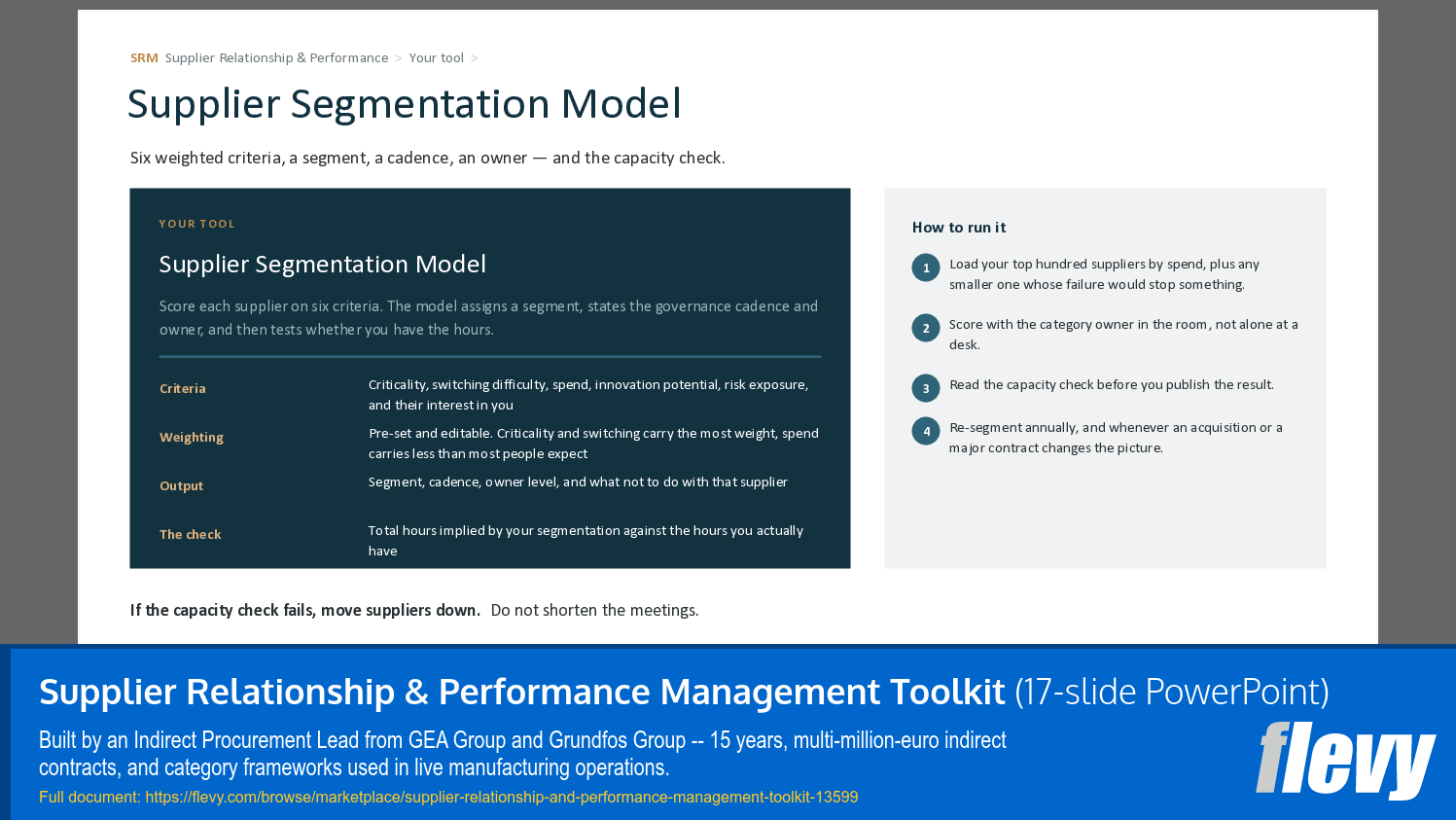
Supplier Segmentation Model (Excel) – six weighted criteria across sixty supplier rows, producing a segment, a governance cadence, an owner level and the capacity verdict. Criticality and switching difficulty carry the most weight; spend carries less than most organisations assume.
Supplier Performance Scorecard (Excel) – six areas, twelve measures, weighted and editable, with the definition and source system on the face of the sheet. Four bands, each mapped to a defined consequence rather than to a colour.
Relationship Health Assessment (Excel) – twelve statements scored by both sides. The output that matters is not either score but the statements where the two disagree by two points or more, which is usually the most useful forty minutes of the year.
Supplier Development Plan Tracker (Excel) – joint actions with an owner named on both sides, benefit type and value, and a check that tells you whether this is a joint plan or a list of things you have promised a supplier.
Quarterly Business Review Pack (Word) – six pages, a fixed order, what belongs on each page and what is banned from it, the attendee list by segment, the agenda as issued, the seven ways a QBR goes wrong, and a copyable page-by-page template.
Supplier Segmentation and Governance Guide (Word) – the capacity arithmetic, the six criteria in full, the four segments, how each is run badly, and the wording that works when you tell a supplier they are transactional.
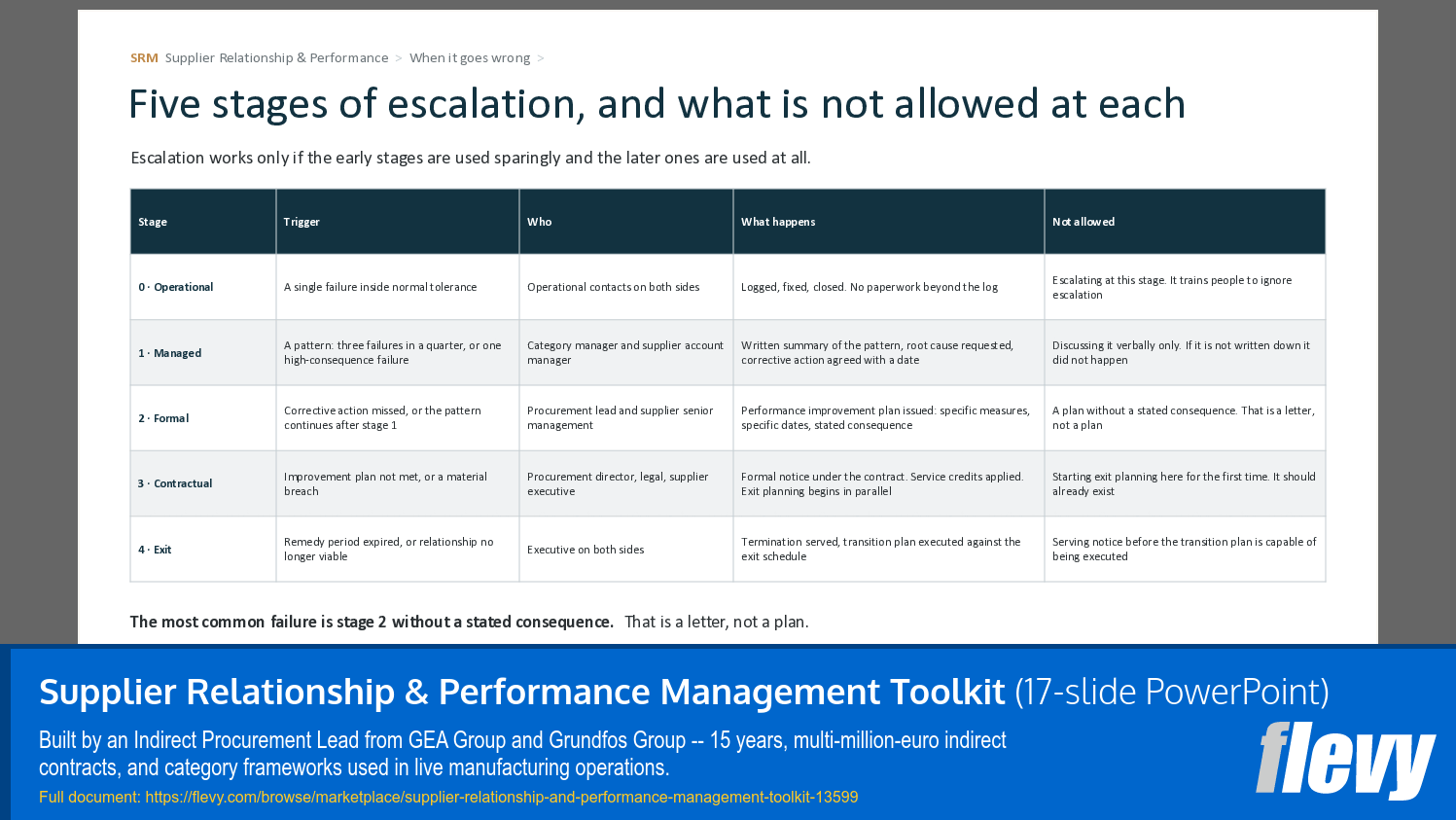
Escalation and Remediation Framework (Word) – five stages with trigger, timescale, level and stated consequence, what is not allowed at each, the four-part performance improvement plan, and the five conditions under which you stop trying.
Exit and Transition Playbook (Word) – the seven provisions to secure at signature, the one-page annual exit plan, how to run the transition, and the exit debrief.
WHO IT IS FOR
Category managers and procurement leads who own supplier relationships after the contract is signed. Heads of procurement standing up supplier management for the first time. Consultants designing a supplier management framework for a client.
WHAT THIS IS NOT
It is not a system. It holds no supplier master data and replaces no vendor management platform. It is also not a partnership philosophy: the position taken throughout is that most suppliers are suppliers, that this is a perfectly good thing to be, and that managing fewer relationships properly beats managing many partially.
Got a question about the product? Email us at support@flevy.com or ask the author directly by using the "Ask the Author a Question" form. If you cannot view the preview above this document description, go here to view the large preview instead.
Source: Best Practices in Performance Management, Supplier Management PowerPoint Slides: Supplier Relationship & Performance Management Toolkit PowerPoint (PPTX) Presentation Slide Deck, Davide Sferrazza
ABOUT THE AUTHOR

Indirect Procurement Lead, with 15 years spent in the categories most organisations manage least well: MRO, facilities, utilities and energy, marketing services, IT and software, professional services, logistics and CapEx.
That career has been inside manufacturing groups -- Pavan (GEA Group) and DAB Pumps (Grundfos Group) -- leading procurement transformation projects, negotiating
... [read more]
Ask the Author a Question
You must be logged in to contact the author.




























