
Leadership Theories   166-slide PPT PowerPoint presentation slide deck (PPTX)
$69.00

Leadership Theories (166-slide PPT PowerPoint presentation slide deck (PPTX)) Preview Image
Log in to unlock full preview.
Leadership Theories (166-slide PPT PowerPoint presentation slide deck (PPTX)) Preview Image
Arrow   Click main image to view in full screen.

Leadership Theories (PowerPoint PPTX Slide Deck)

PowerPoint (PPTX) 166 Slides

Top 500 Best Practice $69.00
Developed by a seasoned Leadership Coach with global experience at industry leaders like Microsoft and IBM, this presentation is your guide to understanding and applying various leadership theories for effective leadership development.
Add to Cart


Immediate download
Fully editable PowerPoint
Free lifetime updates

LEADERSHIP PPT DESCRIPTION

Editor Summary 166-slide PowerPoint presentation "Leadership Theories" by Operational Excellence Consulting, developed by a seasoned Leadership Coach with global experience at Microsoft and IBM, explains and illustrates 23 leadership theories across models, philosophies, and styles. Read more

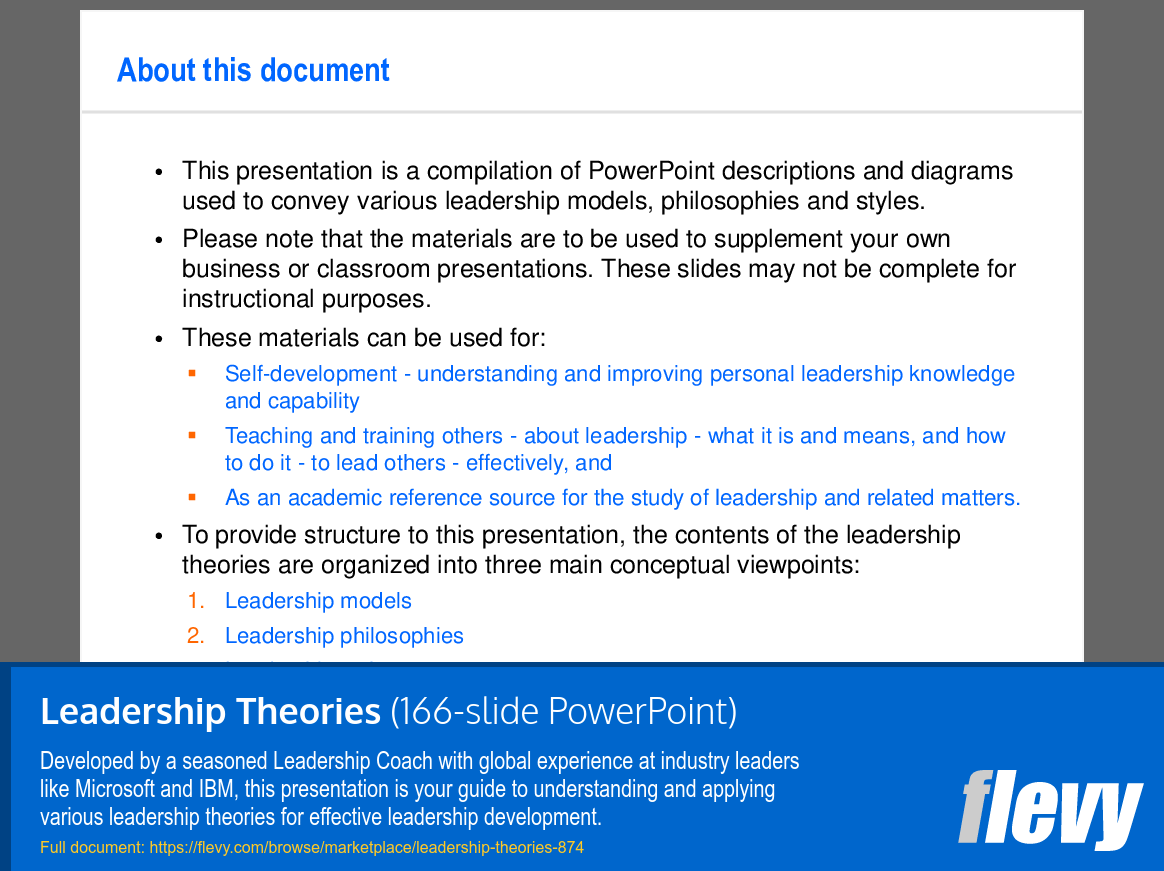
This presentation is a compilation of PowerPoint descriptions and diagrams used to convey 23 different leadership models, philosophies and styles.

The Leadership Models/Philosophies/Styles include:

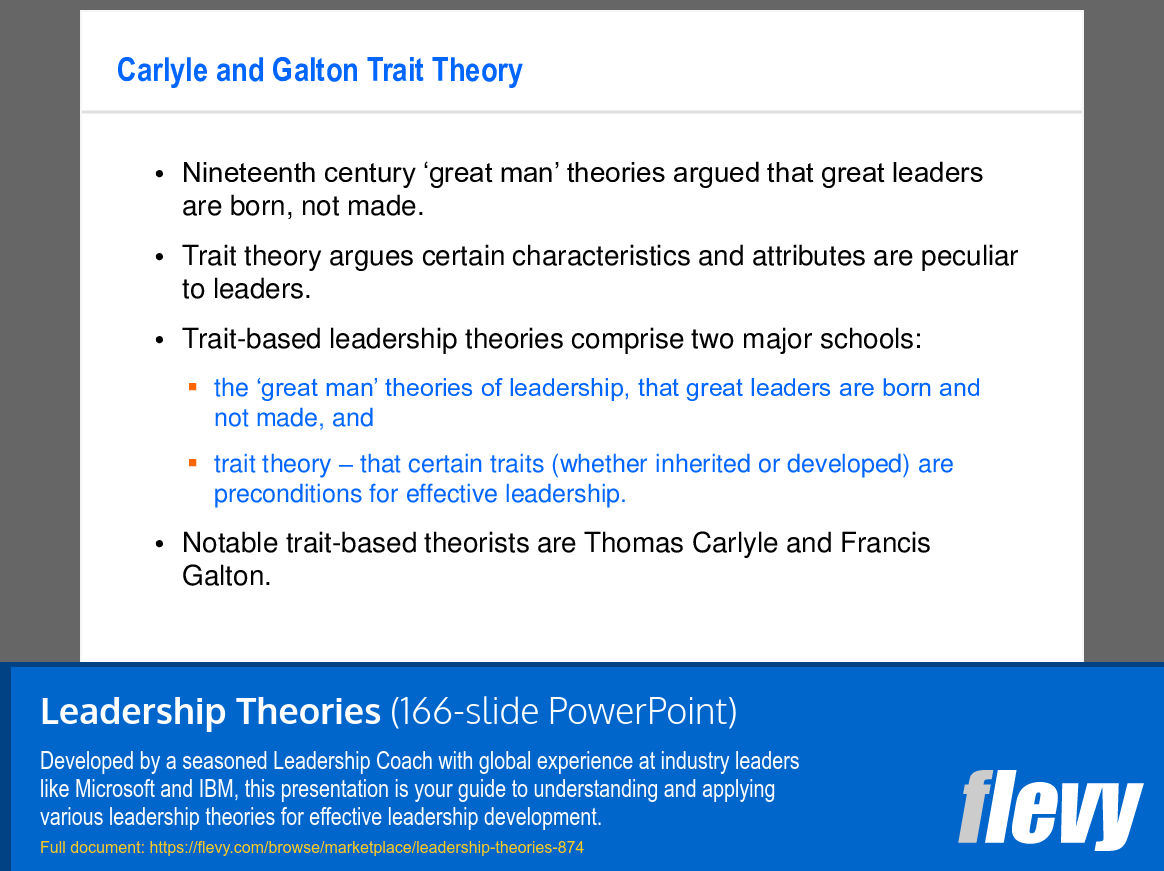
1. Carlyle & Galton Trait Theory
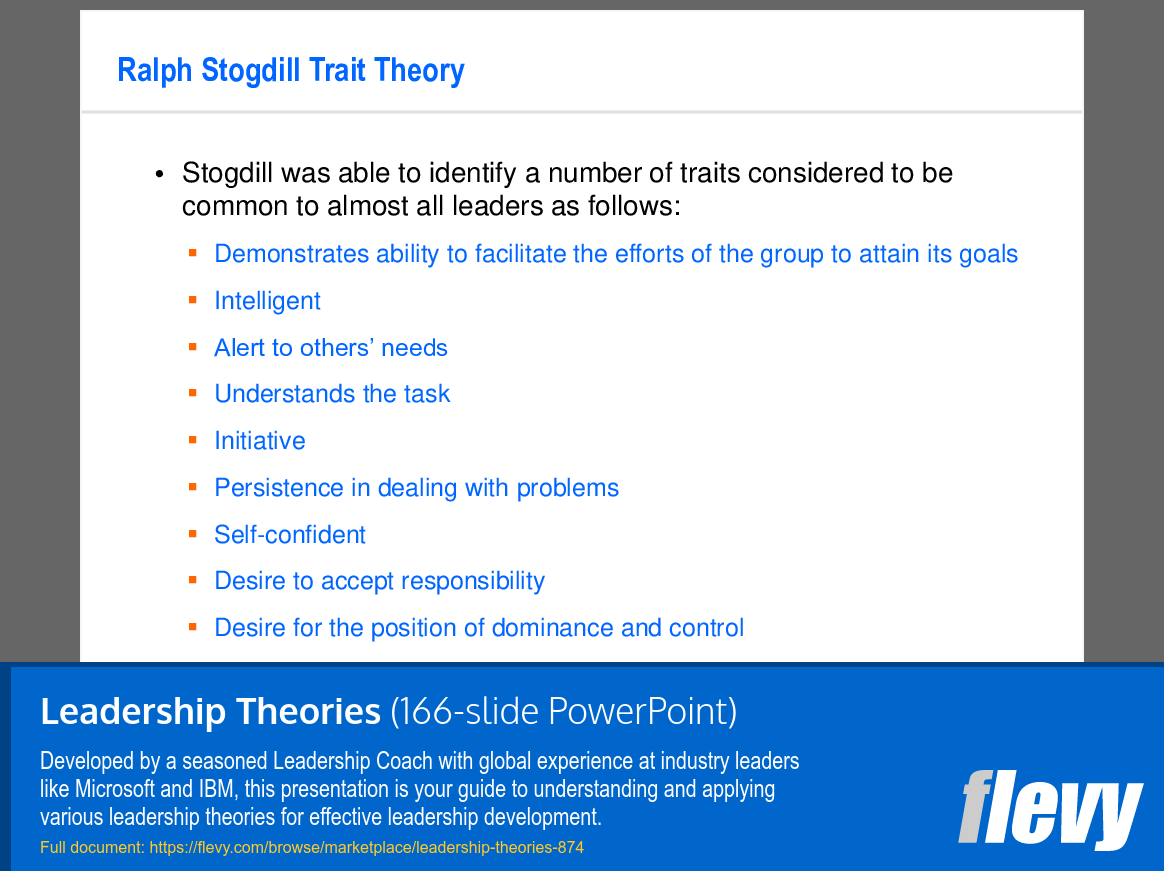
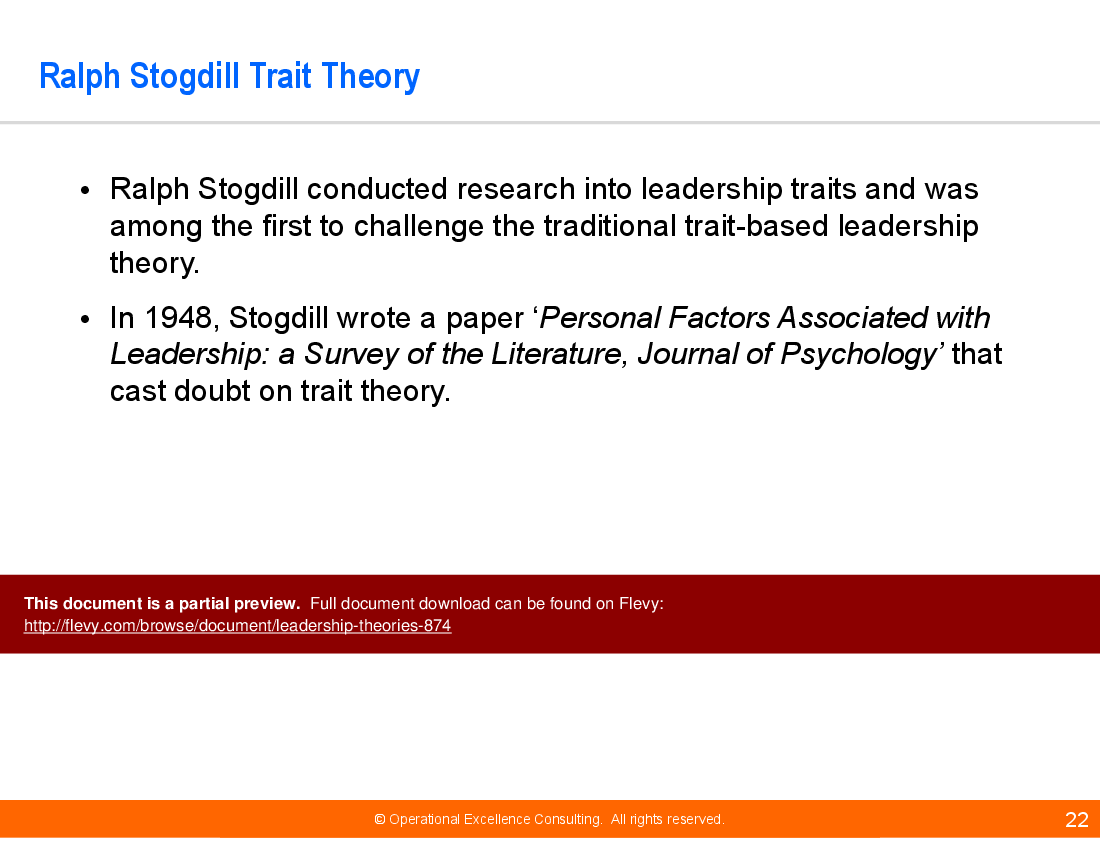
2. Ralph Stogdill Trait Theory
3. Kouzes & Posner Trait Theory
4. Douglas McGregor's XY Theory
5. Blake-Mouton's Managerial Grid
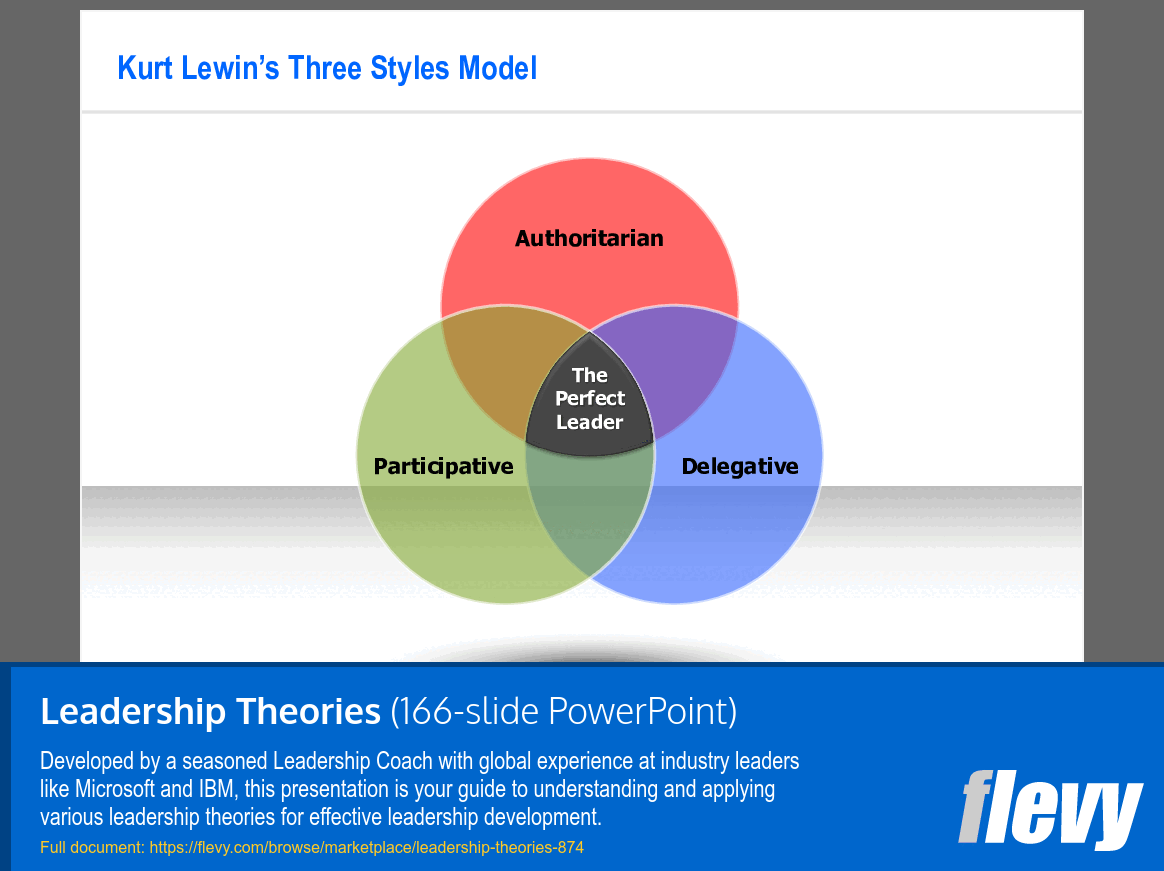
6. Kurt-Lewin's Three Styles Model
7. Bolman & Deal's Four Frame Model
8. Fiedler's Contingency Model
9. Hersey-Blanchard's Situational Leadership Model
10. Robert House's Path-Goal Theory
11. Tannenbaum & Schmidt's Leadership Behavior Continuum Model
12. John Adair's Action-Centered Leadership Model
13. Kouzes & Posner Five Leadership Practices
14. James Scouller's Three Levels of Leadership Model
15. Servant Leadership
16. Authentic Leadership
17. Ethical Leadership
18. Values-based Leadership
19. French & Raven's Five Bases of Power
20. Bureaucratic Leadership
21. Charismatic Leadership
22. Narcissistic Leadership
23. Transformation Leadership & Transactional Leadership

This presentation includes Leadership Models/Philosophies/Styles covering: Carlyle & Galton Trait Theory, Ralph Stogdill Trait Theory, Kouzes & Posner Trait Theory, Douglas McGregor's XY Theory, Blake-Mouton's Managerial Grid, Kurt-Lewin's Three Styles Model, Bolman & Deal's Four Frame Model, Fiedler's Contingency Model, Hersey-Blanchard's Situational Leadership Model, Robert House's Path-Goal Theory, Tannenbaum & Schmidt's Leadership Behavior Continuum Model, John Adair's Action-Centered Leadership Model, Kouzes & Posner Five Leadership Practices, James Scouller's Three Levels of Leadership Model, Servant Leadership, Authentic Leadership, Ethical Leadership, Values-based Leadership, French & Raven's Five Bases of Power, Bureaucratic Leadership, Charismatic Leadership, Narcissistic Leadership, and Transformation Leadership & Transactional Leadership.

This document provides a comprehensive breakdown of leadership theories, categorized into models, philosophies, and styles. It delves into the nuances of each theory, offering practical examples and detailed descriptions to facilitate understanding. The presentation is structured to help leaders identify the most suitable approach for various organizational contexts, enhancing their ability to adapt and lead effectively. Whether you are looking to understand the foundational traits of effective leaders or the situational factors that influence leadership success, this document serves as an invaluable resource for executives aiming to refine their leadership strategies.

Got a question about the product? Email us at support@flevy.com or ask the author directly by using the "Ask the Author a Question" form. If you cannot view the preview above this document description, go here to view the large preview instead.

MARCUS OVERVIEW

This synopsis was written by Marcus [?] based on the analysis of the full 166-slide presentation.


Executive Summary
This presentation, titled "Leadership Theories," serves as a comprehensive guide to understanding various leadership models, philosophies, and styles. It is designed for individuals seeking to enhance their leadership capabilities or educate others about effective leadership practices. The content is structured around 23 distinct leadership theories, including trait-based, behavioral, contingency, functional, and integrated psychological models. By utilizing this presentation, users can gain insights into the complexities of leadership and apply these theories to foster effective leadership within their organizations.

Who This Is For and When to Use
•  Corporate executives aiming to refine their leadership approach
•  HR professionals focused on leadership development programs
•  Educators teaching leadership concepts in academic settings
•  Team leaders looking to enhance group dynamics and performance
•  Consultants advising organizations on leadership strategies

Best-fit moments to use this deck:
•  During leadership training sessions or workshops
•  As a reference for developing leadership curricula
•  In strategic planning meetings focused on leadership development
•  For individual self-assessment and growth in leadership skills

Learning Objectives
•  Define key leadership theories and their applications in organizational contexts
•  Analyze the differences between leadership models, philosophies, and styles
•  Identify effective leadership traits and behaviors based on established theories
•  Apply various leadership frameworks to real-world scenarios
•  Develop a personalized leadership development plan using insights from the presentation
•  Facilitate discussions on leadership effectiveness among peers

Table of Contents
•  Leadership Models (page 10)
•  Leadership Philosophies (page 108)
•  Leadership Styles (page 143)

Primary Topics Covered
•  Leadership Models - Theories that provide frameworks for effective leadership practices, including trait-based, behavioral, and contingency models.
•  Leadership Philosophies - Value-based approaches that guide leaders in their interactions and decision-making processes.
•  Leadership Styles - Descriptions of how leaders behave in practice, including bureaucratic, charismatic, and transformational styles.

Deliverables, Templates, and Tools
•  Diagrams illustrating various leadership models and their applications
•  Frameworks for assessing leadership effectiveness
•  Templates for developing leadership training programs
•  Case studies demonstrating the application of leadership theories

Slide Highlights
•  Overview of the leadership framework categorizing models, philosophies, and styles
•  Detailed diagrams of the Blake-Mouton Managerial Grid and its implications for leadership behavior
•  Key characteristics of transformational vs. transactional leadership
•  Insights into the implications of Douglas McGregor's XY Theory on management styles

Potential Workshop Agenda
Introduction to Leadership Theories (30 minutes)
•  Overview of leadership models and their significance
•  Discussion on the importance of leadership philosophies

Deep Dive into Leadership Models (60 minutes)
•  Exploration of trait-based and behavioral models
•  Group activity analyzing different leadership scenarios

Leadership Styles and Their Impact (45 minutes)
•  Examination of bureaucratic, charismatic, and transformational leadership styles
•  Role-playing exercises to practice different styles

Customization Guidance
•  Adapt the presentation to include specific case studies relevant to your organization
•  Modify diagrams and frameworks to align with your corporate culture and values
•  Incorporate local examples and leadership challenges faced by your team

Secondary Topics Covered
•  The evolution of leadership theories over time
•  The role of emotional intelligence in effective leadership
•  Strategies for developing a leadership pipeline within organizations

Topic FAQ

What are the main categories of leadership theories I should know?

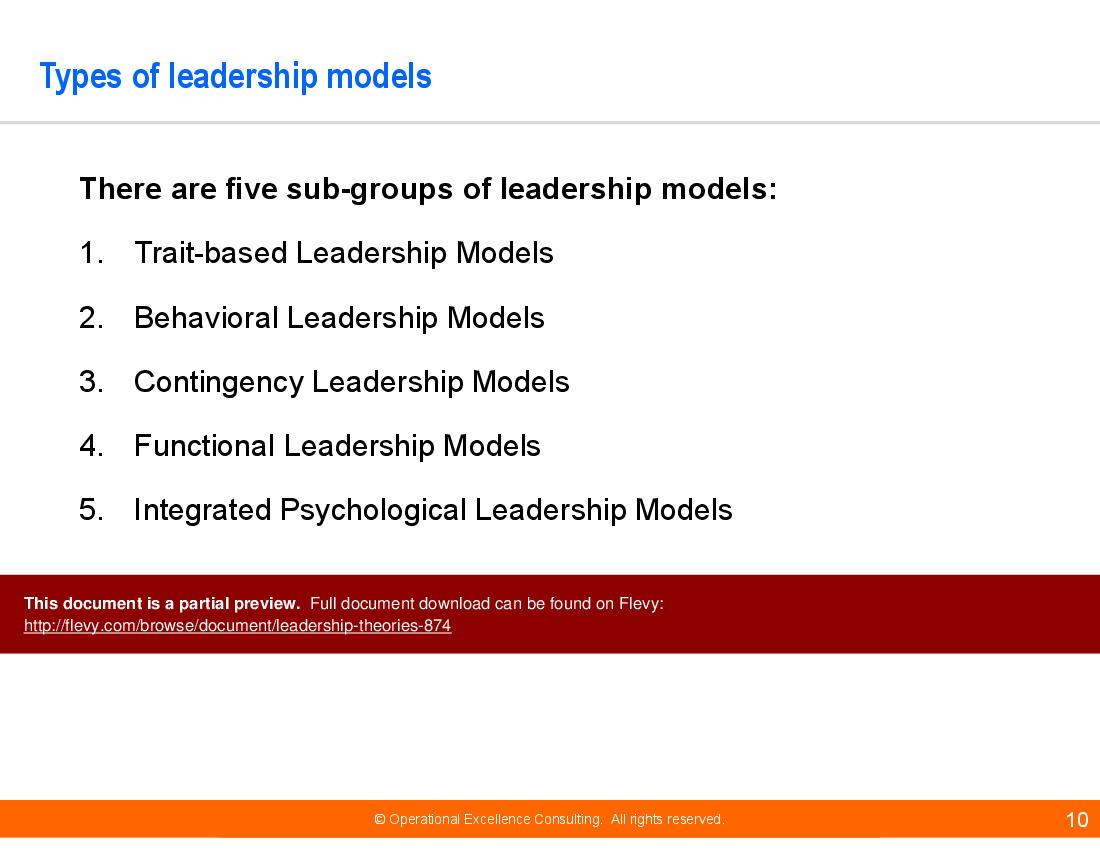
Leadership theories are commonly grouped into models, philosophies, and styles; primary model categories include trait-based, behavioral, contingency, functional, and integrated psychological models. These categories help map concepts such as traits, behaviors, situational fit, and value-based approaches across the covered theories: trait-based, behavioral, contingency, functional, and integrated psychological models.

How do transformational and transactional leadership differ in practice?

Transformational leadership emphasizes inspiring and motivating followers toward a shared vision and higher purpose, while transactional leadership is based on exchanges where followers receive rewards for compliance and performance. The presentation highlights those differing emphases and their practical implications for leader behavior and follower motivation: transformational versus transactional leadership.

What is the Blake-Mouton Managerial Grid and how is it used in leadership assessment?

The Blake-Mouton Managerial Grid assesses leadership behavior on 2 axes—concern for people and concern for results—to identify leadership styles and development needs. The product includes detailed diagrams and implications for leadership behavior to support assessment and development using the Blake-Mouton Managerial Grid.

What should I look for when choosing a leadership theory toolkit for workshops?

Select a toolkit that provides clear diagrams, assessment frameworks, templates for workshop design, and practical case studies; breadth of theory coverage also matters for comparative discussion. Flevy's Leadership Theories matches those needs by offering diagrams, assessment frameworks, templates, and case studies across multiple theories, including 23 theories.

How can I justify buying templates for leadership programs in terms of cost and value?

Buyers typically justify templates by reduced preparation time and by using ready-made frameworks to structure assessments, curricula, and development plans; look for tools that include diagrams, training templates, and case examples. Flevy's Leadership Theories provides such materials in a 166-slide PowerPoint with templates and case studies.

I need to design a half-day leadership workshop—what agenda structure should I follow?

A practical structure follows an introductory overview of leadership models, a deep dive into selected models with group activities, and a session on leadership styles with practice exercises. The product’s suggested agenda includes a 30-minute introduction, a 60-minute deep dive into models, and a 45-minute session on styles.

How can HR use leadership theories to build a leadership pipeline within an organization?

HR can apply assessment frameworks to identify capability gaps, use training templates to design development paths, and incorporate case studies for real-world practice; these steps feed succession planning and leadership progression. The presentation supplies frameworks for assessing leadership effectiveness and templates for developing training programs to support pipeline design.

Which leadership theories focus on adapting leadership style to follower readiness or situational factors?

Models that address adaptation include Hersey-Blanchard’s Situational Leadership Model (leader adjusts style to follower maturity), Fiedler’s Contingency Model (contextual fit), and Path-Goal Theory (leader facilitates follower goal achievement). These specific models are among the 23 leadership theories covered in the presentation.

Document FAQ
These are questions addressed within this presentation.

What are the main types of leadership models?
Leadership models can be categorized into trait-based, behavioral, contingency, functional, and integrated psychological models, each offering unique insights into effective leadership practices.

How can I apply these theories in my organization?
Utilize the frameworks and diagrams provided to assess current leadership practices, identify areas for improvement, and develop targeted training programs.

What is the difference between transformational and transactional leadership?
Transformational leadership focuses on inspiring and motivating followers toward a shared vision, while transactional leadership is based on exchanges where followers receive rewards for their compliance.

How can I customize this presentation for my team?
You can tailor the content by integrating specific examples from your organization, modifying case studies to reflect your industry, and adjusting the agenda to fit your training needs.

What resources are available for further learning?
The presentation includes references to key texts on leadership theories, as well as links to additional resources and training programs offered by Operational Excellence Consulting.

Glossary
•  Leadership Models - Frameworks that outline effective leadership practices.
•  Leadership Philosophies - Value-based approaches guiding leaders' actions.
•  Leadership Styles - Behavioral classifications of how leaders interact with their teams.
•  Trait Theory - A leadership model focusing on identifying specific traits of successful leaders.
•  Behavioral Theory - A model emphasizing the behaviors that effective leaders exhibit.
•  Contingency Theory - A model suggesting that leadership effectiveness depends on situational factors.
•  Transformational Leadership - A style that inspires followers to achieve a higher purpose.
•  Transactional Leadership - A style based on exchanges between leaders and followers.
•  Servant Leadership - A philosophy that prioritizes serving others' needs.
•  Authentic Leadership - A style emphasizing transparency and ethical behavior.
•  Values-based Leadership - Leading by aligning actions with core values.
•  Charismatic Leadership - A style that relies on the leader's charm and appeal.
•  Bureaucratic Leadership - A style focused on strict adherence to rules and procedures.
•  Narcissistic Leadership - A style characterized by self-centeredness and a lack of empathy.
•  Path-Goal Theory - A model focusing on how leaders can help followers achieve their goals.
•  Situational Leadership - A model suggesting leaders adapt their style based on followers' maturity.
•  Managerial Grid - A framework assessing leadership behavior based on concern for people and results.
•  XY Theory - A model categorizing management styles based on assumptions about human behavior.
•  Four Frames Model - A framework for viewing organizational issues from multiple perspectives.
•  Action-Centered Leadership - A model focusing on task achievement, team management, and individual needs.
•  Five Bases of Power - A framework identifying sources of power in leadership contexts.

Source: Best Practices in Leadership, Business Framework PowerPoint Diagrams PowerPoint Slides: Leadership Theories PowerPoint (PPTX) Presentation Slide Deck, Operational Excellence Consulting


$69.00
Developed by a seasoned Leadership Coach with global experience at industry leaders like Microsoft and IBM, this presentation is your guide to understanding and applying various leadership theories for effective leadership development.
Add to Cart
  

ABOUT THE AUTHOR

Author image
Additional documents from author: 257
Terms of usage (for all documents from this author)

Operational Excellence Consulting, founded in 2009 by Allan Ung, draws from extensive experience at Microsoft, IBM, and Underwriters Laboratories (UL). We specialize in strategy deployment, customer experience design, and operational excellence, applying Design Thinking, Lean, and Systems Thinking to maximize customer value and minimize waste.

Our ... [read more]

Ask the Author a Question

You must be logged in to contact the author.

Click here to log in Click here register

Did you know?
The average daily rate of a McKinsey consultant is $6,625 (not including expenses). The average price of a Flevy document is $65.



Trusted by over 10,000+ Client Organizations
Since 2012, we have provided business templates to over 10,000 businesses and organizations of all sizes, from startups and small businesses to the Fortune 100, in over 130 countries.
AT&T GE Cisco Intel IBM Coke Dell Toyota HP Nike Samsung Microsoft Astrazeneca JP Morgan KPMG Walgreens Walmart 3M Kaiser Oracle SAP Google E&Y Volvo Bosch Merck Fedex Shell Amgen Eli Lilly Roche AIG Abbott Amazon PwC T-Mobile Broadcom Bayer Pearson Titleist ConEd Pfizer NTT Data Schwab


Read Customer Testimonials

 
"If you are looking for great resources to save time with your business presentations, Flevy is truly a value-added resource. Flevy has done all the work for you and we will continue to utilize Flevy as a source to extract up-to-date information and data for our virtual and onsite presentations!"

– Debbi Saffo, President at The NiKhar Group
 
"I have found Flevy to be an amazing resource and library of useful presentations for lean sigma, change management and so many other topics. This has reduced the time I need to spend on preparing for my performance consultation. The library is easily accessible and updates are regularly provided. A wealth of great information."

– Cynthia Howard RN, PhD, Executive Coach at Ei Leadership
 
"As a young consulting firm, requests for input from clients vary and it's sometimes impossible to provide expert solutions across a broad spectrum of requirements. That was before I discovered Flevy.com.

Through subscription to this invaluable site of a plethora of topics that are key and crucial to consulting, I "

– Nishi Singh, Strategist and MD at NSP Consultants
 
"Flevy is our 'go to' resource for management material, at an affordable cost. The Flevy library is comprehensive and the content deep, and typically provides a great foundation for us to further develop and tailor our own service offer."

– Chris McCann, Founder at Resilient.World
 
"I am extremely grateful for the proactiveness and eagerness to help and I would gladly recommend the Flevy team if you are looking for data and toolkits to help you work through business solutions."

– Trevor Booth, Partner, Fast Forward Consulting
 
"As an Independent Management Consultant, I find Flevy to add great value as a source of best practices, templates and information on new trends. Flevy has matured and the quality and quantity of the library is excellent. Lastly the price charged is reasonable, creating a win-win value for "

– Jim Schoen, Principal at FRC Group
 
"The wide selection of frameworks is very useful to me as an independent consultant. In fact, it rivals what I had at my disposal at Big 4 Consulting firms in terms of efficacy and organization."

– Julia T., Consulting Firm Owner (Former Manager at Deloitte and Capgemini)
 
"I have used FlevyPro for several business applications. It is a great complement to working with expensive consultants. The quality and effectiveness of the tools are of the highest standards."

– Moritz Bernhoerster, Global Sourcing Director at Fortune 500


Customers Also Bought These Documents


Customers Also Like These Documents

Explore Templates on Related Management Topics


Your Recently Viewed Documents
Download our FREE Organization, Change, & Culture, Templates

Download our free compilation of 50+ slides and templates on Organizational Design, Change Management, and Corporate Culture. Methodologies include ADKAR, Burke-Litwin Change Model, McKinsey 7-S, Competing Values Framework, etc.